
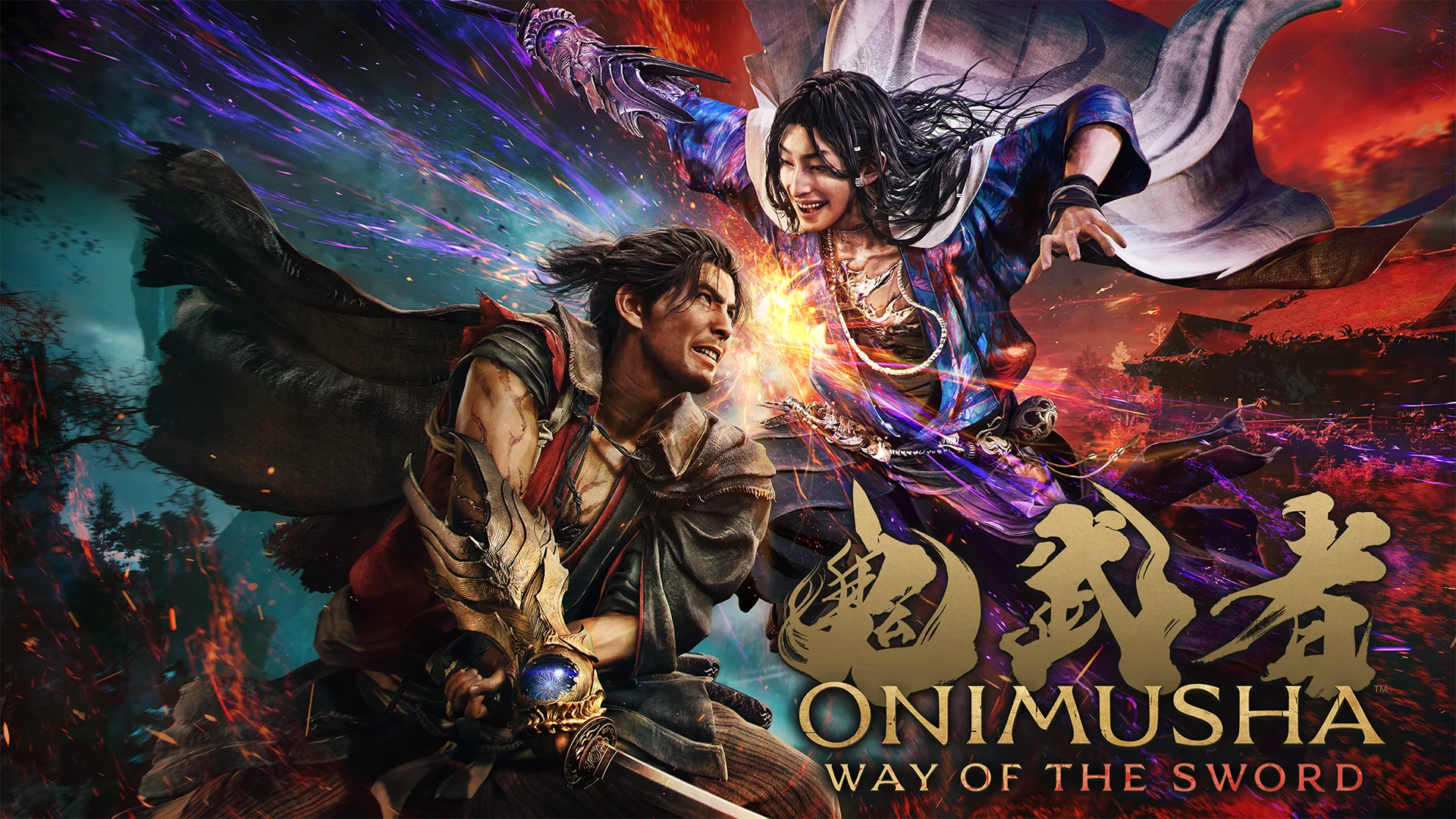
Onimusha is a series with an interesting history. What started off as “Resident Evil but with ninjas” eventually turned into one of the progenitors of the modern-day hack n’ slash – even being the inspiration for Devil May Cry – with two sequels, a few spin-offs and even a cancelled live action movie. Though since 2006 the series has been surprisingly dormant. After the fourth mainline game Onimusha: Dawn of Dreams we’ve only had four releases, two remasters, a browser game and a VR game. So, it was definitely a shock when, after 18 years without a proper new entry, we got the announcement of Onimusha: Way of the Sword at The Game Awards in 2024. Not only the first new entry in two decades, but also a fresh start for the series as a whole. But has time been kind enough for this series to be able to stand with Capcom’s legendary library, or is this a relic that should have stayed buried? Onimusha: Way of the Sword was developed and published by Capcom and released on 4th September 2026 for PlayStation 5, Xbox Series X/S, Nintendo Switch 2 and PC.
Story
The story follows Miyamoto Musashi, a samurai who spends his time travelling Japan and fighting anyone who’s said to be strong. After one such battle, and just as another against Musashi’s “eternal rival” Sasaki Ganryu is about to begin, he is attacked by a gang of monsters known as Genma, an attack that leads to the deaths of the two samurai. However, Musashi’s descent to hell is intercepted by a man in white who forces an unusual gauntlet onto him, bringing him back to life. The gauntlet grants Musashi the strength needed to slay the Genma, though this leaves him infuriated as he’s no longer fighting using his own strength. A voice from within the gauntlet instructs Musashi to find a man named Ono no Takamura. From there Musashi journeys to Ezo, killing Genma all the while, to help protect the people of Japan and, more importantly, find a way to get this damn gauntlet off his arm.
The story of this game is a lot of fun. Most of the enjoyment I got from it were the characters who are just a delight. Miyamoto Musashi is a great main character, he’s cocky and arrogant without it becoming grating, and while he does have some very goofy moments, when the story calls for a serious moment, he absolutely reciprocates. And while the heroes are great, it’s the villains who steal the show for me. Yoshitsune in particular is a fantastic antagonist, being a bit goofy and playful at times but that does not make him any less intimidating or conniving. In my opinion, he’s Capcom’s best villain since Vergil in Devil May Cry.
Presentation
Another Capcom review, another opportunity for me to praise the RE Engine. Graphically this game looks amazing, the locations you explore are brimming with detail, looking liveable enough to make it believable that people are still living there, though still looking downtrodden to show that there is a demonic invasion. I especially love the character designs as they are the perfect representation of each character personality – like Musashi having the ragged clothes of a travelling warrior, or Ganyru’s loose outfit matching his permanent smile – the facial animation is brilliant in this game as well. I also have to praise the designs of the Genma, these guys really look like demons straight from hell, with the boss Genma looking the most unique and intimidating.
I played this game on the PS5 and the framerate for it was absolutely perfect. As far as I could see there were no drops no matter how hectic the combat got, running at a consistent 60fps throughout the entire experience.
I played this game using the English dub though in my second playthrough I am playing it in Japanese, and I think both dubs are great. Both actors of Miyamoto Musashi bring out different sides of him, with the Japanese actor, Yoshimasa Hosoya, fitting better with his more serious side, while English actor, Kenichiro Thomson, matching his goofiness better. I especially have to give praise to Shogo Miyakita who played both Ono no Takemura and Minamoto no Yoshitune, he plays both characters perfectly, making Takemura sound louder than life while Yoshitsune sounds perfectly conniving and overconfident. I do prefer the Japanese dub a bit more, though I think that both are very good.
The soundtrack, like many other games in this setting, uses a lot of traditional Japanese instruments like woodwinds and shamisens. Many of the songs are quiet and ominous, fitting the dark setting almost too well (honestly at times they wouldn’t feel out of place in a horror game). You do also have more theatrical and grander songs that fit in a boss fight or a character motivating cutscene and they sound fantastic, making the moments feel epic and important. Generally, this is a great soundtrack, possibly one of Capcom’s best in a while.
World Design and Exploration
In this game, you’ll be spending most of your time in the city of Kyoto. This is an open area where you’ll find most of your activities, from collectables to side quests to random skirmishes with Genma. Kyoto is a pretty decent size, definitely big enough that warping to checkpoints is a necessity. Much of the city will be blocked off at first due to Malice spread by the Genma, though these areas will open themselves up through story missions. As mentioned, while exploring the streets you’ll have multiple encounters with Genma either dragging dead bodies, harassing locals or desecrating temples. The groups are never big, and you always have the option to avoid combat if you want – which is good as too many of these fights in a row can get a bit tiresome. One thing I do really like is that the map will point out the location of every quest or collectible in the city once you’ve eradicated the Malice in said area, almost prompting you to explore more.
There are other locations outside of Kyoto though they are much more linear, having a much more obvious start and end point. You have to teleport to these areas from Kyoto via the Spirit Mirrors, which is where you also learn new skills, level up equipment and access your storage box. These (let’s call them…) dungeons have a number of the same collectibles as Kyoto has though much less of them, focusing much more on fighting stronger gangs of Genma. On occasion you’ll find something blocking your path, this can be in the form of balls of thread attached to spiders that you have to find, or giant walls of Malice that require a specific power for you to open.
Combat and Enemy Design
Onimusha: Way of the Sword is a hack n’ slash game that I would say is a combination of Devil May Cry and Sekiro: Shadow Die Twice and even then, I wouldn’t call that an amazing comparison. Musashi has a light and heavy attack, but no way to combine them into combos, however it’s not just a mindless button masher. Instead, this game relies heavily on reacting to your opponents and timing attacks. Like every other action game lately, this game has a parry mechanic, where you have to block an enemy’s attack just as it’s about to land, but you have other options that require their own timings and each bring their own benefits with them. Parrying will cancel most enemy combos and will “ignite” your sword if done enough times, parrying will also not deplete your stamina bar, whereas just blocking will. Deflecting (yes this is different to parrying) will decrease an enemy’s poise meter, doing so will let you deal heavy damage to the opponent. Dodging perfectly will let you perform a counterattack. And if you hit the attack button just as the opponent is about to hit you, you can perform an attack called an Issen, which will kill most normal enemies in one hit. I love that every form of avoiding attacks brings its own benefit, so you won’t be relying on just one, and each of them are satisfying and challenging to pull off, ensuring that the combat is always engaging and takes a while to get tiresome.
There are other kinds of clashes in this game that can either deal a lot of damage to Genma or can punish you if you’re not careful. One of these is called a Blade Barrage, this happens when yours and an opponent’s attacks hit simultaneously, to get out of this without taking any damage you have to use the opposite kind of attack that you used when entering the Barrage (using a light attack if you did a heavy attack when the Barrage happens for example). This may sound easy, but, in the chaos of battle, I found myself often forgetting what attack I used when entering the Barrage, so I only had a couple of seconds to guess the right attack to use. The Blade Lock is a much simpler mechanic where you and your opponent will lock swords and try to overwhelm the other with strength, literally all you have to do with this one is mash the attack button until you win.
When a Genma is defeated, they will drop a series of souls that you can then absorb into your Oni Gauntlet. There are a variety of different coloured souls, red acts as currency for buying items or obtaining select skills, yellow will restore some of your health, and the other colours will increase a particular gauge for your various powers.
Don’t think that your sword is your only weapon, as throughout his adventure Musashi will be granted a series of Oni Armaments. Each of these weapons are best used for different situations and will be a great asset in a struggle, like the Two Celestials extracting a bunch of yellow souls to help you restore health, the Wind-Whipper will summon a mini tornado to damage enemies close to you, or the Firebird Flute launching three fireballs at a targeted enemy. These cannot be spammed however and have a gauge that will require you to gather Genma souls to be able to use. Because these weapons work so differently, I never stuck with just one, swapping them around constantly depending on the situation, which I really like.
Speaking of Genma, there is a decent variety in the number of enemies you’ll encounter, and each of them work very differently from one another. These monsters have very different methods of trying to take you out, from common Hitotsume Gasa possibly wielding different types of weapons, to the Togemaru rolling and spinning at rapid speed to strike you with the spikes on their backs, or the nightmarish Chijiko splitting into two if you attack them without destroying their weak point first. These enemies are fairly easy to get the hang of, though still enough of a challenge to ensure that you won’t let your guard down.
I’m just going to come out and say it, this game has possibly my favourite boss fights of the entire year. These fights are incredible; the combos are complex though still feel fair and are incredibly satisfying to master. You will fight some of these bosses’ numerous times, though with enough differences to make them feel at least a bit unique. When bosses deal a large chunk of damage to you, they will extract some of the souls from your gauntlet and absorb them to become more powerful, possibly even gaining power boosts required for second stages early. Whenever you deplete their poise meter, you’ll be given a number of choices on which body part you want to attack, symbolised with a colour. Attacking one of the red body parts will deal a ton of damage, however attacking one of the purple ones will deal less damage and drop a large number of souls. Each fight is challenging and will likely take you multiple goes in order to get right, but holy hell they are so much fun.
Collectibles and Side Activities
There is a large amount of side content for you to do, so I’ll try and keep this brief. One of the main ones is labelled as Chance Encounters, basically side quests that will be given to you from random citizens of Kyoto. These will more often than not just require you to kill a couple bands of Genma, not really any different from your usual random encounters, but hey, at least you’re getting rewarded for these ones. There are others that will require you to do certain challenges, like use your bow (oh yeah, you have an Oni Bow by the way), to hunt and shoot down five hidden Genma in some of the locations outside of Kyoto, or to find a hidden treasure chest within the city.
Someone called Lady Murasaki, a very literal ghost writer, will have a couple of requests for you to do. Some will be the Mysteries of Kyoto, where Musashi will have to pull out his detective hat and solve some of the strange happenings within the city. These are similar to the Chance Encounters, except with a bit more story and even their own cutscenes, though they do still end with you fighting a bunch of Genma. She’ll also ask you to hunt for her Lion Dogs (basically shiba-inu’s with extra padding around the neck), these will be spread throughout each location you visit and collecting them will reward you with some cosmetic goodies if you want to dress Musashi up a little.
Aside from those, the rest of the things you can collect mostly just contribute to upgrading Musashi. Materials to upgrade your equipment, Power Stones to unlock skills that red souls will not, unique Hozuki Pouches – your main healing item – that will restore different properties and possibly fill up certain gauges. Basically, things that will help you survive in this world.
Conclusion
I genuinely don’t know how Capcom are doing it. In a year where we had two fantastic games with Resident Evil Requiem and Pragmata, they somehow manage to release a game that possibly even surpasses them. This game is absolutely fantastic, the combat is satisfying and addicting, the world is fun to explore, and the characters are truly some of Capcom’s greatest. Whether you’re a fan of the older games or this is the first time you’re hearing about it, I cannot recommend this game enough to you. It’s some of the most fun I’ve had this entire year, and I severely hope that it leads to a bright new future for the Onimusha franchise.
FINAL SCORE: 9.6/10




Leave a Reply