
 During our Axia “Post-Diagnostic Support Group” meeting yesterday in Crewe, I spoke of how Axia’s bespoke “Autism Alert Card” was evolving. I referred to the original post I’d written titled Managing Anxiety – the “Autism Alert Card” and the suggestion from a previous P-D.S.G. meeting that Axia should have their own card.
Due to the large number of variations of the “Autism Alert Card” which are now available (including the extremely well thought out version sold by the National Autistic Society HERE), it had previously been decided that in order for Axia’s card to have additional purpose and value, it would only be available to those diagnosed by/through Axia ASD Ltd. The reason for this is that it allows more specific LEGAL WORDING to be used which other cards do not have, perhaps most significantly “Medical Diagnosis for Autism Spectrum Disorder”.
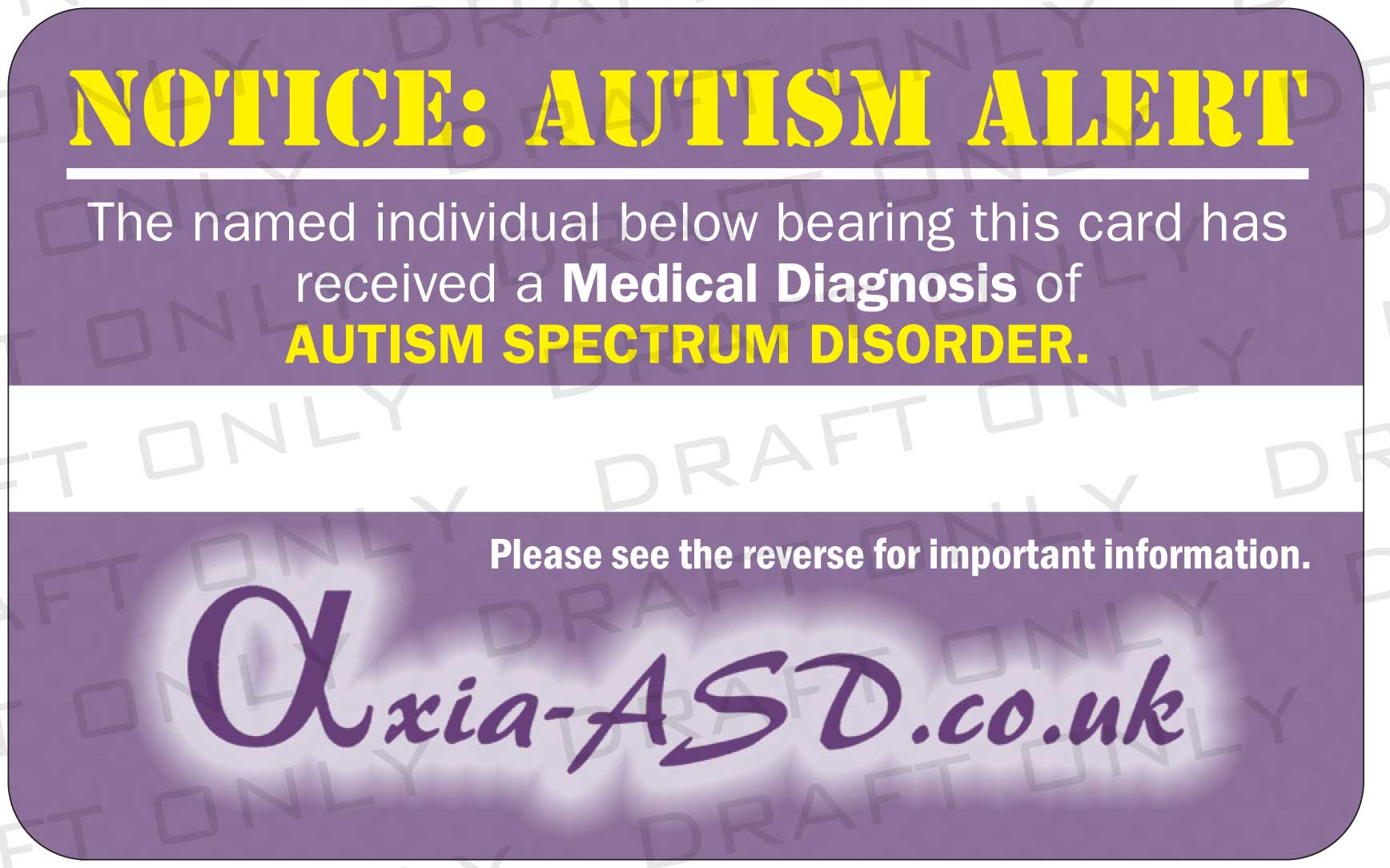
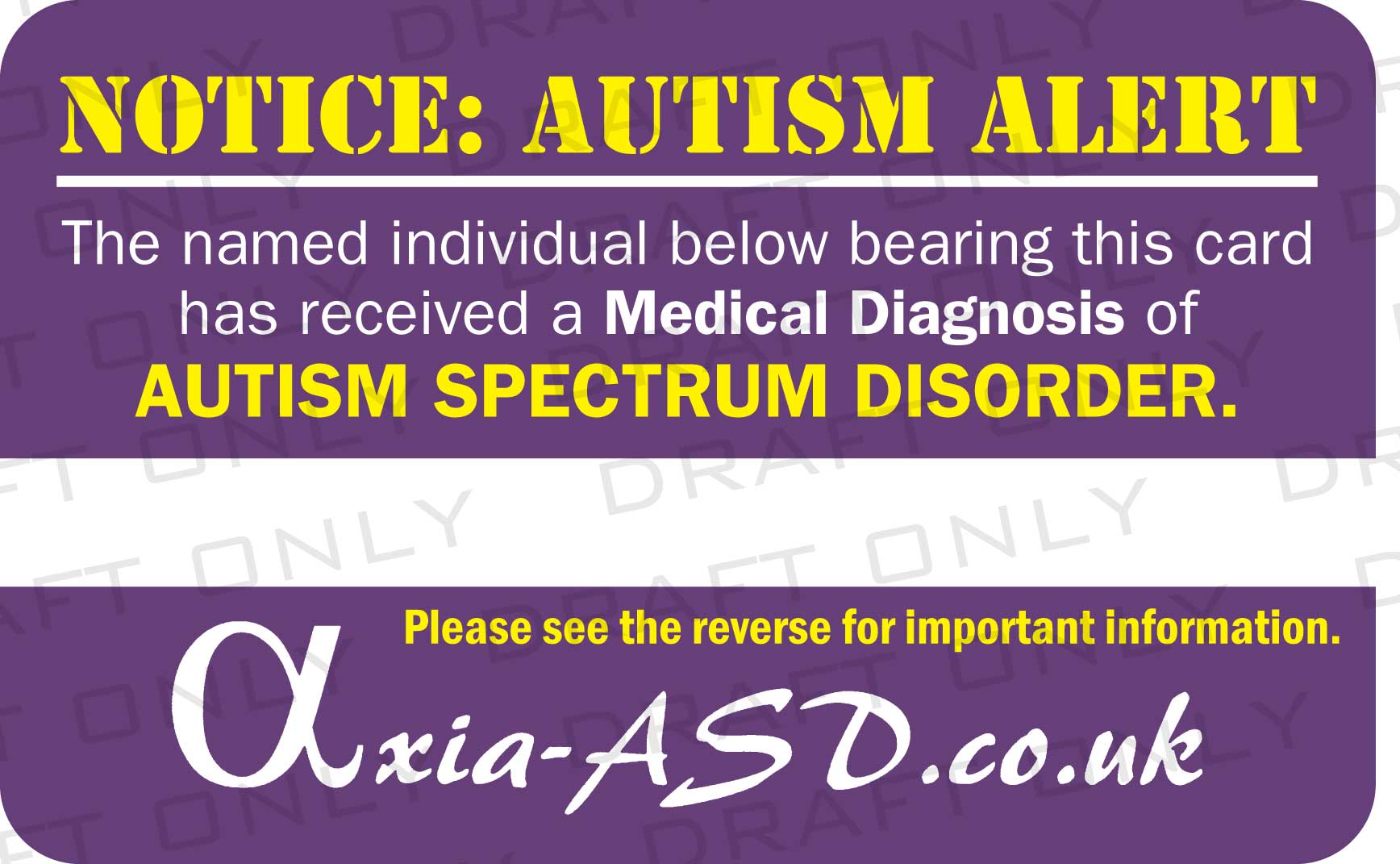
Following my update yesterday, it was suggested the drafts I have been gradually piecing together were shared on the website to enable others to leave thoughts and feedback. As mentioned, there are technical printing issues with the size of text which can be printed and remain legible, which needs to be balanced out with what is considered most IMPORTANT to have on the card.
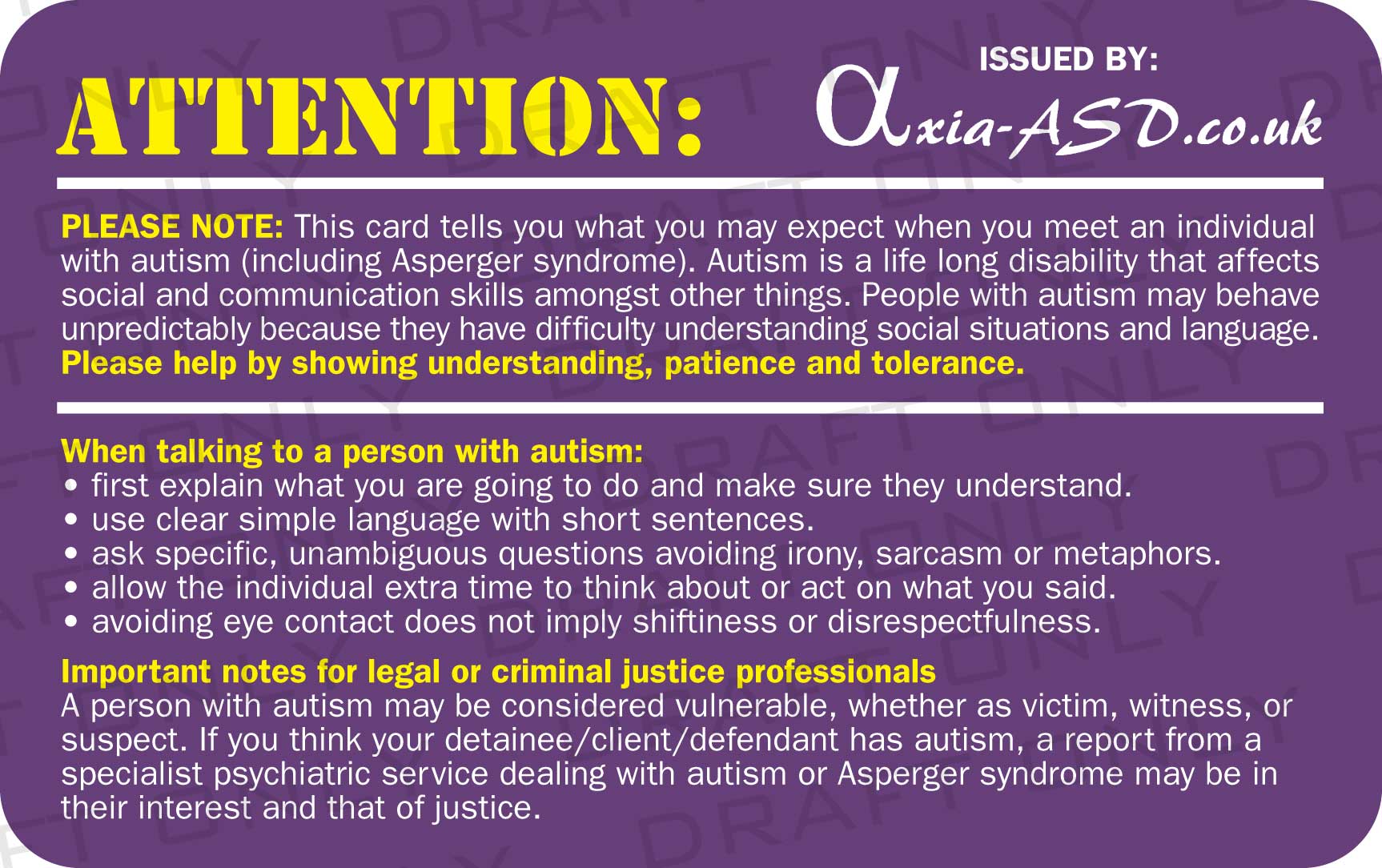
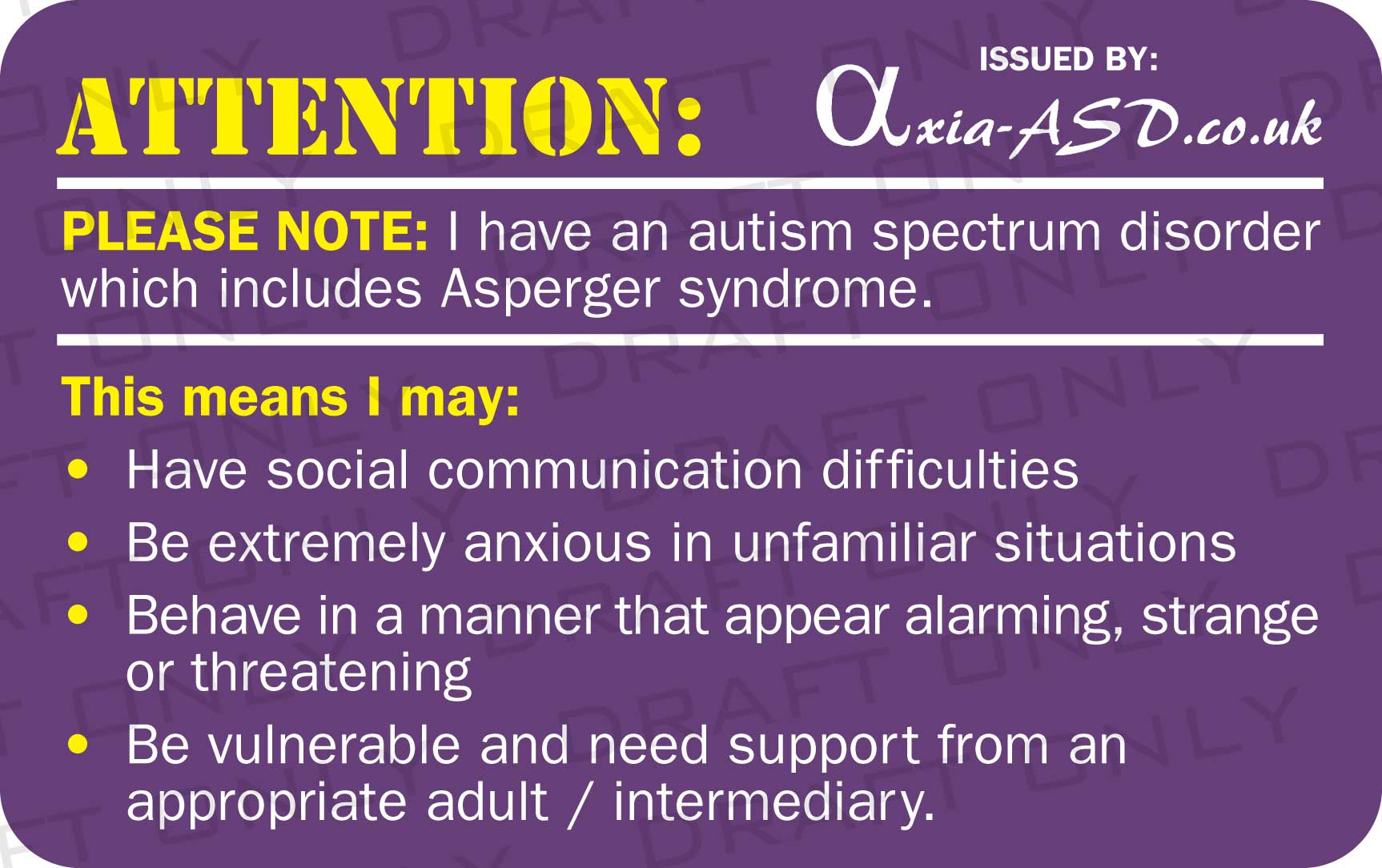
Please find below a few variations of the front and back I was playing with, both wording and aesthetics. Click on an image to enlarge it. The “raw text” of the reverse of the card is also in plain type below. I actually thought after the meeting that I’d not included one of my own personal problems of tactility, an “oversensitivity to touch” (which I imagine if threatened with restraint would disturb me greatly!).

And a simplified text similar to many others below
Reverse of Card Draft Text
PLEASE NOTE: This card tells you what you may expect when you meet an individual with autism (including Asperger syndrome). Autism is a life long disability that affects social and communication skills amongst other things. People with autism may behave unpredictably because they have difficulty understanding social situations and language.
Please help by showing understanding, patience and tolerance.
When talking to a person with autism:
• first explain what you are going to do and make sure they understand.
• use clear simple language with short sentences.
• ask specific, unambiguous questions avoiding irony, sarcasm or metaphors.
• allow the individual extra time to think about or act on what you said.
• avoiding eye contact does not imply shiftiness or disrespectfulness.
Important notes for legal or criminal justice professionals
A person with autism may be considered vulnerable, whether as victim, witness, or suspect. If you think your detainee/client/defendant has autism, a report from a specialist psychiatric service dealing with autism or Asperger syndrome may be in their interest and that of justice.
Version II
PLEASE NOTE: I have an autism spectrum disorder which includes Asperger syndrome.
This means I may:
• Have social communication difficulties
• Be extremely anxious in unfamiliar situations
• Behave in a manner that appear alarming, strange or threatening
• Be vulnerable and need support from an appropriate adult / intermediary.
Please do share your thoughts and comments below.




Leave a Reply