Author: Elliot

  • Elden Ring: Shadow of the Erdtree – Game Review

    Elden Ring: Shadow of the Erdtree – Game Review


    Elden Ring: Shadow of the Erdtree

    So… Elden Ring. As you would probably know by now, especially if you’re one of three people who watches our Professionally Unprofessional Podcast, I absolutely loved and still love Elden Ring. It still remains my favourite game of the decade and one of my favourite games of all time, so it’s only natural for me to want more of it. DLC is a commonality in most FromSoftware Soulslikes (sorry Sekiro), and is often the best part of the game, so obviously we were eager to see what they were cooking. Cut to February of 2023, when FromSoftware announced that we were getting DLC for the latest Soulsborne entree, titled Shadow of the Erdtree, only for us to wait almost an entire year to get a trailer and the release date of 21st June 2024. This was very highly anticipated and became one of the biggest talking points of the year. So, was the wait worth it and how does it hold up with what we got prior?

    Now, this review is going to be a bit different to normal. Despite having written these reviews for nearly 4 years now (not that you would believe it with the lack of quality), I’ve never written a review for DLC. So instead of my usual structure, I’m going to more just be divulging my general thoughts on what we’ve got: What new additions we have, how everything stacks up to the base game, and basically just a bunch of unstructured ramblings. Also, spoiler warning! I will be refraining from talking about anything major in the DLC, I may on occasion mention a boss’ name or something like that but nothing too serious, but when appropriate, I will not be holding back when talking about anything from the base game. So, if you’re for some reason reading the review on additional content for a game you haven’t played yet, you have been warned. 

    How to access the DLC

    Now Soulsborne games have you access their DLC in a variety of different ways. In Dark Souls 3 you just have to talk to a new NPC found by a bonfire you’ll have to go to anyway, in Bloodborne you need to find a specific Amygdala who will transport you to the Hunters Nightmare, really the toughest was the original Dark Souls which requires you to kill a hydra enemy and collect a couple of items in the late game. Elden Ring, in my opinion, has beaten them all in difficulty. 

    To access the Shadow of the Erdtree, you need to defeat two specific bosses. The first is Starscourge Radahn, which isn’t that bad, not only is he one of the best bosses in the base game, you’ll likely find yourself fighting him anyway, so I’m perfectly fine with it. The second, on the other hand, is Mohg, Lord of Blood, and this is where things get tough. Mohg is arguably one of the toughest bosses in the entire game, found at the end of arguably one of the toughest areas in the entire game. Now he’s not Malenia levels of tough, hell I would probably say I had more trouble fighting Maliketh, but he’s still far from an easy fight. In fact, when the DLC was about to be released about a third of Elden Ring players had actually managed to defeat him – even at time of writing only 37.1% of PlayStation 5 players have completed the first hurdle of the DLC. And trust me, this is a very difficult requirement, however for what’s to come, this challenge is going to feel easy by comparison. 

    The Realm of Shadow

    During the build up to the DLC, they said that the Realm of Shadow was going to be about the same size as Limgrave… this was a lie. The map for this DLC is massive, obviously not as big as the Lands Between but it can still dwarf the maps of other open world games. In fact, as Reddit user Gilliam Yaeger proves, if you cover the giant section of water in the Land Between’s map with the Realm of Shadows, not only will it fill that section up, it’ll even cover a large portion of Limgrave, Caelid and Atlus Plateau. That’s not even mentioning all the additional layers to the world, of course there are underground labyrinths and caves for you to explore, as well as the multiple dungeons that you’ll have to traverse and fight your way through.

    There are five main sections you’ll find yourself exploring, mostly separated by the map fragments you’ll have to gather. I found getting to these sections to be somewhat of a challenge, either I just wasn’t going down what I thought was the right path, or the path I was looking for was quite obscure. I found three of the five map fragments after a good while of exploring, though I will admit I did look up a guide to help find the last two. Once you find the fragments and reach the newer areas however, figuring out where to go was surprisingly easy. I would just take one look at the map, find a section that I haven’t explored or that is very devoid of Sites of Grace and head over that way. Even when I was lost, I didn’t mind, just like in the Lands Between, going in the wrong direction will lead you somewhere, and I found myself enjoying it all the while. 

    Just like in the base game, there were numerous moments and areas that just put me in awe over how good they looked. From exiting the cave at the start and witnessing the Scadutree off in the distance, all the way up to entering the final boss’ arena for the first time, the beauty of this dark realm is jaw dropping and I expect a lot of players to take copious amounts of screenshots.

    There are various Legacy Dungeons for you to explore as well. These will be pretty easy to find as they will take up a good portion of your map (I mean, honestly, you’ll just be able to see them in the distance often enough). Some of these are very much required as they contain bosses that really need a bonking on the head, while others you can easily skip… though you shouldn’t. These will contain not only unique enemies that you won’t encounter in the field, but also may have a number of powerful talismans or weapons that can be of great use or even fully replace the one you’re currently carrying. Of course, most of them will also cap off your time there with a unique boss fight, which we’ll get to later. 

    Weapons and Secrets

    There are a lot of unique weapons and equipment that you can find in this DLC, not only are there new additions to currently existing types but there are even 6 new weapon variants such as Light Greatswords or Great Katanas or Perfume Bottles. These new weapon types have vastly different and even more stylish move sets to what you’re used to, just swinging them will make you want to create a new build just to test them out. Of course there are new Ashes of War as well, some can be found while others are exclusive to certain weapons, and these are some of the flashiest and most fun to execute. This especially goes for boss weapons, whose skills are copies of their original owners’ most badass attacks; there is nothing more satisfying than being able to perform attacks that kicked your ass mere minutes ago. 

    One of the most talked about additions since the DLC first came out is the Scadutree fragments. These things can be found all over the Realm of Shadow and are a great help if you’re struggling. Collecting these and consuming them at a Site of Grace will give you a small damage boost as well as a defence increase. Additionally, you also consume Revered Spirit Ash, which will increase the defence of Torrent and your Spirit Ashes. These only work within the Realm of Shadow and will become ineffective in the Lands Between, so don’t think you can collect a few of these and think you’ll do a better job against Malenia or Placidusax or any other base game boss that’s giving you trouble. You could argue that these are just new collectibles to artificially increase difficulty, but I quite like these. In my eyes these are the DLCs version of the Golden Seeds, and can also be a new player challenge; Can you beat the DLC without collecting any of these?

    There are of course hidden pathways to lead new locations on and even off map. Sometimes these places aren’t too tough to find, requiring nothing more than jumping down a hole or something along those lines, but for others you’ll need to put in a bit more work. There are some that will require you completing a series of tasks or finding a certain gesture to be able to reveal the path forward. They can be work, but they’re never not worth it. A lot of these new areas are a delight to discover and wander through and can even lead to new boss fights and new equipment. 

    New Bosses and Enemies

    Finally, let’s talk about what new foes you’ll be encountering. For starters, something I was not expecting, there aren’t that many repeats from the main game. Obviously, there are some, I wasn’t expecting an entire new cast to taste my giant blade, but the number of new ones I was encountering consistently was really cool. They can really surprise you as well, I’ve lost count of the number of times I was expecting one thing from the enemies only to get something else, like how the fire spells from some of Messmer’s knights have a slight delay to being fired at you, or what different elemental attacks the Horned Knights are able to use. There are a couple that are purely terrifying, I don’t get scared of Soulslike enemies very often, but this one has some very menacing foes, obviously we’ve all seen the Furnace Golems, but I’d say the Ageing Untouchable are probably the ones that filled me with the most dread. 

    Now I’m really holding myself back when it comes to talking about the bosses. I’m desperate to go into detail over each one of them, to gush over their hard to manage combos, how much they changed things up in their second phases, and the number of attacks that just made my jaw drop and leave me laughing in absolute glee as I respawn at the Site of Grace, but I really want you to experience that for yourself, so I won’t ruin it for you. Obviously, there are a couple of duds, ones that are a bit boring or just feel like a bit of a slog at times, but when these bosses get good, they are seriously fun. There are a couple of repeats that you’ll find in the Lands Between, but they still manage to find ways to keep these bosses fresh, from just having a different aesthetic to including brand new attacks. These are some of the toughest bosses I have ever fought in a Soulslike – yes, I’d even say a couple of them surpass Malenia in challenge – but, holy hell, they are some of the most thrilling, soul gripping, heart-pounding boss fights I’ve ever fought against. These alone make the DLC worth its price and guarantee I’ll be coming back here in every playthrough.

    Conclusion

    FromSoftwares’ DLC always manages to surpass the base game (well okay not always, some of Dark Souls 2’s are a bit rough), and I can happily say they’ve bloody done it again. I’ve spent at least 40 hours in the DLC and even now I feel the itch to return to that shadow filled land. If you own Elden Ring, I beg you to get this. This is easily FromSoftwares’ best DLC, it’s the absolute peak of any Soulslike, and it will make you addicted to Elden Ring all over again. 

    9.9/10

    Elliot Chapman
    Anime Amigo and Nerd Consultant

    Share This Post:
    Facebooktwitterlinkedinmail
  • Stellar Blade – Game Review

    Stellar Blade – Game Review


    Stellar Blade

    (available on PlayStation 5 only)

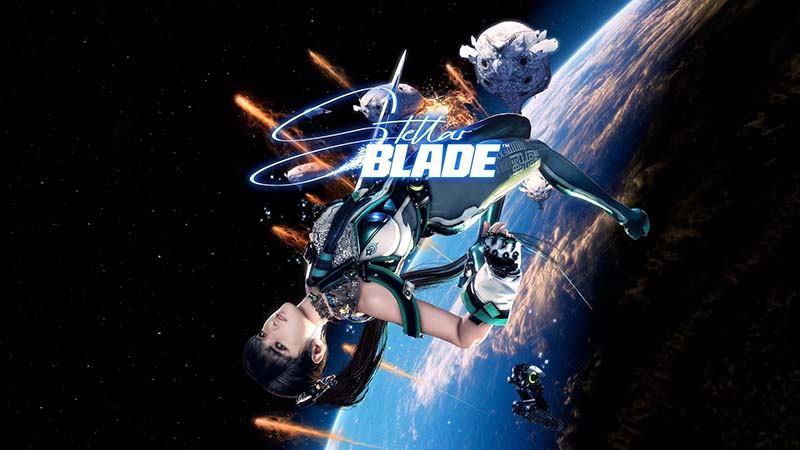
    I don’t know why but it really felt like we were waiting for Stellar Blade for way longer than we actually were. The game was first announced during a PlayStation Showcase in September 2021 where it carried the title Project EVE, getting renamed to Stellar Blade the next year. The game was originally meant to come out in 2023, though ended up having to be delayed into the next year. This is a pretty big deal for the developer Shift Up, as this is the first major console game they’ve ever developed; their previous works include two mobile games and a dating sim based on the South Korean web novel The Reason Why Raeliana Ended up at the Duke’s Mansion. So, we ask the question, how did their first attempt at a major AAA game go? Stellar Blade was released on 24th April 2024 as a PlayStation 5 exclusive. 

    Story

    A war between humanity and a mysterious race called the Naytiba has ravaged Earth, a war in which humanity is the losing side, either evacuating the planet or having fled to the city of Xion, the last bastion of the dying race. The 7th Airborne Squad, in which your character Eve is a member, and is sent to Earth by the Colony to aid in the fight against the Naytiba. Immediately after landing disaster strikes, the squad ends up decimated with only Eve and her friend Tachy surviving the initial onslaught, though the latter also ends up falling in battle after the duo are attacked by an Alpha Naytiba, with Eve only surviving because a scavenger named Adam rescues her from impending doom. After the rescue the two make a deal, Eve helps Adam to find a Hyper Cell to give power to Xion and he will lead her to an Alpha Naytiba, whose cores are essential to reaching and killing their Elder. The two of them, along with a member of the 5th Airborne Squadron named Lily, set off to bring hope back to humanity and to erase the Naytiba for one and for all. 

    As you can tell, this is very generic “strange creatures are killing mankind and an organisation is tasked with erasing them” kind of story, similar to what you’d get in a number of games like the previously reviewed Scarlet Nexus along with countless anime, and while this is one of the better told versions of said story, I’d probably say it’s just good at best. The game does a pretty good job at world building and the plot is told very well. There are a couple of twists (which is standard for these kinds of stories), which are a bit mixed, most of them were quite good, catching me off guard and, while not built up, didn’t conflict with the overall story, though there was one or two that, while not offensively bad, still left me thinking “Wait… seriously? That’s where we’re going with this?”. 

    Presentation

    This game looks really good. Character models and environments are as crisp as can be and are filled with detail. The world really looks like it’s been through a rough time, being filled with scrap and trash, even the more pristine locations look on the verge of collapse, having evidence of ruin and destruction everywhere. My one problem with the locations is that for most of the game there’s a heavy lack of variety. Most open locations are just some form of desert, nothing but sand for as far as the eye can see, meanwhile the most linear segments are things like underground tunnels or abandoned human facilities. Obviously, they’re not all clones of one another, and this is more of a nitpick than anything else, but it does start to feel quite samey after a while. 

    Now character designs on the other hand I absolutely love. Eve’s design was heavily based on South Korean model Shin Jae-eun, though her face is entirely original. The designers especially put emphasis on the… allure of Eve, putting her in the same pantheon of sexy action game protagonists as Bayonetta or 2B from Nier Automata, and yeah, they did a good job making her as attractive as they could (don’t judge me okay, I can say that a video game character looks good without seeming like a creep… right?). It’s not just her though, nor is it the other two in her trio, every named character that you’ll be interacting with regularly all look unique to one another and goddamn did the designers do a good job with them. I’m especially going to give praise to whoever designed the Naytibas. These creatures look super menacing, incredibly distinct from one another while managing to look like they’re all the same species, and, just simply, metal as hell. 

    The voice acting is good, but not amazing. I’m absolutely not going to say that these actors are giving bland or monotonous performances, as it does certainly sound like they are trying, but I do have the feeling that they could do a little better. Again though, not bad at all. 

    I’m going to get right into it, I love this game’s music. The soundtrack consists mostly of heavy techno and Devil May Cry style metal, and some songs sound like they were taken straight out of one of the Nier games, with ambient sounds accompanied by soft piano. There are a surprising number of songs with vocals, I swear most songs have some form of singing in them. A lot of these songs really are earworms, I’ve had tracks like the one for Eidos 7 and a few of the boss songs stuck in my head a couple of times. This is honestly one of my favourite OSTs so far this year, even if you’re not interested in this game (I question why you’re here if you aren’t), I’d highly suggest at least giving the music a listen. 

    World Design

    Stellar Blade’s world is made up of a couple of open areas mixed with more linear dungeons. There are only two open sections in this game, and you’ll likely be returning to them often if you’re completing side quests. These areas are surprisingly big, if you don’t have any waypoints activated it could take you a good while to get from one map point to another. Luckily however, these maps are fairly easy to navigate, there may be a couple of times where you try to reach a quest marker only to find it up a unscalable cliff, causing you to have to find another route, but those occurrences will likely only really happen in the early game and will likely be avoided the more you learn about the map. 

    Most of the sections you’ll be exploring are very linear. These will often be places where people would have congregated but are now abandoned, like ruined cities or underground facilities and labs. I say these are linear but that’s more in the sense that there is one path to continue forward, there are not only a number of branching paths and extra rooms to go through, but there are also a number of smaller open sections, often having you reactivate power or find some form of key to continue forward. Of course, these paths and open areas are the perfect places to hide collectables and extra upgrade materials, a lot of these are very well hidden as well so thorough searches are recommended. 

    Found spread throughout each area are the camps. Each of these will have a few facilities that you can use when you rest up; each will have a vending machine so you can stock up on supplies, you can unlock new skills with the skill points you’ve accumulated, and there’s a deck chair that you can rest on to fully heal yourself and refill all your healing equipment… okay yes this is just another version of the bonfire from Dark Souls. Though, on occasion you will run into a camp that has other facilities that you can use, mostly a Repair Console that you can use to upgrade your weapon and buffs and can create new exosuits, and there’s a phonebooth that can be used to wrap to another camp or back to Xion if you want. 

    Speaking of Xion, this is the general hub area that Eve will return to whenever she completes a mission. Here is where you’ll find the majority of side quests, and where all the non-essential characters will be at all times. Of course, there are a number of facilities that you can access and can only be found here, mostly shops for you to buy unique items, some really useful and others to help world build, though there is also the hair salon for if you get tired of Eve’s current look. Some of these places will require unique currency to purchase from them so keep that in mind. 

    Combat

    Stellar Blade is a hack n’ slash with multiple soulsborne elements mixed into it. Eve plays a lot like she would in a Spectacle Fighter like Bayonetta or Devil May Cry, where you lace together light and heavy attacks to make a large collection of different combos. Though the difference is that there’s no point accumulation nor do you get a rank at the end of the mission, so as far as I’m aware the different combos are more for variety and specific situations rather than anything else. Personally, I found myself doing different combos seemingly at random, I never really thought about what attack pattern I wanted to use, instead going into a strange autopilot, and it worked fine enough. The different combos don’t serve as much of a purpose as they do in those games, but that is absolutely not a complaint; executing combos was still super satisfying and served to make the combat more engaging. They’re super easy to memorise as well, and you’ll find yourself learning them instantly through simple experimentation. 

    As said, this game takes heavy inspiration from soulslikes, meaning that you attacking the enemy isn’t even half of what a battle entails. A large chunk of it will of course be you avoiding enemy attacks and combos. One big upside that a lot of people will appreciate is the lack of stamina, so you won’t have to balance attacking with dodging as much, now you can attack and dodge to your heart’s content (so long as you don’t get hit too much). You’ve seen this in a lot of the games I’ve been reviewing lately no doubt, and  it’s no different here; this game is yet another that takes inspiration from Sekiro: Shadows Die Twice, where if you block just as your opponent’s attack is about to land, you can deflect their attack if they’re at the end of their combo. Actually, Stellar Blade does this slightly different compared to other Sekiro copiers, you’ll notice a series of squares around the enemy’s health bar, these act as their balance, when you parry, you’ll take away one of those squares, completely reduce their balance and you can perform an attack that will either kill the opponent outright or at least deal some devastating damage. It’s not just parrying either, if you dodge at the perfect time you’ll perform a perfect dodge, what do you get for doing that? We’ll get to that in a bit. 

    Both you and your opponents have a shield metre. When either of you are hit, you’ll notice said metre will deplete, once fully depleted you’ll end up taking more damage until it starts filling up again. Though when your opponent’s shield is reduced to nothing, they will stagger for a second, giving you a chance to get some quick damage in. Opponents’ and bosses’ shields won’t refill once depleted, at least unless they have a second phase, in which case they will be fully restored. Personally, I don’t really see the point of the shields, it’s not like there’s a specific technique or skill to reduce them (well there are ones that will reduce them faster but…) you just have to keep wailing attacks, you’re guaranteed to destroy your adversary’s shield in every match.

    You have two types of skills that can be used, Beta and Burst. You have four of each and each is incredibly useful, some are better used in certain encounters or situations but are very effective in just about any. From power AoE attacks, hard hitting moves that will damage your opponent’s balance, an attack that can also work as a ranged, a skill that temporarily increases your combo speed, etc. Both skill types have different bars that need to be filled to use them and each are done so via different means; the Beta metre is filled by simply attacking and parrying your opponents, meanwhile Burst requires you to execute perfect dodges (told you we’d get back to this). These skills are super fun, I found myself using them constantly during tougher encounters because of how powerful they can be. Though they’re also not overpowered, meaning that they down hamper the difficulty of this game. 

    You’re not the only one with special attacks as well. A large number of enemies are also able to enact powerful attacks that you’ll have to approach differently. You’ll know when these attacks are about to be performed by a ring surrounding your opponent whilst they’re charging up. These attacks cannot simply be blocked or parried, and you will be forced to dodge. Depending on the colour of the ring, you’ll have to dodge in a very specific direction and your timing has to be very precise, otherwise you’re really going to suffer. These attacks really make these fights more fun; you really have to be prepared for these attacks and it ensures that you won’t be relying too much on the parry system. 

    Now enough with the swordplay, let’s talk about guns. Your friend Adam has a drone that he uses to follow Eve and guide her along. Part way through the game, Lily transforms the drone into a turret that Eve can attach to her arm. This gun fires a variety of bullets, from fully automatic slug shots to a series of missiles, and even a damn energy cannon. Enemies drop bullets all the time and chests will often contain an abundance of them so unless you’re really going gung-ho or are just a really bad shot, you’re not at a massive risk of running out. There are a couple of sections where Eve is unable to draw her sword, meaning that you’re relying exclusively on your gun. Though aside from these sections, you likely won’t find yourself using this turret very often. Even with the multiple bullet types and the upgrades you can get as you play, the gun doesn’t deal an insane amount of damage, the only reason you’ll really deal a lot at times is by finding something on the enemies that explodes. It’s fun to use at times, but not insanely useful. 

    One thing that surprised me is the amount of different healing items you can gather. Of course, you have one main healing source that replenishes every time you rest at a camp, with the rest you have to buy from the vending machines. There’s even a revive pack that brings you back to life if you die, though you can only use it once per death as you’ll be sent straight to the last camp should a second death occur, and you can only buy a certain amount of these at each vending machine, ensuring it’s not insanely overpowered. If you’re worried that you’ll be unkillable because you could probably just by like fifty of a certain healing source, don’t worry, you can only carry a certain amount of each healing item with you; you can buy more than you can carry but they’ll just go to storage until your next camp visit. 

    Just quickly, you also have a number of grenades that will damage or at the very least hinder an opponent, though in my experience, these really aren’t that useful. For starters you don’t throw them, you just drop them, and their effect happens around you – unless it’s one of the mines – greatly limiting the usage of them, and even when they do hit the enemy the effect is minimal. Honestly there’s really not a lot of point in using them. 

    Bosses

    I just have to mention the bosses quickly. The bosses are exactly what I’d expect from this game, insanely difficult and an absolute joy to fight. Obviously, there are a couple of duds here and there, but when these bosses are good, holy hell they are amazing. They have much more complex move sets than your average enemy that will take some time to master, though once you’re done with them, you’ll know when to block, when to dodge, and what combo will work best. These bosses are the highlight of this game for me, and I rarely found myself getting angry from the constant dying just because of how much fun they are. 

    Side Content and Collectibles

    As mentioned, the citizens of Xion and even some people out in the world will ask Eve to help them with whatever quest they need her to do. These quests will often just involve you hunting down something for them, whether it’s a precious item that they’ve lost or an ally that turns up dead (trust me, happens every time); sometimes these will even lead to a fairly rough encounter or even a full-on mini boss. Some of these are just random nobodies who you won’t interact with again, while others are regular faces that Eve will interact with every now and again. On top of the people who will ask you directly for assistance, you’ll find a number of requests from the bulletin boards. Here people will submit smaller and often easier requests, for a much meagre reward. These side quests can get monotonous at times and can take a while for you to figure out where to go to find what’s being asked, but luckily, they won’t take up too much of your time, and can even lead you to sections of that map you likely wouldn’t have explored otherwise. 

    One of the things you’ll find pretty often are human corpses. Some of these will just be there as a part of the background but others will be holding something that could be of value. Most will have documents that will help to build up more of the world and history, or just their last memoirs, some will have items and material that can be of help, but the most valuable ones will be carrying cores that will increase your health and Beta metre if you collect three of them – these ones are especially tough to find, so be observant. 

    One thing you’ll be getting a lot of is clothing. There are a total of 30 different outfits for Eve to try on, some are cute and cosy, some are ridiculous, and some are downright scandalous. You can gather these in a variety of ways, some you can just buy or simply unlock as you play through the story, some you’ll have to find yourself, others you can get by completing quests. These outfits don’t serve any purpose outside of cosmetics, you don’t get any buffs or benefits from trying them on, and honestly, I don’t mind that. This is the kind of game where you’ll want to see Eve dressed up however you want, and things like stats increases will get in the way of having fun playing dress up. 

    Another big collectible, cans, yes you heard me cans, mostly drink cans. These are spread throughout each location and will take a while, and very likely a guide, to find. What I wasn’t expecting was that you’d be rewarded for gathering these up. The more you gather the more benefits you’ll get. It’s only an increase to the number of healing items and grenades you can carry with you, but still, it’s a pretty good reward none the less. 

    Instakills

    There’s only one flaw to this game that I can really think of, but it’s one that I still feel needs addressing. There are way too many instances where you can get killed instantly and they can be very difficult to avoid. I will spoil for you now, there are bosses that have instakill attacks, however they don’t appear until the very late game, and they are very easy to deal with. I’m talking about environmental ones, of which there is an abundance. Of course you get killed instantly if you fall from a great height or into a bottomless pit, there is quicksand in one section that is very difficult to see and by the time I notice I’m sinking it’s way too late, there are even turrets in certain story missions that can and will one shot you (yes there are plenty of turrets in this game, no not all of them instakill). It does get very annoying very fast, especially since these deaths can very easily happen by accident.

    “But Elliot, you dishevelled rat, you mentioned before that you have a revival pack that can revive you once per death, surely that would help!” you’re probably screaming into your PC/phone/smart fridge. Unfortunately, that doesn’t help, in fact that probably makes things worse. Why? The revival packs will only revive you if you die during combat. This choice completely baffles me, I kind of understand not having it revive you for the bottomless pits and quicksand, but when I’m falling onto a section I can still walk upon or just get shot by an instakill turret, I don’t see why I shouldn’t get the revive. 

    Stellar Blade was a game that I was really looking forward to, you already know that I’m a sucker for hard as nails action games, and this game truly delivered. I had an absolute blast with this game, the combat couldn’t have been better, the bosses were exquisite, and I cannot state enough how much fun I had with this game. If you’re a fan of hack n’ slash games, then I urge you to give this game a go. It’s probably not the best game I’ve played all year, but it is easily one of the most exhilarating. 

    9.3/10

    Elliot Chapman
    Anime Amigo and Nerd Consultant

    Share This Post:
    Facebooktwitterlinkedinmail
  • Senua’s Saga: Hellblade 2 – Game Review

    Senua’s Saga: Hellblade 2 – Game Review


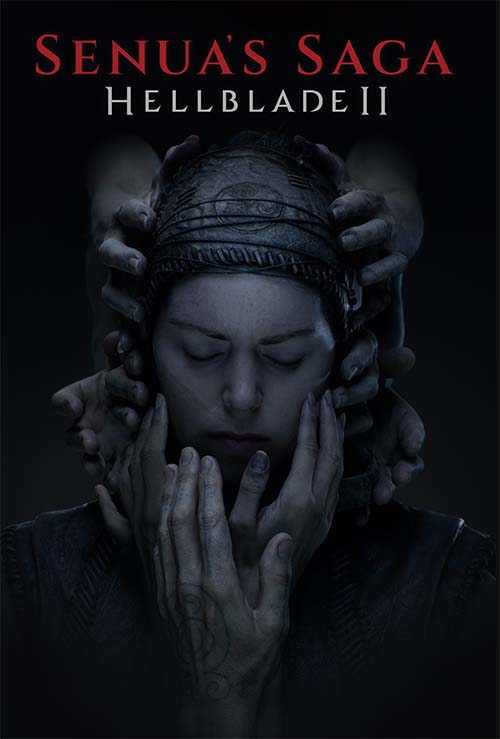
    Senua’s Saga: Hellblade II

    (available for Xbox Series X & S and PC. Xbox Series X version used for Calvin’s review; PC version used for Elliot’s review)

    So Hellblade 2 has been in development for a long time. I think that’s because it got a very early reveal; the game was first revealed at the game awards all the way back in 2019 as a big push for Xbox’s new console, which had just received its name announcement. Early on, it was being sold as the console for Halo Infinite and Hellblade 2. Thing is though, Ninja Theory clearly needed a lot of time to make this game and if anything, that trailer feels more like a hiring pitch.

    Granted, I will stress that one thing that lengthened production was the change to Unreal Engine 5, and I believe that was well worth it.

    If you haven’t played Hellblade 1, the game does start with a decent recap of that game, but I would still recommend actually playing the first Hellblade, Senua’s Sacrifice. If you have an Xbox, it is part of your Game Pass subscription, along with this game, and it’s not that long of an experience, both of these games last about 7 hours.

    I knew that my co-reviewer Elliot was going to play the PC version of this game, so I took the Xbox version. I will say that the experiences do have one major difference, so depending on which version is feasible for you to purchase or download, you should choose that particular review. The big difference is the framerate. Xbox Series X and S both have the game at a locked 30FPS, and PCs can get the game up to 60FPS. The developers have stated that the 30FPS on consoles is due to wanting to make the game more cinematic, however based on things that I’ve heard, I have doubts about the validity of that… Based on statements made from podcasts like from ‘Modern Vintage Gamer’, it’s probably because the developers can’t currently get the 60FPS on consoles, or that it was outright decided on concept that 30FPS was going to be what they stick with.

    I will say that on Xbox, there weren’t any framerate drops. But if you are a stickler for framerate and have both options available to you, the PC version is probably better for you. Though I personally think that this game runs pretty decently on Xbox because the game was designed around the 30FPS lock.

    The game does take place immediately after the events of the first Hellblade, so I’ll be vague when I discuss the narrative, so I don’t give away any spoilers for that one. But needless to say, this game is basically a rehash of the first one. You’re pretty much doing the exact same thing as the first one, where you’re going from start to finish with the occasional combat and puzzles. Without going into too much detail, this game focuses on Senua being taken to what is now modern-day Iceland and fighting to deal with another set of obstacles based around Viking mythology.

    PROS

    • Visuals

    Hellblade 2’s shift to the Unreal Engine 5 was the best decision that the development team could have made. This game is visually stunning. I have to say that photorealistic graphics don’t really impress me anymore, since I feel like they often lack an art style, but Hellblade 2 really has impressed me with how good it looks. By sticking to a linear narrative game, Ninja Theory has really designed an absolutely exquisite experience.

    Some particular standouts for me in this department was the sequence in the caves, which do an excellent job using darkness to their advantage. I won’t go into too much detail about it, since I think you should experience it for yourself, but the team did an excellent job.

    The character models also look excellent! They have done a brilliant job bringing the motion capture actors forward.

    • Narrative

    Hellblade 2 has one of the best narratives of the year so far, it’s a really good storyline. It takes the ending of Hellblade 1 and really does a decent job having Senua’s story continue in a way that doesn’t sacrifice the progression she had at the end of the first one. It’s basically about Senua taking the trials and tribulations that she had previously and can put them into something more constructive this time. It helps that we hear Senua’s inner voices again, which is why I highly recommend listening to this game with a headset, as it adds to the level of immersion.

    I’ve seen people complaining about the game length, since if you’re speedy enough you can complete this game in about 5 hours, but realistically it takes about 6-7 hours. I think that this was perfect, because if it had taken any longer, I think the narrative might have stumbled, especially considering that you are playing this game via chapters, and you never return to areas that you have completed- you just move on to the next.

    I did find the ending a bit vague in some areas, but how it delivers its overall message feels very apt with the current times.

    MIXED

    • Puzzles

    One criticism that has been launched against Hellblade 2 is the puzzles. They’re a lot more linear than before. There are a few puzzles that can be very tedious and don’t quite work. I do, however, want to stress that none of them are terrible. I think that the cave has some of the best puzzles in the game, and some of them take advantage of the extremely fast load time that the Xbox Series X can deliver.

    That being said, when they’re dead easy, they feel like minor obstacles. The puzzle methods definitely do repeat quite a bit, which is why they’re all in the mixed section.

    • Combat

    The combat is all completely one on one in this game, and I’ve heard some complaints about that- but personally, I think that it adds to the intensity of those combat situations, and I think that it leads to the gravitas of every move that Senua does. You’ve obviously got the focus mirror that essentially slows down your opponents, and of course, you’re going to be dealing with when to attack and when to parry. While I think the combat is intense, I think that this is when the framerate issue is really apparent, and it feels like these segments were aimed for the higher framerate. It made early combat a bit difficult to figure out, especially since it was a while since I played the first Hellblade.

    In my opinion, while the combat is fine, I think this might be the one place where the framerate lets it down.

    It’s also really hard to die in combat! I think I died only twice the entire time in the game via combat- this is definitely one where Ninja Theory wanted you to experience the story.

    CONS

    • Post-Game Features

    Because Hellblade 2 is so incredibly linear, they do try to add some replay value, such as alternate paths and new narrators for a second playthrough. The problem is, I’ve already experienced the story at this point, and the game is so linear that these aren’t a good enough incentive for post-game content. This is a game where I might actually prefer my reward for completion to be behind the scenes footage or unlockable artwork. If that ever comes about from something you can do post-game, well I didn’t experience it. I did my playthrough and was in no mood to redo it with another narrator, especially considering that Hellblade has very heavy topics- especially around inner turmoil and mental health, to such an extent that I couldn’t play this game for too long and had to take breaks for this one.

    I won’t bash the narrative, since it handles these subjects incredibly well, it’s just a personal thing! I just don’t feel that going back and playing the game through a different character’s perspective is a good reward.

    FINAL THOUGHTS

    Senua’s Saga Hellblade 2 is an excellent experience game. But I kind of feel like there are better games similar to this on the market. That being said, Hellblade 2 did all that it needed to- it’s an excellent sequel. I feel like a lot of reviews for this game centre on what it could have been rather than what it is and what it was meant to be. Personally, I think it was really good! But it also feels like it was a one-and-done game, I don’t think I’m ever going to revisit it. But I do hope that this does well so that Ninja Theory can make more games like this, maybe even a Hellblade 3.

    If you’ve seen this game on Steam and feel like this is too much for you in terms of price, I recommend reading Elliot’s version of this review, since he actually played the PC version. This was purely based on the Xbox version, but I would also say you might want to wait for a price drop! I personally think that the game is priced at the right amount, given what a visual spectacle it is.

    As an experience, it’s great. As a game, I think it’s got some shortcomings, but overall, it’s pretty damn good.

    FINAL SCORE: 8/10

    Calvin
    Director of Axia ASD Ltd.
    Self-proclaimed Nerd Consultant
    and Head of Axia’s Film Society.


    And now Elliot’s review

    2017 was a very good year for gaming, that year we saw the releases of heavy hitters like The Legend of Zelda: Breath of the Wild, Nier Automata, Persona 5, and many other GOAT level games. And of all those games, Hellblade: Senua’s Sacrifice was one of the most unique: a linear narrative driven game about the titular character descending into the Norse Underworld, Hell, to try and bring back a lost love, containing depictions of trauma, depression and grief told in a very unique way. The game became one of the hidden gems of that year, being applauded for how it represented mental health and its unique method of storytelling. It’s one of those games that you wouldn’t really expect a sequel for, and yet in 2019 we got the announcement of Senua’s Saga: Hellblade II, a continuation of Senua’s journey that I don’t think many people were expecting but was still welcome all the same. Senua’s Saga: Hellblade II was developed by Ninja Theory and released on 21st May 2024 for Xbox Series X/S and Windows. 

    Story

    The story starts off with Senua on a slave ship on its way to Iceland, having been willingly captured to try and free others who have been enslaved. The ship finds itself in a storm and is destroyed as a result, with Senua being washed ashore. She encounters a number of the slavers, slaying them one by one before she encounters and defeats the leader of this band of slavers, Thórgestr, who’s then taken prisoner and forced to lead our hero to the other slaves. While journeying, Senua finds and frees a man called Fargrímr, which causes the group of Draugar to summon the giant Illtauga, who tries to stop the two but luckily, they manage to escape. Believing that she may be a seer, Fargrímr instructs Senua to seek out the Hidden folk, believing that they hold the key to slaying the immortal giant. However, even though she managed to escape from Hell, it seems that Senua’s traumas are far from finished with her. 

    The story is definitely different from the first game, going for more of a chosen hero journey based within Norse mythology rather than a dive into one’s psyche. Not that I’m complaining, the story of this game is still very good, Senua is still a very compelling protagonist, refusing to give up, no matter how much she suffers, both mentally and physically. I will admit that I do prefer the first games’ story, I felt more attached to Senua struggling with mental turmoil and I found that her issues with trauma were better represented in that game, also I found that there were some story beats that I think could have been shown better. But as a whole this is still a very good narrative. 

    Presentation

    Simply put, this game is gorgeous. Senua’s Sacrifice was already one of the best-looking games of the previous generation, even compared to this generation it still looks fantastic, but this game is on another level. Every part of the character is meticulously detailed, the scars and imperfections on Senua’s flesh, the stitches in her clothing, the way the faces portray emotion, struggle and fury, every pixel is used to great effect, you could easily mistake the character models for being real people at times. This goes for the landscape as well, despite it being a very haunting game, the Icelandic landscapes are simply breathtaking, you can tell the developers spent a lot of time trying to capture the beauty of the mountains. And when things get dangerous, you better believe the environment perfectly matches it, bringing a miasma of threat and trepidation. This is one of the best-looking games of the generation, only rivalled in my opinion by Alan Wake II and Stray.

    Seeing how good this game looks, you would probably expect a couple of frame drops, well luckily this isn’t the case. While there was the occasional chop when loading a cinematic scene, the frame rate remained very consistent throughout. There was a bit of controversy with this game when it came to FPS. It was reported not too long before the game came out that the Xbox version would be locked at 30FPS while on PC it would go up to 60. I played the PC version, and I can confirm that, while the 60FPS is greatly appreciated, it’s not entirely necessary. The battles are pretty slow paced and there are few mechanics that really require perfect timing. So, while it will definitely be a downgrade when it comes to immersion with the Xbox version, you’re certainly not going to be at a disadvantage. 

    And then there’s the voice acting, which is magnificent. Melina Juergens as Senua gives one of the best performances of the entire year, you really hear the struggle and anguish in her voice, while also being able to sound menacing when she has to, how she has only done voice work for Senua I have no idea because she is amazing. Everyone else is also great, Chris O’Reilly as Thórgestr and Steven Hartly as the Shadow are probably my favourites (outside of Juergens). 

    Just like the last game, Senua is afflicted with the voices of Furies that speak within her mind and comment on her every action or decision. This is why it’s highly recommended that you play this game with headphones, when played out in the open it can be seen as a cool effect and part of Senuas’ psyche, but when headphones are in it becomes incredibly eerie. The voices can sound like they’re coming from inside your head at times, with each one only taking up one of your speakers, making it feel more disorientating and incredibly immersive. Our head Nerd Consultant said that he couldn’t play the game for more than a couple of hours because of how disorientating he found the furies, so you can tell how well it works. 

    Heilung, a folk band that specialise in haunting, ambient melodies based on “runic inscriptions”, was heavily involved with this games’ soundtrack. Anyone who has heard Heilung, I’m certain, would agree that their sound would fit a Nordic setting perfectly, and I’m happy to say that they are the perfect pick for this game. A number of songs are very haunting, with droning notes, both instrumental and vocal, that sound like they’ve come straight out of shows like Vikings and The Last Kingdom (can you tell I have a bit of a Viking obsession). And while battles aren’t common, the music used in them is very memorable. The songs are very menacing, still having long notes in the instruments, but also being accompanied by harsh drums and threatening chants, just listening to it makes you feel tense, actually fighting while it’s in the background has the potential to make the fight genuinely frightening at times. 

    Combat

    There’s not really that much to say about combat so let’s just get it out of the way. Combat has been mostly unchanged from Senua’s Sacrifice; you target only one opponent at a time and have to focus on dodging and blocking incoming attacks while figuring out when the best time for you to strike is. Combat is exclusively melee focused, with Senua having a faster but weaker combo, and a heavier attack string that’s much slower. The differences of these attack strings are minimal and, if you’re like me, the attack you’ll use will mostly depend on how you feel or what you think might be a bit more effective – using faster attacks while the enemy is winding up their own or using heavy when you parry one of their combos for example. If your enemy is a bit of a distance away, you can hold down the sprint button to charge towards them, potentially getting you an early victory in the battle, while also risking you running straight into a draugar’s axe. 

    Most of the enemy’s attacks can be blocked – and possibly even parried if you block just before the attack strikes, interrupting their combo and giving them less of an opportunity to block – though attempting to block them all isn’t recommended. Your opponents have multiple opportunities to break your stance, almost guaranteeing you getting hit. When the Draugars’ weapon starts glowing red, that’s the time to stop blocking and start dodging, as I said, you can still block these but just one hit from these can break your stance so keep an eye on that blade. Of course, there will be encounters when blocking is impossible, mostly against opponents that like to breath fire in your face, so don’t get too comfortable with trying to parry everything. 

    Just like the last game you have a focus ability. Focus slows down time for your opponent, letting you interrupt the enemy’s attack or bypassing their block and allowing you to pull off a series of blows that ensure their death. If you’re knocked down, you can activate your focus to immediately get yourself back up. This could have easily been very overpowering, but it does take a good while to build itself back up, meaning that you can’t abuse it in every fight and will have to think a bit more strategically before using it. 

    One thing that is somewhat disappointing is how easy the combat is in this game compared to Senua’s Sacrifice. It took until I was about halfway through the game to figure out why, and that is that you only fight one enemy at a time here. In the previous game, you had a number of encounters where you would fight multiple enemies at once, it was never overwhelming but considering the fact that you can only focus on one enemy at a time, it made the battles much more dangerous and stressful. With you only having to fight one enemy at a time, it makes the encounters much less arduous; instead of juggling multiple enemies at once, and trying to decide which ones are best to attack, you instead just have to time your attacks and dodges, which is really easy to do, thus lessening the tension and making each fight feel less dangerous. 

    Puzzles

    Just like last time this game is very focused on puzzles. These puzzles are still observation based, having you examine your surroundings to find the path forward. The main puzzle from the last game returns: a gate adorning a series of Nordic runes will prevent you from progressing and you must find objects in your immediate environment that must be focused on from the right perspective to make up the symbols’ shapes and move forward. These puzzles are much less common than they were last time, but they’re still very challenging and will require a lot of exploration before you’re even given a hint on what you need to focus on. 

    In fact, the most common puzzle in this game is of a new variant. It’s still observation focused but manages to be quite different. Floating in the air you’ll find a large silver bubble, or a series of bubble rings that make up one big one when looked at the right way, by focusing on these you’ll notice the environment around you change, platforms and rock formations will have shifted gravity, ones on the floor wrapping to the ceiling for example, or may just disappear altogether. These puzzles will require you to focus on these bubbles repeatedly, using their environment shifting properties to create a path forward or to reach the solution to other puzzles. These aren’t as challenging as the symbol puzzles but can still be quite head scratching at times, they can disorient you and make you question if you’re going the right way or possibly going in circles in the more complex variants, but in a good way I assure you. 

    Aside from those, there are a couple that only show up for one section and never again, such as having to carry a torch while navigating through water containing shadow creatures or having to stay in a spotlight to avoid detection from an army of enemies. These additions never outstay their welcome and are very enjoyable, they essentially add to the horror of this game and it’s quite effective at the right moments. 

    Linearity and Emptiness

    One complaint that I’ve heard said consistently is how linear the game is. There’s nothing really to explore or any branching paths for you to go down, in each area there’s only one direct path for you to walk. Personally, I don’t really see what the problem is, yes there were more slightly open areas in Senua’s Sacrifice, but that game in itself is very linear, so why people have an issue with this game but not that one, I have no idea. 

    What I do have a problem with is how barren the game can be at times. Now I’m not expecting every moment to be filled with battles and puzzles, that’s asking for way too much and it would get tiresome without the down time, but there are so many moments that are just filled with nothing. All you can really do in these moments is just walk down a path, listening to your allies debate and argue and hear your voices whispering doubts and assurances. I have no problem with spending time just walking through the Icelandic landscape, but these can last a bit too long. A few minutes is fine, but after ten you’re just wishing for a draugar attack. 

    While not as good as the first game in my opinion, I think that Senua’s Saga: Hellblade II is a very worthy continuation to the series. The usage of Norse mythology is expertly done, the puzzles are still a lot of fun, if a bit simple at times, and even though some people really don’t like the combat in these games, I really do and I think this games combat is very enjoyable. It’s up for debate if a game you can beat in 6 hours is worth the asking price, but in my opinion it absolutely is. 

    8.7/10

    Elliot Chapman
    Anime Amigo and Nerd Consultant

    Share This Post:
    Facebooktwitterlinkedinmail
  • Sand Land – Game Review

    Sand Land – Game Review


    Sand Land

    (available for PlayStation 4 & 5, Xbox Series X & S, and PC. PlayStation 5 version used for this review.)

    Akira Toriyama is a man who needs no introduction. From creating the legendary Dragon Ball series – which helped to popularise anime outside of Japan – to lending his artwork to renowned classics like the Dragon Quest franchise and Chrono Trigger, there is a reason why Toriyama is considered an icon in Japanese media. Though, of course, Dragon Ball isn’t the only manga series under his belt, as he also created a number of other franchises, starting with Dr Slump up until his newest short-lived Jaco the Galactic Patrolman. One of these creations is Sand Land, a single volume series that ran during the year 2000. This year seems to be really celebrating this somewhat obscure manga, as not only did we get a 13 episode anime, but it also got a video game adaptation, adapting the events of the manga and even containing a new arc that takes place after the original story, taking place in somewhere called Forest Land. Sand Land (the video game) came out on the 26th of April 2024 for PlayStation 4 & 5, Xbox Series X/S and Steam.

    Story

    The game takes place in the titular Sand Land, a land that, after years of natural disasters and war, has been reduced to a desert where water is scarce, after the stream that provided it has dried up. Now water can only be bought from the king for a ludicrous price. You take on the role of the demon prince Beelzebub, a mischievous fiend with a love for video games, comic books and pulling pranks on humans. One day, a sheriff named Rao, who like everyone else tires of the king’s greed, arrives at the demon village to recruit the demon’s help with finding a legendary spring that can be used as a new water supply. Beelzebub, excited for adventure and wanting to help his demon friends, agrees to join Rao on his mission to hunt down this spring, dragging his friend Thief along with him. Along the way they will encounter bounty hunters, monsters, and the king’s forces attempting to put an end to their journey. 

    The original story was a lot of fun, and I think this game adapts it very well. Of course, some events are abridged or just cut out, either for time as they wouldn’t adapt well to a video game, but the key events and revelations are still there and are all told as best as they can be. A big part of what made the original manga a lot of fun were the characters, and once again I think they’ve been adapted very well, the villains are just as hateful as ever, the heroes are just as likeable, and Beelzebub is such a fun character that they managed to nail incredibly well. 

    Presentation

    First off, this game looks great. The characters look like they were taken straight from the anime, they are just brimming with detail and personality, and are just as expressive as their anime counterparts, these are seriously some of the best anime models I’ve ever seen in a video game. There are also a number of new characters that don’t even show up in the anime, and they all contain the same level of Toriyama charm that everyone else does. The world as a whole looks really good as well, despite it all being sand and forest, but the developers still did a really good job at filling both lands with detail and colour, all enhanced by the games lighting, yeah you could argue that a lot of it is just sand but… the game’s called Sand Land what d’you expect. 

    Sadly, where the game starts to fall short is the voice acting; now I watched the anime in Japanese dub and played the game in English, and if you want my advice go with the Japanese dub. For the record, not every actor is bad, for starters I really like the villains, Shawn Smith as Supreme Commander Zeu and Seth Fuentes as Muniel do an excellent job in their roles for example, I also give compliments to Kira Buckland as Ann and Alan Adelberg as the King of Sand Land, but everyone else is just okay in my opinion. The one exception to this is Jonathan Lipow as Rao who doesn’t even sound like he’s trying, his performance is so bland and devoid of emotion that it sounds like he’s just reading the words off the script, genuinely one of the most emotionless performances I’ve seen in a while. The game’s soundtrack is fairly good, the overworld’s music really fits a desert setting, with a droning ambience accompanied by string instruments and bongos, it’s strangely soothing at times, almost the type of music you’d want to fall asleep to. Boss music is a little more action packed, it doesn’t go over the top but it still raises the tension a bit more than other songs in the game, boss themes almost remind me a bit of the ones you’d find in 3D Sonic the Hedgehog games, which really isn’t bad because those games always have good soundtracks (let’s be honest, that’s one of the only good things modern day 3D Sonic actually has. 

    Exploration

    Sand Land is an open-world game. Straight from the get-go, you have access to a large chunk of the world with only a few sections of it blocked off until a later point in the game. The world is very big and will take a while for you to get from one end to another, luckily, you’ll regularly find areas that you can fast travel to, like towns, campsites or water stations.  

    Towns and villages are what you’d expect, they are homes to a number of NPCs that will sell you items, such as materials for vehicles or resources required for healing and buffing, some will give you side quests that you can complete as you’re exploring. Not every settlement will contain every type of shop, and some might not contain any, luckily you have a main hub that contains every kind of shop, including some that you won’t have in any other town. 

    Found regularly throughout the world are grottos. Grottos are small caves that contain various materials for crafting and oftentimes chests, possibly acting as a home for someone that’s vacant when you find it (yep, we’re robbing people now, guess we are a demon after all). These are regularly guarded by enemies on the outside and will occasionally be hiding within the grottos. My one problem with these is that the game doesn’t tell us which ones we’ve pillaged and which ones we haven’t. I’ve lost count of the number of times I’ve found a grotto and killed its guardians only to find the place empty – while the materials will respawn, the chests don’t refill. I would have preferred it if we got some kind of indicator of what ones we’ve found previously, a tick next to the icon or something like that would suffice. 

    Also spread throughout the world are various Ruins. These basically act as mini dungeons, filled with enemies, chests and materials, these are also the only places you can find Ancient Coins, which can be given to a certain merchant for more unique goodies. Aside from that, there’s not really any point in exploring the ruins, they don’t even have an end, they just loop over and over, which is a missed opportunity in my opinion, I feel like they could have done a lot more with these. I imagine they could have been like the caves in Elden Ring, where you go through trials and encounters, gathering items and materials, concluding with a mini-boss and getting an award for beating them. As it is, I never found myself seeking these out, only really exploring them if I happened to pass them and wasn’t in a rush. 

    My big problem with exploration is how difficult it can be at times to go to certain areas. Side missions and main missions will give you an objective marker on where to go, but to get to some of them you’ll often need to go down very particular paths in order to reach them, and the game doesn’t always tell you how to get to those paths. This has led to me spending ages going down different routes just to try and find the right one to just get to the mission. And before you ask, no, the map is often not much help either. It would have been much better if the objective markers lead you to the path you have to go down instead of just the objective location, it would have saved so much time and would have been much less of a headache. 

    Combat and Vehicles

    There are two different types of combat in Sand Land, standard melee and vehicular. To start with melee, it’s mostly button mashing, you can press a button in between attacks for unique combo finishers, but you can get away with just mashing a single button. You also have a number of skills that you’ll unlock as you proceed through the game, from an AoE blast of dark energy to just chucking a rock at a group of enemies, and even something called Fury Mode which lets you deal insanely heavy damage for a limited time, sacrificing some movement speed to do so. Using these skills will require you to use some of your dark energy, which can be filled by attacking enemies and restoratives. This type of combat works but isn’t great, it can get a bit tedious after a while and fighting any opponent this way is super easy. Enemy attacks are often indicated via a red ring, so you always know when they’re attacking and are incredibly easy to dodge. Also, Fury Mode is seriously overpowered, it drains your darkness energy really slowly, can decimate regular opponents in only a couple of hits and staggers enemies with almost every attack. Seriously, I used this at the start of a story boss fight and the boss was dead before all my dark energy had drained. 

    As for vehicular combat, this is the combat type you’ll likely be using the most. There is a staggering amount of vehicle types, and each one works differently in both combat and exploration. Each vehicle will work better depending on the situation, enemy, and terrain. For example, you’re going to want to use the Battle Tank over the Motorbike when fighting off a group of larger enemies, meanwhile if you’re just driving through the overworld, the Motorbike is much preferable due to its speed. You can carry up to five vehicles at once, with you needing to go back to a camp or base to swap for another one.

    Each vehicle comes with two weapons, a main weapon, the type of which depends entirely on the vehicle, and a machine gun. Each vehicle also has a boost metre that also works differently depending on what you’re riding; vehicles that have wheels will have an increase in speed – unlimited if you’re just exploring the world and limited when in a fight – while hover vehicles will lift you into the air for a short time. Once the metre is fully depleted, you’ll have to wait a few seconds for it to recharge. All weapons can be swapped out for better ones you can either craft or are dropped by enemies. 

    The way you unlock these varies from each vehicle, some can just be unlocked as you play the game, others will require you to complete a side quest or buy the blueprints from a merchant. Either way it doesn’t matter how you unlock the vehicle; they will all need to be crafted at Ann’s workshop back at your main base. To make these you will need one of each part, a main weapon, a sub weapon, an engine and suspension, which you can get crafting as soon as you find the blueprints so you won’t need to start hunting for them (though you might need to for the parts). Vehicular combat is quite fun, it can get boring at times, but not too often, but like melee combat, it is somewhat easy, which can make it feel even more of a drag at times. 

    Side Content

    Aside from side quests, there are other types of side content for you to take part in. One you’ll likely spend a decent amount of time on are Bounties. Bounties are what you’d expect them to be, you’re required to hunt down certain individuals, defeat them and collect the rewards for doing so. These opponents are often surrounded by underlings, so you’ll have to fight them as well, these are also the missions that gave me the most headaches when it came to finding them. The rewards you get depends entirely on the bounty, some will just get you some money and maybe a weapon, while others can go as far as awarding you a blueprint for a new vehicle. 

    Another side mission is the Races. These are pretty understandable, you’ll go through a course, either on your own or against other racers, and drive to the end as fast as you can. The faster you are, the better a reward you’ll get. I’ll be honest, I was expecting these to be more fun, you don’t go very fast so there’s not much of a thrill when rushing through the courses, honestly, it’s kind of bland. 

    The final one that’s noteworthy are the Battle Arenas. Once again, pretty self-explanatory, you enter the arena, either using melee or vehicular combat, and fight a number of opponents and get rewarded for winning. You’ll even have the option to fight against bosses you’ve previously fought here. I don’t really know how else I can explain it, if you enjoy the combat then you’ll enjoy this, if not then it’s best skipped. 

    One More Flaw

    I’ve already mentioned a few problems that I have with this game but there’s one more I have to mention, one that annoyed me to no end throughout the entire game, repeated voice lines. Now this is nothing new, normally in combat you’ll have allies and enemies repeat the same lines over and over, either when doing an attack or at random, it’s annoying but it’s manageable and can even lead to jokes among groups (for those curious, ours is “You know what they say, the more the merrier”). This game, however, does it worse by having characters not only repeat voice lines but entire conversations over and over again while exploring. Seriously, I’ve heard Beelzebub and Rao have back and forth conversations in the late game that I heard within the first hour. It gets very annoying very quickly and it would have been much preferred if they just had the conversation once and left it at that.

    At the end of it all, I feel conflicted with this game. On one hand, I can’t deny that I had fun with it, the vehicular combat is enjoyable, the game looks amazing, and the story is still really good, but there are a number of factors that do hinder it a fair bit. I was prepared to give this game a better rating at first, but the more I played it the more the flaws stood out and they really started to annoy me the further in I went. I do think that this game is consistently fun enough for me to recommend it, but if you just want to experience the story, I’d say just watch the anime. I had very high hopes for this game, and leaving it, I can’t help but be somewhat disappointed. 

    RIP Akira Toriyama, 5th April 1955 – 1st March 2024

    7.1/10

    Elliot Chapman
    Anime Amigo and Nerd Consultant

    Share This Post:
    Facebooktwitterlinkedinmail
  • Rise Of The Ronin – Game Review

    Rise Of The Ronin – Game Review


    Rise Of The Ronin 

    (available on PlayStation 5 only)

    Feudal Japan has always been a pretty popular setting, not just for video games, but for media as a whole. And it’s understandable why, they were times of great turmoil for the citizens of Japan and the samurai and ronin are often depicted as strong honour bound warriors, the storytelling potential is near limitless. That being said though, a lot of them only really seem to focus on a couple of select time periods, most commonly in the 1600’s during the Edo period – the only real exception I can think of is Ghost of Tsushima which takes place in 1274 (during the Kamakura period). To make up for that we now have Rise of the Ronin, taking place in the mid-1800’s, during the Bakumatsu, hailed as one of the darkest periods in Japanese history. Rise of the Ronin was developed by Team Ninja and was released on 22nd March 2024 as a PlayStation 5 exclusive. 

    Story

    You play as a member of the Veiled Edge, a resistance group whose warriors fight in pairs, being referred to as Twin Blades. You and your partner go on a mission to kill American naval officer, Mathew C. Perry, and steal a message sent to him. During the duo’s confrontation with Perry, they are intercepted by a warrior called the Blue Demon who clearly outmatches them in skill. The showdown ends with one of the Twin Blades escaping with the letter and the other getting left behind. Time passes and you wake up to your village being attacked by the Shogunate, during said attack you learn that your Twin Blade is still alive, prompting you to leave the Veiled Edge, forcing you to fight your master to the death to do so. Now with your goal in mind, you venture to Yokohama, where you will become intertwined in a strife between Japan’s Shogun and an Anti-Shogunate faction and meet new faces, including those famous from the time period, all in the hopes of finding your lost partner. 

    The story is ok, you do get attached to the protagonists’ main motivation, as well as the ongoing war, however it doesn’t really leave much of an impression. A big part of this is the characters, there are so many of them and aside from Ryoma Sakamoto and a few of the Anti-Shogunate members, they’re all pretty bland and forgettable. In my opinion, it goes on for a bit too long, reminding me a lot of Final Fantasy XVI strangely enough, where I thought there were plenty of points where the game could have ended but didn’t.

    I’m also not really a big fan of how the game follows the Pro-Shogunate and the Anti-Shogunate storylines. I thought it would be treated as some kind of morality system, where you can choose who you side with in multiple missions to decide the course of the story and the world as a whole, this wasn’t really the case. You only really pick a side on a couple of missions and dialogue options, and the story will have you swapping sides constantly against your will. It’s like the game was trying to have it both ways (have a linear narrative and one where your choices dictate the outcome), and as a result kind of fails at both. 

    Presentation

    If you’re going into the game expecting it to be graphically on par with other modern releases, you’re going to be disappointed. Rise of the Ronin looks like it was made for both previous and modern consoles despite being a PlayStation 5 exclusive, with character models and environments being fairly undetailed, though still fairly colourful. Don’t get me wrong, the game doesn’t look bad, at the very least it’s serviceable, though I would be lying if I said it wasn’t a little underwhelming. 

    While in performance mode, the game runs excellently. Throughout my playthrough, I didn’t notice any frame rate drops and or the slightest bit of lag. Or at least I didn’t in gameplay, in cutscenes however I’m pretty sure the frame rate was cut in half as I found it to be a bit choppier and not nearly as smooth. I suspect that this is because the cutscenes were shown in presentation mode. Obviously, if you want your game running smoothly it’s going to be during gameplay moments, though that doesn’t stop the FPS drop in cutscenes from being any less jarring. 

    The voice acting for this game is honestly a little underwhelming. While not entirely emotionless, the line deliveries are still kind of bland with not a lot of emotion being conveyed, aside from a couple of lines. I played this game in English dub, and I will admit the voices at times were a bit distracting. The actors for the Japanese characters attempted to pull off thick Japanese accents to fairly mixed results. I understand why they did this, as the game also involves American and British characters, which have the appropriate accents, and you do get used to it after a while, but it is a little distracting at first. 

    I will acknowledge, I have been a bit mixed on most of the presentation, so I will at the very least complement the soundtrack. As expected from games based within this setting, the game utilises a lot of traditional Japanese string and woodwind instruments and it sounds great. The music elevates the tension and intensity of combat and even has different songs depending on the kinds of battle, making the fights feel more impactful and just being more epic as a whole. Then there are the songs you hear when wandering the streets of Yokohama or Edo, which sound peaceful and tranquil, while the streets are far from safe, they give the aura that the place is harmless. 

    World Design & Exploration

    As you play through Rise of the Ronin, you’ll arrive at three different locations, Yokohama, Edo and Kyoto. Each of these areas will consist of a small map split up into different sections containing a series of side quests and collectables for you to collect and complete. While two of these maps contain wide open fields and forests for you to ride through, the main attraction is with the city in the centre, which will contain a majority of facilities, such as Apothecaries and Blacksmiths, though you can also find Black Marketeers and Peddlers randomly while exploring. You can travel to and from each of these locations by accessing the Testament of the Soul, doing so will also take you to a different point in the story as well, so if you’re worried about missing any side quests or collectables, you can always come back to previous locations. 

    The fastest way for you to get from place to place is by finding Veiled Edge Banners. These essentially act a lot like the bonfires or other checkpoints in your average Soulslike, not only being a warp point that you can fast travel to or a place you will respawn after dying, but you can also rest here to replenish your supplies, if you have any in storage that is. 

    When you can’t fast travel, however, don’t fear as you have plenty of tools to aid you in traversal. No doubt the main one you’ll be using is your trusty steed, which can be called from and ridden almost anywhere. On top of that, you can use a grappling hook, which is essential for climbing cliffs and reaching rooftops and can be really fun to use; it can even be used underwater for improved swiftness. Finally, you have a glider for if you want to jump off tall buildings and mountains and fly for a brief time, this last one I’m a bit mixed on. I like gliders in pretty much every game they’re introduced, same with this one, but not as much as usual, mostly due to how quickly it drains stamina and how quickly it descends with very few ways of lifting yourself back into the air. 

    Combat

    Rise of the Ronin is an action game with RPG and Soulslike mechanics. You have access to a large number of weapon types that were common during the time period, both melee and ranged, and each have very different move sets and advantages depending on the playing style you wish to go with. Even the ranged weapons work differently, with rifles and bows for example, they’re designed to be used on enemies at a further range, thus require you to stop and aim at them, shurikens and revolvers on the other hand, are used in close range battles and can be used to whittle down an opponent’s stamina and can even halt the enemy’s attack if done at the right time. 

    Yes, stamina, or more accurately Ki,  is very much a thing in this game. This is where I heavily compare this game to Sekiro: Shadows Die Twice, as a lot of this games’ combat is less about erasing your opponent’s health, and more about diminishing their Ki and performing a Critical Hit when their stance is broken. Of course there are multiple ways of doing this, just attacking an opponent can be enough to completely decimate their Ki, but the most effective way is by using your Counter spark move just as an enemy is about to hit you to deflect the attack, not only knocking a chunk out of their Ki but even replenishing some of yours. Of course, this requires a lot of practice as well as some trial and error but believe me there is nothing more satisfying than being able to deflect an entire string of attacks. Of course you have Ki as well, that can be whittled down as well, either from attacking, dodging and blocking. If you’re hit and your Ki is reduced completely, your stance will break, and you won’t be able to move for a few seconds so don’t get careless. 

    On top of your normal combos, you have abilities called Martial Skills. These are attacks that use a lot of Ki to unleash a powerful attack on one or sometimes multiple enemies. Each of these attacks can be changed to become more powerful by holding down or repeatedly pressing the button depending on the attack. Enemies also have Martial Skills, which are indicated by a blood like aura surrounding them, that cannot be blocked, the only way to avoid them is by dodging, then deflecting it with a Counter spark. Once again it takes some time to get the timing right, but it’s incredibly satisfying when you’re able to pull it off. 

    One of the best ways to get the advantage against opponents is by swapping between Combat Styles. Each weapon has multiple different combat styles that you can unlock as you proceed throughout the game, by completing story and side missions, each of which having very different move sets and Martial Skills. These come in three different types: Ten, Chi and Jin, and each type will give you an advantage and disadvantage against enemies carrying certain weapons in a rock paper scissors like format, mostly it’ll affect the effectiveness of your counter spark ability. This is a mechanic that I really like, first of all I like that it can really change up your move set, not only making using one weapon less boring but also giving you more options if you don’t like one particular style for whatever reason. I also like that it doesn’t force you to swap between weapon types to get the better advantage, I found myself very attached to the Paired Swords and did not want to swap them for a different weapon, so not having to really improved my time with the game. It’s also not too punishing if you don’t have the right Combat Style, there definitely is a difference when using an incompatible style, but it’s not glaringly obvious, so you’re not going to be severely punished for not finding the right one.

    Some missions will involve you working with other allies, oftentimes infiltrating an enemy stronghold, or going into a great battle. During these missions, you’ll be able to swap control to one of your compatriots and gain the advantage by doing so, such as by attacking your opponent while they’re distracted by the character you were previously controlling. If you or an ally fall in battle they’re not gone for good, you’ll be able to move over to them and revive them at half health, though it doesn’t require one of your medicines to do so, so it can only be done a finite amount. These missions will always end with a boss, and these are extremely fun, they’ll have an entirely different and more complex move set that you’ll have to learn and they’re very challenging in the best of ways. 

    Side Quests and Collectables

    I mentioned Side Quests previously, and there is a surprising amount of them, if you’re anything like me, you’ll likely find yourself spending most of your playtime on these. 

    For starters, characters you’ve come into contact with throughout the story will ask you for your aid with a particular task of theirs. These can include, gathering items for them, escorting them somewhere, simply defending them from enemies, amongst other tasks.

    What I like about these is that a lot of these quests tie into one another and very few of them feel alike. Some of these can majorly affect the bonds with some characters and can even lead to the deaths of some of them. Completing these will increase your bond with those you’ve helped and can even help forge new ones. 

    One of the best ones in my opinion is the Public Orders. These are indicated by a large red circle on your map. A bunch of ruffians have occupied a small section of the area and you’re tasked with entering that area and slaying them. Some of these will only include a small handful of enemies while some will involve way too many for you to take on at once, requiring some more stealthy tactics. Completing these will guarantee you a Veiled Blade Banner as well as a small cache of materials and items. Why do I really like these missions? It’s just fun to take out a group of enemies, and I enjoyed finding different ways of doing so. To go along with Public Orders, you’ll also find fugitives, either within the Public Orders or just on their own in the world, that you’ll have to kill. These fugitives are basically just more powerful regular enemies that require a bit more work to kill, but they’re still fun to fight. 

    I know you cat lovers are going to love this one… you can collect cats in the game, no really! Someone instructs you to find all of her missing cats fairly early on and you can find them all across the map. Some of these will be fairly difficult to find, requiring some of the most complex platforming you can do in this game. There are also some sleepy kitties that you’ll have to sneak up on in order to collect, otherwise they’ll run away, and you’ll have to leave for a short while before you can try again. It’s weirdly fun and satisfying to find and gather up all these cats, not to mention strangely peaceful. My one complaint is how quickly the cats want to run away from me (get back here and let me pet you dammit). 

    Like most modern games, this game has a photo mode, and there’s even a series of collectables based around it. You’re tasked with taking pictures of historical landmarks and very pretty landscapes, needing to get the angle just right in order to get the perfect photo. This is a really peaceful one, and like the cats, it’s strangely satisfying. Even though it wasn’t required I found myself spending a good while trying to get the best picture I could, it’s simple but a lot of fun. 

    Finally, are the Shrines, and these are pretty simple. You just find them in the world and pray to them, doing so nets you a Skill Point that can be used to improve your character and unlock new skills. 

    Flaws

    One thing that I really didn’t like about this game was the frequency that I was getting weapons. I found myself getting weapons very often, it’s almost impossible for you to leave a battle without getting at least one new one. Each of these weapons have different effects outside of just attack power as well as different rarities. Yep, it’s the ol’ looter-shooter logic that’s been plaguing games as of late. My biggest problem with it is that this kind of looter-shooter style of weapon collecting doesn’t really work with this kind of game. As I said, I was very attached to the Paired Swords from the very beginning, and I found that, at the start at least, I wasn’t getting that many of that weapon type, at the very least I wasn’t getting any of the good ones, meaning that I had to use a different weapon for a good portion of the game, forcing me to completely change how my stats worked, all because the game wasn’t giving me the weapon type I wanted. Yes, I did eventually start getting Paired Swords dropped more frequently, but it never felt rewarding, and it just got a bit tiresome after a while. 

    The second problem that I have is how the game allocates the stats. You have four different stats in this game: Strength, Dexterity, Charm and Intellect, each of which work differently and scale better with different weapons. This game also has skill trees, where you can allocate points to unlock and upgrade different abilities. The problem? The skill trees and stats are linked, meaning that in order to upgrade your stats, you must unlock something on the related skill tree. The problem with this is that there are multiple abilities on each of these trees that are incredibly useful in general, not just with that particular stat, from some that are really good like better melee attacks, to some that are downright necessary like being able to carry more medicine. This led to me not changing my build depending on the playstyle I wanted to go with, and instead unlocking skills I wanted the most. I would have majorly preferred it if the stats weren’t even a thing, instead just having the skill trees, or at the very least making them their own separate thing rather than just lumping the two together. 

    When I first started playing Rise of the Ronin, I was a little mixed on it, there were a number of factors that made me not enjoy it as much as I thought I would, and I couldn’t help but compare it to games that it was copying. But the more I played it and the better I got at combat, the more it grew on me. I never did grow to like the story or characters, but the combat and side quests more than made up for it, having a steep learning curve that is very satisfying to learn and improve upon, and the side quests were so enjoyable that I almost had to force myself to continue with the story. So yeah, I actually recommend this game, is it as good as something like Ghost of Tsushima? No, but I’m sure you’ll still have a damn good time with it. 

    8.2/10

    Elliot Chapman
    Anime Amigo and Nerd Consultant

    Share This Post:
    Facebooktwitterlinkedinmail
  • Persona 3 Reload – Game Review

    Persona 3 Reload – Game Review


    Persona 3 Reload

    (available for PlayStation 4 & 5, Xbox Series X & S, and PC. PlayStation 5 version used for this review.)

    Persona 3 Reload is an updated remake of Persona 3, the PlayStation 2 game. It has been made with Persona 5’s engine. It’s very much a ‘look what we can do with the current technology’ remake. The game has been updated to have more explorable environments, better cutscenes, and a slightly better combat system. 

    However, in many ways, this is a very faithful remake. Some extra features that appear in Persona 4 & 5 don’t appear in this game, for example in Persona 5 you have five stats to level up, but in Persona 3 Reload, you’re back to three. Many of these are very much the result of developers being unable to add much more without completely rehauling the game. That being said, this is now on multiple platforms with access to the portable version of Persona 3 but also to Persona 4 Golden and Persona 5 Royal, which are the best ways to play those games. 

    So how does it work in that case? Well, in the case of Xbox owners, it won’t be a monetary decision, as both versions of Persona 3 and 4 are included with your GamePass subscription. Xbox users also gain the extra benefit of receiving the extra DLC pass including the extra story segments that come out in September as part of their subscription.

    But if you’re playing the PlayStation version only or if the other games are about to leave GamePass, how does this version stand up? Well in short… kind of middling. That’s going to sound like I don’t like this game, so don’t take this the wrong way, I really like Persona 3 Reload, and I think in every regard it’s the best way to play Persona 3. But with that being said, I don’t think that this game is better than Persona 5 Royal and even Persona 4 Golden can challenge it.

    The game centres around a protagonist who is a transfer student, moving to a new town and must help his fellow dorm mates who are part of a group called S.E.E.S. who defend the town from evil shadows by summoning their personas at an event called The Midnight Hour. They must hone this by travelling through their school which becomes a tower called Tartarus during said Midnight Hour, with certain strong spirits showing up to cause havoc every full moon- i.e., you’re going to be doing a boss fight once a month.

    You get to name the protagonist if you want, but I discovered the canon name of Mikoto Yuki. The protagonist must be in the party at all times once again, but he gets access to multiple personas, which you unlock more of as the game goes on. If you bought the special version like I did, you’ll be able to download all personas that are tied to the party members in Persona 5. You can summon them in-game from the Velvet Room, which is where you do your Persona Fusion to create new personas, and your first won’t cost any in-game money, but if you do it again, they will start to cost money. Believe me, these all come in handy at several moments, particularly if you want to guarantee the persona of a certain arcana alignment when you get someone into your party. 

    PROS

    • Story

    Okay, while I don’t think Persona 3’s story is as good as Persona 4 or 5, it still has a very good story for the most part, and I would say that this is the best way that it’s been told. It shows why the gang is so invested in each other, and it has a few good tear-jerker moments and does a good job of tackling some dark themes. I do think that the characterisation has been done better in other games, though I personally think as a whole none of them are bad characters. I’ve certainly heard some people online don’t like Yukari, but I don’t get it, she seems like a fine enough character with not much fault.

    The story does suffer from a few issues, mainly a few plot twists that are so obvious that anyone could see them coming. But I would say that they have improved on some of the side stories that you get from some of the social links. And I particularly enjoyed the side stories that were tied to the members of the athletics club. 

    I wouldn’t suggest 100%’ing all the side stories, I would particularly suggest avoiding the story of the person you met in the in-game MMO, which was really boring. I would normally say don’t waste your money on the salesmen you meet in the mall at nighttime, but the persona you get for beating his story won me the final boss, so I can hardly complain. 

    • Gameplay

    For the most part, it’s the gameplay you’re used to from Persona, with some updates. If you’ve played Persona 5 before, you’ll be able to jump into this very easily. You want to target different Persona’s weaknesses, and you’ll want to chain attacks together. If you’ve never played Persona 3 but you’ve played Persona 5 recently, guns have been replaced with pierce damage, so each character will either have pierce damage or a melee weapon. You also don’t have to do the whole negotiation to recruit other Personas this time. 

    If you didn’t like those, that’s good news because they’re not here, but that’s something to prepare for. Every time, you’ll get rewarded with something called Chance Time, where you’ll get an extra reward for finishing a battle, like extra experience, extra money, a new persona, a skill card, etc. 

    You also won’t be exploring Palaces with intricate puzzles and layouts like in Persona 5, with the idea of randomly generated places. Tartarus will change up virtually every time, but unlike Memento, when you go up a floor, you have to stay on that floor- you can’t change. 

    Something else you should be aware of- saves are rather limited. You can only save your game outside of Tartarus or in its lobby, which is the only place where you can change your party members.

    The socialising gameplay is pretty much the same, it’s kind of like a dating sim. I’m aware there are a lot of people who don’t like that style of gameplay, and I’ll be honest, the social links felt a bit weaker than in other games, but I’ll get into that in another segment. 

    • Graphics and Art style

    It’s a major update. It is made with the Persona 5 engine, but the team has done a fantastic job. On PS5, the game runs at 4K 60FPS and even includes Ray Tracing, and as a result, the game looks great. From a visual and presentation standpoint, I have no complaints. 

    MIXED

    • Implementation of Quality-of-Life Features

    So, there are some good quality-of-life features, like the Baton Pass from Persona 5 is here. But there are a couple of instances where I think, ‘Why didn’t that make it into the game?’. For example, Persona 5 eventually gives you the option to swap party members on the fly, which was discussed in a Professionally Unprofessional Podcast episode I did with Reece and Elliot- and as Elliot pointed out, that was locked behind doing well in Hifumi’s social link. But the fact that this feature isn’t even there is annoying because it means that often you can’t get the right cast member in the team to take advantage of a weakness. 

    I certainly found myself using up my SP recovery items a lot, this was especially the case early on, and it doesn’t help that like in the other games, SP Recovery items aren’t very common. I have no idea why the game uses so many Soul Drops, they don’t do anything.

    I’m glad that the social links are better this time in a story sense, but again, I feel like unlike Persona 5, they don’t serve as much of a purpose. In Persona 5, they would give you extra gameplay benefits- as mentioned before, Hifumi’s arc would give you access to swap out cast members mid-battle. This time you don’t get much of anything for maxing them out. You don’t need the other party members, since they get story modes which give you the extra Personas. But with this one, you only get access to the Ultimate Persona in that category. For example, if you finish the social link for the character with a magician arcana, you get access to the best magician persona, and the same happens for the judgement-based character, etc, etc. 

    I just kind of wish there was more reason for maxing out these character arcs, especially considering I don’t think the storylines are as enjoyable as the ones in Persona 5. 

    CONS

    • Lack of Late Game Content

    This ties into another issue, but this game was really lacking in late-game content. For one thing, I find it really annoying that some of the social links are tied into the last two months of in-game time, because that is not enough time to get invested in those stories, and you have to hope you put in all of your effort into getting them sorted. It doesn’t help that some of the social links are tied to maxing out some of the stats, which means you have to plan your time for when you’re going to be working in the Coffee House to improve your courage stats in order to hang around with some of the later stage characters. 

    It’s also the fact that you’re not going to be doing much in the late game, which I certainly found in the last of the in-game months, since I found that I had already maxed many of the social links and most of the characters didn’t want to know me. 

    I found it interesting that you barely go to Tartarus in the last portion of the game, which ties into another issue I have…

    • Pacing

    In my opinion, the pacing is not good. You won’t get as much social link time as you would like, and it feels a lot more repetitive at times than other Persona games. This is because they’re trying to mimic the original games, and this is something that they improved in Persona 4 and 5. There are some aspects to it that I found really weren’t as good and they could have been easily improved on. For a start, you’re going to beat Tartarus really quickly. You can space it out if you want to, but I found that it only took me two goes. You can get some side missions to do in Tartarus at a later point in the game, but for the most part, the combat part of the game is very short, which is a shame because it was really enjoyable.

    Story wise the pacing is a bit all over the place, too. I don’t think it helps that the villains are much weaker than in other games, it really felt like there was less of a cause for action here. I also found myself repeating a lot of activities, especially towards the end of the game. As a result, I found Persona 3 Reload a much more draining experience towards the end, and I kind of just wanted to get it over with. 

    FINAL THOUGHTS

    Persona 3 Reload is the definitive way to play Persona 3 and is a really good game- but I don’t think it’s the best in the series. It’s worth your time, it’s a decent way to get started in the Persona series, but I would maybe recommend you try Persona 5 first since it has more features and I think it does a lot of things better. 

    That being said, I think it would be a good entry point for newcomers since it’s not as complex in some areas. I think the social links and quality of life improvements could be better, but other than that the combat was great, and I really enjoyed it. It’s a good time if you put the investment into it. I will say that I think the DLC coming out makes no sense since I’ll only be playing the extra story content in September which adds the extra content from Persona FES.

    SCORE: 8.5/10

    Calvin
    Director of Axia ASD Ltd.
    Self-proclaimed Nerd Consultant
    and Head of Axia’s Film Society.

    And now for Elliot’s review

    This is officially my 50th review everybody… yay.

    While not nearly as popular as Persona 4 or 5, it could be argued that Persona 3 is one of the most important games in the series. The first two games were without a doubt just another entree in the Shin Megami Tensei series, meanwhile Persona 3 was the game that gave the franchise its own identity and a unique style to other JRPG’s at the time. Even when the series really started to get more notoriety, Persona 3 still wasn’t spoken about very often, becoming more of a cult classic than a widely beloved game. And then, seemingly out of nowhere, Atlus revealed – via an accidental leak – Persona 3 Reload, a full-blown remake of the original game, giving new fans of the series a more modern way of experiencing the story and finally giving old fans something they’ve been wanting for a very long time. Persona 3 Reload was developed by P-Studio and published by Atlus and SEGA and was released on 2nd February 2024 for PlayStation 4 & 5, Xbox One & Series X/S and Windows.

    Story

    You play as a transfer student of Gekkoukan High School, starting off the story with the protagonist moving into his new dorm and meeting his new classmates. A few days go by, and you wake up during an event called the Dark Hour, an hour of the night that isn’t experienced by most people, and a strange being called a Shadow’ attacks the dorm. During your confrontation with the Shadow you unlock your Persona, a power only accessed during the Dark Hour and only granted to select individuals. After the battle, you learn more about the Dark Hour, the Shadows and about Tartarus, a massive dungeon that the school transforms into during the nightly event. You are then recruited into SEES – the Specialised Extracurricular Execution Squad – and are quickly appointed their leader due to how unique your Persona power is and are then tasked with traversing the labyrinth that is Tartarus in the hopes of finding a way to erase the Dark Hour for once and for all.

    The story is beat for beat the same as it was in the original game, and it still holds up really well. Plot points don’t show up very frequently, only really occurring on certain days or after a full moon, which isn’t a problem as it means there aren’t that many interruptions to your day-to-day life in the game, but they still show up frequently enough so that it doesn’t feel like background noise. 

    Presentation

    The game has clearly taken a lot of inspiration from Persona 5 when it comes to art direction, having a similar shell shaded style that makes the game look simply astounding, to say it’s far superior to the previous game is pretty unnecessary, it has been three console generations since Persona 3 after all. Character art has been redone and, once again, it is a massive improvement, the character art in the last game had very faded colours making your allies look more grey than normal, now the characters are very vibrant, with improved facial proportions and just seeming fuller of life than before. This goes for the environments as well, the original game’s setting looked a bit dreary with very drab colours, meanwhile the remake not only has brighter details but a larger variety of colours, giving more life to the places you explore. 

    The camera angles have changed as well. Persona 3 was a bit more distant than Reload, with the camera constantly floating above the characters when out of battle and staying a decent length away from you. This game gets a bit closer to the protagonist, staying near ground level more often than not and using a larger variety of camera angles for each cutscene, making you closer to the action.

    One thing that surprised me is the voice cast, as far as I’m aware, basically everyone has been recast, it may not be obvious with a couple of characters as there are only subtle differences like Junpei, though with others you can definitely tell there’s a difference, mostly with characters like Sanada or Aigis. Not that I’m complaining, the new cast are still excellent, all of them perfectly bring out the personality of their characters as well as convey their emotions with great results. In my opinion they are on par with the original game’s cast. 

    Finally, is the music, this game has a number of songs that have been remastered and a number of new tracks as well. Some of the remastered tracks aren’t quite as good, but only slightly; for example, the vocalist’s voice isn’t quite as strong as it was previously. Though the blemishes aren’t enough to ruin a great soundtrack, the songs are still very stylish and perfectly match the tone of the game, giving it the vibe that the series is best known for. I will admit that there are a couple of songs that don’t really work for me, but a majority of them really do sound great. 

    Combat

    Persona 3 Reload is a turn based JRPG, focused on exploiting an opponent’s weakness to knock them down and dominate the board. A good way of getting an advantage in battle early is before combat even starts. If you sneak up to an enemy and hit them from behind while exploring Tartarus your party becomes the first to attack, meaning that you can deal a lot of damage and wipe out a group of enemies before they get to make a move. Of course, this goes both ways, as enemies will dart after you if you’re spotted and will go first if you are hit by them. Aside from that there’s not really any consequence for getting hit by an enemy, which I don’t really mind, seeing how enemies can knock down and potentially completely screw over your side very easily, I think this is punishment enough. 

    As mentioned, figuring out an enemy’s weakness and exploiting it is key to winning in combat, and not just because of the extra damage. By hitting an enemy with their weakness or with a critical hit, you will knock the enemy down, allowing that party member to have another opportunity to attack or to perform another action. Of course, this also goes for Shadows, as your own allies will have weaknesses that can be exploited as well. Knock down the entire enemy squad and you can perform an All-Out Attack, where everyone does a massive attack that will eradicate weaker enemies and deal heavy damage against the stronger ones. Of course, the way to do this is by using your teammates’ Personas. Your leader has the unique ability of wielding multiple Personas, meanwhile other party members only have access to one, and most of those Personas only have access to one magic type, so you’ll find yourself swapping them out fairly often. That being said, you unfortunately can’t swap out characters whenever you want, you can only travel through Tartarus with those in your current party, meanwhile everyone else stays at the labyrinth’s entrance, so you’re only able to swap there. Personally, I don’t mind this too much, it gets me to think more about who to take with me and who would work best in the current portion, though I can understand why it can be a major annoyance for other people. 

    At the end of battles there is a very likely chance of you being rewarded with Shuffle time. In Shuffle Time you’ll be able to select one of four cards and receive a bonus reward depending on the card you choose, such as extra experience points, money, a skill card (a card that lets you teach one of your Personas the skill depicted on the card), or a unique benefit if you pick an Arcana Card. 

    There have been a couple of additions to the combat that were not present in the original game. For starters, you now have a mechanic called Shift, which is essentially the same as Persona 5’s Baton Pass. If you knock down an enemy but there are still others standing, you can swap control to another character that you haven’t switched to yet and have them do a move, you can keep doing this until you don’t knock down an enemy with a character or perform an All Out Attack. This is a mechanic you will be abusing a lot, as there will be a number of enemies that won’t have a weakness that your current character can exploit. Easily one of the more useful abilities of the game. 

    Another one is called Theurgy. This allows each character to perform a special ability unique to them. The main one of these is an attack of a certain element that ignores a Shadow’s resistances, though there are other abilities as well, such as being able to heal your party or doubling the damage of your next physical or magical attack. Using Theurgy requires you to fill up the Theurgy Gauge, and the method of doing so depends entirely on the character, for example Yukari’s builds up faster by healing your party while Junpei’s does by dealing critical hits. I really like this mechanic; it makes each of the characters feel more unique and gives you more options to completely dominate the battlefield. 

    Exploring Tartarus

    Compared to the dungeons you explore in Persona 4 & 5; Tartarus is a very unique beast. For starters, the dungeons in those games are separate from one another and have some significance to a particular character (protagonist or antagonist depending on the place), meanwhile Tartarus is the one place you’re really exploring, climbing higher and higher until you’ve reached a point where the way forward is blocked off and you have to wait until the next month. It reminds me of Mementos from Persona 5, and I quite like it. It’s an interesting way to show the progression of your characters growing, outside of gaining levels and abilities. 

    Most of the floors of Tartarus are randomly generated, so the map layout will be completely different each time you wander through. Though each floor will contain a number of guarantees, there will be a large number of enemies, you’ll often find treasure chests and there will always be a set of stairs to move you up to the next floor. On certain floors, you will find a Teleport Point, letting you return to the entrance to swap out party members, access the Velvet Room and fuse Personas, and basically just take a breather for a minute. If you go straight back into Tartarus after returning to the entrance, you’ll be given the option to start at the room you teleported from, seeing as you can only teleport to certain floors from the entrance, this is nothing less than a blessing. At times the floors will have a unique factor to them that will occur at complete random, such as making the entire floor pitch-black, or having all the treasure stolen by a special Shadow that you then have to chase down, these don’t happen very often so they’re quite surprising when they happen, and you’d be surprised by how much they change the current floor.

    One big advantage you get from exploring Tartarus comes from your navigator, Fuuka Yamagishi. While she’s a non-combatant, she’s still a great help to the party. The main mechanic you’ll likely be using her for is her ability to show you an enemy’s weaknesses after one round in combat, though most of her powers will revolve around exploration, such as the ability to reveal the full map of the floor you’re exploring, make you undetectable to Shadows on your current floor, or to teleport to the entrance from wherever you want – though a number of these are only obtained at higher levels. Though, just like the rest of your party, these abilities cost MP, meaning that you can’t spam these continuously. She’s super useful especially when you’re getting desperate and need a quick escape, I also like that there’s a limit on how much you can use her abilities, really making you consider when best to use them. 

    Tartarus is split into blocks, meaning that you’ll go through a series of floors until you reach a floor with a miniboss. These minibosses will often be a more powerful version of an opponent you’ve encountered previously or will encounter, always with different move sets and weaknesses. If you think this game is too easy while wandering Tartarus then these guys will give you a major reality check, as they will often be much more challenging than what you’re used to. Once beaten, the floor you face them on will basically act as a safe room. Here you’ll find a couple of treasure chests, often containing better weapons and armour than what you’re currently wearing, and you’ll gain access to the Teleport Point, and this will act as a waypoint that you can teleport to after leaving Tartarus for the day. After a few of these you’ll reach the Border floor, restricting access to the higher levels of the dungeon until you’ve progressed past the next full moon, so sadly you can’t just blast through the entirety of Tartarus in a single sitting. 

    If there’s any problem that I have with Tartarus, it’s that you can reach the Border Floor pretty quickly. Granted, it’s not like you can reach it the same day you gain access to the new floors (unless you are seriously overleveled), but you can still reach it after only two or three runs through Tartarus. By comparison, the palaces in Persona 5 will take you a good while to run through. Yes, you can go into Tartarus basically whenever you want – as long as exams aren’t coming up – but there’s rarely any incentive to outside of grinding or when the odd outsider stumbles into there, something that would have improved if there were side quests that required you to go into Tartarus more often, again like Persona 5 with Mementos. 

    Social Life

    This is a Persona game, meaning that a large chunk of your time isn’t going to be spent battling through Tartarus, in fact arguably less than half of your play time will be that.  Mainline Persona games normally take place over the course of a year and a lot of that will be spent doing very typical activities for a high school student. 

    If you’re anything like me a majority of your time will be spent on the Social Links. Social Links are the connections you make with side characters and NPCs found throughout the city, each with their own stories and troubles that you can help them deal with. Each Social Link is only available on a certain day, so you can’t just talk to one friend each day and have to plan accordingly. Each time you talk with someone, you will be given a list of responses, the better the response, the more it will increase the chances of your relationship improving the next time you hang out with them. These Social Links are essential in my opinion, not only do you get insight to the world and characters, but they also even help in Tartarus. When fusing Personas in the Velvet Room, if you’ve been building up a Social Link of the same arcana as that Persona, it will gain a bunch of EXP, increasing its levels by a bunch instantly and obtain new skills. Levelling up your Social Links will also grant you Twilight Fragments next time you enter Tartarus, which you’ll need a certain amount of to unlock some of the more special treasure chests. 

    A very big part of the game is your Social Stats. Social Stats are essentially the qualities that your character has and will require different activities to increase, studying to increase Academics or drinking coffee at the cafe to increase charm for example. The main purpose of these is to gain access to certain Social Links as they can only be unlocked with a certain trait being at a certain level. I’m a bit mixed on this to be entirely honest, I like the Social Stats, increasing them gave me a great incentive to do a multitude of different activities, but I wish they could have been used for more outside of just Social Links, such as restrictions for certain Persona fusions or minigames or something like that. It just feels like a missed opportunity more than anything. 

    There are a couple more new additions in day-to-day life as well. One of the main ones you’ll find yourself using frequently is the Rooftop Garden, where you and one of your friends can grow vegetables that can be used for healing in Tartarus. Thankfully, these wont’ take too long to grow, often a little over a week, and you can get some really useful healing items from this. 

    Another one that I really love is being able to spend time with your teammates at SEES events called Link Episodes. On occasion they will ask if you want to spend time with one of them, things you do together will include watching a DVD, doing some cooking or tending the garden together to name a few. The reward you get from these Link Episodes will depend on the activity but completing them all will give your friend a new combat ability. Seeing as you don’t have a Social Link for some of your other SEES members (Seriously why?! Let me befriend Sanada damn you!) it really makes your team feel like they’re actually getting along together outside of combat and the rewards you get for doing so are pretty substantial as well.

    What do I do now?

    There aren’t really that many flaws with Persona 3 Reload, the combat’s solid, Tartarus is fun to explore, and the Social Links are very interesting. But there is one flaw that definitely lowered my opinion of this game. When you’re first starting, it’s a lot of fun, I felt just like I did when I first started Persona 5, like there was a lot of do and I was excited to do it… but as time went on, I found the game getting more and more tedious, and eventually I could feel the claws of burn out scraping down my skin. For a good while I was wondering why, I would remember how much fun I had in the later portions of Persona 5 and how I would never get bored of that game, but then I realised what it was, it’s not just that this game has less content, it’s also that you go through it very quickly. I’ve already mentioned how you can get to the border floor in Tartarus after only a couple of in-game days, but it’s not just that. You can max out almost any Social Link after only a couple of weeks and increase your Social Stats to their highest point in record time. Eventually you’ll find yourself with so little to do, you really have to stretch to find things to do, leaving the game feeling monotonous and just tedious at times. It’s not too bad during the daytime, but you really feel the tedium in the evenings. There are only a couple of Social Links during that time, so the main thing you can do is increase your Social Stats… which I fully maxed out by October, meaning that the only thing I could really do is explore Tartarus, and again, you really don’t have any incentive to do so outside of grinding. I kept playing because I loved the characters and the story, but eventually that was the main thing that kept me going with this game. 

    Conclusion

    Persona 3 is a game that I had been really wanting to play for a good while now, and I’m certain that I’m not the only one. I went into this game with very high expectations, and I will admit they weren’t entirely met. I felt like a lot of the game went by too quickly considering the length which did hamper my experience in the later portions, but that doesn’t mean I disliked this game. I still had a really good time with it, the combat was still great, the characters and story were excellent, and I overall am happy that I finally got to experience the more obscure game in the series, even if it was in this form. It’s definitely not on the same level as Persona 5, but you know what? It’s still pretty great. 

    8.7/10

    Elliot Chapman
    Anime Amigo and Nerd Consultant

    Share This Post:
    Facebooktwitterlinkedinmail
  • Like A Dragon: Infinite Wealth – Game Review

    Like A Dragon: Infinite Wealth – Game Review


    Like A Dragon: Infinite Wealth

    (available on PlayStation 5, Xbox X and S, and PC. PS5 used for this review.)

    In 2020, with the release of Yakuza: Like A Dragon, the Yakuza series went through a massive shift in gameplay. Instead of being a real time Beat ‘em Up with some RPG elements, the latest entrée in the cult classic series became a Turned-Based JRPG. They also made the risky decision of swapping out Kiryu Kazama as main protagonist with newcomer Ichiban Kasuga. These changes were met very favourably with series fans and newcomers, and the game especially received heavy praise for the new protagonist, making Ichiban an instant fan favourite. So, of course, there was going to be a follow up to it, which we finally got with Like A Dragon: Infinite Wealth, not only continuing Ichiban’s story but also bringing back Kiryu as a fellow lead protagonist (yes, immediately making my Like A Dragon Gaiden review outdated). Like a Dragon: Infinite Wealth was developed by Ryu Ga Gotoku Studios and was released on 26th January 2024 for PlayStation 4/5, Xbox One/Series X and Windows.

    Story

    Three years has passed since The Great Dissolution, where the two biggest Yakuza families, the Tojo Clan and Omi Alliance, disbanded, and things are going very well for Ichiban and his crew, with our hero working at Hello Work, attempting to help fellow ex-yakuza’s get back on their feet. After some events (including one very disastrous with fellow party member Saeko, ending up with her no longer answering his calls), Ichiban and two of his friends, Adachi and Nanba find themselves fired from their jobs after some false claims about him were reported by VTuber Hisoka Tatara. Some more time passes, and the gang learns that the Seiryu Clan has been recruiting a large number of ex-yakuza lately; turns out that the Clan’s Acting Chairman, Ebina, is planning on using them to disband the country’s remaining yakuza clans, an event he’s calling the Second Great Dissolution. Through this Ichiban meets with his former captain Jo Sawashiro, who informs our hero that his mother, Akane Kishida, is still alive and has been living in Hawaii for almost half a century now, asking Ichiban to venture forth to Hawaii to meet her. Though it doesn’t take long for things to go sinister, as a number of people are on the hunt for Akane, including the Daidoji and Kiryu Kazama who desire to get her to Japan and keep her safe. Thus, it’s up to Ichiban Kasuga and Kiryu Kazama, alongside friends old and new, to go on yet another adventure, featuring crime syndicates, a cult-like religious group, and no doubt lots of getting distracted by side content.

    As with every Like A Dragon story, this story is sublime. As always, the mystery is very enticing and makes you want to keep playing just to see what the hell is going on, and there are plenty of heavy moments and jaw dropping reveals. The game isn’t afraid to go silly at times though, having a number of moments to relieve the tension or that will make you laugh, all of which is exemplified by the likability of the character and especially with the louder than life personality of our lead protagonist. That being said, they seem to have made Ichiban a bit too silly this time around, making him go from an oblivious goofball to just being a complete idiot. 

    Presentation

    I know I recently said this in my Like A Dragon Gaiden review, but I have to repeat myself, this is the best looking Like A Dragon game to date. It could be because of the Hawaiian setting, but the game looks a lot brighter and has a larger variety of colour than any other game did, making the bright beaches and walkways brimming with detail. The use of lighting and shadows especially sticks out in this game, from simply making the colours pop more, to even going as far as shining light through gaps of leaves in trees. Improvement’s not just exclusive to environments, character models have also been improved, having added detail and just looking sharper overall.

    Voice acting is really good as always – I played this in Japanese dub. Kazuhiro Nakaya once again brings out the louder than life personality of Ichiban flawlessly, while Takaya Kuroda nails the more stoic yet badass voice of Kiryu, and the rest of the main cast play their roles as perfectly as you can expect. There’s a lot more English in this game than there ever was before – it is taking place in America of course – so there was a chance of us getting Japanese actors badly mimicking how Americans speak (I’m not throwing shade but… come on), luckily, they didn’t go down that route, having English speaking actors take those roles, and for just the occasional line, they really go for it. The one blemish in this near perfect cast is Toru Furuya who plays Bryce Fairchild, when speaking Japanese, he sounds great, however they also got him to do his English voice and it’s very obvious, I don’t understand why they didn’t just use the English voice actors’ lines during those bits as the game did release with both dubs simultaneously. It’s not a massive complaint but it’s very jarring, especially since the character is a native English speaker. 

    The soundtrack for this game is very good. Like all other Like A Dragon games, music doesn’t appear when wandering through the city, only really showing up during cutscenes, mini-games and battles. Battle music goes hard, most songs being a techno jam that would make any rave go wild, with the boss battles especially standing out as certified headbangers. Other songs are much calmer but can still enhance emotions and feelings that you’ll feel in the moment, whether it’s sinister intrigue during cutscenes, or the bright calmness while cleaning up Dondoko Island.

    World Design

    Like A Dragon: Infinite Wealth is split between two key locations, Honolulu in Hawaii and Isezaki Ijincho in Yokohama, Japan. Players of Yakuza: Like A Dragon will remember Ijincho as that was the primary location in that game, and fans will be happy to know that the map is mostly unchanged. There are of course a few differences, some minigames are no longer available such as the Seagull Cinema and Dragon Kart, and a number of icons for certain shops have changed (you now have separate icons for armour and weapons shops for example), but aside from that all locations still serve the same purpose as they did before. Also, unlike the previous game, you no longer have to traverse the entirety of Ichinjo to uncover the whole map, all of it is unshaded right from the beginning; this makes sense as before Ichiban was new to the town, and now he’s been living there for a few years so of course he would know the place inside out. 

    The new area, Honolulu, is of course quite different in layout. It feels much less condensed, with the streets being much wider, so you won’t be trudging through as many alleyways. It also has a number of American staples, a sunny beach, more grass, there’s even an indoor mall. While Ijincho’s map is fully open from the start, Honolulu’s is fully covered, meaning that you will have to wander the town in order to fully expose the map. 

    Combat

    As mentioned, Like A Dragon: Infinite Wealth is a turn based JRPG, with a heavy focus of positioning for both your characters and enemies. You’ll have a variety of attack types, from physical attacks to “magic” attacks. While a number of characters do carry weapons, like Ichiban and his trusty bat or Zhao with his sword, a number of characters will perform these attacks with basic everyday objects, such as Tomizawa pulling out a car battery for an electric attack, or Nanba spitting alcohol through a lighter to create a flamethrower. It’s ridiculous and I love it. 

    The type of damage you can deal, whether it be skill or basic strikes, will be entirely dependent on what jobs you have. Just like last time, you’ll have a variety of jobs that can be unlocked as you progress through the game, some being exclusive to characters of a certain gender or just to one character in particular. Each job has a rank separate from your own character level that will increase as you battle with them, increasing your stats and possibly gaining new skills each time you do. Though this time jobs are unlocked a little differently, ln Yakuza: Like A Dragon you needed your characters to be at a certain level, and for their bond level to be at a certain point. In this game you instead need one of Ichiban’s personalities to be at a particular level and must then be able to purchase it from Alo-Happy Tours. Personally, I don’t mind this method of unlocking jobs, it likely won’t take as long till you’re able to unlock these and I like that once you get the job it’s available to everyone who can use it, instead of having to grind with each character to be able to unlock one that everyone else has. 

    The combat in Yakuza: Like A Dragon was a lot of fun in my opinion. I liked that, as I said, a lot of it focused on enemy positioning and using the board layout to your advantage – some attacks working better if your opponents are in a line or clustered together as an example. That being said though, there was definite room for improvement, and you could tell that it wasn’t the final form of this style to turn-based combat. I’m happy to say that, not only does this game greatly improve on combat, in my opinion it’s as perfect as it can be. One big improvement is that you can now move your characters… I know this may not sound like a big deal but believe me it is. It always irked me that previously, despite how vital to combat enemy positioning was, you were never able to move your characters to try and get into the best position for a particular attack, well not only can you now, but you also even get a great advantage by doing so. If you attack an opponent that’s directly next to you, you get a proximity bonus, meaning extra damage will be dealt. You can now knockback enemies when you attack or perform certain skills on them, of course you can knock them into walls and objects for more damage, or even better, you can knock them into their allies to deal a bit of damage to more enemies, or you can knock them into your own allies, and they will do a follow up attack. You can also position yourself near objects to use them to attack, instead of having to hope you’re near something. Of course, you can’t just move wherever you want in battle, you will be limited to a small circle, so you can’t run straight up to an enemy that’s like ten feet away from you and get a proximity bonus. See what I mean, just this one simple addition has greatly improved combat, to the point where I don’t think I can play the previous game as easily. 

    It’s not just moving that’s been added to the game, there are also a number of quality-of-life improvements that have really enhanced this game. One of my favourite ones is that now the game will let you know the area of effect of certain skills. If you use an attack that can hit more than one enemy, the game will show you a circle indicating the range of attack so you can position yourself to hit more enemies, if an attack will knockback an enemy, the game will display an arrow letting you know in which direction they will be launched. This is super useful as it helps you figure out what the right move is and takes away a lot of the previous games’ guesswork. This isn’t exclusive to attack though, healing or buffing moves also have a range, and allies that aren’t in said range won’t get the benefit, at first, I thought I wouldn’t like this at all, but as the game went on it grew on me, it made me analyse the board state and turn order and really consider who needed the heal more. On top of that, if you encounter a group of enemies that are a significantly lower level than your party, you can activate Smackdown before the fight, basically wiping out the enemy party before the fight begins with the sacrifice of getting less EXP for it, making random encounters and grinds less of a chore.

    As you play the game and deepen your bonds with your fellow party members, they will give you added benefits to combat. The main one of these is the Tag Team Skills. During fights your characters will fill up their Hype Meter, which once filled that character and Ichiban can perform a powerful attack that will hit every enemy that’s within the attack’s range. Or you can wait until everyone’s Hype Meter is filled and activate Ichiban’s Ultimate Tag Strike to hit every enemy for some heavy damage. 

    One thing I was very curious about was how Kiryu would play. This is the first time we’ve ever had Kiryu fight using a turn-based system, so I was curious if they would implement his combat styles into it. Well, they did, and they absolutely nailed it. Kiryu has access to the same combat styles that he has in Yakuza 0, Brawler, Rush and Beast, and they all affect what kind of attack Kiryu can perform. Brawler is your basic attack, very similar to the rest of the party, the others on the other hand really change things up. Rush deals a lot less damage than the others, but it increases the range that Kiryu can move, and you can attack twice in a row using this style, and Beast decreases the range of manoeuvrability, but Kiryu resists attacks better and basic attacks all have the grapple effect, instantly breaking the guard of any enemy. Kiryu even has extra benefits when getting a proximity bonus, when achieved his attack combo changes up, dealing more hits than he would otherwise, not only that, but a button prompt also – that’s normally exclusive to skills – will appear, giving you a damage bonus when done correctly. Also, notice before that I said “Ichiban’s” Ultimate Tag Strike, that’s because the Dragon of Dojima’s ultimate attack is very unique. Instead of doing a single powerful strike, when Kiryu’s Hype Meter is filled he can activate Dragon’s Resurgence, giving him free range across the battlefield, letting you button mash to wail on every opponent in sight for a limited amount of time. I absolutely love what they’ve done with Kiryu in this game, they could easily have just made him play like everyone else in this game, but they decided to change how he works, and the game is all the better for it. 

    Finally, we get the grand return of Pound mates, basically this game’s summoning system. As you complete substories and minigames you’ll have more characters that you can call upon to help you in fights. These allies aren’t free however, as you will need to spend a decent amount of money to hire these guys. However, once again, this works quite a bit differently compared to the last one. In Yakuza: Like A Dragon, these guys basically just showed up, did their thing – whether it be an attack or heal up your party – and then left. Some of your summons will still do that, others, however, stick around, acting more like a party member that acts on their own, they’ll remain for a few turns and then will leave. Pretty much, less Final Fantasy more Kingdom Hearts. I quite like this, I like that these guys will stick around for a while, helping you out as the fight goes on instead of just doing one thing and then leaving.

    Side Content 

    A big part of this game is Ichiban’s and Kiryu’s comrades in arms, more notably how close the bonds between party members are. Each character has their own bond levels that you can increase throughout the game. Just battling with a party member would be enough to increase their bond with our leads, but a big way to increase levels is the Bond Bingo. In both Honolulu and Ijincho there are locations where you and one of your allies can have a small chat and learn a bit more about them, doing so will fill in a slot on their Bond Bingo Sheet and will increase bond with you, by a bit if it’s just one slot, but way more if it’s a line. When a character gets to a certain bond level, you are able to do a Drink Link with them, Drink Links are a bit like the Social Links in a Persona game, where you have a one-to-one talk with that character, learn a bit of their back story and can increase one of your personality traits depending on the responses you give. These Drink Links are very helpful as doing them will let your allies perform more actions in battles, not only do you need at least one Drink Link to unlock their Tag Team Strike, but they can also do things like follow up attacks when the enemy’s been knocked to the floor or will attack with other party members when standing next to them. It’s literally the definition of friendship is power (yes, I cringed at that line as well, and I wrote it). 

    Now the Like A Dragon series is known for its excessive amount of side content… but this might be a bit too excessive. I’m not kidding when I say that this game has more side quests than any other game in this series that I’ve played. Of course, you’re getting your usual suspects, karaoke, gambling and a few select SEGA games at GiGO (RIP SEGA Arcades). Substories are still a common encounter, where you’ll interact with the lives of the good, the bad, and the bizarre populace of Honolulu and Ijincho. However, there are some that I’m really going to go into detail with, just because of how unique to the series and how strangely detailed some of them are. 

    Crazy Eats: Crazy Eats is a minigame very reminiscent of SEGA’s Crazy Taxi. You’re tasked with the job of collecting food and delivering it to hungry customers, collecting money from doing so. The catch is in the name, you have to be crazy when delivering the food. While delivering, you have to pull off stunts and tricks, from flips to manuals, not only do you get a bit of a bonus for each trick pulled off, but you also get a massive bonus when you deliver food after pulling off a long series of stunts. The more money you make at the end of the game, the higher the ranking you’ll get. This game is a lot of fun, it’s super quick and is challenging enough to make you want to do it again and again in an attempt to try and get a higher rank. 

    Sicko Snap: Okay, this is a weird one. Sicko Snap is basically this game’s parody of Pokémon Snap. So, you know how a lot of Yakuza games have some form of pervert in them – bald guys in trench coats or just guys in only white underwear – well… now we’re taking pictures of them. You’re on a trolley cart driving down the Honolulu streets, and you have to snap a picture of these “Sickos” when they come into frame. The more in frame they are and the better the picture is, the more points you’ll get. It’s a weird one, but it’s also a fun one. Just keep a vigilant eye and make sure your parents aren’t watching (that was an awkward Monday) and you’ll master this minigame without much problem. 

    Underground Dungeon: This is one I did quite frequently. The Underground Dungeons are a series of gauntlets that are all procedurally generated and filled with enemies. There are three difficulties, and each has ten floors and a miniboss at the halfway point and at the end of each one. There will also be five civilians that have wandered into the Dungeons that need to be saved. Why did I do these so often? They’re a really good place to grind; if I get a new character or decide to swap jobs for a character, it’s straight to the Underground Dungeons to increase their levels. Not only that, but these places also have some really great and rare materials that are essential for crafting the more powerful weapons for your characters. In other words, these places are really useful, and a lot of fun. 

    Sujimon Battles: This is one of the more insane and extensive minigames. Of all the things I was expecting in this game, I most certainly was not expecting a damn Pokémon clone. Sujimon were in the previous game as well, but that was just a compendium of enemy types, this time however, you’ve able to capture and battle with different Sujimon against other Sujimon Trainers. There are five different types of Sujimon, each with their own advantages and disadvantages and you can carry a party of six of them at once. When you can attack with a Sujumon depends entirely on the SP (Sujimon Power) gauge. Each attack from a Sujimon will require SP, which is taken from your SP gauge. When you’ve attacked, you have to wait until the SP gauge is filled up again, so basically, the stronger the attack, the more SP the Sujimon will require and the longer until your next move. Who the Sujimon attacks depends on their positioning, a Sujimon in the middle of your line up is able to attack every opponent, though can also be attacked by every opponent, while the ones to the sides can only be attacked by two of your opponent’s Sujimon but can only attack the one in front of them and in the middle. You can swap the positions of your Sujimon, but it can only be done once per turn. As the battle progresses, Ichiban will accumulate MP (Morale Power). MP can be used to perform the Special Attack of one of your Sujimon, these attacks have one of two properties, dealing major damage to an opponent Sujimon or heal your own. 

    Catching Sujimon can happen in one of many ways. Sometimes, after you defeat a group of enemies, one of them will stick behind, giving you a chance to capture them and recruit them to your team. There are certain spots where Sujimon will congregate, by raiding those spots and fighting them, you’ll get the opportunity to capture them. The final way is by finding a Gacha machine, by battling and visiting Suji Spots you’ll obtain Gacha tickets that can be used to instantly gather one or multiple Sujimon at once depending on what ticket you use. 

    This minigame is so much more in depth than I ever would have expected it to be… and I kind of love it because of that. I like how they create their own rule system and unique style of battles when they could have just stuck with the normal battle system of this game just with different characters. This could easily have been a game on its own, the fact that it’s an optional minigame is just insane. 

    Dondoko Island: If you thought that a Pokémon minigame was crazy, just wait until I tell you about the Animal Crossing knockoff (that’s right, we’re not ripping off one, but TWO Nintendo games). Dondoko Island was intended to be an island resort but has unfortunately not been able to reach that goal with the constant littering from the Washbuckler Pirates, so Ichiban agrees to help them out in trying to turn this place into a five-star resort. You have a series of jobs to do each day, often including building stuff, gathering resources, chopping down trees and plenty more. From doing these as well as many other tasks, you’ll obtain Dokobucks, which can be converted into money to be used back on the mainland, though they are also very useful in Dondoko Island so be sure not to convert all of it. 

    As mentioned, you’re able to do a bit of DIY in this place. You get a DIY station where you can build a variety of objects to make the island better for guests, all that’s needed are the correct resources and for your building talent to be at a certain level. Once you build something, you can place it anywhere on the island, or save it to put into your house. 

    Be careful though, as while you’re fishing for shells, destroying garbage and building squat toilets, the Washbuckler Pirates will show up and try to mess things up for you. All you need to do to get rid of them is to bring out your trusty bat and beat the devil out of them. They’ll keep coming every once in a while, and you won’t be able to edit the island until they’ve been gotten rid of, so best to do so sooner rather than later.

    Yet another minigame that could have been a full game all on its own. I admit that I didn’t have time to really go into this one, which is a shame as it seems like a lot of fun and I can see a lot of people sinking a lot of time into it. I’m quite tempted to go back to it at a later date, so it definitely has my interest. 

    Flaws

    As much as I do love this game, there are unfortunately a few issues that I have with it. For starters, despite the vastly improved combat, it does still get quite repetitive after a while; granted I mostly felt this while exploring the Underground Dungeon which is literally just fighting, and it only really happened during longer play sessions, despite that though, let’s just say a lot of karaoke was played. 

    The other problem is that there are a couple of glitches, most aren’t major and are just a slight annoyance, mostly just characters getting stuck on fences while fighting bands of goons, but there was one that soft locked me for a good while, almost making me have to cancel this review entirely as it would have required me to restart the entire game if I hadn’t fixed it. 

    This was probably my most hyped game of the year. I absolutely loved Yakuza: Like A Dragon and could not wait to see what Ichiban and the gang would do next, as well as what they would do with the new setting. Needless to say, that hype was very much exceeded. Everything that could have been improved has been, the amount of content can easily last you a very long time, and the story and characters are just as good as you would hope. This is now my new favourite Like A Dragon game, and I absolutely recommend it if you’re a fan of the series. Though let’s be honest, you likely already have it. 

    9.5/10

    Elliot Chapman
    Anime Amigo and Nerd Consultant

    Share This Post:
    Facebooktwitterlinkedinmail
  • Granblue Fantasy Relink – Game Review

    Granblue Fantasy Relink – Game Review


    Granblue Fantasy Relink

    (available on PlayStation 5, PlayStation 4 and PC. PS5 used for this review.)

    Granblue Fantasy is one of the most recognisable mobile gacha games currently ongoing. While the game is exclusive to Japan, it’s still insanely popular, receiving over 25 million downloads by 2019, getting a two-season anime, and celebrating its tenth anniversary this year. Despite that though, there has been a surprising absence of video games based on the franchise until recently.

    In 2020 we had the release of Granblue Fantasy Versus, a fighting game based on the franchise which got a sequel in 2023 (which is featured at bloody EVO this year). And now we have Granblue Fantasy: Relink, a game that was announced back in 2016, but was hit with several delays and even had Platinum Games- who was co-developing the game- leave the project in 2019. It was developed by Cygames and finally released on 1st February 2024 for PlayStation 4, PlayStation 5, and Windows.

    Story

    Granblue Fantasy: Relink takes place in the same world as the original game, though a little further into the overall story (this is gonna get confusing if you don’t know Granblue Fantasy’s story, so hold on tight). The story follows a group of Skyfarers led by the Captain of the airship known as the Grandcypher, Gran, a young lad on a quest to find the realm of Estalucia. After fighting a band of monsters, forcing the captain and his companion Lyria to summon the dragon Bahamut who goes berserk and heavily damages the ship, they take a trip to the village of Folca for repairs. While there they meet Rolan, the priest of Folca going by the nickname Mr. Fix it (or as Vryn would call him, “Fix it Dude”), who offers to repair the Grandcypher and the crew decides to help him evacuate the residents of a village and subdue a Primal Beast attacking said village as thanks.

    After stopping the Primal Beast Furycane, they are accosted by Lilith and the Church of Avia, who proclaim their intentions to capture Lyria and use her to reach Estalucia. The crew try to stop her and rescue Lyria but are countered by one of her allies, Id, and are swiftly defeated. It is now up to the Skyfarers of the Grandcypher to pursue the church, save Lyria, and put an end to Lilith’s plans. 

    The most I can say about the story is that it’s fine. It’s very fast-paced, to the point where it felt like little happened when I reached the game’s conclusion, but what was there was still enjoyable. It’s very apparent that the game expects you to have some basic knowledge of the main game’s story, as it tells you very little about the characters or the adventures that they’ve been on; aside from a couple of side characters, there isn’t really any kind of character development. Luckily it’s not so bad that you won’t enjoy what’s there or that you’ll be confused the entire time – in my case, my only experience with Granblue Fantasy is the first season of the anime from 2017 – but it’s still something that should be noted when playing. 

    Presentation

    This is a very pretty game, environments are filled with vibrant colours that really pop out, and the use of lighting makes every inch of this game a feast for the eyes. This is the first time we’ve seen this cast as 3D models, and I can happily say that the transition was a complete success, the character models look fantastic in 3D and are perfect copies of their 2D counterparts. 

    I played the game in English dub and it’s about as good as you would expect an English dub for an anime game to be. The characters’ voices are over exaggerated slightly but never to the point of being grating and each character’s personality is exemplified with the actors’ performance. I especially love Maggie Robertson as Lilith, simply delightful. 

    The game’s soundtrack is very enjoyable. The song played in your hub area is peaceful and tranquil, while the battle music is loud and intense, and what’s played during boss fights is simply exquisite. Each song uses a variety of string instruments and sometimes choirs and is simply fantastic. This soundtrack has no right to be this damn good!

    Level Design

    The game’s levels are split into separate stages that can be accessed through the game’s hub areas. Story levels and some of the optional ones are very linear, essentially acting as pathways from one battle to another. Some of these levels are more open than others and will contain items for you to collect, though, at the end of the day, there is only one way forward. In these levels, you’ll come into contact with stones called Hallowed Ground, just by interacting with these you’ll heal up your party, but you can also use these spots to access services from the hub areas as well as save.

    As for extra goodies, you may find some treasure chests along the way, some are out in the open and just require a bit of exploring, while others are a bit more hidden, requiring you to go through the trial of collecting a bunch of stones within the time limit before revealing itself. 

    A large number of stages, especially in the optional quests, will take place in some form of arena; basically, you’re thrown into a small open area and brawl against waves of enemies or a boss. These types of quests will involve you defending something, surviving until the timer runs out, or battling against multiple waves of opponents. 

    When not in these stages, you’ll spend your time in the small village of Folca or the grand city of Seedhollow. These hub areas are where you gain access to stages, both main and optional, as well as a bunch of other services such as the Blacksmith or Sierokarte’s Knickknack Shack. 

    Combat

    Granblue Fantasy: Relink is an action JRPG, focused entirely on fighting groups of enemies and bosses with a heavy emphasis on teamwork. Combat seems very simple on the ground level, for most characters, it’s basically a button masher, but even then there’s a strange satisfaction to the game. It could just be because of the variety of characters and encounters, or because defeating large groups of enemies fuels the dopamine, but I found the combat to be surprisingly addicting. When I would have to repeat side quests because I didn’t get a rank I was satisfied with, I never found myself minding and even got excited a couple of times. 

    While the main character is the captain, and he does need to be in the party at all times, you do also have access to a decently sized cast of characters, half of which you’ll have access to from the start while others will require unlocking. Each character has an affinity with one of six types of elements, therefore most of their attacks will be based around that element. What I’m most surprised with is the versatility of each character, each character plays noticeably differently from one another, using different weapons and having different attack speeds, including entirely unique move sets for each of them; some being faster or slower than others, and some having a wider area of attack and others only really focusing on one enemy at a time.

    Characters’ movements consist of a standard attack string as well as an attack that’s unique to them. It’s these unique attacks that really differentiate certain characters from one another.

    While a lot of these unique moves may seem the same, certain aspects of them make the characters work differently from one another. As a couple of examples, Gran and Katalina both have the abilities to combine their unique attack and their standard to perform a unique combo finisher depending on where in the string the finisher takes place, however, unlike Gran, when Katalina performs a combo finisher, it builds up her Ares gauge, letting her perform greater combos once filled. For another, Io and Rackem both have attacks that require charging up, though Io’s covers a wider area, and Rackem’s charges up faster depending on how many standard attacks you perform. I think it’s amazing how this game manages to have characters that feel familiar, but have properties that make a slight difference on how you play as them. Considering the amount of characters there are in this game, the fact that they all play so differently is staggering. 

    Each character also has a variety of different skills that you unlock the further into their Masteries tree you go, some of these skills are similar to each other, some cast a barrage of projectiles from the sky, and some will lunge your character towards an enemy at a rapid speed, but each of these has different properties to one another, some causing status ailments or buffing your own stats for a short while, and will be slightly unique depending on the character who uses it. Once again, most of these skills will be of one of an element, most of the time the same one the character specialises in, meaning that they will be more effective against some enemies. There are of course some more defensive and non-aggressive moves as well, these basically equate to buffs for your characters, debuffs for your enemies, or healing moves. 

    One of the big features of this game is the Link Attacks. Enemies have a stun gauge that will increase as you consistently attack them. Once filled it will cause a Link Chance, where everyone in the party will get a prompt to perform a Link Attack. As you keep doing these, as well as performing other specific actions, your Link Level will rise. If everyone in your party performs a Link Attack when your Link Level is at 100%, Link Time will trigger. Link Time is an effect that grants you a great advantage, when in Link Time your enemies move slower, your attack increases and your skill cooldowns shorten significantly. I really like this mechanic, it greatly promotes teamwork between allies and you receive great benefits by doing so. (I’m pretty sure I just said Link more times in one paragraph than I did in my entire Tears of the Kingdom review).

    My favourite mechanic in this game is the Skybound Arts, which are essentially the ultimate attack for your characters. Your Skybound Art gauge will increase as you deal and take damage, and once filled you’ll deal a super strong attack on whatever poor creature ends up in the vicinity of you. That’s not what I like about it though, whenever you or one of your allies performs this attack, it’ll increase the Skybound Art gauge for everyone else by 10%, letting more people be able to perform their attacks.

    When multiple people have used their Skybound Arts within succession of another, a Chain Burst will trigger – an insanely powerful attack that will deal serious damage to an opponent of the element of whoever started the chain. The more Skybound Arts are used, the stronger the Chain Burst will be. I cannot stress how much I love this mechanic, once again it promotes the idea of teamwork and really makes you consider when the right time to use your Skybound Arts would be, making your party feel like a unit working together instead of separate warriors attacking the same foe. 

    Now the make or break with these kinds of games is the AI of your party members. While this game does have multiplayer co-op, there’s still a very likely chance that you’ll be playing this game primarily single-player, so in that case, it is essential that your allies actually be helpful. And thank the Astrals, your allies are incredibly useful! While not the best at avoiding attacks, I found them managing to get out of the way of powerful ones more often than not, they almost always know when to perform a Link Attack if able, and if their Skybound Arts gauge is filled they won’t do it straight away, instead, they’ll hold off until everyone can use it, giving you more of a chance to perform a Full Burst. I seriously cannot stress how good your companions are in a scrap, hell, oftentimes I’ll feel like the incompetent one of the group.

    Character Progression

    Of course, this is a JRPG, meaning that characters grow stronger by levelling up. Every time a character levels up, you’ll be rewarded with Mastery Points, which can be spent on a character’s Masteries tree to increase their stats, unlock new skills and ultimately make them better in combat. Characters don’t have individual Mastery Points, instead they all share a pool of them, meaning that you’ll have to decide not only what to spend the points on, but also who to spend the points on. Because of this, there are other ways of obtaining Master Points, like as rewards for certain quests, or by finding them in treasure chests. 

    On top of that, in both Folca and Seedhollow, you’ll have access to the Blacksmith, who will craft and upgrade your weapons to a higher level. You can even increase the level cap of your weapons here, all you need is the right materials and enough cash to do so. 

    Finally are the sigils, which will grant you extra effects depending on which ones you equip. Just like weapons, you can level these up at the Blacksmith to make their effects even greater. 

    Side Content

    Surprisingly, there is quite a bit of side content to do. The side quests almost remind me of the hunts you go on in a Monster Hunter game, as you go to a counter where you receive these quests, and then are transported into a small area where these quests will take place.

    As mentioned before, these quests involve different requirements for success, such as taking out a horde of enemies or defending an object or a bundle of objects, you’ll even find yourself facing off against bosses you fought in the story. In these you’ll also have several mini-objectives you can attempt as well, such as beating the quest in a certain time limit, having your crew go down only a certain number of times, or defeating a specific number of a certain enemy. At the end of the mission, you’ll receive a rank from C to S++ which is dictated by how well you did, how many enemies you defeated, how many of the bonus objectives you beat, and things like that. You’ll only get a few of these at first, but once you beat the main story, the amount of side content you get really expands and you’ll get more and tougher quests to do, giving you more content long after the main story ends. 

    The other type of side content is the Fate Episodes. It’s here that newcomers to the series will learn about the backstory of every character you play as, with each character having ten episodes total. These will include the character reading you their backstory, and occasionally a playable mission where you play as said character. You won’t be able to access all of these immediately, as a number of them will require that character to be at a certain level or for you to have reached a certain point in the game’s main story. Finishing each episode will give you an increase to that character’s health and attack. I’m a bit mixed on these if I’m honest, the playable missions are fun enough and it gives you a chance to try out characters you likely wouldn’t have before- hell, you might even find your new favourite through this- but the ones where you’re read the character’s backstory is kind of boring. I really would have preferred it if every episode was a playable mission, even if it meant we would get less of them. 

    Conclusion

    This may sound weird but this was honestly one of the games I was most looking forward to this year, as I said I’ve had very limited experience with Granblue Fantasy, but this looked like a lot of fun. And I’m happy to say that it was even better than I thought it would be. I was not only surprised with how much fun the combat was, but also how I never got bored of it, and how this game incentivises teamwork above all else, even when playing single-player, makes me think about how good of a multiplayer game this is. There are going to be more updates to this game in the future, adding new content, including characters and bosses, and you better believe I’m gonna be keeping my eye out for it. Needless to say, I absolutely recommend this game, even if you’re not a fan of the series. It’s a ton of fun, and I’m looking forward to seeing what this game has next.

    9.3/10

    Elliot Chapman
    Anime Amigo and Nerd Consultant

    Share This Post:
    Facebooktwitterlinkedinmail
  • Like a Dragon Gaiden: The Man Who Erased His Name – Game Review

    Like a Dragon Gaiden: The Man Who Erased His Name – Game Review


    Like a Dragon Gaiden: The Man Who Erased His Name

    (available on PlayStation 5, Xbox X and S, and PC. PS5 used for this review.)

    In 2016, we saw the release of Yakuza 6: The Song of Life, which was to be the conclusion of the series’ lead protagonist, Kiryu Kazuma, paving the way to Ichiban Kasuga taking on the role in 2020’s Yakuza: Like a Dragon, with the Dragon of Dojima taking on a supporting role. Kiryu still is a highly beloved protagonist, praised for his kindness, being resolute to his morales and also just how badass the guy is, essentially the perfect lead for this series. In preparation for the upcoming Like a Dragon: Infinite Wealth, Ryu Go Gataro Studio released Like a Dragon Gaiden: The Man Who Erased His Name, to develop on Kiryu’s backstory before the release of that game. Like a Dragon Gaiden: The Man Who Erased His Name was released on 9th November 2023 for PlayStation 4/5, Xbox Series X/S/One and Steam. 

    Story

    The story of this game takes place concurrent to the events of Yakuza: Like a Dragon. Kiryu Kazuma is working as an agent to the Daidoji Faction, taking on the name Joryu with the world believing him to be dead. He’s given a job helping with security at a smuggling job, only for things to go awry when a band of Yakuza literally crashes the job and attacks the group. The confrontation ends with Kiryu managing to hold off the assailants, though his boss, Hanawa, ends up getting kidnapped and one of his opponents reveals that they know the truth of his supposed death. Now once more, Kiryu must dive into the seedy underbelly of the Yakuza underworld, rescue his boss and figure out just what this clan wants from him. 

    Like most other Like a Dragon games, this story is amazing. The amount of mystery and intrigue keeps you wanting to play more at the very least it makes you want to see how this ties in with Ichiban’s story. I will admit, it is one of the weaker stories compared to the ones I’ve played, but even then, it’s still great. Now when this game first came out, advertisements were saying that this was the perfect starting point for the series, a statement that I absolutely disagree with. This game takes place after the events of Yakuza 6, meaning that it will reference events and characters that happen prior in the Yakuza timeline, meaning that there are so many spoilers for what happened previously. Not only that but there are also VERY heavy spoilers for Yakuza: Like a Dragon, in other words do not play this game unless you are already very well versed in the series (trust me, the number of things this game spoiled for me was ridiculous). 

    Presentation

    As to be expected, this game looks really damn good. Character models haven’t had any major improvements, and the environment looks as good as ever, but lighting and colours are simply exquisite, adding vast levels of detail and really enhancing the look of everything and making this, in my opinion, possibly the best looking Like a Dragon/Yakuza game to date. 

    Frame rate and animations are incredibly smooth. The game ran at a consistent 60fps, if it dipped at all I certainly didn’t notice it. And the animation was very fluid during cutscenes and sharp during combat, making each punch feel intense on impact. 

    The voice acting is as great as it’s always been. Of course, Takaya Kuroda returns as the voice of Kiryu Kazuma – giving in my opinion his best performance of the character yet, along with other series mainstays (who I will not mention for spoilers), and all the newcomers to the series are especially brilliant in their roles. If there’s any I have to point out, it would have to be the idol turned actor Uika First Summer for her performance as Akame, her charisma and personality got me invested in the character the instant she was introduced. 

    Now the music, and this might be the best Like a Dragon soundtrack to date. The battle themes are intense, at times sounding like a techno version of a song from the Doom soundtrack, it gets the blood pumping, almost to the point where you want to beat up a group of thugs yourself (you really shouldn’t though). That doesn’t stop the soft tracks from being powerful as well, the calm and soulful melodies pull at your heart strings and are full of emotion. 

    World Design

    Like a Dragon Gaiden: The Man Who Erased His Name, takes place almost entirely in the Sotenbori district in Osaka, a location that appears somewhat frequently in the Like a Dragon series. The map’s structure is the exact same, though a number of the shops have changed locations. The map is very condensed, making traversal very quick and easy, it should take you no more than a couple of minutes to go from one location to the next (depending on how many fights you get into). Spread all throughout are a series of buildings you can enter, consisting of shops to resupply or buy items for side quests from, diners where you can quickly restore your health, and of course mini games, from golf to SEGA Arcades, in case you need a break from the constant fighting. As always, it’s a small map with something to do around every corner. 

    Combat

    This game, just like every other Like a Dragon game, is a ‘Beat ‘em Up’, where you run groups of thugs and Yakuza – either scripted or randomly encountered – and beat them in ways that should kill them but somehow doesn’t. One big difference with the fights is the size. In any other Yakuza game, around the end portion of the game, you’d expect to be fighting against five or six opponents at a time, and even then, they would be tough fights. In Like a Dragon Gaiden, five or six opponents are the small groups, you will find yourself fighting eight, ten, even a dozen opponents at times; and that’s the random encounters, in story fights it’s the equivalent of soloing an army. This is made up by just how fast paced and fluid combat is, combat is designed with these large groups in mind, and because of that your move set is more suited to these larger scale battles. Personally, I think this makes these fights some of the most fun in Yakuza history, the larger groups make every fight all the more exhilarating and the flashier move sets are super fun. 

    Like other recent Like a Dragon games, you have multiple styles of fighting… though this time you only get two, which is less than other games which normally have three or four. 

    The first style is the Agent Style, which is very reminiscent of the Rush Style from other games. This Style is focused on quick jabs and fast dodging but little damage. I found that this one was best used against  larger groups, as the fast dodging made it easier to dodge multiple fists and it worked great from switching from one target to the next. What makes this combat style so unique however are the myriad of gadgets you have at your disposal. With Kiryu now essentially being Japan’s James Bond, it makes sense that you would have a number of gadgets useful in combat. You start off with just one, a wire that wraps around enemies and lets you fling them like you’re Spider-Man, though you will unlock more as you continue through the game, like an army of drones that fly into your opponents or cigarettes that explode. All of these gadgets did have their uses though I did find myself favouring some over others and I didn’t even use a couple very often, but they were still very useful in certain situations. 

    The second was the Yakuza Style, which worked the same as the Brawler Style did. This Style was much slower though dealt a lot more damage, to the point where you could charge up each strike to deal even heavier damage with the risk of getting hit yourself. This Style, as you could guess, works better against smaller groups of enemies and especially bosses, as the slower movement puts you at more risk, but the higher damage definitely helps a lot more with stronger enemies. On top of that, in this Style you’re also able to use makeshift weapons, from bikes to traffic cones, found in the arena to beat your enemies into submission. Enemies will also drop weapons that you can pick up and, in this Style, weapons like katana’s and even guns. The weapons will have limited durability indicated by how many times you can hit an opponent with it, and if you get knocked down and drop it, the weapon will automatically break or will be unretrievable, so be careful when using them. 

    Of course, you have the Heat Gauge returning, attacking your opponent will increase it more and more, and once the bar is filled enough and if the situation is right (you’re holding a weapon, you enemy’s on the floor or there’s something in the area you can use) you’ll be able to do a Heat Action for heavy damage. Though this time, that’s not the only use of the Heat Gauge, you also have a new mechanic called Extreme Heat Mode. Once the Heat Gauge has been filled up enough, you’ll be able to activate Extreme Heat Mode, giving you access to a new string of combos that will deal devastating damage. This is yet another part where the different Styles vary, as Agent Style uses sweeping combos designed to hit numerous enemies at once, while Yakuza Style is more set on fast and heavy punches on a single target. Don’t for a second that you’re invincible in this mode though, as not only can you still get hit and knocked down, but you will also lose a significant portion of your heat gauge if you are. I really like this new mechanic; it adds variety to the gameplay, and I found myself using it very often. The one downside to it is that because of this, I found myself actively avoiding using the Heat Actions, though that’s only a mild nitpick. 

    Of course, there is an upgrade system where you can improve on your current roster of attacks and obtain new ones. Like I mentioned in my Like a Dragon Ishin review, how this upgrade system works changes from game to game, and this time it seems to be using a similar system to the one in Yakuza 0. This system is actually really simple, money in this game takes the place of EXP and all upgrades will have a price next to them, in other words, fight a lot, save a lot and spend big on the upgrades you want. Unlike Yakuza 0 however, where that was a skill tree, this time it’s just a list, so you can just pick what you want to upgrade or unlock and purchase it, rather than having to unlock a dozen other upgrades just to get the one you want. Yakuza 0’s upgrade system was my favourite in the series, so you could probably guess that I’m a big fan of this one, it makes you think almost strategically on what you want to spend your money on and there are multiple options for getting richer, like fights or selling stuff you’re not using, so you’re not just using one method to afford upgrades. 

    Side Content

    It’s a Like a Dragon/Yakuza game, so you know what that means… absolutely insane levels of side content. There are of course the return of the fan favourites, the rhythm game that is Karaoke, the dating sim that is the Cabaret Clubs (which use FMV now, making things even more awkward if parents/roommates decide to walk in), the SEGA Arcades return featuring a number of classics to play like Sonic the Fighters or Motor Raid, and many others that will ensure you send hours avoiding progressing through the story. 

    There are two pieces of side content that I especially want to focus on today. The first one being the Akame Network. Akame is a frequent ally to Kiryu throughout the game, helping you throughout the story and giving you a place to crash at. In exchange for all that, she asks you to help out with her business, the Akame Network, which she uses to help those who are looked down upon by society. It’s basically like the Part-time Hero side quest in Yakuza: Like a Dragon. It’s through this that you’ll encounter the Substories of this game, called Requests, where you’ll encounter the strange and sometimes violent citizens of Sotenbori and will be asked to help those who need it and beat up those to harass them; you may even encounter those who Kiryu previously interacted with in the series. Another element to the Akame Network is what Akame calls Stroll ‘n Patrol, where there are people, you’ll find on the street asking for your help with something, whether it’s to help them find something they’ve lost, take a picture of something for them, or play a mini-game like darts or pool with them. These are small but enjoyable little time wasters that will only last a couple of minutes at most. By doing both of these, sometimes you’ll receive money, and you’ll always receive Akame Points, which are also required for certain upgrades, but you can also spend them in Akame’s store, for powerful gear, healing items, etc.

    The other big one is the Coliseum. Every game has a Coliseum but this time it’s a bit different. For starters, it’s not just Kiryu who fights in these, you also have a team of other fighters that you can recruit and will fight either alongside you or for you in the ring. Aside from that, the Coliseum works how you would expect it to, you go in, fight an opponent or a string of them, getting a higher ranking the quicker you do it, and gather fans as you go along. These fights are a lot of fun and each opponent fights unlike any other thug you’ll encounter on the street, meaning that you’ll have to fight them a bit more differently. Overall, a lot of fun. 

    Length

    If I had to point out something that’s a bit disappointing with this game, it’s the length. Like a Dragon/Yakuza games are known for being pretty long, easily lasting you a few weeks at least, this game on the other hand isn’t really the case. I did a lot of side content, basically doing everything related to the Akame Network that I could, and even then, I was able to beat the game in a little over twenty hours, which yes may sound like a lot, but compared to other Yakuza games that’s not long at all. It’s a pretty big shame as, as I said, this is a really damn fun game and I would have loved to have played more of it, so this game being this short was kind of a letdown. 

    Conclusion

    I feel like this game might be forgotten by a lot of the Like a Dragon community after too long – especially with Like a Dragon: Infinite Wealth coming out soon, which is a shame because this is a really fun game. Story wise, it is one of the weaker games, but the combat is more fun than ever, and Ryu Go Gataro Studios did so much more with this game that I expected them to do. As I said, if you’re a newcomer to the series, then I would not suggest starting here, but if you’re already an established fan then I absolutely recommend this. 

    9.3/10

    Elliot Chapman
    Anime Amigo and Nerd Consultant


    Share This Post:
    Facebooktwitterlinkedinmail
  • Persona 5 Tactica – Game Review

    Persona 5 Tactica – Game Review


    Persona 5 Tactica

    (available on PlayStation 5, Xbox X and S, Nintendo Switch, and PC. Xbox Series X version and Nintendo Switch versions used for this review.)

    Persona 5 Tactica is the newest spin-off from the very successful Persona 5. Not only am I a massive fan of Persona 5, but I love the whole Persona franchise, to such an extent that Persona 5 was my Game of the Year for 2017. If you listen to the Professionally Unprofessional Awards, I gave the spin-off/sequel Persona 5 Strikers my Game of the Year in 2021.

    Now, Persona 5 Tactica comes at a very interesting time- there are rumours of Persona 6 floating around, but more significantly, it’s coming between releases. Not only has Persona now gone multi-platinum after being previously a mostly PlayStation-exclusive franchise, but since after the success of the Steam version of Persona 4 Golden, all platforms received Persona 3, 4, and 5, with GamePass deals, Xbox has now also taken up a marketing deal with Persona and as such they now own the marketing rights to the Persona 3 Remake, which will be coming out in February. The combination of the marketing deal plus the GamePass meant that I felt it was best for me to review the Xbox Series X version.

    From what I gather, there’s not a massive difference between the PlayStation, Xbox, and PC versions, but the Switch version has a much lower framerate and is locked at 30FPS as opposed to the 60FPS of the other versions.

    Persona 5 Tactica is being released now, in between all of those other Persona games and the upcoming Persona 3 means that this definitely has the feeling of a stop-gap title, and it almost looks like it was made with a handheld console in mind.

    But this brings a new style of gameplay that Persona fans haven’t had a chance to experience with their favourite characters. Much like how all of the Persona games seem to have a dancing spin-off and the franchise has some fighting games too, in the case of this one unlike the last spin-off, Person 5 Strikers, Tactica is a strategy RPG. Similar in vain to the Ex-Con games of Final Fantasy Tactics or the recently released Triangle Strategy. Though, if there’s any game it reminded me of whilst playing, it was Mario Plus Rabbids. There were quite a few similarities between these two games, but I will say that positioning plays a bigger role in Tactica than it does in Mario.

    You’ll be controlling three phantom thieves of your choice and you don’t have to have Joker in your party for once, and you’ll be given one of several kinds of missions, which usually want you to eliminate all of the enemies, get characters to a certain location, or survive a certain number of turns. If you’ve played games like this, there isn’t too much new here.

    It’s also relatively short. I did most of the side quests and didn’t include the DLC (which was available for purchase on Day 1 and brings in the Persona 5 Royal characters), you’re looking at around 25 hours. However, the game is extremely cutscene-heavy, so that pads out a lot of the runtime.

    In case you’re worried about spoilers for the original Persona 5 (I would say to get it on GamePass but it’s no longer on the service, but Persona 5 Royal is available on all platforms so I would recommend picking that one up), I will stress that I won’t spoil Persona 5 as much as possible. But I will say that I need to talk about it a little to explain this game. In terms of the timeline, this takes place just before the final cutscene of Persona 5, so it’s sort of a sequel but takes place before Persona 5 Strikers.

    PROS

    • Tactical Combat

    The combat in this game is what it would live or die on, and fortunately, it’s excellent turn-based combat. The thing I had to consider was how would you bring the Persona formula to a turn-based RPG, and it’s done relatively well. Because this is a tactical RPG similar to Mario Plus Rabbids, gins are more important than ever. In the other games, you would be using your Persona or melee weapons a lot more.

    The melee attacks are still here, but you have to use your tactics quite well. You want to try and have cover, with a few exceptions, more of the enemies use range attacks and the cover will not only reduce damage, but it stops them from being able to get one extra hit. Which again, brings in Persona 5’s combat. In that game, you were looking for the different enemy’s weaknesses to get an extra hit in. With this one, you’re going to want to chain different extra turns- believe me, it’s needed to get through some of the side quests. This is also necessary to perform the All-Out Attack, which in this case is done by having the characters form a triangle, which then performs the character’s last action for the turn and gives a devastating amount of damage to any enemies that are engulfed in the triangle. You can move characters to create a better triangle and then move them again so they’re not in harm’s way, if they’re out in the open then the enemies can get an extra move on you as well.

    I will stress that this time you’re less looking for the weakness of the elemental personas. Since the type of enemies, they’re going for in the combat, this time the personas are just used to deal large types of damage or lower enemies guards. It does kind of cheapen the personas a bit, but I still really liked it. This time Joker is stuck with our Sin as his Persona (i.e. the one he has in Smash Brothers) to make up for this, you can now use the Velvet Room to create personas by fusing like usual, but this comes with an added bonus. Those personas are now sub-personas, which add extra attacks and abilities to a character and each character can have one equipped. Personally, I liked this customisation and it felt like I was able to enhance the phantom thieves more than in the other games, and in different ways.

    Some abilities have been removed, for example, I managed to use it to make an early-stage healer since I didn’t have too many of those at the start of the game. The game will also put you in several mission structures. You could end up doing two or three missions in a row before you go back to the cafe for a rest. But don’t worry, you can buy new guns and visit the Velvet Room to make new personas between missions and they also offer a save feature. This also helps if you play using Xbox since the Instant Replay feature means that you can pretty much stop the game at any time.

    I did find the combat very, very satisfying. I particularly was impressed with how the ‘All Out’ attacks are handled, which offer another level of strategy. It’s not particularly difficult, and I think that they acknowledge that not many of Persona’s fanbase have played a lot of tactical RPGs, so I would consider this game to be a good gateway, especially since Atlas is publishing Vanillaware’s new tactical RPG next year.

    In short, the combat is excellent, though not particularly challenging. The side quests are different altogether, they are challenging but I had my issues with them.

    • Story

    It’s a Persona 5 story, of course it’s excellent. It takes place just before the final cutscene of Persona 5 Royal as far as I’m aware and has the gang hanging out at Cafe Leblanc before the events of the final cutscene take place. Only to have them transported to another world which is overrun by a monarch named Marie, and they also encounter a revolutionary girl named Eri, who begs the Phantom Thieves to help her revolutionary mercenaries overthrow Marie and bring peace to the kingdom.

    The Phantom Thieves accept, but it appears that this version of the Metaverse is linked to a prisoner they released from Marie’s dungeon, who is a recently disappeared politician named Toshiro who seems to have some baggage from his past.

    There’s not a lot new here. Toshiro’s arc here is very similar to that of Zenkichi from Persona 5 Strikers. There are many points where I didn’t find him as interesting a character as Zenkichi, and it definitely didn’t help that the voice actors playing both characters have very similar vocal tones. But if anything, it kind of breathes life into an interesting story.

    I did feel like it was a bit heavily centred on Toshiro, as the Phantom Thieves feel like they’re just in for the ride this time. They do get their own moments, Futaba gets an excellent moment that calls back to her palace in Persona 5, and Haru also gets a moment that relates to her relationship with her father. But again, they both tie back to what’s going on with Toshiro at the time.

    Eri is certainly a cool new addition to the cast, and I felt like she definitely brings something new to the Phantom Thieves, while she has a little more going on than Sophie did in Strikers, I felt like Sophie left a more lasting impression.

    If you’ve been playing a lot of the Persona 5 games, there’s definitely a running formula here. In the first game, it was palaces. In the second game, it was jails. In Tactica’s case, it’s Kingdoms. Though, you do get less of them here compared to Royal and Strikers. Not necessarily a bad deal, I think that the game has a good length to tell the story and doesn’t overstay it’s welcome. There’s no reason why this game should be as long as Royal or Persona 5.

    While it definitely feels like the weakest of the three stories, it’s only the weakest of a really good bunch. I love these characters so the chance to have more time with them is good for me.

    • Soundtrack

    It’s a Persona 5 soundtrack, of course it’s amazing. It doesn’t have a particular music genre to follow this time, with Royal taking inspiration from jazz and blues, and rock music playing more of a part in Strikers. This time seems to be a mix of the two. Unfortunately, unlike in Strikers, some of the iconic songs didn’t return, but the new ones are great.

    Lyn Inaizumi provides the vocal performances once again, and she knocks it out of the park like usual. The opening song, Revolution in Your Heart is excellent, but I was particularly a fan of the song Truth or Dare. If you’re used to Persona 5, this soundtrack is pretty much everything that you would expect.

    MIXED

    • Art Style

    The art style in the game is pretty good, but it’s not great in my opinion. There’s very little movement in the cutscenes, it’s kind of a lot of still images interacting with each other, done to give an effect of looking like manga panels. There are some elements of Persona 5 Q here, but that made more sense because it was more wacky crossovers of the continuities.

    Unless you’re counting the Steamdeck and the Switch, Persona 5 Tactica is a home console release. I don’t think that the Persona Q art style really fits the darker themes that can turn up in Persona games. Even though I didn’t mention it in the story section, there is definitely some darker stuff in here. As a result, the art style feels a bit jarring.

    The still images had the issue of having the characters in Phantom Thief attire have their masks not covering their faces, and that often seemed to defeat the purposes of the masks. I know that’s a trivial point, but it bugged me slightly in the cutscenes. That being said, the gameplay had everything move and look great. It’s not pushing anything in these systems., but I can confirm that after doing the tutorial missions in the Switch and Xbox versions, I really did value playing it in 60FPS on Xbox and the difference was very noticeable. I would recommend the Switch version to be played only if it’s the only console you’ve got.

    It’s still pretty good, The new characters look very good, but I wonder how they’d look in the original Persona 5, and I don’t think that will be answered unless we get Persona 5 arena or if another spin-off includes them in that style.

    • Skill and Weapon Management

    The weapon management in this game is a bit weird. Despite the fact you get melee attacks, you’re not buying and equipping new melee weapons. You’re not even levelling up your characters, you’re levelling up the Phantom Thieves as a whole, and this restricts the kind of Personas you can create. You can’t create any Personas that are a level higher than your party.

    On one hand, that does mean you don’t have to worry about how you swap characters in and out since they all level up together. But in my opinion, it kind of trivialises the character selection in a few ways. But that’s not my biggest issue. My biggest issue is that because there isn’t enough side content there isn’t enough opportunity to grind the characters up. It’s pretty much impossible to fill out the skill tree that each character gets. You get a certain amount of experience points that powers up the skill tree, with each character including Futaba getting one. You want to take back a skill to enhance another one, and you can freely select and unselect from the skill tree which makes it very customisable. But your enjoyment of this will boil down to whether or not you find skill trees enjoyable.

    The gun management is fine, I don’t mind doing it. But I don’t like the fact that I can’t sell my old guns- the shop only lets me buy new ones. Since the Phantom Thieves aren’t stealing stuff this time around, there aren’t any treasures to sell- so it’s really hard to make enough money to afford all of the necessary upgrades for all of the characters. Not every side quest has a huge amount of monetary reward, either.

    CONS

    • Enemy Variety

    I’ve always quite liked the enemy variety in Persona games, as they make you think every battle through in terms of party composition and how to take advantage of characters’ strengths and enemy weaknesses. There’s not as much of that this time, the enemy variety had to be a bit diluted. There are certainly a good number of enemies, but there aren’t as many as I would like. I think you could boil down the game to about four to six enemies… This is mainly because they want to make more range combat enemies to fit in with the new gameplay style, but I think it also cheapens the combat slightly.

    Personally, I wasn’t a huge fan of the fact that Persona weaknesses are no longer a thing. I would have accepted a different coloured version of the enemy to indicate a weakness to Persona types, but that’s not here. For example, Blue enemies could be weak to Fire attacks or Yellow enemies weak to nuclear attacks.

    That being said, one of the strengths of this variety comes from the boss fights, which is where most of the best tactical combat is done. Strategy is required here.

    • Side Content

    If there’s something I praised Persona 5 Royal and Strikers for, it is the side content. I think that Strikers did a pretty good job of keeping up the interaction with the rest of the party, but this one… Man, they really tried. You don’t get anywhere near the amount of side content you did in Strikers. They unlock really slowly; you only get about two or three at a time. The rewards are decent for them, but you won’t get as much experience for them as you would in other games.

    As for the social links, well, they’re gone entirely. The replacement for the conversations isn’t great. For one thing, they’re nowhere near as interesting as anything that happened in the other games, and there’s only one that I really remembered, where you get to pick a party member for a scenario and no matter which one you pick, it’s incredibly funny.

    FINAL THOUGHTS

    Persona 5 Tactica has been lauded by a few people as being the best Persona 5 spin-off or at least better than Strikers. I don’t fall into that category. Persona 5 Strikers felt like it was getting that Persona 5: 2 that wasn’t possible but was pulled off amazingly. Tactica feels like the spin-off I was expecting. Nice story and good gameplay, and the early portions of the game were great, but it doesn’t quite reach the heights of the previous entries. That being said, it was a really good tactical RPG in terms of combat. Even though I complained about the enemy variety, it’s not a dealbreaker. The game made me consider my turns a lot more than a game like Mario Plus Rabbids did.

    I think as far as tactical RPGs go, if you like them, you might want to check this game out. But you really do need to have played at least Persona 5 Royal to play this one, especially if you want to purchase the DLC.

    I think that it’s a really good game, but I think it doesn’t quite reach the heights of calling it a great game.

    FINAL SCORE: 8.5/10

    Calvin
    Director of Axia ASD Ltd.
    Self-proclaimed Nerd Consultant
    and Head of Axia’s Film Society.

    And now Elliot’s review

    As mentioned in my Persona 5 Strikers review, Persona 5 is my favourite game of all time. But that being said, like a lot of other fans of the franchise, I’m also wanting Atlus to move on from that game. As much as I love this cast of characters, this story, and all the other elements that makes this game so great, I am still wishing for something new from Atlus, most notably Persona 6. We are getting signs of them moving on with Persona 3 Reload coming out next year, though it doesn’t seem like they’re done with this game yet, as we’ve now got the third (well technically fourth but no one remembers that dancing game) game in this mini-series, Persona 5 Tactica, released on 17th November 2023 for Nintendo Switch, PlayStation 4/5, Xbox Series X/S/One, and Steam. 

    Story

    The events of this game takes place around the end of Persona 5’s story. The Phantom Thieves are all chilling in Leblanc, discussing their upcoming graduation ceremony and talking about how Joker will be returning home in a couple of months. Out of nowhere a mysterious gear appears in front of the cafe’s entrance, and the Phantom Thieves are transported into a wonderland-like world. The land is ruled over by the tyrant Marie who has forced the world’s citizens to work tirelessly, preparing the perfect wedding for her. After fighting off her soldiers, the Phantom Thieves ultimately lose, with Marie capturing and mind controlling all except for Joker and Morgana. Just as all hope is about to be lost, they are saved by Erina, leader of the resistance who defies Marie’s tyrannical rule and plans to have her overthrown. Now aided by her, and a politician who stumbled into this world, currently missing in the real world, Toshiro Kusakabe, it’s up to Joker to save his friends, take down Marie and find a way back home. 

    The story of this game is very solid, the Phantom Thieves are much less of a focus on this game with most of it focusing on Toshiro (which makes sense as they had most of their character development in the last game), but it still kept me interested and overall enjoying it all the way through. It will be a bit difficult for newcomers to play however, as the game will reference events that happened in the main game, explaining basically nothing outside of the bare essentials, so it’s probably best to at the very least know the basics before giving this game a try. 

    Presentation

    The first thing you’ll notice is the shift in art style compared to the other Persona 5 games. Instead, this game has the same art style as the Persona Q games, it being a lot more cartoony with the characters being chibi versions of themselves. Personally, I’m kind of mixed on this choice, it works for the kind of game that it’s going for, especially with the Wonderland setting that it’s based in, and the enemies designs are really creative and look great, but my main criticism with this is the character models. The characters look lifeless, like most of their personality has been stripped from them, granted that’s not the case with all the characters, as Morgana and Futaba are still brimming with character, but then there’s Joker, who’s gone from the cocky and charismatic protagonist in the previous games to just looking like he’s bored the entire time. 

    I played the game on the Switch, and it was pretty obvious that it wasn’t performing the best, the game did lag a fair bit, while docked it was mostly just in the loading screens so it didn’t affect gameplay, but in handheld the frame rate was much choppier at times, it is far from unplayable and tactics games don’t require amazing frame rate, but it is much smoother on other consoles if you’d prefer that. 

    All the voice actors of the Phantom Thieves return and are, of course, just as fantastic as they always have been, all the newer voice actors are just as great as well, I especially have to give credit to the actors who played the antagonists for making their characters especially detestable. 

    Music this time is a bit different compared to the other games, they’re a lot more mellow and not nearly as upbeat as before, not that that’s a bad thing though as the songs are still very enjoyable, though they are a bit more forgettable than the other games soundtracks. Lyn Inaizumi returns for the vocal tracks, and her voice is just as great as always. 

    Tactics

    Persona 5 Tactica is a grid-based tactical RPG, strangely enough most reminiscent of Mario + Rabbids Sparks of Hope. Movement is a lot more ‘free-roamy’ than other tactics games, while there is a grid and you do have to end your turn on a tile, you’re not confined to the grid when moving, meaning that you can move across the board however you wish. How far you can move depends entirely on who you’re controlling, there are characters like Morgana and Yusuke who can travel a large distance across the board, meanwhile characters like Haru and Ann aren’t able to go very far. 

    Rounds consist of you doing a turn followed by the legionnaires taking one, this continues until one side’s forces are depleted. You can move as much as you want with each character as long as it’s within the range of your character’s movement, though once you perform an action with that character, their turn ends where they stand. 

    You have three main attacks, Guns, Melee and Personas, though the game is more focused around ranged attacks. Guns are probably the attacks you’ll be doing the most, and each works differently depending on which character you play as. Some characters like Joker and Makoto for example, can only shoot one enemy at a time and only do one shot, meanwhile others, like Ryuji and Erina, are able to shoot multiple enemies that are in range at once. There’s not really much to say about the Guns, you just shoot at any enemies that are in range, pretty self-explanatory. Melee attacks on the other hand, all work the exact same no matter who you’re controlling. Melee attacks require you to get right up to an enemy in order to strike. Once done, they will go flying to a different tile and you’ll move into the tile the enemy previously occupied. 

    Persona’s work, for the most part, the same as they always do. Each character’s Persona has a list of skills, which require MP to perform, most of them are attacks though there are also some buffs and healing skills. The area that the skills cover varies quite a bit, you’ll get some skills that cover very few or even just one tile, meanwhile others will cover a significant portion of the area and will increase the chances of you hitting multiple enemies at once. The main difference with the Persona in this game is that enemies don’t have specific weaknesses anymore, meaning that there isn’t as much of an advantage using certain elements against certain enemies. To make up for this, instead skills add a certain status ailment and certain effects depending on their element, for example, sweep (wind) attacks will launch an enemy away from you as if you performed a melee attack, Vortex (nuclear) attacks will pull enemies closer together and Despair (Darkness) attacks will steal enemies movement and add it to your own. I really like this change; it works far better than any kind of strengths vs weakness system would and fits the style of game well. 

    Persona’s also work differently in how you collect different ones. In this game Joker’s wildcard powers work somewhat differently, now you can’t recruit enemies and make them become your allies, nor can you equip multiple Persona’s at once, Joker’s instead only able to use Arsene as his Persona for the entirety of the game. That being said, you are still able to gather Persona’s and equip them, this time however you can only equip one at a time and you’ll only receive one or two new skills/abilities from them. To make up for this, it’s not just Joker who has access to these powers, now everyone in the Phantom Thieves are able to equip and swap between different Persona’s, giving them access to new moves that they wouldn’t otherwise. You obtain new Persona by finishing Missions and can fuse them together to create new ones within the Velvet Room. 

    The main strategy of any battle is to try and get your opponent out of cover and make them vulnerable. If a legionnaire is behind cover, then your attack won’t be as powerful, meanwhile if you shoot an enemy when they are vulnerable they will be knocked down and that character will gain an additional turn with their movement resetting as if you started your turn on their current tile; be careful though, as enemies can just as easily knock you down and get an extra turn if you’re not behind cover or an enemy knock you out of cover. The enemies becoming vulnerable is entirely dependent on the enemies type, the basic gunmen, for example, either need to be attack with a Melee or Persona attack or can just be shot at with a gun if they’re not already behind cover, meanwhile others will require different methods, like shooting them from behind or having to hit them twice, again it depends entirely on the enemy’s type. 

    The reason why this is important is because of the Triple Threat, which is this game’s version of the ‘All-Out’ Attack. If one of the Phantom Thieves knocks down an enemy and gets their extra turn, you’ll notice a blue line connecting your allies together forming a triangle, if you get any enemies that have been knocked down within those lines you’ll be able to perform a Triple Threat against all enemies within that triangle, either dealing very heavy damage or outright killing a number of them. Once again, really like this mechanic, it makes you think more about your allies positioning, and makes you wonder if you should look for cover for your opponent’s turn or take the risk and hit more enemies. 

    Most missions will have a series of bonus objectives for you to complete. One of these is always to just clear the mission, one most of the time involves you finishing the mission in a certain number of turns, and the final often requires you to finish it without losing a single ally. Completing these will increase the reward you receive at the end of the level. Completing each mission will reward you with experience points for the entire party – not just individual characters – some money and often a number of Personas. 

    Side Content

    The only real bit of side content are the quests, these are mini missions that you’ll unlock after a string of main Missions. These will often have certain characters that are locked into your party for that mission, and will have you complete an objective like you would in regular missions, most of the time in a limited number of turns. These never have any bonus objectives for you to complete, just the main objective. I do like these as they often get you playing the game in ways you wouldn’t think of without the turn limitations and will get you playing as characters that you maybe haven’t used very often. 

    Unfortunately, that’s about it for side content, you do get optional conversations that have the Phantom Thieves chatting and will have some character development but that’s about it. Nothing reminiscent of Confidants, you don’t have to collect things for the rest of your allies, basically nothing else. This is a real shame as the Persona series is very well known for its massive amount of side content that even Persona 5 Strikers had, so this game having very little is quite the disappointment. 

    Conclusion

    Out of all the Persona 5 games (again, we don’t count the dancing game), this is definitely the weakest. Mostly due to the lack of side content, character models and the gameplay model, while being fun, not being quite as engaging as the others. That being said though, I would be lying if I said that I didn’t really enjoy this game. The gameplay is simple yet unique compared to other tactics games and does a great job converting Persona like gameplay to yet another new style. If you’re a fan of tactical games or are a big fan of Persona 5 like me, then I definitely recommend this to you. For one last send off to the Phantom Thieves, you could certainly do worse. 

    8.4/10

    Elliot Chapman
    Anime Amigo and Nerd Consultant

    Share This Post:
    Facebooktwitterlinkedinmail
  • Alan Wake 2 – Game Review

    Alan Wake 2 – Game Review


    Alan Wake 2 Review

    Believe it or not, I used to be a massive coward when it came to anything horror related. One of the things that helped me get out of my shell and become the horror junkie that I am today was Alan Wake (or to be more exact, watching ‘let’s plays’ of it in high school). Despite being afraid of it, and barely being able to sleep every time I watched it, I was enthralled by the story and characters and kept watching, even years later when I finally played it, while I didn’t find it nearly as scary, I still happily call it one of my favourite games. So, as you can imagine, I got super excited during the 2021 Game Awards when they announced a sequel; hell, if Final Fantasy XVI wasn’t coming out it would probably have been my most anticipated game of the year. Alan Wake II was developed by Remedy Entertainment and released on 27th October 2023 for PlayStation 5, Xbox Series X/S and Windows.

    Story

    Alan Wake II takes place 13 years after Alan Wake. You take on the role of FBI agent Saga Anderson, who’s come to the small town of Bright Falls to investigate a series of ritualistic murders committed by The Cult of the Tree, alongside her partner Alex Casey. Not long after arriving a number of mysterious events start to occur within the town, manuscripts depicting horrific events being played out are being discovered, the corpse of the latest murder victim coming to life and attacking Saga, and a darkness possessing the town members, making them hostile and violent. Saga has now been dragged into a horror story that’s changing reality and taking away everything precious to her. Meanwhile, the writer Alan Wake remains trapped in the Dark Place and is desperately writing one horrific tale after another in an attempt to escape his prison and stop the evil Mr. Scratch from getting out. However, the Dark Presence still hunts for Wake, and has no intention of letting its prey escape so easily. I really like the story, it brings back not only elements from Alan Wake but also a number of other Remedy games, most notably Control. The characters are likeable, the plot gets very tense at times and the mystery surrounding it really draws you in and makes you want to know how it all ends.

    Presentation

    To put it simply, this is one of the best-looking games I’ve ever played. The character models are all traced from real life actors and match their likeness perfectly. The environments are the standout however, whether trudging through the dark forests of Bright Falls, or exploring the city of New York in the Dark Place, your surroundings look immaculate with every corner oozing with detail, from the use of lighting enhancing the scene and the use of darkness obscuring and intensifying the setting, to the hostile design stricken throughout every room and corridor, even the shadows clinging to the Taken has been made to look more eerie and sinister. This is especially apparent in the Dark Place, where the atmosphere is truly ominous and where you never feel safe because of it. One thing that Remedy likes to do in their games is use FMV (Full-Motion Video) and they seem to be getting more ambitious with their use of it in each game, and Alan Wake II is no exception to this. The FMV footage mostly happens when showing footage on a TV, in brief flashes or in the Dark Place for a “shift of perspective”. It is used brilliantly well and never outstays its welcome enough to ruin the charm, I especially love it in the Dark Place as it makes the game more surreal and in a lot of ways creepier.

    The voice acting is fantastic, some of the cast from the last game return, most notably Matthew Porreta as Alan Wake, who is just as good, with all the new ensembles being equally as excellent, like David Harewood as Warlin Door and Melanie Liburd as Saga Anderson – who was just nominated for best performance at The Game Awards. The soundtrack to this game is really good, every chapter ends with a song and there wasn’t a single one that I didn’t enjoy, I especially loved the original songs by Poets of the Fall, who were responsible for the music by the in-game band, Old Gods of Asgard (anyone who played the We Sing chapter knows exactly how good they are).

    Swapping Between Realities

    As mentioned before, in Alan Wake II you play as two characters, the titular Alan Wake and newcomer Saga Anderson, and will be swapping between both of them throughout the game. What I like is that you can actually swap between characters whenever you want. In some break rooms you’ll find a janitor’s bucket, by using these you can switch to a different character and play as them for a bit. I really like this; it makes it so that you don’t get bored of playing one character and also avoids any issues with the story structure as it’s up to the player to decide how they want to experience it.

    This is where this review is going to get a bit more complicated for me, as while the combat essentially works the same with both characters, there are a number of elements that makes playing as both characters very unique. So instead of my usual structure, I’m going to be labelling which parts refer to which characters, partly to prevent  confusion, partly just to make it easier for me.

    Bright Falls and the Dark Place

    Saga:- The entirety of Saga’s story takes place in Bright Falls, meaning that her levels will consist of exploring multiple locations based within the town. Every location consists of somewhat open areas with straightforward and obviously telegraphed paths connecting each area to each other. It’s tough to get lost in these sections, as you’re told where to go beforehand and your end goal is clearly shown on an area map, which is easily found. The paths are actually quite linear, there are a couple of branching paths that will take you to a small building or to a block in the road, but there’s mostly just one path forward. Some levels will have you exploring buildings, usually quite small with only one floor and maybe a basement. You won’t find yourself wandering these for too long as most of them will involve you entering the building, looking for and then finding a McGuffin, and then leaving; not that that’s a bad thing, the buildings serve their purpose and the game shows very early on how dangerous they can be. Each of these buildings feel very claustrophobic, as the space feels much more limited than when you are trudging through the dark forest (well, obviously).

    Alan:- Alan’s levels are similar, and yet very different. For starters, you only have one open outdoor area, that being a small square in the dark version of New York, which mostly just serves as a jumble of mazes that lead you to the location, you’ll be exploring this chapter. Unlike Saga, most of Alan’s locations are larger buildings and city locations, each with several rooms and key locations that are required to explore and change to continue through the story. These sections are giant mazes, with pathways and doors blocked off until you either find the key or the right scenario to unlock. These levels are definitely my favourite, as they’re the ones that make me feel the most on edge, they are incredibly claustrophobic at times and even though there’s not as much combat as there is in Saga’s sections, I cannot help but feel nervous at every corner.

    Fighting the Darkness

    Combat is for the most part the same as in Alan Wake though it does have a few differences. For starters, you still have the same range of weapons as the last game, with Alan using the same kind as he did last time, most notably his trusty revolver and shotgun. Saga does get a slightly larger weapon pool, though surprisingly there are no repeats between characters, yes, they both have pistols and shotguns, but each weapon isn’t exactly the same, making it feel like each character is in some way different. You won’t just get each new weapon though; you will be required to hunt each of them down and then complete a small puzzle to unlock the case that they are trapped in. You want that crossbow, you’ve gotta work for it buddy.

    Of course, your key weapon to defeat your foes of darkness is your trusty torch. Just like before, enemies will be coated in a shroud of darkness, protecting them from your bullets, shining your torch on the enemies first will expunge the darkness and make the Taken susceptible to damage. This time around, your torch works quite differently, and in my opinion better than it did before. For starters, before you could focus your light to erase the darkness faster though it will drain your torch’s batteries, but it wasn’t required as just directing the light onto a Taken was enough to weaken them. This time around, merely shining the light won’t be enough, in Alan Wake II you HAVE to focus the light to eliminate your opponents’ darkness. Your battery drains differently from before as well, now instead of your light being focused in one long stream which lasts as long as you hold the button and have batteries, your light is now focused on charges, so you get a small burst of light at a time instead of a constant stream of it. These changes might be an annoyance to some players, but for me it is much preferred. In Alan Wake I never felt like I was at threat of running out of batteries, which greatly lessened the tension, in this game however, there wasn’t a moment where I didn’t feel at risk of running out of batteries, making the game even more frightening for me, and made me really think before firing at an enemy.

    Along with the torch, you have a small assortment of light-based weapons at your disposal. Of course, one of the most useful are the Flares, which can be used to emit light around you, blocking enemies from all sides and making them retreat briefly, they last longer if you’re holding them, but you can drop it quickly if you want to take a couple of shots at them. They now have another purpose outside of room control, sometimes an enemy will make a grappling attack that requires you to mash a button to escape, if you have a flare available, you can use it to force the enemy off you and damage their darkness a bit. Of course, there are also flashbangs, which seems to have gotten nerfed in between games, before they just killed enemies in one hit, now they just shed the Taken of their darkness, I get why, but it’s still a bit disappointing.

    One big difference, you now have an inventory box. Before you did have limited inventory, but it was more just for how many guns and ammo you could carry, now your inventory accommodates for everything, guns, ammo, healing items, batteries, etc. You can increase your inventory via different means depending on the character, but it is now much easier to run out of space and be much more limited on supplies. Once again, I think this benefits the game greatly, the more limited inventory makes the game much more tense and tries to get you to be more careful and more aware of each bullet or battery used.

    Alan:- There is one thing that Alan’s story has that Saga’s doesn’t, the shadows. In the Dark Place, your enemies are shadowy silhouettes, obscuring their features until you shed them of their darkness. What makes these so different? Not all of them are hostile, and there are a lot of them. The only way to tell if one can hurt you is either shine your light on them, or risk it and run into them. I cannot stress how much I love this, not only are the shadows very creepy – saying things to you whenever they’re near, indicating the potential danger – it increases the risk of you wasting batteries on what is ultimately not a threat, as well as the chances of you getting careless or more daring only to end up getting hurt. It’s done super well and is what always makes me excited to play Alan’s sections.

    All In Your Head

    Saga:- Of course, Saga is an FBI agent, so there’s no doubt that she’s going to do a number of deductions in her investigation, and the place she does that is within, what she calls, her Mind Place. Taking the form of a small cabin, this is where she puts together evidence and comes to conclusions on the cases she encounters throughout the game. As you play the game, you’ll be examining crime scenes and talking to town residents that will lead you to clues for your current case, you can take this evidence to the Case Board where it is then documented and stringed together with other evidence or questions, aiding cases, helping to move forward in the story and getting some clarity on what is unfolding in the horror story. As well as that you also come here to profile certain individuals that you encounter throughout the game. Questioning them on their motivations, suspicious behaviour and on whether or not they’re hiding something. I do really like this; it makes it actually feel like Saga is here on an investigation and is a unique method of storytelling that I’ve not seen in any other game.

    Alan:- Alan also has a room set up in his mind, though you don’t do quite as much as you do in Saga’s. Alan’s mind place is a Writers Room, modelled after the same room in Cauldron Lake Cabin in the first game. In the story, Alan must rewrite the horror story that Scratch is laying out, to do this he must travel to the scenes of a murder site, and from there find a way out of the Dark Place. Throughout the levels Alan will encounter visions of his own fictional character, Alex Casey, investigating a murder in the same location that he’s in, these visions will at times inspire Alan with a story idea. From Key Locations within the level, Alan can enter the Writers Room and use these ideas to influence and change the area he’s in to match the story. Doing this will lead to new pathways opening up and more dangers to prevent your progress. Once again, another really unique idea executed really well, it’s a mechanic that has very simple, yet tremendous results.

    Upgrades and Stashes

    Saga:- Yes, even the upgrades work differently. Saga actually has multiple ways to upgrade herself and keep herself well equipped. Saga’s upgrades are to do with her skills with weapons, there are some pretty basic ones like increasing your reload speed with the shotgun or increasing your magazine size with the pistol, but there are some more unique ones like auto-fire with some weapons or having the crossbow fire two bolts at once. To unlock these upgrades, you’ll need to find Alex Casey lunch boxes containing scraps of manuscripts; what upgrades you’re able to get depends on how many manuscripts scraps you can use to buy. My one problem with this is that a lot of the upgrades cost quite a bit, I admit I didn’t find a lot of lunch boxes in my playthrough, but even then, I was only able to afford one upgrade. Aside from them, Saga can find a number of item stashes left behind by the Cult of the Tree, each of these contain a number of supplies to help you fight off the Taken. These will be locked by a padlock which will require you to search the area for clues on what the code is. These puzzles are cleverly done and require a decent amount of thought to solve.

    Alan:- If you don’t really like Saga’s upgrade system, you’ll be happy to know that Alan’s is much more easily done. Throughout the world you’ll see arrows made from paint that are invisible unless revealed by a light, these will lead you to some Words of Power, you just need to look at them for long enough to be able to upgrade. Just like Saga, some of your upgrades are pretty simple, like healing more from painkillers, or increasing your inventory space, while there are some more extravagant ones like the chance of regaining a bullet after shooting one. I prefer this to Saga’s, yes, the upgrades aren’t quite as unique, but they are much simpler to get, almost guaranteeing that you’ll upgrade at least a few times without even looking for them.

    This is a game that I’ve been waiting for, for 13 years now, and I can happily say that it was worth the wait. Alan Wake is one of my favourite games and this one exceeded it in every way, everything they could have improved has been and has led to an incredible experience that has unnerved me more than any horror game has in a good while. This is easily Remedy’s most ambitious game, and it truly proves how special of a company they are. Whether you’re a fan of the first game or not, I cannot recommend Alan Wake II enough. This is an easy game of the year contender for me, and that just makes me really happy to say.

    9.5/10

    Elliot Chapman
    Anime Amigo and Nerd Consultant

    Share This Post:
    Facebooktwitterlinkedinmail
  • Fate/Samurai Remnant – Game Review

    Fate/Samurai Remnant – Game Review


    Fate/Samurai Remnant

    (available for PlayStation 5, Nintendo Switch, and PC. PS5 version used for the review)

    The Fate series is one of the most fascinatingly confusing ones out there. It started off with Fate/Stay Night, an eroge visual novel created by TYPE-MOON works, which was later adapted into an anime (following the Fate storyline) by Studio Deen in 2006. As time went on it got a number of sequels, prequels and spin-offs – being told through novels, anime, video games and even a couple CD dramas – and now it’s a highly beloved series with one of the most confusing timelines in media history (seriously, you know things are getting complicated when the bloody doujin manga are considered canon). The latest edition to this pantheon of a series is Fate/Samurai Remnant, which was created by Omega Force and released on the 29th of September 2023 for PlayStation 4 & 5, Nintendo Switch and Steam. 

    Story

    The game takes place in the Keian Era during the Edo Period. You take on the role of Miyamoto Iori, the adopted son and apprentice of Miyamoto Musashi and swordsman for hire. He one day finds himself with a mysterious bruise on his left hand, and despite just being in battle, he doesn’t recall getting hit on the hand. That night, he’s attacked by a heavily armoured samurai and a band of shinobi led by Yui Shousetsu, the Master of the Rider class. Just as Iori’s about to be struck down, his bruise takes the form of a Master’s brand, and summons his own servant, one of the Saber class. Now he finds himself roped into a secret war called The Waxing Moon Ritual, a variant of the Holy Grail War, which has seven masters, each with a servant that was summoned from the past, that must battle against one another to obtain the Waxing Moon and obtain any wish that they desire. Not only that, but this war has summoned eight Servants without Masters, leaving them to become rogues. Now Iori must fight against threats high above his calibre and make unlikely alliances, in order to not necessarily win this war, but merely to survive it.

    I’m quite surprised by how much I liked this story, it might be because my only experience with a Fate video game plot is Fate/EXTRA Last Encore which was, to put it bluntly, terrible, but I found myself actually liking this story. The characters are very likeable and easily detestable, you’re never quite sure where it’s going to be going next, and it perfectly mimics the same kind of story found in one of the series’ anime. While it would be better if you were already somewhat versed into the Fate series as there are some basics that are skipped over in this game and there are some returning servants from other stories in the franchise, I still think you can play this game without any knowledge of the series, as it gives you enough information and you don’t need to have watched or played anything previously to understand the story. 

    Presentation

    Graphically, the game looks pretty good. Everything is in that shell-shaded style you’d expect in anime games, and it all looks incredibly smooth. I especially love the character design in this game, they are all insanely creative and are very detailed, each matching the era and place of origins that they come from and are just very pleasing to the eye.

    One thing that a lot of people may not like is the lack of an English dub, unfortunately the only option you have for language is its original Japanese. Personally, I really don’t mind this, in all honesty I likely would have played the game in Japanese anyway, but I can understand why it would be a problem with a lot of other players, especially since this game is part visual novel, so there is a lot of dialogs to read.

    The soundtrack is pretty good as well, a lot of the songs go for a very Japanese sound, so most contain a lot of traditional wind instruments, making the music match the games theme really well. There aren’t a lot of songs compared to the amount found in other OST’s but what’s there works and is overall very enjoyable. 

    World Design

    The game takes place in Edo, which is split into multiple different locations, it’s basically like Kanai Ward from Master Detective Archives: Raincode. Some areas are small hubs where you can stock up on materials or healing items, while others you’ll mostly likely only visit during a story mission or a side mission. The size of each location varies a fair bit, Asakusa, your main hub level, for example, is pretty large in size, while Futago only really consists of a couple of small but open sections and paths leading to them. I find each area to be just the right size considering what role each one takes in the game, and they are all very easily navigable. You’ll gain access to more of Edo as you play the game, and you can easily fast travel from district to district directly from the map when unlocked. 

    Combat and Enemy Design

    The gameplay is heavily based on Dynasty Warriors, with you fighting off large groups of opponents that are easily slain, pulling off strings of combos mostly designed to fight off large waves. I say, based on rather than just saying it’s a Dynasty Warriors clone because it’s really just the combat that mimics that game; certain gameplay elements such as the capturing of keeps is absent. It’s a lot like Persona 5 Strikers in that sense, as it just takes the combat from those games and does its own thing with the rest. 

    Unlike a lot of other games of this nature, while there are multiple characters for you to play, you’re not really able to select them whenever you want. You’ll be spending most of your playthrough fighting as Miyamoto Iori while on occasion swapping to Saber. You do play as other Servants, both ones with and without Masters, but when you do- will mostly be decided by the story instead of whenever you want. Well, ok, technically you can swap characters but not in the traditional sense. As you play through the game, you’ll encounter each of the Rogue Servants that were summoned into the Waxing Moon Ritual, and after a brief encounter with them they will agree to fight alongside you. To fight as these Servants, you’ll have to build up a Substitution Gauge as you fight using Iori, once built up you can swap to that Servant but only temporarily, after a short while you’ll be forced back to Iori and will have to build said Gauge back up again. Saber will be with you most of the way through the journey, meanwhile you can only equip one Rogue Servant at a time. I don’t mind this, this is meant to be Iori’s journey so it makes sense that you would fight as him most of the time, plus the Servants are especially powerful against normal enemies, so it makes sense that you wouldn’t be able to fight as them all the time. 

    To make up for this, Iori has a number of Battle Stances to use. There are five stances in total, and each one not only dictates your playstyle but also the types of combos you can perform. For example, Water Stance is a dual sword style that is fast paced and best used against groups of enemies, while Wind Stance uses a combination of blade and magic and is best used against some of the stronger enemies. There are even some that have extra benefits depending on your status, like Fire Stance being more powerful the less health you have (yes, being too confident with that stance is what lead to most of my deaths). It’s genuinely surprising just how different each stance is, giving you multiple solutions for many different situations, they also benefit from the fact that you’re playing as Iori for most of the game, making playing as him constantly a lot less boring. If you stay in one Stance for long enough, you’ll gain an effect called Afterglow. When in the Afterglow state, if you swap to a different Stance, you gain a temporary buff depending on what you swapped from, for example swapping from Earth Stance stops enemies from staggering you and temporarily decreases damage, meanwhile Water Stance increases your attack speed briefly. I really like this as it encourages players to try out different Stances and will benefit you for doing so. 

    On top of your regular attacks, you also have access to two extra abilities, Magecraft and Affinity Techniques. Magecraft is a form of magic that is frequently used in the Fate universe, magic that Iori is also able to wield. Your Magecraft spells have a variety of effects, like temporarily increasing your defence or gradually restoring your health for a period of time, though most of them will be some form of fire attack. Casting a Magecraft spell requires you to use crystals, the more powerful and useful the spell is the more crystals it will require. You won’t just regain these as time goes on, but you can gather more by enemies dropping them upon defeat, by using material to create more or by simply buying them. Affinity Techniques work a bit differently; for starters these are your Servant’s abilities, not Iori’s. To use these abilities, you will need to fill up the Affinity Gauge, to do so you simply have to hit enemies. After stronger enemies attack, they will sometimes stall briefly and will begin to glow, if you attack them during that time your Affinity Gauge will increase quicker. While most of the Servants will have their own set of Techniques, Saber’s can be swapped out and you will unlock more as you upgrade her. Some of these attacks can be used by Saber herself, while others will require Iori’s assistance, so you can’t use them while he’s not present. Sometimes in battle, Saber will call you out and if you reach her in time, you will be able to perform an Affinity Technique with her for free, however if she gets hit, or you don’t make it to her before the time limit’s up, then the prompt will be cancelled, and you’ll have to wait until she next calls you. I like both of these abilities, they work surprisingly very differently from one another and really help in battle, especially against stronger enemies. 

    Speaking of enemies, there’s a decent amount of variety in them. Human enemies are much more limited in diversity than the monsters, as I found that most of them fight very similarly, with the only difference being what weapons they’re carrying. Monsters on the other hand are quite varied, all of which are very creative in design and mechanics. Humans are very easily killed so you’ll be encountering them in very large groups, meanwhile monsters do have more health so while you do still fight them in large groups, you’ll encounter less of them at a time. As mentioned, multiple times, you’ll be fighting a lot of bigger enemies that almost act as mini bosses. These will have a lot more attacks than the smaller guys and will even have some attacks that will make them glow red that can’t be interrupted, those ones are especially painful if you get hit. I’ve got to be honest, fighting these guys is kind of a pain as Iori. The main reason is because of, what I call, their Shield. Like stronger enemies in other Musou games, these ones will have a stagger metre, which when depleted will stagger them and deal a lot more damage, though there’s one thing that this game does that makes these guys a chore, the Servants can attack these beasts whenever they want, Iori can’t. If you try to attack these opponents while the Shield is still active, then the attack will bounce right off. Literally the only time you can attack these monsters as Iori is either during a brief period in between enemy attacks, or when the Shield is down. I hate this and I wouldn’t be surprised if this killed a lot of enjoyment for other players, the Shields already take forever to destroy, and this just makes it take so much longer. I understand there needs to be some benefit to playing as the Servants over Iori, but this is not a good way to do it. 

    Travelling Across the Leyline

    In my opinion, the most interesting part of this game is the Leyline and Spirit Conflicts. At multiple points throughout the story, you will be required to travel across Edo via the Leyline, a series of paths all connected to things called Spirit Fonts. During it you and enemies will take turns moving across the Leyline and capturing Spirit Fonts. If you and an enemy encounter each other on the same Spirit Font, you will be forced into a fight against them. During these fights you may be given a time limit, complete the fight within the time given and you will get a bonus to the rewards at the end. If you manage to capture a Spirit Font which happens to be the home turf for a Servant, you can recruit said Servant and have them capture Spirit Fonts and take part in fights as well.

    You also gain access to abilities called Earth Arts, these will help you while traversing the Leyline and aid off enemies, giving you benefits like letting you make two moves in a single turn, stopping your opponents from moving for a single turn or teleporting you to a Spirit Font that you previously captured. You have a limited number of turns while in the Leyline which you can increase by defeating enemies, if you run out of turns then you will have to start back at your last checkpoint. If you cross a path that has been highlighted by an enemy and cut them off from other paths highlighted by them, then they will be automatically defeated, be careful however, as if they cut you off from your start point or capture your start point, it’s an automatic game over. I really like this mode; it acts as a bit of a break from the constant action and it’s generally a lot of fun. Kind of makes me want a game based entirely around this.

    Side Content

    While there’s not a large variety of side content, there is still a decent amount of it. The main side quests you’ll be doing are the Discretions. Discretions are tasks and missions given to you by nameless NPC’s and later on, some of the more prominent characters you encounter throughout the story. Some of these will involve Iori and Saber collecting a series of items or battling groups of opponents, and sometimes you will be going into the past as another Servant, showing you a significant part of their own story. All of these act like their own mini stories, helping you to get to know the characters a bit more and increasing their bond with Iori and Saber. You do have a time limit to complete these however, as if you go too far into the story without completing these quests, you will lose access to them. I quite like these actually; these quests never go on for too long and it’s cool to see and play more of these characters. 

    Of course, Iori is a struggling ronin for hire, so understandably there will be people around asking for his services and giving you tasks to complete throughout the story. These are basically in-game achievements, things like upgrading a character to a certain point, or defeating a certain number of enemies using a particular stance or character. Completing these will reward you with some materials and money. 

    The last one is actually pretty enjoyable. At random times as you’re wandering Edo, Saber will dart forward towards something shiny that’s caught her attention. If you follow and talk to her, you’ll get a small cutscene of Saber asking about the thing and Iori giving a small bit of information. It’s mostly just there as a cute little thing, and I quite like it. 

    Flaws

    Outside of what I’ve already mentioned, there are a couple more flaws that I feel I need to mention. For starters, the game is a bit too easy, granted I am pretty good at these kinds of games, but even then, I still found myself dying a fair amount in those, meanwhile I rarely ever found myself struggling with this one, mostly due to the overabundance of healing items I had.

    Second, there are a lot of cutscenes, and they do last for a very long time, it’s not awful as the story is interesting, and there is still enough gameplay there to make sure you don’t get too bored, but it still does get a little annoying after a while, especially with the Discretions (I admit I started zoning out during those scenes around the end).

    Finally, just like all the other games in this genre, fighting does get a little tiresome after a while, granted it doesn’t happen quite as quickly, with the amount of cutscenes and the enemies not being entirely made of glass, but it does get monotonous after a while, add in having to fight the stronger enemies as Iori and frustration is imminent. 

    Conclusion

    This is my first introduction to anything Fate related outside of the anime, and I think I’ve picked a pretty damn good one to start with. I thought this game was quite a lot of fun, the combat was solid, the story was really good, and it got me in the mood to see what else the series has to offer. If you’re a fan of the Fate series like myself, then I very highly recommend this to you, and if you’ve never experienced the series before, while I would recommend Fate Zero or Unlimited Blade Works as your starting point, I still think that this is a pretty good introduction.

    8.4/10

    Elliot Chapman
    Anime Amigo and Nerd Consultant

    Share This Post:
    Facebooktwitterlinkedinmail
  • Lies of P – Game Review

    Lies of P – Game Review


    Lies of P

    (available for PlayStation 5, Xbox Series X & S, and PC. PlayStation 5 version used for the review)

    Despite me not talking about them that much, we seem to be getting a lot of Soulslikes this year. We’ve already had Wo Long: Fallen Dynasty and Star Wars: Jedi Survivor, and at time of writing we are only a few days away from the release of The Lords of the Fallen. And yet out of all of them, the one that’s got the most interest (outside of maybe Star Wars) is Lies of P. Maybe it was because of the setting, maybe because it seemed very Bloodborne inspired, maybe it was because the game is very heavily based on Carlo Collodi’s The Adventures of Pinocchio. Either way a lot of eyes were on this game, making it one of the most highly anticipated games of the year. Lies of P was developed by Neowiz Games and Round8 Studio and was released on 19th September 2023 for PlayStation 4 & 5, Xbox One & Series X/S and Steam.

    Story 

    Lies of P takes place in the City of Krat, at some point during the late 1800s. Krat was a prospering and peaceful city, all thanks to the puppets that aided its citizens and the Alchemists who created them. This peace doesn’t last however, as out of nowhere the puppets go on a rampage, attacking and killing any, and all humans that they can find, thus leading the once great city into disaster. You play as a puppet created by Geppetto, one who is not bound to the Grand Covenant and therefore has the ability to lie and kill, and is given the task of putting an end to the puppet rampage for once and for all, all the while having to deal with the threat of the Petrification Disease, which is causing the humans of the city to die slowly and potentially transform into abominations. His first task: find Mr. Geppetto. Like most Soulslikes, the story is more in the background and in the lore rather than clearly laid out for you. I do quite like the story; the lore is very well fleshed out and hinted at while still being able to keep everything a mystery. There is also an ongoing story as well as recurring characters that will show up every now and again, each with their own arcs that are expanded as the game goes on. These characters are very well defined and really make you care about them, heightening the world building and making you want to keep playing. 

    Presentation

    From the setting alone, you can tell that this game was heavily inspired by Bloodborne. The derelict and automaton ridden streets of Krat are haunting with how dark and gritty each corner and alleyway can feel, all of which is made possible by the game’s presentation. The use of lighting and atmosphere are utilised to great effect, and the style of the levels and set pieces will make any fan of gothic horror very happy. Character models and enemy designs are simply amazing, your allies at the Hotel Krat look great though it’s the enemies and bosses that especially got my attention, they all just look so gritty and threatening that I can’t help but get mesmerised by them. The voice acting in Soulslikes, as mentioned in previous reviews, are always superb, and this game being no exception. The voice actors all do a fantastic job at making the characters come to life, like Allegra Marland as the Blue Fairy having a calm and serene voice, and Henry Lloyd-Hughes as Alidoro for sounding more upbeat and somewhat cowardly. There are even some actors who worked on previous Soulslikes in this game, such as the previously mentioned Allegra Marland who played Millicent from Elden Ring and Anthony Howell (Geppetto) who was the voice of Margit and Morgott also from Elden Ring. 

    Soundtrack

    Finally, is the soundtrack, which is simply astounding. Most songs only play during boss fights, and they are all the perfect combination of haunting and epic, with every symphony being accompanied by a soul-stirring choir. If you want a soundtrack that is most reminiscent of Bloodborne’s, then this is it. 

    World Design

    Lies of P mostly takes place in the city of Krat, consisting of multiple locations for you to explore. These areas will have you wandering the streets, exploring buildings, sometimes trudging through swamps. Like literally every other Soulslike, you’ll have checkpoints that you’ll have to interact with to activate, here you can do things like change equipment, warp to other checkpoints, though of course their main purpose is to act as a respawn point when you die. Each level will normally have about four of these and will always end with a boss fight, while also having multiple throughout the level. One thing that I’m certain will disappoint a lot of Soulslike enthusiasts is the linearity of these levels. There are very few open areas in this game, and while there are some branching paths, which may be hiding some items for you to snag, there’s only ever one way forward and finding your way through is pretty straight forward. Personally, I don’t mind this, the game is tough enough without me getting lost so I’m glad I don’t have to worry about that, but I know that this will be a problem for others, especially after the release of Elden Ring last year. 

    Combat

    This game’s combat works like any other Soulslike, fighting a variety of challenging foes by utilising a series of weapons and items, likely running out of stamina and dying more often than you would in any other game. Of course, there are a large number of mechanics that makes this game unique, from changing the names of resources (Souls are now Ergo, Bonfires are Stargazers etc), to some very big ones that greatly change the game. 

    The biggest and without a doubt coolest change are the weapons. At first the weapons will probably seem fairly standard, yes there are some strange ones like a circular saw, a giant wrench or just a shovel, though the rest seem to be your standard swords and axes. But what really makes these weapons special is your ability to swap around their Blades and Handles. This system is surprisingly really simple; the Blades determine the damage that the attacks will deal, meanwhile the Handles are more about the attack pattern you’ll perform as well as stat scaling. While some Blades work better with certain Handles – putting a Blade better used for slashing on a Handle with a stabbing attack pattern won’t work as well for example – there are no restrictions with the combinations you can create. And if you don’t have the stats to use a certain Handle but really like its attack pattern, you can use a crank that works best with the stat you’re highest in and you can edit said handle to scale slightly better with said stat. I adore this mechanic so much. There are already a decent number of weapons in this game, and this heavily increases the customisability options and makes me even more excited every time I find a new weapon, even after I found my main, I still look forward to testing out new combinations. 

    Your weapon will degrade the more they’re used, it will deal less damage if the durability becomes low and could break completely if reduced to zero. Luckily, from the start you carry a Grinder with you, which will rapidly restore your weapon’s durability. Though while it does have infinite usage, it’s not instantaneous, forcing you to use the Grinder for longer if you want to fully restore your weapon. As strange as it may sound, I actually like how this works, I was always conscious of the fact that my weapon could break if I’m not careful and it intensifies fights if my durability is in the red. 

    One weapon in your arsenal, which I’m almost certain was inspired by Sekiro: Shadows Die Twice are the Legion Arms. The Legion Arms uses the prosthetic arm that Geppetto’s puppet is equipped with for greater advantage in combat. Like shooting a hook to bring enemies closer to you with the Puppet Strings, blasting a stream of fire with the Flamberge, or a shield that explodes when hit with the Aegis. This weapon greatly enhances on your playing style and has a large variety of options for greater experimentation and builds. Personally, I used the Fulminis, as while it takes some time to fully charge up it deals heavy damage when done so. Don’t assume that you can just spam these attacks however, as the Legion Arm does have its own MP bar that can be very easily drained if abused. While you can restore said MP by using consumables, you will still find yourself running out of MP often. 

    Guarding is surprisingly different from what I expected it to be. Almost every attack from every enemy can be guarded, and while you will still lose health by doing so, you’ll be able to regain some of your lost health by attacking the enemy back, the more you attack the more health you’ll get back, just as long as you don’t get hit again. But be warned, because the health you can regain will decrease the longer you don’t attack, so be prepared to get aggressive. And yet another mechanic taken from Sekiro, this game has borrowed its Perfect Guard mechanic. It works basically the same as in that game, block at the exact time that an enemy’s attack is meant to hit, and the damage will be negated. In fact, some stronger enemies and most bosses will have an attack that can only be avoided by using a perfect guard, so you’re going to need to practise on your timing, otherwise you may struggle.

    Fable Arts takes the place of Weapon Skills, first introduced to the genre in Dark Souls 3. Just like in that game these skills are exclusive to a certain weapon, though in Lies of P you actually get two Fable Arts, one for the Blade and one for the Handle. Some of these skills are just a powerful attack or a string of attacks, while others will have different effects, like increasing a certain status element that said weapon will deal or will temporarily Perfect Block an enemy’s attack as a couple of examples. These attacks require Fable Slots to be performed, some will use up only one slot while others could use up all of them. You can refill your Fable Slots by attacking enemies or using consumables. My one problem with this is that these attacks are very easily interrupted, add in the fact that you use up Fable Slots when you press the button to perform the attack and you can understand why that gets annoying. I would have preferred it if your attack didn’t get interrupted, but you could still take damage when doing it, that way there’s still a lot of risk but you still get the reward. 

    One of my biggest surprises are the changes that this game makes with death. Now death for the most part is the exact same as it is in every Soulslike, you drop your Ergo if not at the exact spot, then close to where you died, and respawn at the last Stargazer you rested at. Though there is one key difference, the Ergo you drop. Beneath your current Ergo counter you’ll see the number of Ergo that you dropped upon death, if you get hit by an enemy, you’ll notice that said number will decrease with each hit, and if you kill that enemy the number will return to what it was before. Basically, get hit and you’ll lose a small portion of Ergo that you dropped, and if you die you won’t lose all of it, but you will lose a large chunk. This addition makes it much more tense when you’re trying to regain what Ergo you’ve lost and almost forces you to fight enemies on your way to grab it, it also doesn’t completely screw you over if you die before regaining your Ergo and you’ll just lose some of it instead of all of it. One more difference with dropped Ergo that I’m certain some of you will love, if you die in a boss arena, the Ergo you dropped will spawn outside of the fog wall, meaning you’re not panicking about trying to get it while the boss is lunging forward to pummel your ass. 

    Enemies and Bosses

    Luckily this game doesn’t have the same issue that a lot of other Non-Fromsoftware Soulslikes has, as this game has quite the roster of enemies attempting to prevent you from progressing. Some of these will be simple marching band puppets carrying pipes or zombie-like creatures that will rush you, while others are genuinely terrifying, like giant circus puppets covered in grime with spikes for hands or giant mutations that can wipe out your health in a couple of hits. A lot of these designs are genuinely creative and can be very threatening at times. There is one problem with a few of them, but we’ll get to that in a minute. 

    Boss fights, I have to admit, I’m a little bit mixed on. Which is a shame because I actually really like most of these fights; I’m not kidding when I say that some of these fights are on par with the bosses from Soulslikes by Fromsoftware. The attacks are well telegraphed and are difficult to learn but very satisfying to master, with a great combination of giants and fighters your own size, most of which are super fun to fight. Though there are a couple of things that make these fights not nearly as enjoyable as they could be. For starters, some of these bosses have way too much health. I was dealing a decent amount of damage to bosses, around 350-550 per hit in the later game as an example, and yet I was consistently barely making a dent in their massive health pool. This isn’t just a problem with the bosses either, there are some enemies that I felt had an insane amount of health compared to others. These bosses also have a mechanic similar to yours when you guard, when you hit them, they also have the ability to regain a small portion of health overtime. Though the difference is that while you need to hit the boss to regain health, they just get it back if you’re not hitting them consistently. It almost forces an aggressive playstyle onto the player rather than encouraging it, otherwise their already large health bar will be regained – this is especially annoying against aggressive bosses that barely give you a chance to heal, not to mention the fact that they barely stagger, thus making their barrage of attack uninterrupted.

    Lies of P, unfortunately for some, doesn’t have multiplayer, thus meaning no co-op against bosses. Don’t worry though, as this game does have some form of help with these horrible foes, that help being the Specters. Outside of certain boss arenas, you’ll see what looks like a birdbath, by dropping a Star Fragment into it you’ll be able to summon a Specter that will spawn inside the boss arena when you enter it. These guys don’t really help much in damaging bosses as they do very little damage, instead they act more as a distraction for the boss to swing at, so you can get a few hits in. The Specter doesn’t avoid attacks very well though and can die quickly because of that, so keep that in mind. 

    Upgrading your Arsenal

    Character progression and upgrades are essential to how Soulslikes function, so of course there are plenty of ways to upgrade yourself and make yourself stronger, all of which can be found at the Hotel Krat. Of course, we have the standard Levelling up system, where you spend Ergo you’ve accumulated to increase one of your six stats, letting you customise your character for whatever build you wish to make or to help scale your build to whatever weapon you prefer. Of course, there is the weapon upgrade system, which will power up your blade for further damage. Though that’s not all:

    For starters, the way you upgrade your Legion Arms is fairly unique. Instead of just upgrading the amount of damage you can deal, you instead get more abilities with said Arm. For example, adding an extra charge to the Fulminis, or increasing the range of the fire blast to the Flamberge. It’s really cool to see that the devs thought to do more with these abilities than just “do bigger numbers”.

    The last one is the P-Organ. The P-Organ is basically this game’s version of a skill tree. Unlocking these upgrades requires you use a Quartz, which you can get by beating certain bosses or just finding them in the world. Though just using a Quartz won’t unlock you the ability as each one will have a number of slots that you must fill up before doing so. What I really like about this is that you fill up ability slots with, well… more abilities, which you’ll gain access to straight away. Once you unlock a certain number of abilities from the P-Organ, you’ll gain access to more that you’ll then have to unlock. While I do really like this, there is one complaint that I have to make, and that is that you can’t swap around abilities or even just completely refresh the board if you get an ability that you don’t really like or want to swap it out for something else, which is pretty annoying. 

    Conclusion

    I unfortunately wasn’t able to finish Lies of P before writing this review, partly because I ran out of time (I have three more games to review this month), partly because I’m currently stuck on what I would call this games Melania (and I’ve likely drawn about 25% of readers away with that line alone… sorry), which is a shame because I think that this is a great game. When it comes to Non-Fromsoftware Soulslikes this game is easily one of the best and I highly recommend it if you are a fan of the genre and especially if you’re a Bloodborne fan, because let’s be honest, games like this are the closest we’re ever going to get to a Bloodborne 2.

    8.6/10

    Elliot Chapman
    Anime Amigo and Nerd Consultant

    Share This Post:
    Facebooktwitterlinkedinmail
  • Sea of Stars – Game Review

    Sea of Stars – Game Review


    Sea of Stars

    (available for PlayStation 5, Xbox Series X & S, Nintendo Switch, and PC.
    Nintendo Switch version used for the review)

    Sea of Stars has been a very long time coming, it’s an indie game which has been in development by Sabotage Studios for quite some time, since they announced that they would be making a Role-playing game (RPG) set in the Messenger universe with a striking visual style and soundtrack, boasting that it would be the spiritual successor to RPGs like Chrono Trigger.

    That all being said, I think that the marketing was a bit of a mistake on that part. You don’t need to have played The Messenger to enjoy this story, and from what I gather, it’s actually very separate from that storyline.

    Sea of Stars is a turn-based RPG. It tells the story of two Solstice children, Valere and Zale, who are rather unclearly asked to avert an incoming crisis. They are Solstice children, meaning they are to control the Sun and Moon. They are joined by a cast of friends, most noticeably the warrior cook Garl. The story is about their adventure together.

    What I found fascinating about this game is that it is clearly made with a lot of love and care, and they put a really interesting spin on the genre.

    PROS

    • Gameplay

    Right off the bat, it is really good in terms of gameplay. If you like turn-based RPGs, this one is for you. You’re going to be doing actions very similar to a game like Octopath Traveller, discovering enemy weaknesses and taking advantage of them, though it’s less of a wide array compared to that game.

    It’s tied to weapons as well as elemental magic, but unlike Octopath Traveller, the active party member can be swapped out for another one once you get past 3 party members- something I wish more RPGs would do.

    The game also has a timing mechanic. You can press the action button (A button when on Switch) to gain an extra attack. There’s also a mechanic of absorbing elemental magic from other enemies after doing basic attacks from them. It’s figuring out which attack to use and when to time your strategy to prevent enemies from forming powerful attacks. You’ll want to time those attacks well because basic attacks restore MP, something that you will need when performing an attack that will target multiple enemies. Trust me, I had a few occasions where I didn’t time that properly and I was punished for it.

    The point is, in terms of RPG mechanics, it really works. I like the fact that the levelling-up system adds extra customisation. You’re not going to be struggling with weapons and armour, you’ll find good ones through chests, or towns will sell you good ones. I barely ever died because of this.

    Other than that, you also have the ability when levelling up to choose one of the series of stats to gain an extra amount of boost. For example, since Garl was doing a lot of healing magic in my party, I chose to level up his defence a lot so that way he could become a bit of a tank and I would have to heal him less.

    You can’t just pick any stat that you want, you’re limited to the ones that the game offers you, but it’s still a cool feature to add extra customisation to your characters.

    • Graphics and Art Style

    This is a really good-looking game. I’m not sure that it reaches the same level as the HD2D stuff that’s been coming out from Square Enix, but it’s still brilliant-looking, nonetheless. I did really adore just looking at all of the environments, and they’re so varied within the game.

    To match the gameplay, the environments are brilliant to explore. I did enjoy going back to each of them, but if there’s one complaint I have, it’s that sometimes there was a bit of unnecessary backtracking which forced me to face low-level enemies, which didn’t even help with XP grinding, since the game has a way of levelling that out.

    The art style itself is great though, I would say that it shines the most in the few animated cutscenes that we get. If it gets nominated for Best Graphics by some publications at the end of the year, I would say that it would be justified.

    • Soundtrack

    The soundtrack is amazing, each environment is perfectly catered for, the battle theme is excellent and has a good few alterations depending on where the battle is taking place, and there are tons of great tunes. I think that it is one of the highlighted soundtracks of 2023 video games.

    MIXED

    • Fishing and Cooking

    This is one of the few side content mechanics that you’ll get, there is a tabletop game but for reasons I’ll get into, I didn’t really enjoy it. Fishing was okay, and it was useful to get fish fillets and seafood for some of the best recipes in the game for healing. You do get some revival food later down the line, which was where most of my cooking went, in the later portion of the game. I found that by that point, you were getting brilliant healing magic anyway, so I wasn’t really using the food all that much.

    The game early on gives you a lot of food for cooking but later on gets really stingy with how much you can actually collect, even in terms of ingredients and then in dishes that you can make. You do have to pick and choose based on your supply.

    It’s decent side content, but it’s not the most enjoyable thing in the world. However, I did appreciate that this game had an interesting way of making healing items.

    CONS

    • Story

    This game has a really weak story. I was enjoying it early on, particularly the relationship between the Solstice warriors and Garl, but that’s really only because Garl has the biggest personality in the party- everyone else is kind of a blank slate, including the two protagonists.

    There are a few side characters that I liked including the Pirates and the Headmaster, but his character arc is over really quickly, and the game sets up another aspect of his character that never really comes back. In fact, if anything, it has more to do with one of the few plot twists (because this game loves having plot twists) that comes later down the line for another character.

    The game wasn’t egregious until you got to one major plot twist down the line, which came completely out of nowhere and is terrible! It really sunk the whole thing for me. I just didn’t feel much motivation to finish it.

    The story doesn’t really have an ending, it just kind of stops. As a result, it really made the game drag in its last portion. I really felt the hours being added on each time. Frankly, I couldn’t enjoy the last portion of the game. This game needed a way stronger story, and I think this game should have had voice acting. I know it was probably a budgetary issue, but I feel like it would have helped with the emotional impact.

    I certainly noticed this when comparing it to Octopath Traveller 2, which was released this year, and had really good storylines and voice acting and compare that to the upcoming Star Ocean Story which will also have voice acting.

    • Lack of Side Content

    I mentioned the cooking and tabletop game- that is it. There is a post-game super boss, but I really don’t have any desire to try it out.

    This game really needed some side quests to beef up the world and give more meaning to grinding for later bosses. As such, it means that the game feels incredibly linear, and it almost feels like handholding. With no side content, you just have to go from one place to the next which added to this game feeling a little too easy, I rarely struggled, and I only got a couple of Game Overs.

    FINAL THOUGHTS

    Sea of Stars is an ambitious project, and I can’t bring myself to give it a low score due to the graphics and soundtrack, but the story is a major drag down. If this game had a better story, we could have the best RPG of the year. Don’t get me wrong, in terms of playing the game, I actually do like it, and I would really appreciate it if Sabotage Studios wanted to make a sequel. But as it stands, I think that this is a good RPG that misses out on being great.

    FINAL SCORE: 8/10

    Calvin
    Director of Axia ASD Ltd.
    Self-proclaimed Nerd Consultant
    and Head of Axia’s Film Society.

    And now Elliot’s review,

    The SNES is home to some of the most iconic and highly praised RPGs in existence. Many of these are still talked about today and are widely considered some of the genre’s greatest. Including games like Earthbound, Final Fantasy VI and of course Chrono Trigger. Many developers have attempted to recapture the magic that those games had, games like Octopath Traveller or the Live a Live remake, and most recently Sea of Stars. Sea of Stars was created by Sabotage Studio, who had previously made The Messenger (this game even acts as a prequel to that one of sorts as it takes place in the same world a few thousand years prior), and was released on 29th August 2023 for Nintendo Switch, PlayStation 4 & 5, and Steam. 

    Story 

    In Sea of Stars, you follow the story of Zale and Valere, who were trained from a young age to become Solstice Warriors, warriors who harness the power of the moon and sun, to fight off the forces of the evil Fleshmancer. Throughout the story they encounter many cultures, a variety of characters and have to fight a large number of foes. I’m going to be brutally honest; this story is really bad.

    The world looks interesting with multiple cultures and races, and the worldbuilding is fine, if a bit minimalistic, everything else really suffers. The plot essentially consists of four heroes going to a place, fixing a problem/finding a MacGuffin, being told the next thing to do and then going to said place, with no down time to focus on the characters. Everything is criminally underdeveloped, and it all goes by so quickly that nothing stays in your mind and half the time I forget what the original objective even was. The characters are especially forgettable, they’re all one-note and bland with most only serving one purpose before leaving the story for good. This is even the case with the main cast, as most of them don’t have any kind of personality or goals outside of defeating the bad guys and saving the world. The one exception to this is Garl, as he is very likeable and actually has a personality. Overall, the story feels like the kind of thing I would write when I was thirteen – incredibly rushed, no character moments and only focused on getting to the next plot point – seriously disappointing. 

    Presentation

    After that, let’s talk about something positive. I have absolutely no problems with the presentation, this game looks amazing. The world design is simply sublime, each area looks distinct from one another and are all brimming with colour, every section is a marvel to not only explore but to just look at. The character models are all amazing as well, all of them are very diverse, especially when compared to other games, and all bring personality to the characters (that they are so very missing). I especially have to give massive praise to the animation, this game could have easily gotten away with the characters going from one still image when attacking to another, but the developers go far and beyond with this game. Every attack has a different animation, filled with different effects and all are incredibly fluid, it’s genuinely one of the most beautifully animated SNES style games I’ve ever played. The soundtrack to this game was created by a number of composers including Yasunori Mitsuda who had worked on games like Chrono Trigger and Xenoblade Chronicles 3. The OST is massive, with over 100 tracks and it is marvellous, all the songs match the tone of the situation and the area perfectly. The game knows when to sound peaceful, when to sound haunting and menacing and when to turn up the tempo and bring up the intensity. Every track has brought a smile to my face, and I cannot state how much I love it. 

    Combat

    Sea of Stars is a turn-based RPG, so it plays pretty much how you think it would. You and the enemies take turns dishing out attacks, you have a variety of skills and spells to utilise that will require MP to use and you’ll have a number of items that will heal your HP and MP both in and out of battles. With that out of the way let’s talk about what this game does differently.

    For starters, when you do an attack if you push the A button just as your attack is about to hit, your character deals some extra damage or the attack can spread to some of the enemies close by, that’s not just with your standard attack either, you can also do that with a number of your skills. It will take a bit of practice but eventually it will become second nature. This mechanic isn’t just for your attacks either, if you press the button just as the enemy’s attack is about to hit, you can negate a small amount of damage that they would otherwise deal. This isn’t as easy however as the timing of your opponent’s attacks will vary depending on the enemy. I’m a fan of this mechanic, it makes the player pay more attention to what their character and the enemy are doing, and it rewards you for doing so. 

    One mechanic that is very unique to this game (as far as I’m aware) is Live Mana. When you perform a standard attack, you’ll notice and the enemies will drop small orbs of light called Live Mana. Your characters can absorb said mana for extra effects to their attacks; your attack will also deal another type of damage depending on what character you’re attacking with (Zale deals Sun, Valere deals Moon for example) and depending on how much Live Mana you absorb, your damage will increase by a significant portion at times. 

    On top of regular attacks and skills you also gain access to Combos, where two of your party members can perform a special attack or other skills together. You can’t just use these whenever you want though, you’ll have to build up CP (Combo Points), which is built up every time you or your opponent takes a turn, and even fully charging up the combo metre once isn’t enough as most Combos will require you to fully charge up the metre two or three times to use them. These attacks deal a large amount of damage and will deal multiple types of damage to your opponent’s, so they are very useful if you know when to use them. 

    Enemy Design and Bosses

    Another thing I have to give an insane amount of praise for is the variety of enemies. The number of enemies in this game is absolutely insane, and as far as I’m aware there aren’t any clones, and if there are they come up so infrequently that I hadn’t noticed them. Each of them have different attack timings meaning that you’ll have to keep learning when is best to block an attack, they’ll also do different types of attack, some focusing on a single target, some doing multiple attacks on different targets and others doing AoE’s that will hit every party member.

    It’s not just enemies that have a lot of variety, as you’ll be fighting a hell of a lot of bosses as well. Each of these bosses also feel incredibly unique to one another as they each fight differently, from having limbs that you have to attack to being able to summon a small group of minions. They’re all a lot of fun to fight and are one of the highlights of the game. 

    Just like you, each enemy has a Skill and at times multiple Skills to use against you, these attacks are especially dangerous, as they can and will kill one or multiple of your party members at once. Luckily there is a way to stop them from activating them or at the very least weaken their effects. The enemy will telegraph when they’re about to use a skill by using Spell Locks; when a box above the enemy will display certain attack types. Deal the types of damage displayed to said enemy before the timer is reduced to 0 and the attack will be cancelled if you get them all or will deal less damage otherwise. While I do like this mechanic – it urges you to be more cautious before using certain Skills or Combos and it once again makes you think more strategically – there were a few times where the game makes it impossible to prevent the Skill from happening. Fairly often, the Spell Lock would display types of attacks that would require multiple turns to deal and would only give me one turn to do so, sometimes it would even do this on the first turn of the battle, making it even more impossible. It’s frustrating as it feels like the game isn’t giving you a choice but to suffer the attack, it takes away a lot of fairness from the battle, especially since, as I said, a lot of these moves can really damage your party. 

    Exploration

    Exploration essentially consists of you wandering through the overworld, going into smaller and somewhat linear areas, some being towns where you can rest up, gather equipment and talk to the locals to continue the story, others being landscapes where you just traverse through to get to the next story section, and finally there are dungeons where you fight enemies, complete puzzles and fight bosses at the end. 

    One thing that I quite like is that this game has no random encounters, all encounters can be avoided or battled voluntarily and after you kill them, they will be gone for good. The one downside of this is that those who like to be Goku levels of OP won’t be able to grind, though I never felt the need to do so, so this is something that I actually applaud.

    As mentioned, there are a few puzzles in the game, most of these consist of moving blocks onto a button or to get to a switch at a higher level, changing from day to night or just changing the angle of the sun, using your grapple hook to get to another platform (shut up I’m counting it) or to reach a switch, among others. These puzzles aren’t really that difficult, they may take a minute to figure out, but I never really struggled with them. They were fun to complete though. 

    Unfortunately, there is one glaring problem with exploration and that’s with the lack of direction. While you do have a map, you can only use it in the overworld and even then, it will only tell you the area in which you’re meant to go, and nothing else aside from that. When it comes to telling you where to go in each area, the game gives no indication or direction on where to go aside from a brief conversation beforehand. I struggled remembering where I was meant to go at times and the most time I spent away from this game was a couple of days, I don’t even want to imagine what my experience would be if I stopped playing for a week or two. This would have been much better improved if you were given a map of each area and a marker telling you where to go, I would easily have saved at least a couple of hours trying to figure out where to go.

    Side Content

    One thing that I find very surprising and quite disappointing is how little side content there is. While there are a couple of minigames and a few extra bosses’ post-game, that’s about all there is. I would at least expect some side quests, but there really aren’t any, which is a real shame in my opinion. 

    The first minigame is fishing (because apparently every indie game needs a fishing minigame nowadays). As you explore the world, you’ll find a few ponds containing a variety of fish for you to pluck from their home. This is pretty simple actually, just throw the rod, land near some fish, make sure to stay in the current when you reel them in and, viola, you’ve caught Nemo. All you really get from doing this is some fish to use when cooking (which you can do at bonfires to create dishes for healing purposes), but it can be a nice distraction at times. It’s nothing you’ll spend hours doing but can be nice as a five-minute break. 

    The second minigame is Wheels. You and an opponent use small figurines and play a slot machine-like game to deal damage to the other, trying to bring down their defences and reduce their life to zero to win the game. You get to use a selection of figurines that you unlock as you fight against champions of the game, each of which have different abilities and advantages over one another. There’s a surprising number of rules and depth with this game, so much that I won’t be able to describe it well enough, but it’s surprisingly a lot of fun. I found myself a bit addicted to this game I must admit, managing to waste a couple of hours on it, though I did find myself getting frustrated after a while, so maybe only play in small bursts and not for ages like I did (sorry neighbours).

    Flaws

    I’ve already mentioned the bigger flaws that I had before (the terrible story, the lack of map, etc.) though there is one more that I feel I should mention. This game does get pretty tedious after a while, and I think the main reason for that is because the game is too easy. I did have my party members die a fair few times, but they would always get up after a couple of turns, and a number of other factors (you gaining MP when you do a standard attack, and being able to go back to the bonfire to get fully healed as often as you want), meant that I only really had a couple of game overs. I died more in Final Fantasy XVI, and I complained about how that game was super easy as well. 

    Conclusion

    A lot of people have been giving this game 9s and 10s, pretty much every review I’ve read confirms this. And while I had a good time with this game, I am going to have to disagree with those scores. I can look past a lot of the flaws of this game, but I cannot look past how disappointing and lacking I felt the story was. I felt like this story could have been great if they just expanded on some factors, but the fact that it was so bare bones and painted by the numbers made me not care for the world or the characters, which is a shame for any game not just RPGs.

    I do still recommend this game however, because the gameplay is very solid and well done, and the visuals and soundtrack alone are worth the price of this game. Just be prepared for a bland story and try not to care too much about it, and I think you’ll have a pretty great time. 

    7.9/10

    Elliot Chapman
    Anime Amigo and Nerd Consultant

    Share This Post:
    Facebooktwitterlinkedinmail
  • Final Fantasy XVI – Game Review

    Final Fantasy XVI – Game Review


    Final Fantasy 16

    (available only on PlayStation 5, PC version currently in development)

    Final Fantasy 16 is a significant transition for this franchise. According to marketing, this is the first full-action RPG in the mainline series since for whatever reason they don’t count the 15 and 7 remakes because they maintained some of their turn-based routes. It also appears to be the first time you will control only one character. 

    Comparisons to Devil May Cry have been pushed with the gameplay demonstrations we were seeing, and despite the fact that Yoshi P, who is behind the successful part of FF14, is helming the project, it certainly has divided the fanbase. Not helped by the fact that there isn’t really a Final Fantasy turn-based series to complement this. I would consider Octopath Traveler to be that accompaniment.

    FF16 was definitely on my radar and for this playthrough I have managed to play a large chunk of the game, only missing a few side quests (more on that later). But I also did take on quite a few of the optional bosses, and I can safely say that this is very different to almost any Final Fantasy. It’s not exactly missing the skeletal structure of a Final Fantasy game, and it’s another entry in the series where Summons (known as Icons in this game) are a way to drive the story forwards, though not in the same way that FF10 or even FF9 placed importance on them.

    Going into plot elements is going to be quite hard without giving away anything, and as such, this is going to be a spoiler-free review. By the time this review comes out, we’ll be way past the 1-month release mark of this game, but even so, I feel like given the way that the demo ends that people should really experience it for themselves.

    The first portion of the game is a flashback to the main character Clive’s early years when he is the prince of a kingdom and he is training to be one of the shields to his little brother, Joshua, who has inherited the power of the Icon The Phoenix. After a major climactic event during the flashback, we go to a time skip in which Clive travels the world on a quest to right the wrong of that climactic event. I’ll go into more detail about my thoughts on the story, but as a whole, I won’t be going into huge detail so that my review is spoiler free. 

    Gameplay-wise, the actual RPG elements are certainly there and this is a very different Final Fantasy. Most of your powerups are going to be done through the skill tree, and you’ll be earning experience points to improve your stats, but points to improve on that as well.

    PROS

    • Combat

    The combat itself is really good. I turned the accessibility features on and off throughout my game, and the one I kept on most of the time was the Auto-Combo, since it did manage to perform combos way better than I ever could and I wanted to get a good sense of the flashy combat style. I did turn them off and the combat is still really good! If you’re struggling with the game, you can change the difficulty from preferring action to preferring story, which will then give you the accessories to mix and match to your play style. For example, there was a ring that gave you the ability to perform more timely dodges as well as rings that auto-heal if you have the ability to heal.

    The Devil May Cry comparisons aren’t unwarranted. For one thing, the magic definitely feels like it operates very similarly to Devil May Cry’s guns, but even in terms of character movement and timing, it certainly feels like it took inspiration from Bayonetta as well, which is particularly noticeable given that Platinum Games have aided with the combat.

    The combat was super good. I was looking forward to tons of moments when I got out of cutscenes so that I could experience more of the combat. 

    • Graphics

    I think making this a PlayStation exclusive for at least the first year of the game is to the benefit of the game because it looks amazing. FF16 is really pushing the PS5 in terms of its look, even when I was playing the game in Performance Mode. If you have a very good picture and sound set-up, the game will really take advantage of that. 

    The aesthetic of the world really looks amazing as well. I had some issues with the world design, but as a whole I can’t knock the aesthetics of the game, it looks great.

    • Boss Fights

    Boss fights are really the highlight of the game. I will knock them slightly, although I’m not putting this in the Mixed section of the review. Most of the boss fights are monster battles between various Summons. Each one feels slightly different in various ways and while the quick-time events are very simplistic they do deliver in a big way. This is a game where the boss fights constantly feel epic and I really looked forward to any time where I got to do one. 

    MIXED

    • Story

    The story is clearly largely inspired by Game of Thrones. The politics of the various nations play a massive role in it, to the extent that when you get a hideout later on in the game, you can look up the various politics of each nation, and you can even rewind to see what the politics were previously. The story kind of revolves around these kingdoms and their strife, but it goes way more typical Final Fantasy down the line.

    I like classic Final Fantasy and I’m not a huge Game of Thrones fan. While these are slightly disjointed, it never felt like the game was building to that point. The story did feel a little formulaic at points, particularly with the fact that most of the story starts with debriefing missions in the hideout followed by doing odd jobs before we get to the next climactic moment. It also doesn’t help that Clive is alone for most of this because you don’t have consistent party members.

    While you can definitely improve on Clive’s combat and give him a variety of moves, you’re not able to do anything about the party members since they just come and go, and this is really a weakness in my opinion. Apart from a few examples like Jill and Sid, many of the characters don’t get much to do in this one. 

    The story is really about Clive and the sense of duty he feels, while I can’t go into details, they do nail that aspect of the story- but they don’t nail all of the side cast. Especially considering the companion you’ll have for most of the game is the dog, Torgal, who I did enjoy.

    In terms of the villains, well, I actually think that this was interesting. I think that the better villains in FF16 are the side villains. The main one takes a while to appear, but the side ones have great motivations and they do a great job of making you really hate them. By the time you get to the main villain, they’re not that interesting. They supply an excellent final fight, but I think I’ll remember the side villains more than the main one. 

    • World Design

    I did say that I liked the aesthetics of the world, but while I don’t believe that every game has to be an open world, this one gives you a sense of openness in some parts and restriction in others. As a result, it kind of makes the world feel smaller than it is. I don’t need every world to be massive, and in 16 for the most part, I think that they nailed it- but certain parts felt more confined than I would have liked them to. There’s also no need to do shopping in any part of the world since you get everything that you need in the hideout.

    CONS

    • Side Quests

    There are some good side quests in the game, both story-wise and in terms of rewards. The main ones you want to focus on are the side quests that have a + next to them since they have the best rewards – the rest are mostly boring fetch quests. The only one I remember is about a little girl trying to find her pet, and it’s because of how shattering the ending was. 

    The problem with the side quests is that they’re really dull and you don’t get that many rewards for them, most of the money I earned was insignificant compared to the money I got from fights. They’re a real mess and they really drag down the experience. 

    • Frame Rate

    The frame rate in the game isn’t optimised in performance mode. It’s aiming for 60FPS but it’s dipping constantly, especially in environments where it has a lot to render. I noticed that combat was where the framerate was most consistent. I would suggest playing the game in Quality mode since it does hit a stable 30FPS in that mode, but that also comes with its own problems. I want to stress that the stories of PS5s overheating in quality mode are very mixed in their reporting. Some people are saying that it’s the case while others are suggesting it’s been greatly overexaggerated. Given the fact that I’ve only seen a few instances, I tend to lean on the side of the latter, but I felt like I should mention it for clarity. It’s definitely a software issue.

    By the time this comes out, there should be a patch for it, but if you haven’t cleaned out your fan, it seems to impact the consoles without much airflow where the game is being played in Quality mode. I will stress that it probably won’t be an issue, since it only seems to affect an early part of the game. 

    • Difficulty

    Even if you turn off the accessibility features and prioritise action features, FF16 is too easy. I can count on one hand how many times I died: THREE! And they were all to optional bosses. Maybe New Game Plus makes the game more difficult, but I didn’t feel the need to try that. I think that this game needed to up its difficulty in certain portions. 

    The sheer amount of cutscenes in the game really makes it feel like the game is on auto-pilot.

    FINAL THOUGHTS

    Despite some of my negativity, I really liked Final Fantasy 16. While the story is a bit ropey at points, I think that it majorly succeeds with its main character and tells a really good story, but I won’t put it in my top 5 in the series. The combat is excellent, it looks amazing, and generally, I had a great time playing. While there were framerate issues, they weren’t a massive issue, and the difficulty made the game feel a bit too easy and I would have liked it to be more challenging.

    As a whole, I would recommend FF16. If this is your first Final Fantasy game though, you won’t get the general Final Fantasy vibe. But I think that there is a lot to work with here! If they really refined this game, I think that we’re looking at a really interesting direction for the series to go.

    FINAL SCORE: 8.9/10

    Calvin
    Director of Axia ASD Ltd.
    Self-proclaimed Nerd Consultant
    and Head of Axia’s Film Society.

    And now Reece’s review

    Final Fantasy 16 is the first full action adventure game in the Final Fantasy franchise with now only minimal RPG elements and focusing on the new action combat system seen in similar games like Devil May Cry.

    Pro:

    • Characters/Voice acting.

    FF16 has one of the strongest English voice casts in recent Final Fantasy games with the big highlight being Ralph Ineson who voices Cid in this game bringing his distinct Yorkshire accent to the role and who fans may also know him from in his major role as Lorath in Diablo 4.

    The main character of Clive voiced by Ben Starr who completely changed what people thought Clive would be like when the character art was shown off before release. While portraying Clive as a much more relatable character to other Final Fantasy protagonist with more realistic mental health problems that Clive has to overcome throughout the story which was a breath of fresh air to see with the humanising aspects to him.

    This game uses more casual English for its dialogue with slang terms used a lot more and banter being a more frequent role in dialogue as seen between Cid and Clive, but even the side cast are still fantastic and rarely blend into the background due to the voice cast as Gav for instance who is a recurring side character from start to finish.

    • Combat.

    FF16 builds upon the more action based combat gameplay that was used in FF15 but greatly expands it as now due to the introduction of the Eikons player can have three different Eikons equipped at any time with two attack skills for each from a pool of seven different Eikons that each have a unique moveset.

    This leads to more customisation later on in the game when the player has used enough AP in one skill that it then allows it to be used as one of the two, allowing players a lot more customisation in combat since the player can have an attack from every Eikon Boss battles.

    The larger scale boss battles take a lot more inspiration from Asura’s Wrath and Bayonetta with being big, loud and bombastic in scale with fitting music makes these part interactive cutscene part boss battle, as the player is frequently dwarfed in size compared to the opponent and has to make use of QTEs (Quick Time Events) frequently to deal damage to the boss or avoid taking large damage in return.

    Without going into overt spoilers the boss fight against Titan is easily the best fight in the first half of the game and really shows off first-hand why this game could only be done on the current console hardware with the sheer scale of them.

    But the final boss battle is where the game truly shines and blows everything else in the game out of the water as FF16 goes from being a videogame into being a full blown Anime and shows off the full extent of 16’s combat system and how the player has progressed throughout the game and the skills unlocked to help counter these bosses.

    • Cutscenes.

    Without spoilers FF16 has some of the best cutscenes in the franchise with the Eikon battles turning into full on spectacles that could easily of been only cutscenes but have a lot of player input with the QTEs that depending on if the player is successful or not will add new scenes. The only way these could be better is if there was an easier way to rewatch them as instead players have to replay the stage in the Stage Replay option and then finish the stage as quickly as possible to rewatch the cutscene that takes place at the end of each main stage.

    • Late game side quests.

    In comparison to the early and mid game side quests the late game ones are much more impactful that change the overworld with updating locations and also the NPCs around the map with them changing areas.

    The rewards are also much more worthwhile in the late game as instead of the small amount of materials the player is given is instead replaced with new equipment and upgrades to Clive with more potion space in your bag for instance or unlocking new weapons like the best weapon in the game.

    • Torgul.

    Torgul will probably go down as one of the best animal party members in Final Fantasy as they perform a similar role to Red 13 from Final Fantasy 7 but changing from a standard party member in a turn based combat system to an uncontrollable party member. 

    Torgul extends the players combat options since the player can order Torgul what moves to use in combat from minor healing to being able to throw the enemy into the air to extend combos for the player.

    Then halfway through the game Torgul even gets his moveset increased due to plot reasons and during combat if the player is struggling, so Torgul is useful from the start of the game all the way through to the end and more so in New Game+ when players have chance to combine equipment that boosts Torgul attack to help keep pace with the stronger enemies.

    • Music.

    The music in FF16 carries on the tradition of fantastic Final Fantasy soundtracks with Masayoshi Soken returning to compose the soundtrack after their amazing work on FF14 and all of its expansions.

    The soundtrack balances the more sorrowful sombre tones from prior games to go along with the melancholy themes of this game as long with new energetic and bombastic tracks that are used for the Asura’s Wrath styled bosses with my personal favourite of these being the song against Titan as it fits the boss fight perfectly.

    Con:

    • Unstable framerate.

    Even when played on Performance Mode then game still struggles to hit a stable 60fps during

    gameplay, with this being exacerbated during the more hectic combat encounters and larger bosses fights.

    It got to the point where I had to turn the visuals down to Graphics Mode to have a stable 30fps and a more enjoyable gameplay experience especially since the game got updated to allow players to turn down motion blur to make the game much more visually appealing, in contrast to an unstable frame rate and motion blur that could give players motion sickness from how strong it was.

    • Early to midgame side quests.

    While the late and endgame side quests are great in terms of expanding the lore and rewarding the player with useful materials, the side quests for the first half of the game feature the same mundane  tasks of kill a certain number of enemies or interact with an NPC then return.

    Even the world building for these quests don’t add much to the overall world building or lore,

    making them easily forgettable as the rewards are also not worth it most of the time since they are frequently just item drops that the player usually gets from killing mobs in the overworld making it feel like just a waste of time.

    • Combat pacing.

    While the combat is good fun the player feels very limited with their moveset until more Eikons are collected with three being where player freedom in their own playstyle feels the most rewarding.

    As until then the combat lacks the flow that other action games have starting off as Clive’s moveset feels very limiting and just reusing the same moves when they come off cool down.

    Instead they should of allowed players to double up on early Eikon’s so players can fill all three

    available Eikon slots as each Eikon has more than three attacks each. As prior to the 3rd Eikon players only get to have four Eikon attacks slotted in making combat very repetitive.

    This problem comes back full circle at the end of the game when players unlock the final Eikon right before the point of no return with the final boss, so players will only get the most out of it either doing all the remaining side content or using it off the bat in New Game+

    • Endgame story pacing.

    Once the party gets to the final continent of Ash the game feels very railroaded into the end of the game with no deviation in the linear progress of the story.

    As the player doesn’t return to the rest of the world locations unless they are doing side quests making it extremely linear since there are abundant plot threads that are left dangling in the cutscenes that aren’t addressed making the ending too quick with its build-up and resolution.

    • Main Villain.

    The main villain for the game seems to be mostly an after thought in this game with only some light build-up but never feels like an actual threat before the final climatic boss fight. This shows in the other characters as even Clive’s mother Anabelle Rosfield has a larger impact on the main story, the characters and players than the final boss does since she is one of the reasons

    why slavery is much worse in the kingdoms during the story line.

    As now the final villain is shown as mostly a passive figure during the main story and not engaging with the party until the endgame, this is in contrast to prior villains in the franchise who frequently butt heads with the party making them much more memorable and more of an imposing threat.

    • Hard mode.

    The game’s version of Hard Mode is locked behind beating the game for the first time instead of allowing players to choose it from the start.

    With the natural ease of the game many players may get bored and drop the game due to a lack of engagement from the enemies until the endgame where they get more expansive movesets and up the damage these monsters do to the player.

    • Crafting equipment.

    A mainstay for the franchise but now feels more like an afterthought with weapons and armour

    being crafted way too easily by simply progressing through the main story and side hunt minibosses.

    So now powerful equipment feels too easy to acquire without a need to explore more of the map and doing more side quests, since the materials needed usually only come from two side quests at most rather than large chains to expand the world and lore.

    • AP grind.

    100,000+ AP are needed to unlock every Eikon ability in the skill tree leading to the game being a massive grind if players want to get all the skills in their first run without grinding for it.

    This leads to repeatedly resetting all skills in the skill trees just to try new builds every time they unlock a new Eikon making it very tedious and limits customisation.

    • Exploration issues.

    The games open world feels littered with invisible walls that block off shortcuts when traversing the environment or on the Chocobo as suddenly now short bushes cannot be kept over even though there is solid ground on all sides.

    Without the Chocobo Clive has the ability to sprint after a few seconds but for some reason this ability is cut off when in towns or the hideaway making traversal of those sections a lot slower than they needed to be.

    Even when the player is out in the open world free exploration isn’t that rewarding since most of the time hidden treasures aren’t that important since it will be either a small amount of Gil or equipment that is already worse than what the player has access to.

    • No key rebinding.

    The game features several different controller pre-set button layouts but still doesn’t allow the

    player to fully rebind all the controls to what they would prefer.

    Instead giving the player 4 pre-sets instead of one custom option just wasting menu space that didn’t need to be there when the solution is just simple.

    Conclusion:

    FF16 attempts to go in a new direction compared to prior Final Fantasy games and for the most part I would say it has been a success expanding on the action based gameplay of FF15 to bring the new game more in line with other action games like Devil May Cry.

    Hopefully DLC will be announced in future since the ending is ambiguous enough to warrant it and plenty of story threads are dropped during the main story and never touched on again, so there’s plenty of possible exploration to be done on those.

    Score: 8.7

    Reece Imiolek
    Anime Amigo and Nerd Consultant

    And finally Elliot’s review

    WARNING: This review will contain spoilers to Final Fantasy XVI, while these won’t ruin your experience with the game, I would advise proceeding with caution if you want to go in completely blind.

    Final Fantasy is not only one of the biggest JRPG franchises to exist, but also one of the most iconic game franchises of all time. It has an enormous quantity of games, both spin-offs and mainline, with wide critical acclaim, making it no mystery as to why the series has been going strongly for over thirty-five years. Final Fantasy XVI is the latest entry of the numbered games – which seem to be becoming more of a rarity as the series goes forward – that was first revealed during the PlayStation 5 Event during 2020, with a large portion of trailers being released up until the game finally came out. Personally, I was incredibly excited for this game, it became the game I most looked forward to this year, and considering the fact that this was the same year as Tears of the Kingdom and Resident Evil 4 Remake were coming out, that’s saying something. Final Fantasy XVI was released on 22nd June 2023 as a PlayStation 5 exclusive.

    Story

    A lot happens in this story so I’ll cover as little as I can. The game takes place in the world of Valisthea, a setting that is purely mediaeval, relinquishing the sci-fi elements that have become synonymous with the series. Clive Rosfield (yes… Clive, a very heroic name) is a member of the royal family of Rosaria and guardian of Joshua Rosfield, his younger brother, heir to the throne of Rosaria and Dominant to the Eikon of Fire, Phoenix. The night after their father, Duke Elwin, brings them to Phoenix Gate to have Joshua listen to the voice of ancestors, as is tradition before going to war, the castle is infiltrated by Soldiers of the Holy Empire of Sambreque, who set it alight and start slaughtering the people inside. Clive and Joshua fight back with all their might, though unfortunately their father is killed by turncoats, causing Joshua to transform into the Phoenix. Out of nowhere, another Eikon of Fire, Ifrit, emerges and a battle between the two beasts ensue, ending with Ifrit killing the Phoenix with Clive not being able to do anything about it except cry out in despair. Thirteen years pass since that night and we see Clive, who’s been branded as a Bearer and has taken on the name Wyvern, as a part of a group of assassins called “The Bastards”. Now he has only one thing on his mind, a quest that he will stop at nothing to fulfil, to find the Second Eikon of Fire and kill him. 

    The story has gotten mixed reception from a few people though a lot of fans have also given it high praise. Personally, I cannot praise this story enough, it is absolutely fantastic. This game goes for a more grimdark setting and tone, being very reminiscent of stories like Game of Thrones. The world building is incredible, all the characters have depth and get numerous moments where they stand out, and there are so many plot points that all feel like they’re brought in naturally and are given a good amount of attention. I especially like that there’s an extra menu that you can access to read the lore of certain characters and places, however these aren’t necessary for you to understand the story, it’s more of an optional addition. The one criticism I really have is around the end, where there are so many places that I feel like the plot could have ended and were building up to the end, but the game just kept going kind of ruining the moment. It’s not to the point where I’d really complain, but it’s still worth mentioning.

    Presentation

    Graphically, this game looks amazing. Environments are packed with detail and the colours are vibrant and really pop out, though the areas do start to blend in together after a while as a majority of the overworld is just a series of fields, forests and deserts. Character models are immaculate and also brimming with detail, their designs are also a bit more realistic compared to other Final Fantasy games, yes the characters hairstyles are a little more wild than most and Clive’s shirt looks like it about to rip off on the slightest movement, but they certainly aren’t as anime-like as other iconic characters in the series. Unfortunately, the fraterate isn’t perfect, while it becomes far from unplayable, it still dips fairly regularly, even in performance mode, which is pretty disappointing. I am very happy that the voice actors are getting a lot of love online because the voice acting is absolutely amazing, the actors perfectly portray the characters emotions and personalities, really bringing the characters to life. Ben Star as Clive and Ralph Ineson as Cid are especially getting a lot of attention and in my opinion it is fully deserved (seriously though, how the hell is that Ineson’s actual voice). I’m not kidding when I say this, this game has probably my favourite soundtrack of any Final Fantasy game, the songs sound epic in scale and heightens the battles and scenarios you encounter. It even includes renditions of iconic songs in the series history, and they also sound amazing. 

    World Design

    This game takes a very different approach in world design compared to previous games. While a majority of those games have giant open worlds, this game instead has a series of smaller maps, one for each of Valisthea’s Kingdoms. Though, despite the decrease in size, each area is still pretty sizable, and will take a good while for you to explore every inch of them. This is a change that I honestly don’t mind, each area still has plenty to explore and it makes sense to separate each Kingdom considering how much of an impact they make on the story. To aid with traversing each map, the world has Obelisks spread throughout them which act as warp points, they are well spread between one another and there are a decent number of them in each region, not too much that you’ll be using them too often, but not too few that you’ll be travelling too far.  Each region contains at least one small settlement, where you’ll be able to gather supplies and speak to residents while taking a rest from exploration. 

    Combat and Enemies

    Final Fantasy has spent the better part of a decade progressively (and not at all subtly) transitioning from a turn based battle system to being more action orientated. Final Fantasy XVI continues that trend, as it carries very few traditional JRPG elements and primarily focuses on action. The combat was designed by Ryota Suzuki, who had previously worked on the Devil May Cry series, so it makes sense why the game has little strategy required and instead relies on the skill needed for hack n’ slash games. That being said though, the combat is very simplistic, there aren’t any kind of complex combos that involve you pressing buttons in a certain order or to pause in the middle of button mashing. You only really have two kinds of attack, one for attacking with your sword and another for ranged attacks. There are also a couple of moves that you are able to learn, but they are very minimal and don’t enhance combat all that much. The simplicity doesn’t lessen the enjoyment however, while it doesn’t require as much skill as other Hack n’ Slash games, a decent amount of skill is still required and you won’t be able to get through the game by just button mashing your way through.

    In fact the game seems to have more focus on dodging attacks than it does dishing them out. Enemies and bosses will have well telegraphed attacks that can be easily learned and you will be greatly rewarded for doing so. If you dodge an attack at the last second for example, you will perform a Precision Dodge, which will let you phase through the attack unscathed, if done successfully you will be able to execute a Precision Counter immediately after which deals more damage than your standard attacks. It’s also entirely possible for you to Parry your opponents by attacking at the precise time that one of theirs would land. Doing so will slow down time briefly, letting you get in a series of hits. While I did manage to do this a few times, it was by complete chance and I found myself attempting Precision Dodges far more often. 

    The most interesting part of this game are the Eikon attacks. As you play through the game you will obtain more Eikons and therefore gain access to their powers. You can equip and gain the abilities of three Eikons at a time. Each Eikon power works very differently to one another, whether it’s Garuda’s Deadly Embrace that lets you pull enemies towards you, or Titan’s Titanic Block finally giving you a guard button. You’ll also be able to obtain a series of other attacks exclusive to that Eikon that can be upgraded and learned by spending Skill Points. While I do love these abilities, there is one problem I have with Eikons. Admittedly, I only found myself using the first three Eikons I obtained and only swapped to the others to try them out before reverting back. The reason was simply because I had upgraded those ones and outside of abilities there’s essentially no point in swapping between powers. A good way to fix this, I thought, would be to have certain enemies that are weak or resistant to certain Eikons, thus giving me more incentive to swap between them. Sadly they didn’t do that, thus leaving me fairly disappointed. 

    Of course, this being a Final Fantasy game, your character has access to Limit Break. Limit Break is where Clive taps into the power of his Eikon and starts just going berserk. In this mode your normal combo changes to one that does more damage and hits more, and your other moves gain more power and deal more damage. When Limit Break is active, you slowly regain HP and if an enemy should hit you, you’ll barely flinch so your combo won’t break. Limit Break is always one of my favourite mechanics in Final Fantasy and this game is no exception. I like how it almosts makes you think about when to use it, I found myself considering whether to use it while my health was low or whether I should just use a potion and save it till the enemy is staggered (the enemy falls to the floor for a time and your attacks increase in damage). 

    You encounter a decent amount of enemies throughout the game. Some will be easy to dispatch, not even worthy of being called a threat, while others will be a bit more menacing and be more of a challenge to kill (the stagger bar will likely be a big give away). Some iconic enemies from Final Fantasy’s history show up here, such as Flans, Adamantoise and even a rendition of Malboros. Unfortunately, while there are a decent number of enemy variants, they don’t really change as the game goes on. Even when nearing the end of the game, you’ll still be facing the same kinds of monsters and soldiers, just with a different coat of paint and dealing more damage, which, as I’ve stated many times, it a bit of a pet peeve of mine, not bad enough to ruin the game, but still not the best. 

    If there is any complaint I have to make about the combat, it’s the one that you’ve likely heard a lot since this game’s release, it’s too easy. Don’t get me wrong, I did die a fair amount of times in this game, but those have been against enemies that were significantly stronger than I was or I was very ill prepared, but those were often with optional fights, when it came to story sections or boss fights, I never found myself struggling all that much. I’m a massive fan of difficulty in action games, being a big fan of Devil May Cry and Dark Souls, so this game being so easy did diminish my enjoyment quite a bit. 

    Boss Fights

    If I had to summarise the boss fights in one word, it would be “Legendary”. The bosses are the absolute highlight of this game and are an absolute joy to fight. They all have multiple phases, which includes them transforming into their Eikon if they have one. Their attacks are often well telegraphed but can also be difficult to dodge if you’re not ready for them. These bosses alone made this game worth it, they are some of the best boss battles I’ve ever fought and that is no exaggeration. 

    During these fights, you’ll occasionally have to complete a couple of quick time events to deal damage to your opponent and avoid damage yourself. These aren’t at all complicated and only consist of three moves, hit square to attack, his R1 to dodge and mash square to hit the enemy. Just like the combat , unfortunately, these are super easy as you have a ton of time to hit the button, to the point where I don’t think I even got the timer down by a quarter before I hit it. 

    As mentioned, you will fight other Dominants and they will Prime in their fights, at which point Clive will also Prime and transform into Ifrit (I did warn you about spoilers). I was admittedly a bit worried about these fights initially, nervous about the Ifrit being slow to attack and limited in their moveset (think the first Kaiju fights in Bayonetta 3), luckily however, these worries were put to rest as these fights are a lot of fun. While Ifrit’s moveset is more limited than Clive’s, the beast still does play a lot like him, attacks and combos work exactly like they do as Clive, and you even get a couple of Eikon attacks exclusive to this form. These fights are a lot of fun and thankfully they don’t happen so often that they lose their magic.

    Items and Equipment

    Unlike other Final Fantasy games, your item pool is very limited. You only get three kinds of potions and are limited on the number that you can carry (they will automatically heal you if you find one and are at max capacity). You do get a tonic to temporarily increase your attack, defence and to slowly fill your Limit Break Gauge, but that’s about it. Personally, I don’t really mind this change as it works for an action game, meanwhile having a myriad of tonics that do multiple effects would work for a turn-based game but could completely break one like this. As for equipment, you have one kind of weapon and only increases in damage with each one, meanwhile you have two kinds of defensive equipment that also don’t have any secondary effects. For effects you have accessories, which you can equip three of. Each of these have a variety of effects that I really like as while you do have ones that just increase damage and defence there are also more unique ones like higher potency when to potions or increasing attack proficiency when you Precision Dodge.

    Side Quests and Hunt Board

    Of course, this is still a JRPG, meaning that you’ll encounter a number of sidequests for you to complete. Something I like is that some of these quests have an ongoing story that will continue into other quests and will even lead to ramifications that will affect the world and characters as a whole. A lot of these will consist of the same requirements, from fighting off enemies to gathering resources to simply talking to people. I will admit, the side quests aren’t amazing, I found a number of them to be monotonous and boring, and sometimes the conversation that the quest giver and Clive have goes on forever. I still managed to do them all, but I started to stop paying attention to what the quest was even about around the end. The rewards you get depends entirely on the kind of quest you do and who you’re doing it for, sometimes you’ll just get some EXP and some materials for crafting, while other times you’ll get an increase in potency when you use potions or blueprints for a powerful weapon. In other words, there are a number of side quests that are absolutely worth doing, even if they do get boring after a while. 

    This leads us to the Hunting Board, which is not boring at all. This Hunt Board, run by Nektar the Moolge, is basically a checklist of stronger than average monsters called Notorious Marks, that you can hunt down and slay. What makes this quest difficult isn’t just fighting these monsters (who caused almost all of my deaths), but also finding the bastards. They won’t show up on your map just because you chose to find them, instead giving you clues as to where their location might be, which can be annoying. Though if you ask me, these quests are a lot of fun and will provide the challenge that this game is sorely missing. Completing these quests will reward you with a lot of gil, renown and a loooooooot so EXP. 

    Conclusion

    A lot of people have shown a lot of speculation and outrage about this game, mostly for it being action based, and refusing to acknowledge it as a Final Fantasy game. All I can say is that they’re severely missing out. This game is absolutely amazing, what flaws it has doesn’t majorly detract from how good this game is, even the fact that it’s easy doesn’t really ruin it. The combat is simple but very engaging, the story is engrossing from minute one, and I rarely found myself getting tired of it. I highly recommend this game to everyone who can, this has become one of my favourite games of the year and I don’t see that changing any time soon. Absolutely worth the hype.

    9.5/10

    Elliot Chapman
    Anime Amigo and Nerd Consultant

    Share This Post:

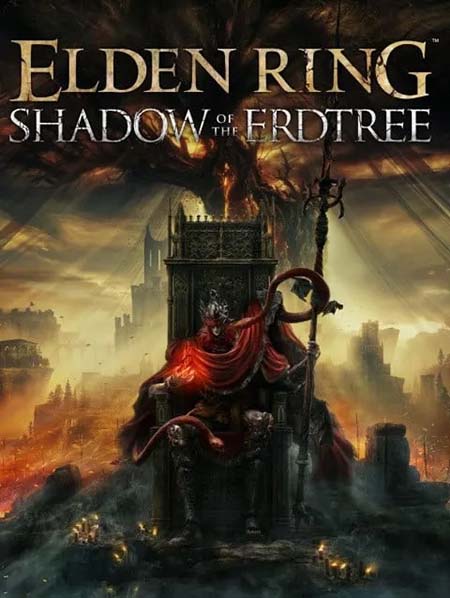
    Facebooktwitterlinkedinmail
  • Master Detective Archives: Rain Code – Game Review

    Master Detective Archives: Rain Code – Game Review


    Master Detective Archives: Rain Code

    (available for Nintendo Switch only)

    Before we talk about this game, I feel it appropriate that we talk about the Danganronpa series. Danganronpa is a somewhat cult series developed by Spike Chunsoft which is a visual novel/detective game not unlike Ace Attorney. The series has been highly praised for its creative character design, gripping narrative and at times tense gameplay. Now it seems like the developers and its creator, Kazutaka Kodaka, have decided to move on from the series and create a spiritual successor to it with Master Detective Archives: Rain Code. I’m one of the many fans of the Danganronpa series, so I had a lot of expectations going into it. So, did the game give me what I hoped for? Or did it leave me in a heap of despair? Master Detective Archives: Rain Code was developed by Spike Chunsoft and Too Kyo Games and was released on 30th June 2023 as a Nintendo Switch Exclusive.

    Story

    In Master Detective Archives: Rain Code you play as Yuma Kokohead, a trainee from the World Detective Organization (WDO) who wakes up in a train station storage room with all his memories up until that point missing. He finds a letter from the WDO instructing him to board a train and meet the other Master Detectives there. From these Detectives he learns that they are going to Kanai Ward, a city that has essentially been cut off from the outside world and where it’s been endlessly raining for three years, to investigate the Amaterasu Corporation, who have essentially taken over as rulers of the city with their Peacekeepers, led by the vile Yomi Hellsmile, enforcing violent “justice” upon its residents. Sometime later, Yuma feels a wave of dizziness, causing him to pass out. A couple hours later he wakes up to find a strange ghost hovering over him, calling herself Shinigami and proclaiming to be a Death God who Yuma had formed a pact with, which was the origin of his memory loss. Skipping forward a bit (don’t worry about what happens during the trainride it’s all fiiiiine), the train stops at Kanai Ward and Yuma meets with Yakou Furio, and is led to a submarine which acts as the headquarters of what he calls the Nocturnal Detective Organization where he meets up with more Master Detectives. Later that night, they get a call from a man called Number One, the best Master Detective of the WDO, who gives everyone their order while they’re in Kanai Ward, to investigate and discover Kanai Ward’s Ultimate Secret and solve the Great Global Mystery. 

    This story is a lot of fun. It’s not as twisted or sinister as Danganronpa but it does have its darker moments, and isn’t meant to be taken as seriously. I especially like the characters, they all have their quirks and are pretty one note in some way. They do not hide which ones you’re meant to like or absolutely detest, which matches the kind of story they want to tell.

    Presentation

    Aesthetically, this game looks pretty damn good. The city of Kanai Ward looks gorgeous, mostly due to the variety of neon colours present all throughout the dishevelled streets. As for the Mystery Labyrinths (more of those later), these look aesthetically pleasing for an entire different reason. While Kanai Ward looks deceptively calming, the Mystery Labyrinths are chaotic and full of bright colours, basically like you’re on a mild acid trip. Just like Danganronpa this game has some exceptionally creative and distinct character designs, each one being incredibly colourful and being a perfect representation of their own personalities. The voice acting is also really good, the actors are able to pull off the characters traits and personalities perfectly, with the standouts being Anjali Kunapaneni as Shinigami and Howard Wang as Yomi Hellsmile. Sadly, just like with a lot of Japanese games, the lip syncing has not been altered for an English release, meaning that during cutscenes you’ll be experiencing a lot of gaps between lines because the lip syncing hasn’t caught up yet. Frame rate, unfortunately, is a bit mixed. Most of the time it works fine, a couple drops but nothing major, though there are times where it really tanks, especially in handheld mode. The one bright side to this is that good frame rate isn’t that essential to the game, but it’s still annoying when it goes bad. The soundtrack to this game is very good, a lot of tracks sound like they were taken straight out of Danganronpa, a number sounding entirely unique to this game, there were even a couple that I’m sure took some inspiration from Persona 5. There’s a ton of variety, to the point which they could be from different games entirely, and I love it.

    World Design

    The entire game takes place in the city of Kanai Ward. The city is split into different segments, whether for a district of Kanai Ward such as the Kamasaki District or the Ginma District or for buildings that are important to the story like the Clocktower or Aetheria Academy. Each district isn’t too big, the most you’ll get in one is a couple of streets and upper walkways. You’ll only have access to a few areas at the beginning but you’ll be able to explore more the further into the game you go. Thankfully, you’ll be able to fast travel from one section to another from the pause menu (how you might ask? Yuma takes the bus… if only more protagonists thought of something simple like that). 

    Investigation 

    The main goal of this game is to solve seemingly impossible cases, these chapters are split into two parts, Investigation and the Mystery Labyrinth. The investigations are pretty self-explanatory, you search the crime scenes and talk to people who might have some connection to the victim or the case to gather clues and transform them into Solution Keys to be used in the Mystery Labyrinth later. Luckily gathering clues is fairly easy as the game will indicate what rooms still have clues that can turn into Solution Keys and will inform you when you’ve found all the ones available. Not every clue found will turn into a Solution Key as they won’t be entirely relevant to the case, though it’s still recommended that you check them anyway, because by doing so you’ll gain a small portion of Detective Points (EXP). Gathering enough Detective Points will increase your Detective Rank, nabbing you some Skill Points which you can use to purchase Skills to help you in the Mystery Labyrinth. 

    Mystery Labyrinth

    Considering how much I’ve been mentioning them, you’re probably thinking to yourself “What the hell is a Mystery Labyrinth?”, well buckle up because we’re about to delve into some chaotic nonsense. Mystery Labyrinths is this game’s equivalent to Danganronpa’s Class Trials, where you gather all the clues together to figure out the events of the case and reveal its culprit. Here you’ll take part in a series of minigames which rely on your deduction skills as well as under pressure, snap decision making. You’ll have a health bar that will decrease if you make wrong decisions or aren’t fast enough to figure out the right one. Now instead of going through all the minigames in this one segment I’ll give them their own mini segments so I can talk about them without making this one feel too bloated. I’ll also only talk about the ones that show up consistently, otherwise we’ll be here all day. Starting off with:

    Reasoning Deathmatch

    In my opinion, this is easily the best part of the game. Reasoning Deathmatches is another element that was borrowed from Danganronpa, this being a new rendition of that game’s Nonstop Debate. Periodically your path will be blocked by a Mystery Phantom, a manifestation of someone from the real world who’s trying to stop you from reaching the truth of the case. In this minigame the Mystery Phantom will present their arguments (half of which will be about the case, the other half are just insults) and will attack you with their words, quite literally. In order to survive the battle you must dodge the white phrases, by sliding from side to side, jumping or ducking, and find a phrase that one of your Solution Keys contradicts and use said evidence to strike back. Your opponent will also attempt to block your attack with red phrases, thus protecting themself from your Solution Slash, to combat this you just have to strike them normally and they will disappear. This minigame is a hell of a lot of fun, having to dodge attacks while also figuring out which phrases are  contradictions makes this mode super engaging and, while not as difficult as the Nonstop Debates, adds a type of difficulty that wasn’t there in that minigame. 

    Quicktime Events

    This game has a lot of quicktime events, both in Kanai Ward and in the Mystery Labyrinth. And personally – whether this was because I was also playing Final Fantasy XVI as well with those quicktime events being super easy or just because, I’m not sure – I honestly found them pretty damn difficult. The amount of time you have with each is pretty steep, to the point where I barely managed to figure out which button I had to press before I ran out of time – or at least in Kanai Ward they were. In the Mystery Labyrinth, this is where your snap decision making comes in as the game will ask you a question and present three options for you to pick, guessing the right one will let you continue, while picking wrong will force you back to your last question with you losing a small piece of health. Now these are quicktime events that I really like, they can be pretty stressful if the answer isn’t blaringly obvious and forces you to think about what happened previously in the case, basically forcing you to pay attention every step of the way. 

    Shinigami Puzzle

    This is yet another one that’s similar to a minigame in Danganronpa (the Hangman’s Gambit in case you were wandering). This minigame occurs when you find your path blocked by a question you don’t have the answer for, at which point Shinigami will climb into a barrel (don’t ask, this is a weird game), and you’ll be asked a question or have to figure out the missing word in a sentence. The barrel will have a series of letters on it and will rotate slowly, your task is to shoot the correct letters in the right order and figure out the answer to said question. If you’re unsure of the answer you can feel Shinigami a Solution Key, if it’s relevant to the question she will give you a vague hint, if not she’ll throw up and your time will get deducted. This minigame is fine. It feels amazing when you get that “AHA” moment and the answer becomes obvious, though there have been times where I really wasn’t sure, not helped by the hints making me ask more questions than giving me answers, and I would start to panic and just hit letters randomly hoping to get at least one right – that does work sometimes… but only after a couple of game overs. 

    God Shinigami Rush

    This is always the penultimate stage in the Mystery Labyrinths, where the culprits Mystery Phantom gets desperate in their attempt to hide the truth. This minigame is by far the easiest as well. Shinigami will grow to titan size and will rush towards a fortress that the culprit resides in. They will send a series of begs and insults in the form of steel balls, walls and spikes and you’ll have to press the right button for each one to avoid getting hit by them. They will occasionally throw a wall at you with a statement or question that can be contradicted by a Solution Key, all you have to do is select the right one and you can move forward. As said, this is really easy, the most difficult part is selecting the right Solution Key and I managed to do that almost every time. 

    Deduction Denouncement

    Now we come to the end of the Mystery Labyrinth, where all the clues have come together and all you have to do now is to sum up the sequence of events by placing the right tiles into a comic book. A number of panels will be missing and each one will have a question when your cursor hovers over it, all you have to do is find the panel that matches the question and stick it in there. Get the wrong one, the game will tell you straight away and you’ll lose a little bit of health if done. 

    Flaws 

    As much as I love this game, there are a fair amount of flaws that do have to be addressed. First of all, the game takes forever to load, we’re not talking Sonic 06 or Crash Bandicoot: The Wrath of Cortex levels of bad, but it is close. In comparison, The Legend of Zelda: Tears of the Kingdom came out over a month before this game did and that didn’t take as long to load, and that is a much bigger game. Another is that the conversations tend to go on for a bit too long. I understand that the game is part Visual Novel, therefore you should expect long discussions, but I swear it takes twenty minutes for the Master Detectives on the train in Chapter 0 to introduce themselves. Finally are the side quests, throughout the game a number of citizens of Kanai Ward will need your help with a certain problem they’re having. The problem is that these quests are pretty boring and get tedious quickly, especially since all you really get for them are Detective Points. What makes them worse though is that if you move on to the main plot of said chapter without completing the quest, the game won’t let you finish it at a later date, marking the case as unsolved. I really don’t like that, as it basically forces me to complete the quest straight away if I want to solve it rather than letting me do it when I want. It reminds me a bit of the side quests in Fire Emblem Warriors: Three Hopes, with you needing to do them before getting to the main story; granted it’s not as bad as that but the fact that I’m comparing them should be enough.

    Conclusion

    So, do I think that this game is as good as any in Danganronpa? Honestly, no. In my opinion, that series does almost everything better, better character design, a more interesting and darker story, and more engaging and difficult gameplay. That doesn’t detract from my feelings with this game however, as I still think it’s really great. It is a lot of fun, the mysteries are interesting, the characters are likeable and it’s really easy to get addicted to it. Yeah, I do wish that Spike Chunsoft and Kazutaka Kodaka would return to Danganronpa (which apparently they would like to do some day), but if this is what they want to work on going forward, then I’m certainly not going to complain. 

    9.3/10

    Elliot Chapman
    Anime Amigo and Nerd Consultant

    Share This Post:
    Facebooktwitterlinkedinmail
  • Lord of the Rings: Gollum – Game Review

    Lord of the Rings: Gollum – Game Review


    Lord of the Rings Gollum

    Lord of the Rings is a franchise that has marvelled fantasy fans and non-fantasy fans alike for generations. What started off as a story about a Hobbit leaving his home on an adventure has turned into an immense fantasy epic with extensive lore and history, and has transcended into multiple mediums, from movies to recently tv shows and of course video games. That being said it seems that the franchise has been going into a downward spiral as of late, starting with Amazon’s divisive Rings of Power series, with supposedly more on the horizon. Unfortunately, Daedalic Entertainment decided to tarnish this pantheon even further with the release of Lord of the Rings: Gollum. A game that was met with countless delays, and had gamers scratching their heads over why the game was even being made, leading to a lot of cynicism. Though the game finally came out, so did it quash these negative feelings or were they very warranted?

    Story

    In Lord of the Rings: Gollum, big surprise, you play as Gollum, the fan favourite schemer always on the hunt for his precious ring. The game takes place sixty-six years after Bilbo Baggins stole the One Ring from him. A majority of the story is a recounting from Gollum to Gandalf after being captured by the Elves of Mirkwood. After stumbling into Mount Doom whilst he was chasing a bird, Gollum runs into a band of Orcs and eventually gets captured by Nazgul while trying to escape. He’s thrown into one of the slave pits, being forced to do strenuous and menial work for the Orcs. Now, by using those around him and by being ever so patient, he must find a way to escape these pits and return to his hunt for his beloved ring. This story is not very good, there are a lot of long periods where the story doesn’t progress and at times when it does it comes with little to no build up. I understand that it’s just a story about Gollum so it’s not going to be anything epic, but I expected better than this.

    Presentation

    I’m just going to say it, this game looks hideous. The environments and backgrounds look fine, the one real downside is that they don’t stand out compared to other games, but the character models look downright awful. I’m sure we’ve all seen how Gollum looks by now, he does not look menacing in the slightest and looks more like a rendition of the character you would find in a children’s picture book. What makes it worse is that he’s one of the better character models. At best the characters have little to no details and at worse it looks like their face is melting. The best I can really say about the voice acting is that, like the environments, is just fine for the most part, a number of the less significant characters don’t sound very different from one another and they definitely aren’t trying their best, but they aren’t offensively bad. I also have to give a bit of credit to Andres Williams for doing a pretty good Gandalf impression. The one exception to this however is Wayne Forester as Gollum. I think it’s safe to say that after Andy Serkis’ phenomenal portrayal of Gollum in the Lord of the Rings films, the voice he used for Gollum has pretty much become his definitive sound, hence why all renditions of the character have used at least a similar sounding voice (with the best in my opinion being Liam O’Brein in Middle Earth: Shadow of Mordor). Forester on the other hand doesn’t even attempt to mimic said voice, he sounds incredibly whiny and not menacing in the slightest, even I can do a better Gollum impression than him (which isn’t saying much as my impression of him is pretty spot on). The music isn’t really much to comment on, it’s all basically soft tracks that feel like they could fit in any fantasy setting, in fact a few sound like they would fit Harry Potter more than they would Lord of the Rings, ultimately very bland and forgettable. 

    Controls

    Lord of the Rings: Gollum is essentially a stealth platformer, the levels consist of platform challenges for you to get through that are at times integrated with stealth sections where you have to stay out of sight of nasty Orcs as well as other creatures. Honestly the worst part of the game is how it controls. On the ground movement feels too loose, making it hard to gauge how far you can move or even which direction you’re moving in. I often find myself falling off the edge or getting trapped just because I’m fighting against the controls. The jumping isn’t much better as it’s too floaty, often causing me to overshoot how far I’m jumping, meaning that I, of course, fall to my death. Honestly, most of the game overs I got were because of how poorly it controls. On top of that there are a few aspects of the controls that just don’t make sense or are just infuriating. For starters, if you’re hanging from a ledge and want to jump backwards, you would normally just hold the control stick in the opposite direction of where you’re facing, instead this game has a dedicated button to jump behind you, which is just unnecessary. You also have a sprint button, mostly for platforming purposes, which has a stamina metre, the issue with that is that you run out of stamina after sprinting for only half a second and it takes ages for it to recharge to the point why I question the point of even having a sprint mechanic. 

    Platforming

    Platforming is what you’ll mainly be doing throughout the game. You’ll find yourself shimmying along the edge of cliffs, climbing up and down walls and swinging on bars amongst other things. As you can guess, the controls make these sections much more difficult than they should be, especially when you’re walking on very narrow platforms. One big issue is that the game really doesn’t do a good job differentiating what gaps in the cliffs can be climbed upon and what part can’t, sometimes it’s pretty obvious though other times it blends in with the environment too much, meaning that I either spend ages not figuring out where I’m meant to go or take unnecessary damage. There are a couple of sections where you’re shimmying across a cliff and your legs end up dangling, causing your stamina to slowly deplete. This is likely meant to add tension, but the only reason you’d run out of stamina is if you stop moving for a significant amount of time, as long as you keep moving you’re going to be fine, making these sections lack the tension they’re meant to have. I also mentioned a couple of sections where you have to swing on bars to get to a ledge. You’ll also lose stamina during these sections, though it makes more sense here as you do have to swing a certain distance to do a decent jump. Though that’s the only good thing I can really say about this mechanic as it is otherwise terrible. It barely works half the time as if you stop swinging it takes forever for it to start going again, and you can’t move along the bar, meaning that if you’re not in a very good position to jump, you either have to drop off and start again or just die.

    Stealth

    The other consistency with this game are the many stealth sections. First of all I have to at least praise the devs for not trying to incorporate combat into this game as Gollum is absolutely not a combative character (hey I have to give them credit for something). These stealth sections will often give you a multitude of areas to hide in, from patches of tall grass to under desks and tables, to just simple shadows. If you get spotted by an enemy they will either start shooting at you with crossbows or will simply start chasing you, leading to an immediate game over if you’re caught. It is simultaneously easy to avoid detection and difficult to avoid detection. For starters, if you’re hiding in any kind of shadowy alcove or even just walking behind an enemy, no matter how close to them you are, you won’t be detected thus making it insanely easy to hide if you’re close to one. However, it is also very easy for a guard to spot you if you’re not hiding and the enemy going from seeing you to chasing you happens very quickly. The best I can really say about these sections is that they’re very boring and will require a lot of trial and error, hell it feels like I just get lucky half the time, but at least it’s not as broken as the platform sections are. 

    Puzzles

    There’s not really much to say about the puzzles, there are very few of them and they’re not very good. Some of them just involve you trying to figure out where to go next, though others include an npc that you have to guide and simply tell them to pull a lever or something like that. As I said, the puzzles aren’t very good, there’s very little instruction on how to solve them and you never feel any kind of satisfaction for completing them. Granted it might be because I’ve been playing The Legend of Zelda: Tears of the Kingdom a lot recently, but these just aren’t worth mentioning. 

    Arguing with Yourself

    Probably the most unique part of the game are the moments where you have to get Gollum and Smeagol to agree with one another on a decision you make. It happens very infrequently but a couple of times in the game you’ll be given a decision that will correlate well with one of your two personalities and conflict with one another, and then have to convince the other into their line of thinking. You’ll be given a number of choices on how you would like to present your argument and you’ll have a number of chances to do so. It’s an interesting idea that I feel like could have been done well, but sadly it’s ruined by one flaw, it’s too easy. The best argument to pick is painfully obvious to the point where I was consistently winning the argument on the first chance. It’s a shame because I really like the idea, if only it were executed better. 

    Bugs and Glitches

    This should come as no surprise, but this is probably one of the buggiest games I’ve ever played. And it’s not any of the fun ones like graphical deformities or character models getting mangled, unfortunately they’re more annoying and confusing than anything else. There are some minor ones, for instance a character who’s beard starts floating every time he speaks, and a couple of annoying ones like how Gollum at times gets stuck on seemingly nothing and is unable to move for a few seconds. There have been a number of crashes that, of course, come out of nowhere. Then there are some more unusual ones, for example there were a number of times where NPCs and enemies didn’t even spawn where they were meant to, which led to some funny moments like the camera being pointed at nothing during cutscenes or making stealth sections easier, though they’re are also some incredibly annoying instances where an NPCs presence is needed for you to move further into the level, causing a softlock that requires a full level restart. The one that confused me the most is where the game respawns me at the wrong checkpoint, it might just be me being an idiot, but I swear there were a couple of times where I ended up dying and respawned at the checkpoint ahead of my last one. I’ve never encountered that happening in any other game, but it’s the one time I was actually happy while playing it (coz it meant that I finished the game faster). Those are the ones that happened to me but after watching a few Youtube videos on the game, I question if this game was even tested at all. I found some bizarre glitches and bugs that I never even saw in some of the most broken games in existence, and that includes travesties like Ride to Hell: Retribution and Sonic Boom: Rise of Lyric. Easily the weirdest one I’ve seen is in a video by Tears of Grace, where a wheel that you’re meant to run on top of started spinning sideways, I swear I’m not kidding. 

    Conclusion

    The thing that I question the most of all is why this game was even made. Lord of the Rings and the world it takes place in is magnificently vast  with multiple encyclopaedias worth of lore and characters, and the one they decided to make a game about is this dishevelled cretin. Don’t get me wrong, I love Gollum, he’s my favourite character in the series, but even I wouldn’t want a game based on him. Want my advice, stay as far away from this game as you possibly can, there is absolutely nothing redeemable about this game outside of the environment not looking that bad. It’s bland and boring at best and is broken and miserable at worst. To put it simply, we hates it, we hates it, like we hates the filthy cheating Bagginses. 

    1.2/10

    Elliot Chapman
    Anime Amigo and Nerd Consultant


    Share This Post:

    Facebooktwitterlinkedinmail
  • Dead Island 2 – Game Review

    Dead Island 2 – Game Review


    Dead Island 2

    Back in the seventh console generation (PS3, Xbox 360 & Nintendo Wii), there were three major trends in gaming: FPS’s, blood and gore, and zombies. In that generation we had an overabundance of zombie games, from sequels in series that are known for the monsters like Resident Evil 5 & 6, original games like Dead Rising and The Last of Us, even spin-offs and extra modes like Yakuza: Dead Souls or Red Dead Redemption: Undead Nightmare. One of these games being Dead Island, which received mixed to positive reviews when it first released and had reportedly sold around 5,000,000 copies by 2013, so of course a sequel would eventually enter development. Dead Island 2 for the longest while felt like a game that would never get released – similar to other games like Beyond Good and Evil 2 or Skull and Bones – as it was at e3 in 2014 with no new news for the longest time. That is until we got a trailer out of nowhere in 2022 with a release date of February 2023, which then got further delayed till 21st April the same year. 

    Story & Dialog

    Welcome to Hell-A, a city filled with beaches, celebrities (well the ones that aren’t dead anyway) and over the top gore and kills. You play as one of six colourful characters (I went with Jacob), who just survived a plane crash after an evacuation flight ended up having an infected passenger on board. You make your way out of the debris and encounter a few survivors, including actress Emma Jaunt. You find yourself in an altercation with a hoard of zombies where you end up bitten but later discover that you are immune to the infection. You make your way back to Jaunt’s mansion and meet an array of colourful characters, including Sam B from the first game, and from that point on it’s your goal to explore the city and find yourself and your new compadres a way to get the hell out of Hell-A. This story is a lot of fun, while it does have serious and even tense moments, it never takes itself too seriously and always has a small amount of cynicism that never gets distracting or takes over a scene. Most of this game’s comedy does revolve around quips and the odd cynical comment, but thankfully it’s not in a bad way. It might be because of how excruciating the “humour” in Forspoken was but I actually liked the quips that the main character spouts, the lines in this game always felt like characters making light of a horrible situation rather than an attempt to imitate Marvel as is getting more common these days. It’s more humorous and actually funny, but I still enjoyed it nonetheless. 

    Presentation

    Graphically the game looks very good. The colours and lighting especially heighten this, making the streets and beaches really pop and helps you feel as if you’re traversing through one of America’s most colourful cities. The gore especially stands out, everywhere you look you’ll find the occasional smear of red or decaying mound of offal, and when fighting zombies you’ll see a small shred of skin get sheared off with every hit, you’ll even get more unpleasant details like limbs being held on by only a scrap of flesh or eyeballs getting pop out of their heads and left dangling from the sockets. It’s very gnarly and if you’re a gore loving freak like I am you’ll find it awesome. The voice cast really nail their roles, doing a great job at portraying the characters assigned and how they would sound in any given situation. I especially love Okezie Morro as Jacob for smashing that uncaring and here to have a good time attitude and a special shout out to Becca Stewart as Amanda Styles for getting the obnoxious and annoying tones of a content creator obsessed with getting views and who really needs to get their head out of their ass. The soundtrack is pretty good as well, most of it is licensed music (so not very good for streamers, sorry guys) but it’s all very upbeat and matches the game’s tone, though there’s not that much variety so while a lot of people will be vibing with these songs, there are gonna be a fair few who won’t enjoy it quite as much. 

    World Design 

    Dead Island 2 is a semi open world split into ten regions for you to explore. Some of these areas will consist of a single building or a series of tunnels, while others will be much wider with more sections for you to search. Some of these areas are somewhat difficult to navigate, Bel-Air for example, as a lot of the buildings look the same and it can be difficult to differentiate where you’ve been and where you haven’t, though you do luckily have a map to help you, unluckily however the maps aren’t that good. While they do look good, mimicking maps for tourist attractions or sewer blueprints, some of them aren’t the easiest to navigate as they won’t always tell you which ways are blocked off or even the names of certain buildings. While aesthetically pleasing I would have much preferred it if we got a map that made the regions make sense when exploring rather than one that looked nice. Honestly these work for picking out markers to go to and not much else. 

    Combat and Enemy Design

    The game primarily focuses on melee combat though there are ranged options as well. Weapons you use will consist of items you find spread throughout the world, from as basic as expected like Pipes and Hammers, to some unlikely finds like Swords or Maces, hell even Katars are an option. Each weapon comes in their own subcategories which dictates their speed, likelihood of severing limbs, ability to stun an enemy and so on, each one working better in different situations and against different zombies. Personally, if I had to choose, I found myself favouring faster weapons that can cut off limbs, though I did find myself swapping weapons frequently. 

    Your tools will degrade with each hit and will eventually break, though you can repair your favourites for a price and you’ll find an overabundance of the things spread throughout the game, scrapping those that are no longer fit for your arsenal. You’ll even get some for completing certain sidequests, though some of these can’t be scrapped meaning that when they’ve outlived their usefulness they’ll likely be sent to storage for the rest of the playthrough. If you ask me weapons can be found a bit too frequently, it’s like you can’t go a single minute without running into something suitable for bashing in zombie heads so I never felt like I was at risk of running into an encounter poorly equipped. I would have much preferred it if weapons were spread out more and were found much less commonly. 

    One feature that I really like is your ability to have a weapon imbued with Mods. Some of these Mods can be already equipped to a weapon when you find it, though most will require you to craft the mod. Some will add elemental damage to a weapon while others will simply boost a damage type as well as enhance other attributes. I especially love the elemental Mods as you’ll have the opportunity to use them on the environment to deal some extra damage, such as using the Cremator Mod to ignite some spilled oil or the Electrocutor Mod to shock enemies trudging through water. The danger with this however is that these Mods are a double-edged sword, as the environmental damage you cause can be harmful to you, so best be careful when using them. 

    It’s not just weapons at your disposal, as your infection gives you access to Fury Mode. Fury Mode acts as your infection taking control, causing you to go berserk, clawing and maiming all zombies in your way. Your Fury Mode will build up the more zombies you kill and once activated you’ll drop you’ll use your hands to rip the zombies apart, healing a significant portion of health with each hit. 

    One thing I was not expecting was the vast variety of undead that you would encounter. There are the ones you would expect like the Walkers, Runners, Crushers as your more buff foes, but there are some very creative ones that I really like, even if they can be an absolute pain. Some will have an extra elemental effect thus making them immune to those kinds of weapons, some can be taken advantage of to deal heavy damage to other zombies like the Grenadier Walkers, and others have properties that will just ruin your day. Probably my favourite has to be the Screamers, zombies that emit a loud scream that will shove you away and will summon its friends to aid it, add that some of them can electrocute you with their cries and we’re in for a world of pain. 

    Side Quests 

    Dead Island 2 has a pretty sizable amount of side content. For starters, I have to give praise to the game for not just hiding these quests for players to discover as it will tell you on the map how many side quests are in a certain region and will even point you to where the quest is. I know that some of you would prefer to explore and discover the quests yourself, but personally I much prefer this. These missions will revolve around you helping out a fellow survivor, usually a celebrity of some kind, with whatever predicament they’ve gotten themselves into. Mostly it will involve you searching for a person, people or item, or hunting down a particularly powerful zombie and slaying it. Though there are some that simply require you to kill zombies in particular ways, some of those are especially a pain (looking at you Amanda). Completing these will always net you some XP, and will sometimes reward you with some cash, a new mod or one of those unique weapons I briefly mentioned. 

    On top of those, we have the Lost and Found quests. These are essentially treasure hunts that will lead you to a missing individual or weapon. These quests will require a bit more detective work as they aren’t marked on the map and are triggered by you finding a scrap of writing that will give you hints on the person’s whereabouts. These quests are the main reason why having a map that’s so barren of information really doesn’t help, as sometimes these writings will mention house numbers and not knowing what house it is leaves these missions somewhat of a chore. The missing person missions will just reward you with some XP, the weapon quests on the other hand are absolutely worth it as, at the point where they’re available, they are some of the most powerful weapons you can obtain and are already equipped with Mods, so while they can be a chore (unless you’re a nasty cheat and use a guide… like I did) they are very worth it. 

    Levelling and Crafting

    Yes, this is yet another game with RPG mechanics and crafting, but this game actually uses these quite well. First of all, levelling up doesn’t mean that previous areas will get any easier, while there are some unique enemies whose levels will remain the same, most enemies levels will scale with yours, so don’t think that just because you’re stronger than before it means that the zombies are gonna get any less overwhelming. 

    So what does levelling up get you if it doesn’t make the game easier? Outside of a health increase and allowing you to use stronger weapons, your biggest reward is Skill Cards. Skill Cards aren’t just limited to offensive and defensive buff, they also get you new powerful combat abilities. Each card is split into five different subcategories and you are given slots to insert the cards into and can swap them around and experiment to see what play style fits you. This is one of the factors where the character you selected matters as there are some cards that are exclusive to each character and each one starts off the game with their own set of cards. I really like this system, it’s much better than a basic skill tree and gives you more room to really create the kind of character you want to play as. 

    As mentioned, crafting is also an element in this game, but it’s not really that bad. Crafting is focused more on maintaining your arsenal rather than creating new weapons. As mentioned you can upgrade weapons with powerful Mods though you can also equip perks to each weapon to add a couple extra traits. Both of these require cash and materials which I’m not really a fan of, personally I would have preferred it if you, for example, used materials for upgrades and crafting non weapon items – gun rounds and med kits mostly – and cash for repairing, combining the two means that I’m inevitably just gonna run out of cash quickly which is just an annoyance. 

    Flaws

    There are unfortunately a few glitches that you will likely encounter. There were a few times where I ended up dying despite still having some health left and I even fell through the world and respawned under the map at one point; luckily it was fixed by just restarting the game. Another is that a lot of the deaths I ended up getting felt somewhat cheap, for example getting hit by electrified water simply by being near it was a common occurrence that I really didn’t enjoy. Finally, you’re unable to do certain things, such as access a workbench or talk to people, while there are zombies in the vicinity. This wouldn’t normally be a problem, but the zombies respawn – not that they respawn after you leave the area, the constantly respawn, as in if you kill one another will quickly take its place. There was one time where I spent twenty minutes killing zombies because I wanted to use a nearby workbench but couldn’t as more were continuously appearing to take a bite out of me – the ironic part was that I wanted use the workbench to repair a weapon, and so I ended up going from one weapon needing to be fixed to multiple. 

    Conclusion

    Was this game worth the eight year wait, filled with development hell and speculations of cancellation? Well no, no game’s worth that much wait. Though that doesn’t mean that this game wasn’t a surprising amount of fun. I went into this game expecting it to be kind of bland but I found myself actually really enjoying it despite its flaws. So yeah, I recommend this game, especially if you’re someone who wants to feel nostalgic about the PS3… good god saying that makes me feel old. 

    8.2/10

    Elliot Chapman
    Anime Amigo and Nerd Consultant

    Share This Post:
    Facebooktwitterlinkedinmail