Author: Elliot

  • Have A Nice Death – Game Review

    Have A Nice Death – Game Review


    Have A Nice Death

    (available on Nintendo Switch and PC)
    (Switch version used for review)

    Over the last few years, it feels like we’ve gotten an abundance of rogue-likes. From recent heavy hitters like Hades and Inscription to more niche like Loop Hero or Crypt of the Necrodancer, even AAA companies have gotten into it like with Deathloop in 2021. This trend doesn’t seem to be ending anytime soon as we recently had the release of Have a Nice Death developed by Magic Design Studios and released on 22nd March 2023 for Nintendo Switch and Steam.

    In Have a Nice Death you play as the Grim Reaper, Death himself, who’s the CEO of Death Incorporated, a company that specialises in… well death and the many forms that it can occur. As of late his top executives, the Sorrows, have been a little too efficient at their jobs to the point where Death has lost control of his company, a fact that has brought him an endless mountain of paperwork and has led him to the brink of burnout. Now, he must delve deep into the corporation’s departments to sort out his troublesome employees and hopefully finally get the vacation he very much desires. This story isn’t that deep and you’re not going to find the levels of character development that you’ll find in Hades for example. It does mostly act as an excuse for the rampage you’ll go on, but it’s still a lot of fun and the idea alone is something to be praised. 

    To start off, I absolutely love the art style and animations. The characters all look and feel like they’re from an animated movie with the black and white aesthetic adding a bit of charm to it, I especially love the look of Death, I want a plushie of that guy so badly. As mentioned the animation is seriously good as well, the different movements and attacks flow very well not just with Death but with the enemies as well. I especially love the backgrounds, they each match the Department you’re traversing such as the mountains of trash you’ll see in the Industrial Pollution Department, or the war torn wasteland in the Modern Warfare Department. While there isn’t voice acting, characters mostly communicate using small sounds that sound like they’re straight out of a Banjo Kazooie game that really matches the vibe the game’s trying to make. Frame rate is fine for the most part, throughout most of the levels it stays very consistent with minimal drops. However, for some reason, at the start of every level the FPS tanks, it only lasts a couple of seconds so it’s not like it affects a majority of the gameplay but it’s still annoying when it does happen. The soundtrack is pretty good as well, while I don’t think it’s anything great I do like the charm it has as it’s very cartoony most of the time and matches the game very well. 

    Have a Nice Death is a 2D action rogue-like, which requires you to go through various platform levels fighting numerous enemies along the way. These stages take up the form of different Departments, each one having a theme related to different ways to die. One thing that surprised me is the number of Departments that you can explore, there are eight in total with you being able to pick between which ones you’d like to explore… at least at first, after the first three Departments, you’re pretty much relegated to traverse through the ones the game already has lined up. It’s not really much of a complaint, but it is strange that the game would let you choose the levels you go to only to take that choice away after a couple of stages. Some of these Departments will have their own stage hazards, like fire shooting out of the ground in the Toxic Food Processing Department, or having to turn off fountains to reach the elevator in the Natural Disasters Department, though with most of them the Department will just have the unique theme as well as some enemies that match it. 

    For weaponry Death has his trusty Scythe, or perhaps I should say Scythes. At the beginning of each run you get to pick between two Scythes, your regular one or one of the more unique ones that will be picked at random. Each Scythe will have different movesets as well as their own pros and cons to using them and you’ll quickly find which ones you like and dislike. Thus leads me into my first problem, I personally don’t really like the fact that the Scythes you can pick are random. I would understand it if it was like Dead Cells where the weapon variety was incredibly vast and played very differently from each other, but that’s not the case as your weapon pool is very shallow and there’s not enough differentiating the weapons to really warrant it. I would have much preferred it if you could just pick what Scythe you could use right from the beginning of a level, maybe even have me unlock each of them if you want to encourage me to try them all out. 

    To go along with your Scythe you are able to find items called Anima, which basically acts as this game’s primary healing items. What makes Anima different from healing items in other games however is that it comes in two different variants, blue and gold. You see, when you’re harmed you have a secondary bar that may go down as you take damage, this bar represents how much HP you can recover by using the Blue Anima, meanwhile the Gold Anima increases not only your HP but also that secondary bar with the caveat that it doesn’t heal you as much. You have three slots for your Anima, and if you collect any Blue while all slots are full then it overlaps and transforms one of your Blue Anima into a Gold. Honestly, I’m not really a big fan of this decision, it feels like it complicates things for the sake of it and I would have much preferred it if this game just had a simple healing system. 

    Each level requires you to go through a maze of platforms – which are straightforward in the early Departments but become tougher to navigate through in the later ones – and battle your way through a myriad of enemies as you try to get to the elevator at the end. The variety of enemies you’ll face is surprisingly plentiful, each Department will have enemies that are unique to it and while there are some repeats they do still match with the Department’s theme and may even have an extra attack or two to spice things up. In every level your path will become blocked and you will be forced to battle against a number of enemies before the game lets you continue. When you reach the elevator at the end of the level it will let you decide what floor you’d like to go to next, these floors ultimately dictate what reward you get when you beat it or if there’s a certain gimmick for said floor and will be offered to you at random.

    To aid with combat and help you survive as long as you can, you’ll get a variety of power ups called Curses. These will be given to you by Mr. O’Shah, a strange man who lives in a coffin, at the end of the first floor, after defeating bosses/mini-bosses and at the end of levels if you picked his floor at the elevator. One thing I found surprising is the variety of Curses you can gather, from ones as simple as increasing damage and HP, to some more extravagant ones like infusing your attacks with a certain element or having your enemies emit a poison cloud upon death. Be careful though, some of these Curses may come with a price as some of them will also give you a penalty that will negatively affect you, some of these aren’t too horrible as the effects will be pretty minor, however there are some that could completely destroy you run so it’s best to be careful when deciding what Curse you pick. 

    On top of the Curses, you are granted Equipment and Spells to help you out. You’ll, of course, get these at the end of floors and potentially after beating a gauntlet of enemies. Both of these act essentially as an extra attack, some with minor effects that do very little damage, while others are completely decimating and will annihilate anyone who stands in your way. The main difference between these two are how they function and how often you can use them. For starters, some spells will normally have a longer lasting effect than equipment do, though because of this they usually won’t do as much damage, and with equipment after using it once you’ll have to wait a second for it to recharge before you can use it again, meanwhile you’re able to use spells as often as you want as long as you have the mana for it and if you run out of mana you’ll have to wait a few seconds for it to recharge. You do start off with a decent variety of both though you can purchase more to be used in your runs from Joe the Office Manager for some Ingots – that you can find in levels and you’ll be rewarded with at the end of a run. 

    Luckily it’s not just danger and enemies that you’ll find on every floor, as there are some safe ones where you can relax a little and power up. The first one of these you’ll find is the Shop run by Mark, there you’ll be able to purchase an Equipment or Spell, something to heal you and/or a Curse with some Soulary (main currency gathered by killing enemies or just found throughout the level). The second is the Control Room run by Orville and Jacob, here you can upgrade your Scythe and any other Equipment or Spell by spending either Soulary or a Prisium (a rare item that can be gotten at the end of a level if you pick the floor it’s found on). 

    At the end of every Department you’ll face one of the company’s mischievous Sorrows. These bosses focus on you reading attack patterns, timing your attacks well and a lot of trial and error. Each boss fights very differently and requires different strategies to defeat them, like Maxxx using projectiles that act a lot like Medusa heads in Castlevania or Mr. Gordon Grimes utilises long reaching attacks that are best avoided in the air. These fights are a lot of fun and don’t feel cheap at all, it really feels like most deaths were my fault for not fully knowing how the boss works rather than the game being unfair, which is always a good thing. 

    Sadly, there is one more flaw with this game, and it’s kind of a big one. Now most rogue-likes aren’t that long. Using Dead Cells and Hades as examples, if you know what you’re doing and get lucky with the build you could finish a run in around twenty to thirty minutes, maybe forty if the run is especially stubborn. This is because those games only have a few levels that can be beaten fairly quickly. With Have A Nice Death on the other hand, I still haven’t completely finished a run and I’ve had ones that have lasted nearly an hour. If you ask me that’s WAY too long for a rogue-like as there’s too much to really make it feel possible to beat it. And because of that, this game gets tiresome quickly, with the other games mentioned it feels like I can do a fair few goes at them because they don’t overstay their welcome, Have A Nice Death however leaves me tired of the game not only at the end of a run but possibly during one as well, especially considering how difficult the last Department is as well. It would have just been better if this game had fewer levels or given me the choice on which Departments to play throughout the game, not just at the start. 

    As much as I’ve been praising this game and for as solid as I think it is, I’m likely not going to be replaying it as often as I would some of the other rogue-likes. Don’t get me wrong, it is very good and is a decent amount of fun at first, that enjoyment doesn’t last especially considering how long the game is. I think the main reason for that, outside of the length, is because it doesn’t really do much to differentiate itself from other rogue-likes like Dead Cells for example. I do recommend it if you are a fan of the genre as there is a lot to like about this game, just don’t go into it expecting to have the same love for it as you would something like Hades. 

    7.6/10

    Elliot Chapman
    Anime Amigo and Nerd Consultant

    Share This Post:
    Facebooktwitterlinkedinmail
  • Resident Evil 4 (2023) – Game Review

    Resident Evil 4 (2023) – Game Review


    Resident Evil 4 (2023)

    (available for PlayStation 5, PlayStation 4, Xbox Series X and S, and PC- Steamdeck compatibility included. PlayStation 5 version used for this review)

    Resident Evil 4 Remake rounds out the trilogy of the remakes of the classic Resident Evil games, though ever since the announcement it’s been wondered what this version would add considering that the original version updated to HD and was available on most modern platforms and holds up remarkably. In fact, I actually replayed it on Switch during lockdown and it is really good! Honestly, everything about it kind of works. I do have my issues with it and it’s debatable whether that or 2 Remake is my favourite in the franchise, but overall it is a great game and deserves all the praise it gets.

    Resident Evil 4 Remake was met with some trepidation, but it has done well with recent trailer outputs, which have really highlighted the ability to remake the game in this engine. It’s fundamentally the same game that you would have played on the GameCube or PlayStation 2 as well as the modern consoles. There aren’t so many fundamental changes as there were with the 2 and 3 remakes. That being said, considering how long it has been since the release of the original, I’ll be writing this under the assumption that most people will have played the original, and as a result, you shouldn’t expect it to be much of a shake-up plot-wise or even gameplay wise compared to the previous two remakes. You will still pretty much do everything in order, though there will be some slight differences along the way, which I won’t give away too much.

    Capcom is pretty much assuming with this entry that most of us have played the original, and I know for a fact that this will be many people’s first experience playing. If you haven’t played any of the other Resident Evil games but you want to jump into this one, you absolutely can, it’s not really tied into any of the other storylines other than a brief mention at the beginning of the Raccoon City incident that takes place during Resident Evil 2 and 3, and there’s also the relationship between Leon and Ada which doesn’t really get much of an explanation in this game.

    Like before, you will be playing as Federal Agent Leon Kennedy travelling to a remote Spanish village to rescue the president’s daughter Ashley, who is being held by the villagers who have been infected by a parasite bioweapon brought on by a cult.

    PROS

    • Gameplay

    While it is mostly Resident Evil 4’s gameplay brought onto a modern system, this remake does bring in a few elements of the 2 & 3 remakes. But for the most part, it does feel like the game has maintained a lot of what made the original great- you still have excellent melee combat and very precise shooting. This time, the game gives you a lot more to do with it, for example, shooting oil lamps can now cause massive fires to deal with large waves of enemies (take note, when you get into that initial encounter in the village where you’re being swarmed, do that in the cow pen like in the trailers! The developers gave you that as a hint to survive a little bit longer.).

    I think that the game suits being on the PlayStation 5 really well. I initially bought this version because of the VR2 content that’s coming later down the line- no fixed release date at this point, though, and we haven’t even seen a showcase of gameplay with this feature. But considering how much I’ve been enjoying VR2 since getting one, this has been a no-brainer.

    I actually felt that the PlayStation version does have some good features that make it an excellent version to get. The haptic triggers are actually well handled this time, but if you’re someone who doesn’t enjoy those you can turn it off in the settings. One of the best features of the gameplay is the fact it makes very good use of the DualSense controller’s internal speakers, which add an extra level of inversion for walkie-talkie conversations and sound effects for gun reloading.

    It definitely brought over improved AI from the 2 & 3 remakes, which is a lot smarter. The difficulty levels aren’t really in terms of health and damage, but in how aggressive the enemies will be. Even in normal difficulty, these enemies are way more aggressive! The initial village encounter took me way more attempts than it usually would because I’ve become very complacent. What’s more, the enemies have more ways to deal damage to you – not only do they have those weird decapitation buzzsaw head things (which I never learnt the name of), but they also can get back up even if you get a kill shot but having the parasite break their own necks. If the prompt comes up to stab a corpse with a knife, take the advice!

    If anything, the remake feels more like a survival horror game than the action game that the original was. The action elements are certainly still there, but because the enemies are now bullet sponges, I found myself running out of ammo way sooner than I usually would. Ammo and healing item consumption is something you really need to take into account.

    It also should be noted that the Ashley escort section is severely improved. She is a little more vulnerable and she can still die if you’re too overzealous, but for one thing, she doesn’t have a health bar anymore. She can be temporarily incapacitated and can die if not brought back up, but she’s a lot more durable this time and she also doesn’t make really dumb decisions.

    The gameplay is also very interesting in the sense that it adds some extra sequences and takes some out, for example, the cable car sniper sequence has been removed, and it plays around with some familiar sequences also. The mine cart sequence is now one of the best moments in the game, and I won’t dare spoil how good it is. If you enjoyed the gameplay of the original, it’s still great and trust me, newcomers are going to love this!

    • Aesthetics

    I’m never surprised by how good the RE Engine makes games look, and this game is no exception. Character design-wise, not much has changed, obviously, everyone has new voice actors, but they all look the same. If anything, Ashley has probably had the biggest overhaul in character design, but as a whole, the team didn’t really change up much. Because all of the environments look and feel the same in many ways, it made navigation and finding hidden items a lot easier this time around. The benefit from the new engine means that the loading screens are quicker and fewer this time around, so navigating areas like the castle is much quicker.

    I played the PS5 version and I’ve been told the Xbox Series X version looks better, but looking at videos comparing the two, I don’t think that there’s a noticeable difference. Either way, you’re getting an excellent-looking game. This is definitely setting a high standard for AAA releases coming out this year.

    MIXED

    • Story

    It does maintain the story from the original, and I thought that that story was fine. It works well, and I like that Ashley doesn’t get kidnapped that often this time around, and they did a good job giving her a character arc. Thankfully, some of the more creepy dialogue has been removed, as a whole I thought that this dialogue was pretty good – they kept a lot of the good one-liners in and added new ones too.

    However, there are a few issues that I found with the storyline. I feel like the villains don’t have much of a presence here. I feel like they weren’t quite sure how to handle some of these villains in the modern era considering that some of their personalities feel a little drained. Ramon Salazar isn’t really in the game as much, but I will say that the voice actor who is playing him does an excellent job. But he doesn’t have much of an interaction with Leon in this game so he doesn’t get as much time to shine. During the boss fight they actually try to give him a bit more character but it all feels a bit weird and too little too late.

    Saddler is definitely the most interesting change – I’m not sure how I feel about him at this point considering that his motivation is a little different. His plan is about the same as why he kidnaps Ashley, but he doesn’t really have a lot of the same motivations from the original. I think that the issue with Saddler was that by modern standards he kind of comes off feeling like a pro-wrestling character that does the whole ‘I don’t like America’ gimmick.. I think that the team wanted to give him a bit more substance this time around, but by trying that they ended up removing a lot more of his personality. I don’t really learn that much about him this time, and it doesn’t help that he just isn’t in the game that much compared to the original.

    The best thing about the story is the expansion of Luis, and to a lesser extent I would say Major Krauser getting an extended motivation is good too, but they kind of turn their back on that by the time you get to the boss fight which is annoying. Luis, however, does get excellent character motivation and is probably one of my favourite parts of this version.

    The last thing I want to mention in terms of the story is some of the changes made. In the case of 2 & 3, they did make changes to the storyline, but those changes felt like you could still get to the recent Resident Evil games, plot-wise. The remakes could easily still lead to the events of Resident Evil 7 and Village. 4 has at least one change that makes me wonder where this series is going, I won’t spoil it but I feel like this is their way of getting out of some plot decisions made by other games for future games going forwards, and I’m not sure how it’s going to be handled yet. I’m curious but cautious.

    CONS

    • Unnecessary microtransactions

    This was added post launch and isn’t terrible but is unnecessary. You can spend real world money to access weapon upgrade tickets needed to finish a weapon upgrade with the Merchant. Now  it’s not as if these are completely blocked behind the micro transactions since upgrade tickets can be purchased by grinding for rewards from side quests and only 1 achievement is locked behind it if you’re going for 100 % but introducing them after launch feels completely unneeded.

    • Lack of Ada Content

    I wish that this had more content in the post-game because right now it’s lacking. If you get the old version, when you beat the old game you get access to the Mercenaries and Operation Ada, a smaller campaign which gives you the ability to play as Ada and find out what she was getting up to in the events of Leon’s campaign.

    Admittedly, I would have liked that to come back. It could easily be future DLC down the line and I suspect it will be, but it just makes the post-game feel rather lacking. You do get access to New Game Plus which lets you overhaul your upgrades, and you can purchase new costumes of the characters and this was helped further when mercenaries were added as free dlc shortly after the review was finished requiring an edit, but I can’t help but feel like I’m missing something here, especially considering that if you don’t want to play the villages mercenaries, this isn’t of use to you and the lack of Ada’s campaign at launch only to be potentially charged for it later feels a bit off.

    FINAL THOUGHTS

    Resident 4 Remake is a really good remake of the original game, and it’s excellent in every regard. The thing that holds me back slightly is that it doesn’t feel like much is different this time. I certainly prefer it to the 3 remake that I felt took away from the great elements of the original, but that being said, it doesn’t go all the way to justify its existence. The gameplay improvements do a great deal in proving its existence, and if you want to play Resident Evil 4, this is a great way to get into the game. It is still one of the best Resident Evil games to date- I think that is does some elements better than the original, like the Ashley escort sections.

    If you want to get into Resident Evil, this is a great one to play, but the 2 & 3 remakes also go on sale often so you could pick up those ones if you feel it’s necessary to play those before this one.

    This game is still highly recommended, even with the issues that I pointed out. As a whole, it was an excellent playthrough. In terms of the horror elements, this one made me more nervous than the original did in many parts, while it didn’t really scare me, I will say it did those elements better.

    Final Score: 9.3/10

    Calvin
    Director of Axia ASD Ltd.
    Self-proclaimed Nerd Consultant
    and Head of Axia’s Film Society.

    And now Elliot’s review

    If you’ve been playing video games for a while, especially during the early to mid 2000s, there’s no doubt that you’ve played Resident Evil 4. Not only does it stand side by side with Silent Hill 2 and Amnesia: The Dark Descent as an icon of Horror games, it’s arguably one of the most iconic video games of all time, and seeing how it practically revolutionised third-person shooters and still holds up really well today, you can definitely see why. So with Capcom going on a spree of remaking Resident Evil games, it was only a matter of time before they decided to give this game the same treatment. This did admittedly lead to some scepticism, with a lot of people (including myself) saying they would have much preferred to get a remake of Code Veronica instead, as well as arguments that a remake of this game is unnecessary. But now that it’s out it leads to questions: What’s changed? What’s remained the same? And how does it hold up to the original? Resident Evil 4 Remake was developed and published by Capcom on the 24th March 2023 and was released for PlayStation 4 & 5, Xbox Series X/S and Windows.

    For the most part the story of the original Resident Evil 4 remains untampered with. The game takes place six years after the events of Resident Evil 2. You take on the role of Leon S. Kennedy, the once rookie cop now a government agent, on a mission to save the President’s daughter, Ashley Graham, who’s been kidnapped by the Los Iluminados cult and taken to a small village in rural Spain. Shortly after arriving, Leon gets attacked by the village locals who have all been infected and taken over by a parasite called Las Plagas, thus swearing their allegiance to the cult. After finding and almost rescuing a stranger called Luis Serra, Leon gets knocked out and wakes up to find himself infected with the Las Plagas parasite. Now, trapped in a village full of crazy people, it is up to him to find Ashley, kill this parasite and get the hell out of there. 

    As I said the story for the most part remains the same, but there are a few differences. For starters, the dialog isn’t nearly as quippy or cheesy as the original. While there are still a few quips (the most notable one being Leon’s “Where’s everyone going? Bingo?”), even some new ones that weren’t in the original game, we no longer have any of the more outwardly silly ones, so no Leon commenting on how boredom kills him or Luis commenting on Ashley’s “ballistas” as those have been erased from the script. The dialog as a whole is now more serious with a hint of self-awareness to it. Personally I don’t mind this change, this game feels like it’s trying to take itself a bit more seriously than the original and it fits more with the times and makes the game feel more realistic – plus let’s be honest, those quips in the original were never actually good, they were just so crap that they ended up being amazing. On top of that characters have been greatly expanded as well, with some of them getting more development, whether it’s in character development such as with Luis, or with their relationships as a whole such as Leon and Ashley’s. Once again this is greatly appreciated as it enhances the story even more and makes me care all the more about these characters. 

    Resident Evil 4 Remake, just like the last few Capcom games, continues to show just how much of a powerhouse the RE Engine is. This game looks absolutely amazing, the level of detail is just insane, from the characters models to the environment to the excessive gore. In fact this game feels like it’s going more for horror than the original did. Outside of a few enemies this game isn’t particularly scary, but it has a much more gritty atmosphere and the game as a whole looks much darker. The character models have also been updated, looking a lot better not only in presentation but in design as well, with some characters like Luis having their design looking mostly the same, while others like Ashley have had a major glow-up and, in my opinion, look better than they ever had. One thing that should probably have been expected is that pretty much everyone in this game has been recast, that being said though I think they do a very good job at playing their roles. While not all of them are perfect, for example Michael Adamthwaite as the Merchant does sound a bit off, most of them do really match how their character was sound, with the best one in my opinion being Marcio Moreno as Ramon Salazar. The soundtrack, I can happily say, is insanely good. The atmospheric pieces are incredibly eerie, meanwhile the heavier songs make the small skirmishes feel more tense and the boss battles feel much grander. I do admittedly prefer the original games soundtrack as I think it works better for a horror game, but that’s not me discrediting this games’ any less, it’s still great. 

    As to be expected, Resident Evil 4 Remake plays a fair bit differently from the original. While the core aspects of gameplay remain intact, they have been modified a bit to match more with the other Resident Evil remakes. For example, probably the one everyone would have picked up on the most, you can now move while aiming. In the original when you aimed your gun you were forced to remain in place and couldn’t move unless you stopped doing so. Despite how insignificant of a change this seems it may lead to mixed results, some people may like it more as it’s the standard for modern third-person shooters and because it’s less awkward to control, meanwhile others would argue that not being able to move helped to heighten the tension and would make you think more critically. Personally, while I can see why people would think either, this is a change I don’t mind too much as it doesn’t really make the game less tense as it is entirely possible to back up into an enemy and it’s not as if it completely breaks the game. 

    One thing I was not expecting was how much they expanded upon the knife gameplay. In the original game, you likely didn’t really use your knife for much, in all likelihood you only really used it for breaking locks or boxes, or hitting enemies that got a little too close for comfort. This game on the other hand not only added more to knife combat, but also improved upon it in a number of ways. For starters, it’s now entirely possible for you to parry an attack coming from an enemy, just bring your knife up as they strike and you won’t take any damage; you’ll even stagger them or even sever an appendage if you get your timing right. If you don’t want to go into a battle with guns blazing you can even stealth your way up to an enemy and if you haven’t been noticed you can use your knife to kill them with one stab to the neck. This may sound a bit broken, so to make up for that your knife now has an endurance bar, so if you use your knife a little too much you’ll find it broken and unusable until you get it fixed by the Merchant for a small price. Don’t worry though as knives can be gathered by exploring and will be dropped by enemies frequently enough that you won’t be afraid to use them, but not too frequently so you’ll still want to use them sparingly. I cannot stress how much I love this change, it adds another layer of gameplay that wasn’t in the original and can add to the stress at times with me possibly not having that last line of defence that I had previously. #

    Something that you’ll notice very early on is that level design is not exactly how you remember it. While at first the level layout will feel familiar, you’ll notice the slight changes to the design that weren’t present in the original, some slight, others quite substantial. Even in the first chapter you’ll notice some sections that have been expanded or a puzzle added where there previously wasn’t one. This is another thing that may lead to mixed thoughts, as some people will like the change and be grateful that they’re not playing the exact same game they did before, while others may be disappointed that it’s not exactly the same. Personally, my opinions lead more towards the former, as I think that the changes are a welcome addition and makes the game feel a bit more fresh. 

    Of course, like most games nowadays, this game has a crafting system… not that that’s a bad thing, as there was one in the original game and this one is very simple and well expanded upon. Just like in the previous games, you can combine herbs (this games’ primary healing item) to create more powerful concoctions that greatly increase the amount of health regained when used. In fact, after going back to the original game for a little bit, it turns out that you can actually create combinations that weren’t originally possible, which is greatly appreciated. On top of that, you can now craft bullets for your guns as well, and it just requires some gunpowder and resources, which are easily found throughout the game. Once again, this is an addition that I greatly appreciate, the ammo that you find throughout the game tends to be very random, therefore you won’t always find the ammo type you want, so being able to craft them makes it less of a headache. It could also lead to more critical thinking, as you could be low on ammo for your pistol, as an example, but you know that a section coming up would be much easier if you used the rifle, so you can either craft some handgun ammo now to help your current predicament, or you can wait to get more gunpowder and craft some for your rifle. 

    You’ll be happy to know that enemies are still just as scary in this game as they were in the last. Like with all other Resident Evil games, you’ll find yourself running into a mast variety of deranged foes and monsters to slay. Some obviously being scarier than others, from the Spanish cries of the regular villagers to the dreadful hum of a chainsaw, and the less said about the Regeneradores the better. On top of that, this game expands the variety and behaviour of some of the enemies. The main addition being the Brutes – people donning cow heads and swinging giants mallets that can hit you for a significant amount of damage, or a new type of Plagas that can attach itself to an enemy and make them go completely ballistic, and if the enemy they’re attached to dies they’ll just hop onto the next one. 

    With the significant additions to this game there was one major mechanic that they removed, that being the quick time events. These events were spread all throughout the original that kept the players on their toes at all times, hell there was even a boss fight that was just QTE’s. This game however decided to remove them, the closest thing to them we have now is a prompt to avoid enemies doing certain attacks. Personally I don’t mind this change, the QTE’s in the original game felt more like they were there just to make sure the players were paying attention more than anything else, so their removal isn’t something I’ll begrudge. 

    Speaking of boss fights, they’ve made their grand return and, despite what our lead nerd consultant would tell you (seriously, Calvin will not stop complaining about the Salazar one), I think they’re a lot of fun. They all require you to keep an eye out for indications of what attack they’re about to perform and to take any chance you can to shoot them, with them punishing you if you get too greedy. Some of them have changed as well, with some getting new attacks and phases, and some of them getting changed entirely. 

    Of course the Resident Evil series, like all horror games of the 2000s, are well known for having a number of puzzles to test the brain, and admittedly I found them to be pretty easy. Most of them involved you just hunting around for a key item or a clue that basically gives you the answer. Don’t get me wrong, I do like these as they give you a break from the combat and there are some that require you to go through some genuinely tense situations. But yeah, if you’re expecting Silent Hill levels of difficulty, you’re probably gonna be disappointed. 

    Just like in the original game, Resident Evil 4 Remake has a vast amount of treasure for you to find, with their only real purpose being to be sold to the Merchant for some cash. There is one major difference now that wasn’t a feature before though, and was no doubt brought in because of the more recent games, if you find small gemstones you can inlay  them into the much bigger pieces of treasure that you find and can increase their value depending on what combination of gems you use. 

    The last new addition to this remake is the Merchants requests. Spread throughout the game are blue posters that if found will give you small requests, like killing a certain number of rats or snakes, or having you find a part of the level to interact with. Doing so will reward you with a small bundle of Spinels that you can trade with the Merchant for some exclusive items. I’m not gonna lie, these are kinda lame. I would have much preferred it if they added quests that made you do something much bigger than just simple pest control. I guess they’re not too awful and the Spinels are definitely worth it, but I do wish they did more with them. 

    As for flaws, outside of the gripes already mentioned and a couple of moments where I started to lose patience with the game, I can’t really think of any. I find this to be a very solid game with little to complain about. Yeah there are some moments of frustration, but that’s to be expected in any survival horror, but they really didn’t ruin the experience that I had with this game. 

    Finally, while I’ve been working on this review, Capcom released some free DLC with the iconic Mercenaries mode. This mode is pretty simple, as one of four characters, you fight a continuous wave of enemies while a timer slowly ticks down. You can increase the timer by finding green orbs spread randomly in predetermined spots throughout the level or by pulling off headshots or blowing up your enemies. Each character enters with their own set of starting equipment as well as a special ability called Mayhem Mode that’s unique only to them. The round ends when you either run out of time or die, and you get a ranking depending on how many points you accumulated. I cannot stress how much fun I had with this mode. Going through a multitude of enemies, trying to get a higher score than last time is super addicting to the point where what was meant to be a small session could easily last a couple of hours – which is a testament to just how good the combat of this game is.

    To say that I really like Resident Evil 4 would be an understatement. This game has not only been extremely entertaining, but has pretty much been my main obsession for the past couple of weeks, to the point where it’s made me want to go for the platinum trophy. I absolutely recommend getting this game, whether you’ve never played a Resident Evil game or have been a veteran since the beginning, this is a must play for you. 

    9.5/10

    Elliot Chapman
    Anime Amigo and Nerd Consultant

    Share This Post:
    Facebooktwitterlinkedinmail
  • Like A Dragon: Ishin – Game Review

    Like A Dragon: Ishin – Game Review


    Like A Dragon: Ishin

    (available for PlayStation 5, PlayStation 4, Xbox One, Xbox Series X/S, Xbox One and PC)
    (PlayStation 5 version used for review)

    Admittedly I only really got into the Yakuza series a couple of years ago. Like most I started with Yakuza 0 after seeing the overwhelming amount of praise it got, and like everyone else I absolutely loved it. While I still haven’t played all of the Yakuza games, I can still see why it has the fanbase that it does. From the likeable characters to intriguing plots to the jaw dropping amount of side content (and the severe tonal shifts that come with them), it is very easy to see why these games are so beloved by many. Which leads us into Like a Dragon: Ishin, a remake of a PS3/4 game that originally came out in 2014 and was unfortunately Japanese exclusive. At the time, this announcement seemed to have come out of nowhere, but it was also a very welcome one. Not only was this more of this awesome franchise, but now everyone outside of Japan got to experience it. The game came out on the 21st February 2023 for PS4/5, Xbox One/Series X and Windows.

    In Like a Dragon: Ishin you play as Sakamoto Ryoma, a samurai of the Joshi rank returning to his home of Tosa. He reunites with his sworn brother Takechi Hanpeita and his adoptive father Yoshida Toyo who’s created a faction called the Tosa Loyalist Party, with the goal of ending the social class system of Tosa, and asks Ryoma to join. However while discussing negotiation plans, a masked assassin sneaks into the room and murders Toyo. Ryoma gives chase but the assassin gets away, and he gets accused of murdering his adoptive father. He then flees from Tosa, vowing not to return until he has discovered the identity of the mask assassin and proves his innocence. A year passes and Ryoma has taken up residence in Kyo and now uses the alias Saito Hajime, with still little knowledge of who killed his father. The story of this game is great, doing a good job emulating the journey of the real life Sakamoto Ryoma while taking some very heavy liberties to help aid the story. It also captures the time period, both in setting and worldbuilding, perfectly, it really did feel like I was wandering through Japan during the Edo Period. 

    First of all, compared to the original Yakuza Ishin, this game has been greatly improved with how it looks. Both lighting and colouring makes a near night and day difference, not to mention the improvements to the quality of graphics and frame rate. Though, when comparing it to more recent Yakuza games, there isn’t really any improvement. Not that that’s a complaint, Yakuza games already look really good, so this game being on the same level as those ones is perfectly fine in my book. Some character models have been changed as well, as characters in both versions of Ishin look identical to characters from the other Yakuza games (Sakamoto Ryoma looking like Kiryu Kazuma or Okita Soji resembling Goro Majima as an example), however this game decided to do a bit of tweaking with some of the other characters, so now we have characters that look identical to ones in Yakuza 0, 6 and Like a Dragon. Voice acting as always is very good, with the cast from the previous games returning to reprise their roles and they kill as always. Finally there’s the music, the music only really shows up during cutscenes, minigames or battles, and not while just traversing the streets of Kyo, but I can say that the songs are very well done, not only bringing the flare and energy from the previous games, but some even add in wood instruments to match to the time period and it works really well. 

    Like a Dragon: Ishin plays the exact same as most other Yakuza games, it is a Beat ’em up that takes place in a small sandbox, and has a heavy focus on story and side content. While combat works the same way as any other Yakuza game does, it makes a few changes that really makes it unique. Some battles will be scripted, whether it’s a part of the story or during a substory, though most of your fights will be from random encounters that you run into while moving from place to place – believe me, an alarming number of people want to fight you. In combat you’ll have access to four different Styles: Swordsman, Gunman, Brawler and Wild Dancer. As you can guess from their names, these combats essentially just swap around what weapons you wield, but each one is vastly different, and each has their own benefits and caveats. For example, Brawler lets you grab enemies and perform different throws as well as let you use random objects as weapons, though damage doesn’t really increase as much as the others, or Wild Dancer being very good for attacking multiple opponents at once with the disadvantage of you being unable to block. If you’re at all like me, you’ll likely find yourself swapping from one Style to another to get a better advantage against certain opponents, or just to spice combat up a bit. Personally, I found myself using Swordsman and Wild Dancer the most, as I enjoyed sword combat the best and felt it had the best upgrades. 

    As to be expected, one of Yakuza’s most iconic mechanics, the Heat System, returns for this game. As you attack your opponents, you’ll notice a metre next to your health increase with every hit. Once filled up at least once you’re able to perform a Heat Attack that will deal a lot of damage or just outright kill an enemy. Though you can’t just perform this the moment the bar is filled, there are one or two extra steps to fulfil before you can. Whether or not you can do a Heat Attack will depend on other factors, such as if the enemy’s been knocked to the ground, what fighting Style you’re using, what the environment is like when you’re fighting etc. The Heat Gauge increases quickly so it stops you from exploiting it, and seeing as it’s really difficult to knock some enemies and bosses onto the ground, it makes them feel more like a challenge than fighting normal enemies does. 

    When it comes to enemies, you’ll find that there is little variety. You’ll be exclusively fighting samurai or bandits that use a multitude of weapons, from swords to spears to guns, some will even fight you bare-handed. As said though, you won’t find these enemies using that many different Styles and they’ll mostly fight the same. Honestly the most variety you’ll have in the fights is that there’ll be more opponents. While this isn’t the worst and doesn’t really detract from fights all that much, it can lead to fights getting stagnant and tiresome after a while, especially when seeing how big this game is. 

    At the end of every battle, you’ll be ranked on Attack, Defence and Style. It sounds like a simple ranking system, though unfortunately it’s anything but and doesn’t make sense half the time. There are plenty of times where I will fight near perfectly, not taking a single hit and being super aggressive, but will get an incredibly poor rating, and there have been numerous occasions where I get absolutely battered and play really poorly, and yet I’ll get an A rank in every category. What makes it worse is that your grades actually really matter in the game, the higher the grade you get the more experience you receive, so the fact that this system makes no sense is even worse. 

    There are a few things that you can do to make combat a bit easier. For starters, like in every other Yakuza game, you have a skill tree to unlock more abilities. Every Yakuza game that I’ve played has had different ways for you to unlock skills (using money in Yakuza 0, or gaining specific stats in Kiwami 2), luckily this game seems to have it very simple. Obtaining these skills requires you to use one of two types of orbs, Training Orbs and Soul Orbs. Training Orbs are by far the easiest to unlock as you’ll obtain these by just playing through the game and levelling up, and unlike Soul Orbs they can be swapped out and given to other skills. Soul Orbs on the other hand are a bit more difficult to unlock, unlike Training Orbs, they can only be used to unlock a skill for the Style that shares its colour (blue for Swordsman or yellow for Gunman), and to unlock them you’ll have to fight with that Fighting Style and rank up with it, the more you use a certain Style the more Soul Orbs you’ll get. There are some skills that are locked from the start of the game and that you will not just be able to unlock with the Orbs. To unlock these you’ll have to visit one of the Dojo’s spread throughout Kyo and take part in a special training event, once complete you’ll have unlocked the slot, though you’ll still need an Orb to be able to use the skill. 

    While equipment has been around in other Yakuza games, it would obviously have more importance in this one. Throughout the game you’ll unlock a variety of swords and guns, some of which you’ll unlock as you progress through the story while others you’ll have to obtain from the Blacksmith. Yes there is a crafting system to unlock and upgrade most of your equipment, but I don’t actually mind it in this game. It reminds me a lot of the crafting system of the Monster Hunter franchise where, by using materials you’ve obtained from fights, each weapon upgrades into another and there are branching paths so you’ll have to get and craft multiple of the same weapon in order to be able to unlock all of them. On top of just using the Blacksmith to create more weapons, you can also use them to equip seals onto weapons. These will add different effects to your weapons such as an increase to damage or how much EXP you get in battle. Some weapons will come with Seals already equipped, though you’ll have to obtain more to fill up those empty slots. 

    A mechanic added to this game – that wasn’t even present in its original version – are the Trooper Cards. The Trooper System is a mechanic that adds different and incredibly useful abilities to aid you in combat. There are five different types of Troopers Cards: Offensive, Defensive, Medical, Support and Assist, and these abilities will consist of an AoE attack that will deal a severe amount of damage, heal a small amount of health over time or a big chunk of health all at once, or even just a buff to a specific Fighting Style. Even bosses will now have new attacks that act like they’re using a Trooper Card. There are a few ways to unlock Trooper Cards, by either spending money to enlist them, by fighting them in random encounters and then offering their service afterwards, or by completing Battle Dungeons (which we’ll get into later). I do like this mechanic, I feel like it adds a level of strategy that was missing from the other Yakuza games. My one issue with it is that it does make the game significantly easier, you don’t feel nearly as threatened against a large group of enemies when you can easily destroy them with a single AoE attack. It’s not a major gripe, but it’s still very noticeable. 

    As you’d expect from a Yakuza game, Like a Dragon: Ishin has a lot of side content… Like, a lot of side content… Like, so much that you likely wouldn’t be able to experience it all without a guide, levels of side content. In other words, way too much for me to go into detail with, so instead I’ll just try and summarise it all up as quickly as I can (though, knowing me that’ll be like asking a dog to please leave the sausage that just dropped on the floor alone). Returning from other Yakuza games are Substories, that will have you interacting with individuals or scenarios, that range from serious to weird to just downright wacky, and will have you perform a certain task to complete it, ranging from having to fight an onslaught of enemies to help an innocent woman, to just giving the drunk man another bottle of sake. Doing so will reward you with some Virtue and maybe something a little extra. Some of these Substories will also increase your relationship with that individual, which will lead to further development into that story or just net you a reward. Also returning from the previous games are fan favourite minigames, like the rhythmic wonders of Karaoke and Dancing, where you’ll find some of the best songs you’ve ever heard, as well as not so beloved ones like Gambling (I just can’t deal with these after what I went through in Kiwami). Also returning is the Fighting Arena, where you can fight in a variety of tournaments against a gauntlet of opponents. Each of these opponents will fight very differently from the people you’re fighting on the streets, which means a lot of diversity in the fights as well as a lot of frustrations against the tougher lot. 

    A new addition to this game is the Battle Dungeons. Because of story reasons, you’ll eventually gain access to these dungeons, where you must run through them and complete a task in each one, whether it involves you just annihilating all enemies that stand in your way, or collecting three of a certain item, all ending with a boss at the end. Beating these will net you a hefty amount of money as well as a new Troop Card. I really like this part of the game, I will admit that the game did get fairly easy after a certain point and these dungeons are quite the challenge. I found myself going through one or two of these every time I played just because they were that much fun. 

    Another addition to this game and honestly one of my favourites is the Second Home. You’ll gain access to the Second Home part way through the game and the main mechanic here is farming. You’ll get a small plot of land, that can be expanded later on, and using it you can grow different vegetables. Each type of vegetable will take up a certain amount of space so you’ll have to be conservative with what you put on and really plan out what you’re planting. When the food has grown and has been harvested, you can do one of two things with them, you can either sell them – which is essentially the easiest way to get rich in this game – or you can use them to cook meals, which is done via another minigame. If you cook meals you can use them as a way to heal yourself, in fact you’ll find them more effective than the medicine you can buy while in Kyo, thus giving you more of an incentive to cook more meals. I genuinely love farming in this game, it’s just a nice change from the barrage of battles you have to go through. That being said though, while I do like the cooking minigame it can get tedious when you’re trying to make multiple of the same dish as you can only make one at a time and have to go through all the menus all over again. 

    Through doing pretty much anything in the game, you unlock Virtue. Virtue basically acts like Completion Points in the previous games, where you can use them at a shrine to unlock upgrades like enhanced sprinting or a larger inventory. Eventually you can even exchange Virtue at a shop for even better items. I cannot stress how useful Virtue is, as some of these upgrades are incredibly useful, from both helping you while playing the game or even just acting as small quality of life improvements.

    It’s honestly a shame that we had to wait nine years to finally give this game a go, because I can happily say that Like a Dragon: Ishin is a damn good game. It has a number of additions that really enhance it and brings very few gripes with them. If you’re a Yakuza fan, then you absolutely should play this, and even if you’re not, there are worse games to introduce you to this masterpiece of a series.

    9.3/10

    Elliot Chapman
    Anime Amigo and Nerd Consultant

    Share This Post:
    Facebooktwitterlinkedinmail
  • Metroid Prime Remastered – Game Review

    Metroid Prime Remastered – Game Review


    Metroid Prime Remastered

    (available for Nintendo Switch only)

    It’s hard to believe that it’s been nearly six years since we got the announcement of Metroid Prime 4 – only months after the Nintendo Switch was released – and we still have no idea when it’s coming out. The game’s development has gone through hell, with them having to restart completely from scratch at least once, so it’s not surprising but disappointing that we have a while longer till it’s released. Luckily, to make that wait more durable, Nintendo have blessed us with a HD remaster of the original Metroid Prime, that wasn’t only announced in the most recent Nintendo Direct, but was also shadow dropped the exact same day. Seeing as this is something that many Nintendo fans – myself included – have been waiting for, the news was well received.  

    Metroid Prime takes place between the events of Metroid and Metroid II Samus Returns. It starts off with the series’ main heroine Samus Aran landing on a spaceship that has been attacked by Space Pirates. After fighting her way through the ship, slaughtering Pirates and ending with a battle against the Parasite Queen, she runs into her recurring nemesis Ridley, who seems to have obtained a number of cybernetic enhancements since her last encounter. She escapes the exploding ship, an explosion causing her suit to malfunction and lose a number of abilities in the process, and chases after Meta Ridley who leads her to the planet Tallon IV. This planet seems to have been once a home to Chozo, but something happened that led to their annihilation. It’s now up to Samus to explore this world, regain her powers and find out what the Space Pirates were researching on this planet. As with most Metroid games, the story doesn’t have much of a presence. While there is lore for you to learn as you explore, you’ll find that the story is more reasoning behind you entering the planet and exploring its surface. 

    As you would expect, the game’s presentation has been greatly improved. Everything from enemy designs to environments to Samus herself, even the details of your beams are a lot smoother with added detail and a lot more colour, while maintaining the feel and look of the game. Even the menus and map has been smoothed out and look significantly better with little changed outside of that. The game’s soundtrack still retains that haunting and otherworldly ambience that the original had, with ominous waves and soothing, for lack of better terms, spacey sounds for basic exploration, while upping the tempo for boss fights or battles against tougher enemies. The soundtrack nails it in every situation and environment, easily making this one of the best soundtracks of the sixth generation game consoles that still hold up today. 

    Metroid Prime Remastered is a first-person shooter which is heavily focused on exploration and obtaining upgrades as you progress. For starters, I have to give major praise to the controls. In the original game you only used one thumbstick for both movement and turning, and used the face buttons to shoot, which hasn’t aged the best. Luckily, the remaster has updated the controls to match more modern FPS’s, now you move with the left thumbstick and aim with the right and you can now use the shoulder buttons to shoot. After playing with this control scheme I tried out the original’s again, and I don’t think it’s possible to go back, the remaster’s is far superior. However, if you just have to play this game like the original was played, you can change the control scheme to be the same as the original’s from the menu. It even gives you the option to play with motion controls like you can with the Wii port of the game, though it does need recalibrating frequently. 

    One thing that this game is more focused on is combat. While combat is still a very important necessity in the 2D Metroid games, it doesn’t quite go into the level of depth as Metroid Prime does. In this game you use four different types of beams that are found as you progress throughout the game. What I like about these is that they don’t feel like clones of one another, each one has a different rate of fire to one another and have their own strengths and weaknesses. While you will find your favourite, don’t think that you’ll be just using the one once you’ve found it, as certain enemies are weaker to one type of beam as opposed to the others and eventually these enemies will be impervious to all but one kind of beam, so you’ll find yourself swapping them around regularly. The type of enemies you’ll face will depend entirely on what area you’re exploring and how far you are in the game. Some enemies will have a particular strategy to defeat them, such as attacking them in a certain weak spot or having to wait until they’re vulnerable to being attacked. Enemies will also change the further along into the game you are, small creatures that are native to Tallon IV will be replaced by Space Pirates or the titular Metroids. In fact a good way to know that you’re going the right way is if a room you’ve previously explored has had a change in enemies. My one major downside to combat is dodging. For starters you’re only able to dodge when you’re locked onto an enemy and you can only dodge when strafing left and right. The reason? Because the dodge button is the same as the jump button… can you see the problem now? There have been numerous times where I was meaning to dodge, but ended up jumping instead because I was going forward, or meaning to jump and dodged instead because I was moving slightly to the right. It would have been a much bigger improvement if they instead gave dodging its own button rather than having it share with jump.

    Despite the change in perspective compared to the non-prime games, this does still play like a Metroidvania. You’ll be exploring a labyrinth of corridors and rooms, finding upgrades and ultimately getting lost. Of course there are some areas that you won’t be able to access right away as they will need a particular upgrade or beam to access, meaning that you’ll have to leave and go back there later (meaning more backtracking… yay). While I didn’t get lost too often while playing Metroid Dread for example, I definitely did here as I found the 3D environment more difficult to navigate than the 2D one. One of the things that would have definitely made exploration better would have been map markers, they would have been much more helpful as a way to keep tabs on an area you can’t access because you don’t have the morph ball upgrade, for example, or even just a way to show where you’re going so you aren’t confused between sessions. 

    One of the main mechanics that will help you with exploration and combat are the visors. Like with the beams, there are four that you can find and they are incredibly important to ensure you make progress through this game. Two of them are pretty much required to fight against certain enemies and will help you in finding invisible platforms (yeah, those are a thing now) and holes in the wall that hide optional upgrades. The main ones you’ll be using though are your combat visor, which is pretty self explanatory, and the scanner. The scanner is one of the most important mechanics in the entire game, as it’s pretty much essential for basic exploration. There are numerous things you can scan, enemies to items to panels to just the nature of the world, and you’ll get a brief description of what you just scanned that will then be added to your logbook. Some of these descriptions will just be basic information of lore on the Chozo’s that once lived on the planet, but other times it’ll be important text such as the specific weakness of a boss or the solution to a puzzle. Scanning everything you can is even important to completion as it’ll add to your overall percentage. In other words, SCAN ABSOLUTELY EVERYTHING!!!

    Upgrades you find throughout the game, both optional and mandatory, are pretty much what you’d expect from Metroid. You have the returning favourites such as the morphball, which has its own list of upgrades, new suits, the multiple beams as I just mentioned. Though one unique edition is that every beam has its own version of the super missile, which are a lot of fun. As for the optional upgrades, you have the usual energy tanks, which will increase your health, and the missile upgrades, which increase the number of missiles at your disposal. While these are optional, it’s still incredibly important that you find as many as you can. While you’ll be okay for the early game, the later threats can and will decimate your health if you don’t upgrade it, and it’s very important that you keep up your missile count as you will be going through a lot of them in the late game as well, both in combat and exploration. 

    Now for the bosses, which overall are pretty good. I’m not gonna lie and say that they’re all great as there are definitely some stinkers in this game. Whether it’s due to the boss being too simple or having a weakness that led to the fight taking forever, there are some that did disappoint. That being said though, there are also a number of really fun bosses. While these fights aren’t as hectic as those of the 2D Metroid’s, I do still really enjoy them. Some take certain strategies or can only be attacked at certain times, or some can just be wailed on. Overall I had a lot of fun with most of these bosses. 

    If there’s any unmentioned downside to this game, it’s the same as the one I mentioned in my Metroid Dread review, and that’s the lack of checkpoints. If you die at any point throughout the game, you’ll respawn at your last save, nevermind that you may now have to traverse halfway across the map to get back to where you just were, but you lose all your progress as well. In fact, you could argue that it’s worse in this game, as if you fought a boss in Metroid Dread you at least respawned just outside of the boss room, you don’t even get that luxury in this game. While I luckily didn’t die too often in this game, it was still annoying when I did. Another one is with the Chozo Artefacts. At first these seem like optional collectables that will reward you with extra Chozo lore or something like that. Not only did I learn that these things are mandatory, but it was only revealed to me near the end of the game and felt more like an attempt to pad out the game’s play time. I would have much preferred it if they were reserved to an optional collectible or at the very least told me that these were required beforehand so I could have just kept an eye out for them early on. 

    Of all the games I wanted for the Nintendo Switch this was easily in my top three, and I am very happy that my wants were well met. While there are still some improvements I would have liked to see in this remaster, the improved graphics and modern controls are more than enough to define this as the definitive version of the game. Despite the original game coming out over twenty years ago, this game proves that it still holds up, and I highly recommend it to any Switch owner. Seeing as it costs a fair bit less than most games on the system, it’s absolutely worth the price. 

    9.0/10

    Elliot Chapman
    Anime Amigo and Nerd Consultant

    Share This Post:
    Facebooktwitterlinkedinmail
  • The Callisto Protocol – Game Review

    The Callisto Protocol – Game Review


    The Callisto Protocol

    (available on PlayStation 5, PlayStation 4, Xbox One, Xbox Series X and PC)
    (PlayStation 5 version used for review)

    One of the most beloved and highly acclaimed horror series to come out in the 2000’s is the Dead Space franchise. The series (or the first two games in all honesty) got wide praise for its atmosphere, unique gameplay gimmicks and gore. After the tragic closing of Visceral Games horror fans thought we would never get a horror experience like it again. That was until the announcement of The Callisto Protocol, which presented itself as a spiritual successor to Dead Space – it was even directed by one of Dead Space’s co-creators. Now that a remake of Dead Space has been announced and is coming out later this month, the question is, does this do a good job at recapturing the horror of its predecessor, or is it just another failed revival. The Callisto Protocol was released on 2nd December 2022, for Playstation 4 & 5, Xbox Series X & One and Steam.

    In The Callisto Protocol you play as Jacob Lee, a cargo transporter who, with your partner Max Barrow, had just finished a job transporting goods from Europa to the Black Iron Prison on Callisto, with promises that this job will be the last. On your way back to Europa, your ship is infiltrated by the Outer Way, a group who was responsible for a terrorist attack on Europa. This encounter leads to your ship crash landing back onto Callisto, killing Max in the process. After the crash you and the leader of Outer Way, Dani Nakamura, are arrested for unspecified charges and are taken into the Black Iron Prison on the orders of Leon Ferris, Head of Security. After passing out and waking up in a prison cell, Jacob discovers that things are very wrong. The prison has been overrun by monsters that are almost zombie-like named Biophages. After escaping your cell and with the help of fellow prisoner Elias you have one task: find a way out of this damn prison. The story is fine, it’s well told and has interesting characters, but it’s not insanely compelling and does feel like a plot you’ve likely played in other horror games. 

    When it comes to looks, the game looks amazing. The level of detail is staggering, from the menacing environments to the photo realistic character models to the levels of brutality with the gore. This is one of the best looking horror games I’ve ever played, on the same level as Resident Evil 7 & 8 if you ask me. Performance wise, I had absolutely no problems, I ran the game in performance mode and it ran at a very consistent 60fps, if there were any frame dips I didn’t notice. However, I was playing on PS5 and while I haven’t heard anything about last gen consoles, the PC port of this game unfortunately doesn’t run that well, so I would advise against playing that version. The game, in my opinion, absolutely nails its atmosphere. It really makes you feel the isolation as you wander the prison, trudging through dark areas and claustrophobic corridors, knowing that a grotesque monster could be around any corner, heightened by the haunting ambience of the game’s soundtrack. Even if most of the scares are just monsters jumping out at you, I still think that the game does a pretty good job of capturing what made just walking around in Dead Space unnerving. 

    If you were expecting this game to play exactly like Dead Space does, you’re likely gonna be disappointed, as this game plays very differently to how that series did. For starters, this game has a very heavy emphasis on melee combat. While there are ranged weapons, if you play like me you’ll find yourself using your baton more often. However with melee combat, it’s somewhat of a mixed bag. When combat starts, you’re automatically locked onto the enemy in front of you. Combat mostly focuses on timing your attacks with the enemies, attacking is slow so you’ll have to make sure the enemy’s not planning on striking you before you attempt a swing. When an enemy attacks, you have to hold the left thumbstick to the side in order to dodge it, if the enemy attacks again immediately after you have to change the direction you’re holding the stick. There’s no specific timing involved with dodging, you just have to be holding the stick. This mechanic is what will likely kill the game for you. It’s painfully obvious that this style of combat is more suited to one on one fights, meaning that it will be significantly harder if more enemies are around. The dodging can be finicky as well, sometimes it will work perfectly, while others it just won’t with there being no indication on what I did wrong. I, and likely everyone else, would have just preferred it if they just put in a dedicated dodge button, but the fact that we don’t have one just makes it more of a pain than it should be. To make matters worse some enemies will shoot projectiles at you, and the dodging only works against melee attacks, meaning that you have no means of avoiding those attacks which just becomes infuriating after a while. It is a learning curve and if you can learn it it is very satisfying, but I know people who gave up after only a couple of hours as they didn’t like how combat works, and I honestly don’t blame them. 

    To go along with your melee weapon, you also get a series of guns for ranged combat – well, I say there’s a series of guns but in actuality there’s actually only two that you can change barrels with. As you explore the game you can find schematics for new gun barrels that you can obtain at an upgrade station. I do really suggest looking for these as well, as you’ll likely find some of your favourite weapons by doing this. In fact during melee combat, if you manage to pull off a string of successive attacks, you’ll get a prompt to fire your gun at the enemy you’re attacking to deal some extra damage.

    One of the coolest mechanics of the game is the GRP Power Glove. Originally used by the Black Iron’s Wardens, these gloves will let you lift enemies in the air like you’re a jedi and let you fling them across the room. Though you could only hold them for so long as the GRP has a limited battery that will have to refill on its own after use or will require a battery to be recharged instantly. I loved this mechanic, it was a lot of fun being able to fling Biophages around, especially off platform and into fans and spikes to kill them instantly. 

    Though it’s not just Biophages you’ll have to be careful of. In a couple of sections of the game you’ll have to sneak past robots designed to hunt down any inmates that are trying to escape. These things are a massive threat, as they can and will kill you instantly if they spot and reach you, or in seconds with their turret gun. The only thing you can really do here is sneak up on them and stealth kill them, or get lucky with your shots and manage to get them in the head enough times. These sections are probably my favourite parts of the game, the level of dread I feel in these sections is way higher than in the rest of the game. Which is why it’s such a shame that there’s only a couple of them in the entire game, and one of them is super easy. I would have loved it if there were more of these encounters spread throughout as they were legitimately fun.

    As mentioned, one of the main selling points of this game is the level of gore, the amount of blood and guts spilled by the end is enough to fill a septic tank. This isn’t just limited to enemies either, it’s very likely that you’ll see Jacob die in some brutally horrifying ways, from enemies smashing your head in to your body getting diced into pieces. While these deaths can be awesome to witness, admittedly they do lose their magic after a while, with some game overs lasting longer than others as they will show you a cutscene of Jacob dying and some go for a bit too long. It was only in a recent update that you could even skip these, as originally you had to watch them every time you died, which led to some frustration. 

    Outside of combat, you’ll be exploring Black Iron Prison, progressing the story and gathering resources to help survive the horrors. Resources you find will include Health Injectors, which can each be used once if you need to heal (a process that originally took the length of the Lord of the Rings trilogy to do, until an update significantly reduced the time of it), though you can also get Health Gels to heal a small bit of health instantly, as well as ammo and Callisto Credits which act as currency. You’ll find all of this either scattered across the prison, or by stomping on enemies after you kill them (I’m not sure why they don’t just drop them after you kill them, but who knows maybe Biophages like shoving bullets up their legs or something). This game continues the tradition that other horror games carry when it comes to inventory space, as it’s very limited and will require you to drop a few things if you find something you desperately need. Though something I’ve noticed is that if I die in a fight in an area a few too many times, the resources I can find before said skirmish will become more and more pitiful, so keep that in mind. 

    As well as these you can find audio logs from the previous denizens of the prison. These will enhance the lore of the world slightly or will show their final moments before getting their face lobbed off. Some of these are easily found, however others will require you to go out of your way to find them. Personally, I don’t think these are entirely worth it. They seem to be trying to do what Bioshock did but it doesn’t work as well here. What makes it even more annoying is that the audio logs don’t happen automatically and you have to enter the menu just to access them, and to make it worse, if you leave the menu the log will stop, meaning that you just have to sit there and listen when I would much rather be playing the game. 

    Spread throughout the game are the Reforge Stations, where you can buy and sell anything and upgrade your weapons, these upgrades are mostly just add-ons like increased damage or better stability. 

    If there’s any complaint that I can think of it’s the lack of map. Yes the game is somewhat linear, but there are also a series of branching paths and some sections where you have to backtrack, so I did find myself getting lost a couple of times. Not enough that it really becomes a detriment to the game, but the fear of getting lost was still there. It didn’t even have to be a map, even just an objective marker would have been better. The only other complaint that I can really think of is with how scary the game is. Now I’m easily scared when it comes to horror games, there are plenty of games that I still haven’t finished specifically because of how scary I find them. And yet, when I played this game, I only felt a slight bit of dread around the beginning and in the robot sections, after a while that dread just went away and didn’t come back. I understand that the game is trying to go more for atmosphere and gore than with anything else, but the lack of fear I felt is still a bit disappointing. 

    Something that you may have seen online already is that this game has been getting a fair amount of hate, the Youtuber RabbidLuigi and Yahtzee from Zero Punctuation even declared it as one of the worst games of the year. While I do see the criticism and see it as valid, I don’t think this game is nearly as bad as everyone else says it is. In fact I’d even go as far as to say that I actually quite like this game. Yeah it’s not as good as Dead Space and it’s nothing spectacular but I wasn’t really expecting that. I was mostly expecting a sci-fi horror game with a lot of gore and that’s pretty much what I got. Even if it goes against what everyone else is saying, I actually recommend it. If you’re a fan of games like Dead Space or of films like Alien I say this is something you might enjoy. 

    7.7/10

    Elliot Chapman
    Anime Amigo and Nerd Consultant

    Share This Post:
    Facebooktwitterlinkedinmail
  • Bayonetta 3 – Game Review

    Bayonetta 3 – Game Review


    Bayonetta 3

    (Available for Nintendo Switch only)

    Bayonetta 3 has finally come out. After being this fabled game shown off at 2017 Game Awards and seeming like it would never come out… It’s finally here and I have been dying to get my hands on it. I’m a fan of the previous games, and so I’ve been dead excited to see what Platinum Games would do with the Switch hardware in mind.

    Platinum Games has been working hard on this, and they really need a big win on this, since they haven’t had a good year after their live service game Babylon’s Fall collapsed, to such an extent that the service will be shutting down in February, with the game having a very short lifespan, not even reaching one year of service…

    Bayonetta 3, though, promised to be an excellent take on all of the action in the previous games, whilst also expanding on a lot of the ideas that have been going around action games. I definitely noticed when playing this that a lot of ideas had been borrowed from Devil May Cry 5, which was interesting since when I played that I thought that a lot of Dante’s gameplay and progression borrowed from Bayonetta.

    If you liked playing the first two games, this one will be very familiar to you. The game is set up pretty much exactly the same, you play levels, complete verses – some of which are made very obvious, others are very out of the way and are more challenging. You earn medals that range from Stone to Platinum, and at the end you get a trophy.

    The game is once again split into different difficulties, from Casual, Standard, and Expert. The combat remains largely unchanged, and you pick up different weapons to experiment with throughout the game. Starting off, obviously, with the basic guns, this time they have a different design. This time the guns are purple and are the avatar of the demon Madam Butterfly. Which introduces a new combat in the game, the demon slaying. This was advertised as being similar to kaiju fights, and they certainly have a similar effect to that. You can use the ZL trigger to summon them, with Bayonetta being motionless while this happens, but you can then use the various demons to use punches, kicks, and special abilities that they each have. For example, the frog demon that was shown in the trailers gets a singing based ability that allows her to rain poison onto the battlefield. It was quite hard to pull off in my case, so I never managed to attempt it.

    Other than that, the game introduces two more gameplay styles. Some missions you’ll be taking on the new character Viola, a witch that joins Bayonetta on her training. There’s also some 2D side-scrolling stealth missions where you’ll be playing as returning character Jeanne. I’ll get into my thoughts on the new gameplay styles later on in the review.

    With all that being said, what do I think of Bayonetta 3? Well, I really like it! I have a few gripes that I’ll go into detail on, but none of them held my opinion down that much. But if you think that this is going to be a major innovation to the franchise, it’s not really. At least not in the way that will appease many people. I personally thought that adding the demon slaying aspect was a major innovation in itself, since it’s a good way to introduce speedy combat.

    I’ll say right off the bat – if you weren’t convinced by the first two games, Bayonetta 3 isn’t going to change your mind.

    PROS

    • Combat and weapons

    The combat is better than ever. For one thing, the witch time feels more well-handled than ever. My biggest problem with the first game’s switch port is that it felt like the witch time ability (where if you dodge attacks successfully, you can slow down time to get extra hits in) was a little finicky, but it was improved in Bayonetta 2. Three feels like the perfect combination. While I wasn’t able to trigger it whenever I wanted to, it certainly felt slightly more forgiving. I was able to get in some amazing combos while doing it, and I also thought that it was a good idea to add some extra visual cues to aid with that.

    What’s more, the combat feels more fluid than ever. The control mapping is about the same as before, so if you’re used to the idea of A being Kick, X being Punch, and Y being Fire, etc, you’ll jump into this very easily.

    The combat was so easy for me to get into that I had no trouble with it whatsoever. I barely ever died in this game, which is not something that I can say about the previous games- and I was playing on Standard difficulty. I haven’t tried Expert mode, since I don’t want to approach that until I get a Platinum Trophy on every single level, and so far I haven’t even achieved half of that. But they certainly did a good job of making it feel like there was a challenge while still feeling enjoyable.

    The weapons that Bayonetta requires, however, not only have an interesting concept in terms of how Bayonetta receives them in the narrative, but they’re also really cool concepts in general. The other games had some weaker items, and I tended to only use a small amount of them. But in this game, I was jumping between all of them! This is the best selection of weapons that the series has had. Special shoutouts to my favourite weapons like the Trainsaw and the Fan weapons. The spinning disks were also amazingly good fun.

    Bottom line, in my opinion, this game has the best combat and weapons of the series so far.

    • Replayability

    This has got to be the most replayable Bayonetta game to date! The game obviously adds some extras in post-game, which I won’t spoil, but it does provide a good amount of challenge without being impossible. I felt the need to go back and retry levels with upgraded weapons.

    You’ll definitely want to try out some of these set pieces and enjoy them more once you know exactly what to do. Believe me, there are some cool moments in this game! The early portion set on a cruise ship gives the game a great starting point, and it just gets better and better before it ends on one of the most insane moments in the series.

    I beat all of the levels in a few days, and while I didn’t think I was going to be doing too much replaying of the levels before doing the review since I wanted to get the review done before Sonic and God of War came out, I think I’ll be playing more of this in my downtime than I thought!

    • How the game looks

    I didn’t really want to use the word ‘graphics’ for this section since there are a few issues in the resolution portion of this game, but I still think that this game looks amazing. It doesn’t really push the Switch, which at its best can do 1080p, but this game produces 900p in docked mode, taking a noticeable bump in handheld mode. I’ve played this game a lot on train journeys, and I definitely noticed that there was a visible downgrade. Not that it ruined the experience, I was still able to enjoy it (especially on the OLED screen) but I would recommend playing in docked.

    However, in terms of its art style, I really think that this is a good looking game. It’s not a massive step up from Bayonetta 2, but I thought that that was a really good looking game also. I can knock Bayonetta 2 for many of the same reasons as 3.

    MIXED

    • Story

    I don’t have a lot of unpopular game opinions, but I might have one today. I’ve seen that the biggest criticism for Bayonetta 3 is its story, and I believe it has issues, but I’m a lot more forgiving than most people are. I think that the story is okay!

    It centres around Bayonetta defeating man-made monsters this time around. It follows Bayonetta taking on a creature called Singularity that is creating Homunculi.

    For me personally, the narrative succeeds in being a good character piece for Bayonetta (I’m sure people will be shocked at my opinion of that, but I stand by it), and I think that unlike the other two games, this one feels like it’s more concerned about following a three-act structure, which is something I felt like that games had lacked previously. It often felt like the narrative was more concerned about producing lore for the series than it was of telling a coherent story. Though as a whole, I think it works, but I think some people are disappointed that certain plot threads have been ignored.

    I do think that the story fails in a few regards. Some characters feel a bit mishandled, and it doesn’t feel like there’s enough explanation for some characters. The villain, Singularity’s motivation is weak at best, and it’s mainly because the game doesn’t seem concerned about fleshing out many aspects of the villains. The only thing we know about them is that they want to collapse reality, but the game never really explains why.

    That’s all I’ll go into for the story, but I’ll stand by my opinion that I think that story is fine. I don’t think it’s a terrible story that people have made it out to be, and I think that the ending was better than I expected, and it certainly made me excited to see where the franchise will go after this game!

    • Jeanne’s gameplay

    I briefly touched on the premise of Jeanne’s gameplay, it focuses a lot more on stealth and puzzle-solving than combat. I personally thought that it was okay, but I wasn’t a huge fan of it. It definitely felt like there were a few moments where I screwed up because getting used to the perspective was a bit of a challenge. It felt like it intruded on the storyline when you first started the game..

    It does have its strengths, however. There’s a fun arcade feel to it and the first portion of these segments are great, with some excellent set pieces.

    The levels felt really quick though- almost too quick, it felt like there wasn’t enough time to enjoy them.

    • Performance and Resolution

    I quickly touched on the resolution issues, particularly with the differences in docked and undocked gameplay (and I’ll stress that you should definitely play it in docked mode), that being said, the performance needs to be taken into account.

    While the game is aiming for 60fps, it’s very rare that it will actually achieve that. There are definitely moments such as the boss fights where you’ll definitely notice the resolution, but even those have some issues. Probably due to the fact that they had to keep all of the demons on standby in the game’s memory (ModernVintageGamer on Youtube put that idea forward).

    The game doesn’t have bad performance! I rarely ever had many frame drops, it usually performed at 42fps at worst when playing in docked. The combat still flows excellently.

    The point I’m making with this is that if you’re used to counting framerates, you’ll notice the difference at 60-40fps. The average person playing this game won’t notice the difference and it definitely won’t impact your enjoyment of the game. I’m actually surprised that they managed to get the framerate as good as it is, since the environments are a lot more open this time around, which I thought was a good decision since it made it easier to explore and find the extra challenges in each level.

    CONS

    • Viola’s gameplay

    I like Viola as a character! She was one of my favourite parts of the game. I love her personality and her design. I just wish I loved playing her gameplay style! Her combat isn’t much different from Bayonettas, she wields a sword and throws darts instead of guns, but her buttons are mostly the same. Except now you use the R trigger to block using her katana. Your goal now is to block attacks to perform witch time instead of dodging, which took a lot of getting used to, and I found that the timing was very finicky.

    I think I screwed up more when I was playing as Viola instead of other characters and it made her gameplay more testing at times.

    When I got into a good flow of combat, but when I was expecting to perform witch time it was damn near impossible. She gets a good demon to wield, a unicycling cat named Cheshire, but as a whole I dreaded going back to her levels..

    FINAL THOUGHTS

    Bayonetta 3 is one of the best action games of the year. Even with some of my gripes, I adored playing this game, and this might now take the spot for my favourite action game outside of Devil May Cry 5. Rather like that game, both of them have a character that I struggled to enjoy (V in Devil May Cry 5 and Viola in this game).

    That being said, in spite of the performance and resolution issues and some narrative issues that I’ve already gone into, I can’t knock this game too much. I had to knock it down for some technical issues, but if we’re going by how good of an action game it is, I never really felt the impact of these issues on my first playthrough.

    I beat it in less than 4 days and I was keen to keep going. The game itself has a 12 hour campaign which is shorter than Bayonetta 2, but the content inside of it is worth it.

    I didn’t even mention the soundtrack, which is another phenomenal one. I didn’t like playing Viola’s gameplay, but I’ll revisit any of her levels just to hear her battle theme. The boss fights are great, and the set pieces are fantastic.

    If there’s one other complaint I have for the game, it’s that I wasn’t a massive fan of the kaiju fights in the middle portion of the game, but as a whole, Bayonetta 3 is one of my top games of the year so far. I really loved it and I think all of the new additions make it the best in the series so far.

    FINAL SCORE: 9.3/10

    Calvin
    Director of Axia ASD Ltd.
    Self-proclaimed Nerd Consultant
    and Head of Axia’s Film Society.

    Next is Reece’s review

    My experience with Bayonetta 3 is that I have completed the game using my Nintendo Switch OLED model with gameplay split across both handheld and docked mode to compare them, so my experiences only reflect the game running on the OLED model of the Nintendo Switch and not prior versions.

    Bayonetta 3 is the latest game in the Bayonetta action adventure franchise by PlatinumGames. The franchise started on PlayStation 3 and Xbox 360 before eventually becoming a Nintendo exclusive franchise from Bayonetta 2 onwards and is exclusive on the Nintendo Switch for now.

    Pro:

    Weapons.

    This game features 8 weapons the player collects during the main story before the post game. These are easily my favourite choice of weapons in the franchise as they all feel viable and fun to use and are very distinct to each other. There are more weapons in the postgame to collect that are all extremely powerful and fun, so I highly recommend players to collect them all and experiment with them since they help the postgame content and missions.

    While the player can no longer set 2 weapons to use at once like in earlier games where one was bound to the hands and the other was to the shoes. Platinum made up for it by giving each weapon itself a full and robust move set that can be expanded upon by buying new moves from the skill tree in this game instead of Rodin’s bar.

    A new feature to combat of this game sees Bayonetta fusing with her weapon & Demon in the new Demon Masquerade system. This gives the player access to enough more devastating moves in combat as well as new traversal choices outside of combat for example with Madame Butterfly the player can now hover for a short while or with Gomorrah the player can use a new triple jump that propels the character a big distance away.

    Demon Slave.

    The most fun new addition to combat in Bayonetta 3 is easily the Demon Slave feature whereby holding the ZL button Bayonetta can fully materialise her Demons and control their movements precisely in combat if the player has enough magic left to do so.

    As the player can equip 3 Demons at once (As well as being able to swap them out at any time with the menu) this essentially means the player has access to 3 more weapons at any time. The significant risk with using this new ability is that if the enemy deals enough damages to them then they can break free of control and attack everything including the player. This leads to a notable risk and reward system that punishes the player if they get too greedy and make the Demons very worthwhile to use.

    The Demons are also used outside of combat for environmental puzzles that really expands the scale of the game and can lead to incredibly fun sequences as well as speeds up slower puzzle areas that would have dragged otherwise.

    Scale.

    The scale for Bayonetta 3 is easily the biggest it has ever been, as everything has been scaled up from the enemies to the environments in comparison to the prior games where the enemies were mostly the same height as Bayonetta with the larger enemies saved for mini bosses and the biggest bosses for big climatic boss fights. Compared to Bayonetta 3 they are fought more often and are fought every few verses in each chapter as both Bayonetta and Viola.

    The most obvious scale up is the environments as now instead of small arenas most combat

    scenarios take place in large open rooms or areas. This is probably due to the Demon Slave mechanic as players would need a large space to control the Demons.

    The game also features large new scale set pieces where Bayonetta mounts her Demons and goes through giant chase sequences during the story and these all look amazing while feeling like something that could not be done in earlier games.

    There are also more varied end of chapter boss fights with new Kaiju inspired boss battles compared to earlier games where the player normally played as Bayonetta alone and faced off against building sized enemies but now can fight the enemy on a similar scale helping elevate the stakes.

    Enemy variety.

    The main enemy faction in this game is the Homunculus led by Singularity, in comparison to earlier games that feature the Angels of Paradise and Demons of Inferno.

    Due to their nature as artificial lifeforms this leads to a lot more different enemy variety as they can be whatever form is needed for that situation. So this leads to players meeting a new enemy type in every chapter since they are artificially made to fulfil a certain purpose in combat.

    As they range from small foot soldiers similar in size to Bayonetta to more animalistic homunculi that are larger than building, so they all fight and are countered in quite diverse ways with the larger ones promoting the use of the Demon Slave mechanic.

    Multiple playable characters.

    As shown off in trailer Bayonetta 3 features 3 separate characters during the story mode, with those being Bayonetta herself, Jeanne and newcomer Viola.

    Bayonetta plays similarly to her past versions but with an even greater expanded upon move set who acts as the core character that players will be using most of the time.

    Viola is the new character for this game who plays in a similar fashion to Bayonetta but is very

    distinct as she uses only 1 main weapon, but her combat style is distinct as she can use more charge and flurry attacks. While she can also naturally move around and fight with her Demon Cheshire compared to Bayonetta who must remain static during the Demon Slave mechanic.

    Jeanne has her own gameplay style in this game instead of being a swap of Bayonetta, as her

    chapters features her in 2D environments doing side scrolling combat called “Elevator Combat” in similar games. Her chapters are noticeably short in comparison to Bayonetta & Viola’s but do not outstay their welcome as they are very action packed but fast paced.

    Soundtrack.

    This game features another great soundtrack like the prior games and features one of my favourite songs in the franchise being “Ghost” which is Viola’s theme and feels straight out of the 2000’s female punk rock like Avril Lavigne.

    The rest of the soundtrack is great and some returning tracks are back from prior games with the orchestral with heavy piano and jazz songs all feature remixes to help them stand out and feel distinct than what came before. The player can listen to the full soundtrack at any time by using the Jukebox function in the menu when not in a chapter, so if the player finds all the hidden records in each chapter it is worth it since Bayonetta 3 features a decent size soundtrack.

    Voice acting.

    As most people are aware of now the earlier voice actor for prior depictions of Bayonetta, Hellena Taylor has been replaced by industry veteran Jennifer Hale, but I will not be getting into what happened here.

    Hale does a fantastic job taking over the role and sounds great as Bayonetta being able to perform the same iconic accent and uses the same inflections.

    The rest of the cast also does an excellent job with Anna Brisbin voicing the new character Viola, she holds her own considering this is her first game in the franchise and feels very distinct from the rest of the cast.

    Collectibles.

    This game is stuffed to the brim with extra collectibles to grab during a player’s gameplay.

    As each level features 3 Umbran Tears the player must grab from the hidden cat, crow and toad in each level. Each animal needs a different method to catch with the cat being chased on foot, the crow being chased through the air and the toad being stealthy hidden in the level with its only clue being an audible croak the player must listen out for.

    When the player collects all 3 in a chapter then it unlocks a new side chapter for the player, this can either be a short challenge to get a player upgrade (Health or Magic) or can even be surprise boss fights that reward the player with a new weapon if they can take it down.

    The player can also fill out the new gallery in this game titled “The world of Bayonetta 3” this area in the menu features the jukebox to listen to songs from the game, 3D models of all the characters and enemies, concept art for the game and finally cutscenes from the story.

    The player fills out this gallery by collecting hidden vinyl records in the stage for the jukebox to be expanded, collect hidden model kits in the stage for the 3D models and find card packs to unlock more concept art.

    There is also the hidden journals in each level that reward the player with a short story when

    collected to help flesh out the world building of each chapter, these are normally hidden in hard to reach area of require the use of the new time puzzle mechanic to rewind the environment to a time where platforms where available so the player can do a jumping puzzle to collect the journal entry.

    So this game has great replayability and postgame content since players will undoubtedly miss most of them on their first playthrough.

    Instant fail QTEs.

    One of the most annoying problems I had with earlier games was Quick Time Events during bosses fights that if you missed or had issue with due to a disability would instantly kill the player and make you restart the boss fight again and give the player a massive penalty to the chapter score.

    Thankfully, they were completely removed in this game, so I did not have to worry about my

    Dyspraxia getting in the way of myself enjoying the frantic and high octane boss fights to then die over something suddenly I have little control over.

    Loading times.

    Load times in this game are a lot shorter than earlier games, so the player will not be waiting as long for chapters to start of for stage transitions to occur.

    One of the more impressive occasions of reduced loading times is when you enter the Chaos Rifts to enter Ginnungagap for story progression or hidden verse challenges for collectibles, as they load almost immediately compared to prior games.

    Battery life.

    One surprise I had when playing Bayonetta 3 in handheld mode was just how long the battery lasted with it.

    In my playthrough it lasted longer than most other action games like Monster Hunter Rise Sunbreak, so if the player wants to play the game portably then they will not need to rush to find a charger after 2 hours.

    Con:

    Performance.

    Bayonetta 3 claims to be able to hit 60fps during normal gameplay but during my gameplay it never was able to, with it being between 40 and the mid 50’s as it never felt completely smooth 60fps. This also was not an issue exclusive to heavy combat sections, but even when the battlefield is empty frames would still drop as it was never stable. Even in the completely barren later chapters where there is only a vast open area with no enemies and no buildings the frame rate still suffered.

    Even strangely enough while the cutscenes are supposedly locked to 30fps like the earlier game, I found that even those could drop some frames during more intense cutscenes. Although this issue only happened when I played in handheld mode on Switch and not docked, so it could just be an issue with the handheld mode.

    Screen resolution is also changed compared to Bayonetta 2 on Switch. Wherein that game was a constant 720p for its entirety whether in docked mode or handheld mode, compared to Bayonetta 3 has upped its resolution slightly in docked mode to 810p but handheld mode has now dropped to 480p, but these are dynamic resolutions meaning that they can drop lower as was my experience in handheld mode during intensive action scenes.

    I would have preferred the choice to have all combat locked to 30fps to make the game feel a lot more consistent with the cutscenes, Kaiju fights and the chase sections.

    Camera.

    Due to the scale of everything being increased in this game it leads to the camera being extremely zoomed out during combat since this game features the greatest number of bosses and even giant enemies in regular combat.

    The major downside is that now Bayonetta now is so reduced in size that it is more difficult to judge distance needed for dodges for Witch Time, and due to the scale Bayonetta now spends a lot of combat punching the ankles and legs of monsters leading to the camera clipping through the enemy

    leading to a messy visual effect as the enemy fills most of the screen while Bayonetta herself is tiny in comparison to them and in previous games.

    When the camera does clip through enemies there is no longer a good looking Alpha Transparency filter on them like with previous games and instead uses a Dither Transparency, this leads to a worse looking effect due to the game culling half the pixels of the object making it look like a screen door filter and this is normally used in other games on underpowered hardware like Super Mario Odyssey.

    Unlike that game though the effect is much clearer in this game as it is almost always on screen on any given time as it happens whenever something clips into the camera or in the overworld on environmental hazards like the mist.

    Lighting.

    The lighting engine appears to of taken a significant hit from the prior 2 games, as now objects are highlighted with an almost constant dull shine making them appear to be made of wet rubber. This happens across multiple objects in multiple chapters and not confined to just one chapter. As even objects and surfaces that are supposed to be in shadow or away from light sources still shine with wooden floors to stone walls.

    Art style/Textures.

    Compared to Bayonetta 2 on Wii I and especially on Switch, the textures in this game appeared to be less detailed and blurrier even when the approached expecting the textures to fully render in. The colours in this game are also more muted compared to 2 but still more colourful than Bayonetta 1, so it does feel like a step back compared to where they were on the Wii U.

    Even the Demons like Gomorrah have become more muted during normal gameplay as compared earlier games as now they are now a deeper purple on its body with red highlights across it and it is claw, now it is more a pale purple/black

    Object pop-in.

    A problem that does not happen too often but is noticeable when it occurs is the amount of pop-in that can happen even up close to the player during gameplay.

    It happened the most during my playthrough during the city based levels as debris had suddenly appeared in front of me as I was dashing through the environment impairing movement during the level.

    No full key rebinding.

    While the game does feature the ability to swap between certain button layouts for each character, it still does not allow the player to freely customise all the buttons at once to create your own custom configuration.

    For example to use Viola’s Witch Time the player must parry an incoming attack using the R button, this contrasts with Bayonetta who triggers her Witch Time by dodging an incoming attack, but her corresponding button is on ZR. This led to me on multiple occasions confusing the buttons and would have suggested both characters use the same button by default to trigger their Witch Time, but instead they are both separate buttons until you go into the options to change the button layouts using one of the pre-set button layouts.

    As you go through the layouts though the player will find that they are leaving the attacking buttons alone as you switch between layouts, so if you want to change up the buttons for the light and heavy attacks while changing the Witch Time but then you cannot.

    All these problems would have been fixed if instead of multiple different button layouts that players can choose from that instead there was just one choice that allowed you to fully customise the buttons however you wished and would allow players to find a configuration that best suited them and their play style.

    Story.

    The story of Bayonetta 3 is the weakest in the trilogy as the story this time relies on either not

    explaining the plot being explained to the player or by burying it deep in the codex, so players are kept in the dark about most of the backstory for the new key storyline figures and even some returning characters. This could be seen to cut down on the heavy narrative based cutscenes in the past but winds up leaving casual players who do not read the codex lost and confused during the story.

    I will not say spoilers but my major complaint with the story is the fact that players end up repeating the same story beats 4 times in a row. This became clear to me the second time it happened and when I finished the game and looked back it did make the game feel more repetitive than it needed to be. As both prior games did not feature this issue because with Bayonetta 2 you felt the natural story progression as you climbed through Fimbulventr, and you could chart your progression through the story as you keep climbing up the mountain so each locations flow much better than in Bayonetta 3 as they are jarringly separate with little flow between them.

    Overuse of one boss fight.

    Without spoilers one boss fight is repeated 4 times throughout the story mode, and the boss fight itself is mostly the same every time. It feels too much, and it also happens to be my least favourite boss to fight in the game due to their moveset and how much damage they can quickly rack up if you are not prepared by upgrading your health bar before the fights.

    Conclusion:

    While a technological step down from Bayonetta 2 on Switch in every aspect, Bayonetta 3 is still a fantastic action game that when it works is a fun time.

    Unfortunately Bayonetta 3 feels restrained by having to work on the Nintendo Switch and would be a much better experience on Nintendo’s successor console, because as right now Bayonetta 3 feels held back from what it could be and perform like on superior hardware. This is clear in the new Switch ports for Bayonetta 1 & 2 since they perform at a near solid 60fps with only some no frame rate dips compared to Bayonetta 3 which is very inconsistent dependent on what chapter the player is playing and whether you are playing docked or handheld mode.

    Overall if you are a fan of the series and heavy action based combat games in the same vein as Devil May Cry then Bayonetta 3 is worth picking up as it is a fantastic addition to the franchise.

    Score: 8.9

    Reece Imiolek
    Anime Amigo and Nerd Consultant

    And finally Elliot’s review

    If there’s any genre of game that I would probably consider my favourite it would easily be, what I guess is now known as, Spectacle Fighters, which are essentially Hack ‘n Slash games with the combat of traditional fighting games. And if you ask me (and if Devil May Cry didn’t exist) nothing does this better than the Bayonetta series. Bayonetta 3 has been a long time in the works, announced all the way back in 2017 during The Game Awards, and it took until 2021 for us to get a second look at the game, needless to say the wait was excruciating. But then, after five long and agonising years, we finally got the game on the 28th October 2022. And thus leaves the question, was it worth the wait?

    Compared to the other games, Bayonetta 3 has a much grander scope when it comes to story. It starts off with Bayonetta in the city of New York, when the city is attacked by a new threat that doesn’t seem to be from either Paradiso or Inferno. After fighting off the threat and taking refuge in the Gates of Hell, they meet a woman named Viola, who reveals that these beings are called Homunculi, creatures created by someone called Singularity to try and destroy all universes. She recruits Bayonetta to hunt down items called the Gears of Chaos and Jeanne to find a scientist named Dr Sigurd to open a portal to the Alphaverse and to stop the Homunculi’s rampage throughout the Multiverse. This is probably my favourite Bayonetta story so far, it increases the stakes exponentially and actually gives context as to why Bayonetta’s design changes so drastically in each game. 

    Graphics wise, I’d say it looks pretty good, admittedly it’s only slightly better than Bayonetta 2, but in all fairness that game looked damn good already so I can’t really complain. One thing that is noticeable however – and has been heavily talked about online –  is the performance issues. I wouldn’t go as far as to say it’s unplayable, far from it even, however when comparing this game to the others, you can’t deny that the second one does run the best. Bayonetta 3 does dip in framerate on occasion, especially in handheld mode, but it’s never to the point where it affects gameplay. It’s nothing major, just a little disappointing. Another thing that’s changed is the voice cast, with all characters having the same actors with the exception of Bayonetta herself, having the recently made controversial Helena Taylor leaving the role and getting replaced by Jennifer Hale. While I can understand some scepticism going into it, I can happily say that all doubts have gone to rest. She absolutely nails the role, mimicking her speech patterns and voice near perfectly, to the point where if it hadn’t been pointed out that it was a different voice actor I wouldn’t have noticed the difference. Finally is the music, which I really like. Just like the previous games, Bayonetta’s battle theme is a remix of an old song – this time being Moonlight Serenade by Frank Sinatra – which once again really works, and Viola getting her own song which is unironically my favourite song in the entire series, it’s honestly the best part of playing as her. 

    As explained before, Bayonetta 3 is a Spectacle Fighter, where you fight a myriad of different enemies by combining light and heavy attacks to string a series of combos together and gain a large portion of points. Just like with the previous games you’re judged on three factors in a fight (which are called Verses in this game): how many combo points you accumulated, how fast you finished the fight, and how much damage you took, you’ll receive a grade – ranging from stone to platinum – for each of these factors and these will determine an overall grade for the fight. What you received in each fight will be rounded up and will determine your overall grade at the end of the chapter. Personally I really like this, it gives the player incentive to do better in a fight and encourages them to come back and try again. Though it can also be a crutch to the player as it makes the game more of a pain for completionists and has led to me restarting the fight multiple times because I felt like I took too much damage, which more than likely doubled my overall playtime. 

    Like in previous games, Witch Time makes its triumphant return as one of the best and most useful mechanics. Like in other games, Witch Time is performed by dodging an enemies attack at the very last second, this will slow down time for a few seconds giving you an opportunity to strike at your enemies without resistance. Once again, Witch Time continues to be one of this game’s best additions, it encourages the players to learn enemy attack patterns and rewards you greatly for doing so. 

    A new ability that you have access to is being able to summon Infernal Demons (or Demon Slaves as this game calls them). First of all, like in Bayonetta 2 if you’re able to successfully pull off a full combo, you’ll get a prompt to summon one of your Infernal Demons for one last strike for heavy damage. This isn’t the best part of these demons however, as in this game you’re able to summon them to fight in any Verse you wish. When they’re summoned you’ll gain complete control over them and will use them to do all the fighting while Bayonetta stands there vulnerable to attacks. It’s a balance of risk and reward with this, as while you’re able to deal a truck load of damage and make some of the biggest threats easier to handle, losing control of your character can become a big hindrance, especially if you’re not paying attention to the other enemies in the area. You’ll gather more of Demon Slaves as you progress through the story and you can equip three of them at a time. Be careful though as these Demons can die if taken too much damage, in fact there are some bosses that can one-shot them.

    Like with pretty much all Spectacle Fighters, you’ll obtain a variety of weapons as you progress through the game. However, there’s one main difference with this game compared to the previous ones when it comes to weapons. In those games you often have to work for those weapons by finding pieces of records spread throughout the game, you were given one as a freebie at the very beginning, but after that you have to hunt them down. In this game on the other hand you’re just able to unlock them as you progress through the main story. I much prefer this compared to the last two games, it’s a lot less of a headache to just get the weapons naturally rather than having to hunt them down. These are also in my opinion the best weapons in the series so far, yes there are some that I much prefer to use than others but I found them all to be a lot of fun, which isn’t as common as you might think it is in these kinds of games. Easily my favourite weapons were the Simoon (the fans), I thought they had the most flashy combos and I really like the wind attacks you could perform with them. 

    Unlike most Hack ‘n Slash and Spectacle Fighter games not every fight will be found along the beaten path and will have to go out of your way to find, they’re not too difficult to track down but it is recommended that you hunt down as many as you can as failing to find them will affect you ranking at the end of the chapter. The most obvious of these hidden Verses are the ones that are accessed by rings of light. The more well known of these are accessed by stepping into a ring of purple light. These kinds of fights are nothing new to the series, they’ll send you to another realm (in this case the Chaotic Rift) and have you play out a Verse with some extra requirements. These will include having to fight using only your Demon Slaves, not being able to take any damage, and it being impossible to damage an enemy unless Witch Time is active. Completing these challenges in the allotted time will reward you with a Witch Heart Fragment (which will increase your overall Health when four are collected), or a Broken Moon Pearl (which will improve your max magic metre when you find two). To say these Verses are difficult would be an understatement, some of these took up a majority of my time in some chapters, easily taking me around thirty minutes to beat at times, sometimes even more. The rewards are worth it, but take the plunge at your own risk of sanity. 

    The other kind of hidden verses are accessed by stepping into a ring of gold light. Doing so will summon a bundle of Angels from Bayonetta 1 & 2 for you to fight. Defeating them won’t give you anything as big as the purple ones will, they’ll just reward you with a bundle of Halos – which was the exclusive form of currency in the previous games, but are somewhat secondary in this one. I actually really like these battles, a Bayonetta game feels a little hollow without the inclusion of Angels, so it’s really cool to be able to fight them while using techniques and weapons from this game. 

    In the other games, new techniques are normally bought from the Gates of Hell, which is accessed either on the Chapter Select Menu or part way through a Chapter. While this bar is still available for you to purchase from, skills aren’t available there. Instead you’re able to unlock them from the pause menu. You get a different menu for each weapon and will consist of attacks for both Bayonetta and the Demon Slave that weapon is associated with. These aren’t bought with Halos or with the more commonly found currency Lotus Seeds, but are instead with Red Orbs, which are earned by performing a long string of combos in fights. 

    This time ‘round, Bayonetta isn’t the only playable character. In some missions you play as Viola who plays somewhat like our favourite Umbra Witch but with a few differences. For starters, she only uses one weapon throughout the game, meaning that she only has one skill menu to upgrade from. She only has one Demon Slave, which acts on its own rather than having you control it, though you do change to fighting with your bare fists rather than your sword. And finally, the thing that makes her a chore to play, her Witch Time is based on how well you can guard against an enemy attack instead of how well you dodge it. I cannot stress how much I hate this change, not only does it make it more likely that you get hit as Viola compared to Bayonetta, it feels like I can only guard against enemies directly in front of me instead of those all around me; it makes enemies that wouldn’t normally be too much of a struggle as Bayonetta become an absolute pain as Viola. And I’m constantly getting the timing wrong as well, good enough that Witch Time activates, but because it’s not perfect it only lasts for half a second, barely enough time to land a single hit. The only way I can guard perfectly is by spamming the guard button, but then there are attacks that are linked to that button as well, so I’ll just end up doing a launch attack while in the middle of spamming because I had the nerve to push the control stick forward while doing so. It honestly reminds me of Strangers of Paradise: Final Fantasy Origins where a single mechanic completely ruins how a character plays, granted it’s not nearly as bad as in that game, but it’s still very infuriating. 

    Though it’s not just Bayonetta and Viola, you also play as Jeanne in a few missions that are so vastly different that they might as well be in an entirely different game. It almost plays like if Metal Gear Solid was a Metroidvania, where you wander through a base, sneaking past enemies and trying to get to the end. You get weapons that can one-shot enemies like a shotgun or a rocket launcher and it even comes with its own set of collectibles, which are four different types of food (which includes toilet paper for some reason) that you can find spread throughout. These levels feel like a tonal shift compared to the rest of the chapters, but I must admit that they are kind of fun. They never last too long and can serve as a break from the constant button mashing and combo chaining. 

    One thing that surprised me is the vast number of collectables for you to find. One that returns from the previous games are the Echoes of Memory, small books that contain lore related to the section they were found in. One that I find to be quite fun are the Figure Boxes, finding these will unlock some in-game art for you to look at as well as figures of characters and enemies from the game, these are found all throughout the Chapters and can be purchased for fairly cheap from The Gates of Hell. The more pesky collectables that you can find are the Umbra animals, these can be found in every Chapter you play as Bayonetta or Viola in and consist of a Cat, a Toad and a Crow. The Toad is the easiest to find by far as you only have to look out for its croaks, the Cat and Crow on the other hand are a bloody nightmare, they’re very quick and have their own ways of avoiding you – the Cat crawling through small spaces and the Crow’s ability to fly. Collecting all of these will unlock a hidden level on the Chapter select (levels that I am still yet to beat, play them at your own risk).

    The thing that I find most tragic about this game is that it’s so close to being perfect. Bayonetta herself has never played better, the battles are an absolute joy and so many other factors lead to this being the best game in the series. The one real downside is Viola, her usual combat is fine, but her Witch Time almost completely ruins her and almost makes me dread playing her. That being said though, almost perfect is still pretty damn good, I had an amazing time with this game and would happily say that it’s a must play for anyone with a Switch (as long as you’re the right age, naughty children), it was absolutely worth the five year wait. Fingers crossed Metroid Prime 4 isn’t too far away.

    9.6/10

    Elliot Chapman
    Anime Amigo and Nerd Consultant

    Share This Post:

    Facebooktwitterlinkedinmail
  • Thymesia – Game Review

    Thymesia – Game Review


    Thymesia

    (available for PlayStation 5, Xbox Series X and PC)
    (PC version used for review)

    Yeah, I don’t know how to pronounce it either
    I feel like most non-from software Soulslikes are following a very similar formula: emulate Dark Souls in gameplay and difficulty, and not much else. While we have had a decent number try to add their own twist, a lot of the time it’s difficult to see a large portion of these games try to be anything other than “Dark Souls”. One thing I consistently found surprising though, was the lack of games trying to mimic what Bloodborne did, that was until the discovery of Thymesia; developed by OverBorder Studio and released for Playstation 5, Xbox Series X & S, Nintendo Switch (as a cloud version so doesn’t really count) and Microsoft Windows.

    The land had been struck by a sinister plague, a sickness that would cripple the entire continent and almost destroy it. It was only the Kingdom of Hermes that didn’t fall, due to their knowledge in alchemy which managed to turn the plague from a disease into a cure. This did not last, as there was a high price with the alchemy, a price that would eventually lead to creatures infected with the plague to ravage the streets, which would lead to the kingdom’s fall. You take on the role of Corvus, a mysterious being missing a good portion of memories (I’ve lost count of the number of times I’ve written something like that). Your task is to wander through Corvus’ memories to recover what he’s lost and discover other mysteries within the world. Normally I would give high praise to the story of Soulslikes, I enjoy the vagueness of these games and the sense of discovery as I venture further into the world, these are praises that I can’t really give in this game. The story is way too vague to the point where I don’t have any idea what our real end goal is, and what you discover in exploring doesn’t really reveal much more. I understand not telling the players much to let them figure it out on their own, but this is overkill. 

    Graphically, the game doesn’t look great. It came out for next gen consoles exclusively, but you won’t believe it as it really doesn’t take advantage of that at all, looking more like a late Playstation 3 or early Playstation 4 game. While I do like the character design and the general look of the environments, the detail in them leaves much to be desired. The music on the other hand is pretty good. The exploration music is very mysterious and almost haunting at times, while the music played in boss fights fit each one perfectly, while not being as action heavy or as grand as the likes of Bloodborne or Elden Ring, I can’t deny that they’ve gotten the theme down and managed to make the music sound pretty damn epic. The one downside to it is that it’s not really memorable, there’s not really any boss theme that stands out or really sticks in your head. Something I find very surprising is that the game has no voice acting, I say it’s surprising because the game still acts like there is, with things like bosses speaking during their fights and characters having subtitles for non-existent vocal lines. I’m not sure if the game will be getting voice dialog in future updates or if they weren’t able to add it due to time constraints, but it really is jarring that there is none. 

    As mentioned, Thymesia is a Soulslike Action RPG with similar gameplay to Bloodborne or Sekiro: Shadows Die Twice. The game requires you to use a more aggressive playstyle and focuses more on skill and timing than other games of the genre would. 

    Outside of a couple of exceptions, every enemy has two health bars, both requiring a different weapon to whittle down. The first health bar – which I’ll call the shield for convenience – it’s best that you use your sabre, which will act as your basic weapon, as for the second health bar – which I’ll just call the soul – your best weapon are the claws as they will decimate that bar much faster. If there’s a long enough gap where you’re not attacking the enemy, then their armour will restore itself at an alarming rate, luckily if you dealt damage to their soul it will only regenerate to the point where the soul ends. I really like this mechanic; it forces you to use both weapons rather than favouring one or the other and it promotes you to adapt to a more aggressive playstyle. 

    Like with every other Soulslike, every time you slay an enemy you collect experience points (which in this game are called memory shards) which you are able to spend at checkpoints to level up a certain stat. Unlike other games in the genre though, you only have three stats that you can level up in (Strength, Vitality and Plague). While this may not seem like a lot, it’s pretty much all you need for this game seeing as there’s not really any magic or even a stamina bar. However, every time you level up you gain a Talent Point which you can spend to either upgrade one of your current attributes or change them entirely via the Talent Trees. By using the Talent Trees you can adjust how Corvus fights if you want to make him fit more into your playstyle as well as give you other benefits like being able to do more dodges in a row or regaining a tiny amount of health and Energy (mana) when you land a hit against an enemy. And if you purchased a Talent that you didn’t like or didn’t use that often, you can completely reset the board and pick out different ones, though personally I would have preferred if you could select which Talents you wanted to get rid of rather than reset the entire skill tree. Personally, I primarily got Talents that would allow me to attack faster, and thus regain what little health and Energy I could more quickly. 

    One of the bigger gameplay elements to this game is the Plague Weapons. If you hold down your claw attack until it’s fully charged then use it to attack the enemy, you’ll gain a Plague Weapon that will be the same as the one that the enemy used. These weapons will let you use a singular attack or give you a brief effect for a small amount of time, and after that you’ll have lost it and will have to do the same with an enemy to get a new one. Though if there are some Plague Weapons that you want to use more, then don’t worry. Sometimes when you kill an enemy, they will drop a Skill Shard of whatever weapon they were wielding. These will let you unlock a Plague Weapon that you can then equip for permanent use, though these ones will require Energy for you to use and will require a cooldown afterwards. The main ones I used were the Twin Swords and Miasma, Twin Swords because they attacked fast and did a lot of damage to basic enemies, and Miasma because it let me dodge as many times in a row as I wanted for a small amount of time. 

    One thing I was not expecting to be able to customise as well are the Potions. You get a selection of three types of Potions, one that heals more but takes longer, one that you get more of but heals less per Potion, and one that’s somewhere in the middle. When you kill a boss or mini-boss you obtain an item called an Alchemy Enhancer, these will let you upgrade your Potions in one of three ways, increasing the number of Potions you can carry, increases the amount of health that you can regain per use, or lets you equip more Ingredients to the Potion. Ingredients can be found throughout the game and will add extra effects that you can use with your potion, like an increase to the amount of health you gain on use, letting you also regain some Energy or increasing your attack for a limited time.

    This game unfortunately commits a very common sin that a large portion of Soulslikes commit, that being the lack of variety in enemies. Throughout the game you’ll find yourself facing the same enemies, even as you venture into different areas. While it doesn’t ruin the game for me, it’s still a bit annoying having to fight the same monsters with little to no variety. 

    Then there’s the level design. Each of the areas you explore, whether intended or not, are basically giant mazes that are difficult to navigate. I understand that Soulslikes focus on having you explore gigantic areas with little guidance, it’s still easy for you to recognize where you’ve been which in turn makes it easier to figure out where you need to go. Even a game as massive as Elden Ring manages to succeed at this flawlessly. In Thymesia however trying to figure out where I had to go was a nightmare, as I kept finding myself in areas that I had already visited and when I think I have found a pathway leading to a new section, it often just brings me back to a place I’ve already been. Oftentimes when I finally go down a path that I haven’t been before, it was often just out of luck and I didn’t even have figure out that it was a new area until I reached the next checkpoint. 

    Though the poor level design is still made up by the combat, which is easily at its best during the boss fights. Each boss is incredibly aggressive and – just like in other Soulslikes – really requires you to learn their attack patterns in order to be able to even have a chance at surviving them; especially if you decided to do that I did and choose to continue deflecting attacks rather than just blocking them. With a couple of exceptions – one of which being pretty much a copy of the Ancient Wyvern fight in Dark Souls 3 (who in their right mind would decide to take inspiration from that fight and can I hit them with a shovel) – every fight is excellent; I can honestly say that these are some of my favourite boss fights in a Soulslike not developed by Fromsoftware.

    Probably the main issue that I have with this game is its length. Especially for a game of this genre, it’s devastatingly short. I did everything I could, which was mostly beating all the levels and bosses, and yet I still managed to finish the game in about eight hours. The ending just kind of came out of nowhere and left me pretty disappointed, as I had a lot of fun with the game and I wanted to play more of it. 

    While yes, the level design and the short length did lower my opinion on the game a fair bit, the combat easily makes up for it. I had an insane amount of fun with this game and I would honestly have it up with games like Nioh and Code Vein and one of my favourite non-Fromsoftware Soulslikes. If you’re a fan of the genre, especially if you enjoyed the gameplay of Bloodborne then I recommend this game to you. While not in the same calibre as Elden Ring, I still think that this game is very much worth your time. 

    8.4/10

    Elliot Chapman
    Anime Amigo and Nerd Consultant

    Share This Post:
    Facebooktwitterlinkedinmail
  • Stray – Game Review

    Stray – Game Review


    Stray

    (available for PlayStation 5, PlayStation 4 and PC)
    (PlayStation 5 version used for review)

    Video games have made us play as some strange things in the past. We’ve played as robots, goats, even as a goose in a small British village. But surprisingly, never a cat. Well, for those of you who were begging for this to become a reality, we now finally have our chance to do so with the release of Stray, developed by BlueTwelve Studio and released on 19th July 2022 for PlayStation 4 & 5 and Windows.

    In Stray you play as an unnamed stray cat who ends up being separated from its pack after losing its footing on a pipe and finds itself in a Neo-Tokyo-esk underground city populated exclusively by robots. Eventually, you enter a lab where you find and befriend a small drone named B12. B12 explains that he was a helper for a scientist but can’t remember much else as his memory is corrupted. After promising to help you escape the city and return to the surface, B12 accompanies you as you both explore the slums to find a way to escape the city (insert Sonic the Hedgehog joke here). I really like the story; it’s a simple premise that expands as the game continues, leading you to meeting incredibly charming and likeable characters. I also like how the game never really tells you what happened to the city and the people that once inhabited it, leaving up to the imagination of the players. 

    I absolutely love the way this game looks. The game has a very Blade Runner vibe to it, with an almost depressing atmosphere and downtrodden streets and apartments, but it’s also very colourful and well-lived in, giving you the impression that it was once bustling with a lot of life (or at least non-robotic life anyway). I especially love the design of the robots, how they seem very low-tech, as if made from old computer parts, and how they show emotions with the monitors they use for heads or the way they try to emulate human behaviour but at times not fully getting it, they’re incredibly charming. I also really like the music; I’m a big fan of sci-fi atmospheric music and this game’s OST really nails it. Like the game’s setting, it’s very downtrodden and ominous, but it has a lot of emotion and colour as well, it genuinely is the perfect soundtrack for this game. 

    Stray has a myriad of different gameplay styles, it’s mostly a puzzle platformer, but it also has elements of stealth as well. Most of the game is a combination of fetch-quests and completing puzzles to collect said item or to find your way forward. The puzzles aren’t incredibly tough if you know what to do, though I will admit, there were a couple that I was somewhat stumped on – one in particular took me way longer than it should have. Just keep a close eye on your surroundings and talk to everyone you can, and you’ll eventually find the solution.  

    Achieving these tasks will involve you using whatever you can as a platform, be it windowsills, signs or air conditioners, to thoroughly explore your environments. You’ll get a prompt whenever you do find something that you can jump onto, and once you do you are latched onto it, unable to fall off. The game admittedly can get picky on what you can and can’t jump on to though, there have been a couple of platforms that I could swear I could jump onto, only for the prompt to never show up, though that’s not too common and outside of that I think that this is done really well. It’s super fun knowing that you can use literally anything as a platform. 

    It’s not just platforming either that really makes you feel like a cat, in this game you’re able to perform other cat-like abilities. One of the main ones you’ll find you can do is meow on command. This doesn’t have too much purr-pose (…okay, I’ll leave) outside of luring enemies away and even then that’s not used much until one of the last parts, it’s still just a cute thing that you’ll find yourself doing a lot; mostly to see the reactions of the robots when you do. Another very cat-like action you can do is scrape your claws on rugs and curtains, most of the time these are just small fun prompts that you can do just for the hell of it, sometimes though these are integral parts to the game, mostly for opening new paths or solving puzzles, so for once our cat friend will be rewarded for its bad behaviour. The rest of the stuff you can do is mostly just for aesthetic and for fun, like sleeping in a small spot or rubbing up against a robot’s leg, there’s no purpose to it but if you’re at all like me you’ll find yourself doing it every chance you’ll get. 

    While most who you meet are very friendly and likeable, that doesn’t mean you’re entirely safe. Throughout the game you’ll find yourself encountering one of two enemies, the Zurks in the earlier portion, and Drones in the later areas. The Zurks are small Facehugger-like creatures that at moments in the game will chase you relentlessly in an attempt to latch on to you. When they do you will have to mash the O/B button in order to throw them off. Drones are another enemy which are just as terrifying. They will follow a strict path that you will have to try and sneak by before it spots you. If it does it will fire at you until you manage to get away, and it will only take a couple of successful hits to put you down. I’m not sure if it was just how well the game pulls it off, the atmosphere of the moment or because I’m playing as an adorable little kitty that I didn’t want to see get hurt, but I found these sections terrifying, whenever I had to run I was freaking out and the lead up filled me with absolute dread. 

    If there’s any downside that I can think of, it’s that the game is very short. As I said I got stumped once or twice and I still managed to finish the game in about four hours (hell, there’s an achievement for beating it in two). Personally though, I didn’t really mind how short the game is, I thought it was the purr-fect (okay I’ll stop now) length considering the type of game it is. I feel like if it went on for the same length as a game normally would go for then it would eventually lose its charm and I would get tired of all the fetch quests. For some people it might not be worth the price tag, but for me, I didn’t have a problem with it.

    At first I was planning on calling this my game of the year as a joke because I’m playing as a cat, but I wasn’t at all expecting to actually consider it. I absolutely adored my brief time with this game, I thought the world was incredible, the characters a delight and overall this game to be an absolute joy to play. I absolutely recommend that everyone give this game a try, if you’ve subscribed to PlayStation + Premium it’s completely free, but if not I still think it’s fully worth the price.

    9.3/10

    Elliot Chapman
    Anime Amigo and Nerd Consultant

    Share This Post:

    Facebooktwitterlinkedinmail
  • Fire Emblem Warriors: Three Hopes – Review

    Fire Emblem Warriors: Three Hopes – Review


    Fire Emblem Warriors:
    Three Hopes

    (available for Nintendo Switch only)

    Fire Emblem Warriors: Three Hopes is the latest collaboration between Koei Tecmo and Nintendo to once again adapt one of their famous franchises into a game similar to the style of Dynasty Warriors. The last time that this was done was Hyrule Warriors: Age of Calamity, a game which, despite its flaws, I greatly enjoyed. That was attempting to expand the story of Legend of Zelda: Breath of the Wild. Fire Emblem Warriors: Three Hopes is attempting to expand the story of Fire Emblem Warriors: Three Houses, a game I really enjoyed when it came out and stand by my belief that it is one of the best entries in the Fire Emblem series.

    The biggest issue I had when this game was announced was the fact that it was a bit unclear with how it was going to play out, considering that if you look at the last two games that were adapted to Warriors games, they did some interesting things with their world. Age of Calamity is a precursor that sheds more light on the events that led up to the war in Hyrule, and if we go to another collaboration, Persona 5 Strikes is a direct sequel to the events of Persona 5. Fire Emblem Warriors: Three Hopes just seemed like it was going to be another Three Houses recap. Considering how the events of Age of Calamity went (which I will not divulge because I think that some of the events are going to play a part in the upcoming sequel to Breath of the Wild) I will say that I was hoping that given the fact it is impossible to get a truly good ending- and I don’t mean that in a narrative sense, I mean that in video game terms – I was hoping that this one potentially could be that.

    Three Hopes does a very similar thing to Age of Calamity, but instead of being in control of the main character of Three Houses, you’re put in control of Shez, a mercenary who develops his powers thanks to being possessed by another being who seems to be a sort of mirror version of the being that possesses Byleth in Three Houses.

    I’m going to be a bit coy in this review because I don’t want to spoil the events of Three Houses because I think you should absolutely check out that game, but the storyline will play out quite similarly this time around.

    Shez and Byleth actually get into a rivalry in this game and Byleth becomes quite an antagonistic force, you can’t actually play as him unless you recruit him which does require fulfilling certain criteria (for the record in the playthrough for this review, I did manage to recruit him, so I can talk about the gameplay with him).

    The storyline plays out mostly the same, you’re taken to the monastery and you are asked to pick from one of the Three Houses: the Black Eagles, the Blue Lions, or the Golden Deer. Since I chose the Black Eagles in my playthrough of Three Houses, I chose the same this time around, too. I’ve not gone back and played that game with a different house choice at this point. Though, you can recruit members of different houses into your party.

    The game then largely plays out the same as before, one of the significant events in the storyline of Three Houses actually happens very early-on, to such an extent that I actually got up to it in the demo that does the first few chapters of the game. The other difference is, Chez, while he’s in a position of power, isn’t a professor like Byleth, he’s another member of the student body which I thought was an interesting choice!

    As for gameplay, it’s your typical Warriors game. It plays incredibly similar to a lot of these games, especially to Age of Calamity. It’s not as much of a shake up as Persona 5 Strikers was.

    PROS

    • Gameplay

    As mentioned, this is very typical of a Warriors game, but it is in really good form here. The map design is really well thought out, the gameplay works very well for combat, I loved all of the combos that I could pull off. The game gives you a very good idea of all of the characters’ different combos and abilities, and it does have a very good move set list in the menu if you want to try some more out. Characters’ abilities will alter over time as you can actually upgrade their classers, for example, Archers become Snipers who can then become Bow Knights.

    That being said, it’s not as difficult to upgrade characters’ classes this time around. Mainly because there’s no fear of failing the exam. You cannot use a seal this time, be it beginner, intermediate, or master seal, take the exam, and then fail. If you’ve revealed the criteria in combat and have levelled up that class enough, the other ones become open. The only thing that’s holding you back is the new expanded facilities idea. This involves collecting items from the battlefield and residents on the war map in order to upgrade your blacksmith, your general store, your kitchen, your training instructor, etc. If you do most of the side content in the game, you’re never going to be short of materials to upgrade your facilities. I did a lot of side content so most of my facilities were completely upgraded as a result.

    The side content is usually a lot of regular battles, though occasionally they’ll add in a criteria, for example, not being able to use certain abilities or female combatants. Though they do replicate some of the side contents that are character driven from Three Houses, don’t get too excited about that because these don’t develop characters nearly as much as Three Houses did.

    I really enjoy the Warriors style combat action games and this game is no exception. I really enjoyed levelling up my characters and going into combat. It’s actually really easy and I only had trouble with my final mission. I barely ever lost, and most of the time it was due to failing escort missions from AI who have no idea how to defend themselves or it was tactical errors that I made- I did fail one mission because I moved all of my units to one area thinking that I was in the final segment of the game only to them not be able to get to a bunch of thieves trying to reach a certain area of the map in time.

    Your enjoyment of it will depend on how much you enjoy the Warriors games up until now, but on the whole, if you enjoy it it’s more of the same. There’s only a few changes here to reflect Three Houses’ world and aesthetic.

    • Graphics and art style

    It’s no surprise that this game really looks and feels like Three Houses world and the aesthetic of the world is kept mostly intact. No surprise since Koei Tecmo was a large part of the production of Three Houses. The thing that surprised me was that the game looks great in action. I wondered how the action was going to translate considering that there weren’t many character animations to play off in terms of how combat worked – it was your typical Fire Emblem zoom in to see very basic attacks happening. It both looks and feels great this time around. The characters are very well handled. I thought that the game did a very good job bringing them to the warrior’s style. Of course, there are a few issues with the graphics if you didn’t like Three Houses (particularly the Monastery segments) and I am aware that some people didn’t think that that game looked good graphically, but I think that the art style makes up for it!

    If there’s one thing that I think is lacking, it’s the CG cutscenes. They don’t feel as good as Three Houses to me.

    MIXED

    • Game length

    I personally think that while Three Hopes has a decent gameplay length, around 33 hours, which is relatively similar if not shorter than what you would expect from a single player playthrough of Three Houses. Here’s the thing, because Three Hopes’ gameplay is a lot more repetitive and doesn’t have the same depth as Three Houses, sometimes it felt like the game length dragged on! That’s not to say that I thought that the game length was bad, but I kind of think that they should have made it shorter.

    My gameplay time was really extended because I did a lot of the side content and I did more battles that I expected, and I also did a lot of expeditions (the new version of tea parties from Three Houses) – which I think are a lot easier than tea parties to get conversations going, there’s a lot more of a repetitive nature to them which means that they don’t really work as a whole in my opinion. I do like the fact that they give you more hints on how to progress in conversations but considering I could be answering the same questions over and over again, that’s not really meaningful.

    The bottom line is, I did probably artificially extend my gameplay time out, but I think I felt the game play time a lot more because some of the gameplay aspects this time around were a lot hollower.

    CONS

    • Story and support conversations

    Fire Emblem Warriors: Three Hopes isn’t a sequel to Three Houses, nor is it a prequel. It’s an alternative take on Three Houses. The best way to describe it is that it feels like an abridged version. Most of the great character moments feel really watered down, in fact, most of the story does as well. There is some real intrigue due to the fact that the main character of this game is opposed to Byleth who now plays a very different role in this game compared to the first game. By the way, when I said recruit Byleth, I really mean it, whether you choose a male or female Byleth, once you recruit them it really breaks the game. There’s also some intrigue that the story is playing out very differently to begin with, but the downside is that they never really follow through on that.

    It really baffled me how much of the story has been drained of its likeability and its sense of tragedy that the Three Houses gave us. I did feel bad about killing certain characters, but I think I only felt that because I knew their backstories from other games. This game really struggles to deliver those backstories. If you went into this thinking you were going to get real character arcs, you’re really going to be mistaken. I think that the dialogue in this game is really bad.

    I didn’t want them to just repeat the dialogue from Three Houses, that was clearly never going to work. I can only really count a couple of the support conversations (which are so skippable this time around) where it felt like the genuine character interactions from the original games were there.

    You’re also not going to have that many options. It doesn’t matter what gender you pick Shez to be, there is no romance in this game. And despite the fact that levelling your support with certain characters leads to battlefield advantages, that’s about it! This game has clearly been made for people that have played Three Houses. If you haven’t played that game, this games’ storyline and characters feel a lot hollower. I really recommend you do all three routes on Three Houses as a result.

    Also, I’m just going to come out and say it… Shez is not that good of a protagonist. While I do get the whole ‘brothers in arms’ aspect to the character and the way that they will interact with the group, they don’t really have much of a character arc and they just feel like a diet Byleth. There are a few good moments in the game, but as a whole, the story felt really lacking in my opinion. It didn’t feel like revisiting these characters that I really liked, it just felt like someone trying to show me a Wikipedia article of the story and what the characters were like.

    If you compare it to Persona 5 Strikers which is a sequel to Persona 5, that one actually managed to give the characters new arcs and while it did repeat Person 5’s plot points, it still felt like there were new things for these characters to do. I think that there should have been a bit more thought put into the character arcs this time around.

    • Not enough variety in combat styles

    The thing that I really liked about Age of Calamity and Persona 5 strikers was that the different characters had very different combat styles, so you could really think about which ones would suit your gameplay style to bring into the tougher battles. There’s certainly some of that here but because the game developers are trying to replicate the different characters that were in Three Houses it’s at the cost of the combat. Caspar and Edelgard are both axe wielders and as a result their move sets are almost exactly the same, they only differed when I changed them up slightly- I made Caspar a dragon rider and I turned Edelgard into an armoured knight. Similarly, Bernadetta is a very skilled bow fighter but when I recruited Ash to the party I noticed that she didn’t play much different to him. The major differences came in that case from the special all out attack. Until I turned Bernadetta into a bow knight she had the best special all out attack in the game.. But I may be biassed because she’s one of my favourite characters in the game.

    I don’t think that some of the characters are able to show their personality. For example, I particularly like Hubert’s personality that came through in some of his attacks when I turned him into a dark mage.. But as a whole, I didn’t see a difference between many of the characters. This was hardly the equivalent of all the characters that came into the Age of Calamity. As a result, it didn’t feel as good when I recruited new characters. I felt inclined to try them out once only to find that they didn’t play out differently.

    FINAL THOUGHTS

    Fire Emblem Three Hopes is good on paper. The gameplay works well and it looks great. But as a whole it doesn’t really work because I felt like that story and characters were really lacking, and as a result, the 30+ hour length felt really dragged out. I think unless you have played Three Houses and know the tragedy of that game, it won’t provide much context for what’s going on in this game. In fact, I think because of Byleth’s absence in many of the events of the story, I think it actually shouldn’t play out the way it does in many regards. It’s mechanically all there but the substance feels lacking. I do think that it’s a good game, don’t get me wrong, but I don’t feel the immense joy I got from Age of Calamity or Persona 5 Strikers.

    Overall, if you liked Three Houses, it’s more of that. But if you turned down Three Houses because you don’t like the turn based RPG tactical element to it, I don’t think you’re going to get that same story without that gameplay this time around. I would still really recommend Three Houses and I would really recommend you only play this if you’ve completed ALL of the routes in that game and you wanted a bit more time with those characters.

    Final Score: 7.5/10

    Calvin
    Nerd Consultant


    And now Elliot’s review

    To say that Fire Emblem: Three Houses was a great success for the series would be an understatement. Not only is it the second highest rated game in the series (only being beaten by Fire Emblem: Awakening), it currently holds the title of most sold Fire Emblem game to date. Since then Nintendo has been doing a lot more content based around the game, starting off with adding Byleth to Super Smash Bros Ultimate, and now has released a spin-off title with Fire Emblem Warriors: Three Hopes, developed by Omega Force and Koei Tecmo and released on 24th June 2022 for Nintendo Switch.

    The story takes place in an alternate timeline from Three Houses. The game follows Shez, a mercenary who finds himself in a battle against a warrior called the Ashen Demon (Byleth), in which his entire mercenary band is slaughtered. He barely survives his encounter with Byleth and only then thanks to the power of a being known as Arval. Months later he runs into the three house leaders of the Officers Academy at Garreg Mach Monastery, Edelgard, Dimitri and Claude, who are on the run from a set of bandits. After aiding them in battle he is offered the chance to enroll at the Officers Academy. After which you choose whose house you’ll join and the story will differ from there. If I’m being entirely honest, the story isn’t that great. I was more expecting it to go down an entirely different route from Three Houses, but instead it just does mostly the same as that game except with a slightly different outcome and with a different protagonist. It’s especially obvious that the game expects you to have played Three Houses before this one as well as characters get little development and most of the dialog seems to focus on war strategies, it’s ultimately uninteresting. 

    Just like with Hyrule Warriors: Age of Calamity this game mimics the original game’s presentation perfectly. The character models and cutscenes look like they were taken straight out of Three Houses and thrown into this game, Omega Force and Koei Tecmo have done it again. Unlike Age of Calamity though, outside of the startup menu, this game hasn’t copied the menus, instead opting to create their own, which considering the different genres is understandable. The voice actors of Three Hopes returned for this game and once again they do a pretty good job, once again making it seem like the characters were pulled straight out of the main game and into this one. The music in this game is downright epic, while I don’t really recognise any of the songs as remixes of the original game’s soundtrack (mind you I haven’t finished the original game) the songs in this game wouldn’t be out of place in another Fire Emblem game. Those that are played a battle feel grand and heighten the action, meanwhile the others help to lighten the mood during the calmer moments of the game. 

    Fire Emblem Warriors: Three Hopes plays like any other Dynasty Warriors-like (Musuo) game, you go through large maps as seemingly overpowered characters capturing keeps and demolishing an entire army’s worth of enemies. Unlike other games like Hyrule Warriors: Age of Calamity or Persona 5 Strikers this game definitely feels more like it’s taking inspiration from the main Warriors series rather than the games from it’s main series; as this game has more of a focus on protecting and capturing keeps as opposed to the other ones. That being said though, this game does still bring along a few mechanics from the Fire Emblem series. 

    One of the main ones being the weapon triangle. The weapons wheel is basically like Rock, Paper, Scissors, characters who wield a sword for example will be strong against axes or bows being strong against mounts, each weapon has a strength and weakness. This game tries to mix that into the game, and in my opinion does it quite well. It pretty much works like you’d expect, if you use a weapon against an opponent that wields one it’s strong against you’ll deal more damage than otherwise and will be able to weaken its shields faster, as well as the opposite if the weapon is weaker. I do actually like this, it adds more strategy to this game and helps it to resemble the series that it’s representing more and really makes you think about who you take into battle and where to place them at the start. 

    The class system however I’m a bit more mixed on. Just like in Three Houses your characters have a large list of classes that they can train with and unlock. Each character has a set that they’ll rank up faster with, however they’re still able to unlock almost any class you want them to, seeing as each class can only use one weapon it’s really the only way for your characters to use different weapons. Each time you unlock a class of a higher tier, you’ll unlock a new attack or combo. While some classes that link into one another will have a fixed moveset, some will be entirely unique and even if you don’t like the new moveset you can still go to a previous class and still have whatever attack that class unlocked with that other one. While I do think that this is a good idea, I can’t help but feel somewhat negative about it. For starters it takes away a lot of the characters individuality, yes while they still have their own unique abilities, outside of Shez – whose class is entirely unique to him – each character just feels like a clone of one another in some way. What makes this a little worse in my opinion is that it means that enemy generals will also have to follow this class system, meaning that not even the bosses are unique to your playable characters. It just takes away some of the fun I would have with these characters and makes the game a bit more boring. 

    There are a couple of bosses that aren’t just generals in the form of large beasts. These bosses, I’m not gonna lie, are quite boring. Their attacks are way too easy to dodge, as it’s shown where the attack will land and the build up time is insanely long, and they have a ton of health. The only way to take them out quickly is to whittle down their shields. They have four of them, three that can only be damaged by a certain weapon type and one whose weakness is a certain magic element. This in my opinion just makes the fights more annoying, as if you don’t have a warrior that uses the weapon required you could see yourself fighting the boss for way longer. 

    One thing I do really like though are the Skills and Combat Arts. To add a bit of individualism to the characters, each one has its own Skill that they can use in battle. There are three different types of skills, Action, Support and Tactical, and each character has one of each. These include abilities like imbuing attacks with a certain spell, an increase in stats or the character’s own unique attack. Combat Arts and Magic on the other hand are mostly dependent on what weapon you use. Most of these are a type of attack that can be used by sacrificing some of your weapons durability. If that worries you then don’t worry as unlike in Three Houses your weapons durability is restored at the end of the mission. 

    Also to add to the monotony is how each chapter is laid out. Every chapter gets its own map with a myriad of side quests for you to complete and the big main mission to lead to the chapter’s conclusion… or at least they should feel like side missions. To start off, not all of these are unlocked right at the beginning of the chapter, actually only one or two are. Every time you beat one of the side quests you unlock whatever quest is next to it and you continue doing that until you’ve unlocked the main mission or you’ve beaten all of them. If I’m being entirely honest, I hate this. In Hyrule Warriors: Age of Calamity, you did have a lot of side missions to do, arguably more than you do in this game, but I didn’t mind it there as if I ever got tired of doing them I could just move on to the main mission before playing more of them. This game doesn’t give me that option, sometimes it can take only a couple of side missions in order to unlock the main one, other times it requires me to beat all of them. These side quests do get tiring after a while, and the fact that it won’t let me move on to the main one meant the game really dragged at times. It’s also because of this that the main quests will often be at ludicrously high levels which will require you to beat a large number of these quests to even stand a chance. And to make it worse, completing these side quests don’t just get you new items and help you to level up, they also give you advantages in the main missions, meaning that I feel even more inclined to do them and thus the grind drags even further. 

    Outside of combat you have your camp. Your camp is a general hub where you’ll be able to access numerous facilities that will aid you in battle. At camp you will have a number of Activity and Training Points for you to spend. You gain these points at the start of the chapter however they will not carry over into the next one. Activity points can be used at the Kitchen Master and the Chores Master, where Shez and two other members of your warband can spend time with each other and strengthen their bond as well as increase the unit’s morale. Activity Points on the other hand are spent at the Training Grounds, using these you’re able to train up units in a certain class and increase their ranking with said class. It’s also here that you’ll be able to level up troops by paying gold and unlock more classes for your troops. You start off with only a few of these points, but they can be increased by increasing the rank of your camp. 

    The Tactics Academy is one of the more vital parts of the camp as it’s here that your character gets a number of near essential upgrades. Most notably things like extra Warrior Gauges or more Recovery Items. 

    To help get your camp up to a higher ranking you can upgrade each facility at the Facilities Master. To upgrade a facility you will need certain materials that you can obtain either by doing side missions or by collecting them from the Supply Master. Upgrading facilities is very highly advised as if you don’t you won’t gain access to certain upgrades if you don’t, being able to unlock certain classes of tactic for example. 

    The final thing (well final important thing anyway) brought back from the Fire Emblem series are the Support Conversations. During battles and activities back at camp characters will grow closer to one another, leading to a cutscene with the two of them as well as some character development, maybe even into a romance… or at least it does in the main games. Sadly in this one the support conversations mostly just feel like they’re there because it would feel off putting if a Fire Emblem game didn’t. To start off romances aren’t possible which puts a damper on it, but also, there’s little character development in these cutscenes, as previously mentioned, the game basically expects you to have played the main game where most of the development would have happened, making these near pointless. Eventually I just tuned out these conversations and near the end I just skipped them entirely, which is definitely a bad sign.

    Out of all the Dynasty Warriors-like spin-off games we’ve gotten since Hyrule Warriors started the trend, this one feels the most pointless. I can accept the others being small fun side games or as expansions of the world and story, meanwhile this one just doesn’t feel like that. It doesn’t expand the world of the characters in any way and instead feels like it was made for the sake of making it. While the game isn’t horrible, it’s still fun to wipe out legion after legion of enemies, it just feels really bland and has little life to it. With Fire Emblem: Three Houses I feel like I can play that game right from the very start after beating it to experience the other storylines, but I have no motivation to return to this game and play the others here. If you are a fan of these kinds of games then I can say that you will have fun as it’s more of the same. As for me, I’m gonna pass. 

    6.7/10

    Elliot Chapman
    Anime Amigo and Nerd Consultant

    Share This Post:
    Facebooktwitterlinkedinmail
  • Neon White – Game Review

    Neon White – Game Review


    Neon White

    (available for Nintendo Switch and PC)
    (Nintendo Switch version used for review)

    Speed running is a phenomenon in gaming that has increased in popularity within the last number of years, mostly due to events like AGDQ/SGDQ and other content creators gaining a career from the craft. With the growth of the speed running community and fanbase, it’s inevitable that game companies will try to capitalise on it and create a game focusing on it. One such game is Neon White, which was developed by Angel Matrix and released 16th June 2022 for Nintendo Switch and Steam.

    In Neon White you take on the role of White, an assassin plucked from the depths of Hell by forces of Heaven, with missing memories. Every year beings from Hell, referred to as Neons, are brought into Heaven to take place in an event called the Twelve Days of Judgement, where they’re given the task of dispatching Demons who infiltrated the realm, with the promise that whoever slays the most, gets to spend a year in paradise. With your memories missing, finding companionship with friends from your previous life; Yellow, Violet and Red, as well as an unexplainable but severe hatred for the Neon Green, you traverse the realm of Heaven with the aim to slaughter all in your way. I actually really like the story, there’s a lot of mystery that’s really engaging and has very likeable and hateable characters. 

    The levels you play in, I can’t deny, look a bit bland. While some of the missions do change the environments up a little, mostly with the colour of the sky or the look of the buildings, a large chunk of the levels consists of you running through pure white buildings resembling chapels. While I can look past it as the game isn’t really meant to look pretty and there is some variety at times, it would have been cool to have a bit more. Though I mostly feel that way because I really love the character design, each of the characters look incredibly stylistic to the point where they wouldn’t look out of place in a Persona game if they had a bit more colour to them. The voice acting as well is seriously good, all the characters are pretty much one note with little depth, but the cast portrays them really well. The soundtrack fits this game perfectly, created by Machine Girl, the techno soundtrack is very upbeat and fast-paced, seeing that this game focuses heavily on speed running, I’d say it’s a perfect fit. 

    Neon White is an action platformer, focusing on you dispatching Demons and using disposable abilities to make it through the levels as fast as possible. The levels are structured like obstacle courses, consisting of linear corridors and enemies to try and hinder your progress. The Demons are very easy to identify from one another, you’ll easily be able to tell what each enemy can do just from a moment’s glance. Though don’t think you can just avoid having to kill an enemy as you have to kill everything to be able to unlock the level’s exit, luckily each Demon can be quickly dispatched so long as you have the right weapon (in other words not the pistol).

    Your main tool for rushing through your level are the Weapon Cards. Each of these cards represent a certain type of gun that can be used to slay all enemies in your path. Though the important part of these are less the weapons, and more their Discard Abilities. Just as each weapon represents a different gun, each card also has a different Discard Ability that is required to get through the level. For example, the yellow card allows you to do a second jump while in the air, the purple card fires a bomb that can kill enemies in one hit and launch you in a direction adjacent to it, or the green card will shoot you downwards and will cause an AOE attack where you land. Figuring out where and how to use these, adds an extra challenge to beating each of these levels as using them too early and you’ll have to start from the very beginning; luckily all the levels are incredibly short so it’s not too punishing. 

    For completing each level you’ll receive a Medal depending on how fast you complete it. Bronze is the easiest one to get, as all you need for that is to make it to the end of the level, it’s mostly a participation prize (the game’s basically saying, congratulations you tried). Silver is also pretty easy to get, as the time to get it is very generous and you’ll get it easily as long as you know when to use your Discard Abilities. Gold is where it gets a bit more complicated as it will require you to know exactly when and how to use the Discard Abilities and will require you to kill Demons as soon, and as quickly as you possibly can. To top it off, it is the only medal that is really required for you to continue the game, as receiving it will increase your Neon Rank which will need to be at a certain level in order for you to move on to the next set of levels. The Ace Medals are by far the hardest to get and easily took up most of my playtime, as they require you to be near perfect in order to achieve them and for you to utilise shortcuts where possible to even just barely make the time, luckily, the only purpose they really serve is bragging rights, so they’re not a requirement like with the Gold Medals. It’s an insane challenge that I fully recommend you do. Getting the Ace Medals was by far the most fun part of the game, the level of speed required to achieve such a feat is psychotic and you will feel like a God when you pull off some of the feats necessary to make it. I somehow managed to get all the Ace Medals, not because of my compulsory need to get everything (well not entirely), but because it was just so fun to do so.

    Along with the Medals, the main collectables of the game are the gifts. You’ll find a gift hidden in most levels that you can give one of your friends, depending on the colour. Some of these gifts are easy to find and easy to achieve, some won’t even require you to go out of your way to collect them. Others on the other hand, are not only very out of the way and difficult to find, but will demand you to go through most of the level in a completely different way than you normally would, forcing you to preserve Weapon Cards that you normally would have discarded to even reach them. I would not suggest going out of your way to find these things without a guide, otherwise you’ll be spending a very long time trying to figure out how to get them, and even then the skills you need to collect these gifts is ridiculous. That being said though, these gifts are absolutely worth getting. As giving them to your friends will unlock small conversations between White and that character, memories giving you insight to your old life, and, the best part, side quests – small levels with requisites depending on the character such as the inability to use discard skills or spikes that will kill you in one hit. These side quests are a lot of fun and are the main reason that I went after these gifts. The extra challenge of the level’s gimmicks really heightened the enjoyment that I got with them, as well as the frustration. 

    If there’s any negatives to this game that I can really think of, it would probably be the tedium. This game requires a lot of trial and error, and even the most skilled player will have a lot of trouble just getting the Gold Medal on some of the levels. While I did manage to get every Ace Medal, it still took me a ludicrous amount of time to get even one on the later levels, to the point where I even started to look up guides on the best way to get them, and even then I was still barely able to obtain them. While I was rarely ever frustrated during this game, and all of the failures and restarts, I acknowledge, were my fault, I cannot deny that this game is not for the faint of heart, and will require you to struggle. 

    I did not go into Neon White expecting it to end up being one of the best games I’ve played all year, but I cannot deny that it absolutely is. I had an insane amount of fun with this game. The fast-paced action was exhilarating and despite messing up constantly I never felt any inclination to give up or even really get that frustrated. I wholeheartedly recommend that anyone interested in this game give it a go, especially seeing how cheap it is. Believe me, if there’s an indie game that’s better than this, I will be very surprised. 

    9.4/10

    Elliot Chapman
    Anime Amigo and Nerd Consultant

    Share This Post:
    Facebooktwitterlinkedinmail
  • Strangers of Paradise: Final Fantasy Origin – Game Review

    Strangers of Paradise: Final Fantasy Origin – Game Review


    Strangers of Paradise: Final Fantasy Origin

    (available for PlayStation 5, PlayStation 4, Xbox Series X and S, Xbox One and PC)
    (PlayStation 5 version used for review)

    I’m sure that at this point you’ve at least heard of Strangers of Paradise: Final Fantasy Origin. Whether it’s from the clips you’ve seen online to the trailer saying CHAOS more times than the entirety of the Sonic the Hedgehog franchise, this game was met with infamy before it even launched. Strangers of Paradise: Final Fantasy Origin was first announced at e3 2021 and was released on the 18th March 2022 for Playstation 4 & 5, Xbox One & Series X and Epic Games Store.

    The story is a dark retelling of the first Final Fantasy game. In the game you play as Jack Garland, a gruff, tough guy who’s fixated with destroying Chaos, a god-like being said to be nothing more than a story. Joining him on his quest are his friends Ash, Jed and Neon, who also share his obsession to slay the dark being. The story was something I was actually excited about experiencing, mostly for how hilariously bad it looked to be – if you’ve seen the clips going about online you’d know what I mean. Sadly, I did not get the gloriously crap story I was hoping for, instead the story was just your generic, run of the mill bad. The characters’ personalities are practically non-existent and we get nothing new about them with little development. It’s really not interesting. 

    The best I can say about the presentation is that it’s okay. You can definitely tell that this game was designed more to play on the previous generation’s consoles, but even then it doesn’t look that great. The character models don’t seem to have been improved at all since Final Fantasy XV, and don’t really stand out that much. The voice acting really isn’t going for any awards, it’s painfully static to the point of almost being monotone and the actors are trying so hard to sound tough or playful that it just becomes cringe inducing. Even the soundtrack, which in my opinion is the best part of the presentation, I’m mixed on. On one hand I can’t deny that it does match up to a number of Final Fantasy soundtracks, the songs are epic and to add to the atmosphere and the battles, but at the same time they don’t stand out and are somewhat forgettable (except for the main battle theme, but you hear that song so often that you’ll eventually wish it was). 

    Strangers of Paradise is an action dungeon-crawler that’s very reminiscent of a souls-like. Something that I found surprising – that no doubt a lot of other people probably would as well – was the fact that, for the most part, the game was actually a lot of fun. While the combat does get monotonous after a while, it’s still a lot of going through each dungeon and killing enemies whatever enemy crosses your path.

     One of the best parts of it is the customizability. Like a number of other Final Fantasy games, you have a selection of jobs that you’re able to unlock and upgrade as you go along. You have a selection of eight weapons to wield, though you’re only designated to using the ones that your current job will allow. What I found amazing is that not only do all the weapons work very differently from one another, but I actually enjoyed using all of them, obviously I had my favourites and least favourites, but I never found myself dreading using any of them. 

    As you max out your jobs, you’ll gain points to spend on that job’s skill tree, letting you unlock new attacks, bump up your stats and even unlock even more jobs to use. With each job you’ll also unlock a series of special attacks that you can attach to your normal attacks and create a combo. What I love about these attacks are not only the fact that you can essentially create your own attack patterns, but that these aren’t linked to any particular job, as long as you have the necessary weapon you can perform the attack, no matter what role you’re performing. However, each job will have one ability that can only be used by them, such as a unique buff for the caster, a special attack, or the ability to cast spells. 

    As to be expected, these attacks require you to use up a bar of the MP gauge. At first you’ll notice that the MP gauge is very small (only two bars available), though you will be able to increase those bars as you fight. The way you most often will is by a special guard called a Soul Shield. When an enemy attacks, you can use the Soul Shield to finish their combo early and in doing so you’ll increase your MP gauge slightly. 

    The enemies that you fight are monsters that you would expect to encounter in other Final Fantasy games, like Bombs, Flan and Tonberrys (oh god, not the Tonberrys). These enemies will of course have their own resistances and weaknesses to certain weapons and magic attacks. This is something that I’m honestly mixed on, mostly on the weapon resistances as it’s really annoying when an enemy is resistant to all weapon types except for one and you’re wanting to level up a job that doesn’t use that weapon. When you attack an enemy with a weapon or spell that they’re weak against, their break gauge will steadily decrease with each attack. Once depleted you’ll be able to perform an attack that will kill them instantly and increase your MP gauge by a decent amount

    So yeah, I had a surprisingly decent amount of fun with this game, fully planning on recommending it as something I had a ton of fun with… at first. Sadly, while the game is a decent time, it’s almost completely ruined by a couple of mechanics and design choices. 

    First of all, the level design isn’t that great. The settings of the levels are ok, despite them looking no different to a place you’d expect to find in other Final Fantasy games, but the designs are very bland, mostly consisting of corridors that look almost identical to one another – making exploration more of a pain as you’ll get lost easily – and small arenas for fighting in. Even in the optional side quests, you just go through small sections of the main missions levels with a rope bannister keeping you in that small section (Jack Garland: Oh no, a rope bannister, my one weakness.)

    Easily the most infuriating part of the game is the Break Gauge. Not only do your enemies have a Break Gauge, but so do you, and it will deplete as you get hit, block or use the Soul Shield. Now this is a mechanic that normally I wouldn’t mind, I’d welcome it even. I thought it would work like the Posture System in Sekiro Shadows Die Twice, where it would help to encourage you to learn how combat worked and punish you slightly if you get too greedy or don’t time your parries properly. However here’s the main difference, in Sekiro if your Posture Metre depletes all that happens is that you stagger for a second, leaving you susceptible to a potential combo from your opponent. In Strangers of Paradise if your Break Gauge empties, you stagger until it refills – which mind you is at the speed of a snail after a caffeine rush – you lose all the buffs you applied to yourself and you lose a bar from your MP gauge. This is way too punishing, especially with how quickly your Break Gauge can deplete. With Sekiro it takes a good while for your Posture Metre to be fully drained, meanwhile in this game it can literally be decimated after one or two hits, and that’s if you’re not blocking. And to make matters worse, as far as I’m aware, there is no way to strengthen it, so there’s no way to make it less of a headache for you. To be frank, it’s insulting how unfair this makes the game; especially since it makes the White Mage job near useless. 

    Another big problem I have with the game is the consumables, or to be more precise, the lack of them. Literally the only consumables available in this game are Potions, all the other ones you’d expect to find in a Final Fantasy game – let alone a JRPG – are absent. And yes, you still get status ailments like Poison and Sleep, that last for a really long time and will make things more of a pain for you. In fact, there aren’t even spells that can cure them. What makes it even worse is that there are some lines of dialog during battles that implies that you should have been able to heal these ailments, implying that these were originally gonna be features in this game but were either scrapped or weren’t put in due to time constraints. Yet another thing that makes this game all the more unfair. 

    So if consumables are missing, then what do enemies drop when you kill them? Armour and weapons, and a lot of them. Yes this game follows in the same footsteps as many looter-shooters like Destiny 2 or the Borderlands series, and this is something that at first, I actually didn’t mind all too much. I liked the idea that I could be getting items that could potentially make me stronger with every kill. Unfortunately, that feeling didn’t last, and it eventually became a bit of a nightmare. Because of how much you get in every level, you’ll find your inventory getting filled up after one or two levels, meaning that you’ll have to scrap a good number of them. This is especially bad as you’ll find yourself either spend hours sifting through menus trying to pick out the best equipment every time you reach a resting point, or you’ll just do what I did and throw most away, only keeping whichever ones had the best stat increases or the highest job affinities, meaning that I’m definitely not getting the best equipment that I can.

    Finally are the AI partners. You’ll have two of them with you out at a time and will aid you in your fights. You do also have the option of multiplayer, and if able to definitely do that instead. While your NPC allies aren’t bad, they’re not exactly useful. They’re not very good at avoiding enemy attacks and enemies will almost always go after you, completely ignoring them. So multiplayer is definitely the path to go here.

    As I leave Strangers of Paradise I find myself conflicted. I will admit that I think that the game is ultimately a lot of fun, even in the last few hours that I was playing it, I can’t deny that I was having fun in moments – enough that I was considering going for the platinum trophy for a short while. But, as I said, there were just a few decisions and mechanics that ultimately ruined the game for me and ended up with me not finishing the game. If you do have fun with this game, I can totally see why. But ultimately, the game left me unfulfilled, and I have absolutely no desire to return to the game anytime soon. 

    6.8/10

    Elliot Chapman
    Anime Amigo and Nerd Consultant

    Share This Post:
    Facebooktwitterlinkedinmail
  • Mobile Suit Gundam Battle Operation: Code Fairy – Game Review

    Mobile Suit Gundam Battle Operation: Code Fairy – Game Review


    Mobile Suit Gundam Battle Operation: Code Fairy

    (Available on PlayStation 5 and PlayStation 4)
    (PlayStation 5 version used for review)

    For the ease of this review I will be referring to this game as only “Code Fairy” and not it’s full title of “Mobile Suit Gundam Battle Operation: Code Fairy”.

    This also applies to “Mobile Suit Gundam Battle Operation 2” being referred to as “GBO2”)

    My experience with Code Fairy is that I have got 100% of the trophies and received S ranks on almost all missions across all 3 volumes, and I have spent easily over 40 hours on the game.

    I played the game exclusively on my PlayStation 5, so all of my experiences (both positive and negative) may not reflect your experience playing on the PlayStation 4 or 4 Pro consoles.

    The developers are B.B. Studio Co., Ltd. a subsidiary of Bandai Namco Entertainment and in the past have been lead designers on a lot of the past Gundam games, the Super Robot Wars series and surprisingly Digimon World: Next Order (which is one of my favourite Digimon games that I would recommend every Digimon fan play).

    Code Fairy is a single player 3rd Person action mech game spin-off based off the base engine, art assets and control scheme of the Free2Play (F2P) multiplayer action game GBO2 (which is available on PS4 and PS5) which was released back in July 2018 in Japan, and October 2019 in English.

    The story of Code Fairy takes place during the One Year War of the Universal Century as seen in the original Mobile Suit Gundam anime from 1979. The game sees the conflict in U.C.0079 where the Principality of Zeon launched a near genocidal war against the Earth Federation in a bid for liberation from control of Earth and have full autonomy. The plot starts on September 18th Universal Century 0079 when the main character of the story Alma Stirner transfers into the Noisy Fairy Squadron on Earth. 

    Pro’s:

    Story.

    This is the best story of the any recent Gundam focused games that is easily accessible outside of Asia.

    There’s 2 forms of storytelling in Code Fairy, as there’s the anime cutscenes and in-engine cutscenes with full voice acting that have a very high production value which are always a treat and really make me want a full blown anime adaption. The second is using visual novel style textboxes that convey the rest of the dialogue of the story and exposition, so if you get bored of the dialogue boxes then they are replaced by anime cutscenes or in-engine cutscenes that will immediately grab your attention soon after.

    During the conflict in U.C.0079 we see the Principality of Zeon launched a near genocidal war against the Earth Federation in a bid for liberation from control of Earth and have full autonomy. The plot starts on September 18th when the main character of the story Alma Stirner transfers into the Noisy Fairy Squadron. 

    Noisy Fairy is a new squadron formed within Zeon when they claimed North America and was created as the first all-female squadron and due to this it led to the new squadron being called “Noisy Fairy” due to the misogynistic nature of the other members of the Zeon military that knew of their existence.

    The rest of the story follows the rest of the One Year War as Noisy Fairy cover Zeon’s retreat (mostly across the battlefields of North America gameplay wise) from Earth due to badly losing the war effort against the Earth Federation’s superior numbers and advancing technology.

    Characters.

    The characters in this game are great and all feel unique from each other with each of their personalities.

    Across the nearly 30 hour campaign missions and cutscenes we see the main core trio of women soldiers develop as they come across a variety of issues in the invasion of Earth, and how they grow with each conflict and resolution.

    You also get to control each of the core cast across several missions so you aren’t just limited to the main character with each character fulfilling a different role in combat from each other and their custom Suits are also very unique and match their personalities.

    The core team is squadron leader Alma Stirner, Mia Brinkman the engineer, and Helena Hegel the most experienced team member. Each character is a great addition to the 40+ year history of Gundam and would love to see their story expanded upon in an Anime or Manga to explain more of their backstories or other missions.

    If you are a fan of the original Mobile Suit Gundam anime then you will enjoy seeing the war from the other side of the conflict as we rarely saw the perspective of Zeon troops on the ground, since most of the time we were following the exploits of the “heroes” with Amuro and The Federation with Zeon just being the villains.

    Whereas Code Fairy does a great example of showing both sides in war as not everything in conflict is black and white, while not everyone joins the conflict for the same reason as this is reflected great in its main cast.

    It also dives into more real world focused topics as of late, with an emphasis placed on the mental health of the pilots and also the discrimination that women can be forced to deal with in a male dominated society. This is reflected in that most Zeon soldiers and enemy Federation soldiers in game are Male (and most of them are antagonists) and those in higher positions of power in the Principality of Zeon are also Male and how they view the Noisy Fairy Squadron and use them as pawns and propaganda.

    Gameplay.

    The core gameplay is carried over from GBO2 (As they are virtually the same framework and code on the same engine), so if you enjoyed the fast paced Mecha based combat then you will right at home in Code Fairy.

    There are also some small tutorials to help new players get used to controls that do a valiant job in explaining the basics.

    Code Fairy also features a large amount of map variety for your missions so the gameplay feels fresh for every mission as you tackle new terrain and new hazards e.g. one mission may have you providing covering fire in the rubble of a ruined city as your troops retreat and another can see you facing down a giant landship boss battle as enemies drop in from the sky and hunt you down.

    Customisation.

    Another great feature of this game is that you can customise the “Parts” for all the Mobile Suits depending on the parts you unlock via the missions.

    You can upgrade the weapons and stats for the Suit. These include damage reduction via Ballistics, Beams and Melee damage. Boosting your own Ranged and Melee damage and increasing your amount of thrusters available for boosting and your Suits turnrate.

    These upgrades all help you on the harder difficulties and in the Simulator missions and cost matches, so you can deal more damage and take more damage before your Suit is destroyed.

    In conjunction with the customisation of the Suits your pilots also level up as you gain experience from missions, as your pilot levels up it will increase the stats of your Suit. Then as you level up and get further in the story you unlock several new skills to help you out and turn the tide in combat and they recharge after a set amount of time so you aren’t punished for using them too often.

    This system also allows you to make your own Suit feel distinct from another player’s as you are free to build your suit to match your playstyle e.g. You can max out your melee resistance and melee damage if you like to get up close and personal and slice the enemy up with your Beam Saber or Heat Hawk.

    Unlockables.

    As you get S ranks in missions and complete mission objectives you will unlock new parts, Mobile Suits and concept art.

    For the normal rewards you normally unlock high levels of weapons and equipment which you use to customise your Mobile Suit throughout the story and also the simulator missions.

    The unlockable Mobile Suits are normally the reward for Hard mode and are used exclusively in the simulator mode and in cost matches, and the later unlockable Mobile Suits usually are better for the simulator missions and cost matches 

    Through the use of mission rewards and rank you unlock a fantastic gallery of artwork that shows off the different designs for the characters that appear in the story mode along with all their variations for the holidays that pass with each mission (There’s a great Halloween mission for instance) and for these holiday missions each of the characters dresses up to match the holiday, so they are not in all the same uniforms throughout the story.

    Replaybility.

    All missions can be replayed at the same difficulty or a higher difficulty with unique rewards for both Normal and Hard difficulties.

    So if you miss out on the S rank or getting the optional mission rewards then you can always replay and skip cutscenes.

    Another great replay feature is using the Simulator for Cost matches, as this allows you to use Suits that you may not own in GBO2 yet. I used this feature for instance to test out the new White Rider and Black Rider Suits introduced in this game as they will be added to GBO2 down the line like the Dom Gnomides was. 

    Then due to the replayability you can redo all these cost matches as much as you want to really learn a Mobile Suit before you unlock it in GBO2, so you can really learn how a Suit controls (as Suits play very distinctly from one other).

    This is also really useful because you will be in a match against A.I opponents and not real people, so you can learn to be better at the game (and make plenty of mistakes with new Mobile Suits) without the potential threat of a random person being toxic to you in your DMs on PlayStation.

    Crossover compatibility.

    Code Fairy is a great purchase if you currently play Gundam Battle Operation 2 because just completing Code Fairy on Normal and Hard difficulties will unlock 6 Mobile Suits for use in that game that cover costs from 200-500, so if you are new to GBO2 then these suits definitely help you until you get better Suits (a personal favourite of mine is the GM Spartan which is a 450 Cost General Suit that really holds its own).

    Then if you purchase the Deluxe Edition of Code Fairy you will unlock another 2 Mobile Suits and 30 tokens for use in GBO2 (Normally valued at £21.99 alone) and for further crossover with GBO2 you can unlock new Simulator missions in Code Fairy that add to the total playtime of Code Fairy, so you are definitely rewarded if you play both games and get far enough in both.

    Opening/Theme song.

    The theme song for Code Fairy aptly called “Fly high the Fairy” plays during the anime styled opening that accompanies every chapter and is sung by the talented Japanese singer Maon Kurosaki. 

    An artist who anime fans may recognise as the singer/writer behind other great anime openings and endings for example “Toaru Majutsu no Index aka A Certain Magical Index” where she wrote the lyrics for season 2 and 3 where she also performed vocals for season 3 and also performing all 12 ending songs for “Highschool of the Dead”.

    The opening for Code Fairy is fantastic as not only does it work as an anime opening but also really sets the mood for the game and for Gundam as a whole with its amazing visuals and song. I find it most similar to the second opening to Mobile Suit Gundam Unicorn with its visuals.

    Con’s:

    Uses the same game mechanics from GBO2. 

    So if you’re not a fan of how that game plays then you will still not enjoy the control mechanics in Code Fairy as they are nearly identical.

    Story in an already established Universe.

    This is a Gundam game with a story set during the OYW (One Year War) from the original Anime, so if you are not familiar with the story then you may feel lost in the plot as not a lot if explained as the game takes for granted that you know the backstory of the OYW and both factions.

    Repeated music. 

    While Code Fairy does have some great unique music tracks (See the opening theme above), it does unfortunately recycle quite a lot of music from Gundam Battle Operation 2 such as the briefing meeting song and cut scene music.

    Spelling mistakes. 

    This mainly occurred during Volume 3 in Chapter 12 that several names were misspelt like the squadron known as the “Black Dogs” being called the “Black Doog” for one of their troopers. 

    Simulator S ranks. 

    This is a weird problem that sometimes happens in that even if I destroy all enemy Mobile Suits and clear the mission then I still wouldn’t get the S rank and would instead only get an A rank even though there were no more enemies to destroy. This could be fixed by just lowering the point requirement for the S rank as sometimes it has made the difference between getting an overall S rank or A rank for a mission meaning that I missed out on the extra rewards for no reason of my own.

    Conclusion:

    If you are a fan of Gundam especially the OYW and GBO2 then this game is instantly worth it due to its expansion on the lore.

    Code Fairy is currently available on PS4 and PS5, so you don’t have to own a PS5 in order to play Code Fairy but if you have a PS5 (Which I would recommend for the best playing experience) and are a Gundam fan then I would highly recommend Code Fairy as a solid 3rd Person action game that ties into a rich history of the Gundam franchise.

    Score: 

    7.0 (As a new player with no knowledge of Gundam or Gundam Battle Operation 2)

    8.1 (As a standalone game for a fan of Gundam without using the cross compatibility with Gunfam Battle Operation 2)

    9.3 (As a player of Gundam Battle Operation 2 and a fan of Gundam)

    Elliot Chapman
    Anime Amigo and Nerd Consultant

    Share This Post:
    Facebooktwitterlinkedinmail
  • Voice of Cards – Game Review

    Voice of Cards – Game Review


    Voice of Cards: The Isle Dragon Roars


    (available on PlayStation 4, Nintendo Switch and PC)
    (Nintendo Switch version used for review)

    Something that I have a massive amount of love for is tabletop RPG’s (TTRPG), most notably Dungeons and Dragons. I love using my imagination and creativity to create a world and story for my friends to explore and interact with. It’s easily one of my favourite hobbies. So when Voice of Cards: The Isle Dragon Roars, was announced in the September 2021 Nintendo Direct, introducing itself as a homage to TTRPG’s and being directed by Nier and Drakengard director Yoko Taro, I was intrigued. Voice of Cards: The Isle Dragon Roars was developed by Alim, who before this worked only on mobile games, and published by Square Enix, and was released on 28th October 2021 for Nintendo Switch, Playstation 4 and Microsoft Windows. 

    The story of the game is nothing you haven’t heard before. A dragon has reawakened and has been deemed as a threat to the world, and thus the queen of the world has called for the heroes of the land to seek out to slay the beast. You play as a self-proclaimed hero named Ash who travels with a monster named Mar, who seeks out to slay the dragon for no other reason than the riches he’ll receive as reward. You meet a witch named Melanie who also wishes to see the dragon dead and thus joins you on your quest. As I said, the story isn’t really anything unique, but it does have a certain charm to it. Besides, the story isn’t the main focus of the game…

    …That goes to the presentation. When this game calls itself a homage to TTRPG’s it wasn’t lying. The entire game is shown via cards on a table, from characters to NPC’s to the ground you walk upon, even dialogue and narration is represented using cards. They take full advantage of the cards as well, from things like the cards getting ripped in half when a character dies in a cutscene, to it looking like the card has been damaged with one of the status ailments. It adds a lot of charm to the game that more than makes up for the simplistic story. Speaking of dialogue, everything in the game is told and described to us by someone calling himself the Game Master. He’s pretty much our story teller and thus is the only voice actor in the game. He does a good job at mimicking how a real like Dungeon Master would speak (mind you he mimics the kind that’s constantly bored, but oh well, also he’s one of those lazy Game Masters who doesn’t change his voice at all), there are even a couple of extra details to his lines, like one time when he ended up stumbling on his words or got the pronunciation of something wrong and correct himself, little details like that really add a lot to the feel of the game. As for the soundtrack, it sounds really good. A lot of the songs are somewhat generic fantasy music that a dungeon master may use in their own campaign, while other songs, most notably the game’s main theme, gives off a more epic vibe and wouldn’t be out of place in one of the Nier games. 

    The gameplay, like the story, is very simplistic. Combat is your standard turn based style that JRPG’s are very well known for. You go into battle with a party of three and use your skills to beat whatever enemies you come across. Each character goes into battle with four skill cards equipped, and they’ll learn more as they level up, you’ll find yourself swapping cards as you unlock more and depending on the weaknesses of the enemies you’ll battle. Most skills will require gems to use. You start off each battle with one gem and gain one at the start of a character’s turn, though you can use skills to gain more. Your party members and your opponents have attack and defence points that can be increased and decreased with skill cards. As you can guess, both of these determine how much damage you’re able to do and how much you can resist. While you can still deal damage if the enemy has higher defence than your attack, the damage you’ll deal will be dismal, so, my advice, don’t make that enemy your main priority, especially if another of the enemies has higher attack. 

    As mentioned, you and your opponents have the ability to deal status effects of one another. While you do have your basic ones like paralysis and freeze, you also get some really unique ones like curse – moves that will heal you will instead deal damage to you – or seal – you’re unable to use attacks that require gems to use. Inflicting your enemies with status effects requires a dice roll, where if you roll a certain number or higher, the status effect will go through, thus adding more to the TTRPG presentation this game has. Sometimes at the beginning of battles a happenstance card will be drawn. Happenstance cards will add an effect that will last for a single turn or, at times, the entire fight. It will deal more attack to or more defence against a certain attack element, inflict a status ailment to your party, have you start the fight with more gems, amongst other benefits and detriments. While this is a random element that happens during regular fights, in boss fights this is a guaranteed event, and these happenstance cards will only last for a single turn after which a new one will be drawn, and that effect will take place. 

    You’ll be spending most of the game exploring, wandering the world and exploring dungeons, visiting towns and talking to NPC’s. When you enter the overworld and explore dungeons, most of it will be hidden from you, as unexplored cards will be face down. To flip over a card all you have to do is walk up to it and all cards directly next to you will flip. While this is cool, it can get annoying at times, thinking I’m going the right way or that I’ve found a secret path only to find that I’ve run into a dead end, not to mention the fact that, in my opinion, the animation of the cards being turned over is a little bit too slow, so it does get tiresome after a while. 

    If you do decide to go off the beaten path however, you have the chance of finding some hidden treasure. These will contain items, both for healing and for dealing damage, equipment for your party, or one of the Mysterious Cards. (SPOILERS IN THIS NEXT BIT!!!) The Mysterious Cards are collectables for you to find in the game, there are ten in total, and you can find them by either finding them in chests or by completing side quests. While these are cool little collectables, something that I absolutely despise is that you need to collect these in order to get the true ending. It is really annoying when games do this, and to make it worse, this game doesn’t even tell you that’s the case, meaning that I went through the entire game only really finding these things when I did, and got a bad ending because I didn’t know they were essential. Seriously, screw that mechanic. 

    At random moments while exploring, you’ll randomly – and sometimes not so randomly – run into an event card. Event cards can act as a benefit to you or a hindrance. Sometimes you’ll have to roll a dice to avoid taking damage, escort an NPC back to a town and gain a Mysterious Card as a reward, or have to make a choice that could lead to riches, or to a battle. I actually like these, they add more to the overworld than just random battles, and you would find random encounters like these in an actual TTRPG.

    Unfortunately, there are a few extra problems with this game. First of all, is the item mechanics, most notably the fact that you can only carry thirty items total. I already don’t like it when you have a limit on how many of a certain item you can carry, but when you can only carry a certain number as a whole, it gets really annoying. Especially because when I find a new item or get to pick a random one from winning a fight (which can’t be refused as well), and I already have the maximum amount I can carry, rather than just denying me the item, it forces me to go into my bag to either use an item or discard one. Whilst this doesn’t sound too bad, when you consider how frequently I had to do this, it gets really annoying really fast. Secondly, the game is really easy. Up until the last dungeon of the game, I didn’t feel as if I was in trouble of dying, hell I don’t even think any of my party members died until the last dungeon. As someone who does like his game to have a decent level of difficulty, I am pretty disappointed. Also, the game is very short, normally RPG’s will pride themselves on being games that you can play for dozens of hours, this one on the other hand only really took me around fourteen hours. While I can kind of see why, seeing the simplicity of the story and game, however, it also leads to a lack of character development for some of the side cast, in fact most of the development with the main characters don’t really happen until the last couple of hours. Speaking of simplicity, that kind of leads to this game’s downfall. While the whole TTRPG aesthetic is really cool, and adds a number of benefits to the game, outside of that there’s not really that much to the game. The game is just too simple, and not in the same way that games like Dragon Quest XI are, where they use that simplicity to its advantage. I can promise you, give it a couple of months and the presentation will be the only thing that I remember about it. 

    This is definitely one of the more interesting games that I’ve played this year, and while I have complained about a number of factors of the game, I do still recommend it. The game is pretty cheap, at half the price of most games today, and it is worth it. It’s not very grandiose, and it’s not trying to be, it’s just a fun game that’s paying tribute to TTRPG’s, which it does a very good job with. It’s an enjoyable game that I’m sure you’ll enjoy. 

    7.6/10

    Elliot Chapman
    Anime Amigo and Nerd Consultant

    Share This Post:
    Facebooktwitterlinkedinmail
  • Demon Slayer – Game Review

    Demon Slayer – Game Review

    Demon Slayer – Kimestu no Yaiba – The Hinokami Chronicles

    (available on PlayStation 5, PlayStation 4, Xbox Series X and S, Xbox One and PC)
    (PC version used for Elliot’s review)
    (Playstation 5 version used for Reece’s review)

    First up Elliot’s review

    (“Two reviews in a single week? Goddamn Elliot, you really are spoiling us”… nah it’s more likely to be “Oh god, and I thought we’d get some peace from this guy.”)

    When it first came out, I don’t think anyone was expecting Demon Slayer: Kimetsu no Yaiba to blow up as much as it did. Ever since its anime adaptation came out in 2019, the series has been blowing up in popularity. Its 2020 movie has become the highest grossing anime film of all time, overthrowing Spirited Away, the manga sold over 82 billion copies in 2020, selling almost ten times the amount of any other manga series in that year, and has even out-sold the Batman comic series. So of course, it’s practically inevitable that the series would eventually get a video game based on it, which is exactly what we got with Demon Slayer -Kimetsu no Yaiba- The Hinokami Chronicles (which I am just gonna shorten to The Hinokami Chronicles, thanks for making my job harder guys), which was first announced in March 2020, and released on 15th October 2021. 

    The Hinokami Chronicles tells an abridged version of the manga’s story; up until the end of the Mugen Train arc. Tanjiro Kamado lives in the mountains with the rest of his family, his mother and five younger siblings. One day he leaves his home to sell some charcoal, only to return to see that his family has been slaughtered by a Demon, the sole survivor being his sister Nezuko who has been transformed into a Demon that, for some reason, lacks the urge to consume human flesh like the rest of her kind. After spending two years training under Sakonji Urodaki, Tanjiro joins the Demon Slayer Corps and sets off with Nezuko on a quest to find a way to make his sister human again and to find and kill the Demon that murdered his family, Muzan Kibutsuji. The game does a decent job at retelling the story, we at least get the most important parts of it, and the parts that aren’t shown we can see by collecting items called Memory Fragments. Although, the story isn’t exactly accessible for people who aren’t already familiar with the anime or manga, so newcomers to the series will have a lot of details missing which may lead to confusion. 

    The game actually looks pretty good. It does a good job at recreating the sets and environments that we see in the anime and manga. The animation during the fights and in some of the cutscenes do a very good job at capturing the fighting style of the characters and on mimicking the scenes we saw from the anime, though at other times the animation can be a little stilted, almost like they’re having the characters move as little as they can, I understand that it’s not the same as the animation that we get in anime so I can’t complain much, but seeing how well they can animate at other times, I can’t help but be a little annoyed. The cast of the anime reprise their roles for the game and they, once again, do a fantastic job at playing their roles. The soundtrack, just like the voice acting, is taken straight from the anime and includes songs that I wasn’t expecting them to add in, like the song played at the end of the fight in episode 19 (I just made a lot of anime fans really happy by mentioning that episode). 

    The Hinokami Chronicles is a 3D fighting game very much like the Naruto Ultimate Ninja Storm series, where players fight on a 3D plane to try and defeat their opponent in one on one combat. Just like every fighting game, you’re able to play as a variety of different characters, each with their own move set for you to master. And thus leads to our first problem, a good number of the fighters don’t make much sense. While you do get the absolute must-haves of the series, like Tanjiro, Nezuko, Zenitsu and Inosuke, a small number of the characters are people who either don’t fight in the anime, or only have a small role. For example, Sabito… who, yes, helped to train Tanjiro, we don’t really see them do much outside of that, or how about Makomo… who’s very much in the same camp of Sabito, only we don’t even see her wield a sword, and everyone’s favourite character Murata, come on, who doesn’t know and love Murata… aside from everyone. For some reason we’re only able to play as Demon Slayers (aside from Nezuko), and it feels like, to make up for that, they had to add in characters that contribute little to the overall story. Especially when they could have let us play as some of the Demon characters as well, I would have loved the option to play as characters like Rui and Akaza, instead it just makes the character selection feel a little more hollow. Don’t get me wrong though, the characters are still very fun to play, and each has very unique move-sets (if you ignore the fact that every character that uses water breathing techniques also uses the Water Wheel attack). In the end, my main ended up being Inosuke, as I really liked his move-set the best and being able to use two swords was a nice bonus. 

    Fighting in this game isn’t really that complex, even when comparing it to the Ultimate Ninja Storm games, it’s actually really easy to understand. You only really have three types of attacks; light attacks, charge attacks and your skill moves. The light attack is a standard string of attacks that leads into a combo. While these attacks remain the same sequence, you can move the left analog stick to change how the combo ends, tilting up will launch your opponent into the air for example. Your charge attacks are performed by hitting the light attack button and pushing on the left stick at the same time, this will lead into an attack that will deal a decent amount of damage, though the charging can’t be cancelled and you’re vulnerable while you’re doing it, so be careful. Your skill moves are basically how you perform the Breathing Techniques that you see in the anime. You get two skill moves per character, one when you’re tilting the left analog stick and one when your character is standing still. Your character has a skill gauge that determines how many more times you’re able to use these skill moves, once depleted you’ll have to wait until it’s somewhat recharged until you’re able to perform the skills again. Outside of them, you also have a guard that can only last for so many attacks and will stagger you if broken, you’re able to dodge attacks, and by hitting the same button while standing still you’re able to charge towards your opponent, and a parry that you can perform by tilting the left analog stick and pressing the guard button.  

    When you go into battle (in VS mode at least) you always go in with two characters instead of one. While one character is out in the field, the other one is essentially back-up. At any point during the battle you’re able to send out your second character to perform their own skill move – again, they’ll use either depending on whether you’re pushing the left analog stick or not – whether you want to deal some extra damage, keep a combo going or whittle down your opponent’s shield. You can also swap out your current character and play as your second character to fight in their places, though the amount of damage you’ve been dealt will remain the same. Though your ally also has their own gauge for you to keep in mind, so you can only use them twice before their meter needs to recharge. 

    When you hit your opponent or your opponent hits you, you’ll notice a meter in the bottom left-hand corner fill up. When this is filled up, you’re able to perform your character’s ultimate attack. When you do, you get a small ten second cutscene of your character performing their most powerful breathing technique that deals your opponent with a lot of damage. But beware, as your opponent can block and avoid the attack, make sure you use it at a point when you’re able to hit. 

    As said at the beginning, you have a story mode. This essentially acts as your single player mode, that you can run through and it is how you unlock the rest of your characters. In some of the fights in the story mode, when your opponent has a little bit of health left, you get a brief series of quick time events to perform, that focus on speed at and timing and basically show how the fights end in the anime. If you hit the button at the right time or fast enough, you’ll get a brief cutscene of still images that last only for a second. Whilst they are really cool, these quick time events, as far as I’m aware, don’t really have any consequences for you failing them, the cutscene still carries out, and nothing really happens, which is a little disappointing if I’m honest. 

    While in the story mode, you get small exploration parts, where you explore the areas shown in the anime and fight a couple of mini battles against Demons. It’s here where you’ll find a number of collectables, like the memory fragments that, as explained before, lets you see the events of the anime and manga that the game missed out. You’re also able to find small bundles of Kimetsu Points, which can also be received by winning fights, these won’t really get you much, they’re meant to be spent on panels that you can find in the menu, and mostly unlock artwork. While I do see why these parts exist, I really don’t like these parts. They’re great for continuing the story and for breaking up the fights, the main problem with them is that you move so damn slow in them. Seriously, the speed that your characters move is unbearable, it’s like you’re playing as a snail after doing nothing but drinking caffeine for the last three days. I get that it’s the same speed that they move in the fights, but considering how big some of these exploration areas are, it gets super tiring. 

    Also the story mode is really easy. To the point where I found myself S ranking most of the missions without even trying to. I only really struggled against the last two fights (in all fairness the difficulty spikes with them were insane). I’m not even that good at fighting games, so if I’m finding them easy, you know that something’s gone wrong. 

    As for the biggest problem with the game, it’s just kind of boring. I’ve been playing a fair amount of Soulcalibur VI over the last couple of months, and it’s a game that I can play for a pretty long time, and I mostly attribute this to how complex and fun to learn the combat in the game is. This game on the other hand, if I’m not playing the story mode and am just doing the VS matches, I just find myself getting tired of it after only a couple of matches, and this is coming from someone who used to play the Ultimate Ninja Storm games for hours. The simplicity and lack of depth, whilst being more accessible to new players of the format, doesn’t really have anything keeping me in the long run. The other problem is one that I’ve already touched upon, which is that this is clearly a game that’s for fans of the Demon Slayer anime and manga. For anyone new who hasn’t seen the series, they’re probably not going to have as much enjoyment in the game as fans will. I understand that most people who buy this game are going to be Demon Slayer fans already, but it would be nice if there was something here for people who didn’t know about the series as well. 

    In the end, I find myself a bit mixed on the game. I did have fun with it and enjoyed testing out each of the characters. It was really cool to go through the Demon Slayer story once again as it is really good. However, I don’t really have any intentions on going back to it. That might just be the gamer that I am, but with how simple it is, and how quickly I get bored of the fights, I just don’t think I’ll be coming back for a second playthrough. I do think that fans of the anime and of Ultimate Ninja Storm will enjoy this, and I do recommend it to them. But for most fighting game fans, I’d probably say give this one a skip.

    7.4/10

    Elliot Chapman
    Anime Amigo and Nerd Consultant

    And now Reece’s review

    My experience with this game is that I have beaten it 100% and received the Platinum Trophy on the PlayStation 5 version of the game.

    Demon Slayer Kimetsu no Yaiba – The Hinokami Chronicles is the latest game from Japanese developer CyberConnect2 who players may recognise as the developer of other famous anime fighting games with the Naruto Shippuden: Ultimate Ninja Storm Legacy featuring the quadrilogy of Ninja Storm games. Which Demon Slayer takes a lot of influence from as well as the infamous QTE (Quick Time Event) laden Asura’s Wrath.

    Demon Slayer PS5 adapts the story of season one of the Anime along with the film Demon Slayer: Kimetsu no Yaiba – The Movie: Mugen Train also known in the West as Demon Slayer: Infinity Train. With the player mainly playing as the main character Tanjiro Kamado following along the storyline of the Anime.

    Pro: 

    Graphic fidelity. This game is truly stunning to watch visually as everything looks like it does from the Anime with the character models and in game special effects for the Skill moves being especially worthy of praise, with the Ultimate Art always being jaw dropping on characters such as Zenitsu and Rengoku.

    I would highly recommend players to replay the cutscenes and not focus on the QTEs and just enjoy the expertly crafted cutscenes that look like they are straight out of the Anime. This was highlighted for me in the chapter based on the film as those final cutscenes feel like they were created by Ufotable who created the Anime as the standard is that high, in my opinion.

    Framerate. The game is currently locked to 30 FPS but it was a solid 30 FPS and it never dipped for me. The game is also very responsive and the game never felt cheap (Except for one minigame I’ll mention later) because while the game is fast paced it never felt overwhelming and even I who suffers from Dyspraxia was able to get to 100% the game with only 2 bosses giving me difficulty for the S rank.

    The game engine used for the game, that being Unreal Engine 4 which was released back in 2014 still holds up incredibly well and feels very well optimised especially on PlayStation 5 as I didn’t experience any crashes throughout my playtime of the game.

    So even without switching to the new Unreal Engine 5, I think 4 still does a great job and delivers a great performing game so the developer team did an amazing job with this game for it to perform this well on such an old game engine.

    Roster. The default roster (Free DLC is being released in future that will increase the roster size) feels very well balanced with all the expected characters being selectable along with a few surprises.

    This is true of 6 bonus unlockable characters that you gain access to when you finish more of the Rewards Page.

    All characters do a great job of feeling distinct and barely feel similar due to their each unique mechanics and Skills e.g. Shinobu can poison enemies and Zenitsu uses his “unique” combat style that is iconic from the Anime.

    I can’t wait to see what new character they add in future with the free DLC as the only ones we know of for certain are that some of the Demon bosses from Story Mode are being added, which will be great as the Demons are all extremely unique as Nezuko (The only current playable Demon) features a playstyle unique to her as she is the only member of the cast to fight without a weapon and instead uses her claws and feet.

    Combat. This ties into the points I mentioned above of the player having a wide variety of moves to use in this fighting game.

    There are even mechanics that the game doesn’t teach you that are very useful in Boss Battles and especially in online Multiplayer.

    Even the basic 5 hit auto combo that most players use without realising is even more In-Depth as depending on whether the player holds the left thumb stick Up, Neutral or Down results in a different combo that ends with the enemy being launched into the air, thrown back or planted into the ground.

    So the combat is a lot more than meets the eye initially and I would recommend players watch some Youtubers play the game who are good at fighting games, as they can pull off some amazing feats. The most I ever got in a match was a 40-hit combo for Instance.

    Multiplayer. When the player feels done with the single player sections of the game then they can try their hand at the online multiplayer mode for Demon Slayer.

    When going onto online mode then the player can set up their “Slayer ID” which is a unique ID that the player is free to customise with quotes from the Anime that play after every match, images from the Anime to show off and it displays the players online rank along with their amount of matches along with the amount of wins.

    The player can then set up their preferred characters and battlefield before customising their rule set where you choose which region you want to play against e.g. NA, EU or Asia, then the match time with a maximum of 99 seconds.

    Then you are free to go into Ranked Matches and challenge players from around the world depending on the region you chose in your matchmaking settings.

    Voiced cutscenes. A great option the game includes is being able to toggle between English and Japanese audio for the game.

    This is a great option for players who prefer one set of voice actors (as the classic debate in the Anime community rages on as to which is superior a Subtitled or Dubbed version of an Anime).

    Then while there are no other languages for the audio, the game does feature several languages for the subtitles so players from around the world can hopefully enjoy the game via reading a language they are familiar with. 

    This also applies to the User Interface as well and not just the subtitles, and through my gameplay of using English subtitles throughout the game I could not spot any translation errors which is always a plus in Anime based games.

    Faithful adaptation of the anime. As someone who has watched all of season one of Demon Slayer and the accompanying film, the game does a great job of trimming the fat of the series and keeping you focused on the main story and the plot as you go from Demon Hunt to Demon Hunt as Tanjiro.

    Then extra scenes that you don’t see in normal gameplay that were in the Anime that focuses on the other characters can be unlocked by getting high enough ranks in Story Mode. These are called Memory Fragments and some can be unlocked by picking up particular shiny rocks in the walking sections between boss fights.

    So if you feel like you are missing out on some details to the story then I would recommend improving your ranks or keeping an eye out for the pickups in the walking sections.

    Unlockables. As a reward for getting S ranks in Story Mode you unlock rewards in the Rewards Panel.

    These range from voice lines, screenshot of the Anime, music to even great unlockables, like characters and different skins for the characters. The only downside is that most of the skins are the characters without their Haori on in comparison to being fun and unique (That was saved for the 6 unlockable characters on the final Rewards Panel).

    But if the player is impatient then you can expedite the unlocking process by using Kimetsu Points that the player picks up either in Story Mode or by fulfilling certain conditions e.g. Complete all lessons for each teacher.

    Con:

    No restart in story mode boss battles. This is the most annoying problem I had with the game that feels very avoidable.

    In comparison to Training Mode or Vs Mode where the player can use the start button and choose to restart the battle, there is no option for the battles in Story Mode and instead the player has to go back to the Storyline and out of the battle completely.

    Then when you try to go back into the boss fight to try again for a higher rank you then have to sit through all the cutscenes again, and while the cutscenes all look amazing it is annoying that you can’t restart and go immediately into the battle. 

    Even when you finish a boss battle and get a rank that you aren’t happy with e.g. A rank like I had multiple times, then instead of having an option to restart the battle right there in the menu you are forced to go back to the Storyline and go back into the battle manually and get saddled with all the cutscenes again that require multiple presses of the skip button to get back into the action.

    Story mode is a walking simulator. In comparison to the fantastic boss battles and 2 areas of the game (That being the Final selection and Spider Mountain areas) all other sections in the 8 chapters mostly feature the player travelling in a straight line to get from point A to point B to trigger the next cutscene.

    Even when you try to go off the path, the player is blocked by invisible walls or literal walls. It feels like these sections could have been more expansive giving the player more chances to explore the world and get more lore for the series or towards the upcoming bosses.

    Instead these sections mostly feel like nearly straight hallways between boss fights, when they could of been more interesting as even the random NPCs that are walking around don’t offer much engaging dialogue and feel just generic.

    QTEs. A carry over from CyberConnect2’s previous work with Asura’s Wrath is the inclusion of QTEs and they mostly appear at the end of boss battles to unlock “Trance Memories” but at that point I lost focus due to finishing the boss battle and forget about the upcoming QTEs.

    Then if you fail them then you have to restart the entire boss fight again, which is aggravating as you need to perfect the QTEs to unlock all the Rewards from the Rewards Page which is how you get extra characters and costumes.

    Tea Splasher Hard mode. This minigame solely took me several days for the S rank and was the penultimate S rank I need to 100% the game and get the Platinum Trophy.

    As a person who suffers from Dyspraxia this minigame was pure torture for me as the 2nd half was near impossible as my reflexes couldn’t keep up when you had to press a button three times in quick succession and then jump to a button on the other side and repeat it.

    The Hard Mode should not have been tied into the chapter progression as I didn’t get any enjoyment from the S rank as it felt like a fluke when I pulled it off. It should have been for bragging rights as I actually got hand cramp from several days of repeated and failed attempts leading me to have a soured experience from the game due to how annoying and tedious it was for the S rank.

    Training Mode lackluster. While a training mode sounds fun as you study a particular teacher it quickly became repetitive as you have to do 10 lessons under each teacher but most 10 lessons are identical between all teachers, so they didn’t feel unique between all of the teachers.

    For example never once does the lesson ask you to perform a grab on the teacher and a particular trophy is to complete 10 teachers, so that’s 100 lessons between them all and not once does it ask for a grab.

    This mode just feels very tacked on and that there was little thought put into it and was just there to pad the game out and to make players do a repetitive task in order to get one trophy, as it doesn’t feel like training if you have to do the same lessons for all teachers as the point of different teachers feels redundant if they are not unique.

    Conclusion: 

    This game is a great introduction to the series and you can play it and not feel like you are missing out too much from the Anime.

    It is also a rock solid 3D arena fighter that has a lot of hidden depth to the combat and has plenty of hidden mechanics to make online multiplayer matches always fun and challenging, that delivers on being a great game and a great adaptation of the Demon Slayer source material.

    If you are a fan of the series and of 3D arena fighters like the Naruto Shippuden: Ultimate Ninja Storm series, than this game is definitely worth a pick up.

    Score: 8.2

    Reece Imiolek
    Anime Amigo and Nerd Consultant

    Share This Post:
    Facebooktwitterlinkedinmail
  • Tales Of Arise – Game Review

    Tales Of Arise – Game Review


    Tales Of Arise

    (available on PlayStation 5, PlayStation 4, Xbox Series X and S, Xbox One and PC)
    (PC version used for review)

    Despite the fact that I am a very big JRPG fan, further evidenced by the fact that over half of my reviews this year have been from games in said genre (I admit I’m slightly obsessed), I have very little knowledge on the Tales series. While I have been very interested in trying to get into the series for a few years now, the most I can say about the games is that I’ve played about five hours of Tales of Berseria (which I really need to get back to as it is really good). So, when I first heard about Tales of Arise, I thought it would be the perfect opportunity to finally try and see why this series is so beloved. The game was first revealed at e3 2019, with an original release window of 2020, though it ended up getting delayed and was eventually released on 10th September 2021 for the PlayStation 5, Xbox Series X/S and Microsoft Windows.

    In Tales of Arise, the world of Dahna had been invaded and, with the help of creatures named Zeugles, was overtaken by the world of Rena over three centuries ago, leading to all of Dahna’s inhabitants becoming slaves to their Renan oppressors. You take on the role of Alphen (or Iron Mask at the start), a Dahnan slave within the realm of Calaglia, who doesn’t remember a thing about his past and has the inability to feel pain. One day he comes across a Dahnan resistance group called the Crimson Crows, after capturing a woman called Shionne Vymer Imeris Daymore, a Renan bearing a curse that causes harm to anyone who touches her, that she calls her Thorns. When the Crimson Crows’ stronghold is attacked by Renan soldiers, Alphen learns that Shionne carries a Master Core, which produces a sword made from molten fire named the Blazing Sword, which only he is able to wield because of his lack of pain. Because of this, and because their goals align with one another, Alphen and Shionne reluctantly form an alliance, with the goal to eradicate the Renan Lords of Dahna’s five realms and to finally free the Dahnan people. While the story may sound basic and somewhat generic, I can guarantee it’s anything but. With great characters and world building, and plenty of twists and turns that I didn’t see coming, the story this game has is actually pretty damn good. 

    The game’s presentation is great. The character models look clean and very distinctive, all of them do a really good job at drawing out the characters personalities and are a perfect blend of simple and grandiose. The environments aren’t really anything new, each realm focuses on a different element (or a different astral energy type in the games case), but each one uses that to its advantage, having elements like the earth realm Elde Menancia having a lot to do with nature, or the water realm Ganath Haros being very swamp like. The voice acting is also very good as well, each actor really brings out the feelings and personality of their character and almost makes a lot of the corny dialog work… almost. One thing I was excited for with this game was the soundtrack after one of the songs was played at the Summer Game Fest 2021, and it did not disappoint. The soundtrack was very grandiose, whether you were in a battle or just wandering the world, but also knew when to be quiet and sombre, it reminded me very much of something I would hear in a Final Fantasy game, which is a massive compliment. 

    Just like with Neo: The World Ends with You, the game is an action heavy JRPG, focused on encounters against small groups of enemies fought in real time. Combat takes place on a small plain, focusing on enemy weakness and character utilities to take the enemies down. The main mechanic to these encounters are Artes – a feature that is very iconic to the series. Each character has their own set of Artes that they can either learn by unlocking them on skill trees or by simply learning them in battle. Artes are, to put it simply, special attacks that are exclusive to certain characters, they utilise certain elements that enemies can either be weak or resistant against, they can buff up the character that used it or another party member, or they’re just cool looking attacks that deal a little more damage than your normal attack. Using Artes requires you to use up points from that character’s AG meter (or Soul Gauge as some call it) – which is pretty much this game’s (and the series’ for that matter) substitute for a mana bar – which will be refilled automatically very quickly and you’ll be able to increase it as you proceed through your adventure. The one exception to this are Healing Artes, which also use up CP, which can only be replenished by either resting or using items. When it comes to using Artes, Alphen is the most unique. When you use an Arte with Alphen, if you hold the button you’ll be able to perform a second attack with the Blazing Sword that deals a large amount of fire damage, however, doing so will require Alphen sacrificing a small amount of his health so keep that in mind when using it. While the AI controlled characters are able to use whatever Artes they want, the character you control will only be able to perform three ground and three airborne (six in later game) that you can swap around both in and out of combat, and you’ll even be able to decide on what Artes your allies perform when you’re not controlling them, just in case there’s one or two that you don’t want them to use. 

    Using Artes will also increase the chance of breaking an enemy. By breaking an enemy, it’ll be more susceptible to your attacks, letting you bring it into the air easier for example, and will increase the Boost Strike Meter. Once that meter is full, you’ll be able to perform a Boost Strike – a flashy attack which involves two of your characters combining their efforts to perform – which will kill the enemy instantly while also dealing a ton of damage to opponents in its vicinity. 

    Another big combat mechanic is Boost Attacks. As the battle proceeds, each character will have a meter (I know, there are a lot of meters in this game, but it’s a JRPG what’d you expect) in the bottom left hand corner increase, once filled you’ll be able to hit one of the buttons on your D-Pad and use that character’s Boost Attack. These attacks work best against certain enemies like Shionne’s against flying enemies or Law’s against enemies with stronger shields, or when an enemy uses a certain type of attack like using Rinwell’s when an enemy is using an Astral Arte, doing this will leave the enemy stunned for a few seconds and will leave the meter slightly refilled depending on how many enemies were staggered, otherwise it will fully deplete and will have to go through the slow process of refilling itself. Something that I really like is that the character doesn’t have to be out on the field in order for their Boost Attack to be used, you can still activate them even if they’re off screen, it’s a major relief as I don’t have to worry about swapping them around as much. While I do really like this mechanic, I felt that it takes too long for the Boost Attack meters in fill up if you don’t use them on the right enemies, which can be very annoying in encounters against specific enemies where those attacks would be very beneficial, especially with Rinwell’s attack, it was seriously annoying to have to wait for that to fill up when you’re against enemies that primarily use Astral Artes.

    Finally, there is Overdrive mode. When a character is dealt enough damage, deals enough damage or does enough perfect dodges during the course of a fight, they’ll be shrouded in a blue aura indicating that they’ve entered their Overdrive mode. While in this state they are able to perform Artes without using up any of the AG meter. At any point during Overdrive that character will be able to perform a Mystic Arte, which is like the Boost Strike – a very flashy attack, but it’s only performed by one character and won’t outright kill the enemy – that will deal a large amount of damage to the unfortunate enemy who’s caught in it, with the consequence of ending the Overdrive prematurely. 

    While you’d expect combat to get old quickly, it somehow remains incredibly fun all throughout. I had a ton of fun swapping out characters for certain encounters and swapping out Artes and testing out new ones to see which ones I prefer.

    Outside of combat you’ll be spending your time exploring the world of Dahna, gathering items, completing quests and moving on to the next story event. While exploring either the world or dungeons, you’ll get multiple prompts to have the character interact with one another – another thing the series is well known for. These will involve character bonding moments, small pieces of lore on the world and character building, or just “humorous” and somewhat cute scenes of characters talking with one another (or another heavy debate or very intense monologues about food, which there are plenty of in this game). 

    One of the biggest things you’ll be doing is completing side quests. Most of the time these will consist of finding particular materials or food ingredients, or going to a certain area and fighting a number of Zeugles there. Though every once in a while you’ll be tasked with fighting a much bigger and more powerful Zeugle, which acts as a form of miniboss. If you manage to kill these creatures you’ll be rewarded with an Astral Flower, which will increase your CP meter by ten. Completing these quests will reward you with money, SP to be spent in the skill tree and materials and items. 

    Yes, just like multiple of the games I’ve reviewed so far, this game has skill trees. You gather SP by battling in encounters and completing side quests, and spend them to gain some very useful benefits, like increased damage, new Artes for said character, or an increase to your AG meter. Each character can gain multiple skill trees either as you progress through the story or by meeting the particular requirements necessary to unlock them. 

    As hinted at before, you’ll be gathering materials and ingredients as you explore the world. Materials can either be gathered by killing Zeugles or just by finding them in the wild, either in chests or by mining crystals. By gathering these you’ll be able to craft new weapons for you and your allies, and be able to create accessories that will add extra benefits to battle, like stat increases or being given better rewards for example. Ingredients on the other hand, can be found either by exploring the world, are sold in shops that can be found in inns or by campfires, by fishing with Kisara, or by farming animals for their meat (and before you ask, this does include horses… for some reason). When you find a bonfire or decide to rest in an inn, you’ll be able to use these ingredients to create food that will give you and your party certain benefits for a certain amount of time outside of combat, like an increase of attack and defence, or being able to gain a little bit of health or CP back after battle. These food recipes can be obtained by completing particular side quests or just by gathering the required ingredients in the overworld (insert Ignis from Final Fantasy XV “I’ve come up with a new recipe” joke here). If you’re worried about not being able to find certain ingredients, don’t worry as they’ll respawn when you leave the area for a while and re-enter it, so you won’t be running out of potatoes any time soon.

    Now for some negatives. First of all, a lot of the enemies that you face are mostly rehashed from earlier in the game, only made to be slightly more powerful and with some having the ability to use Astral Artes, even some of the previous bosses are changed to be regular enemies in the later game. While it’s nothing too major, it would have been nice to have been able to face enemies unique to each region for example. Another one that I have is when I’m swapping out characters. Something that I do like is that you’re able to swap out characters during encounters, in case one of them has a certain Arte you’d like them to use or another one is low on health. Though what I don’t like is that if you’re swapping out characters while they’re in the middle of an attack or are charging up their own Astral Arte, they’ll either take a while to leave the field or, even worse, won’t even do that, choosing to instead refuse my command and stay in battle. It gets really annoying as this is a frequent issue that I have, I would just much prefer it if they left the moment I tell them to.

    So, do I recommend this game? Well considering the fact that I’ve been raving about it to everyone who’ll listen and that it’s gotten me to buy all the other Tales games that are available on Steam, the answer is a definite, hell yeah. I had a blast the entire time I played this game and only got tired of it after especially long play times. If you’re looking to get into the series or are looking for a JRPG that’s a little bit different, I cannot recommend this game enough. It’s a definite contender for game of the year for me, and I absolutely love it.  

    9.3/10

    Elliot Chapman
    Anime Amigo and Nerd Consultant

    Share This Post:
    Facebooktwitterlinkedinmail
  • Scarlet Nexus – Game Review

    Scarlet Nexus – Game Review


    Scarlet Nexus

    (Available for PlayStation 5, PlayStation4, Xbox Series X and S, Xbox One and PC )

    While I do like a lot of these anime hack and slash style games, which have also been well received by critics, you have to admit that they do all appear somewhat samey when it comes to story. They all seem to be based in the future with an otherworldly force threatening to destroy humanity, and you’re a newcomer to some organization that deals with these threats, but the organization seems to have a shady side to it which turns out to be the actual main threat, and so on. While these games are definitely a lot of fun, I would be lying if I said that these stories weren’t getting a bit tiresome. And to add to the pile of these games is Scarlet Nexus, a new game developed by Bandai Namco and Tose and published on 25th June 2021 for PC, Playstation 4 & 5 and Xbox One & Series X.

    In an alternate and futuristic version of 2020, the world is being attacked by an otherworldly force known as the Others, a race of beings that descended from something known as the Extinction Belt. You play as either Yuito Sumuragi or Kasane Randall (I will never get used to them giving english surnames to characters with Japanese first names), new recruits to the OSF (Others Suppression Force) who are tasked with protecting the residents of New Himuka. But the OSF and the government of New Himuka has a dark side to it that the main characters have to discover and expose. What makes this game interesting is that the story is very reminiscent of Sonic Adventure 2, where both Yuito and Kasane, while going through the same story, go down very different routes, and you’ll be able to pick who’s story to follow from the beginning of the game. While their stories will converge on occasion, they will go through very different experiences, meaning that while you can just play as one and get a basic idea of the plot overall, if you want a full grasp of the story you will need to play both. It adds a breath of fresh air to this story that I really like, and that I also wish they would have added to other games like The Last of Us part 2 (and no, I will never stop crapping on this game). 

    One thing I have to praise the game for is the character models, while not the most unique, they’re all very distinctive, especially when compared to other anime games, and they all fit the characters personalities very well. The designs for the Others are also really good, they have a very floral design, which makes them look very unique to enemies in other games. Sadly the same can’t really be said about the environment set pieces, while at times they are very unique, most times they’re very generic and feel very been there done that. The music is pretty good as well, definitely a lot better than I was expecting, with a lot of songs that sound very light and, for lack of better term, anime, and even some that I would say is more reminiscent of something like Devil May Cry, the best for me being Internal Madness. The voice acting for the most part is passable, it’s nothing amazing but it gets the job done. That being said though, it’s pretty obvious that the game wasn’t optimised for the English dub, as there are long pauses between characters lines at times, even during the cutscenes that are just still images where the characters mouths don’t move, and during the ones where they are moving, the lip syncing is clearly still meant for the Japanese dub and hasn’t been altered at all. 

    The game is a hack and slash with elements of JRPG added into it. You traverse different environments – some linear, some expansive – and fight through small groups of Others. While having the same movesets, for the most part, Yuito and Kasane play quite differently from one another. Yuito wields a somewhat large sword dealing more damage while doing less hits, while Kasane uses a bundle of knives that hits the enemies more but deals less damage with each knife. Personally, while I found both fun to play, I found myself enjoying how Yuito played slightly more, as I just prefer dealing more damage with each attack. To go with your weapons, you also have an ability called Psychokinesis (insert Sonic 06 joke here), which allows you to interact with objects in the environment to attack enemies with. Some objects are just launched at enemies when you use Psychokinesis on them, though there are some special ones that, when used, also gives you a quick time event that will either deal more damage or add a status ailment to the enemies when performed. You keep track of your Psychokinesis via a bar just above your health, once depleted it will either fill up on its own if you’re not in battle, or you’ll have to refill it by attacking Others. 

    When fighting you have two extra abilities called Brain Drive and Brain Field. When Brain Drive is active, you’ll gain enhanced speed and will be able to deal more damage to enemies and attack faster, as well as other benefits that you’ll gain as you level up. While this mechanic is really powerful, it activates automatically and there’s no way to turn it off, because of this I found myself in numerous situations where Brain Drive will activate after I’ve already killed all the enemies, wasting it and forcing me to rush about to find a new group to fight in the hopes of actually using it. Brain Field on the other hand is completely different, it’ll transport you and the enemies to a different plain, while there you deal damage to the Others by throwing and swinging mounds of debris, this also lasts for a short amount of time, though you’ll have to deactivate it before the meter for it is completely depleted otherwise it’ll lead to a game over. These, as well as other abilities, can be upgraded in the Brain Field. Whenever you level up you gain points that you can spend in the Brain Field that will either improve your current skills and let you obtain new ones, the more powerful the skill, the more expensive. 

    As well as these, you’re also able to use the abilities of your OSF allies called SAS. Your friends also have their own Kinesis powers that you’re able to tap into, it adds extra benefits and are pretty much essential for certain Others. Both Yuito and Kasane’s stories will have you using different SAS Kinesis and you’ll quickly find your favourites. Personally I found my favourites being Hinabi’s Pyrokinesis and Luka’s Teleportation in Yuito’s story and Kyoka’s Duplication in Kasane’s story. Though you’re only able to use their SAS abilities for so long until they run out and you have to wait for them to recharge, or you have to use an item to fill them up again, while I do understand why this is done it’s still kind of annoying when you’re up against a certain enemy that requires that particular Kinesis. You’re able to have your allies gain extra skills to aid you by increasing their friendship meter. You do this by giving them gifts, some they prefer to others, and by initiating a cutscene that depicts Yuito or Kasane interacting with that person. I really like these friendship cutscenes as it lets you learn more about the characters that you wouldn’t have known otherwise, and you’ll quickly learn who your favourites are (Tsugumi is best girl and screw Shiden).

    But of course a game isn’t without their faults in which this game has plenty. The first problem is the tutorials, or to be more accurate, the fact that you can’t turn them off. While I did find some of them very helpful in Yuito’s story, while others somewhat unnecessary, in Kasane’s story I found them way too annoying and was begging for a way to turn them off which unfortunately wasn’t available, especially if you’re like me and went straight into the other characters story after finishing the first one. The second problem is the lack of funds that you have in the game. You’re able to buy items from the shops spread throughout the levels of the game, from weapons to healing items. The problem is that for the first half of the game, I found that I was severely lacking in the money needed for these items, even when I grinded I found that I only had just enough for what I was planning to buy, which lead to me going into battles with few healing items and some of my allies wielding weaker weapons. Luckily, as I was fighting stronger and more Others, I found that I was getting more funds and was easily able to buy the healing items I needed. Sadly though, the biggest problem with the game is its length. While length doesn’t really bother me most of the time, I prefer my games to be longer anyway, I found this game just way too long, to the point where I got about halfway through Kasane’s story before stopping; which is a shame because her route was my favourite of the two. It took me about 26 hours just to finish Yuito’s story, which for a game like this, is stretching it a little, but considering the fact that I have to play through this game twice to get the full story, 26 hours is ridiculous. It left me winded after playing it for only a couple of hours after a while and I just found myself getting really tired of the game, which is a shame because I was really enjoying it up until that point. 

    While Scarlet Nexus in terms of story isn’t anything unique, I found myself having a lot of fun with it. It takes a formula that we’ve seen plenty of times and tries something new with it, and it really does work. While it’s not a perfect game by a long shot, and the length might be too much for most, I still very much recommend this game to you. Just make sure you take a break in between stories. 

    7.8/10
     
    Elliot Chapman
    Anime Amigo and Nerd Consultant

    Share This Post:
    Facebooktwitterlinkedinmail
  • Miitopia – Game Review

    Miitopia – Game Review


    Miitopia

    (Avaliable on Nintendo Switch only)

    Around September last year, we heard the unfortunate, yet understandable, news of the discontinuation of the Nintendo 3DS. Looking back, I did not appreciate the console nearly as much as I should have. It had an insanely good library of games, with titles from well known to obscure or new IPs coming to the system, including some the best in their series like Fire Emblem Awakening or The Legend of Zelda: A Link Between Worlds. One of these games being Miitopia, a spiritual-successor/spin-off to Tomodachi Life, which came out a few years prior. The game received average ratings from critics, but was beloved by general audiences, so of course many people were hoping for some representation of the game to come to the Nintendo Switch. Which we finally got in the February 2021 Nintendo Direct, when they announced that Miitopia was being ported to the Nintendo Switch, and was eventually released on 21st May 2021. 

    In the game, the world of Miitopia is being ravaged by a being known as the Dark Lord, who wields the power to steal the faces from the world’s Mii’s and places them onto monsters. After being given an ancient artifact from a resident of the town of Greenehorne, and getting attacked by a monster, you are spoken to by a being claiming to be a god. After dispatching the monster, you are chosen by the god to defeat the Dark Lord and save the world of Miitopia. The story is very textbook and basic, but that’s the idea. It’s not trying to be anything unique and is simply trying to do a fun and, admittedly, adorable story, which it fully succeeds in doing, 

    As to be expected, the graphics have been seriously improved. Not only are the character models a lot smoother, but the lighting effects also help to enhance the visuals. The music is exactly the same as in the 3DS version and it’s just as good as it was there. Strangely enough though, despite the game not being the most graphically intense, it doesn’t run that well. There were numerous times in the game, mostly during the outing scenes, that the frame rate dropped significantly. What’s even more baffling is that the 3DS version didn’t have any frame drops at all, so what made this have them I have no idea.

    This game plays like any traditional turn-based RPG… kind of. Rather than being able to control the actions of every character in your party, you’re only able to control your own Mii’s actions and everyone else acts on their own. It adds a level of randomness to the game that you would think would get tiresome quickly and lead to frustration. While it can be a little bit frustrating at times, like when a party member attacks an enemy that you weren’t wanting them to aim for, those cases are few and far between and you’ll find that they’ll quite often do the actions that you’re hoping for. 

    To get to these battles you travel to different areas in the map and essentially have your Mii’s automatically walk down a linear path with the occasional branching path and fight in predetermined battles. During these moments, you’ll at random points see your party members interact with one another, from random conversations to moments that affects one another’s relationship. You’ll also find yourself running into treasure chests, that will contain money, healing items, or weapons and armour with the bigger ones. 

    After a day’s travel, your Mii’s will rest up in an inn. While in the inn you’ll be able to directly interact with the Mii’s. You do this by having them visit one anothers room to help increase their relationship, giving them food to increase their stats, buy them armour and weapons if they request, and play minigames with Game Tickets for the chance to win more money, more food, more exp, or some equipment. 

    As you play the game, you’ll slowly get more members added to your party. When you get a party member you’re able to create and design how they look or you can pick from a variety of Mii’s created by other players by typing in their access keys. From there, you’re able to select what job you want that character to be, some are your traditional RPG classes like Warrior or Cleric, though most of them are ridiculous joke classes, like Chef, Cat or Pop Star. You also pick from a small selection of character personalities as well, which at random moments during combat will have the character do a certain action that’s reminiscent of the personality chosen for them. Like someone with the kind personality protecting someone from an attack, or someone with the laid-back personality hiding behind someone to avoid an attack (Ren did that one a lot, d***).

    Speaking of creating your Mii’s, you’ve likely seen how insane character creation in this game is. The amount of detail you can add to the Mii’s you create is staggering, and easily outdoes most character creation systems in other games. Though one thing that I don’t like is that you can only gain access to someone’s creation by typing in their access key. In the 3DS version of the game, all you had to do was type in the name of the Mii you’re looking for and you’ll find a small collection of Mii’s with that name. With you having to find not only the character you want, but also the access key to be able to use that character, it just adds more steps than necessary. 

    A big dynamic of the game are the relationships between the Mii’s in your party. By sleeping in the same room, aiding each other in battle or during random moments in the game, the relationship between your Mii’s will increase and level up. At each level they’ll gain extra abilities with one another, such as showing off, where the Mii deals slightly more damage, helping hand, where that Mii will do an extra attack on another Mii’s turn, or sacrifice, where a Mii will take a hit for another that would otherwise be fatal. Though at the same time, Mii’s can also have a falling out with one another. If that happens it’ll lead to confrontation during battles, which would often lead to negative effects. A new feature to increasing Mii relationships is the Outing Tickets. When given to two Mii’s sharing the same room at the inn, you’ll get a cute little cutscene of them interacting, that will often increase their relationship by a significant amount. 

    One of the new features in the game, and arguably the best one, is the horse. Early into the game you’ll find a horse that you tame and will travel with you during your adventure. You can fully customize your horse and, just like with the Mii’s, you have an insane amount of options when it comes to designing your equine friend (personally I made mine look like the Bicorn enemy from the Shin Megami Tensei and Persona franchise). Your Mii’s can interact with the horse and increase their relationship with it, doing so will give you benefits to you during combat, allowing your Mii to ride on the horse’s back to deal more damage for a single attack, or to get through areas a lot quicker. 

    The one main problem that I have with this game is that it’s not exactly one that you can spend hours on. It’s more reminiscent of Tomodachi Life, where it’s more something that you pick up and play in short bursts rather than something for you to play for hours at a time. I found myself only really able to play for a couple of hours at a time, not because I thought that the game was grading, because it absolutely wasn’t, but because I felt like I wasn’t interacting as much as I was in other games, which left me winded a bit faster than normal. Though this is ultimately a slight nitpick and didn’t retract from the enjoyment that I had with the game. 

    This may be embarrassing to admit, especially for how simple the game is, but the original Miitopia is one of my favourite games of all time, and this game is an excellent port of it. While there are some things in the original that I do think they did better, I cannot deny that this is ultimately the superior version of the game from all the things they’ve added and improved upon. In my opinion this is definitely a must have for any Nintendo Switch owner, and I urge you to give it a go, especially if you’re a fan of the original game. 

    8.9/10
     
     
    Elliot Chapman
    Anime Amigo and Nerd Consultant

    Share This Post:
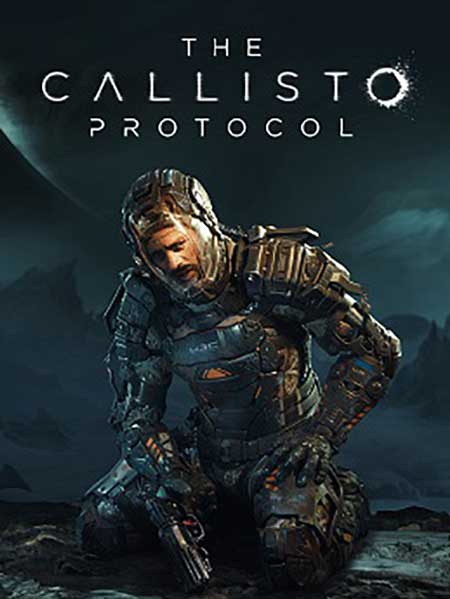
    Facebooktwitterlinkedinmail
  • Nier Replicant – Game Review

    Nier Replicant – Game Review


    Nier Replicant

    (Whoever decided on this title, thanks for making my job harder.)

    While Nier may be a bit more well known today, after the success of Nier Automata, both the series as well as it’s creator Yoko Taro have been very unknown for quite some time. The original game didn’t end up selling too well overall, only selling around 700,000 copies to date and also led to the closure of its development studio Cavia. Despite that though, the game still got a cult following and received acclaim for its great characters, story and soundtrack. 

    As it turns out, there were actually two versions of Nier, there was Nier Gestalt, which was the version that got a worldwide release, and then there’s Nier Replicant, which only got a Japan release. Both games were mostly the same, with the main differences being the main character’s appearance and his relationship with a character named Yonah. As mentioned, Nier Replicant never got an official worldwide release, until recently when we finally got a remake of the game with Nier Replicant ver.122474487139… on the 23rd April 2021 for Xbox One, Playstation 4 and Steam. 

    In Nier Replicant ver.122474487139… you take on the role of Nier (in truth you’re able to name him but most people just call him Nier), taking care of his sister Yonah who suffers with a deadly disease called the Black Scrawl. One day Yonah learns of a tale of a flower called the Lunar Tear and ventures out to find it. When Nier finds Yonah within a place called the Lost Shrine, he comes upon an ancient tome who calls himself Grimoire Weiss, a book that contains magic powers that our protagonist is able to wield. He learns from his village chiefs Popola and Devola that Grimoire Weiss, with the power of pages called the Sealed Verses, may be able to cure Yonah of the Black Scrawl. And thus they set off in search of the Sealed Verses and a mysterious being named Grimoire Noir. 

    As to be expected, the game is a massive improvement presentation wise compared to the original. From the character designs, to the colouring and lighting, the visuals have had a major facelift and look so much better when compared to their original counterpart. The game carries the same soundtrack as the original, with a few more songs added in, and it’s just as haunting and epic as it always has been. Each song perfectly accompanies the situation, heightening the tensity and the emotion that the moments, whether gameplay or storywise, bring with them. The characters also deserve some major praise, all of them are seriously well written and are casted perfectly, with actors like Liam O’Brien as Grimoire Weiss and Laura Bailey as Kainé really helping in heighten the characters personality and mannerisms. 

    The game plays in the style of a hack and slash RPG, where you explore an overworld completing tasks and killing enemies named Shades all the while. The combat of the game isn’t too complicated as there aren’t any button combos and most of it revolves around mashing and holding buttons. You have two strings of attacks that can be performed by pressing the X/Square button and the Y/Triangle button. At any time during the combos you can hold down the button and release a more powerful attack. At the start of the game you only have access to a single type of weapon, a one-handed weapon, though as you progress in the game you’ll eventually be able to wield two-handed weapons and spears. While I personally prefer the spears to the others, I still found myself swapping out weapons very often for different groups of enemies. At aid in combat you also have the magic powers provided by Grimoire Weiss, which will let you perform powerful attacks both at a distance and up close. You’re only given a few of these powers at the start, though you quickly learn them as you progress through the game. While you can only equip a maximum of four spells at a time, you’re able to change them whenever needed just by going into the menu; and you’ll quickly find your favourites. Personally I found myself favouring the Dark Hand, Dark Spear and Dark Gluttony. When a Shade dies there’s a chance that they’ll drop what’s called a word, when they do you’ll gain extra benefits like an increase in strength, magic power or allowing you to gain slightly more exp. While the combat can get tedious at times, the flashy animations and the switching of magic and weapons will keep you engaged. 

    Just like in all other JRPG’s, as well as your main quest you’ll also be able to perform a number of side quests for the locals within your village. In doing so you’ll be able to receive more money to buy healing items and more weapons for your arsenal. That being said however, unlike in most games like this where you’ll have to pry me away from the side content to actually finish the main story, I rarely ever found myself completing any of the side quests. Most of them are nothing more than fetch quests that give you pretty much no direction as to where you have to go for the items, meaning that you have practically no choice but to use a guide. Plus, you can just get money from selling materials that enemies drop anyway, so there’s not too much point in completing side quests. 

    Another slight gripe I have with the game is that, for me at least, the jump in the normal and hard difficulty options are way too steep. I played most of the game in hard mode (I’m a masochist okay) and I found myself dying a ton and was consistently getting frustrated, as moments that would probably be somewhat of a challenge normally felt increasingly unfair and it felt like I was surviving them by sheer luck alone. It was around the 15 hour mark that I finally bit the bullet and decided to try on normal difficulty and I ran into the opposite problem. The game all of the sudden became way too easy and I didn’t die once, suddenly all the tension I would normally have felt simple vanished. While I did still have a good amount of fun in normal difficulty, I do wish that there was a bit more challenge to it. 

    The biggest problem that I had with the game though was the camera and lock-on system. The camera is absolutely atrocious, wherever you run it’ll always stay stationary and won’t follow where you run, meaning that if you want to be able to see where you’re going you’ll have to turn the camera manually, what’s worse is that there’s no option in the menu to change it at automatic. It becomes incredibly annoying very quickly and the frustration only increases as you keep playing. It’s especially annoying since Nier Automata does have an automatic camera (I mean, it’s not a good once but it’s still there) so there’s no excuse for this game not to. Then there’s the lock-on system, the game will automatically lock-on to the nearest enemy and have all your attacks focus on it, manually locking on to an enemy just keeps it on screen. While this isn’t too annoying in a battle against a horde of smaller enemies, it becomes really annoying when you want to focus on one enemy in particular and the game locks you on to one of the smaller guys, especially in boss fights. Even then, if you manually lock on to a certain enemy, all the game does is keep the enemy on screen and not have your attack centre on it, at times it doesn’t even put the enemy in centre focus. 

    Despite all these problems however, I still kept going as there were still some really epic moments and awesome fights that made me ignore the problems and also because I was so attached to the characters and so in love with the story that I felt it was necessary to see it through to the end. 

    I’ll happily be the first to say that Nier Replicant ver.122474487139… is far from perfect, there were plenty of times where I got super frustrated with the game and even got a little bit tempted to stop playing like I did with Oddworld: Soulstorm (just wait till that review), it even led to this review sounding like one huge rant. Despite that though, this game did eventually win me over and I fully acknowledge that I did have a lot of fun with it and I’ll definitely be coming back to it to get those other endings at some point. Personally I would definitely recommend Nier Automata over this game for anyone new to the series, but I’m still sure that if you give this game a go that you’ll have a good time with it. It’s not an amazing game, but it’s far from terrible. 

    7.5/10

    Elliot Chapman
    Anime Amigo and Nerd Consultant

    Share This Post:
    Facebooktwitterlinkedinmail