Author: Elliot

  • Onimusha Way of the Sword – Game Review

    Onimusha Way of the Sword – Game Review

    Onimusha is a series with an interesting history. What started off as “Resident Evil but with ninjas” eventually turned into one of the progenitors of the modern-day hack n’ slash – even being the inspiration for Devil May Cry – with two sequels, a few spin-offs and even a cancelled live action movie. Though since 2006 the series has been surprisingly dormant. After the fourth mainline game Onimusha: Dawn of Dreams we’ve only had four releases, two remasters, a browser game and a VR game. So, it was definitely a shock when, after 18 years without a proper new entry, we got the announcement of Onimusha: Way of the Sword at The Game Awards in 2024. Not only the first new entry in two decades, but also a fresh start for the series as a whole. But has time been kind enough for this series to be able to stand with Capcom’s legendary library, or is this a relic that should have stayed buried? Onimusha: Way of the Sword was developed and published by Capcom and released on 4th September 2026 for PlayStation 5, Xbox Series X/S, Nintendo Switch 2 and PC.

    Story

    The story follows Miyamoto Musashi, a samurai who spends his time travelling Japan and fighting anyone who’s said to be strong. After one such battle, and just as another against Musashi’s “eternal rival” Sasaki Ganryu is about to begin, he is attacked by a gang of monsters known as Genma, an attack that leads to the deaths of the two samurai. However, Musashi’s descent to hell is intercepted by a man in white who forces an unusual gauntlet onto him, bringing him back to life. The gauntlet grants Musashi the strength needed to slay the Genma, though this leaves him infuriated as he’s no longer fighting using his own strength. A voice from within the gauntlet instructs Musashi to find a man named Ono no Takamura. From there Musashi journeys to Ezo, killing Genma all the while, to help protect the people of Japan and, more importantly, find a way to get this damn gauntlet off his arm.

    The story of this game is a lot of fun. Most of the enjoyment I got from it were the characters who are just a delight. Miyamoto Musashi is a great main character, he’s cocky and arrogant without it becoming grating, and while he does have some very goofy moments, when the story calls for a serious moment, he absolutely reciprocates. And while the heroes are great, it’s the villains who steal the show for me. Yoshitsune in particular is a fantastic antagonist, being a bit goofy and playful at times but that does not make him any less intimidating or conniving. In my opinion, he’s Capcom’s best villain since Vergil in Devil May Cry.

    Presentation

    Another Capcom review, another opportunity for me to praise the RE Engine. Graphically this game looks amazing, the locations you explore are brimming with detail, looking liveable enough to make it believable that people are still living there, though still looking downtrodden to show that there is a demonic invasion. I especially love the character designs as they are the perfect representation of each character personality – like Musashi having the ragged clothes of a travelling warrior, or Ganyru’s loose outfit matching his permanent smile – the facial animation is brilliant in this game as well. I also have to praise the designs of the Genma, these guys really look like demons straight from hell, with the boss Genma looking the most unique and intimidating.

    I played this game on the PS5 and the framerate for it was absolutely perfect. As far as I could see there were no drops no matter how hectic the combat got, running at a consistent 60fps throughout the entire experience.

    I played this game using the English dub though in my second playthrough I am playing it in Japanese, and I think both dubs are great. Both actors of Miyamoto Musashi bring out different sides of him, with the Japanese actor, Yoshimasa Hosoya, fitting better with his more serious side, while English actor, Kenichiro Thomson, matching his goofiness better. I especially have to give praise to Shogo Miyakita who played both Ono no Takemura and Minamoto no Yoshitune, he plays both characters perfectly, making Takemura sound louder than life while Yoshitsune sounds perfectly conniving and overconfident. I do prefer the Japanese dub a bit more, though I think that both are very good.

    The soundtrack, like many other games in this setting, uses a lot of traditional Japanese instruments like woodwinds and shamisens. Many of the songs are quiet and ominous, fitting the dark setting almost too well (honestly at times they wouldn’t feel out of place in a horror game). You do also have more theatrical and grander songs that fit in a boss fight or a character motivating cutscene and they sound fantastic, making the moments feel epic and important. Generally, this is a great soundtrack, possibly one of Capcom’s best in a while.

    World Design and Exploration

    In this game, you’ll be spending most of your time in the city of Kyoto. This is an open area where you’ll find most of your activities, from collectables to side quests to random skirmishes with Genma. Kyoto is a pretty decent size, definitely big enough that warping to checkpoints is a necessity. Much of the city will be blocked off at first due to Malice spread by the Genma, though these areas will open themselves up through story missions. As mentioned, while exploring the streets you’ll have multiple encounters with Genma either dragging dead bodies, harassing locals or desecrating temples. The groups are never big, and you always have the option to avoid combat if you want – which is good as too many of these fights in a row can get a bit tiresome. One thing I do really like is that the map will point out the location of every quest or collectible in the city once you’ve eradicated the Malice in said area, almost prompting you to explore more.

    There are other locations outside of Kyoto though they are much more linear, having a much more obvious start and end point. You have to teleport to these areas from Kyoto via the Spirit Mirrors, which is where you also learn new skills, level up equipment and access your storage box. These (let’s call them…) dungeons have a number of the same collectibles as Kyoto has though much less of them, focusing much more on fighting stronger gangs of Genma. On occasion you’ll find something blocking your path, this can be in the form of balls of thread attached to spiders that you have to find, or giant walls of Malice that require a specific power for you to open.

    Combat and Enemy Design

    Onimusha: Way of the Sword is a hack n’ slash game that I would say is a combination of Devil May Cry and Sekiro: Shadow Die Twice and even then, I wouldn’t call that an amazing comparison. Musashi has a light and heavy attack, but no way to combine them into combos, however it’s not just a mindless button masher. Instead, this game relies heavily on reacting to your opponents and timing attacks. Like every other action game lately, this game has a parry mechanic, where you have to block an enemy’s attack just as it’s about to land, but you have other options that require their own timings and each bring their own benefits with them. Parrying will cancel most enemy combos and will “ignite” your sword if done enough times, parrying will also not deplete your stamina bar, whereas just blocking will. Deflecting (yes this is different to parrying) will decrease an enemy’s poise meter, doing so will let you deal heavy damage to the opponent. Dodging perfectly will let you perform a counterattack. And if you hit the attack button just as the opponent is about to hit you, you can perform an attack called an Issen, which will kill most normal enemies in one hit. I love that every form of avoiding attacks brings its own benefit, so you won’t be relying on just one, and each of them are satisfying and challenging to pull off, ensuring that the combat is always engaging and takes a while to get tiresome.

    There are other kinds of clashes in this game that can either deal a lot of damage to Genma or can punish you if you’re not careful. One of these is called a Blade Barrage, this happens when yours and an opponent’s attacks hit simultaneously, to get out of this without taking any damage you have to use the opposite kind of attack that you used when entering the Barrage (using a light attack if you did a heavy attack when the Barrage happens for example). This may sound easy, but, in the chaos of battle, I found myself often forgetting what attack I used when entering the Barrage, so I only had a couple of seconds to guess the right attack to use. The Blade Lock is a much simpler mechanic where you and your opponent will lock swords and try to overwhelm the other with strength, literally all you have to do with this one is mash the attack button until you win.

    When a Genma is defeated, they will drop a series of souls that you can then absorb into your Oni Gauntlet. There are a variety of different coloured souls, red acts as currency for buying items or obtaining select skills, yellow will restore some of your health, and the other colours will increase a particular gauge for your various powers.

    Don’t think that your sword is your only weapon, as throughout his adventure Musashi will be granted a series of Oni Armaments. Each of these weapons are best used for different situations and will be a great asset in a struggle, like the Two Celestials extracting a bunch of yellow souls to help you restore health, the Wind-Whipper will summon a mini tornado to damage enemies close to you, or the Firebird Flute launching three fireballs at a targeted enemy. These cannot be spammed however and have a gauge that will require you to gather Genma souls to be able to use. Because these weapons work so differently, I never stuck with just one, swapping them around constantly depending on the situation, which I really like.

    Speaking of Genma, there is a decent variety in the number of enemies you’ll encounter, and each of them work very differently from one another. These monsters have very different methods of trying to take you out, from common Hitotsume Gasa possibly wielding different types of weapons, to the Togemaru rolling and spinning at rapid speed to strike you with the spikes on their backs, or the nightmarish Chijiko splitting into two if you attack them without destroying their weak point first. These enemies are fairly easy to get the hang of, though still enough of a challenge to ensure that you won’t let your guard down.

    I’m just going to come out and say it, this game has possibly my favourite boss fights of the entire year. These fights are incredible; the combos are complex though still feel fair and are incredibly satisfying to master. You will fight some of these bosses’ numerous times, though with enough differences to make them feel at least a bit unique. When bosses deal a large chunk of damage to you, they will extract some of the souls from your gauntlet and absorb them to become more powerful, possibly even gaining power boosts required for second stages early. Whenever you deplete their poise meter, you’ll be given a number of choices on which body part you want to attack, symbolised with a colour. Attacking one of the red body parts will deal a ton of damage, however attacking one of the purple ones will deal less damage and drop a large number of souls. Each fight is challenging and will likely take you multiple goes in order to get right, but holy hell they are so much fun.

    Collectibles and Side Activities

    There is a large amount of side content for you to do, so I’ll try and keep this brief. One of the main ones is labelled as Chance Encounters, basically side quests that will be given to you from random citizens of Kyoto. These will more often than not just require you to kill a couple bands of Genma, not really any different from your usual random encounters, but hey, at least you’re getting rewarded for these ones. There are others that will require you to do certain challenges, like use your bow (oh yeah, you have an Oni Bow by the way), to hunt and shoot down five hidden Genma in some of the locations outside of Kyoto, or to find a hidden treasure chest within the city.

    Someone called Lady Murasaki, a very literal ghost writer, will have a couple of requests for you to do. Some will be the Mysteries of Kyoto, where Musashi will have to pull out his detective hat and solve some of the strange happenings within the city. These are similar to the Chance Encounters, except with a bit more story and even their own cutscenes, though they do still end with you fighting a bunch of Genma. She’ll also ask you to hunt for her Lion Dogs (basically shiba-inu’s with extra padding around the neck), these will be spread throughout each location you visit and collecting them will reward you with some cosmetic goodies if you want to dress Musashi up a little.

    Aside from those, the rest of the things you can collect mostly just contribute to upgrading Musashi. Materials to upgrade your equipment, Power Stones to unlock skills that red souls will not, unique Hozuki Pouches – your main healing item – that will restore different properties and possibly fill up certain gauges. Basically, things that will help you survive in this world.

    Conclusion

    I genuinely don’t know how Capcom are doing it. In a year where we had two fantastic games with Resident Evil Requiem and Pragmata, they somehow manage to release a game that possibly even surpasses them. This game is absolutely fantastic, the combat is satisfying and addicting, the world is fun to explore, and the characters are truly some of Capcom’s greatest. Whether you’re a fan of the older games or this is the first time you’re hearing about it, I cannot recommend this game enough to you. It’s some of the most fun I’ve had this entire year, and I severely hope that it leads to a bright new future for the Onimusha franchise.

    FINAL SCORE: 9.6/10

    Elliot
    Anime Amigo and Nerd Consultant
    Share This Post:
    Facebooktwitterlinkedinmail
  • Splatoon Raiders – Game Review

    Splatoon Raiders – Game Review

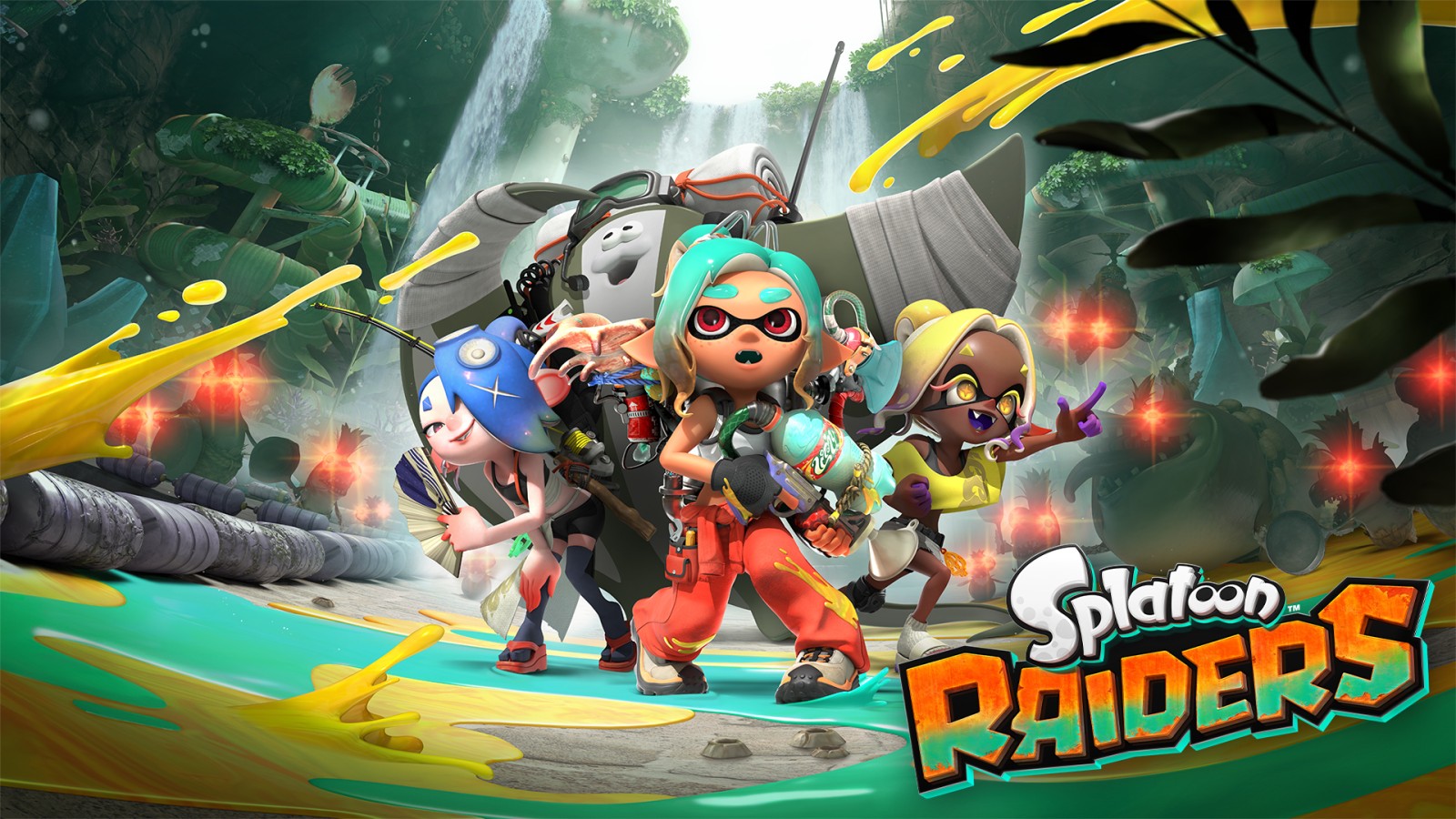
    As I’ve said previously, I am a huge fan of that Splatoon franchise… though only in terms of the multiplayer. While I have played a bit of the single player mode in each game, I’ve never been a massive fan of them, much preferring to duke it out with fellow Squidlings than play around in obstacle courses. And I know I’m not the only one, so see my surprise when I heard that they were making a brand new single player Splatoon game. While first hearing about it I was skeptical, I was also mildly curious about it. And being the big Splatoon fan that I am, I felt morally obligated to at least give it a try. Splatoon Raiders was developed and published by Nintendo as a Nintendo Switch 2 exclusive and was released on the 23rd July 2026. 

    Story

    This game follows the idol group Deep Cut, consisting of Shiver, Frye and Big Man, who apparently have a side gig as treasure hunters. They are flying in a helicopter towards the recently resurfaced Spirhalite Islands, in hopes of pillaging the place of whatever loot they can find. However, a mishap during flight, forcing the pilot to make a crash landing. A month goes by and we find the group stranded on a ship made out of junk constructed by the pilot, who they now call the Mechanic (who you play as). During an expedition where the Mechanic goes to look for more building materials, they come upon a strange looking robot. After returning and fixing it up, it displays the location of various treasures spread throughout the island. Deep Cut sees a golden opportunity in this, deciding to use the robot to resume their plans of looting and plunder. It is now up to the mechanic, with the aid of Deep Cut to traverse the island, battle its inhabitants and seek out that sweet loot. 

    The story is fine. This really isn’t a story focused game, it being told through the occasional conversation between the members of Deep Cut. There is some mystery to the island, mostly with particular relics, which can be interesting. Though ultimately, the game really doesn’t have that heavy of a focus on its narrative. 

    Presentation

    Despite being on a more powerful console, graphically this game doesn’t look that much different than Splatoon 3. There is a slight improvement to characters and environments, though you wouldn’t notice unless you were really looking. It’s not like there’s much to improve upon as Splatoon 3 already looked very good and I’m not sure what could be changed or added to make it look better, so there isn’t really anything to complain about there. 

    Environments, if I’m being honest, are kind of boring. Now I’m not expecting anything as expressive or full of personality as the multiplayer stages in previous games, but I was expecting a little more than plain environments that feel more like level set pieces rather than actually livable areas. None of the levels really stand out compared to one another, and because of that, none of them end up being particularly memorable. 

    This game runs really well both docked and handheld. It can get very chaotic at times, with what feels like dozens of enemies on screen at once, each throwing different kinds of attacks at you, and yet I never once noticed a drop in framerate at all. If that doesn’t convey the power of the Switch 2 then I don’t know what will. 

    If there was anything that disappointed me with this game, it was the soundtrack. Splatoon is known to have very upbeat and loud soundtracks that perfectly match the mayhem going on in the game. And yes I would be lying if I said that there weren’t songs that matched those games, the music playing during the final boss comes to mind. But most of the songs really don’t work for me, having a jungle sound that fits more in a Donkey Kong game than Splatoon. And even then, some of the songs sound bloated, like there are too many sounds happening at once, making me feel overwhelmed when listening to it. Personally, I’d take any of the previous game’s soundtracks over this one in a heartbeat. 

    Level Design

    If you’re expecting this game to play like the single player mode of the normal Splatoon games, you’d be mostly mistaken. I see those levels more as obstacle courses than anything else, almost treating them like training for the multiplayer portion. This game’s levels revolve way more on fighting Salmonids than platforming. 

    There are three main types of dungeons that you’ll be playing through,Treasure Hunts, Shard Mining, and Multilevel dungeons. The Treasure Hunts will feel most like the single player modes in other Splatoon games. With these you go down linear pathways and defeat enemies that get in your way in an attempt to obtain the treasure at the end. At certain points you will be forced to defeat a band of Salmonids to be able to move on, with you being rewarded with a crystal that you can mine for shards – two small ones mid level and one large one at the end. It’s also here that you’ll do most of the platforming, nothing complex, mostly cliffs or rail obstacles, but still something there for those who did enjoy the previous games’ obstacle courses. These levels are the simplest, but they are also my favourite type. It was honestly fun to run through them as fast as possible, it was also here that you got to discover new enemy types and learn to defeat them before the game goes relentless with them. 

    The Shard Mining Dungeons are way more open than the last, giving you a giant island to wander around. Spread across this island are a series of crystals guarded by bands of Salmonids, defeat them and you’ll be able to mine the crystals for shards. Now, despite mining crystals being the main gimmick of these dungeons, collecting them isn’t what your main goal in the game is, in fact it’s actually the gathering of Power Eggs dropped by enemies. You see, to beat the level you have to mine a giant crystal at its starting point, and to do so requires a large amount of Power Eggs to make the robot’s drill strong enough to break it – arguably the other crystals are optional. These were probably my least favourite levels in the game, though that doesn’t mean I disliked them, I just found the act of exploring the island looking for the crystals to be a bit of a slog at times. Crystal shards are an important currency in this game, therefore you’ll no doubt be coming back to these to do a bit of grinding. Especially as the crystals and enemies will respawn after a while, so you could arguably stay here for hours if you’re patient enough. 

    The final level is what I call the Multilevel Dungeons. These ones are where the game goes from a little crazy but manageable, to down right psychotic. Your task in these is very simple, kill Salmonids until you collect enough Power Eggs to move on. Sometimes these will only have one floor, though oftentimes you’ll have to descend and repeat this two more times. These dungeons can get ludicrously difficult if you’re not careful, it is very easy for you to get bombarded with enemies, spraying their own puke coloured ink and giving you little to no room to get away. Some of these dungeons will only have you battling one type of enemy, which can make gathering Power Eggs really easy or rage-inducing depending on who you’re up against. These dungeons and I have a very love-hate relationship, on one hand they can be very fun and satisfying to play, but on the other hand they can feel borderline unfair at times, to the point where beating them feels like pure luck. 

    When you’re not battling your way through armies of Salmonids, you’ll most often be resting on the hideout ship. It’s here that you’ll be preparing for upcoming hunts by doing things like upgrading weapons and your tank – giving you more health or letting you deal more damage amongst other things. You’ll also be able to see what relics and treasures you’ve gathered up and do research on enemies and lore found on the scrolls you can collect. 

    Combat and Enemy Design

    Combat is, well, pretty much the exact same as any other Splatoon game. Using an assortment of weapons, like guns, bows and arrows and giant paint rollers, you’ll have to spray multicoloured ink onto your enemies while ensuring the terrain around you is covered in ink of your colour instead of the Salmonids. Of course, this time around covering the stages with your ink isn’t as important, as Turf Wars aren’t a thing this time around. It’s still important as it makes traversal easier and refills your ink tank once you’ve run out, but you won’t find yourself doing it as relentlessly this time around. 

    Your weapon pool consists of the exact same types as you had in Splatoon 3 with no new additions. The main difference is that these weapons aren’t bought but found within dungeons, and they have rarities and levels. The levels will of course determine how much damage these weapons deal and can be increased a maximum of five times (unless it’s a five star in which case it can be upgraded indefinitely). The rarity of the weapon however dictates what additional powers these weapons have, powers that include reducing the amount of ink the weapon uses up, being able to freeze or set enemies on fire, being able to recover health faster, amongst others. The higher the rarity the more powers the weapon has installed. 

    In this game you have three unique tanks, Speed, Power and Tactical. These tanks will not only determine the gadgets you’ll be using, but pretty much your entire playstyle. Gadgets are similar to the Special Weapons from previous games, weapons that can deal explosive damage when played. These weapons can be used whenever but will have to cool down before they can be used again. The Speed Tank focuses mostly on mobility and swiftness. The Power Tank does heavy damage with attacks that are more widespread. And the Tactical Tank uses more traps and tools to aid in battle rather than deal heavy damage. For me personally, the Speed Tank fits my fast paced playstyle much more than the others, and lets me avoid being surrounded much easier than the others did. Though they all work equally well, it just depends on how you like to play the game. 

    As the previous section implies, the robot you found at the start of the game joins you on your journey, though it’s used for far more than just drilling through crystals. One of the members of Deep Cut will pilot it (meaning I probably should have been calling it a mech rather than a robot… sorry Reece), and they will be of great help in dungeons. They can do things like shoot at enemies you’re too preoccupied to deal with, let you jump on it to give you a massive air boost, which is required for some dungeons and greatly helps fight off some enemies, and you “bot buddy” will even have a powerful special attack that can be activated once you’ve collected enough Power Eggs – the attack that is pulled off depends entirely on which Deep Cut member you bring along.

    Finally, let’s talk about the island’s natives. There are a large variety of Salmonids that you’ll have to face, with each one requiring a different method to combat. The normal “Lesser Salmonids” will just swing at you with spoons of various sizes, though the “Boss Salmonids” not only look different but use very different attacks to each other. Like the Flyfish flying using jetpacks and firing missiles at you (those can be a pain), Steel Eels piloting long machines with one little guy at the back that you have to shoot (those ones really are a pain), or the Stingers being on top of a stack of pots shooting one continuous spray at you which can somehow shoot through walls (and these ones genuinely make my blood boil). There are even stronger variants of the Boss Salmonids, which will drop a ton of Power Eggs once defeated, which is good because, holy hell, they are tough to deal with. What I like though is that it’s not just the stronger Salmonids that you have to worry about, as you see, when you run out of health you enter the danger zone, if you get hit once while in this state you instantly die and lose one of your lives, meaning that even the tiny Smallfry are a massive threat – in fact it’s them who have probably killed me more times than any other. 

    Post Game Content

    Now it’s not often that I talk about post game stuff, but I feel like it’s worth talking about this time around. To start off, once you’ve beaten the game you’re able to replay previous missions on a higher difficulty. If I’m being honest, I’m generally not a massive fan of this. It just feels kind of lazy, especially as there’s no change to the enemies you fight in these levels, they have more health and deal more damage, but ultimately feel the exact same. 

    So is there anything actually new to play through in the post game? Actually there is, there’s the Bottomless Buffet. This is a series of infinitely descending Multilevel Dungeons that get progressively more difficult the further down you go. Now, I’ll be honest, I didn’t struggle that much in this game, yes there were some levels that took me longer to beat than others, but I didn’t have too hard of a time with it… until the Bottomless Buffet. These floors are ludicrously difficult, to the point that they don’t even feel fair. The dungeons will just bombard you with enemies and will give you barely enough time to be able to collect enough Power Eggs to move on. You can’t even go off and grind for a higher level or better weapons, as eventually your level cap will max and you’ll receive minimal upgrades after that. I wouldn’t mind it too much if this was just an endurance test, but seeing as this is a must do to be able to fight a secret boss and unlock the secret ending, it feels like too much of a difficulty spike. I reached floor 79 before deciding I couldn’t stomach it anymore. 

    Conclusion

    Now the question is, is this as good as the other Splatoon games? Honestly, no. I found those games to be way more fun and replayable. Though that doesn’t mean that this isn’t still a damn good game. I had a ton of fun with Splatoon Raiders, the combat was as fun as always, the challenge was balanced and engag

    ing, and whenever I failed a run it just made me more eager to go back in and give it another go (except for Bottomless Buffet… obviously). If you’re a fan of Splatoon then I seriously recommend this to you, and even if you’ve never played a game in the series, I think this will be a great game to dip your toes into to see if it’s the series for you. 

    FINAL SCORE: 8.7/10

    Elliot Chapman
    Anime Amigo and Nerd Consultant
    Share This Post:
    Facebooktwitterlinkedinmail
  • The Adventures of Elliot – The Millennium Tales Game Review

    The Adventures of Elliot – The Millennium Tales Game Review


    The Adventures of Elliot – The Millennium Tales

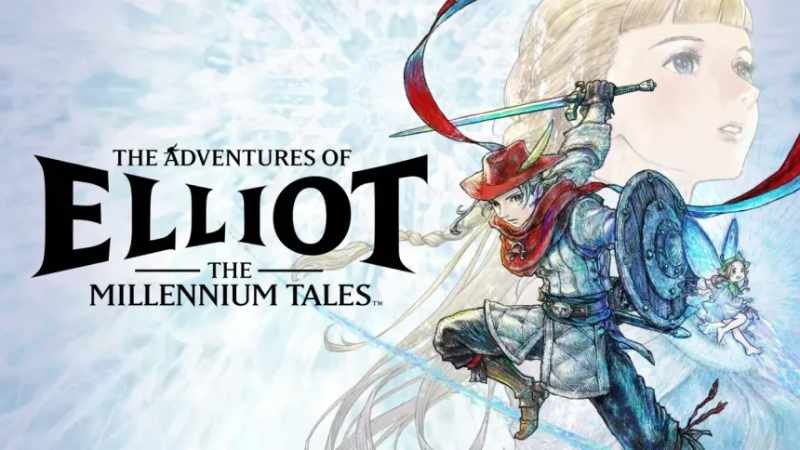
    Let’s talk about the name Elliot to start off. The name Elliot (or Elliott if you like to spell things wrong), is a variant of the name Elijah and in Old English means “the Lord is my God”. It can also mean “With Strength and Right”, “Boldly and Rightly” or “Bravely and Truly”. Elliot is not a common name you find in fiction, although there are examples of the name showing up, like Elliot Alderson from Mr Robot, Elliot Carver, the antagonist of Tomorrow Never Dies, and of course Elliott Taylor from E.T… It also just so happens to be my name, so imagine my shock when a game called The Adventures of Elliot: The Millennium Tales was announced in a Nintendo Direct on 31st July 2025… Yes, the entire reason I’m reviewing this is because the main character and I share the same name… just roll with it. The Adventures of Elliot: The Millennium Tales was developed by Claytechworks and Square Enix, published by Square Enix and released on 18th June 2026 for Playstation 5, Xbox Series X/S, Nintendo Switch 2 and PC.

    Story
    The content of Philabieldia is one infested with beast tribes, animal humanoids that kill any human on sight (a likely fantasy for the furries of the world), therefore humanity lives behind the walls of the Kingdom of Huther, protected by the spell of safekeeping. You play as Elliot (you have no idea how weird it is to play as a character who has the same name as you), an adventurer and one of the only people brave enough to venture outside of the kingdom. One day he is called upon by King Hichard and his daughter Heuria to explore some ruins that have been recently discovered, despite the objection from the king’s aide Kaifried. Elliot discovers that the ruins lead to a Doorway of Time, a gateway to the past. After relaying this to the king, Kaifried defies orders and heads to the doorway himself with plans to change the past and make himself king. Elliot confronts the king’s aide, though the battle ends with his defeat. Elliot is miraculously brought back to life by the powers of a small Fairy named Faie, that only he can see for some reason, and discovers that he has awakened in the past. It is now up to our titular hero to go on a journey through time, exploring new ages, and meeting new friends in an attempt to put an end to Kaifried’s plot.

    I actually really like this story. It starts off simple and ramps up as the story progresses, having deeper levels as the events of the past begin to add to further context in the present. The characters are quite fun as well, again, pretty simple without a lot of depth – aside from one or two – but you quickly grow to love them and almost become sad to see them go when the adventure ends.

    Presentation
    This game is another one of those 2D-HD games that Square Enix enjoys doing. And, while I can admit that it’s certainly been done too much, it really does look pretty. Having 3D environments juxtaposed with the 2D sprites really makes the details pop and stand out – especially with details like light coming from fire or the shine of crystals. The particle effects from attacks or cutscenes when characters start overflowing with power are especially great, making the fights feel grandiose and strengthening the impact of each blow.

    Character designs are great as well. During cutscenes, characters will be portrayed with illustrations of themselves and are all brilliantly drawn and perfectly capture their expressions in the moment. The pixel sprites also look great, perfectly capturing the characters details despite the restrictions, they look like they come straight out of a JRPG on the SNES like Chrono Trigger or Final Fantasy VI.
    I played the game on the Switch 2 and while docked it runs really well, if there were any dips in framerate I certainly didn’t notice them. That being said, I definitely noticed a drop in performance when playing in handheld mode, especially when exploring the overworld or just after you’ve teleported somewhere. It’s not enough to ruin your experience, but certainly enough to notice.

    The soundtrack is mostly just fine. It perfectly fits the somewhat easy-going fantasy setting, with a combination of calm and epic songs. Sadly though, there’s nothing that really makes it stand out from other games of the same style. It’s not a bad soundtrack, just mostly unmemorable.

    Combat and Enemy Design
    If I had to compare The Adventures of Elliot to any other game, it would have to be The Legend of Zelda: A Link to the Past. You have a number of weapons, you get a couple through story progression though you have to explore for most of them, and two slots that you can equip them to. The weapons in this game aren’t that different from what you’d find in your traditional fantasy adventure game, a sword, bow and arrows, bombs, a spear, honestly the most extravagant one you have is the chain and sickle. While some of these weapons are necessary for particular obstacles – most notably the bombs needed to blow up cracks in walls – you don’t really need most of them for certain situations or enemies. I don’t mind this, but it would have been nice to have had particular enemies that were weak to one weapon or require one to be able to hit, mostly just so I wasn’t using the sword and bow for 90% of my playthrough.

    Each weapon in this game has a quick attack and a charged attack. The quick attacks are just single swipes or stabs or shots, while the charged attacks will have extra abilities outside of heavier damage, like the sword shooting a projectile after a slash, or the bow firing multiple arrows at once, or the chain and sickle being swung through the air while you’re charging it up. It makes each weapon feel more unique and gives you more ideas on how they can be utilized. As you explore the world you may encounter stronger weapons to replace your older ones, the main benefit of these is a much stronger charged attack. You also have access to a shield that can not only block enemy attacks, but also stun them if you time the block perfectly (yes even this game has a parry mechanic, I would say I’m sick of it if I didn’t use it all the time). The shield does have a durability metre and will not allow you to use it for a short period if it depletes.

    When you kill an enemy, it starts a chain. The chain will keep going up as you kill enemies which will end when you next get hit. The more your chain rises the better enemy drops you’ll receive. It adds a unique way to encourage you to improve and to learn enemy patterns and avoid taking damage.

    One thing that will greatly help you in battle is Magicite. These small gems can be equipped to weapons and will add additional effects to your attacks, such as increasing your critical rate or damage, adding status effects to your attacks, or further effects that would only work with the equipped weapon. Each magicite is weapon exclusive, and the stronger the magicite, the more it will cost to equip. You can gain more magicite and level up the magicite box – which will let you raise the max cost limit of what you can equip – at specific vendors.

    Enemy design is honestly kind of disappointing. The enemies themselves are fine, there are three kinds of enemy per beast tribe, they each only have a couple of attacks that you can figure out quickly, the main challenge is trying to juggle fighting multiple kinds at once. The main issue I have is the lack of variety. The enemies that you encounter at the beginning of the game are the same as the ones that you’ll fight close to the end, and it never feels like they get any tougher. It’s especially disappointing when you consider the fact that you’re literally travelling through time, it would have been really cool to have fought different enemies in different time periods, instead of the same humanoid chicken wielding the same bow from two ages ago. It’s not a deal breaker, but it would have been nice and possibly even immersed me in the world a little more.

    The bosses on the other hand are a definite highlight of the game. These fights are very challenging with each boss having a variety of attacks for you to learn, and even once you do, they can prove to be a worthy adversary. You will have to fight some of these bosses more than once, though they do often have new gimmicks so it’s not the same challenge you fought before.

    Of course, you’re not going on this adventure alone, as you have your fairy companion Faie journeying with you. She can be controlled with the right thumbstick or by a second player (a fate given to all the little brothers who want to play), and she has her own variety of powers to help you. These include Ignite, where she sets herself on fire to light torches to deal damage to enemies, Sprint which lets you zoom forward at a rapid speed, or Copy letting her become a clone of Elliot temporarily, to name a few. What I like about these abilities is that they aid in both combat and exploration, meaning you’ll find new ways to use them and will be using them constantly throughout your playthrough.

    The one power of Faie’s that I don’t like is her ability to revive you. Simply put, if you die in the game, Faie will be able to bring you back from where you fell, at the cost of some of your currency, with the cost doubling every time you fall. This makes death feel way less impactful and almost doesn’t incentivise you to avoid getting greedy – especially if you don’t care about building up a chain – or perfect boss fights as there’s little consequence for doing so. Some people won’t mind this, possibly like this even, but I really wasn’t a fan and would have preferred the game without.

    Exploration and World Design
    The continent of Philabieldia is evenly split into six different types of environment. These aren’t anything you wouldn’t find in any other fantasy game, you have your usual snow-covered land, a desert, a volcano, amongst others. You do encounter different types of enemies in each of these areas, like frog-people in the swamp area or rat-people in the desert, which I do like as it makes sense for particular animal races to prefer one environment to another, making the world feel a little deeper.

    The map in each age is pretty much the exact same, building and caves are in the exact same place, temples and dungeons are essentially unchanged, the only real difference is the state and layout of the human’s city and the environment being coloured differently. I don’t mind this too much, as it makes navigating each age easier, meaning I won’t be wasting time trying to get somewhere that I’ve already visited previously (though I did still get lost quite often trying to get to a previously visited temple). That being said though, navigating through this world is a bit more difficult than it may seem at first. This world is rife with blocked pathways, secret tunnels and, lord forbid, small twigs that you can’t step over or cut down – the greatest foe of any adventurer. This game does really encourage going out of your way to find more unorthodox methods of reaching your destination, like going to an entirely different environment just to circle back to the previous, or traversing caves filled with enemies. One thing I do really like with the caves is that once you’ve explored one it will tell you in the map where the exits will leave you, once again helping out those deep explorers. Some pathways will also require a new ability, meaning that you’ll have to backtrack there at a later date. While I do like this, it did lead to embarrassingly long periods where I was going back and forth trying to figure out what the right way forward was.

    Regularly, you’ll find wrap points spread throughout the world, meaning that you’re not forced to run everywhere. These also act as save points, though the game does autosave very often so it acts more as a bit of extra security. Just like everything else, these warp points are in the exact same spots in each age, though you will have to find them again in a new era to be able to use them.

    There is at least one temple in each area. While you can explore them in each age, there’s only one where you can go through the entirety of it. I don’t mind this too much, as you will go to the “main” temple as you play through the story anyway and the rest just act as a place to find some extra goodies. Just like with the overworld, the main challenge with these temples is navigating them, especially if you want to find all the items in them. While there are puzzles, they aren’t too challenging, mostly just flicking switches or using Faie’s abilities every now and again.

    Collectables and Powerups
    As I said, this game really encourages you to go out of your way and explore every inch of this continent. Part of the reason for this is just how much it rewards you for doing so. All throughout the world you’ll find chests or buildings that will grant you boons and powerups that will greatly aid you. One thing that I really like is that most of the treasures you can find will be presented to you on the map once you’ve opened up that area, meaning that you won’t go crazy searching every nook and cranny for them – or more likely you won’t be opening that walkthrough as often.

    One of the main ones you’ll find are the Shards of Life. They are basically like Heart Containers from The Legend of Zelda, collect four of them and you’ll receive more health. Some of these can be found in chests hidden throughout the world, however you can also find them in these mysterious shrines. When you enter the shrines, you’ll have to undergo a trial to be able to receive the shard. These trials will either be a small puzzle or a horde of enemies.

    It’s not just Shards of Life hidden in these shrines, as there are a few that will test your skills with one of Faie’s powers. Making you complete a puzzle revolving around a specific ability, these are easily the most challenging puzzles in the game. Completing these will improve the used ability and grant it additional effects.

    One collectable that will please the animal lovers reading this are cats. Yes, throughout the world you’ll encounter a lot of cats, often found in the overworld, although others will be hidden in temples. By finding them and bringing them to an NPC with cat ears, he’ll reward you with a series of goodies depending on how many you’ve brought him, such as a larger quiver or bomb pouch and will also guide you towards the best ending (yes, there are multiple endings to this game, but this is one of the better games to implement them in my opinion).

    Conclusion

    I always enjoy games that encourage exploration, not just through having a large world but also rewarding you for going out of your way to travel as much of it as you can, and this game definitely succeeded in doing that. I had a very good time with this game, the combat was simple but fun, the story is honestly one of my favourites of the year so far, and travelling this world was simply a joy. If you’re a fan of classic SNES games or are just wanting a fun adventure with likeable characters, then I recommend this game. I spent nearly 50 hours in this world trying to get everything, and, honestly, I could easily have gone for longer.

    8.4/10

    Elliot Chapman
    Anime Amigo and Nerd Consultant

    Share This Post:
    Facebooktwitterlinkedinmail
  • Pragmata – Game Review

    Pragmata – Game Review


    Pragmata

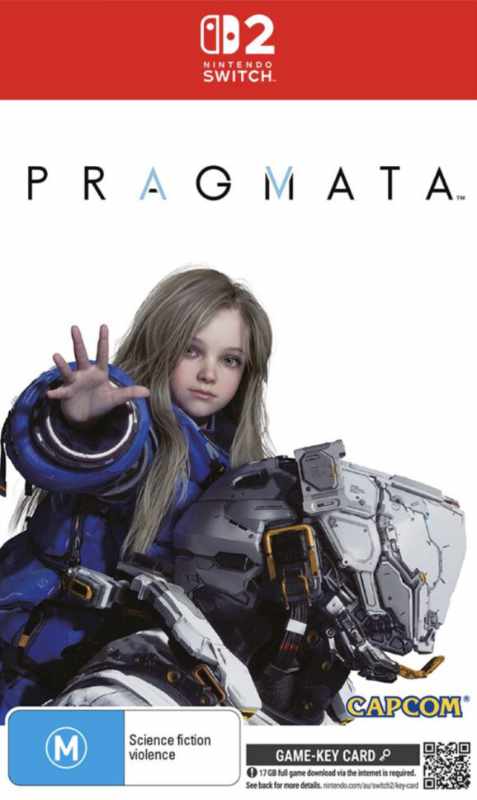
    I’ve said this numerous times now, but Capcom has really been on a roll the last few years. It seems like every game they’ve released has gotten critical acclaim and is praised by fans. Resident Evil has arguably entered its best era, Street Fighter 6 has become one of the most popular fighting games today, and they’re even revitalising classic franchises with games like Mega Man: Dual Overdrive or Onimusha: Way of the Sword. Thus leading us into their newest IP, Pragmata. the game was announced all the way back in June 2020 – nearly six years ago – and ended up getting delayed over and over, eventually being delayed indefinitely in 2023. Finally in 2025 we finally got a new trailer for it, with a release window that they actually stuck with. Pragmata was developed and published by Capcom and released on 17th April 2026 for Playstation 5, Xbox Series X/S, Nintendo Switch 2 and PC.

    Story

    You take on the role of Hugh Williams, a systems engineer who’s been sent to a mining outpost called The Cradle, along with a small team, after communications with them and Earth have stopped. Shortly after arriving, the base is struck by a moonquake, which kills everyone on the support team except Hugh who is knocked unconscious. He is awoken by a Pragmata, an android designed to look like a little girl, who Hugh names Diana (which thank god because I do not want to be writing Pragmata D-I-0336-7 this entire review). He soon enough learns that the stations’ AI, IDUS, has turned hostile and begins using various robots to try and take out our heroes, a skirmish that Hugh only survives due to Diana’s ability to hack into said robots. Now with his new trusty and adorable companion, Hugh must traverse through the outpost, to try and figure out exactly what’s going on and to try and find a way back home.

    The story as a whole is fine. It’s fairly generic and can be pretty predictable at times, though as a whole inoffensive and still well told. The main draw of the story is the relationship between Hugh and Diana, the two quickly take on a father and daughter role and it’s written in a way that feels very natural and well developed. I especially love Diana, who, despite being an android, acts just like a little kid, having the same playfulness and excited curiosity that someone of her age would have, it’s simply delightful.

    Presentation

    Graphically, the game looks great, once again using the RE Engine it has the same detailed presentation options that you had in Resident Evil Requiem, giving you general options like texture and shadow quality, but also details like hair strands. Once again telling you how much of your PC’s GPU the graphics settings use up, ensuring the most stable and best-looking experience you can have.

    Despite the entire game taking place in a mining outpost, there is a decent amount of variety in the environments. I’m specifically thinking about the amazing spectacle that is the city, with bright coloured billboards whose neon lights bleed into the reflections on the pavement below, or when you go outside and traverse across the moon, showing you just how vast his outpost is all the while seeing the Earth in the distance. The environments make you want to dive deeper into the outpost, to explore every inch of it and see what’s hiding in its depths.

    You really don’t meet a lot of characters in this game, for the most part it’s just Hugh and Diana – and one other character which we won’t get into because of spoilers. Both of our main characters are designed excellently. I love how Hugh’s suit looks, having a cool helmet similar to Issac Clark’s from Dead Space, with the rest of it being somewhat puffy like you would expect a space suit to be. I also love Diana’s design, her very long hair and the blue puffer jacket only add to how cute she is. The hostile robots are definitely a highlight looks-wise. A number of them look simple, white plated humanoids, but their uncanniness and how human they look can make them feel very intimidating. You get an idea on how a number of them fight based on how they look as well, with details like components, limbs or some just straight up looking like tanks. It’s a great way of hinting at how they work instead of straight up telling you. Not to mention they all look very distinct, so you won’t be mistaking one robot for another.

    I seriously love the voice acting in this game. David Menkin, who’s previously voiced Barnabas from Final Fantasy XVI, and Malos from Xenoblade Chronicles 2, puts on a great performance as Hugh. That being said though, the star of the show is clearly Grace Saif, who’s only had one named role in the past (Manana from Xenoblade Chronicles 3), as Diana, she perfectly did the speech patterns and mannerisms of a giddy child. Genuinely one of the best performances of the year.

    The game’s soundtrack perfectly matches the sci-fi setting. Many of the songs go for an upbeat techno sound, similar to what you’d hear in a rave. While the songs never get too intense, in my opinion anyway, they do fit well in battles – being fast paced and striking while not feeling like it’s a fierce gunfight. There are also a number of slower and calmer tracks, them being droning and ambient notes or slow piano pieces. They’re the kind of songs you would imagine listening to while staring at the night sky or a sunset. The soundtrack is a blend that perfectly accompanies the story about a collapsing outpost with a lot of heart added into it.

    Combat

    Pragmata is a third person shooter where you explore various sectors and defeat anything slightly robotic that would hinder your progress. The action isn’t as fast-paced as something like Devil May Cry, but at the same time it’s not as slow as Resident Evil. Really combat is a bit like a puzzle, requiring you to work to open the enemies up for just moderate damage. What do I mean by this? Well you see, the plating on enemies is near bullet-proof, therefore the damage you’ll be dealing is less than pitiful, so it’s Diana’s job to hack into them and open up the plating so you can deal some real damage.

    The hacking in this game is actually fairly simple. When activated you’ll see a square grid with a bunch of blue icons spread throughout it, as well as a power symbol that will open the robot up. All you have to do is move the cursor towards that power symbol while moving it across as many of the blue icons as you can, and the more icons you cover, the longer the enemy will remain open for. Is that all there is to the hacking? Of course not, as there are some things to make it easier and more challenging. One powerup you’ll be utilising a lot I would imagine are the hacking nodes which are equipable enhancements that will add extra effects to your hacks when activated. For example, Multihack will hack all enemies within a certain range, Freeze will stun enemies for a short period, and Confuse will make enemies attack one another instead of you – unless you’re their only opponent. There are also hindrances that will prevent the perfect hack, some enemies could have walls, looking a lot like warning symbols that you’ll have to go around, as well as red warning symbols that will completely cancel your attempt, forcing you to start again. Some enemies will also have an external shield that will also block you from moving the cursor, forcing you to shoot and destroy that shield before you can pull off a successful hack. The hacking system is what makes this game as fun as it is. It’s easy enough to understand but also makes the fights much more tense and difficult, forcing you to multitask and concentrate on numerous things to get the advantage. It will definitely be a struggle for some people to get used to, but it’s still a ton of fun to do.

    Now, I imagine the most common way that people will be playing this game is with a controller, though you can also use the mouse on PC, and both come with their pros and cons. When hacking with the mouse you have the advantage of speed. though you’re far more likely to make mistakes, meanwhile with a controller you’re much slower but you’re not going to have as many accuracy problems. It’s a risk reward no matter which control style you go with, and I think it’s really good that the game does that. I personally used the mouse to get the better hacking speed, though I will admit the allure of better accuracy was certainly enticing.

    For weapons, you do have a bit of a variety. The main weapon you’ll be carrying is your trusty pistol; it doesn’t deal too much damage although it is the only weapon that reloads on its own. That’s right, all other weapons don’t reload, in fact once they run out of ammunition they are destroyed. This may seem like a downside, but I honestly quite like it, it’s kind of similar to the weapon degradation in The Legend of Zelda: Breath of the Wild and Tears of the Kingdom – though not as infuriating as in those games – forcing you to improvise with what you’ve got and having to keep an eye out for other weapons to use. The weapons you can use are pretty unique to this game and aren’t just designed for damaging. Yes, you do get your usual shotgun and charge gun, though there are some that have unique abilities. These can include the Stasis Net that immobilises enemies for a short period, Sticky Bombs that decrease the size of the hacking grid, and the Hacking Mines that will let you perform a hack on it and it will automatically hack every enemy within range, even affecting them with the same nodes.

    If there’s any issue that I have with combat, then it’s the healing. You have access to a number of healing cartridges to use when a battle gets a bit too hectic and you take a bit of damage, and this is probably one of my least favourite healing systems that I’ve experienced in a while. For starters, you have to hold down the healing button to be able to use it, meaning that if you’re desperate for health, you still have a risk of being hit before you’re able to heal. Even then, you have to be planted firmly on the ground in order to be able to use it. If you’re dodging or hovering or doing anything other than standing or running, then you won’t be able to even hold the button down to use a cartridge when you land. Not to mention, when you do manage to use a cartridge, it heals very little, maybe a quarter of your health at the start of the game, and you only have two of them at the beginning. It feels like the healing is designed specifically against the player to the point where it feels really unfair at times. Not even Dark Souls is that restrictive with its healing.

    As mentioned, enemies are very distinctive and each will fight you in different ways. How you fight them will be the same, but what will be different is the placement of their weak points and their main attacks and how to avoid them. There are some whose main attacks are by jumping, and therefore you’ll have to be off the ground when they do, some will bombard you with missiles forcing you to dodge all over the place before you can try and hack them or use one of your special guns, and there are some that are smaller that are super-fast and difficult to shoot though they don’t have a lot of health and their weak spot is their entire body. The challenge with fights is trying to juggle fighting multiple enemies that require different methods to combat, it makes the fights thrilling and can make even the weakest enemies a threat if you’re not careful.

    Level Design and Exploration

    Pragmata is a semi-open game, meaning it does have some open areas though the level progression is pretty linear. The game is split into various sectors, each one bringing different environments and challenges for you to combat. Like Sector 2 making you explore numerous buildings to find switches to unlock a big door blocking your way, or Sector 4 taking place outside, meaning you’ll be dealing with zero gravity as well as a boss monster constantly hunting you down. Each level brings a new gimmick or challenge for you to deal with, ensuring a different experience with each new area.

    There is a decent amount of platforming and verticality in this game, either from the layout of the sector or due to the gradual decay of the outpost. Luckily, Hugh has a jetpack to help with this, letting him hover and dash from one platform to another. This jetpack does require energy to be used, though it does restore itself fairly quickly.

    There are a number of puzzles for you to solve throughout the outpost, and these sections are Diana’s time to shine. That’s right, it’s not just robots that she’s able to hack, as there will be a number of door and elevator switches that will need to be accessed to move forward. These hacking minigames are simple to understand and easy to solve, taking the form of switches you’ll have to rotate by pressing certain buttons, a particular button sequence or the same but with timing the button presses involved. You do get a timer that will tick down, but it gives you way too much time in my opinion, to the point that I forgot there was a timer half the time. If you do end up failing the hack you don’t really get punished, you just have to start the puzzle again. I’m a little mixed on this, I understand that failing one of these while in combat would be stressful, but when exploring it’s just a minor annoyance, making me almost wish that it was a little more punishing, losing a little bit of health upon failure for example.

    If you start getting tired or are running out of resources, then you can always return to your Safe Room. As the name implies, this is a small hub that is devoid of enemies, where you can heal up and regain all your healing nodes. There are a number of checkpoints in each sector that will take you back here and will let you return to that same spot when you’re ready to continue (though with all the enemies being respawned as well), and when you die you’ll automatically respawn back here. It’s also here that you can upgrade your weapons and hacking nodes, as well as your suit and Diana’s hacking abilities. It’s also here that you can take on the Training Simulations, small yet difficult challenges that will net you a number of rewards and upgrades, with secondary objectives that make the Simulations extra laborious, but the extra goodies make them very worth it. Or, while you’re here, you can have a quick chat with Diana, where you’ll learn more about the two characters and bring them closer than before. Once it’s time to leave, you’re able to select your loadout, deciding on what weapons, hacking nodes and mods you want to bring with you as you descend further into the outpost.

    One thing I heavily praise this game for is how well it rewards you for exploration. There are not only a couple of cute collectibles for you to find, like Earth Memories which are items from back home – mostly toys – for Diana to play with back in base (with crayons being the best because she will draw numerous pictures of her and Hugh, the one instance of AI art I can approve of). Throughout the levels there are a number of goodies that will greatly strengthen you in battle, like new mods that will add passive abilities to greatly help you in combat and exploration, upgrade materials for your equipment, and even expansions to your storage letting you carry more weapons or more healing equipment. It gives you great incentive to go out of your way to find everything in each level, especially as each area will have a checklist of what’s left to find in them.

    Conclusion

    Even amongst all the fantastic releases that Capcom have released the last few years, this one still finds a way to stand out. Pragmata is an incredibly fun game, with one of my favourite combat systems that the company has ever made, making the game challenging and ensuring that combat encounters will never get tiresome. While the story’s nothing too special, the dynamic between Hugh and Diana will pull on the hearts of anyone playing. If you ask me, this is an absolute must buy for everyone this year. I am certain I will be replaying this in the near future and I hope that this is the start of a new franchise for Capcom.

    9.4/10

    Elliot Chapman
    Anime Amigo and Nerd Consultant

    Share This Post:
    Facebooktwitterlinkedinmail
  • Tomodachi Life Living the Dream – Game Review

    Tomodachi Life Living the Dream – Game Review


    Tomodachi Life Living the Dream

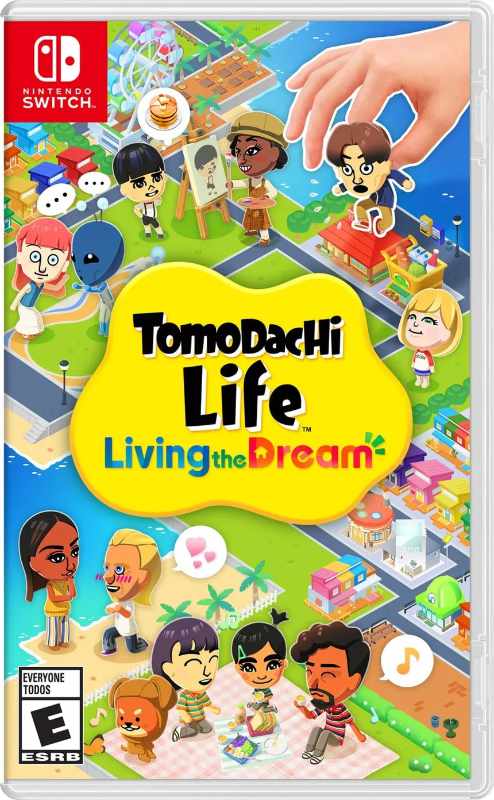
    Despite my trying over the years, I’ve never really been able to get into lifesim games. I’ve played multiple games in the genre but I always find myself getting bored or burnt out after long enough, even the really popular and high rated ones like Animal Crossing or Stardew Valley. Yet for some reason I absolutely adored Tomodachi Life. It’s one of the first games I got seriously addicted to, despite it just being you looking after a bunch of Mii’s, and still remains to this day as one of my favourite games on the console. I had been praying for years for a version of the game to come on to Nintendo Switch, especially after the incredible remake of Miitopia. Well, you can only imagine my excitement during the Nintendo Direct in March 2025, when we got the announcement for Tomodachi Life: Living the Dream (I’m honestly surprised I didn’t get a noise complaint from all the squealing I did). This is a game that I and the small yet passionate Tomodachi Life fanbase have been waiting for for more than a decade, so was that wait worth it? Tomodachi Life: Living the Dream was developed by Nintendo EPD, published by Nintendo and released on 16th April 2026 exclusively on Nintendo Switch (and Nintendo Switch 2 via backwards compatibility).

    Building Your Community

    So there really isn’t a story in this game, and there isn’t that much to describe when it comes to presentation (the graphics are more stylized and a step up from Miitopia, all the voices being text to speech is humorous and the music is very pleasant) so we’re just going to go straight into gameplay. Gameplay is basically the same as it was in the first game, you have a community of Mii’s that you have to take care of, all the while they meet, become friends and potentially become lovers.

    Your first step to doing that is, of course, creating your Mii’s. Now we’ve come a long way from the Mii creator of 2013, back then it was essentially the same Mii Maker that you had on the Wii, with enough character options but not a lot. Tomodachi Life: Living the Dream essentially takes the Mii Maker from the Miitopia remake and somehow expands it even further. This game gives you more hairstyles and colour options, even letting you pick out the Mii’s fringe and separately from the back. Apply makeup or eyelashes to them for added flair. You can finally give them ears (the fact that that’s a new feature is quite baffling). And the facepaint from Miitopia is back, allowing you, if you have the artistic skills, to add any character from any media to the game. One thing that some people see as a flaw is the fact that you’re not able to use Mii’s that other people created like you were able to in Miitopia. I do believe it’s to encourage people to make their communities as custom as they can, especially as it’s more likely that people will create Mii’s of friends and family, which I do get, but I can also understand why those who aren’t as good as art or struggle drawing with the Switch controls will be a bit upset about not being able to put their favourite anime characters into the game.

    Other customisation options include the usual, like height and width of the character, as well as the voice they can get, with the ability to make them go insanely weird or creepy if you want them to. One massive addition is the ability to select not only your Mii’s gender identity, but also their sexual orientation, this is probably the most wanted feature that fans of the previous game wanted, so the fact that it’s been added is super appreciated, especially for those in the LGBTQ+ community.

    One definite downgrade from the 3DS game is the fact that your island now only has room for 70 Mii’s, in comparison to that game’s 100. 70 Mii’s is still a lot and you probably won’t be able to fill up that much space, but the reduced capacity is still a bit disappointing.

    Customizing Your Island

    One of the big selling points in this game is the fact that you can now see your Mii wandering the island and interact with each other outside instead of just in their own apartments. Thus the game gives you the complete freedom to customize the island however you want. Straight from the beginning, you have access to the Island Builder, which lets you make many additions and changes to your island, from adding aesthetic items like flowers or vending machines that your residents will interact with, to even letting you completely change the layout of your island.

    Mii’s no longer live in one giant apartment building, but instead in individual lodgings and you can decide where they are placed. As well as the location of certain facilities that you and your island residents can interact with. Personally, I had all the houses put into their own corner, forming a small neighbourhood that everyone lives in, and have all the shops and whatnot spread throughout the rest of the island. Sadly there isn’t really much point in having more than one of each shop or facility outside of aesthetics, which for some would be fine enough, but personally I like to get some use out of everything I add, so it does take away a bit of my fun if I’m honest.

    It’s not just you who decides how the island looks however, your Mii’s will also make suggestions on how to improve the island. Sometimes they will make big requests for changes, like new roads, or plants and benches to make the island more pleasing and easier for them to travel around, and sometimes they will just ask for one small thing to be added, like a spotlight or picnic table. The former suggestion I normally say yes to, as they are very good improvements, though the latter I’ve been denying more often than not, mostly because they just want to fill in empty space and it makes the island look more ugly in my opinion (they’ve already ruined one beach and are trying to ruin the second).

    Interacting With Your Mii’s

    Part of the reason why this game is so difficult to explain is because the majority of it is just helping your Mii’s with whatever problem they are currently going through. If they are having any mild inconvenience or decision to make, whether it be hunger, wanting new clothes, who to talk to, who to fall in love with, they will call for your assistance.

    What they require depends entirely on the colour of the thought bubble above their head. Yellow normally means they need you to give them something, such as food, some new clothes, their room to look different, amongst other things.

    Orange always relates to another Mii on the island. Sometimes they’ll just ask you how well they get along with a particular resident, though often it relates to the Mii having an interest in the other Mii and wanting to be their friend. These thought bubbles can also be one Mii wanting to become housemates with another, and having them move into a much bigger place if everything goes well. I do also like that when they do move in together they just stack their old lodgings on top of the new house and have them act as their rooms, it’s a nice touch.

    One of the more common requests from the Mii’s will be to play games with you, sometimes they will ask you to play one on one and sometimes you will have multiple Mii’s participating. The type of game they’ll ask you to play will often be hinted at by where they are when they request it. One of the more common ones I’ve played involves you identifying items that have been hidden, either by pixelation, being silhouetted by a shadow, or by being zoomed in. Some of these games are really fun and I find myself playing them every time they’re requested, like Bowling, Red Light Green Light, or No Repeats (though my main problem with that game is the fact that the only subject on it seems to be food, I would have liked if there were other subjects to change things up a bit). Though there are some that I’m really not a fan of like What’s Missing or Poke the Ferris Wheel. When winning one of these, you’ll win a treasure that you can either pawn off or give to a Mii at a later point, though if you lose, they will give you either tissues or a roll of toilet paper, assumingly to help wipe away your tears after failing to identify a pixelated roast chicken.

    All this is done in order to increase your Mii’s happiness. Each Mii has a happiness level that will increase the more tasks you do for them, with the amount that is increased depending on what task you complete for them, or how happy they are with a gift or food you’ve given them. Whenever they level up you’re able to give them a special reward, such as a unique gift that you’ll see them playing with in their spare time, like a football or camera. You can also give them a fun quirk that will change the way they greet people, the way they walk or even how they eat, you can also give them an expression to say whenever they’re in a certain mood.

    However, don’t think that it’s just your Mii’s benefitting from their own happiness, as when you collect enough happiness points, you’re able to use them at the Wishing Fountain to increase your island’s rank and obtain items that can make island life a little better, like new decorations, interior designs for a Mii’s home, or just travel tickets to send your residents on a quick holiday. My one issue with this is the fact that your island ranks up incredibly easily – I only have to speak to a few Mii’s and already I’m able to unlock a new thing – meaning that I found myself unlocking everything insanely quickly – in fact, at time of writing, I have 122 unused wishes because there’s nothing to spend them on except travel tickets, so hopefully in the future they add more things for you to unlock,  though I feel like this wouldn’t be as much of an issue if ranking up took a bit more work.

    Getting Your Mii’s To Be Friends

    For me at least, the most rewarding part of the game is seeing all your Mii’s become friends and interact with one another. Sometimes this will happen on its own, though most of the time they will come to you for assistance. Unlike the last game, if you want Mii’s to become friends you’re able to drag them to one another and force them into a conversation, most of the time this will lead to the two becoming acquaintances, though it is possible for the interaction to go badly. After a while, the Mii may ask you to help them become friends with the other Mii, after which you will have to give them a topic of conversation – one that you’ll have to write out for them, meaning that you can either add your own interests into the game, or you can be like everyone online and add in subjects that will require you to play this game on mute in polite company (you are all filthy people). Sometimes, someone will think that two Mii’s will get along swimmingly and will ask you to help them introduce the two Mii’s. If the conversation goes well, congrats, the two are now besties and you can even decide nicknames for each of them, otherwise, they’ll have to try again another day.

    Friendships aren’t the extent of how close Mii’s can get, it is of course possible for Mii’s to develop romances for one another. This is something that you can try to set up, and who knows it might even work, but most of the time this will occur purely through random chance. This can be quite funny as it can lead to some unlikely and hilarious pairings – my islands weird couples consist of Ichiban from Like a Dragon and Inkling from Splatoon, Maomao from The Apothecary Diaries and Johnny Silverhand from Cyberpunk 2077, and most recently Grace Ashcroft from Resident Evil Requiem and Monkey D. Luffy from One Piece. It could be that one Mii helped out the other when they couldn’t move or had fallen over, possibly it could happen when the two Mii’s and just hanging out together and one of them does something cute, or it they might just get a crush on someone that they spot on the other side of the street. When this happens, you will see the Mii start blushing when interacting with their crush, they’ll start asking you more about that Mii and try to help get the two closer, and you’ll see them fantasizing about being “sweethearts” with their crush… on numerous occasions… per day (looking at you Calvin and Priya). It will eventually get to the point where the Mii cannot hide their feelings anymore and just HAS to confess, after which, with a little bit of guidance from you, there will be a cutscene showing how the confession goes. These cutscenes can get bloody wild, it’s not always a straight yes or no, if the Mii has multiple suitors, they can and will try to interject and ask the crush out themselves, which may even lead to the crush choosing one of the interjectors. There’s even a chance, if the Mii is a little too persistent, that one of the crush’s friends will go in their place to tell them that he/she/they aren’t interested… Those ones are especially devastating. If the crush says no, then the Mii will enter a pit of despair that you’ll have to get them out of, either by bombarding them with a horde of food and presents, or simply by sending them on a trip to Kyoto or something.

    When Mii’s become sweethearts, as the game calls them, you’ll get unique interactions with the two, some of them sweet, like when they’re chasing each other on the beach, or some that are just really cringey, like their conversations in the restaurant (I never thought I’d hear someone describe their partner as “yummy”, and this game has made me realise that I hate that adjective). Eventually, if the relationship goes on for long enough (somewhere between three weeks to about thirty minutes), they decide that they want to marry the other Mii, which will have you play a bullet hell minigame to keep the proposers mind on their partner.

    Soon enough, married Mii’s will even want to have a baby with one another, and will have one a couple of days after the idea is brought up. The baby will have some of the features of their parents, including facepaint if possible, and will even obtain the personality of the parents. The babies are a returning feature from the previous game, and this is my biggest disappointment this time around. You see, last time, the babies stayed as children for five days before fully growing up and becoming island residents, during that time you see them slowly grow up, their parents play and interact with them, and will have to help them on occasion. This time around, you get none of that, you get a single, admittedly adorable, cutscene of the baby growing up and then, BOOM, they’re fully grown. I was really looking forward to seeing how the babies would interact with the island, seeing them in strollers, being walked around the island, eventually running with their parents, and having them grow up that quickly makes the Mii’s having children feel more pointless, less rewarding and you don’t grow as attached to them as you did in the last game – especially as, once they are fully grown, they don’t get any unique interactions between them and the parents or anything like that, basically acting more as if they were friends rather than family. Mii’s having kids was one of my favourite features in Tomodachi Life and here it feels like a wasted opportunity.

    Things aren’t always gonna be upbeat and happy, as relationship turmoil can and will happen after long enough. Mii’s can fall out with one another, making each other so angry that they may not want to be friends anymore, and while you can get them to calm down and try and make up, that doesn’t mean that the other will forgive them. Even relationships or marriages aren’t guaranteed to work out, with the chance of the sweethearts breaking up or divorcing if one isn’t happy in the relationship. This one isn’t a common occurrence, and in my over 100 hours in the game has only happened once, but it’s still very sad when it does happen.

    Studio Workshop

    The final thing that this game introduces is the creation studio, this gives you the ability to really customise your island with your own creations. You can make your own food (from looking online, people have been feeding their Mii’s cigarettes and cakes containing various hallucinogens). You can also customise clothes for them to wear, allowing you to add in real life clothing or have your Mii’s from popular media look more like themselves. You can create gifts and treasures that you can give your residents, like music records, jewels, or even pets – or in my case a lot of Pokemon. You can even design your own interiors and exteriors for your Mii’s houses. You can start just from scratch, or use an in game model as a base and edit on it. This is also the one time that the game will let you use touch controls, making it easier for you to draw. I will admit, I only have limited experience with this, mostly due to my ungodly level of incompetence of drawing and not having access to a switch stylus that a lot of other people have, but I can tell that this is a very well implemented mechanic that I’m sure a lot of the artistic crowd will get hours out of.

    Conclusion

    To say that I am addicted to this game is a massive understatement. I’ve had this game on in the background whenever I’ve been at my desk, and I am constantly looking back to it to see if my Mii’s need any help (this game is the reason why it’s taking me so long to get my Pragmata review out). While there are some features missing from the previous entry – town hall, events like rap battles, couples sleeping in the same bed and, of course, the babies slowly growing up – I’d say the new features definitely make up for it. I will admit that this isn’t a game for everyone, but those who this will appeal to will find it taking over their lives for a good while. It’s a game that I’ve been waiting over a decade for, and I’d say that the wait was worth it.

    9.2/10

    Elliot Chapman
    Anime Amigo and Nerd Consultant

    Share This Post:
    Facebooktwitterlinkedinmail
  • Vampire Crawlers – Game Review

    Vampire Crawlers – Game Review


    Vampire Crawlers

    As other reviews would imply, I can get very addicted to certain video games, with indie games being the main thing to fuel my dopamine. There are two Roguelikes (well technically three but I don’t think Cult of the Lamb really has any relevance today) that even today I’ve spent hundreds of hours playing, those being Vampire Survivors and Slay the Spire. One of these involves being a bullet-hell where you have to survive waves of enemies for thirty minutes, and the other being a deck-builder where you fight random encounters through three floors of trials. As much as I love both of them, I never found myself considering what would happen if the two games were combined, yet Poncle did and decided to develop the first ever spin-off to Vampire Survivors, Vampire Crawlers, a roguelike dungeon Crawler whose main mechanic is based around collecting cards and crafting decks. Vampire Crawlers was developed by Poncle and Nosebleed Interactive, published by Poncle, and released on 21st April 2026 for Playstation 5, Xbox Series X/S, Nintendo Switch 1 & 2 and PC, with a mobile port planned for future release. 

    Level Design

    Just like with my Tomodachi Life: Living the Dream review, there isn’t really much to discuss with story, as all you’re told is that you have to kill the vampire. Nor is there much to say with presentation as it’s mostly the same as in Vampire Survivors, aside from the 3D environments (which look great I will admit), so we’re just going to go straight into gameplay. 

    The game is a procedurally generated dungeon Crawler, where you have to descend a series of floors, the stairway to each one being guarded by a boss, collecting cards and improving your decks as you do so. Each level consists of a few rooms and corridors, and while you will find similar layouts, each floor, as well as item and enemy placement, will be randomised. You’ll be able to see where everything is on the mini map at the bottom of the screen, as it reveals where every encounter, treasure chest and destroyable object – which will give you random goodies for destroying, like random cards, permanent upgrades or coins – is placed, though you still won’t be aware of what you’ll encounter until you’ve reached it. My one small nitpick with the mini map is that it doesn’t tell you some of the more intricate details of each room, primarily the fences or shelves that will block you from going certain directions, especially when you’re heading towards something you can break, only to realise it’s on the other side of the bookshelf. It only takes a few seconds to correct your mistake, hence why it’s only a nitpick, but it would have been nice to have it on the map so I didn’t make said mistake to begin with. 

    When you’re not traversing these dungeons, you’ll find yourself preparing for your next run at the Village. Whilst here, you’ll be able to purchase upgrades. These can be for yourself, whether it’s recruiting new Crawlers to play as or buying power-ups to increase stats or cards draws, or you can upgrade your cards by increasing the number of slots in each of them (more on that later). These upgrades may seem inconsequential at first, but once you’ve obtained enough of them, you’ll find yourself decimating more waves of enemies with ease (or at the very least not dying as embarrassingly).

    Combat

    I have compared this game to Slay the Spire a lot, though that is exclusively due to its card slinging gameplay as when it comes to combat itself, this game is way simpler. There are four standard card types all indicated by their colour: red is attack, blue is defence and healing, purple are mana based and yellow are stat increases, with there being two additional colours, white and black, that are destroyed upon use. The abilities on these cards are actually rather simple, there aren’t any complex strategies or hidden combinations you have to learn, and the cards effects are quick and easy to understand and memorise. One thing I really have to give the game praise for is managing to convert the equipment from Vampire Survivors into cards in ways that feel natural to their original effects. Some of the more basic ones still retain similar abilities, the Spinach increasing damage dealt or the Duplicator increasing the number of projectiles as examples, though it’s the more game specific ones that I’m proud of. For example, the Orb originally pulled EXP crystals from further away towards you, and in this game it draws you more cards, basically giving you resources faster, or the Empty Tome originally shortening the cooldown between weapon attacks, this time gives you more mana, letting you use more attacks on your turn. These cards really play like their bullet-hell counterparts, meaning that anyone familiar with the previous game will have an easier time understanding what the cards do. 

    You start each crawl with a very limited number of cards and the ones you start with will depend on which Crawler you play as, though you will receive more as you descend through the dungeon. The main way you get them is from levelling up, when you’ll be able to choose from a selection of three random ones. The cards you receive are not limited by your Crawler, meaning that you can customize your deck however you want, so long as you get the right cards for it. When it’s your turn you’ll have a limited supply of mana with each of your cards requiring a certain amount of mana to be used, and once you run out of usable cards, your turn will automatically end and it’ll be the enemy’s turn next (luckily you can increase your mana with cards or permanently increase your starting mana with orbs found on select floors). This will go back and forth until either you fall or all your enemies are destroyed. 

    There is one card type that is unique to each character though, those being the Crawler cards. These cards will have specific effects depending on which Crawler you are using. These will have effects similar to other cards you’re already using, like healing you a few hit points, or an increase in projectiles. However, what makes them unique are their trigger abilities. These abilities will remain after these cards are played and will trigger every time a card of a particular colour is played, Antonio for example will increase damage by 10% every time you play a red card, or Clerici will restore one hit point at the end of a battle whenever a blue card is played. Every time one of these is triggered, a counter will tick down and once depleted, the Crawler card will return to your deck. These cards are another part that makes you consider which Crawler to take into battle, on top of what cards you want in the early game.

    While I say that the combat is more simple than other card games, there is still a level of strategy and deck optimisation that you have to adhere to. Thus, leading to easily my favourite part of this game, and the part that can make this game insanely chaotic, the combo system. Performing combos is actually really easy and something you’ll naturally learn to do as you play the game. In order to pull one off all you have to do is play a card whose mana cost is one more than the previous one played. Doing so will multiply the numbers on the cards that would continue the combo – be that their damage output, shield or mana generation for example – by however big that combo is (in other words, if a combo consists of three cards, the effects of cards that would continue the combo would be three times as powerful). Now you’re probably hearing this and thinking: “Well then, the combos can only go so high then”, but that’s where the Wildcards come in. The Wildcards are very special tools, most of them are the aforementioned white cards that you can only receive from breakable objects around the floors or from effects of specific cards, though there are some that can be permanent additions to your decks via level up. These cards are not only played for free, but they add on to your current combo, and will even allow the next card you play to increase said combo as well. Just through this I’ve managed to pull off some absolutely insane stunts in this game, from killing boss enemies with a single attack, to having my entire deck in my hand, to having so much mana that my turn will essentially never end. It’s absolutely insane how powerful this system can make you and, holy hell, there is nothing more satisfying than having a combo go into the thirties or possibly even the fifties. 

    One mechanic that’s been converted over from Vampire Survivors is weapon evolution. In that game if you had two corresponding items – a weapon and passive item – then once they were fully levelled up you were able to evolve the weapon, making it more powerful and even adding new effects to it. It works somewhat the same this time around, to the point where the combinations are the exact same. It’s not without its risks however, as receiving an evolved card not only requires two specific cards, but those cards are also removed from your deck. This makes evolving more risky than it did in Vampire Survivors – where there really wasn’t any downside to evolving – as you could be losing some really good resources, not to mention the fact that evolved cards cost more than the ones used to make them, meaning that if you’re not prepared or your deck isn’t optimised enough, you’re not going to be able to pull off combos as often, which could potentially be a run killer if you’re not careful. I actually really like this idea, it stops you from being overpowered too early and does emphasise the fact that you can’t just throw powerful cards into a deck and hope for the win.

    You remember before I mentioned that you can upgrade your cards to contain more slots, well those are specifically for you to store gems. Gems are power ups that you can equip to cards and will add a new effect when activated. There are some that share the same effects as other cards, such as letting you draw from your deck, giving an increase to stats or some that will launch additional attacks based on certain cards. There are plenty that add unique effects, such as making the card free to play or even turning it into a wildcard, adding a colour to the equipped card so you can activate Crawler triggers more often, or ones that will double or triple the damage the card deals as a few examples. Unlike regular card effects, gems aren’t affected by combos, though they are still very useful and can even save you from defeat in a time of crisis. They also manage to make each deck more unique and will give people more customisability with their cards. 

    Now, so far it probably feels like this is a game that’s very easy for you to become overpowered in, and therefore will not be much of a challenge, especially in the late game. And while that may be true at times, this is still a game where you can lose incredibly easily. When you fight a wave of opponents, you’ll be put face to face with a line of at maximum five enemies, with more behind them waiting patiently for the monster in front of them to fall so they can take their place. When it’s your turn you are told exactly how much damage their next attack is going to deal, and it can be devastating. There have been plenty of times where I wasn’t able to take out a single monster and ended up losing about 80% of my health in a single turn. This is why deck optimisation and making sure you aren’t passing over certain card types is very important. This isn’t a slower burner kind of game, either destroy or be destroyed. And there’s one more factor that can make or break your run, luck. You can have the perfect deck, with the best cards in the game, but if luck is not on your side, then all your progress will come tumbling down. Some people may see this as a downside, though this is a natural part of card games, so it’s something that’s to be expected in a game of this nature. 

    Finally, let’s talk about boss monsters. Now for the most part these guys act and fight like normal monsters in that you’re told how much damage they’re going to deal you, and they will attack at the end of your turn, they just have a much larger health pool. Or at least it’s like that at the beginning of the fight, as after you deal enough damage they enter what I’ll just call their “second phase”. When they enter their second phase, you’ll notice a number of eye shaped holes above them and will be filled every time you play a card. Once these holes have been filled in they’ll automatically make their move, it doesn’t matter if you still have cards in your hand or mana still floating, they’re going to attack you either way. I love this mechanic, not only does it make boss fights feel different from regular enemies, it also makes you completely change your playstyle, making you put much more consideration into what the best card to play is, and forcing you to prioritise certain card types over others. 

    Conclusion

    Despite loving both Vampire Survivors and Slay the Spire, I wasn’t sure what to expect when getting this game, and I certainly wasn’t expecting to put six hours into it on the night I bought it. This game is very addicting and I have not gotten the slightest bit bored of it in the fifty plus hours I’ve put into it. The simplicity of the game makes it very accessible for newcomers to card games, and the fast-paced combos will bring hours of enjoyment to the veterans of the medium. Needless to say, I highly recommend this game to anyone interested, or to anyone wanting something new to get addicted to, because trust me, you’ll want to keep playing until the sun comes up. 

    9.3/10

    Elliot Chapman
    Anime Amigo and Nerd Consultant

    Share This Post:
    Facebooktwitterlinkedinmail
  • Mio: Memories in Orbit – Game Review

    Mio: Memories in Orbit – Game Review


    Mio: Memories in Orbit

    Despite being founded in 2017, the company Douze Dixiemes only has two games released (a testament on how long game development takes nowadays). Their first release was Shady Part of Me, a game that whilst not being that popular, did receive some pretty good scores. And now we have the release of their second game, Mio: Memories in Orbit, a Metroidvania that was announced in a Nintendo Direct in 2024 with an initial release window for late 2025, that unfortunately had to be delayed. The general reception of this game has been very good, receiving a number of positive scores and finally giving the company some notoriety. Mio: Memories in Orbit was published by Focus Entertainment, developed by Douze Dixiemes and released on 20th January 2026 for Nintendo Switch 1 & 2, Playstation 5, Xbox Series X/S and Steam. 

    Story

    Now, I am a fan of cryptic stories. I like games that let the environment do the narrating and leave you to figure out the pieces. I’m also used to games mostly having the stories take place in the background and be more of an excuse for the events that unfold. However, I feel like this game takes it a little too far. 

    In this game you play as MIO, a small robot who wakes up on a spaceship named ‘The Vessel’. The caretakers of the ship have stopped working, leading to the threat of the ship shutting down, and it’s up to our little friend to put a stop to this. 

    Even in the most cryptic games, the story would still pop up on occasion to help guide us forward or to at the very least imply that we’re progressing or going in the right direction. This game doesn’t really do that, and I found it a little annoying at times. I understand what it’s trying to do but I’m very much someone who gets attached to the stories of games, I like to dive into the world and the characters, or at the very least learn what’s happening. It’s disappointing because I feel that a premise like this could lead to a fantastic narrative. It also made MIO feel less like a character, throughout the game we never learn anything about her or if she has a motivation outside of stopping ‘The Vessel’ from shutting down, and honestly, she doesn’t really have much of a personality (which you cannot say for the rest of the robots). Maybe I’m missing something because this game has gotten a lot of praise for its environmental storytelling, but sadly this time around, it failed to really enthral me. 

    Presentation

    The main praise given to this game is its environments and visuals. And rightfully so, this game is gorgeous. The robots are all very creatively designed, enemies, NPC’s and even background characters all look distinct, and at times very cute. Mio is obviously the star of the show when it comes to design – her size, her cape, and the fact that she doesn’t have arms so she uses her hair for everything. You get very quickly attached to her because of this and almost feel bad when she gets hurt because of it. 

    The environments are absolutely stunning. The game regularly has moments where it draws back to show off more of the background, not only giving you a breathtaking view, but also showing off the scope of the size of this ship. Many of the locations you explore are distinct from other Metroidvanias as well. There are still some ol’ reliables like a swamp area or a frozen area or a forest, but the way they are coloured and the general visuals make them feel unique. Platforms also blend in with the environments, taking on the form of pipes or branches, to the point where at the beginning I didn’t even recognise them as platforms, further immersing you into the world.

    I played the game on Switch 2 (meaning yes this is my first written Switch 2 review, only took me like… 8 months to get one done), and I am very happy to say that the game ran perfectly. It played at a consistent 60 fps, both docked and handheld, and I found no drops at all. It did, however, crash on me a few times, most notably if I took damage from particular hazards too often. I don’t know how common this is on other platforms, and it wasn’t a common occurrence but it was still annoying when it did happen. 

    I found the soundtrack quite surprising, not because it was better or worse than I expected, but because it was way more… relaxing that I was expecting. The best way I can describe it is sci-fi ambient, with slow and harmonious melodies and calm synthy backings. Even when fighting bosses, the tempo is built up and it does become more energetic, but it never feels intense or stressful, more like something you’d hear in the background of a nightclub scene. Overall, I do like it, it perfectly fits the setting and even in the most intense sections of the game doesn’t feel out of place. 

    Combat

    I’m starting off with combat instead of exploration this time around because… there isn’t really much to say with combat. MIO has a three-strike attack combo that requires you to press a single button and that’s really it for attacks. Seriously, you don’t learn or obtain any new forms of attack – no new weapons, combos, not even a special attack. On one hand it does make combat very easy to learn, but on the other hand it can make combat feel pretty shallow and possibly tedious if you’re having to run through areas you’ve already explored to reach another. 

    You do have a dodge button which works quite differently from what you’d expect. Instead of rolling to the side or darting into a different direction, MIO instead vanishes for a second and reappears in the same place, relying on your timing when avoiding attacks rather than moving out of the way of them – though you do get abilities that can help with that as well. I feel like this may end up isolating some people from fully enjoying this game, especially those who aren’t great at timing, though personally, I like this. If you’ve read some of my previous reviews, you’d know that I’m a big fan of learning enemy attack patterns and learning to time dodges and blocks, so this really appeals to my combat style. 

    The main selling point with combat are the enemies you’ll be fighting. There is a surprisingly large variety of enemies that you can encounter, from ones that fly, use ranged and melee weapons, and plenty that you can only find in certain areas while others are fought, generally they’re all the basic types you’d find in any Metroidvania. Like with MIO, all regular enemies only really have one or two types of attack, and the main key to the game is learning their timings and how to deal with each one. A number of them are not easy to deal with – there were some I was still struggling against close to the end of the game that I first fought against hours ago. 

    The bosses in this game are all quite tough but really fun. All of them are incredibly distinct from one another, not only with different designs but vastly different functions as well. Their fights are all complex and will take a lot of practice and patience if you want to master them. Normally, there are a couple of bosses in a game that I really don’t like, or at the very least is a bit of a letdown, but this is one of those rare games where I liked every boss I fought. Of course, there are some that are better than others, but there wasn’t a single one that I disliked, they are all pretty great. 

    Exploration

    Exploration is where this game thrives. To start off, everything that I’ve mentioned in combat can be attributed to platforming, as there are multiple sections where you have to attack an enemy or dodge a projectile to be able to move forward. Doing either will allow you to jump an additional time and will regain you a portion or will fully refill your energy meter (more on that later). This does somewhat make up for the simple combat in my opinion, giving your attacks more uses outside of just defeating opponents.

    While I said that you don’t get any new combat abilities, the same cannot be said for additional platforming skills. For starters, the strands of long flowing hair (wires?) that MIO has isn’t just for show, they are the key to you using a number of your abilities, like using it to launch yourself forward either from a hook in the environment or an enemy, or to climb walls or cling to the ceiling. You also get the ability to glide, letting you avoid obstacles that damage you on impact. All these abilities use an energy meter that is seen at the bottom of the screen, the energy is drained rapidly, and won’t refill unless you attack and hit an enemy, dodge an attack or find solid ground to land on. One massive criticism that I have with this game and this energy meter is that if you use one of these abilities and stop using it with some energy left, the meter will continue to drain. I’m someone who will instinctively use one of these abilities in a panic or will just hit a button on accident, so when I do it feels like the game is punishing me for no reason, and makes platforming unnecessarily more challenging. I’m fine with not being able to regain it unless you’re standing on solid ground, but the fact that it will continue to drain when I’m not using an ability is frustrating. 

    If I had to describe the platforming sections with any phrase, it would be “puzzle-like”. There are multiple sections that require you to use particular skills in specific orders, otherwise you’ll be hit by an obstacle that will damage you and teleport you back to when you were last on solid ground. It really feels like a test of skill at these points, like it’s relying on me to understand how to interact with the environment and what abilities are best used to move forward, and there is nothing more satisfying in this game than getting through one of these sections perfectly. That being said though, there are some sections, especially later in the game, that feels like luck at times, where the timing and positioning required are so specific that my successes were through sheer chance rather than my skill. In other words, it’s very gratifying when you manage to get through these, but very aggravating when you consistently fail. 

    Spread throughout these areas are checkpoints that act a bit like bonfires from Dark Souls. This is mostly in the sense that you can rest there to regain your health, swap around any mods you’re carrying (small items that you can equip to gain extra benefits from being able to see enemy’s health, all the way up to regular enemies not attacking you unless you strike first), as well as teleport to other checkpoints… at least, eventually you might. Basically, you can’t just teleport from one checkpoint to another just by resting there, if you want to be able to fast travel to that specific checkpoint you have to find its corresponding overseer, which can be found in the same location that the checkpoint is in. I’ll be honest, I’m really not a fan of this. I don’t mind not getting a certain benefit from not finding the checkpoint’s corresponding overseer, but for the game to gatekeep teleporting makes exploration way more tedious, as you’ll be going all over the place trying to figure out the path forwards (or at least I did), and you not being able to teleport makes traversal way more of a slog, and can be especially annoying if you go in the wrong direction. 

    Flaws

    Before we end, there are a couple more flaws that I would like to bring up. First of all, I mentioned before that the game will zoom out and let you witness more of the environment, and this happens when you go down specific elevators into new areas, and yes, it is very pretty and mesmerising… at first. Unfortunately, you have to go through the same thing every time you use that elevator. You heard me right. EVERY TIME. And these are not short elevators, meaning that every time I use it, I have to endure about half a minute of doing absolutely nothing while waiting to get to the playable section. I would have loved at the very least an option to skip this, because it just gets annoying after a while. 

    The other flaw I have is in regard to the health. This game’s health is very similar to Hollow Knight’s, as in a few symbols signify how often you can get hit until you die. This isn’t something that I have a problem with, it worked very well in Hollow Knight so there’s no reason why it shouldn’t here. My problem is with how you restore health. Because enemies don’t drop restoratives, you can’t collect potions or anything like that, and there aren’t any abilities that will let you regain health – again, like in Hollow Knight. The only ways for you to regain health is either by resting at a checkpoint, finding and using a health station for a small amount of currency per health point, or finding a specific mod (which I didn’t find in my playthrough, might I add). Especially with how difficult the game can get in later sections, giving you few and infrequent methods of healing makes the game feel way more unfair than it should, and can make you go into some encounters and boss fights ill-prepared for the challenge ahead. 

    Conclusion

    I will admit, I’ve definitely been more negative about MIO: Memories in Orbit than most other reviewers have, but that doesn’t mean that I dislike it at all. Despite my gripes with the game, I had a really fun time with it. The combat is simple to learn but makes you use it in different ways, it has some of the most fun yet complex platforming I’ve experienced in a Metroidvania, and this game is incredibly pretty. If you’re a fan of the genre, I highly recommend this game, it’s a lot of fun and a great challenge to all who are a fan of platformers. 

    8.2/10

    Elliot Chapman
    Anime Amigo and Nerd Consultant

    Share This Post:
    Facebooktwitterlinkedinmail
  • Ghost of Yotei – Game review

    Ghost of Yotei – Game review


    Ghost of Yotei

    Game review

    I will admit, I was very late to Ghost of Tsushima, not playing it until last year at time of writing, and as soon as I did, I instantly regretted not giving it a go sooner. The game was a ton of fun, I was quickly drawn into Jin Sakai’s story, the combat was thrilling, and I loved exploring the island of Tsushima; it didn’t take long for it to become my favourite game to come out in 2020. I was a bit hesitant when I heard that Ghost of Yotei, a sequel to Ghost of Tsushima, was in the works, mostly because Jin’s story was over and I didn’t want them to over extend it, and make that beautiful ending null and void. Luckily, however, those worries were put to rest with the first trailer, after not only learning about the new protagonist, but also with the new setting and even time period, instead having it become one of my most hyped games of the year. Ghost of Yotei was developed by Sucker Punch Productions, published by Sony Interactive Entertainment, and released on 2nd October 2025 as a PlayStation 5 exclusive. 

    Story

    The game takes place on the island of Ezo in 1603. We start off with the burning of a ginkgo tree. Our protagonist, Atsu, is trapped to this tree, being stabbed through the shoulder by her father’s katana, just after witnessing a band called the Yotei Six, being led by Lord Saito, slaughter her mother, father and her brother Jubei and leaving her to burn with the tree. She manages to escape and spends the next sixteen years on the mainland as a mercenary. Now Atsu returns to take her revenge against the Yotei Six, writing their names on a sash she wears and plans to cross out their names with the blood she draws from them. However, Lord Saito has obtained a significant amount of power while she’s been away, now being referred to as the Shogun of the North, and after gaining a name for herself after killing her first target, The Snake, and the denizens of the island giving her the title Onryo, she will discover that her hunt will not be an easy one. 

    In my opinion, this game’s narrative is weaker than Ghost of Tsushima. The previous game was a compelling story about the conflict between one’s honour and the importance of those you care about. This game is more of a simple revenge story about Atsu learning to let go of her past, which is not a bad idea at all, but it is not as unique as the first game’s. Plus, I find Jin to be a more interesting protagonist when compared to Atsu, I found his inner turmoil more compelling and more thought provoking, while Atsu’s is not nearly as nuanced. That being said though, I did still like the story. Atsu’s quest, while fairly predictable at times, was still engaging and I found myself liking her more and more as the game went on. The side characters are very likable and compelling. And while Jin is a better protagonist than Atsu, the Yotei Six definitely outshine the Mongols, having a much larger presence and Lord Saito being very intimidating when he wants to be; especially when you consider what they did to Atsu in the past, it is incredibly satisfying to see them killed off one by one. 

    Presentation

    After the encounter with the Snake and riding my horse through a forest, ending up atop a cliff where I saw the land I would be exploring, my mouth was agape. Ghost of Yotei looks absolutely stunning, everything about it is exquisite, the vast use of vibrant colours makes you want to ride through every inch of the island. Even smaller details have attention brought to them, from the way water flows through rivers, particles and clothes flapping with the wind and adapting to how strong the wind is, even footprints being left in wet mud. Every last part of the environment and characters has been meticulously worked on, and it makes the world feel even more alive and a marvel to explore. Obviousldoes notame does look better in quality mode, but performance mode still looks amazing, the details that are missing are very minute, mostly it just doesn’t have as dynamic lighting and details on clothing material is missing, though that’s only if you look very closely. 

    How the game runs depend on what graphics mode you are playing. For quality mode, you will find the game chugging along at 30fps, meanwhile performance runs at a very nice 60fps. For me, the slight increase in quality in exchange for the sacrifice of half my frames is not worth it so I would definitely advise that you play in performance. Whichever one you pick however, the frame rate will run smoothly and consistently, with no drops or lag, so you are guaranteed for a stable experience. 

    The voice acting in this game is pretty good. I played this game in English dub and everyone spoke with a bit of a Japanese accent, which I did find a bit jarring at first, but I grew to appreciate it, if makes the characters sound like they are native to Ezo, even without speaking the language and most of the cast seem to be of Asian descent, so it’s doesn’t feel insensitive. Particular standouts include Erika Ishii as Atsu, playing both the adult and child version of the character, Feodor Chin as Lord Saito and Suzie Yeung and Kiku. 

    The soundtrack for this game is beautiful. It is predominantly a combination of string and woodwind instruments and it all comes together to make an overall tranquil and harmonious listening experience. Of course, not every song is like this, some of the tracks will sound dramatic, intense or orchestral. The standout for a number of the songs is the shamisen, it is not in every song but when it’s there it’s very much welcomed, especially as the shamisen is Atsu’s instrument of choice, so it makes the soundtrack feel more connected to her. 

    World Design

    Ghost of Yotei takes place on the island of Ezo (known in the modern day as Hokkaido). You only have access to a small portion of the island (because Ezo is massive, the developers need to sleep at some point), but what you are able to explore is nothing to groan at. The game is split into six open areas, and each of them are of a very decent size. While not as big as other open-world games, the game makes up for it by cramming as much as they can into each area, using a similar strategy to the Yakuza/Like a Dragon series, where you can barely take three steps without finding a side activity to do. This can be an annoyance to people who are not that bothered with side quests and just want to get on with the main story, though I never found them too egregious as they really do not take up much of your time. 

    A decent amount of exploration will involve climbing. What cliffs you are able to climb up are very easily indicated by pieces of rock jutting out making a convenient path upwards. You also have a grappling hook to also aid in climbing up cliffsides as well as swinging between large ledges. Using the grappling hook will always be the most fun part of parkour in any game, so obviously it’s a ton of fun in this, however, climbing can be a bit more cumbersome, sometimes Atsu will not jump unless you’re incredibly precise with your thumb stick placement, as well as not automatically grabbing onto a ridge if you’re climbing down a ledge. 

    If you are in need of more ammo for ranged attacks or need to regain health, you can set up camp pretty much anywhere. There are some places that you cannot obviously, such as on uneven terrain or in the middle of an enemy camp, but you are able to in the majority of places. At these camps, you can use materials to craft ammo for your weapons, sleep until morning or night, sometimes an ally or wandering ronin will sit with you to sell you their wares or point you to a side activity. Sometimes when you set up camp, the game may force you into a minigame where you light a fire and cook some fish or mushrooms. A lot of people have called this minigame unnecessary and annoying and I honestly agree. It’s mostly there for additional dialogue that could have just been added to a cutscene and you get no benefits or negatives for how well you cook the food – you can burn one mushroom to a crisp and leave the other one completely raw and nothing will happen. 

    One thing I have to praise this game for is the fast travel. As usual, there are a number of key locations that you can travel to be it settlements, taverns on the road, or locations for completed side activities. The unique feature of this game’s fast travel is the fact that when you select a settlement or location containing a lot of facilities, you can also select which facility you can spawn in front of. You just need to find said facility for the first time and you will be able to fast travel to it. I love this feature, as it takes away potential minutes of searching for something every time I wander into town, and as someone who regularly gets very lost in games, this feature is much appreciated.

    Combat

    Ghost of Yotei’s combat works very much the same as Ghost of Tsushima. Encounters consist of you fighting a bundle of enemies, where you have to juggle them while whittling down their defences with the right weakness. Easily the biggest difference between Jin and Atsu in terms of combat is their weapon pool – mostly the fact that Jin did not have one, only using a single katana but adapting to each situation by using different stances against enemies with certain weapons. Atsu has access to five different melee weapons, each of which you will unlock as you progress through the story and world. Similar to Ghost of Tsushima’s stance system, the weapon that’s best used depends on the weapon the opponent’s carrying, kusarigama being best against enemies with shields or twin-katana’s best against spears for example – the main benefit being that they help to degrade an opponent’s shield gauge a lot faster. This can make juggling enemies a much tougher challenge, especially when each enemy in an encounter is wielding a different weapon, forcing you to swap fighting styles around with quick succession. It can admittedly lead to a bit of frustration as well, mostly when you swap weapons for one enemy, only for Atsu to launch herself at a different one entirely, either because that previous ronin moved back or the game was just feeling scummy at that moment. Overall, I vastly prefer Atsu’s giant arsenal to Jin’s multiple stances, they feature vastly different move sets on top of speeds that feel more natural that it did in the previous game. 

    At the start of some fights, Atsu can call out an opponent, leading to a standoff. Just like in the previous game, when a standoff happens, you have to hold down the strike button and wait for the opponent to charge at you to let go. Doing so at the right time will kill that opponent instantly, though failing to do so will deal a chunk of damage to you. It is not quite as easy as it sounds as an enemy can perform a feint, tricking you into attacking before they do. I found myself getting tricked by this all the way into the later game, so it is not something you can really get used to, which I do quite like. 

    Just like last time, a big part of combat in particular is spirit. Spirit is the circles you see above your health bar and they are your primary source of regaining health, though you can also use spirit to perform a special attack with each of your weapons, or use three spirit at once to perform your own disarming attack. You regain spirit through a variety of means in combat, from just killing opponents, to performing perfect parries, or you can just chug a bottle of sake to regain a bunch, though with the caveat that your vision will become temporarily impaired. 

    On top of melee, you also have a variety of ranged weapons. You have your long-ranged ones like bows and eventually a Tanega Shima (a rifle for those of you too lazy to google it yourself – no hate, I can relate). Though you do also have quickfire weapons for close quarters combat, like a smoke-bomb to make you invisible and potentially even pull off some assassinations, or the oni’s flame to set your blade on fire temporarily, making your attacks unblockable. They are not so overpowered that the game stops being a challenge, but they can give you an edge in combat and can be incredibly useful when needed. 

    There is not really that much variety between enemies, some may have slightly different tactics or will gain new weapons and better armour in the later game, but when you really analyse it, the differences are minimal. Though in this kind of game, not having a wide variety is a benefit more than anything else, as you will be battling against hordes of enemies at times so having familiar enemies means you will not be as overwhelmed. When it comes to enemy attacks, aside from the standard ones, there are three in total, each one foretold by the colour their weapon is glowing. Returning from Ghost of Tsushima, blue glows mean that the attack has to be parried instead of blocked and red means that it is unblockable, meaning you have to dodge instead. This game however features a new type to attack, if the opponent’s blade glows yellow, they are performing a disarming strike – if hit Atsu will lose whatever weapon she’s holding and will have to rush to pick it back up or select another one. She can instead disarm an opponent if she hits them with a charged attack while they are still charging theirs. I’m a bit mixed on this type of attack, when facing a single enemy I enjoy it as it can put you into that fight or flight mode, where you have to decide in a split second if you’re going to try and disarm the opponent or just dodge out of the way. Though it can be seriously annoying when it’s against a group, as a lot of the time you’re way more likely to get hit by it if you’re not concentrating on that enemy in particular, or even worse, they’re offscreen before while building up the attack, so you don’t know it’s about to happen until you’re hit by it. Genuinely rage inducing when that happens. 

    Finally, just like before, you have plenty of opportunities to stealth. There really aren’t any areas where stealth is required, there aren’t any sections either in the story or any of the side quests that I played where stealth is your only option, so it’s not as punishing if you get caught or if you just don’t like the sneaking option you can just rush into the fray sword in hand. Sneaking about enemy strongholds is quite fun as there are a number of ways you can move past or assassinate guards, from hiding in long grass to, my preferred method, climbing on top of houses and bringing your enemies death from above. 

    Side Content

    There is a lot of side content in Ghost of Yotei, possibly more than there was in Ghost of Tsushima. To the point where I am going to be structuring this like I did in my Like a Dragon: Infinite Wealth review, where I will be giving each one their own segment. There is a lot so let us just get into it, starting with:

    Tales: Tales are quests given to you by other characters. While some tales are required for the story you will also find plenty that are entirely optional. Some are pretty small, being given by NPC’s you will only see once and will take you about five minutes, though there are some that will lead you on a grand quest and will reward you greatly once you reach the end. The rewards may range from a couple of coins for your trouble, to a new set of armour that will give you unique benefits in combat or exploration. A number will even end with a one-on-one duel against some pretty challenging opponents – one of which is probably the most difficult/unfair boss I have fought this year and need I remind you I played The First Berserker: Khazan. 

    Bounties: Ezo is full of bad eggs, and not just the members of the Yotei Six. In each settlement you will find a bounty board containing a selection of crooks you will be asked to kill. Most of these will have you searching their last known location for them and will then result in a duel to the death. These fights are pretty fun, though they can also be a bit samey if you do them one after another. Completing these will reward you with some money and maybe an additional reward depending on the bounty. 

    Fox and Wolf Dens: Fox dens are back everybody!! Just like last time, you will find a fox somewhere in the environment and it will ask you to follow it. You may encounter nothing, you may run into some enemies, but in the end they will lead you to a fox shrine where you’ll be rewarded with a charm – these charms will give you a variety of effects to help in combat, stealth or health regain (but more importantly, you’re able to pet the foxes again!!)

    Wolf dens on the other hand are a bit different. When you find a wolf, they will not lead you to a shrine or a charm, but instead to a Yotei Six camp that has caged wolves. After dealing with them and rescuing the captured wolves, you gain an upgrade based on your connection with the wolf, making it more likely that she will help you in combat or save you from death. 

    Altars of Reflection: Altars of Reflection are how you unlock skills or upgrade ones previously unlocked. There are two ways to find one of these altars, the most common one is simply by finding one in the wild, sometimes out in the open, others at the top of a cliff that may require climbing to reach, and others will just be hidden by nature, like in a cave behind a waterfall or within a bundle of boulders. The rest will require you to take out one of the Yotei Six Camps. These camps can be a pack of tents or a seized village whose locals have been captured and caged. All you have to do in these is eradicate the samurai within and liberate the citizens of the village. These in particular are very fun and are probably my favourite side quests aside from the Tales. 

    Hot Springs and Bamboo Strikes: I decided to lump these two together as they both do similar things. Hot springs are what you use to increase your max health and some of them can be fairly well hidden. It is also in these that Atsu can reflect on her journey or her past, so you get a bit of insight towards her character. Bamboo strikes on the other hand are what is required to upgrade your spirit. When you approach one you are given a list of buttons to press and the order in which to press them, progressively getting more difficult. It will take you finding multiple bamboo strikes to be able to level up your spirit, but these are very easily found, and they are quite fun to do so I do not really mind it. 

    Zeni Hajiki: While there are more that I can talk about, this is the last side activity that I feel is worth mentioning. Zeni Hajiki is the gambling minigame of Ghost of Yotei. The game’s actually quite simple to understand; there are a bunch of coins on the table, and you have to flick one of the coins into another, this is repeated until either you or your opponent gets six points. If you do not hit any coins, or you hit more than one then your turn is over, or even worse, if you hit one off the table then your opponent gets a point. While this game is fun, it is one of those ones that is difficult to master and is very easy to mess up, there are a few problems I have with it. To start off, the amount of money I can bet is predetermined, which I am not a big fan of. I would have preferred it if I could choose how much I want to risk, whether it be a small amount so I do not go broke, or a lot so I can be really risky. But my main problem with this minigame is how good the opponent is. As I said, it is very easy to mess up and misjudge the power of your flick, meanwhile, whenever I played, my opponent was almost always perfect, getting a clean streak and reaching six points without effort. Them messing up a shot felt like a miracle. It felt really unfair at times and just discouraged me from playing it more than anything else. 

    Conclusion

    At time of writing, the Game Awards has recently announced its nominees, and this game has been nominated for a bunch of them, though it’s not nominated for game of the year which is baffling to me because I thought that this game was fantastic. While weaker in story, it surpasses Ghost of Tsushima in every other way. I played this game for dozens of hours, even managing to get the platinum trophy for it, and I did not get bored in the slightest. In my opinion, if you have a PlayStation 5, then you really should get this game. It is one of the best exclusives for the console and absolutely deserves your time. 

    9.4/10

    Elliot Chapman
    Anime Amigo and Nerd Consultant

    Share This Post:
    Facebooktwitterlinkedinmail
  • Elden Ring Nightreign – Game Review

    Elden Ring Nightreign – Game Review


    Elden Ring Nightreign

    Elden Ring Nightreign is probably FromSoftware’s most experimental game to date. It takes the style and formula of Elden Ring and turns it into a co-operative roguelite game. The gap between announcement and release was surprisingly short, with the game being announced during The Game Awards in 2024 being released a little under half a year later. Now, soulslikes have had some form of co-op in the past, mostly with players summoning each other to aid with bosses or stubborn areas but that’s mostly it, so the idea of a game fully focused around it is an interesting concept. Did they manage to make it work however, or is this a game to be sent directly to Blighttown. Elden Ring Nightreign was developed by FromSoftware, published by Bandai Namco and released on 30th May 2025 for Playstation 4/5, Xbox Series One & X/S and Windows.

    Once again, I’m going to be changing this review up a little bit. There’s not really much to talk about when it comes to story as, even by soulslike standards, this game’s story is especially non-existent, and the presentation is essentially the exact same as Elden Ring so I’ll just be repeating myself from there. So instead I’m going to go straight into talking about gameplay and discussing what makes this game tick.

    Classes

    To start off, all your class options are premade and better suited to certain weapons. Of course, once you have the class you can use any weapon you want – want to use a colossal greatsword with a ranged class? Who am I to stop you? – though each class is better suited to certain weapons that scale better with their predetermined stats. In fact, some weapons are better for classes because they’ll get a unique and better moveset if they specialise in said weapon, Wylder with greatswords or Dutchess with daggers for example.

    You start off the game with six classes, with two unlockable once you beat the first expedition, with each one fitting a different playstyle. If you want to be a tank and dual-wield two sword like the Dragonslayer from Berserk, the Raider is best suited for you, if you want to tap into your inner samurai and inflict bleed with a katana, then pick Executor, or if you want to stay at the back and fire arrows like every IGN guide would tell you to, then Ironeye should be an option. Very likely, the class you end up picking will be the kind you play the most often in base Elden Ring, though don’t be afraid to experiment as you may be surprised by how much you enjoy the others – for example, I thought I’d be maining Wylder and Raider because of big damage, but I found myself mostly playing Duchess because I liked her dagger combos and Ironeye partly because he was best for dealing status ailments, partly because no one else would pick a ranged character.

    On top of specialising in certain weapons, each character has a selection of skills to be utilised while within the world. Each of them has three skills, a passive skill, a character skill and an ultimate skill. Passive skills are continuous effects that either happen at random or stay active throughout the expedition, these include the Guardian having improved guarding when using a shield, or the Duchess having a much better dodge compared to other characters, or the Wylder being able to automatically dodge a fatal blow once per death. Character skills are smaller abilities that has a different use in battle depending on who you’re playing, such as the Ironeye being able to reveal an enemy’s weak point for a short while, making it more likely for the enemy to stagger, or the Revenant being able to summon spirits to aid her in battle. These skills will have a short cooldown before you can pull them off again. Finally, is the Ultimate Arts, which are massive attacks that will deal a lot of damage to an enemy or a small portion to a boss or heavily aid your allies, like the Executor being able to transform into a primordial beast for a short period of time, or the Duchess being able to turn herself and nearby allies invisible. These skills have a much longer cooldown so you’ll have to be more considerate when you choose to use them.

    The Expeditions

    Now let’s get into the actual meat of the game. expeditions consist of you and two other players dropping into the Limveld and surviving two days and nights before eventually ending with a fight against a Night Lord. These days are your preparation time, where you run around, fighting enemies and obtaining equipment to get you a better chance of defeating the final boss on day three. You have a number of threats during these days but the main one you have is the Night Rain, a circle of blue fire that will shrink the further into the day you get. If you or your allies are outside of the circle you will progressively lose health. It does shrink slowly however, giving you time to potentially finish off any objectives you have, or even start some new ones if you’re cocky enough.

    The world, for the most part, stays the same every time you run through. Ruins, churches, Evergaols and the castle in the centre rarely move, meaning that you can strategize and better learn the world the more you play through it. What does change however, is what you encounter in each of these areas. Each location will contain different enemies each time you run through, often determined by the element symbol next to them on the map, which will also help to dictate the type of reward you’ll receive at the end.

    So what are these new locations and what do you receive by beating them. For starters, the ruins, enemy camps, great churches and forts are areas that contain a number of enemies and a boss for you to defeat. The types of enemies will depend on which type of location you enter as well as other obstacles you’ll have to conquer. The tunnels are all entrances to mines where you’ll find upgrade materials to make your weapons stronger. Churches are the locations where you get more flasks. And the Castle in the middle is a big dungeon-like area, where you’ll face a number of really strong enemies and even stronger bosses. There are obviously more map icons than these, but these are the main ones you’ll encounter and likely will find yourself running to.

    Now let’s get onto the rewards and weapons. You can get weapons by buying them from merchants or looting chests, but the best way to get the stronger ones is from bosses. When you defeat a boss, you get to pick from a selection of drops, them being either weapons or passive abilities. The rarity of these rewards will be indicated by the colour of them, from blue to purple to gold. These will range from standard weapons that can be dropped from any enemy in Elden Ring to some insane boss weapons that will make you drop your jaw, such as Maliketh’s Black Blade, or even the Hand of Malenia, each with their accompanying weapons skills. Though the weapons may not work with the class you’re playing as, as you could end up with a greatsword as Ironeye or a staff as Raider. This isn’t terrible, as these weapons could work really well with your allies, but there’s nothing worse than only finding two or three weapons that work with your class because in an entire run (fellow Ironeye mains will likely understand my pain).

    Death works quite differently in this game. Usually, in soulslikes, after getting the YOU DIED message on screen, you respawn from your last resting point, in the case of Elden Ring the last Site of Grace you rested at. In Nightreign, you instead linger there for a few seconds before respawning, giving your allies a chance to revive you by beating the ever loving crap out of you. If they don’t get to you in time then you respawn just outside of the area you died with a level missing – though don’t worry, as you get back the runes needed to regain that lost level once you pick them back up, so you’re not going to be at a disadvantage. When fighting against a Night boss or Night Lord on the other hand, you don’t respawn no matter how long you lie there, requiring a friend to revive you for you to re-enter the fray. If everyone goes down in these fights, your raid comes to an end.

    One thing that does on occasion happen are the Earth Shifts. These are where the world will be changed in a major way, adding a new area to explore while adding in new challenges for you to conquer. Within each of these shifts is an objective for you to complete to receive an award, these are optional if you just want to spend the time fighting bosses, though they are very much recommended because the rewards you get are really useful, such as the crater level reward being the only way to upgrade a weapon from purple to gold, or the rotted woods essentially forcing you to find the objective so you stop being affected by the scarlet rot in the air. I really like these parts, as they add more challenges to the levels and ensure that each run doesn’t just feel the same every time.

    Bosses

    Now the moment we’ve all been waiting for, the bosses. Let’s start off with the ones you’ll fight while exploring Limveld. These bosses are all repeats that you’ve likely fought plenty of times throughout Elden Ring, from the very common Tree Sentinels, to the absolute pains that are the Death Rite Birds. These bosses can pose a challenge however, possibly being able to one-shot you if you’re playing a class with a small health pool. Of course, the stronger the boss, the better reward you’ll receive.

    The Night Bosses are the bosses you fight at the end of the day, when the circle is especially tiny. The bosses you fight are completely random though they all only appear during certain expeditions. As you’ve likely seen in the trailer, it’s not only Elden Ring bosses that you’re fighting this time, as there are six bosses from the Dark Souls series that will try to put an end to your run, from the fairly easy Duke’s Dear Freja, to the absolute horror that is the Nameless King. As I said before, if your entire party dies in this run, then it’s back to the Roundtable Hold for you. Defeating these bosses will reward you with a purple passive skill.

    Finally, there’s the Night Lords. Entirely unique bosses that you fight on the third day. To say that these bosses are difficult is an understatement, as there are plenty that will absolutely decimate you if you’re not careful. They have combos that specialise in group encounters as well as really powerful second phases that can change up the fight dramatically. There are even event versions of these bosses called Everdark Sovereigns, these ones are especially powerful, starting off with the second phase from the moment you enter the boss room and having new attacks that will annihilate you if you’re not prepared for them.

    Roundtable Hold

    Finally, before we get into my issues with the game, let’s talk about your general hub area. The Roundtable Hold from Elden Ring is back and looking a lot more dilapidated this time around. This is where you prepare your characters for each of your runs, powering them up more and helping you to get the builds you want. The main way of doing this is with the relics (yes I too am ashamed that it took me this long to bring them up). Relics are what you receive at the end of every run or you can buy them from the Pot Merchant, you can equip three of them at a time and the types you’re allowed to equip depends on the class you’re choosing. These relics have up to three abilities that will power up your characters and give them different power-ups, such as their starting weapon dealing a certain type of damage or be able to inflict a status ailment with each hit, an increase when using certain weapons or items, or regaining HP or FP with successive attacks. These abilities will really dictate how you play and the kind of character you want, for example I equipped a relic to Duchess that lets her regain HP if she hits an enemy just after taking damage, with that and her speed and dodges I’ve essentially turned her into a Bloodborne character.

    It’s also here that you can talk to your fellow Nightfarers, change the look of your characters (and can we just reel over the fact that FromSoftware aren’t charging anything for cosmetics, it’s all in game), as well as practice and test out characters to see if they are a good fit for you.

    Flaws

    Now, I will say right now, that I do really like this game, though there are some definite flaws with them that I feel are worth mentioning. To start off, at this point in time, the game relies very heavily on multiplayer, which can be the make or break for you. Personally, most of my experiences with playing with other players have been fairly pleasant and when you get those golden teams you have a brilliant time, but there’s nothing worse than having a team of players that either refuse to do what you suggest, go off on their own constantly, or are just terrible at the game – which according to Reece is about 80% of his teammates. The main reason why this is bad is because the game really isn’t scaled for single player or even two players, three is a necessity, which makes it even worse when a player leaves a session early or you’re having internet issues requiring you play solo. Now, at time of writing, FromSoftware have said that they are working on it and are planning on updates to make things better, but at the minute it definitely leaves much to be desired.

    The second one is with the nature of this game. Each session can go on for a long time, each day is around fourteen minutes, and seeing as the Night Lord can take a while to beat, it could easily take about forty minutes to do a single run. And unlike other roguelites, where you can improve to a good enough point and become so powerful that you’re breezing through each run in record time, the time in Nightreign’s runs have a set amount of time, meaning that it’s still going to take a lot of time before you reach the end no matter how good you get. Which can make it especially demoralising when you reach the end of a run and are destroyed by a boss in less than a minute, knowing that you have to go through all that again for a second attempt. I’ve found myself only doing a couple of runs at a time because of the amount of time it took to get through them and if I had a bad session I might not want to do another one, which I don’t often feel with roguelites as I’m often raring to go again.

    My last issue is with the PC version of the game, and I’m certain it will get fixed in the future but it’s still worth mentioning. While this game runs perfectly fine for the most part, it has a tendency to crash… a lot. It hasn’t happened every time I’ve played it but it’s been at least a good 40%, and it’s been almost always when I was right in the middle of a run. The game will punish you as well, as not only do you not receive any of the runes the other players obtained while you were rebooting the game up, you also lose a level and all your runes which you have to run and collect. It’s not just my PC either, as this thing runs Elden Ring perfectly and others have been reporting on this problem. This is a problem that I’m certain will be fixed in the future, but the fact that it’s here to begin with is still bad.

    Conclusion

    I’ll freely admit, I’ve been somewhat addicted to this game. Booting it up when I’m watching something in the background or when I have an hour to kill. It’s something that I’ve loved getting the hang of and brings back that satisfaction of perfecting a soulslike over the course of multiple playthroughs. If you’re a fan of soulslikes and are wanting something different then I recommend it. Admittedly it wouldn’t be a good idea to play it if you’re not already a fan of the genre, but for those who are, I think you’ll find yourself having a very good time with this.

    8.4/10

    Elliot Chapman
    Anime Amigo and Nerd Consultant


    Share This Post:
    Facebooktwitterlinkedinmail
  • Clair Obscur: Expedition 33 – Game Review

    Clair Obscur: Expedition 33 – Game Review


    Clair Obscur: Expedition 33

    The success story is Clair Obscur: Expedition 33 is the kind that only happens once every few years. This is the debut game for Sandfall Interactive, which started off with only 30 developers who left Ubisoft to explore their own ideas, includes a storywriter found on reddit and a composer from SoundCloud, and was developed with a budget of $50 million. And despite that, this game has received nothing but praise and has been a massive success, selling over 2 million copies in 12 days, having near perfect scores from multiple review sites, and even had a movie adaptation announced before it had even launched. This is a magnificent success for any video game, never mind a debut release, a success that I think is fully deserved as, not to spoil the rest of this review, but from the first few minutes, I could tell that this game was something special. Clair Obscur: Expedition 33 was developed by Sandfall Interactive, published by Kepler Interactive, and released on 24th April 2025 for PlayStation 5, Xbox Series X/S and Windows. 

    Story

    For 67 years, the Paintress has sat on the top of the monolith, painting a number that ticks down once every year, with everyone in the city of Lumiere of that age suddenly dying. This is an event called the Gommage, and every year the city sends an expedition to the monolith to defeat the Paintress and stop the next year’s Gommage from happening, or, should they fail, help clear the path for those who come after. Gustave, who lost someone during that year’s Gommage and at the age of 32 has only one year until his death, joins this year’s Expedition alongside his adopted sister Maelle, who’s Gommage is still in the distant future but joins him anyway. When arriving on the island, the Expedition encounters something that shouldn’t exist, a man old enough to have white hair, who attacks the team, slaughtering almost everyone. Gustave manages to escape and survive his encounter and reunites with Lune, another surviving member of Expedition 33. Finding other members who survived, they journey across the island to reach the top of the monolith, defeat the Paintress and save Lumiere from yet another Gommage. 

    I cannot express just how much I adored this story. Everything in it was done near perfectly. The world was creative and mesmerising. The characters were instantly lovable and I grew attached to them instantly, due to their unique and likable personalities and the incredible dialogue. The plot was dripping with intrigue and wonder, with elements of hope, tragedy, humour and horror, with all of it feeling in character and in perfect sync with the game’s tone and setting. It’s one of the most creative stories I’ve ever encountered in a game and had me engaged all the way up to the credits. 

    Presentation

    This game looks genuinely fantastic. Just like the story and worldbuilding, the areas you visit are very creative and wondrous, with beautiful environments and breathtaking views. There are plenty of locations that elevate the fantasy setting and tell a story by looks alone, like the breathable ocean that is the Flying Waters, to the decrepit and eerie aesthetic of the Forgotten Battlefield. Even the city of Lumiere is full of the grandness and majesty that you can only find in a Belle Epoque setting. The world was an absolute delight to explore simply to see what kind of aesthetics the next level would have, I genuinely was in disbelief over how good these sections looked multiple times during my time with this. 

    Character models also look great. With the level of detail on them, they look as if they could be real people, from the way the clothes and hair moves in the wind, to the dirt and blood plastered to their faces after a battle. Even the characters you only see for a single scene, like the characters in Lumiere, are creatively designed. I especially love the look of the fantasy races you encounter, like the cute and lovable Gestrals, looking as if they were made of wood and key ones designed so differently, or Esquie’s majestic form, seemingly made of felt and silky materials. 

    The voice acting is simply spectacular. The game’s cast is simply God Tier, filled with some of the finest performers you can find. Like Charlie Cox of Daredevil fame, or Jennifer English who had roles in games like Baldur’s Gate 3 and Elden Ring, or the illustrious Ben Starr once more utilising his Clive Rosefield (Final Fantasy XVI) voice, and of course it would be a crime not to mention Andy Serkis, delivering possibly one of his best performances to date. The entire cast is perfect for their roles and I cannot give these performances enough praise. 

    Performance wise, the game does unfortunately have a few hiccups. I was playing on PC, and while I’m not sure if it’s my laptop that’s having problems (mind you it’s played other graphically intensive games perfectly fine), but I did find the game stutter and lag in a couple of places. It doesn’t affect the framerate as a whole, which most of the time runs very consistently, but I did find that the game had to pause for a second every once in a while. Which, for a game that relies a lot on timing and precision, is not the best thing. 

    Finally, the soundtrack which, you’ve guessed it, is simple perfection. Not only is the game’s composer, Lorien Testard, apparently only 25, but this is the first professional composition, which is honestly staggering. This soundtrack is hauntingly beautiful at times, with a combination of string instruments and soft piano, accompanied by French singing. The songs are very representative of the country it comes from and it works in the game’s favour. And when the game ramps up in tempo, it’s almost like it’s from a different game, but it still fits perfectly. It captures the epicness and tensity of each fight, perfectly fitting the encounter and giving it the appropriate amount of excitement. This is going to be remembered as one of the great soundtracks of this year, it truly is a marvel to experience. 

    Level Design

    Each location is segmented into its own semi-linear level, which you can access by travelling the overworld. The overworld clearly took some inspiration from old school Final Fantasy and similar RPG’s, giving you a giant open world that will take you a good while to fully explore, with some sections blocked off until you obtain a new ability. It is possible to run into encounters while in the overworld, both against regular enemies and optional bosses, though seeing as you have to trigger encounters yourself, it’s entirely possible to explore this world without having to fight (though it is highly recommended). 

    One of the main mechanics you can do in the overworld is set up camp. The camp is essentially a safe haven for your characters. Here you can upgrade your weapons and improve your characters. It’s also here that you get to have a bit of down time with the rest of your party, with characters having short conversations with the others, gaining insight about their motivations and personality and deepening your relationship with them, giving them added benefits and even new abilities in combat. It’s these moments in particular that made me fall in love with the characters of this game, so it is very heavily recommended that you talk to them whenever you get the chance. 

    As for the locations themselves, as mentioned they are semi-linear, meaning that while there is one direct way forward, each area is fairly open with a number of branching paths that will lead to better equipment and Pictos (more on them later), as well as harder encounters for those of you who are especially masochistic (hello my fellow nutcases). I did unfortunately find myself getting lost in a couple of these areas, meaning that it did take me an embarrassing amount of time to find my way out, mostly due to the game not making it clear which way you’re meant to go, but also due to the lack of map in each of these levels. As I said, it only happened a couple of times, and I do admit that it could easily just be a me problem, but it was still a little annoying when it did happen. 

    It appears that this game has also taken some inspiration from soulslikes, as you have a number of checkpoints that you can rest at. These checkpoints are represented by the flags of previous expeditions, and here you can rest up and regain all your health and healing items, you’re able to allocate stats to each of your characters after they level up, and are able to purchase use skills for your characters to use in battle. While I called these checkpoints, they’re not entirely, as you don’t respawn at these if you get a game over, instead you oftentimes revive just outside of your last encounter, which I do quite like. I also like how these add extra worldbuilding to the game, implying that this is as far as some of the other expeditions got. 

    Combat

    This game takes your average turn-based style of combat and blends it with other combat styles that should conflict with it, but manages to combine them in a way that makes them work in perfect harmony. To start off, you go into combat with a maximum of 3 party members, though there are some battles – mostly optional ones – that do require you to use fewer. Each character has their own unique style of combat, and I don’t just mean that they use different elements or weapons to each other, mechanically they all work entirely differently. For example, Maelle uses a stance system, her attacks will end with her in one of three stances, the stance she ends her turn in determines the added benefits she gets during her next turn. Or there’s Sciel, who uses an ability called foretell, which stacks on enemies when she attacks them and can be consumed for added benefits. It’s an aspect I genuinely love, not only does it differentiate the characters from one another in a way I’ve never seen before, but it makes you become even more considerate of party formation, and makes you think more about who best to use against a certain group or who works best with particular characters. It deepens the combat and is just done brilliantly. 

    This goes for your skills as well. To be able to use skills, you don’t use MP, you use AP points. You get one AP point at the start of your turn and performing certain actions in combat will reward you with more, which will let you activate your more powerful skills when needed. Whenever you use an ability, you’ll be brought into a quick-time event, pressing the buttons at the right time will not only determine how powerful the attack is, but will dictate if the attack will even happen at all. The quick-time events are fairly easy to learn, but it’s still entirely possible to screw up, possibly leading to heavy consequences. What I especially love about these skills, is that not only do you get standard information about them – how much damage the attack will deal, the amount of hit it’ll dish out or any status ailments or buffs inflicted as a result – they each have a secondary effect that will occur with certain requirements. Such as Maelle’s Pyrolyse inflicting extra burn damage if she’s in the offensive stance or Verso dealing more damage depending on what rank he’s at. I found myself focusing more on the secondary effects more than I was any of the other information, spending more time experimenting and figuring out which move sets and formations would allow me to pull them off more. It made strategizing more fun for me and I found myself loving the combat all the more for it. 

    Now we get to the thing that will likely make or break your experience with this game, the multiple types of dodging and parrying. Yep, despite this being a turn-based game, you can’t just put the controller down when it’s the enemies turn. Enemy attacks can and will decimate your team, just one combo is enough to end the battle prematurely. So to deal with this, you have a number of ways to defend against these attacks. The two most common ways are standard parries and dodges. Dodges are the easiest to pull off, as they last a little longer so your timing doesn’t have to be dead on. Parrying on the other hand requires absolute perfection, forcing you to learn enemy attack patterns and blocking the microsecond their attack would land. While it is harder, you do get extra benefits when you parry as opposed to dodging, most notably, for every parry you manage you receive an AP point, and if you perfectly defend yourself against an entire combo, that character gets to do a counterattack, dealing a massive chunk of damage. There is also the jumping mechanic, where the enemy will do a sweeping attack that you can’t just step away from and will have to jump over, succeeding in that will let your party deal a small chunk of damage to the enemy. Finally is the Gradient Parries, these are used when an enemy is about to perform an especially dangerous attack, that could potentially one-shot you. Managing to defend against this attack will, again, let you perform a counterattack. Now, this is a mechanic that will draw a lot of people away from the game, some aren’t as good at timing as others or are too impatient to learn enemy attack patterns and will possibly give up when they first encounter this. Personally, I absolutely adored this. I’m in general a fan of learning attack patterns and feel great satisfaction when I manage to perfectly counter them, and there are few games that gave me the level of satisfaction and elation that this one did. It also kept me engaged with the combat, ensuring that no battle felt stale and making me excited for every new encounter. 

    You’ll be happy to know that it’s not just opponents that are able to use Gradient Attacks, as your party will have a number of their own. Eventually you’ll get a Gradient Gauge that will slowly fill up as you keep playing. These skills are the most powerful in your arsenal and will have a number of effects. From skills that do a ton of damage, to ones that heal or revive your party. What I also like about them is that using them doesn’t end that character’s turn, in fact, it starts it again, to the point where you get AP after using it. 

    Another reason I compare this game to soulslikes, is your limited healing items. You have three types of potions, one that heals, one that revives, and one that gives you AP. You only have so many of these, and while you can get an increased amount from finding certain materials, these are the only items of healing that you can get. Once again, this might be something that may turn you off from the game, but I personally don’t mind this. There are plenty of skills you can use to heal either the caster or everyone on your party, and the better you get at the game, the less you’ll find yourself relying on healing items all together. 

    One of the main pieces of equipment that you’ll find are the Pictos. Pictos are this game’s version of accessories, that will add passive buffs and effects to your characters to aid them in battle. From minor effects, like getting extra AP at the start of battle or your standard attack debuffing an enemy, to some really powerful ones like being able to exceed the max amount of damage you can deal, or being revived the instant your HP reaches 0. Each character can only equip 3 Pictos at a time, but you can get past this by mastering it. You see, your characters can gather something called Lumina Points, which can be earned by defeating enemies, gathered from loot, or just by levelling up. Once you master a Pictos – something that can be done after just a few encounters – you can use some of these Lumina Points to equip the effects of said Pictos without using one of your equipment slots – the higher level the Pictos the more points it requires.. What makes it even better is that every character has access to that Pictos’ ability after just one character masters it, meaning no grinding or tedium necessary. I know I keep repeating this, but I really love this mechanic. It helps to optimise your party and get them as powerful as you’d like, and it lessens the headache of having an ability you want everyone to have but can only equip it to one character. 

    Enemy Design and Bosses

    You’ll find yourself fighting a lot of repeats when it comes to enemies. With a number of them becoming more powerful the more you go through the game. This is something that I usually have a bit of a problem with (well not really, but I prefer if there was some variety), but I don’t mind it that much in this game. This is a game that relies very heavily on you learning enemy attack patterns and figuring out the best way to fight them, so it’s not as offensive this time around. Plus you do still meet new enemies fairly often in new areas, all the way up to the final one, so it’s not like the game runs out of new challenges halfway through. Plus, if you’re like me, being familiar with them does not make them any easier. I still found myself getting hit and dying to combos that I had been familiar with for hours, so it never stopped being a challenge. As said before, learning the enemy’s attack patterns, while taking a fair bit of trial and error, is really fun and engaging to do. Most of them may appear to be simple, but the barrier to mastering them is high, and even when you think you’ve mastered them, you’ll still find yourself making mistakes fairly frequently. Eventually, encounters become especially challenging, with opponents being about to take out a party member in only a couple of hits, making almost every battle feel like it’s a boss fight. 

    Speaking of boss fights, these are the creme de la resistance of this game (…because this game’s French… please marvel at my clever writing). These fights are incredibly challenging, and you will die in a majority of them. The combos and attack patterns are especially complex at times, coming at you faster and with more hits per turn. They may even have multiple turns in a row, further exemplifying the threat they bring. These are some of the most challenging bosses I’ve fought in a turn-based RPG, and I cannot express just how much I loved them. Did these fights take me ages to beat at times? Yes, especially the late game ones. But learning and mastering their complex movesets gave me a sense of euphoria that few other games have managed to grant. I found myself both dreading and getting excited whenever a boss was coming, and I never stopped having fun against them no matter how often I died. 

    Side Quests & Collectibles

    Let’s finally end this with the side content. For side quests, there aren’t really that many. There are a few occasions in the game where you’ll encounter a friendly Novron – a regular enemy that you’ve probably fought already – who will often ask you to help them with their problem. They will often ask you to help them find something that they’ve lost, but they will make other requests, like giving them some Chroma (this game’s currency) or battling them. You will, of course, be rewarded for your efforts, and what you get will depend on the quest in question. 

    There are also a large number of collectibles that you can gather. One of the main ones you’ll find are the journals, these will contain the passing thoughts and experiences of a member of one of the previous expeditions, once more adding extra lore and worldbuilding, making the world more interesting. Another one is the records, this is pretty self explanatory, you find these and you’re able to play them at your camp, sometimes they will be rewards for finishing story sections or though there are some that you will have to go out of your way to find. Finally, a Gestral called Caretaker Sastro has lost 9 Gestrals and asks for your help in searching for them. Find these and give them to him and he will reward you each one. 

    Conclusion

    I have been obsessed with Clair Obscur: Expedition 33 from the moment I started playing it. Everything about it is a testament on why I love video games as an art form. The story is magnificent, the presentation is artistic and creative, it has one of the best battle systems I’ve ever encountered, and it’s all led to an experience that I will not be forgetting anytime soon. This is the kind of game that only comes once in a decade and it’s one that I think everyone should experience. If you are one of the few people who has not played this game, please change that immediately. If this is only the start of a successful career for Sandfall Interactive, then I eagerly await what they make in the future. 

    9.9/10

    Elliot Chapman
    Anime Amigo and Nerd Consultant

    Share This Post:
    Facebooktwitterlinkedinmail
  • First Berserker Kazan – Game Review

    First Berserker Kazan – Game Review


    First Berserker Kazan

    The First Berserker: Khazan is the first of possibly many soulslikes to be released this year. The game is a spin-off based within the Dungeon Fighter Online universe, a 2D beat ‘em up similar to games like Golden Axe, thus making this the first 3D game in the series. The game was first announced in 2018 called simply Project BBQ, though it didn’t start gaining major notoriety until 2023, where it received a gameplay trailer at The Game Awards, where it finally received its final name. The First Berserker: Khazan was developed by Neople, published by Nexon and released on 27th March 2025 for PlayStation 5, Xbox Series X/S and Windows. 

    Story

    The game takes place in the 89th year of the Pell Los Empire, hundreds of years before the events of Dungeon Fighter Online. You take on the role of Khazan, a once famed general of the empire who had been falsely accused of treason and exiled with the tendons of his arm severed. After the crew transporting him to god knows where is hit by an avalanche, causing Khazan’s prison wagon to be hurled from a cliff, he is possessed by a being known as the Blade Phantom, who heals Khazan’s body, including his broken arms, tries to take control of him with their attempts being thwarted. Khazan traverses through the mountains for a way to escape, and eventually confronts the Blade Phantom who tries to take over his body by force. After the battle, the berserker makes an offer to the Phantom to help each other with their own quests, to restore balance to the netherworld, and to get Khazan his revenge. With that an alliance is born, and the two venture onwards to find that the empire is not the one that the famed general remembers.

    I thought that this story is, honestly, kind of forgettable. The lore is interesting and I did like hearing about the feats of Khazan and his friend Ozma, and how they rose to prominence, and I do appreciate the fact that you don’t need any prior knowledge of Dungeon Fighter Online in order to be able to enjoy this, but the ongoing story is ultimately unremarkable. A big part of that is probably because it does a similar style of storytelling is other soulslikes do, having the story mostly take place in the background as opposed to having it told front and centre. This has worked for more story centric soulslikes, such as Lies of P or Sekiro: Shadows Die Twice, but it doesn’t really work for this one as well, leaving me with a story that I’m forgetting even as I write these words. 

    Presentation

    The First Berserker: Khazan has a very distinctive look compared to other games in the genre. While it’s not the first to go for an anime-esque art style, it is very heavily cel-shaded, almost comic-book like I would argue. Personally I think it really works, it adds a unique flair and detail to character and enemy design – which by the way is excellent – and makes the game standout compared to the more dreary looking entries in the genre. 

    Environments look good as well. They really give off the vibe of a kingdom in ruins, and I like that the world becomes more and more corrupted the further into the game you get. Though that being said, the levels do tend to blend into one another after a while. There are some distinct traits and colours, but most levels are some variant of swamp, ruined town or castle. There aren’t any that are particularly memorable or really stand out from one another, making the world itself feel fairly bland and uninteresting. 

    Performance-wise, on PC I found that the game ran at a consistent 60fps without any noticeable frame dips or lag. However, on a few occasions during battle, the game did end up freezing on me, music still playing but sound effects and movement ceased all activity, forcing me to restart my game from the steam menu. It was infrequent but still annoying when it did happen. 

    The soundtrack, the boss themes especially, sound like something ripped straight out of Elden Ring or Bloodborne. The songs are intense, each one signifying the grandeur and the threat of the encounters, with the choir amplifying and increasing the tension of the battle. It’s not all violins and choirs however, a few songs include electric guitars, which only adds to the ferocity of the track, and makes the songs stand out even more. This soundtrack is simply epic and for me, stands out of one of the greats of the genre. 

    Level Design

    The First Berserker: Khazan has a mission based structure. There are a number of locations, each of which is accessed via the corresponding portal, that will have a main mission and possibly a few side missions for you to access. Levels are quite linear, though there are some pathways that branch off and will lead to extra encounters and more goodies for you to collect, and despite that getting lost is not very easy. Kind of like the aesthetics of each level, there’s nothing that really makes any of them standout. The level design is kind of basic and, while some do have some kind of unique trait or obstacle, there’s not really that much to differentiate them from one another, aside from the bosses at least. One thing that I do really like actually is that missions are infinitely replayable, obviously one of a kind items will not respawn, but everything else can be run through a second time, yes you can even have a rematch against the bosses. 

    Throughout these levels you will find checkpoints called a Blade Nexus that look a lot like a fusion of Soulcalibur and Soul Edge – specifically the ones from Soulcalibur IV. Here you can do a few upgrades, look back through Khazan’s memories to get a reminder on the events that have transpired and return to the Crevice, which is essentially your safe space. The number of Blade Nexus’ you can find will often depend on the level itself, sometimes the mission will be filled with them, often times mere minutes away from one another, while others will only contain a couple, though in those ones you’ll find copious shortcuts that will lead you back to them, so you won’t have to worry about losing progress. And this leads me into one of my main problems with this game, there’s no way to warp to a Blade Nexus within the level. If you want to go from one checkpoint to another you have to leave the level completely and teleport from the spectral portal, which just adds extra steps to what should be solved via a menu option. But even worse, there’s no item that will teleport you to the last Blade Nexus you rested at, which is baffling to me, as you have to make the trek back to you last checkpoint if you just went exploring for a certain item or to pick up the souls you lost at death, and if you get lost and have no idea where to go or how to get back, or just fall off a platform and land far away from your last Blade Nexus, you are just screwed with your only options being to either die or to quit to the title screen and lose all your progress (should have mentioned before, but the game only saves when you rest at the Blade Nexus). In my opinion, this type of item is essential to any soulslike, the fact that this game doesn’t have one is incredibly disappointing. 

    Combat 

    Let’s start off with something that some soulslike veterans may be disappointed with, The First Berserker: Khazan only has three weapon types, dual-wielding a sword and axe, a two-handed greatsword and a spear. While this may sound like a negative, it’s actually the exact opposite. Yes there is a very limited weapon pool, however the game makes up for this by having a skill tree for each of them, giving you access to new attacks and abilities. It adds that extra layer of depth to the combat that you don’t see very often in soulslikes. It does mean that you will end up using one weapon type exclusively throughout the game, but I feel like you’ll find yourself favouring one of the three very early on. Plus if you get tired of one weapon or start to lean more towards another one, you can always reset your upgrades in one of the skill trees and use those points on another. Personally, I found myself favouring the spear, not only was it the fastest of the three weapons, but it also has an ability called the moon stance, which temporarily summons an afterimage of you, letting you deal a little extra damage to an enemy. 

    To make up for the very limited types of weapons, the game constantly gives you an overabundance of the things. They are found in almost every corner of the maps and dropped consistently by enemies; you likely won’t leave a mission without acquiring at least a dozen new swords or spears. The main difference with these will obviously be the amount of damage that weapon can dish out, but there is an extra factor that you have to throw in. On top of weapons you also have armour sets, and these have added benefits other than defence. If all the pieces you’re equipped with, armour, weapons and sometimes accessories, are all of the same set, you will get a number of extra buffs added to your repertoire, such as an increase to your stamina recovery, an increase to your brutal attack’s damage, to even new skills exclusive to that set. This is one of my favourite additions to this game, I’m someone who will happily go for a matching set over overall defence, so the fact that I’m getting rewarded for that is simply amazing.

    Like a lot of modern soulslikes, the game is very parry centric. You know the drill by now, press the guard button just as the enemy’s attack is about to collide with you and you parry. The main benefit you get from parrying is the fact that it doesn’t use up any stamina, meaning that you can keep conserving it for any required dodges or attacks. On top of that, it will also do a bit of damage to your opponents stamina, which once depleted will let you perform a brutal attack to deal a chunk of damage. Aside from that though, this is probably the most unrewarding parry I’ve ever experienced in a soulslike. It feels like they added it in because other games in the genre did, without considering how to incentivise the player to use it more. Yes parrying does damage the opponents stamina, but honestly, you do more damage to it using your basic attacks. Yes it does negate all damage an attack can deal you, but so does guarding normally, the only caveat is that guarding uses up stamina. Though the real stab in the back, the main issue that if anything discourages you from parrying, is the fact that it doesn’t prevent the build up of status ailments, why is this a problem? We’ll get to that later. Overall, while I did still use the parrying as my main source of defence, it didn’t feel nearly as satisfying to pull off as it does in other games, and led to more frustration than I’d like to admit. 

    One of the resources that you have access to is your Spirit. Spirit is what’s required for you to pull off some of your more powerful attacks and is also needed for the usage of certain items. For example, Khazan can summon javelins that can be thrown as his ranged attacks, each one thrown costs 1 spirit. On top of that, your weapon has a selection of special attacks that can be unlocked and equipped from the weapon’s skill tree, the power of which will determine how much spirit it takes up. It is very easily replenished, either through combat or consumables, so you don’t have to be too conservative with it. It may sound like there is a lot of stuff that this mechanic is linked to, but personally I actually like that, it forces me to consider what I should be using the spirit on and will punish me if I get too greedy. 

    Your final ability is Phantom Form, a form that temporarily merges you with the Blade Phantom and gives you access to a new moveset. You not only gain this new form, but you can also learn a number of new skills and abilities exclusive to when you’re in this state. Probably the best part of the Blade Form is that you don’t take any damage when it’s active, instead when you get hit you lose a bit of your Phantom Form gauge, reducing the ability’s duration. Despite that though, I’m a little mixed on it. I find that I don’t get any major advantage in this form, nor do I really deal any more damage than I normally do. I found myself only really using it to prevent myself from losing health, or when a boss only has a slither of health left and I start getting slightly worried. 

    Enemy and Boss Design

    While some enemies do appear similar, and there are numerous repeats between levels, there is a decent amount of variety between them. There are of course your generic knights and dogs, but there are a significant number that are exclusive to this game, like one eyed bats that inflict status ailments, giant worms that will disguise themselves as items in obvious places, and more spider variants than can be found in your average Australian attic. In a few levels, there are unique enemy types called Elite Enemies, a version of a common enemy with more health and that deals more damage, unlike other enemies though these ones disappear for good when killed, acting a bit like a mini-boss more than anything. 

    Finally we have the bosses, the true spectacle of any soulslike and these guys are no different. To start off with something I love, when you die in battle not only does your Lacrima (this game’s version of souls) drop outside of the boss arena, you’ll also gain a small portion of Lacrima depending on how well you did in the fight, the more damage you did, the more Lacrima you receive as a reward. Not only does this encourage you to keep fighting, it also removes the need to move somewhere else and grind for a bit, instead letting you continue to battle the boss and get better at it while being rewarded for your efforts. 

    The bosses were very enjoyable, it was incredibly satisfying to learn their combos, perfectly parrying each of their attacks once I did, and progressively do better after each death before finally slaying them… at first. Unfortunately, the further into the game I got, the more issues I started having with the bosses, not that they were getting harder, rather that they were getting more unfair. For starters, this game has one of the issues that I had with Lies of P when I reviewed it; they have way too much health. Now, since going back to Lies of P as practice for an upcoming livestream that me and Calvin have planned (please watch it we’re desperate), the problems I had with boss health weren’t nearly as bad as I thought they were, but these bosses are on another level. The amount of health they have is ludicrous, to the point where even the brutal attacks do so little damage it doesn’t even feel worth it. Especially when compared to the amount of damage they do to you, I feel like I’m at a serious disadvantage, and not the kind that feels satisfying to overcome. This makes the difficulty feel artificial and makes defeating the boss feel less like conquering a massive hurdle and instead just has me thinking “Thank God it’s finally over”. 

    Then there’s the difference with human and monster bosses, or to be more exact their stamina. Monster stamina works exactly how you’d expect, you deal damage or parry the attack, they lose a small chunk. Humans on the other hand lose stamina not only when you do these things, but also when they perform some attack themselves, however their stamina will also recharge overtime, meaning that you’ll have to be more aggressive with them. A fun idea in theory, though I found myself hating this later on, entirely because of the rate the boss regains stamina. Not only does it start recharging pretty much half a second after you stop hitting them, their stamina can be practically zero and it’ll be fully restored in a couple of seconds. It makes all my efforts feel wasted by no fault of my own, once again, making the damage dealt by the brutal attack feel even more worthless. 

    The final issue I have is probably the biggest gripe I have with this entire game, that being…

    Over Reliance On Status Ailments

    Yes, this is such a big problem to me that I put it into its own segment. Now, status ailments are expected not just in any soulslike, but in any RPG, and this game does some interesting things with them. It has one that only affects your stamina, one that decreases your max health temporarily, even one that reverses your controls. My problem isn’t their existence, but how much the game uses them, especially in the later game. In the second half, I swear every level has some way in inflicting you, from rocks or trees that will build up the ailment by you just being near it, to enemies who’s weapons or spells are coated with the stuff, even if it conflicts with the setting of the level. Later on, all the elite enemies will have their weapons build up the ailment when you get hit by them, and, I’m not kidding, almost every boss uses status ailments in some way. Hence why not being able to prevent the build up by parrying is such a massive problem for me. When almost every attack can inflict you with some plague, and even guarding the attack perfectly won’t stop it, not only does it discourage you from parrying, it feels like the game is punishing you for it, like it doesn’t want you to use this method to defend yourself, despite the fact that the game feels very reliant on this mechanic. Yes, a lot of soulslikes, even the ones made by FromSoftware, have bosses and areas that rely heavily on inflicting the player with something (Miyazaki having a thing for poison swamps is one of the souls communities favourite jokes for a reason), but even then it’s very occasional and in the case of bosses it’s only with one or two attacks. This game relying on it so heavily killed a lot of my enjoyment of it, and very heavily impacted my feelings on it as a whole.

    Conclusion

    If I had to be honest, my opinions on this game lessened more and more as I kept playing. At first I was really enjoying it, the combat was super fun and I liked Khazan as a character. But the more I played the more I started to get annoyed and the game felt more and more unfair. I’ll be frank, I didn’t finish this game, I have three bosses left and yet I’ve lost all motivation for it. Is this game fun? Yes. Do I recommend it to souls fans? Also yes. There’s a lot to enjoy about this game, and I’m certain those better than me will enjoy it all the more. But this game has a number of problems and unfair factors that are just keeping me away from beating it. Overall, it’s a good game, except for when it’s not. 

    7.4/10

    Elliot Chapman
    Anime Amigo and Nerd Consultant

    Share This Post:
    Facebooktwitterlinkedinmail
  • The Midnight Walk – Game Review

    The Midnight Walk – Game Review


    The Midnight Walk

    I am a big fan of stop-motion animation, from the big movies like The Nightmare Before Christmas or Wallace and Gromit, to the shorts you can find online. The amount of work it takes to create something with this animation style, even compared to others, is painstaking and methodical and makes you appreciate the piece even more for it, in my opinion at least. So you can imagine my curiosity when I first saw the announcement for The Midnight Walk, a game whose style is entirely based around Claymation, and looks like something directly out of the mind of Tim Burton. The Midnight Walk was developed by MoonHood, published by Fast Travel Games, and was released on 8th May 2025 for PlayStation 5 and Windows as a standard and VR release. 

    Story

    The sun has died out, and thus has plunged the world into darkness. Within this darkness, terrifying monsters thrive, bringing fear and death to those still surviving with an insatiable hunger for fire. You play as The Burnt One, who, after being born… I think, runs into a small creature called Potboy, someone who has the ability to spout fire from his pot-shaped head. The two quickly form a companionship and journey down the Midnight Walk in order to reach Moon Mountain and reignite the sun.

    The game doesn’t have much of an ongoing story aside from that, instead it’s more episodic, with The Burnt One, Potboy, and a sentient house called Housy travelling to different locations and sorting out a problem there in the hopes of moving further down the walk. For what it is, the story really works. Each location is fascinating to learn about, and the lore is wonderfully cryptic, giving you enough to draw you further into the world, but leaving out enough to get you theorising and keep you guessing. It’s a simple story overall, but it’s still very good. 

    Presentation

    I think it’s safe to say that the looks and aesthetic of The Midnight Walk is the main draw to the game. The developers used actual clay models for the characters and 3D scanned them into the game, and you can tell. Everything, from the character design to the environments and all the set pieces look and feel like they were taken directly out of a Tim Burton project. The game looks hauntingly twisted, from the wonkiness and downtrodden looks of towns and forests, to the uncanny and disturbing designs of the characters – even those meant to be friendly have some eeriness to them. The team took full advantage of the clay look, the game has, crafting a world that doesn’t just work in Claymation, but can only work in Claymation.

    During cutscenes, the game will be animated very choppily, further exemplifying the Claymation style the game is going for. This isn’t a constant though, as the game will shift to smoother animation during gameplay, mostly during the more repetitive and commonly seen animations, like run cycles or you lighting a candle. I understand that it’s for a smoother gameplay experience, but I would have liked it if the game kept with the choppy animation all the time. 

    The voice acting is pretty great. Everyone’s voices perfectly fit the characters, from Chris Guerrero’s soft southern twang for The Soulfish, to Pauline Constantine giving Moonbird a sinister whisper, to the small grunts and gurgles that Potboy spouts. A lot of the voice acting adds to the eerie yet cozy feel that the game portrays and I kind of love it.

    The music for this game is probably what makes this game feel so cozy. You’re travelling through a dark and creepy world with giant monsters who want to devour your little pot friend, and yet the music is incredibly soothing at almost every turn. There are times where the music will turn sinister, usually while avoiding monsters, but it never gets very loud, having more of a quiet encroaching presence instead of being loud and bombastic. The music is incredibly comforting and I can honestly see myself listening to it when trying to relax or while reading a book, which is something I never thought I’d say about a horror game. 

    Puzzles

    Most puzzles in this game are solved in one of two ways, by closing your eyes or lighting something on fire. To start with the former, you have to close your eyes a lot for puzzles, each using the mechanic in unique ways. One that the game will teach you early on are the eyes embedded into walls, doors, statues, pretty much anything within the environment. What you have to do with this is simple, face the eye directly until it glows blue and then blink, and afterwards something in the environment will change, oftentimes a new path will reveal itself, or you’ll be teleported to someplace else. As for the other one I really like, you close your eyes and listen out for audio cues, if the sound gets louder then you’re on the right track. This is mostly done to help you find objects like keys or a hidden path forward. I think this mechanic is really interesting and is used in really cool ways. It’s also why I think this game is best played in VR, because it’ll help to immerse the player more as well as unnerve them more than they would just playing it normally. 

    Lighting things on fire is probably the most common kind of puzzle you’ll encounter. At numerous points you’ll find a large matchbox containing an infinite supply of matches, which you can then light at said matchbox, though they will go out pretty quickly. Also spread throughout the levels are candles for you to light, sometimes these will just be ways to light your surroundings, or give you another source to light a match with, though they will also need to be lit to open a door and continue forwards. Eventually, you’ll get a gun that will light up and fire matchsticks and can be filled up at the matchboxes. Aiming with it is a bit finicky as you will have to aim above the thing you want to light up instead of directly at it, but it does work, in fact I’d say I would be a bit disappointed if it was easier to aim with it. Potboy is also able to light these torches, in fact it’s one of his main character traits. There will be some that you simply cannot reach, or multiple candles that will have to be lit at the same time, whether by Potboy himself or including your involvement, in which case you will have to instruct him to light them up for you. He can’t always reach them straight away, so you’ll have to help guide him towards the source, mostly by telling him to travel through a few pipes to reach a higher platform – figuring out which pipe to point him towards is a puzzle in itself. 

    Looking back at it, the puzzles are really simple, the solutions are easy to figure out and they won’t take you that long to solve. But I think that works in the game’s favour, it can still take you a few minutes to figure out what you need to do and I think they are clever enough that you’re not going to be unsatisfied once you solve them. I found myself enjoying these puzzles quite a bit. 

    Monsters

    The monsters in this game are like something out of a nightmare. They have some truly demented and off putting design, once again taking full advantage of the Claymation style, and creating horrors that can only work when made out of clay. From the shrivelled form of the Crawlers, to the absolute nightmare fuel that is the Grinners, the monster design is simply sublime.

    As to be expected, you can’t fight these monsters, all you’re able to do is run and hide. You do have ways to deal with each of them, and the method will be different depending on who’s pursuing you, like lighting a candle to distract the Crawlers for example, or the Grinners giving you a couple of seconds to run and hide before giving chase. However, sometimes all you can do is hide from them, and there are plenty of hiding places for you to use, from small burrows in the ground to wardrobes. There are small barriers that you can crouch behind to avoid detection, if the monster is on the other side they won’t see you no matter how close they are. 

    Collectables

    There are a surprisingly large amount of collectables in The Midnight Walk. These aren’t that difficult to find if you’re thorough with your exploring, in fact Potboy will lead you towards the collectable if you stand for long enough. Some of these are found behind small doors in walls, trees, rocks – pretty much anything that looks solid. The more common ones you’ll find are the Shellphones, these are essentially this game’s version of the Audio Diaries from Bioshock, where you’ll be told a small piece of lore from someone in the past, occasionally hinting you on what to do to move forwards. These ones are the easiest to find, as they are often in plain sight along the beaten path and not that difficult to miss.

    The rest of the collectables are found in the small cubbyholes I mentioned before, and can be viewed and interacted with when resting inside Housy. There are the Gramophone Discs, which will let you listen to some of the wonderful songs this game has to offer. The Story Pages, film reels that will tell you a story when put through the projector. And finally there are the Clay Figures, small figures of characters and monsters you’ve encountered throughout the game, these are just for examining, but they are fun to look at and will give you greater appreciation for the real life clay models that were made for this game. 

    Collectables don’t really do much more for the story or gameplay, they’re just small things for you to interact with and learn more about the world, which I really like. They won’t take that much effort to find if you’re actively looking for them and are fun little extras that I enjoyed getting. 

    Flaws

    Finally, this game isn’t perfect and there are a couple of minor issues that I have with it. For starters, I played this on my PlayStation 5, not on VR, and I feel like I missed out on a core part of the experience because of that. I still had a good time with it but I can tell that this game was tailor made for VR first and foremost and I feel like I would have gotten way more immersed in the game if I had played it that way. 

    Second, there are a number of invisible walls, during gameplay they never got in the way, but there will be times where the game wants you to see Potboy or another NPC do something, and an invisible wall will block your way forwards until you watch the whole thing. It’s like the game is afraid of you missing what Potboy’s doing, which is a fine worry, but forcing me to stop and watch is not the method to do it as it just feels restrictive. I would have much preferred it if the game just let me risk missing the cutscene instead of confining me to that spot. 

    The final one is one that didn’t bother me but it may annoy some other people, this is a really short game. From start to end it took me a little under 6 hours to beat and I’ve heard of some people managing to finish it in around 4 hours. Personally, I think that the game is long enough, but there are going to be others that would like it to be at least a little longer. As I said, it’s not an issue for me, but others might not think it’s worth the money. 

    Conclusion

    In some ways this game is what I expected, but in others it surprised me. I expected the weird world, the horrifying monsters and a charming little story, but I wasn’t expecting to find myself really relaxed during the game. The Dev’s did call this a “Cozy Horror” game, but I was not expecting just how cozy it would be. I found this game to be an absolute delight. The charm and vibes are next level, the creativity is wonderful and it has the perfect blend of creepy and cozy. If you like short and wondrous games that take you through a unique experience, then I think you’ll really like this one. It’s charming, it’s delightful, it has a cute mascot with a pot for a head, what more could you ask for?

    8.7/10

    Elliot Chapman
    Anime Amigo and Nerd Consultant

    Share This Post:
    Facebooktwitterlinkedinmail
  • Like a Dragon: Pirate Yakuza in Hawaii – Game Review

    Like a Dragon: Pirate Yakuza in Hawaii – Game Review


    Like a Dragon: Pirate Yakuza in Hawaii

    If you ask a Like a Dragon fan to name their top 3 favourite characters, there is a very likely chance that Goro Majima would be in there. The Mad Dog of Shimano is a very beloved character of the series, being a source of comedy in quite serious stories, but still having a threatening aura to him, proven even more in his fighting style. He was voted as the most popular character in the franchise in a poll in 2018 and is considered a great rival to “Kiryu-Chan” due to their contrasting personalities. So, it may surprise you to hear that Majima has rarely ever had his chance as the main character, the only time he really has is in Yakuza 0 where he shared the spotlight with Kiryu, and in a bonus episode in Yakuza Kiwami 2. So, you can imagine the joy from the community when Ryu Ga Gotoku Studio (RGG Studio), during their RGG Summit in 2024, announced Like a Dragon: Pirate Yakuza in Hawaii, a side game in the Like a Dragon series with Majima as the lead protagonist. Like a Dragon: Pirate Yakuza in Hawaii was developed by RGG Studio, published by Sega and was released on 21st February 2025 for PlayStation 4 & 5, Xbox One & Series X/S and Windows. 

    Story

    The game takes place 6 months after the events of Like a Dragon: Infinite Wealth. Goro Majima finds himself stranded on Rich Island, a small island near the shores of Hawaii, with no memories on how he got there… in fact, he has no memories whatsoever. Not long after awakening he is found by a boy named Noah Rich and his pet cat (well actually it’s a tiger but Noah insists that it’s just a cat) Goro, who Majima takes a liking to after the lad brings him water. He is brought to a small bar run by Noah’s father, Jason, and his sister, Moana, and helps them when they are being harassed by a band of pirates led by Captain Jack the Collector. Upon confronting and defeating the pirate captain, Majima is appointed the new captain of Jack’s ship, which he names the Goromaru. Majima is told by the ship’s cook Masaru that Jason used to be a pirate himself and hunted for the Lost Treasure of Esperanza, a treasure said to be worth a billion dollars and could contain the elixir of eternal life. With Noah wanting to explore the world outside of their tiny island, and after Majima convinces Jason (which in Like a Dragon terms means beating the crap out of) he agrees to join the Goro pirates, and they set off in search of this treasure and to make Noah’s dream a reality. 

    This is probably the most fun Like a Dragon story so far. It’s still filled with what you’d expect from one of these games, conspiracy, betrayal and powerful people looking to obtain more power (insert political joke here), but it also has a certain air of silliness and light-heartedness to it – honestly, having traditional pirates roaming the seas in modern day is already kind of funny. It’s great to see Majima as a lead protagonist again, it just further exemplifies how great of a character he is. He finds a way to be funny during the more serious moments without it ruining the tension and his goofiness doesn’t distract from how serious of a character he can be and feels natural for him – something that I don’t they did as well with Ichiban in the previous game, increasing his goofiness that even for him felt out of place. 

    Presentation

    Let’s get the obvious out of the way, this is a Like a Dragon game, it uses the Dragon Engine, so obviously it looks brilliant. The moves you pull off in battle retain the flashiness of Like a Dragon Gaiden, and the environment has the mesmerising colour of Infinite Wealth. Even traversal on the open sea is enhanced by the presentation, mostly with the water physics. Watching as your ship bobs up and down because of the waves and the water itself just looking great as well. 

    This game continues to have the series trend of having one of the best Japanese casts I’ve ever seen. Hidenari Ugaki returns to play as Goro Majima and once again nails the character. Uika First Summer – who played Akame in Like a Dragon Gaiden – also makes a comeback, this time playing as Noah Rich, and she continues to be a standout in this game. One big difference between Infinite Wealth and Pirate Yakuza in Hawaii is the lack of English dialogue in the Japanese dub, this time having everyone just speak Japanese, even when Majima isn’t in the room. There is a bit of English, but it’s either spoken in the overworld when a gang approaches you for a fight, which I imagine was brought over from Infinite Wealth, or during minigames, which I suspect was either an oversight or due to them not recording any Japanese lines. It’s not a complaint, this is a smaller game than Infinite Wealth, so they probably weren’t able to throw in English dialogue, plus Majima did acknowledge the language barrier in the beginning of the game so it’s forgivable. 

    The music in this game is really great. A large portion of the soundtrack is what you’d expect from a Like a Dragon game, intense techno tracks that would feel at home in a Devil May Cry game if the genre changed. Though there are a few tracks that try to capture the feel of being a pirate on the open seas, and goddamn they nail it. Using more string instruments than the other battle themes and being a combination of light-hearted and intense. Both sounds fit the game super well, I can’t pick a favourite, a genuinely epic soundtrack. 

    World Design

    There are a few locations you will go back and forth from, but there are two key locations you’ll be returning to consistently. The first being Honolulu, which is essentially unchanged from your time in Infinite Wealth. There are a few differences, such as different minigames and a noticeable lack of weapons shops (now being replaced with clothing stores), but everything else is practically identical to your last visit. 

    The second location is Madlantis, a pirate’s haven where the scourge of the sea congregate and battle each other. This is a lot smaller than Honolulu, though there are your usual attractions, shops, eateries and a few minigames. You won’t be spending as much time here as you will in Honolulu, so the smaller size isn’t a complaint, plus it just means it’s more tightly packed, so getting from one section to another won’t take nearly as long. There is one key reason that this place exists, but we’ll get to that later. 

    Of course, it being a pirate game, your main method of transportation is via ship. There are a number of sea maps, each of which connects to one of the traversable locations. Each map is filled with smaller islands, with spots that you can get off at and hunt for treasure and fight enemies (though I’m getting ahead of myself here). Also spread across these maps are lighthouses, where you can check up on your crew, swap out your crew formation and warp to other lighthouses and maps, which is something that I don’t really like. It’s not the fact that I can do all this stuff at lighthouses, it’s the fact that I can only do this stuff at lighthouses. Now, not being able to swap out my crew formations or change anything about my ship is annoying but manageable, it’s an inconvenience but I can live with it, what is annoying though is not just being able to warp to a lighthouse from anywhere on the map. Traversal by sea can be quite sluggish, there are hoops you can run through to make you go faster, but there’s only so much that that can help, especially as some of the visitable islands can be quite a trek from the closest lighthouse. It would have been more convenient to just let me instantly fast travel to the lighthouses from anywhere, thus making these sections a bit less of a slog.

    On Land Combat

    This game returns to the old beat ‘em up formula that worked so well with the series before it got infiltrated by turn-based mechanics. Like with Like a Dragon Gaiden you have access to two separate styles of combat. The first is the Mad Dog Style, which is reminiscent of his Thug style from Yakuza 0, though this time Majima’s not afraid to cut people up with his knife. This style utilises Majima’s fists and his knife, focusing on quick and vicious combos, without a doubt best used for smaller skirmishes. With this style you also get a special attack called Doppelgangers, an ability likely brought over from his boss fight in Yakuza: Like a Dragon, where Majima clones himself, and these clones will absolutely decimate your opponents, spreading out the carnage against multiple attackers or ganging up on a single enemy completely annihilating them in record time. This style is Majima through and through, fairly basic yet fast combos with brutal finishers, it’s easy to get the hang of but it doesn’t take away how fun it is. 

    The second style you have is the Sea Dog Style. This is where Majima fully embraces his pirate persona, complete with full costume and dual cutlasses. This style focuses a lot on slower but wider attacks that could possibly hit multiple targets at once, so this is the one you’ll most likely use in bigger battles. This is the style that you’ll be unlocking the most in, the Mad Dog Style already has everything you need, you just have to buy the extra skills, Sea Dog on the other hand has more that you can obtain and utilise. On top of your swords, you also have access to a gun, which has to be charged up but can destroy enemies from a distance, and a hook and chain, which will bring you closer towards opponents and can even be used while exploring to help you find extra goodies. On top of those you get access to the Dark Instruments, these instruments are powerful artifacts that if played will deal devastating AoE attacks that will do a number of enemy forces. This is a style that definitely gets better with time, and eventually I found myself favouring it over the Mad Dog Style. While that one was good, I felt that this one had more variety and overall found it more fun to use. I still used the Mad Dog Style all the way into the endgame, but I still used this one more. 

    Of course, it’s not a beat ‘em up style Like a Dragon game without the Heat Actions. If the Heat Gauge is full and you’re in the right conditions or just pull off the right attack, you can trigger an attack that will deal heavy damage to a single or multiple opponents at once. It’s a staple of the series and it’s still incredibly satisfying to pull off. 

    There are multiple battles in which you won’t be going in alone. Your crewmates, sometimes a couple of the main side characters, sometimes a large portion of the Goro Pirates, will enter the fray with you and fight especially large groups of enemies alongside you. You would hope that these allies would be useful and not make you do the majority of the work, well thankfully they are… depending on their stats. Yep, your crewmates need to be levelled up to become more powerful, building up their attack and defence stats to have a fighting chance in more dangerous battles. Some specific characters will even perform a Heat Action with you, dealing heavy damage to multiple enemies at once. Finally, in these battles you have access to support skills, these are temporary power-ups to aid you in these larger battles and despite their simplicity – they’ll often be things like increase defence or will gradually heal your party – they can completely turn a losing fight into a victory. These skills do have to be charged up though, and your opponents also have access to their own support skills, so you best be careful. 

    Ship Combat

    Again, this is a pirate game, so there’s bound to be a decent number of ship-on-ship battles. Your main weapons are two machine guns, which are fired straight ahead, and cannons on both the left and the right of your ship. Machine guns can’t fire continuously and will need a couple of seconds to cool down, but it really doesn’t take long for them to be ready to fire again. The cannons on the other hand will need to charge up after a shot before you can fire again, how long it takes will depend on the cannon you’re using. 

    You also have the ability to boost your ship forward, either to crash into an enemy ship or avoid a barrage of cannon balls. The boost will have to be charged once used, though you can hold down the button to forcibly blast yourself forward before it’s fully charged, though you can only do that a limited number of times.

    It’s not just attacks and boosts though; battles will also require a decent amount of ship maintenance. Such as repairing any damage dealt to the ship, with the caveat being that you can’t fire your weapons during that time. You may even have to move away from the captain’s wheel to fix a problem, such as reviving a fallen crewmate or putting out a raging fire slowly whittling down your ship’s health. 

    One thing I really like is how the ocean can affect combat for both you and enemy ships. This is mostly with the waves, the ships bobbing up and down and having to glide over giant waves can completely throw off the trajectory of a cannon shot, either screwing you over or saving you from damage. It adds more risk assessment and makes you consider when the best time to attack would be. 

    Finally, in some fights, once the enemy ship’s been stripped of health, we move onto the on-deck battle. This is where you can a select few of your crewmates raid the enemy’s deck and enter an all-out brawl with their crew and captains. These battles can get intense and it’s very easy to become overwhelmed and have a quick defeat, especially if your crew’s not at the appropriate level. 

    Overall, I was expecting to enjoy naval combat, but I’m still surprised by how much fun it was. Yes, it can add to the slog that is traversing the sea, but when you’re looking for it, it can be some of the most fun you can have in this game. It’s easy to dominate, but it’s also very easy to be dominated, even with the strongest equipment and the best crew, ensuring that the tougher fights still have that tension and can be dangerous if you’re not careful. 

    Side Quests and Minigames

    Let’s start off with the obvious, substories are once again back, and they are still wild and a lot of fun. What I especially like with a number of these is how it references the events of Infinite Wealth, not only having characters mention the events of that game but also having characters with substories from that game have another this time around. Previously, substories would have rewarded you with some money or something you can use to heal, sell or hit people with, though this time the rewards are a lot better… new crewmates. Yep, a number of these substories will result in you gaining a new addition to the Goromaru, in fact, these crewmates will often be of a higher quality than others you can just find on the street, having better stats immediately and having a higher max level. 

    Speaking of other crewmates, yes you can often find them hanging on the streets of Honolulu or the walkways of Madlantis. They won’t join your crew just because you asked nicely though (obviously) often asking you to do something for them before you can recruit them. Sometimes something small like giving them a particular healing item or getting a certain score in a minigame, though there are others who will ask for more exotic items or will require you to be a certain pirates rank. 

    Now, this is a Like a Dragon game, so you know what I’m about to say, the amount of minigames available is once again ludicrous. There are your usual suspects, karaoke (the song Midnight Desire is my personal favourite, though it’s also great to see 24 Hour Cinderella back), casinos and mahjong. As well as some returning from the games staring Ichiban, like Dragon Kart and Crazy Delivery. Arcades make a return so you can still play your favourite classic Sega games, and there are even a couple of Master Systems lying about, letting you play entire games for said consoles. 

    Though for side content unique to this game, there are a few that you’ll find. The first is treasure hunting – I mean, it wouldn’t be a very good pirate game without it. I’ve mentioned that in each ocean map are a number of invadable islands where you can hunt for treasure. You enter these with four other crewmates of your choosing, fight and destroy either a massive group of enemies or go through a gauntlet of smaller groups to find the treasure at the end. These treasures will reward you with a large sum of money and reputation. 

    Next is the Pirate Colosseum, aka the main non-story reason why Madlantis exists. This is the tournament minigame you’ll find in most Like a Dragon games focused entirely on naval combat. I’ve already expressed how much fun I found naval combat, so as you would imagine I found the Pirate Colosseum a ton of fun. You fight some especially difficult opponents in this one and trying to get a fast enough time to achieve S-rank in each battle added that little extra bit of challenge for me, which only increased my enjoyment more. 

    And finally, we have the Devil Flags. These fiends killed off one of Jason’s friends and stole his treasure, and now his daughter is out for revenge, so now it’s up to the Goromaru to hunt down and defeat them all. The Devil Flags’ ship can be found throughout the ocean maps, and they will also have taken up residence in the islands you can invade. Defeat enough of these and reach a high enough pirate’s rank, and you’ll be able to have a boss fight against one of the Devil Flags’ commanders, which your entire crew will take part in. Defeating a Devil Flags ship/crew will reward you with some treasure, and by defeating one of the commanders you’ll receive one of the Dark Instruments for your Sea Dog Style. 

    Overpowering

    I’ve already mentioned the sluggish sea traversal as a flaw, but I’m afraid to say that I have one more. It’s way too easy to become overpowered in this game. All the other Like a Dragon games do have you becoming stronger as you continue through them, though it’s quite difficult to become truly overpowered, mostly due to how expensive it is to unlock all the skills and upgrades. In this game on the other hand, I was swimming in cash, mostly due to all the treasure hunting that I was doing, so affording upgrades was never really an issue. Yes, you could argue that finding as much treasure as I could would probably result in me becoming very powerful really quickly, but at the same time, I didn’t find all the treasure in the game, only really going after the ones that I could sail to, and even then I managed to fully upgrade Majima and the Goromaru before the end of the fourth chapter – which I have never been able to do in any other Like a Dragon game. It took away a lot of the challenge making this, for me at least, the easiest game in the series. There was still some challenge, but not enough for me.

    Conclusion

    For as ridiculous as the Like a Dragon series can get at times, this game is on another level. It’s a ridiculous concept starring the franchise’s most ridiculous character, and you know what? They made it work. This game is a ton of fun, the fighting is as good as ever, the ship combat is near perfect, and you can tell the people working on this were just having fun with it. If you’re a fan of the series (and have played Infinite Wealth) then I highly recommend this game. It’s gotten me look forward to seeing what side game RGG Studio does next and has once again got me hoping for a game focused on Majima in the future. 

    9.2/10

    Elliot Chapman
    Anime Amigo and Nerd Consultant

    Share This Post:
    Facebooktwitterlinkedinmail
  • Dynasty Warriors Origins – Game Review

    Dynasty Warriors Origins – Game Review


    Dynasty Warriors Origins

    If you’ve read my previous reviews, you would know that I really like a lot of Musou games. I’ve talked about a number of them in my 4+ years of reviewing, like Hyrule Warriors: Age of Calamity and Persona 5 Strikers, with the most recent being Fate/Samurai Remnant. So it might be surprising to hear that I’ve never actually played a Dynasty Warriors game, the franchise that birthed this style of game, though I have been itching to for a while now, I never really got the chance. That was until the announcement of Dynasty Warriors Origins during Sony’s State of Play in May 2024, with the lead developer proclaiming that they used this as an opportunity to reinvent the series, to make it less stale for fans. And I decided to use this game’s release as an excuse to finally give this series a try. Dynasty Warriors Origins was developed by Omega Force, published by Koei Tecmo and was released on 17th January 2025 for PlayStation 5, Xbox Series X/S and Windows. 

    Story

    This game, like all other Dynasty Warriors games, is a loose adaptation of Romance of the Three Kingdoms by Luo Guanzhong. You play as Wanderer, a lone vagrant who’s lost all of his memories and is an incredibly skilled warrior. The game starts at the end of the Han Dynasty, with the citizens of China oppressed by the Government and soldiers. Your character joins with the Yellow Turban Rebellion, alongside fellow warrior Guan Yu in a giant battle while trying to leave a town, making the two fast friends. Time passes and the Yellow Turban Rebellion has now changed from being saviours to oppressors, bringing in a reign of terror. Wanderer, by sheer coincidence, reunites with Guan Yu, and meets with the two men he calls brothers, Zhang Fei and Liu Bei, the leader of the volunteer army, who requests that you join them in a mission to take down the vanguard of the Yellow Turbans. Now battling with the volunteer army, eventually gaining the support of generals Cao Cao and Sun Jian, the Wanderer now enters the battlefield, to try and take down the rebellion, discover more about himself and help pave the way towards the establishment of the Three Kingdoms era. 

    I quite enjoyed the story. You grow attached to the characters and gain a massive amount of respect for them, to the point where you almost feel sad when the sides diverge and start going against one another. I also felt interested in learning more about Wanderer and discovering what his backstory is. Overall, I think the team did an excellent job in fleshing out this game’s plot, and kind of makes me interested in reading Romance of the Three Kingdoms myself. 

    Presentation

    As said before, this is the first actual Dynasty Warriors game I’ve actually played, but I have watched clips and gameplay from other games in the franchise, and from what I’ve seen this is easily the best looking game in the series. To start off, characters look great, models are looking very clean and, while not looking realistic, small details like added colour to the skin and clothing and louder than life designs make the game great to look at. 

    Environments look great too, looking incredibly vibrant and expansive despite you fighting in a confined space. I’m also surprised by how much variety there was, I was fully expecting this game to just be grasslands and meadows with keeps spread about, but we also have more dirt or sand filled map, there’s one that’s covered in snow, and even ones with smaller changes, like fighting during sunset, help to make this land feel more varied.

    Now, the battles of this game are ginormous, having some battles forcing you to take on hundreds, possibly thousands of enemies in one section of the map. It would not have surprised me at all to see the frame rate drop or stutter during these battles. And yet, I found that the game’s FPS remained consistent throughout, running perfectly with little lag, or at least none that I noticed (though I have seen some people note that they’ve had some frame rate drops on their end, so your mileage may vary). 

    When it comes to voice acting, there are three languages that you can pick from, English, Japanese and Chinese. Personally, I picked Japanese because that’s the language that the lip syncing was matched to. I also found the English voice acting a little too jarring for me personally, the characters having the speech patterns and the over exaggeration that you would expect to find in an anime, so for me seeing that with a more realistic art style felt a bit off to me. That’s not to criticise the actors however, the acting as a whole is very good and if you don’t have my personal gripes I’m certain you’ll have a good time with the English dub, but for me the Japanese just felt more natural.

    I found myself really liking the soundtrack to this game. During a mission, the music becomes incredibly action heavy, each song having an intense guitar riff that any rock/metal fanatic will absolutely adore, and brings with it a sound that perfectly matches the activity of decimating entire armies. Though the game isn’t afraid to go soft either, some songs being militaristic and inspiring and others being soothing and emotional. I’ve heard a number of fans say that it’s one of the series best, and from what I’ve heard I’m inclined to agree. 

    Combat

    This series was the originator of the musou game, thus you can guess what to expect from this. Unlike a number of other Dynasty Warriors games, and kind of like Fate/Samurai Remnant, you spend the majority playing as one character this time around, Wanderer. There are some battles in which you can temporarily swap control to another character, but for every mission, you exclusively play as Wanderer. To make up for this, the game gives you access to a variety of weapons, each one being unlocked the further into the game you go. I expected each weapon to play at least somewhat like each other, having strong and light attacks that can be linked together to make a unique combo depending on where you use the heavy attacks. But to my surprise, that style of combat is exclusive to the sword, with each weapon’s strong attacks working very differently from each other. For example, the wheel’s strong attacks involve them being thrown in some way, the podao revolves around charge attacks, and so does the lance except how powerful the attack depends on how much you were attacked during the build-up. Personally, I preferred the combo attacks of other musou games, so I found myself favouring the sword, but I also really enjoyed all the other weapons and tried to become more proficient with each of them. 

    One big difference compared to all the other musou games I’ve played are the objectives… or rather, the lack thereof. Yes, you do get an overall objective that needs to be completed in order for you to beat the level, as well as conditions that will lead to your defeat, but there are no mini objectives that you are given throughout the level, instead you’re just given free reign to do whatever you want. If you’re confused however, the game does give you some hints on what you can do. It’ll point out skirmishes and battles between generals and captains on the map and will even tell you who has the advantage in said battle. It will also point out the movements of allied and enemy forces, as well as indicating the route they’ll take to reach their destinations. This is a feature that I wasn’t entirely sure about at first, but I very quickly grew to love this feature. The game essentially gives you freedom to do whatever you want during the mission without pressuring you to focus on your main objective, letting you determine what you should prioritise over others and incentivises you to keep a closer eye on the state of your allies and the battlefield. 

    One big thing you have to do is build up and maintain your army’s morale and make sure that it is higher than your opponents. The morale of both sides will fluctuate continuously throughout the mission and will mostly determine the power of your and your opponent’s troops. The higher the opposing army’s morale, the tougher of a time you’re gonna have. Morale will shift into each side’s favour depending on certain events during combat, from small things like key figures getting eliminated and capturing keeps, to helping your army advance closer towards your enemy. It’s a great system that’s easy to understand but also punishes you for ignoring it for too long. 

    A new mechanic they’ve added into this one is the guards. Guards are a band of troops that stay with you during battle, and have a list of abilities called tactics that you can pull off to gain an advantage in a fight, such as firing a volley of arrows into an enemy legion or strengthening allied troops. This is a cool mechanic, though I didn’t find myself using them very often outside of main missions, partly because of the time it takes for one of their tactics to charge up, partly because their numbers decrease the further into the mission you go, so some tactics aren’t possible. I do like it, but I wish I had more chances to use them. 

    Another unique ability is the Eyes of the Sacred Bird. Your character has the ability to sense the goings on on the battlefield, and the game lets you utilise this skill. It sounds cool, but I never really found myself using it aside from select occasions, mostly while having to detect the source of magic spells so I could dispel them. Also the fact that the game paused when you used them, thus halting the action and meaning that I had to spam the ability to know exactly where I was going, made using these eyes kind of a chore if I’m being entirely honest. 

    As mentioned before, while you do almost exclusively play as Wanderer, some missions do let you go into battle with a companion. These companions essentially play like your character, wielding weapons that you do, thus having those weapons movesets, and also having skills that you can unlock. They need time to charge up before you can play as them, and when you do you can only play as them for a limited amount of time, but they are really powerful, being able to unleash powerful abilities without you having to waste your resources. But even when you’re not playing as them they are really useful. On occasion, when you pull off one of your skills, your ally will use one of theirs immediately after. They will also give you access to the Ultimate Musou attack, where both characters unleash a musou attack at the same time, widening the damage caused by the strike while not using up any of your musou gauge. 

    I’ve mentioned already that you fight giant armies in this game, battling hundreds, sometimes thousands of enemies at a time; well that really doesn’t come into perspective until you encounter a Large Force, a cluster of hundreds of troops, often fought at the end of a mission, being commanded by numerous generals. More often than not, you’ll get a prompt to charge in with a sizable portion of your army. These forces will even have their own health bar that will deplete as you eliminate legions of troops, more so if you take out a general. During these sections, generals on both sides will give out commands that will power up their troops, and you’ll be given an objective that has to be completed within a time limit, often it’ll be something like “defeat 300 enemy troops” or “protect your commander for 30 seconds”. These parts of the game are super enjoyable and can be seriously challenging if you’re not careful. Not to mention it’s incredibly fun to eradicate multitudes of enemy troops all at once and these parts give you the best chance to do so (I’m not a psychopath I swear).

    Finally, very rarely in certain missions, when you encounter an enemy general they will challenge you to a one on one duel. These sections change the game into something akin to a 3D fighter, where you enter a circular ring and have a one-on-one battle with the general. Health and shield bars are replaced with a singular bar, similar to the one that indicates morale, and your attacks will push the bar more in your favour. These parts are also quite fun, despite it only being against one opponent, it’s very easy to become overwhelmed and I found these bouts to be the more difficult ones I encounter. 

    Combat overall is bigger and wilder than any other musou game that I’ve played, and specifically for that reason it’s become one of my favourite musou games period. The grand scale of these fights just makes them so addicting, to the point where I felt inclined to prolong missions for as long as I could, especially when against the large forces. 

    Side Content

    Side missions will continuously keep popping up on the overworld map. There are some recurring missions that will appear consistently and at random throughout the map. These missions have a singular small objective that you can easily complete in only a couple of minutes. Missions like “Find and defeat the enemy captain”, or “Protect the villagers”. They’re quick and easy, and are a good way to gain proficiency with a particular weapon. 

    Other side quests on the other hand are much bigger. These will always have bigger battles than the smaller side missions, and will be more like smaller versions of the main missions – to the point where you are almost guaranteed to battle against a named character. The rewards you get from these missions are always worth it, from new skills that can be used with a certain weapon, to items and accessories that can be equipped to make you stronger, or added numbers to your guards. These missions are also worth it just because of how much fun they are as well. If you think the game isn’t challenging enough, then these missions will likely give you the struggle you desire. 

    Finally, there are the requests. During the game you can meet and commune with allies and friends you’ve encountered. These conversations will not only increase your bonds with these allies, they will also give you a series of requests. Sometimes these requests will be a side mission that they’ll join you on, but most of the time they will be a checklist of actions for you to perform in battle. These are always really simple to do and can even be done in a smaller side mission if done right. Completing these will increase the number of battle points you gain at the end of missions, which you can then spend on your skill tree. I do like these missions, it encourages you to learn more about the game and each weapon and will even incentivise you to test out new weapons instead of just using the same ones over and over again. 

    Issues With The Map

    If I had to point out one flaw in particular that I had with the game, it’s the overworld map. As a whole, the overworld map is fine, it’s split off into different provinces and you can warp from one province to another easily enough, so there’s not too much of an issue there. My main problem is the game not really telling you where things are. When you go into the map menu and hover over the province, it will tell you if there is a side mission or conversation that you can do, but it doesn’t tell you exactly where it is, meaning that you have to wander across the province trying to figure out where you’re meant to go. And then there are the boats. Some of the places you can go are on smaller islands, so to get from one island to the next, of course you have to go via boat. The issue with that is that the boats only follow a straight line, starting from one bit and ending at another with no deviation, so sometimes trying to get from one island to another can be like a maze, with trying to figure out which boat you’re meant to take. It’s not terrible, but it can still be an annoyance. 

    Conclusion

    I’ve said before that this is my first time playing an actual Dynasty Warriors game, and personally, I think I’ve picked a good one to start off with. The changes that this game makes to the musou formula makes the game feel fresh compared to all the others I’ve played, and it’s still a ton of fun fighting and decimating entire armies. If you’re a fan of Dynasty Warriors, or are like me and are looking for an excuse to give the series a try, then I definitely recommend this game. It’s a ton of fun and has only increased my enthusiasm with playing this series. 

    9.1/10

    Elliot Chapman
    Anime Amigo and Nerd Consultant

    Share This Post:
    Facebooktwitterlinkedinmail
  • Dragon Age: The Veilguard – Game Review

    Dragon Age: The Veilguard – Game Review


    Dragon Age: The Veilguard

    BioWare is one of, if not, EA’s most celebrated studios. They were the original creators of the Baldur’s Gate franchise and Star Wars: Knights of the Old Republic, though they are mostly known nowadays for creating the highly renowned Mass Effect series. Amongst their beloved franchises is Dragon Age, a grimdark fantasy series about a demonic force called the Darkspawn and the blight that comes with them attacking and corrupting the land of Thedas. The series has been praised by many, with its third game Dragon Age: Inquisition even winning game of the year at the first ever Game Awards. Now, after nearly a decade since the last entry, we have the release of Dragon Age: The Veilguard, the fourth game in the series – originally called Dragon Age: Dreadwolf before having its name changed in 2024. This game was released on 31st October 2024 for PlayStation 5, Xbox Series X/S and Windows. 

    Story

    The game takes place ten years after the events of Dragon Age: Inquisition. You take on the role of Rook, a mercenary recruited by two dwarfs, Varric and Harding, to stop the elf god Solas from tearing down the Veil and flooding the world with demons. They encounter Solas performing the ritual needed to bring down the veil and our gang manage to put a stop to it. Though doing so leads to disaster, as it inadvertently releases the elven gods Elgar’nan and Ghilan’nain, who plan on harnessing the power of the blight and the darkspawn to build a new empire atop of what remains of Thedas. This encounter also traps Solas in the fade and badly injures Varric. Now, with these gods released, it’s up to Rook and his friends to form a team, with Solas aiding our hero from within the Fade, and convince the many factions of Thedas to unite and defeat this new threat, before calamity befalls upon their world. 

    I’m not really a massive fan of this story. For the most part it’s fine, but a lot of it is really forgettable in my opinion. One definite issue with the story is the tone. As I said, the series is a grimdark fantasy where the apocalypse is at the world’s doorstep. And while there are definitely dark events and plot points spread through the story, the game’s tone doesn’t really match that, at the very least not as well as previous games did. Dialogue is a very heavy indicator of this. Thankfully they haven’t tried to mimic the quippiness of a Marvel movie, and they have the characters take the situation seriously, unlike games like Forspoken and Immortals of Aveum, but it still doesn’t quite match the tone that the game’s trying to establish, being quite light-hearted and not really reacting to what is essentially the worlds potential end.

    One big part of BioWare’s story-focused games are the choices you make affecting multiple parts of the narrative. For starters, usually, things like what race you pick or the faction you were a part of will often lead to people treating you differently or will give you a unique prologue depending on which race or class you picked. The main difference you really get in this game is who recognises you when you meet them as well as new dialogue options, nothing really that substantial. Speaking of dialogue choices, these also affect certain aspects in the story in BioWare games, from character relationships to even who will survive at the end of the game. This isn’t nearly as deep this time around, as it really doesn’t feel like your choices matter in the grand scheme of things. Yes, some of your choices do lead to different outcomes, but there are never any significant consequences for your choices, and the results of said choices will often be shown via side quests. It feels like they’re trying to mimic their old success but are afraid to go as far as they did previously, making this game feel really shallow by comparison. 

    Presentation

    Graphically, the game looks pretty good. The areas you visit are really pretty, each being distinct from one another, not just with layout and location but even with the colour schemes – show me a screenshot and I’ll be able to tell you where that place is just by colour alone (just so long as I don’t have to tell you the name of it… I’m terrible with names). 

    Character models on the other hand, I’m quite mixed on. I can’t deny they do look good, just like the environments, they are well detailed and look incredibly clean, but they don’t feel like they belong in a Dragon Age game. Characters look a bit too cartoony; I’ve heard someone say they almost look like Pixar characters, and while I wouldn’t go that far, they are yet another aspect that conflicts with the tone and the setting of the game. They do look good, don’t get me wrong, but they feel like they belong to a different game, especially when compared to previous entries. 

    Honestly, the most I can say for voice acting is that it’s fine. While actors are far from emotionless, they definitely aren’t brimming with it either. Your companions are definitely the best acted, feeling the most distinct of all the characters and are the most enjoyable to interact with, with Jee Young Han as Bellara being my favourite. Unfortunately, I think one of the blander performances come from Rook themself, it almost feels like every piece of dialogue is said in the same way with the same mannerisms. I wouldn’t say it’s a bland performance at all, but there’s also not a lot of range in their voice. Though aside from those, a lot of the performances are fairly unmemorable, nothing groundbreaking but also nothing appalling, just fairly average. 

    The soundtrack, once again, is just fine. Some of the songs do match the settings, feeling like something you could listen to while reading battle scenes in Lord of the Rings, while others don’t really, sounding like they would be more in place with a superhero movie. Just like with a lot of this game, these songs really don’t feel like they fit the grimdark setting – I know I keep bringing it up, but I think it’s worth signalling when you have a series with a known setting and tone deviating from said setting and tone. Honestly, it’s pretty forgettable. 

    Combat

    (I played as a warrior in this playthrough, so your experience with combat may vary from mine)

    Dragon Age: The Veilguard has pretty bog-standard combat. It’s an action RPG that utilises close and ranged combat, the skill you have with both being dependent on your class. For example, the Warrior can take more abuse but is severely lacking in ranged abilities, while the Rogue isn’t as good defensively but is a lot more nimble. 

    You go into battle alongside two other allies that you get to pick before entering the location you’re teleporting to or is predetermined for certain story and side quests. Unlike you these allies don’t have any health, so you won’t have to be worrying about them during a fight. They will often fight on their own accord and will target the nearest enemy if you leave them alone, though you can give them directions and tell them which monsters to fight. Your allies are actually really useful, they do draw enemies away from you, so you won’t be bombarded by attacks and they deal fairly good damage, they actually managed to defeat a decent number of enemies, which is more than I can say for some games. 

    Melee combat is really simple. You don’t have any unique combos, just a single button attack chain, meaning that you’re going to be doing a lot of button mashing. There is a second attack chain you can pull off, but it’s better used for enemies with shields than for normal combat, and honestly, I used it so little I keep forgetting that it was even a thing. The type of weapon you use for ranged attacks will depend heavily on what class you pick, in my case, Rook decided to pretend to be Captain America and throw his shield at enemies on higher platforms, though there are of course other types of weapons like bows and staffs. I’m not sure if it’s just the type of weapon that I used, but I found myself only really using ranged attacks against enemies I was running towards instead of using them to outright kill them. Maybe it was because I had to wait a couple of seconds before I could throw my shield again, maybe it was because it didn’t deal that much damage, but, while not useless, it was never really the coup de grace of my arsenal. 

    You and your allies of course have a series of skills you can utilise in battle. Your allies have a few predetermined abilities while you have a large number that can be unlocked via a skill tree. There is no mana in this game, though skills do have to be charged up by you hitting enemies, meanwhile your companions will have to suffer a hefty cooldown before they can use a skill again. As usual, there are a few support skills, ones that will heal you or will give you a slight buff for example, though most are of course attacks. None of these attacks are especially powerful, the main purpose of a number of them being to inflict status ailments, and there are some really cool effects, like overwhelmed dealing extra stagger damage, siphoned draining opponents of their health and healing the caster, there’s even an ailment simple called Bees! I’m not joking. That being said, there is one part of these skills that I really like, some skills are labelled as primers, meaning that they’ll inflict one of two status ailments to an opponent, and there are some labelled as detonators, that when cast on an enemy inflicted with the corresponding ailment will cause an explosion not only dealing damage to the enemy but will also hit monsters surrounding it. This mechanic is easily my favourite part of combat, it makes me think of which allies I want to bring with me, as well as what spells I should use. It’s a unique feature that makes the fights more enjoyable. 

    Surprisingly, combat in this game never really got boring. Yes, it does get a bit monotonous in longer playthroughs, but it’s surprisingly enjoyable for how simple it is. That being said though, there is one main criticism that does make the fights tedious. You may have seen online that a lot of players suggest playing the game on easy mode, this isn’t because of difficulty – in fact this game isn’t really that hard – but because it means that fights don’t go on for nearly as long. Why is this? Enemy health bars are ridiculous in size. It’s a similar problem to what I had in Lies of P where some opponents had way too large health bars, though while in that game there are workarounds and ways to make them less arduous, you really don’t in this game. This leads encounters to go on for way longer than they have any right to, making them feel sluggish and like you’re making barely any progress. And what makes it worse is the EXP you receive at the end of the fights. In these fights, it doesn’t matter how many enemies show up, or how long it takes to kill them, the amount of EXP you gain is predetermined every time, and what you get is pitiful. Even against the mini-bosses I randomly stumbled upon, which could take me upwards of fifteen to twenty minutes to kill just because of how unnecessarily large their health is, and I’ll still get the same amount I would receive from a thirty second tussle with a few Darkspawn. It discouraged me from fighting all together, no matter how fun they could have been, making me want to run away from the fight because I knew how little it was worth it. 

    Side Quests

    First of all, I have to comment on how many side quests there are. You want to know why this game took me this long to finish and review (aside from Metaphor Refantazio taking up the vast majority of two months), it’s because so much of my time was spent on completing side quests and these were not short ones either, sometimes taking me ages to complete.  And even then, I don’t think I managed to complete half of what the game presented to me. 

    Some of these can just be found while wandering the town or forest or wherever you are, whether it’s someone begging for your aid, or possibly just found as a document on the wall. Some of these will be given to you by the local faction, requesting your cooperation and helping you get closer to them. Side quests are really where you get all of your EXP, as you get a large portion almost every time you complete one. I found myself levelling up after doing only a couple of the things. 

    One mainstay in BioWare RPGs are the companion sub quests. Of course, your allies will have their own strife’s that they have to deal with and you’re there to help out no matter what it is, getting you closer to your allies and possibly even starting a romance with one of them. These are my favourite side quests in the game, to the point where I made sure I completed them all before starting any of the endgame missions – especially as completing them determines whether or not they survive these missions. All the side quests are interesting and help establish more with your allies, like helping Harding get a handle of her new magic powers, or Davric in saving the last remaining griffons, or even Taash discovering and coming to terms with being non-binary. These quests are definitely the best in the game and got me to like the companions I was saving the world with. 

    Customisability

    I don’t talk about Skill Trees very often anymore because of how samey and almost pointless they feel, just being a line of abilities you have to slowly unlock. This time however, I feel like this is one that really needs to be talked about. For starters, it’s literally impossible to unlock everything in a single playthrough, not only do you only get skill points once you level up, but some skills will also be permanently locked off because you decided to go with a different one. Another thing I really like are the builds you can use. Once you reach a certain level you are able to unlock build specific abilities that you’ll be locked into as the game continues. These builds work very differently, not only in the skills you can unlock but also the weapons best used for them. For example, with the warrior, you have the Reaper build, which has attacks that can inflict the siphon ability, or the champion specialising in shield usage. If you don’t like one build or have second thoughts on how your character is progressing, you can of course reset everything and allocate your skill points to different abilities. In my opinion, this is how a skill tree should be done, giving you options and letting you customise how your character plays instead of just having skills and stat increases that you have to progressively unlock. 

    One last thing I feel is really worth mentioning is armour customisability. Say you have a piece of armour that has really good stats, but you either don’t like the looks of it or it doesn’t go with the rest of your set. On the other hand, you could have an item of clothing that you really like the look of but has terrible stats. Well, you’ll be as happy as I am when I tell you that you can have both fancy looking equipment and equip the useful stuff at the same time. When in your base you can customise how your equipment looks, having what you’re wearing take the form of a different armour set or weapon that you currently own. You can even buy equipment appearances from merchant stalls, whose sole purpose is to change the appearance of whatever you’re carrying. This is yet another thing that I really like. Customisability and making sure my character looks as good as they can is really important to me, so the ability to personalise my protagonist without having to sacrifice stats for it is something I will forever praise.

    Conclusion

    The review scores for this game are all over the place. Some reviewers absolutely love it, saying it’s one of 2024’s best games, while others say it’s one of the most shallow Dragon Age games to date and is terrible. I wouldn’t go as far as either of these do, but I do have to agree with their points. This game is fun, with solid combat and interesting characters, but there are also a number of things that do make it severely lacking compared to other BioWare games, on top of all the other flaws it has. I do think that this game is worth the price, and I do recommend it for anyone who’s interested, though if you’re wanting to get into the Dragon Age series, I’d probably suggest trying out one of the other games. It’s a good game, great at times, but it can definitely do better. 

    7.5/10

    Elliot Chapman
    Anime Amigo and Nerd Consultant

    Share This Post:
    Facebooktwitterlinkedinmail
  • Legend of Zelda: Echoes of Wisdom – Game Review

    Legend of Zelda: Echoes of Wisdom – Game Review


    Legend of Zelda: Echoes of Wisdom

    (available for Nintendo Switch only)

    So, in a very short space of time, we’ve gone from reveal to release of what is not only the new 2D Zelda, but also the first game where you’re going to take control of Zelda herself.

    Echoes of Wisdom was made by the studio Grezzo, and they were the team behind the Legend of Zelda: Link’s Awakening remake that came out several years ago. Personally, I really liked that remake and thought they did a very good job at updating the Gameboy Classic. I assumed that afterwards Grezzo would get the job of being the Zelda Remake studio, but to my surprise, they were able to create a new and bold entry into the series.

    The game starts out like any typical Zelda storyline. Link walks in and defeats Gannon, however in the process, rifts start opening up which engulf Link and many parts of Hyrule, and also create possessed copies of people. Zelda’s job is to investigate what is going on and rescue Link and most of Hyrule.

    The mechanic this time means that you’re not just playing as Zelda in Link’s costume (for the most part, we’ll get into that later and I will have to spoil the first dungeon, so if you don’t want to hear about that, just skip to the final thought section). Basically, this game gives Zelda a new weapon called the TriRod, which allows her to duplicate items and defeated enemies in the world, and then use that to solve various puzzles- you’ll stack items to perform jumps or summon previous enemies to fight new ones. As a result, the game relies a lot more on puzzles than it does action.

    It also borrows quite a bit from other Zelda games, for example, early on you get to choose which order of the dungeons you wish to visit. Given who you’re going to visit, it feels very reminiscent of games like Breath of the Wild and Tears of the Kingdom.

    Other than that, if you’ve played  a lot of 2D Zelda games, it won’t be entirely alien to you.

    PROS

    • Graphics

    This is made in the same engine that was used to make Link’s Awakening, and that was clearly where they started building their bases for this. I actually think that Echoes of Wisdom looks a lot better. For one thing, because they had the ability to create an environment from scratch, it means that they are limited by the environments that were created with the limitations of the Gameboy. As a result, I kind of think that it lets those beautiful graphics that were used to make Link’s Awakening pop out even more when you can use the environment, like oceans, deserts, snow peaked mountains, etc. You will get a lot of options early on; this is a very open Zelda game.

    Apart from all of that, it feels like the graphics have received a slight update from Link’s Awakening, too.

    • World Design

    As I said, the world is very open, and I do like the contrasting environments that you get early on, and there’s a lot of things to do that make this world worth exploring. I don’t think that the environments flow as easily into each other like they do in Breath of the Wild or Tears of the Kingdom, but this game is made on a very different scale, so I don’t hold that against them.

    You’ll want to try and get lots of collectibles in these environments because you’ll need it for the smoothie making minigame, which is an excellent source of healing and energy- more on that later. If anything, I think that this is a very bustling Hyrule that felt like a lived-in world. I think they did an excellent job creating this version of the world.

    • Puzzle Mechanics

    Huzzah, they have done it! They have made a Zelda game where there wasn’t a single puzzle that bored or infuriated me. I think this is to do with the open freedom of the puzzle, there’s no one right answer to solve any of these. For example, some people were stacking beds to reach heights in the puzzles, I did this too until I unlocked the water block item which I then started to use. Thank you, Grezzo, for making Zelda able to swim!

    The game teaches you that there is no one way to solve a puzzle, and you really want to think out every single aspect of each environment to figure out what would be the best solution going forward. You gain new abilities as the game goes on which is reflected in how the puzzles work, and it’s worth doing some of the mini dungeons that are scattered about in order to upgrade your copy abilities.

    But these mechanics and the puzzle themselves are excellent. Top marks to the team on that front.

    MIXED

    • Side Content

    There’s nothing inherently wrong with the side content, there are plenty of side quests to do, but it often feels like they are there just to pad out the runtime. Some of it is quite good, as I said, there’s one to do with the smoothie minigame and I was going to do that anyway because, well, they were some of the best healing items in the game and they didn’t cost as much as potions.

    That being said, by the time I got to the halfway point of the game, I just really didn’t want to do any more side content and none of it was that enriching. The only stuff I was doing was the mini-rift dungeons, because at least then I was getting upgrades- but there weren’t that many of them! I was amazed at how fast they ran out.

    • Combat

    Okay, the combat is fine in itself, when you beat the first dungeon you will have realised that when you get an upgrade you don’t need to constantly copy your enemies to fight for you since you get access to Link’s sword and shield, and you essentially fight like you are Link (you even get his tunic), while I do like this, I do think that it shows a lack of confidence in giving Zelda her own game with her own identity, though I was challenged on that opinion, so don’t take it as gospel.

    Where I do think my colleagues (in said podcast) were accurate, is when they said energy is very difficult to replenish. You only tend to get it in rift dungeons with certain enemies, other than that, you better stock up on chillies as they make the best smoothies for energy.

    The combat itself feels fine, but when you combine it all together, it does feel like it could do with some improvement in a follow up, though I was pleasantly surprised that the partner AI isn’t that dumb.

    CONS

    • Framerate

    The framerate in this game TANKS on several occasions, particularly in instances with lots of enemies or lots of people living in a village or a town. The Switch is really struggling to make it work at that point, and it just drove me nuts on a few occasions. Thankfully, it gets better as the game goes on and this was in spite of the fact that when I was playing it, the game hadn’t had any patches.

    • Amiibo Functions

    When this was put on the Nintendo UK Store for preorder, they were putting up bundles that included repackaged Amiibo, particularly the Toon Zelda from Wind Waker and Link’s Awakening Amiibo. What you can get from these changes as the game goes on, and eventually you get some cosmetics. This is fine, but as far as I can tell, they are completely locked behind the amiibo. So, if you haven’t collected a bunch of Legend of Zelda Amiibos, there’s some content that you can’t access.

    • Battery Life

    I was actually amazed at how this game drains the battery of the Switch. It’s not egregious, but it definitely felt a lot more than some of the more high-powered games than I’ve played on the system, so be aware that it will drain your battery more than some other games.

    FINAL THOUGHTS

    Despite my complaints, I do think that the Legend of Zelda: Echoes of Wisdom is an excellent game. I like this version of Hyrule, I like the puzzles, the combat could do with some improvements but ultimately, I think it’s quite good, and I didn’t even mention some things like the soundtrack as well as some really clever and colourful characters you get to hang out with. It, however, does feel like a Zelda game was put out just to pad out the lifespan of a console that’s on the way out, and the framerate issues really highlight this- I’d be very interested to see how this game runs on the upcoming Switch successor.

    If you like good  Zelda games, I think that this one is a great one to pick up, especially considering how unique this one is compared to the rest of the series. I would like to see a co-op adventure in the future where one person plays as Link and one as Zelda. I think it’s a bit ridiculous that Zelda is still a silent protagonist, and the same with Link in the other games… They need to start getting some established character!

    FINAL SCORE: 8.5/10

    Calvin
    Director of Axia ASD Ltd.
    Self-proclaimed Nerd Consultant
    and Head of Axia’s Film Society.

    And now Reece’s review

    Echoes of Wisdom is the brand-new Legend of Zelda game available on Nintendo Switch, and it sees the player take full control of a playable Princess Zelda for the first time in the mainline franchise.

    The game sees Zelda set out on an adventure to save Link and the entirety of Hyrule by closing various rifts across the land that spit out monsters and abduct people. To help the player in this task the player encounters Tri a small golden fairy type character that allows the player to summon “Echoes” of items or enemies to aid the player in their quest.

    Pros:

    Art style.

    Echoes of Wisdom carries on the same toy aesthetic from Grezzo’s last developed Zelda game in Link’s Awakening for Switch 5 years ago. The aesthetic works great in Echoes of Wisdom as instead of being limited to the small map of Link’s Awakening it uses the larger map based on Link to the Past & Link between World. As it has a more varied environment especially with the Still World added in addition and creates fun fan service moments that we haven’t seen in prior games like the River and Ocean Zora interacting in this art style.

    New lore.

    As a breath of fresh air after nearly 10 years of games Echoes of Wisdom finally moved away from having Ganon/Ganondorf/Demise storyline that takes up the majority of the various games storylines. Now in Echoes of Wisdom a new main boss is introduced that adds a lot to the pre-existing lore that makes players re-evaluate what has come before, this is most easily seen with Ocarina of Time and the Three Golden Goddesses we learnt about there and the creation of the world.

    Exploration.

    Echoes of Wisdom takes place in the downfall timeline on the main 3 branches of the official timeline. As such sees the world of Echoes of Wisdom taking a lot of inspiration from Link to

    the Past and Link between Worlds, as various architecture from those games reappears, with the easiest sign being the layout of the route from Link’s house to the side of Hyrule castle from the opening of Link to the Past. These call backs aren’t just limited to geography as even some bosses from other downfall timeline games appear (Without naming spoilers) an often forgotten boss from Oracle of Ages, which is more puzzle than boss and a boss that appeared in Oracle of Seasons, but even as far back as the very first Zelda game on NES.

    Echo creativity.

    Combat is really only as limited as the player’s imagination just like with exploration to break the environment. As instead of only using combat focused Echoes like the Lynels or Moblins, I found great success by using the Deku Baba level 2. Usually, the player cannot use bind on a Deku Baba as it will kill it by ripping it’s head off, but if the player summons it on top of a table, then the player can Bind the table and freely move the Deku Baba around without restriction. This tactic makes it one of the stronger and most lethal Echoes in the game, as it can instantly kill any non-boss by eating them and then spitting out any items they had, like rupees or hearts, but due to being carried around by Bind it attacks a lot faster than other Echoes.

    Echoes are also a lot of fun to use to interact with the environment, with one of the very first Echoes the player gets (The bed) is one of the most versatile, as not only can players sleep in the bed to regenerate hearts but also use them to build stair cases to climb over any obstacle.

    Swordfighter form.

    While the player will usually be forced to use Echoes in combat, players still aren’t locked out of the classic sword & board style of combat of older Zelda games, where players played as Link. After the opening tutorial dungeons, and you get access to the open world, Zelda, unlocks the ability to take on the form of Link to use his arsenal, starting with his Sword of Might and Hylian Shield to block enemy attacks. Then later in the game the player gets access to Link’s Bow and Bombs to expand the combat system outside of only using Echoes.

    The downside of Swordfighter form is that the player can only be in that form for as long as they have energy in the bar, that quickly depletes when Zelda is in the form. The player can replenish energy by either killing Rift monsters or making specific smoothies that restore energy.

    Actual dungeons.

    After over 7 years classic dungeons have returned with actual puzzles that can’t just be skipped by using climbing or Zonai machines, like with Tears of the Kingdom. This helped Echoes of Wisdom feel more like the classic Zelda games that it was inspired by, and while the dungeons never outstay their welcome, they are a great place to pick up new useful Echoes to use outside of the dungeons.

    Smoothie mechanic.

    Bringing the cooking mechanic forward from Breath of the Wild & Tears of the Kingdom, it is a useful addition to this game, as not only does it have the usual heart restoration or defence up the player can create energy smoothies. These were the smoothies I used the most in my play through as it was easier to spam Echoes in combat than rush in with Swordfighter Form to quickly finish off an enemy, while the Echo distracts them and takes agro. So, by having a good supply of energy smoothies meant I didn’t have to keep killing Rift monsters to refill the energy gauge.

    Cons:

    Frame rate.

    The most obvious problem that I personally encountered throughout my entire play

    through was the inconsistent frame rate. The frame rate was never stable outside of cutscenes and drastically fell even in non-combat areas like Hyrule Cast Town, just walking around and talking to the NPCs or going inside buildings sees a noticeable drop. The worst time this occurred was during the early boss fight against Mogryph in the Gerudo Sanctum, during the first phase it isn’t too bad but when Mogryph starts flying and summoning tornadoes that is when the frame rate drops to near single digits as it struggles to process all the particle effects.

    Echo menu.

    One of the biggest issues for combat is using the cumbersome menu to select Echoes to use during combat. It slows the pace of fighting down to a crawl as the player manually scrolls through multiple menus one at a time to select the best Echo for the situation. This problem is exacerbated if the player wants to use multiple different Echoes in combat and wants to cycle between them.

    Echo based combat.

    Players have no control over Echoes when they have been summoned, thus making combat very slow if the player doesn’t have the energy to transform into Swordfighter form. As the player has no other way to attack enemies or defend themselves making a lot of fights take too long and really slow down the pacing of the game. This is most easily seen with boss fights where if the player’s Echoes don’t go on the offensive often enough then they can just get stun locked by the boss, interrupting the Echo’s attack so they never attack and then die. The only work around was to spam ranged Echoes like Wizzrobes

    Smoothie mechanic.

    While the Smoothie system is a good idea in general as it brings the cooking mechanic forward from Breath of the Wild. It is a lot more cumbersome to use as the player has to go to dedicated Smoothie stands to mix smoothies and the player is limited to only making one specific smoothie at a time. This system would have been a lot more useful if the player was able to batch make several smoothies at once instead of doing them one at a time and even better being able to make several different smoothies at once.

    Otherwise, the smoothie mechanic really slows down the pace of the game, especially since they are usually not that mandatory and can be skipped if the player is competent enough at using Echoes.

    Side quests unlocking.

    While the side quests are usually not too offensive as they are short and easy to do, the main issue I found was that they are locked behind main story progression. As was the case with my play through, is that I had already fully explored the map before finishing the main story, but if you cleared out an area early then the player misses out on the side quests there. This actively discourages early exploration or having to go back in the late game and revisit every tile of the map to find the side quests the player missed out on by exploring too early.

    Side quest rewards.

    As the game is so heavily Echo based without more conventional weaponry or armour based like prior entries, I found the rewards for the majority of the side quests disappointing or just very repetitive. As they tend to either be smoothie ingredients or Rupees, as other equipment like Accessories or Heart Pieces are the rewards for puzzles or to buy in the various shops around the map.

    Battery drain.

    Due to the performance issues on the Switch and the graphical intensity of the art style it really causes the battery to drain rapidly and required the charger after a couple of hours. This was even more noticeable in sections of the Still World and with heavy Echo usage either spawning a lot of the same Echo or using the Bind mechanic to manipulate the Echo into enemies or enemies into the Echo.

    Conclusion:

    A great return to the franchises origins after the recent trend of a big open 3D world that the series had for the last couple of games with Breath of the Wild and Tears of the Kingdom style of gameplay.

    If a person is a veteran of the older 2D titles and the Link’s Awakening remake, then I would highly recommend picking up Echoes of Wisdom, as it sets itself apart from traditional Zelda games through its use of Echoes, compared to usually sword or ranged gameplay that Link focused games usually focus on.

    Score: 8.7

    Reece Imiolek
    Anime Amigo and Nerd Consultant

    And finally, Elliot’s review

    I’m pretty sure we’ve all heard this joke before, “If it’s called “The Legend of Zelda”, then why do you never play as Zelda?”. It’s a stupid joke told by very unfunny people, but it is kind of a good point. While Zelda has been a playable character in spin-offs and games that include some of the Legend of Zelda cast – most notably Hyrule Warriors and Super Smash Bros – despite her name literally being in the series title, we’ve never had a game where we exclusively play as Zelda herself (I mean, technically we have, but I’ll be rotting in the ground before I acknowledge Wand of Gamelon as an official game). Plenty of other Nintendo franchises have games based around the side cast, Kirby’s had some of his friends be playable in some of his mainline games, and some of Super Mario’s side cast have had full releases based on them, but pretty much every Zelda game has had Link as the sole protagonist. So, I’m certain I’m not the only one who got really excited during the June 2024 Nintendo Direct, when they dropped the trailer for The Legend of Zelda: Echoes of Wisdom, not only a game in the same style as the Link’s Awakening Remake, but also a game where you play as Zelda. The Legend of Zelda: Echoes of Wisdom was released on 26th September 2024 as a Nintendo Switch exclusive. 

    Story

    This story begins just as another one ends. The game starts with Link reaching the end of your traditional Legend of Zelda journey, fighting and slaying the dark lord Ganon and freeing Zelda from imprisonment. However, just as Link defeats Ganon, a dark rift opens up and begins swallowing him, giving him just enough time to shoot an arrow at Zelda’s magic prison before falling into the void. Zelda returns to the castle and tells the King about her rescue and is informed that these rifts are showing up everywhere in Hyrule despite Ganon’s defeat and causing its citizens to disappear. Soon after, a rift shows up in the throne room, consumes the King and his two advisors, and doppelgangers of them jump out. The imposter (*sigh* insert your Among Us jokes here) King accuses Zelda of being the one creating the rifts and commands her arrest and later execution. While imprisoned, Zelda meets a small being called Tri, who gives her a staff called the Tri Rod and helps her escape. Now it’s up to the Princess to figure out what’s causing these rifts to appear, find a way to stop them, and to search for and save Link. 

    I actually quite enjoyed the story. I like that it starts off at the end of one of Links adventures, having there be a reason why he isn’t there to save everyone. The story also does a good job at portraying Zelda as capable and able to handle all the hardships she’ll be going on. This game proves that she’s far from being a damsel in need of saving. 

    Presentation

    The game uses the same engine and art style as the Link’s Awakening Remake. Graphically and colour wise, the games don’t look that different from one another, which certainly isn’t a bad thing; I already thought that Link’s Awakening was one of the nicest looking top-down games I’ve ever played. This game still has the charming toy-like aesthetics to everything, the vibrant colours, the light reflecting off the water. In fact, this game goes further than Link’s Awakening by having a larger variety of environments. Last time it was just grasslands, forests and beaches, this time though you have areas like a desert, a volcano and a snowy mountain. It makes the world much more varied and interesting to explore.

    Unfortunately, another thing that was brought over from Link’s Awakening is the frame rate issues. The game usually runs at 30fps when exploring the overworld and rises to 60fps when in dungeons. While in dungeons I found that the frame rate stayed consistent, it unfortunately didn’t when in the overworld, regularly dropping to around 20fps. It doesn’t outright ruin the game, but it does become noticeable and can get very distracting. 

    Now the soundtrack is just what you’d expect from a Zelda game. The soundtrack is overall very light and upbeat, with songs using particular sounds depending on where in the world you are and who you’re interacting with – a lot of wooden xylophones for places with Gorons or repetitive harp picks in the Zora locations for example. Meanwhile dungeons have somewhat ominous melodies, sounding much more mellow and using longer notes. The most I can say is that it’s your standard Legend of Zelda soundtrack, which is by no means a complaint. 

    World & Dungeon Design

    The land of Hyrule is pretty big, though luckily, it’s not massive, so while there’s a lot to explore, it’ll likely only take you a couple of minutes to reach your desired area. From the start of the game, you are free to explore the world to your heart’s content, though there are sections you definitely shouldn’t head to if you don’t have enough heart containers. The key areas of the world are very easily found on the map and have a unique type of environment to the rest of the world. That being said though, they’re not always the easiest to get to, most of them are, and this could just be due to me being an idiot having a never ending brain fart, but I did find myself struggling to get to particular sections, either because I had a hard time figuring out which path to take or I didn’t have the right echo. Luckily, there are warp points by certain locations or buildings, so if you run out of potions and need to gather more quickly, you don’t have to run all the way to the shop for example. When you pick a main quest or side quest, you’ll be given an objective marker on where to go, but they’re not always great at pointing you in the right direction. Often telling you the area you’re meant to go to but not who you’re meant to talk to or will just stay at the point where you got the objective, this caused me to get confused a few times and left me wondering where I was meant to go or who I was meant to talk to. 

    Your main quest is to enter and close the rifts that have infected Hyrule. Inside the rifts is where you really show your prowess when using Echoes (more of that later). The inside of the rifts is made up of disjointed platforms that you have to navigate. Not only will some of them be at a different elevation to others, there are plenty at a different angle, meaning that you’ll have to climb up them using tree or environment pieces. These sections are really cool and are surprisingly easy to navigate and get around once you understand what you’re doing. 

    Dungeons are structured like any other Zelda dungeon. You have multiple rooms, some containing puzzles, many containing enemies, and you have to navigate your way through, finding keys and figuring out where to go, all culminating in a boss fight. I did find these dungeons to be quite the challenge at times, partially due to there being no real solution to each of the puzzles, instead allowing you to use the tools you have to move forward, which I really like. It felt really good to come up with my own way forward, and there were never any moments that I felt were unfair or solutions that made me think “Oh come on!”. 

    There are a couple of sections in this game, often when diving into caves or traversing from one floor to another in a dungeon, where the game briefly turns into a 2D Metroid Vania. Gameplay will essentially be the same, you can still use all your abilities, you’ll just be doing it going from side to side. It’s probably because there are fewer directions I can go, but I found these sections more difficult than the rest. It took me a bit longer to figure out how to unlock a door or how to go down one particular path that had a treasure chest in it for example. Though this is entirely due to my own skill and at no fault of the game.

    The Tri Rod & Combat(?)

    As you’ve likely picked up from the trailers, the main item you’ll be using in this game is the Tri Rod, which is the one of the most unique items in any Zelda game. The key mechanic with this Rod is its ability to create “Echoes” of items. Basically, you can scan a pic of the environment that can be interacted with, or possibly not, and you’ll be able to create a copy of said item whenever you want, from wooden crates, to even blocks of water. This is how you get past the main obstacles of this game and what allows you to use your creativity to do so, as a few examples, stacking beds on top of one another to get across a gap, creating a rock to stop a gust of air from blowing you off a platform, or creating blocks of water and stacking them to swim up to a higher area. The items you can scan aren’t that difficult to find either, you can find a majority of them just by exploring the world for a few minutes, and if there’s anything that is really necessary for a dungeon, you’ll often find it within said dungeon. The items and number of them you can create depends entirely on how many triangles are hovering behind Tri, and how many the item requires, so you can’t just infinitely stack tables on top of one another to reach a high platform for example. This is the mechanic that makes the game for me. I love experimenting and coming up with different methods to solve puzzles and move forward in the story. I especially love that other players will have approached the same puzzles differently and have come up with unique solutions. 

    Now what makes combat in this game so unique is… well, how non-combative it is. Zelda comes into this game without any kind of weapon outside of the Tri Rod which isn’t meant to be used for whacking Moblins. She does have a twirl, but that’s more for cutting grass than fighting enemies. Luckily, you do have a few non-traditional methods of battle; the key one being the Echoes. Yes, it’s not just boxes and potted plants that you make with the Tri Rod, you are also able to scan and create Echoes of any enemy that you’ve defeated. These creatures will be your weapons, they will fight any enemy they see for you, though they will have less health than their enemy counterparts, luckily if they die then you can just create another one immediately, so it’s not too detrimental. Just like the other items you can create, the stronger the monster, the more triangles it’ll take up. Unfortunately, fighting like this does have the risk of battles going on for way too long. There is a very likely chance that your monster will just keep missing another enemy, either because of teleportation if it’s a Wizzrobe or just because it’s at a higher elevation like the flying enemies, so these fights can get tiresome if they last too long, especially as you’ll likely just be running around avoiding attacks instead of fighting yourself. 

    Now, some of you might be a bit put off by this. You may not want to have others fight for you and want to be in the fray. Well luckily for you, you are still able to. During the first dungeon you’ll come into contact with the shadowy doppelganger of Link, who after being defeated will drop his sword. Once picking up this sword you’ll be able to go into Swordfighter form and be able to fight like Link for a brief amount of time. As you play the game and encounter Shadow Link more often, you will collect more of his items which can also be used in Swordfighter form. While in this mode you’re unable to use the Tri Rod and attempting to do so will force you back into your normal form. Don’t think that you can stay in this form indefinitely however, as you also have an energy gauge that will gradually drain as you keep using Link’s stuff. I actually don’t mind this, I like that the game gives you another mode of combat to avoid fights going on for too long and I like that it can’t be abused, making you have to consider when the best time to use it is. What I don’t like is how difficult it is to collect the energy required to change into Swordfighter form. It’s only dropped by shadow enemies from the rifts which aren’t as common as normal enemies, so I’ll often end up getting into encounters with enemies where I could really use Swordfighter form only to have no energy left. You don’t really need it throughout the entirety of the game, but when you don’t have energy in encounters when you could really use the sword or bow, you really miss it. 

    Collectables & Other Useful Items

    Let’s get the obvious one out of the way, the Heart Pieces. We all know how these work by now I’m certain, collect four of them and you’ll get a new Heart Container. These are scattered all across Hyrule in hard-to-find places, so be very observant or be just like us rats and use a guide. 

    One of the new collectables are the Might Stones. These little things are used to upgrade the weapons you sto- I mean… borrowed from Link, increasing the damage you’re able to dish out with them. Though a large chunk of them will be found within the overworld, you’ll get a chunk of them every time you close a rift, so you’ll be able to upgrade your weapons at least once. 

    Throughout the game, you’ll find some materials, such as fruit or monster parts, which will either be dropped by enemies or found within treasure chests. These items can be used at a smoothie vendor to make yourself a delicious smoothie. The effect of said smoothie will depend entirely on what ingredients you use. For example, refreshing grapes will heal you, the chilly cactus will give you resistance to fire, rock salt will increase your energy and many more. You can combine two of these ingredients and the concoction you create will depend on what you use. I’m a bit mixed on this, for starters, I think that two ingredients don’t give that much room for experimentation or use of effects, especially when you compare it to the cooking in Breath of the Wild which lets you use a maximum of five ingredients. The second problem is that it’s way too easy to create an Unfortunate Smoothie, the result of combining two incompatible ingredients. I really hate this because not only does it discourage experimentation of the ingredient effects, but it also practically punishes you for doing so. Because of this I found myself just creating the incredibly safe health smoothies instead of using this mechanic to its full potential.

    One pretty big help you’ll get comes from Accessories. These are small wearable trinkets that you can collect and will grant you a small power-up depending on which one you equip. Some will have effects like reducing the damage you take, letting you jump higher, or wall climb faster, some will even increase the likelihood of certain drops when you defeat enemies. These require a bit more digging than the collectables previously mentioned, some are very well hidden in dungeons or caves, some require you to complete a side-quest, meanwhile some can just be purchased from a store. My one complaint with the accessories is that you can only equip one at a time, meaning that you’ll either be constantly going into the menu and swapping them around depending on the situation or you’ll only keep one equipped all the time and ignoring the rest. I would have preferred it if you could equip multiple at once – three at most I’d say – encouraging you to collect more and allow you to get full use out of the effects. 

    The final collectable I feel worth mentioning are the different outfits. These outfits will require you to go a little more out of your way to collect, as these will mostly be rewards for particular side-quests or by gathering all or a majority of other collectables. Only a couple of these actually have any effects during gameplay with the rest just being cosmetic, which I don’t actually mind. One thing that may be a bit of a negative for you is that there are three costumes that can only be unlocked via amiibo. Of course, these are entirely cosmetic and don’t have any gameplay effects, but if you’re a completionist and really need these items, then you may have some problems with it. 

    Conclusion

    This is the most experimental The Legend of Zelda game currently out there. It abandons the usual formula of the series for something new, and in my opinion, it does an excellent job with it. The story was a lot of fun, I loved experimenting with the Echoes, I just had a lovely time with this game. If you’re a fan of 2D Zelda, then I highly recommend Echoes of Wisdom. Honestly, I would love another game like this in the future, turns out you can have a great game without Link. 

    8.8/10

    Elliot Chapman
    Anime Amigo and Nerd Consultant

    Share This Post:

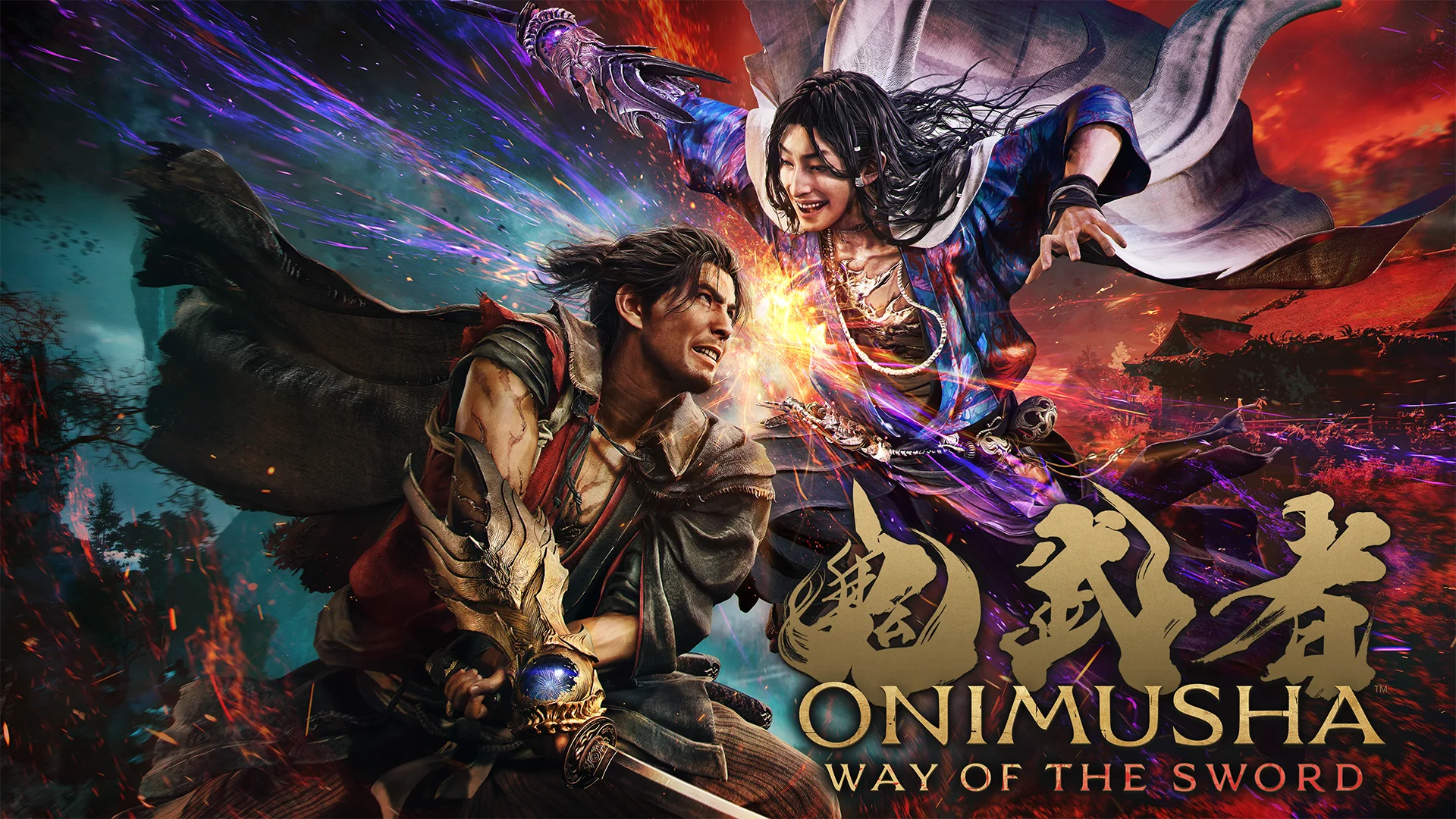
    Facebooktwitterlinkedinmail
  • Warhammer 40,000: Space Marine 2 – Game Review

    Warhammer 40,000: Space Marine 2 – Game Review


    Warhammer 40,000: Space Marine 2

    (available for PS5, Xbox Series X/S and PC)
    (PC version used for review)

    As I’m certain you’re aware, Warhammer 40,000 is the most popular miniature wargame out there. Taking place within the 41st millennium, the universe is in a state of eternal war with the Imperium of Man standing alone in a constant fight against alien forces and the legions of Chaos. In a setting filled to the brim with lore, blood and suspected heresy, it’s the most metal thing you can imagine, practically the definition of grimdark. So, of course, there are bound to be video games, a lot of video games. One of the most notable of these games was Warhammer 40,000: Space Marine, a third person action game released in 2011, getting favourable reviews and working as an excellent gateway into the franchise. And now thirteen years later (to the date here in Europe), we’ve finally got the sequel to it with Warhammer 40,000: Space Marine 2, continuing the story of Captain Demetrian Titus after being put under investigation for corruption and heresy at the end of the last. The game was developed by Saber Interactive, published by Focus Entertainment and released on 9th September 2024 for PlayStation 5, Xbox Series X/S and Windows. 

    Story

    We start the game on the jungle planet of Kadaku in the Imperial system of Recidious, where Demetrian Titus, former Captain who’s served on the Deathwatch for a century, has been called to eradicate the Tyranid invading the planet and to protect “Project Aurora”. The rest of Titus’ squad ends up getting wiped out in the onslaught, a fate which he almost suffers after getting trapped with a swarm of the insectoids and suffering a wound from a Carnifax before being saved. Titus awakens on the Battle Barge, having been forced to go through Rubicon Primaris (an operation required to turn one into a Primaris Space Marine) just to be able to survive. He meets Chaplain Quintus when he wakes who informs him of this, the fact that he has been declared free of taint, and his Promotion to Lieutenant, thus allowing him to rejoin his chapter. He is put under the command of Captain Sevastus Acheran and is put in charge of a squad with Sergeant Gadriel and Brother Chairon. Now he is to complete missions assigned to him within his new squad, which include fighting off the Tyranid horde, protecting key individuals, while slowly figuring out what exactly this Project Aurora is. 

    I quite enjoyed the story of this game. I thought it did a good job of incorporating the events of the last game into its story, I thought the character moments were very well executed and made it all very understandable for those not familiar with the Warhammer 40,000 lore. It should go without saying, but you should play the first game before you start this one, as there are plot points and MacGuffins that do relate to the events of the last. If you don’t, you’ll likely be a bit confused. That being said, you don’t need any kind of knowledge about Warhammer 40,000 to be able to enjoy this game. There will be some terms that you won’t recognise if you don’t – I already mentioned Rubicon Primaris as an example – but it’s not going to ruin what fun you’ll have, and it may even get you curious and start looking things up (and then no doubt have you falling into a rabbit hole where you start obsessing over the lore and story and probably get you watching lore videos on YouTube about certain races… seriously this stuff can get very addicting).

    Presentation

    When I first saw Titus in Kadaku donning his Deathwatch Power Armour, I was immediately staggered by the level of detail on it; this of course goes for his Ultramarine armour as well. The attention to certain details is genuinely jaw dropping, from the light shining off the gold emblem on the front, to dirt and battle scars embedded in the armour. Of course, you do see the marines without their helmets on and they also look great. I especially love how they have scars from battle as well, like bullets lodged in Titus’ head and some carrying burn wounds that melted half of their face. Environments do a fantastic job on conveying the effects of war, with grounds being rough and uneven and the crumbling buildings you’ll be exploring, all of which are also incredibly detailed and exemplifies the grimdark setting perfectly. I was expecting the game to look better than its predecessor, but not to this level. 

    As far as I’m aware, despite the game looking as good as it does, I never encountered any lagging or frame drops. I played the game on PC, and it ran at a consistent 60fps the entire time I was playing. The only time I encountered any kind of lag was during multiplayer, and that was more due to internet issues than with the game itself.

    One thing that surprised me was the change in voice actors for Titus. In the first game he was voiced by Mark Strong (Merlin from Kingsman), but this time around is portrayed by Clive Standen (Rollo from Vikings). If you go looking for it, you will notice that the voice is different from last time, though it’s expected with a change in actor and that doesn’t detract from the great performance that Standen gives. This goes for the rest of the cast, perfectly portraying the honour-bound gruffness you’d expect to find in an Ultramarine. 

    You can tell that the soundtrack was meant for a Warhammer game. Many of the songs have long notes that lead into faster ones further in, increasing the intensity and depicting the fight getting more dangerous. The harsh drums especially aid the music, making it feel more powerful and threatening. And when you add in the male choir accompanying many of these songs, you have a soundtrack worthy of the Emperor and will make you motivated to eradicate the Tyranid scum. 

    Combat 

    Combat feels like it was taken directly from the first game. Space Marine 2 is a third-person action game focusing on melee and shooter combat where you fight swarms of enemies across different planets. You’ll be able to carry one melee and two ranged weapons – one rifle and one pistol. The melee weapons vary quite a bit, primarily in speed and damage, with the Combat Knife being fast and useful in one-on-one encounters, the Thunder Hammer dealing a ton of damage and making dealing with crowds much easier, and the Chainsword being somewhere in between. Melee combat is quite simple, you’ll have a standard combo consisting of only a few swings, but you can interrupt them at any time for a unique combo finisher. If an enemy is blocking, then you can hold down the attack button to break their guard. Sometimes when an enemy is about to attack, you’ll see a blue or red ring around it, if it’s blue you’ll be able to parry the attack and deal quite a bit of damage, if not kill the enemy outright, meanwhile if it’s red then you’ll have to dodge. 

    The differences with guns are very much what you’d expect; different rates of fire, further or shorter range, how much ammo per magazine, things like that. There are both standard and plasma weapons, though the main difference is that plasma guns don’t need to be reloaded, though they can overheat if shot too frequently. And thus, we get to a pretty minor problem with the guns; in the original Space Marine you were able to carry four guns at once – a pistol, a fully automatic, a sniper rifle and a semi-automatic – meanwhile in this game you can only carry two. Now it’s not a major problem, and I suspect that it’s the case because of this games’ focus on co-op multiplayer, but it makes me feel like I’m at more of a disadvantage at times, for example if a battle will include enemies from far away and I don’t have a sniper on me. It just means I’m less prepared for certain battles. 

    On top of those, you have a small assortment of grenades found throughout the level. Each of these have a variety of different effects aside from exploding enemies into chunks, like Shock blinding targets while continuously damaging them, Krak sticking to targets guaranteeing maximum damage, or Melta-bombs acting as remote landmines. 

    After a certain point in the story, Titus will gain a new ability called Righteous Fury. This ability will charge up on its own. Once activated Titus’ health will start regenerating and you will deal more damage. Once again, I felt that this was a bit better in the original Space Marine as you could also slow down time when aiming with your gun. Again, I understand that this change was due to multiplayer, but it’s still a slight downgrade in my opinion. 

    Now I’ve been consistently referring to the battles against Tyranids as swarms, no this isn’t because of my lack of creativity when it comes to writing, this is intentional, because I cannot recall a battle where I wasn’t fighting dozens of these things. Yes, there are a couple of smaller groups of the insectoids, but these are found more on the path to these battles, rather than the primary conflicts. You will be overrun by these things consistently, having to fight numerous waves of the creatures as you fulfil your primary directive. The first time I saw basically an entire army running towards me in the distance and then witnessed them attempting to climb the walls below to try and reach me was honestly pretty terrifying. The enemy variety is very thin, only really consisting of half a dozen types of Tyranid, which doesn’t change when the legions of Chaos enter the fray, some small that only take a couple of shots to kill as well as some larger ones that will take more of a beating. Though for once this is something that I’m actually going to praise, as I’d rather not have to figure out their move set while trying to kill a thousand more. While they are easy to kill, if you’re not careful you will find yourself becoming overrun, and the threat of that is constant; and it’s because of this that I never found myself growing bored. The intensity of the fights simply through the immense numbers had me on the edge of my seat the entire time, ensuring that I never relaxed even on repeat runs through some missions. 

    Multiplayer

    I have already mentioned the multiplayer a couple of times in this review and how the game seems to be overly focused on it. Pretty much everything in this game screams that it’s designed to be played with multiple people, from the squad list in the top right corner, to the fact that you don’t get a game over when you die, instead needing to wait for an ally to revive you. If I’m being honest, the constant focus on multiplayer, even in the main campaign, is something that bothers me. As I’ve mentioned, it feels like the developers made some mechanics less powerful because they wouldn’t have worked in multiplayer, and I started missing those elements from the previous game because they weren’t here. Now I’m certain that playing the campaign with some friends can be a lot of fun, but I’d rather just have that as a purely single player mode, especially as there’s already a separate PvE mode. 

    Now, while the campaign can still be very much enjoyed on your own, the other modes in this game are very much meant to be played with multiple people. In these modes, you get to select one of six different classes to play as during that mission or battle. Each of these come with their own loadout and specialise in different types of gameplays. For example, the Assault class is very good at melee combat as they have access to the Thunder Hammer, though are very weak in ranged, with the Heavy class being the opposite. On top of that, each class has their own unique ability, different to Titus’ Righteous Fury, like the Tactical class Auspex Scan which make enemies more vulnerable to damage or Bulwark’s Chapter Banner restoring the armour of every ally within range. None of these classes feel more powerful than the other and will all come down to personal preference on playstyle. 

    The first of these multiplayer modes is Operations. In each of Titus’ missions he’ll be accompanied by another squad of three who perform their own mission off screen that aids the Lieutenant with his, well in this mode you’ll play as that squad performing said mission. You have a total of six of these missions, each following the story of the campaign. While the campaign can only really be played with friends you’ve invited, in Operations you can play with complete randoms, who just so happen to be playing on the same level as you. This of course means that a big part of the fun you’ll have in this mode is dependent on who you play with. You may encounter some players who are real team players, they revive you the instant you go down, will be expert exterminators of the Tyranid horde, and will possibly even wait to see if you will pick up a medica stim before picking them up themselves, on the other hand you could find someone who just steals your kills, takes every ammo box or grenade bundle they can find and will just run off to the next objective while you’re trying to fight off an army. As said in combat, these missions don’t really seem to get boring, again due to the massive swarms of enemies you’ll end up fighting, and there’s just that extra bit of fun that comes from playing with other people. 

    The other multiplayer mode is the Eternal War. This is the PvP mode, where you take part in a 6v6 battle as a Space Marine or a Heretic to accumulate more points than your opponent can. There are three different types of multiplayer modes, each of which are your standard affair in PvP shooters, from capture the flag (Seize Ground), death match (Annihilation) and one where you have to maintain a section of the map for the longest (Capture and Control). Matches can last a maximum of 20 minutes which may sound generous, but these battles can last for a good while. Once again, a big part of the fun you’ll have in this mode is how good the rest of your team are, as well as the skills of your opponents, on top of how much you like getting absolutely decimated by multiple players at once. Some of the weapons you can use will be locked away until you reach a certain veterancy with said class, which is something which I personally really don’t like. I would understand if this was just for Operations mode but having it in this mode can really put you at a disadvantage as it forces you to use inferior weapons or ones you just don’t like until you’ve played the game enough, likely putting you at a disadvantage. 

    One thing that I really like is the customizability of your Space Marine. You’ll unlock more cosmetics the more you play either mode and the options you have are plentiful. From the individual pieces of armour you can equip, to the colours of each part, even the emblems on the shoulder plates can be swapped around. Unfortunately, this only goes for your Space Marine, as your customization options for the Heretics are pitifully slim. Yes, it is for only one of the two modes, but I would have liked more options for the Heretics, especially since I can’t choose which side I’m on during an Eternal War Match. 

    Conclusion

    This game takes you right back to the Xbox 360/PlayStation 3 era of games, where multiplayer shooters with shorter campaigns reigned supreme. The combat is simple, and the multiplayer mode doesn’t have much depth, but it’s still very fun and has really invigorated my interest in Warhammer 40,000. Whether you’re a fan of this universe or not, I recommend this game, there’s more content that’s going to be added in the future, and I’m definitely going to be keeping my eye on it. 

    8.4/10

    Elliot Chapman
    Anime Amigo and Nerd Consultant

    Share This Post:
    Facebooktwitterlinkedinmail
  • That Time I Got Reincarnated As A Slime: ISEKAI Chronicles – Game Review

    That Time I Got Reincarnated As A Slime: ISEKAI Chronicles – Game Review


    That Time I Got Reincarnated As A Slime: ISEKAI Chronicles

    (available for PlayStation 4 & 5, Xbox Series X & S, Nintendo Switch and PC. Nintendo Switch version used for this review.)

    If you’re a watcher of the Anime Amigos Podcast (for the love of god please watch it we’re desperate), you’d know that I’m a massive fan of the anime That Time I Got Reincarnated as a Slime. The light novel by Fuse came out in 2014, and has since gained a manga adaptation, an anime – whose third season is ongoing at time of writing – a movie and is hailed by many as one of the best of the ISEKAI genre. That being said, if you asked me which anime I would like a game for, That Time I Got Reincarnated as a Slime (I’ll shorten it to just Slime when referring to the anime for now) would probably not have made the list, so it was pretty surprising when out of nowhere Bandai Namco announced That Time I Got Reincarnated as a Slime ISEKAI Chronicles, scheduled to be released only a few months later. That Time I Got Reincarnated as a Slime ISEKAI Chronicles was developed by ZOC and Monkeycraft, published by Bandai Namco and was released on 7th August 2024 for PlayStation 4/5, Xbox One/Series X, Nintendo Switch and Steam. 

    Story

    This game is essentially an abridged version of the Slime anime. The story follows Rimuru Tempest, who was originally a man in modern day Japan who ended up getting murdered and was reincarnated as a slime in a fantasy world. Not long after being reborn he meets a dragon called Veldora, the two quickly take a liking to one another and form a pact. Eventually Rimuru stumbles upon a goblin village being attacked by a band of dire wolves, utilising the skills he obtained with his Predator ability, he defeats the wolves and inexplicably becomes the ruler of the settlement and has the opposing sides form an alliance. The story follows Rimuru’s adventures, encountering and allying himself with different monster races and developing a tiny village into a mighty nation. The game also includes two new arcs, not in the original light novel, that was written by the original author.

    As said, this is a pretty abridged version of the main story, to the point where the game basically gives you the cliff notes of the first eight episodes of the anime: blasting through them within the first five minutes. Despite that, I’d say the game does a fairly good job at adapting the story. It gets the main plot points down to the point where you at least get an understanding on what’s going on, there are some characters that are clumsily introduced, mostly because we originally met them much earlier in the original source, so the game has to hastily explain how the characters met, but aside from that it’s done pretty well. 

    Presentation

    To start off, this game does a really good job with adapting characters from the anime into the game’s art style. Character models are chibi-esc, so they don’t go full on chibi with the characters, but they are fairly close. Most of the dialogue scenes are portrayed by moving character portraits in small squares, a lot like the optional conversation from the Tales series. 

    While in-game character models look incredibly smooth, the same can’t be said for the character portraits, they look very blurry, to the point where it gets very distracting. I was hoping that I would get used to it eventually, but sadly no. 

    While most of this game is told via blurry character portraits and stills from the anime, there are occasionally in-game cutscenes. These cutscenes are surprisingly well animated, though the framerate is cut in half during these, it’s not distracting, and I will admit that it does stylize them somewhat, but they are a bit choppy if that’s an issue for you. 

    One thing that might be a downside are the language options, or more accurately the lack thereof. Unfortunately, the only language you can play this game in is the original Japanese dub, which for me isn’t too bad, the original voice cast reprise their roles and are just as good as ever, but if you’d rather play in English, whether it’s because you don’t want to be reading dialogue or are more used to the English cast, you’re going to be a bit disappointed. 

    Level Design

    That Time I Got Reincarnated as a Slime ISEKAI Chronicles is a 2D action game focused on fighting scripted battles along a linear pathway. You go into each level, unless the story dictates otherwise, with a max of three playable characters and two allies off to the side. If I had to compare the level design to any game, strangely enough it would be Miitopia. Each level is a series of pathways that move down with branching paths taking you down different corridors. Within each level are a series of what I’ll call “rooms”, these rooms will contain one of two things, an encounter with a couple of enemies, or a treasure chest containing some materials. Aside from the backgrounds, the difference with each of these levels is very minimal, as they only have one direct pathway, with each other path leading to an optional room, and while one or two of those rooms might have a slightly tougher enemy on occasion, they are incredibly similar to the encounters you’ll have to fight anyway, so there’s little incentive to go down those paths. After a while, each level just blends into one another, making the game feel incredibly samey and monotonous very quickly.

    Combat

    This game goes for a very different combat style than other games based on anime. Usually, you’d have some kind of Dynasty Warriors clone, or a fighting game akin to Dragon Ball FighterZ or Naruto Ultimate Ninja Storm, though this one decides to do its own thing. 

    As mentioned in the level design section, a number of “rooms” in each level will contain a small handful of enemies – never more than 3 – that you’ll have to slay before you can continue onwards. The attacks you can pull off remind me of what you can do in Super Smash Bros. Your characters have a number of combos or single swing attacks, and which one you use depends on which direction you’re pushing or pulling the left thumb stick. You don’t really get an advantage on which attack you pull off; it mostly just depends on what attack you feel like performing in the moment. Each character also has their own set of special moves, again the attack you perform depends on which way the left stick is pointing. Most characters’ special attacks are set in stone and will be unlocked the further into the game you go, meanwhile Rimuru is able to learn one of his friends’ attacks by building up his bond with them, so his attacks can be swapped in and out. 

    On top of those, each character has what’s called their Secret Skills. These are basically that characters’ ultimate ability; what the skill does, and its range depends entirely on whose Secret Skill you’re using. For example, Rimuru’s will launch an attack across the screen, and will heal you if you kill any enemies, meanwhile Sumire’s will heal and buff your allies. To use these, you need at least 100% in the secret skill gauge, this will build up on its own over time so there aren’t any further requirements to use these attacks. 

    I mentioned before that you enter levels with up to two allies that aren’t playable, well these are your support characters. Support characters aren’t playable but do have their own secret skill that can be used in battle. These skills are devastating attacks that will heavily damage multiple enemies. Just like your playable characters’ Secret Skills, these will also require at least 100% in the secret skill gauge, so you’ll have to decide whether to use theirs or your allies. 

    At the end of each battle, you’ll get a ranking from C to S. What ranking you get depends on two factors, how many hits you performed and how much damage you dealt. How well you did will dictate how good of a reward you get. I’m not really a big fan of this if I’m entirely honest; not the ranks themselves, but how you get them. Damage dealt is fine enough, but the amount of hits you manage I just don’t like. It means that, if you care about the rankings, you’ll prioritise using fast characters that hit multiple times, meaning that some characters (Shion’s one that comes to mind) will be pushed to the side. Plus, as you play the game more and go back to earlier levels – which you will do in the story and side quests – you’re less likely to get a good ranking in hits because you’ll be killing the enemies faster. I would have preferred it if it was different factors deciding what rank you got, the amount of time it took or the amount of damage you’ve taken, something like that.  

    Building up Tempest

    Seeing as a big part of the anime and light novel is Rimuru building and developing his nation of Tempest, it’s pretty much expected that it would play a part in this game as well. You have plots within your town where you can place buildings, including a couple that you’ll have to place for story purposes. You build these buildings using materials you gather with each level, either from defeating enemies or from treasure chests, you’ll also gather some from beating story and side quests. 

    This was probably the bit of the game that I was looking forward to the most, I was expecting it to be like the shelters in Fallout or possibly the ISEKAI version of SimCity; where you’re trying to maintain the stability of the town and make sure all your citizens are happy. Unfortunately, this ended up being the most disappointing part of the game. Why? All you get for putting down buildings are stat increases… that’s it. Now there are some that have further purposes, like the hot springs letting you bond with your allies or the harvest buildings giving you items on occasion, but there’s not much else. In fact, I don’t think they give you stat increases all at once, you have to interact with the facilities to get the buff. This portion of the game could have been much deeper, but instead they decided to, in my opinion, go below the bare minimum, and that’s not nearly good enough for me. 

    Monotony

    Yep, I decided to use an entire section of this review to talk about how monotonous I think this game is (aren’t you lucky). But I mean it, this game gets really tiresome insanely quickly, and there are a couple of reasons for it. First of all, it’s the lack of variety. I’ve briefly mentioned this in the level design section, but each level really does start to feel the exact same after a while. Yes, the layout is a little different between levels, but that doesn’t stop the fact that you’re just walking down straight lines with no obstacles for multiple hours at a time. This goes for enemy encounters as well, very few of them fight differently, the only real difference being whether they have close up or ranged attacks. Aside from that, you can go into every battle with the same strategy and win – with the exception of boss fights as they do have more attacks. Even side quests don’t give you any reprieve, as they just force you to do the same as the main missions – go through one of the same levels you have before, but this time there are extra chests for you to open or you get extra rewards for beating encounters – my god it gets so tiresome.

    But a lot of that could have at least been durable if it weren’t for my second and biggest complaint. Now, I’ve played and reviewed a lot of easy games, it’s probably known by now that I’m a fan of difficulty, I like to be challenged and enjoy conquering menacing threats, though even then I’ve still rated easy games very highly, ones like Final Fantasy XVI and Granblue Fantasy Relink come to mind. So, you know that I have a massive problem when the difficulty of this game really bothers me. I’m not kidding when I say that this is quite possibly the easiest game I’ve ever played. For starters, enemies rarely ever attack, I don’t mean that it takes a couple of seconds to wind up a strike, in fact it can take them even longer to even start an attack. I’m not kidding, I once stood there waiting for the enemy to try and hit me, it took at least twenty seconds, and not just once, it consistently took tens of seconds for them to make any kind of attack. And even when they did and managed to hit me, the damage they dealt was pitiful, never mind not dying I don’t think my health ever went to the halfway point. On top of that, I was constantly seriously overpowered despite never going out of my way to grind. One of the story missions was to unlock 15% of Gobta’s and Ranga’s passive skills, and I already had over half of them simply by playing the story missions. Now you could argue that it’s story accurate, as there is very little that actually challenges Rimuru and his allies in the story, but for me, no challenge means no engagement, if I’m not struggling at least a little bit, I’m not having fun.

    Conclusion

    I will admit that I didn’t actually beat this game. I spent over seventeen hours on it, and I started to stop enjoying it around hour four – honestly the only reason I think I managed this long is because I had Taskmaster on in the background. There is some fun to be had at first, but once you realise, you’re just going through the same levels and fighting the same fights over and over again, you really start to get tired of this game. I am a really big fan of That Time I Got Reincarnated as a Slime, so it was cool to re-experience those early moments that made me fall in love with the series, but that’s the most enjoyment I honestly got out of it. I’d only suggest getting this game if you’re a Slime mega-fan and even then, only once the price has dropped tremendously, because it really isn’t worth what they’re asking for. My final words on this game, I expected little and even then, I was disappointed. Rimuru deserved better.

    3.9/10

    Elliot Chapman
    Anime Amigo and Nerd Consultant

    Share This Post:

    Facebooktwitterlinkedinmail