


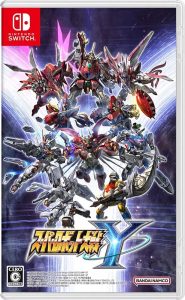
 Super Robot Wars Y
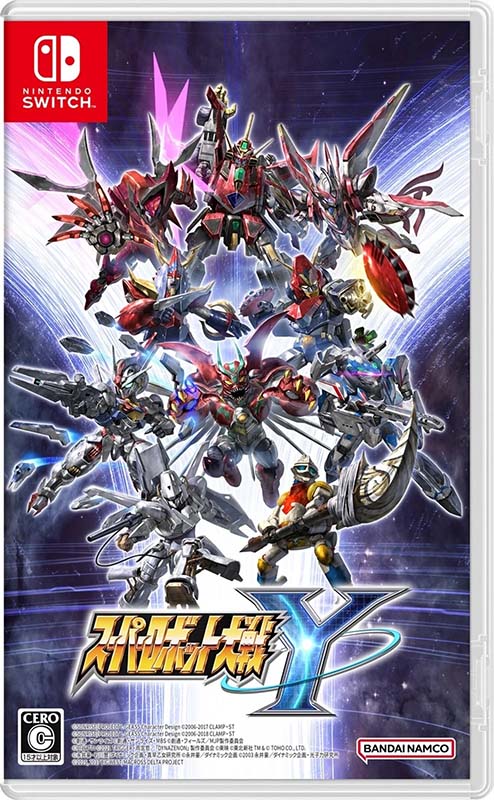
Nintendo Switch 2 Review
Super Robot Wars Y is a turn based Tactical Role-Playing Game and is the first Super Robot Wars game released on western console stores.
It is the latest entry in the franchise stretching back to 1991 and has a home release on every digital console whilst also being on Steam for the PC release.
Pro:
Graphics.
Even on Nintendo Switch 2 the game graphically looks very impressive with its animation for the character cut-in cutscenes from the various media they appeared in being recreated very faithfully.
The mechs follow the art style of their respective anime whether that’s 2D or 3D unit animation for their models and also cut in animations for their special attacks.
The pilots themselves also have a more unified art style to bring them more in line with their modern-day contemporaries with for example the pilots from older anime from the 70’s like Raideen and Mazinger not looking too out of place with the cast of Gundam Witch from Mercury or Godzilla Singular point.
Roster.
This game features a very sizeable roster of characters and mecha from history with over 80 distinct mecha to pilot and over 70 pilots for those mecha.
This includes older titles like Reideen from Reideen the Brave making his reappearance since the PS2 games nearly 20 years ago and also the typical slew of fan favourite Gundam entries with Zeta, Char’s Counterattack, G, Wing, Seed and now Witch from Mercury in 2022.
Other anime debuting in this game aside from G-Witch are Godzilla Singularity Point, Macros Delta, Getter Robo arc and SSSS.Dynazenon.
So there’s a great mix of older returning franchises and newer anime from 2022 and earlier.
Difficulty.
There are four difficulty modes (Casual, Normal, Hard, and Expert) where it actually has an impact and not just inflating enemy HP in this game.
As on higher difficulties the reward XP, credits are reduced from killing enemies. Enemies have more upgrades compared to lower levels increasing their stats like evasion and critical hit chance not just HP and Damage.
Your units also deploy with less starting SP for Spirit commands and during the enemy turn you cannot use Spirit commands from allies on your unit.
However the main benefit is that after a mission is cleared quickly enough players can get a larger credit bonus based on how many turns it took with a max of 50,000 credits. This is great for maxing out Unit stats compared to lower difficulties especially if the part that increases credits is equipped to a Unit.
The lowest difficulty I would recommend for new players to the franchise since units gain more XP per kill and it’s cheaper to upgrade units compared to higher difficulties.
However no matter the difficulty there is no permanent death of units like in Fire Emblem for example, so players shouldn’t be daunted by trying a higher level of difficulty.
Difficulty can also be changed later on from the Systems menu and only affects gameplay not the story or unlockable units, so players are not punished for experimenting and can drop the difficulty back down.
Bosses.
Some of the big difficulty spikes in this game come from the late game Superbosses Godzilla Ultima who can regenerate their HP back to full after every turn due to their skills and also equipment.
This is also further compounded by having a strict turn limit on too with Godzilla Ultima needing to be taken down within three turns.
Other bosses (I won’t spoil the identity of) also have harsh conditions like being able to take down several bosses in one turn simultaneously otherwise need to reload the save file.
This may seem overly harsh but is a welcome challenge from the rest of the game which is quite easy unless playing on Hard or Expert difficulties where the average enemies get a lot of additional modifiers to make more challenging.
STG Memory System.
The new STG Memory system is a three branched skill tree of the game that is the main use for the Mission XP that players collect after every mission to buy upgrade nodes on each of the three main branches.
Each branch is very impactful to the overall gameplay augmenting the pilots and mechs with additional buffs from each of the various branches.
The red branch focuses on attack buffs by allowing your units to deal more damage to the enemy units along with increased accuracy and critical hit chance.
The blue branch focuses on survivability for your units with increases to HP, Armour for increased defence and more SP for commands to use for defensive skills.
The final branch is the green branch and focuses on increasing the amount of XP and Credits that the player received for destroying enemy units along with cheaper upgrades for the player’s units and pilots.
These branches are very impactful over the course of a full play though and players can refund the cost for each of the nodes to purchase new nodes at any time in the branches. This is useful for changing around the nodes to deal more damage on challenging maps where the player needs to destroy a tough boss or a fleet of units.
Assist Link System.
Assist Link system is a new system where players can assign up to 9 NPC characters as Assist Crew that join throughout the story.
These characters then unlock a passive buff as they rank up to a max of 4 but also an active command when players have saved up enough assist charges from 0-9 that increases every time an enemy is killed by the player. With the highest cost assist command costing 8 Assist Charges but it’s definitely worth using them in combat.
It’s a great way to incorporate other side characters from these franchises who don’t pilot a mech in their show. As these Assist characters get character grow in the side missions and also when they reach the maximum rank they get a private conversation with the leader Echika.
Character Interactions.
One of the best things about the Super Robot Wars franchise is being able to see all the characters from across 50 years of anime history being able to interact together.
Being a massive Gundam fan one of the highlights for me was seeing all those characters interact from different universes.
Such as Domon from G Gundam becoming the instructor for all the other Gundam series pilots in a very adorable moment including Suletta.
It is very much worth to do every side mission available in the game and get each unit’s score to 70 and above for the Ace rank to get the extra dialogue with Echika.
Value For Money.
This game features a campaign that took myself 150 hours to do everything on my first play through due to the difficulty and unlocking all the units and pilots I could.
So players will get their monies worth with this title as the game also encourages multiple play throughs to see the different endings and optional missions not taken the first time through.
Library Mode.
Under the database option on the intermission screen there is an option to open the library for the game to find Encyclopedia on everything in the game.
This includes detailed biographies for all the mechs, characters and plot summaries for all the different anime that are included in the game.
It also covers all the enemy faction too since the game does not go that in-depth with their character development and expects players to already have the baseline knowledge from their own anime already.
This is a fantastic option to help new players familiarise themselves with these characters and plotlines they probably had never interested with before.
Soundtrack.
Super Robot Wars is a franchise that always features remixes from the anime that they are adapting and they definitely did an amazing job with this entry giving these theme songs a fantastic instrumental rendition of them.
The stand out ones for myself were the opening for Gundam Witch from Mercury called Shukufuku/The Blessing by YOASOBI getting a rock remix with amazing guitar. The other being Godzilla’s theme from Godzilla Singular Point that overrides all other music when Ultima appears in the final chapter.
The game has an inbuilt Sound Browser under the Database menu on the Intermission screen and I would highly recommend players listen to it after the game as all the music is included and unlocked after finishing the story.
Con:
Game Length.
Due to the number of main missions, optional side missions and difficulty spikes in the late game. This makes it so the average game length can last over 130 hours to do everything possible in their first playthrough.
So while this length is fine for a lot of Tactical RPG gamers and covers the storylines for the majority of the twenty different anime featured in this game so to the average player this length is way too long and daunting.
STG Grinding.
There are a total of 147 nodes with the system not being feasible to follow out the entire memory system in one playthrough as that requires 1.25 million XP.
So it is impossible to fully fill out the STG system on your first playthrough, as during my playthrough I was only able to fill out two of the three skill trees.
Visual Novel Storytelling.
While not an issue for myself, the majority of the narrative for this game is told through text boxes with very little voiced lines except some directly pulled parts from key anime scenes.
It is easy to skip through these parts of the storyline through button presses or players can select the auto mode to read along and save their thumb from Repetitive Strain Injury due to the sheer length of the game and amount of text boxes.
Mission Pacing.
While the main story missions are paced well over the seven chapters.
However the side missions are a different story since they are mostly clustered in the second chapter. This is where the game introduces most of the main cast members along with their personal side missions instead of saving these for later chapters for better balancing.
Repetitive Gameplay Loop.
Like any other Tactical Role Play Game like Fire Emblem or XCOM players spend most of the missions getting into position for the first couple of turns. Then proceeding onto the tactical aspect as players balance attacks with their energy cost to not run out.
However every unit plays exactly the same way so if players are not into that style of combat, then it will be very repetitive doing that exact same thing for a hundred hours long.
Hidden Secret Units.
While some secret units are to be expected I feel that the conditions for some of them were too cryptic in parts and not hinted at.
As for some secret units that are converted from main story enemies they have to be destroyed by one particular character every time they appear in a mission.
This is exacerbated by needing to do this six times with optional characters in your party who don’t auto sortie at the start. So that means the secret units will be permanently lost until New Game+.
I just wish the game hinted at these secret units being able to be recruited during a play through and not requiring players to check with the rest of the community to see who discovers the method first.
Conclusion:
A very fun entry for the franchise that focuses on mecha created or directed by Yoshiyuki Tomino and Sunrise studios.
If the player has a love for mecha as a genre and has cursory knowledge of the anime in this game then this is a great jumping on point, as the game goes over arcs of these games but adapted to the Super Robot Wars universe.
If a player does not like reading walls of text for close to 100 hours, then I probably wouldn’t recommend this title. Since due to the visual novel format means there’s no voice acting for the majority of it only tapping A to go to the next text box.
Score: 7.5
Anime Amigo and Nerd Consultant
Share This Post:















Leave a Reply