

We have included important information that was shared on social media during July, so you have this all in one place.
We have tried to make it plain English.
If you are looking at this from a work email address and can’t see the pictures below, try sending this email to your personal email address.
You should be able to see all the pictures.
What we are covering:
- Newsletter
- Advisory group meeting
- Co-production week
- Love your lungs
- NCEPOD: Learning Disability study – patient and carer survey

Read our latest NHS England Learning Disability and Autism Programme newsletter, number 19. Written in easy read and plain English.
The topics are:
-
Mental Capacity Act guidance
-
building better lives in the community
-
annual health checks
The newsletter was coproduced with the wider programme, together with members from the learning disability and autism advisory group.
Please share this link widely with people who you think would like to read it and find it useful. https://www.england.nhs.uk/learning-disabilities/about/get-involved/newsletters/
Or if you would like any hard copies, please let us know.


The learning disability and autism advisory group met online on 9 July.
We had 24 of our advisory group attending, as well as staff joining us for part of the meeting from a hospital, a region and an integrated care board (ICB) and two GP practices, so that we could truly co-produce.
We heard from the groups about their views on problems with and ideas to improve accessing health care, which we will also share with the Department of Health and Social Care (DHSC).
We also shared new resources to support health and care staff use the Mental Capacity Act. The groups explored what else might be needed to help patients and staff in their Mental Capacity Act assessment.
Emma Clark, Lived Experience Policy Officer Co-worker, captured the day in the great picture below.
Some feedback we had:
-
was really interesting and a great learning opportunity to go away and see how some of the issues raised are managed within own organisation or through the new plans
-
the meetings make me feel like I’m having a real positive impact on the services for those in our community

It was co-production week at the start of July. Read about how our lived experience staff contribute to our work and help us to co-produce.

It was love your lungs week from 21 to 27 July. We shared information on lung conditions that people with a learning disability are more likely to get.
Asthma is a common condition that affects your breathing. At the moment it cannot be cured, but if it’s well treated you should not have problems. See this easy read guide on asthma.https://shop.asthmaandlung.org.uk/collections/easy-read/products/all-about-asthma-easy-read
Bronchiolitis is a common chest infection that affects babies and children under 2. It’s usually mild and can be treated at home. But sometimes it can be serious. See the Hampshire and Isle of Wight NHS webpage on bronchiolitishttps://www.healthiertogether.nhs.uk/child-under-5-years/bronchiolitis-and-rsv
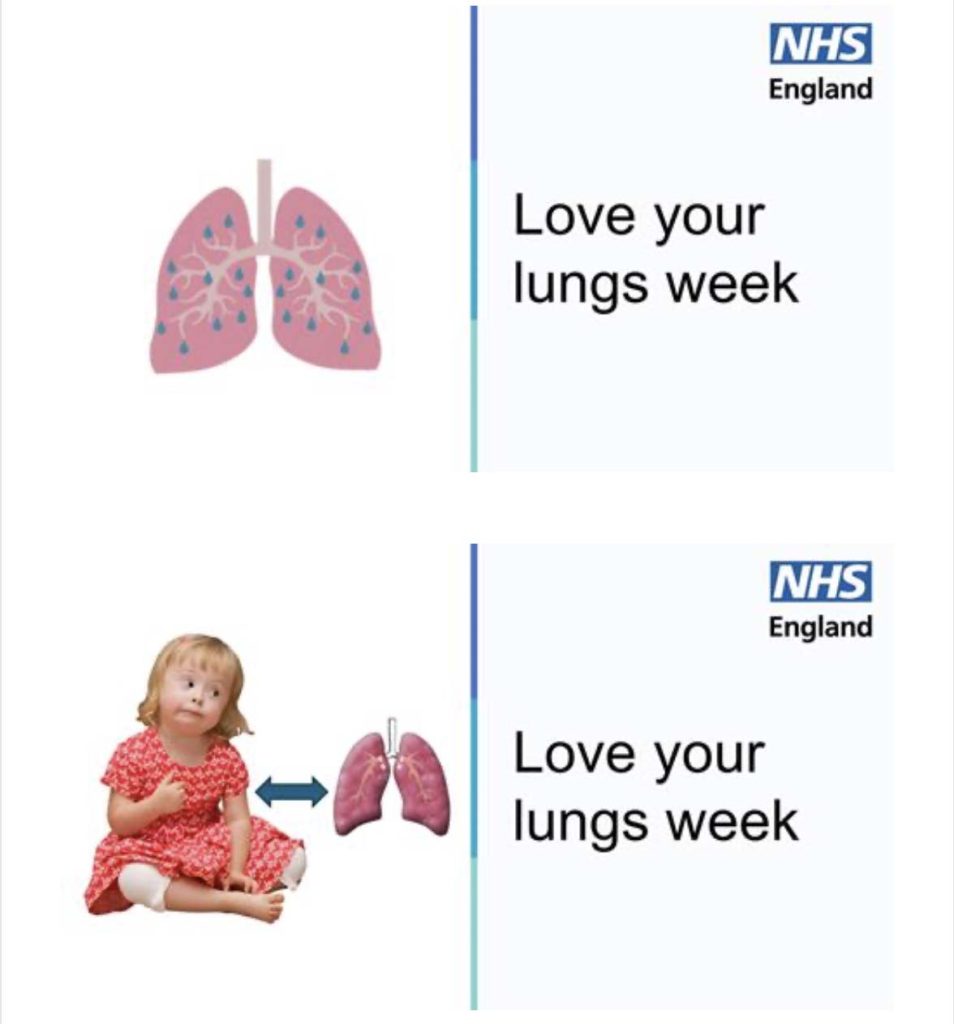
Pneumonia is inflammation of the lungs, usually caused by an infection. People can be at risk of getting seriously ill and may need treatment in hospital. Read this easy read guide on pneumoniahttps://mcusercontent.com/cc1d350f6ca35e29c3b45892e/files/5a47263f-2897-17a7-e8b4-fe9818b53cea/Pneumonia.pdf
Lung cancer is one of the most common and serious types of cancer. Look at this easy read guide on lung cancerhttps://www.macmillan.org.uk/cancer-information-and-support/stories-and-media/booklets/lung-cancer-easy-read
Obstructive pulmonary disease (COPD) is the name for a group of lung conditions that cause breathing difficulties. See this easy read guide on COPDhttps://www.easyhealth.org.uk/pages/21-lung-and-breathing-problems-copd
We hope you have found the information useful to help keep your lungs healthy and know what to look for if you have any problems.
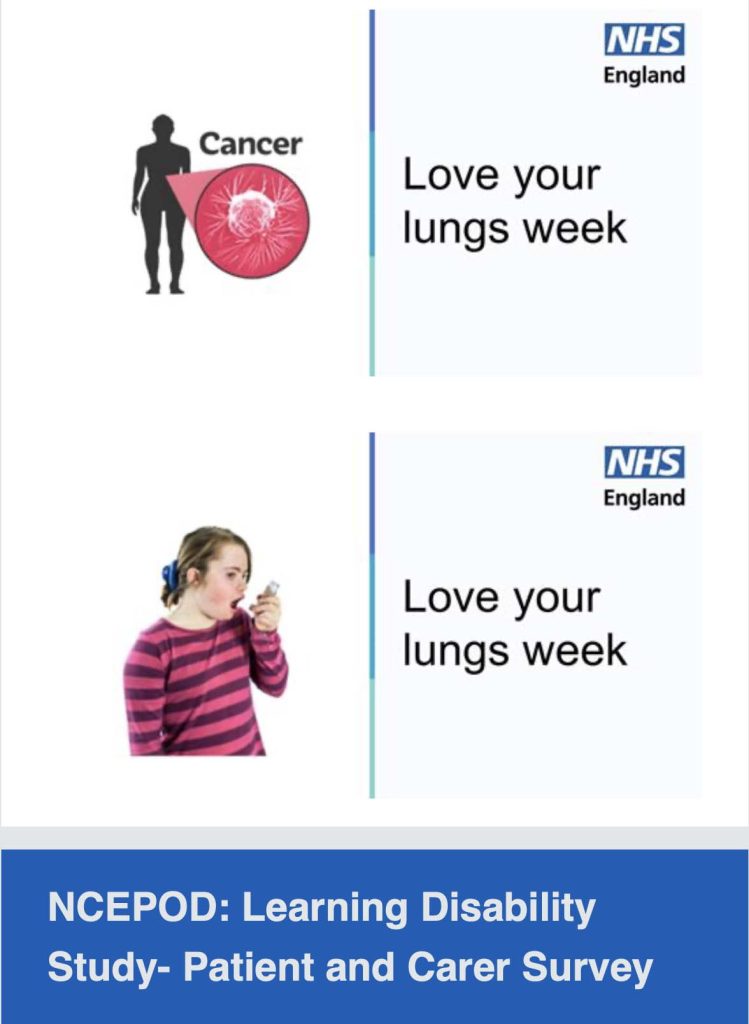
The National Confidential Enquiry into Patient Outcome and Death (NCEPOD) is a charity which works to make healthcare services better for the people who use them. Their work has led to lots of good changes in how healthcare is provided. They are trying to make hospital admissions for people with a learning disability better.
They are collecting information to understand how hospitals can give better care to people with a learning disability.
If you have been in hospital when you were unwell, they want to hear about your experience. You may have taken an ambulance to hospital.
The information they collect will help doctors, nurses, and other healthcare staff learn how to give better care in the future.
They (NCEPOD) have made a survey for someone with a learning disability to complete to tell us what they think. There is also a survey for carers of people with a learning disability to complete.
The survey is anonymous, NCEPOD removes all personal information from any surveys they receive, so you and your family cannot be identified.
The closing date to complete the survey is 16 October.
If you would like to complete a survey:
Online – by clicking the link below or scanning the QR Code
Patient survey – https://forms.cloud.microsoft/e/5yAVV0AWa2
Carer survey –https://forms.cloud.microsoft/e/ibhGBWUkxe


Give us your feedback!
If you would like to feedback about anything in this update email, including the new look, please email us onengage@nhs.net
Share This Post:




Leave a Reply