Author: Linda Buchan

  • Covid-19:Study address declining students mental health – MHT

    Covid-19:Study address declining students mental health – MHT


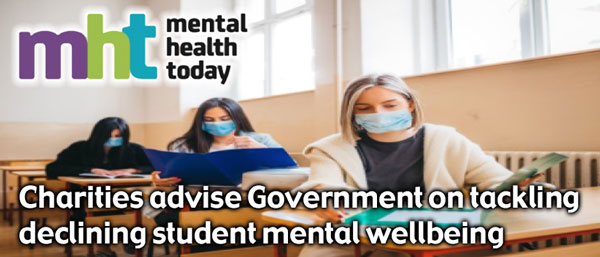
    Charities advise Government on tackling declining student mental wellbeing

    A new charity wide report has found that young people’s mental wellbeing has declined during the Covid-era and has called on the Government to act.

    Covid-19 uncertainty has presented unique challenges for education with digital poverty, lockdown anxiety, and lack of support affecting students and teachers.

    These theme were highlighted in the first annual report by the Children and Young People’s Mental Health Coalition (CYPMHC), a joint campaign of nationwide charities, which said that there are signs that Covid-19: has exacerbated underlying mental health problems of young people, has made new mental health issues harder to treat, and is likely to further increase inequality.

    Lockdown anxiety

    Studies conducted by charities during lockdown have been grim, with both Barnardo’s, a vulnerable children’s charity, and Girlguiding, a youth charity for girls, reporting many young people struggling with their mental health during lockdown.

    “The pandemic and lockdown have been hugely traumatic for young people- separation from friends, anxiety about the virus and financial pressures at home have taken a serious toll on their mental health”, said Barnardo’s Chief Executive Javed Khan.

    Barnardo’s found that a third of those studied had experienced a decline in their mental health, and Girlguiding that half of girls had between the ages of 15-18, and a quarter of girls had between the ages 4-10.

    These fears have been compounded by data from the Children’s Society’s annual ‘The Good Childhood Report 2020’, that showed that this is part of a worrying pre-pandemic trend- with the average score of happiness for young people down before lockdown.

    These findings were also represented by teachers who also have been experiencing higher levels of anxiety and depression, with half of all teachers saying that their mental health declined during the initial stages of the pandemic when replying to a YouGov survey.


    Share This Post:
    Facebooktwitterlinkedinmail
  • Dara McAnulty becomes youngest ever finalist for Baillie Gifford prize – The Guardian

    Dara McAnulty becomes youngest ever finalist for Baillie Gifford prize – The Guardian


    Diary of a Young Naturalist, the 16-year-old’s debut, joins 12 other books in contention for prestigious £50,000 nonfiction award

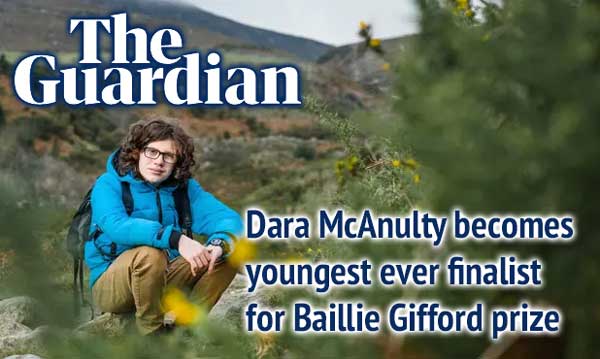
    Dara McAnulty, author of Diary of a Young Naturalist.
    Natural talent … Dara McAnulty, author of Diary of a Young Naturalist. Photograph: Elaine Hill Photography

    The teenager Dara McAnulty has become the youngest writer ever to be longlisted for the UK’s most prestigious nonfiction award, the Baillie Gifford prize, for his book Diary of a Young Naturalist, which he began writing at the age of 14.

    The book chronicles a year in the life of McAnulty, who is autistic, as he deals with his family’s move across Northern Ireland and seeks sanctuary in nature, detailing encounters in his garden and in the wild.

    At 16, McAnulty is the youngest author to be longlisted in the prize’s history. If he wins the £50,000 award, he would be by far the youngest ever winner of a major UK literary prize. Téa Obreht is the youngest winner of the women’s prize, taking it in 2011 at the age of 25, while Sally Rooney, at 27, is the youngest winner of Costa award for best novel and Eleanor Catton is the youngest winner of the Booker at 28. Last month Marieke Lucas Rijneveld became the youngest winner of the International Booker, at 29.


    Share This Post:

    Facebooktwitterlinkedinmail
  • Take action against coronavirus impact – NAS

    Take action against coronavirus impact – NAS


    Sign our letter to Rishi Sunak

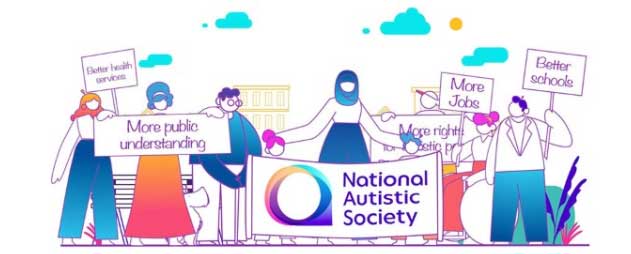
    Everyone’s lives have been upended by coronavirus. But today, we’re releasing our new report, Left Stranded, that shows that the impact of coronavirus has hit the autistic community worse than most.

    This isn’t fair – we need investment in local services to get our community back on its feet. The Chancellor, Rishi Sunak, is due to announce the Government’s spending plans for the next five years – we have to take action now to make sure that autistic people and families aren’t left stranded. Join our campaign by signing our letter to Rishi Sunak.

    Since the pandemic, all the things that we used to rely on – schools, shops, transport, seeing friends and family – have changed. While most of us have been able to adapt to our new reality, autistic people and their families have been left stranded. The mental health, social care and education services they usually rely on were cut back during lockdown, leaving them to cope with the pandemic alone.  

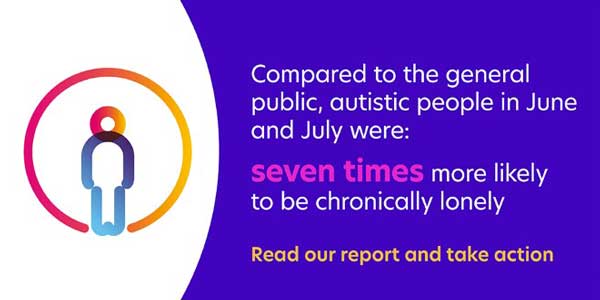
    The impact on our community has been devastating. Our survey in June and July found that autistic people were seven times more likely to be chronically lonely than the rest of the public. They were also six times more likely to have low life satisfaction. Anxiety was worse for autistic people who require a lot of support, as they were less likely to receive the information and advice they needed.

    This is hugely unfair. We can’t allow a generation of autistic people to fall into a mental health crisis. 

    We need funding for services that support autistic people.  And we need an action plan to make sure that autistic people are protected from the impact of another lockdown.

    Right now, we have an opportunity to bring about these changes. We’re calling on Rishi Sunak to fund services for autistic people in the Government’s upcoming Spending Review. You can help us get his attention by signing our letter to show you support our calls. 

    Thanks for your support! Together we can fight for a world that works for autistic people.

    All the best,
    Beth
    Campaigns Manager

    P.S. Please share our campaign with your friends and family – the more signatures we have, the louder our voice will be!


    Share This Post:
    Facebooktwitterlinkedinmail
  • MHT – Rural poverty

    MHT – Rural poverty


    Rural poverty: Without public transport or digital connection, mental healthcare excludes children

    More support is needed for young people’s mental health in coastal and rural areas, a Centre for Mental Health report shows.

    Children living in remote rural and coastal communities in the UK are at risk of missing out on mental health support, says a report published today by Centre for Mental Health.

    “While rural life can be good for mental health, children growing up in poverty, with disability or in a marginalised or oppressed community face a high risk of poor mental health with little support close to home.”

    The space between us, by Louis Allwood, explores evidence about the mental health and wellbeing of children aged between 8 and 13 years living in isolated communities across the UK. Funded by BBC Children in Need, The space between us finds that children living in remote areas face isolation and struggle to get help for their mental health because of poor transport, a lack of safe spaces to meet in and poor digital connectivity.

    Children living in poverty, disabled children, children from marginalised communities and children whose gender or sexual identity is different to most of their peers face especial disadvantages in remote and rural areas. Rural poverty is less visible than in urban areas but can leave children especially isolated and excluded.


    Share This Post:
    Facebooktwitterlinkedinmail
  • South Yorkshire Autism Fayre 2020

    South Yorkshire Autism Fayre 2020


    About the Fayre

    Due to the recent pandemic and circumstances of health and safety, we have decided to hold our annual Fayre virtually. It will take place between 13th – 16th September. Although we are disappointed at not holding the Fayre in our traditional manner, we are however EXCITED to be holding our first ever Virtual Fayre

    History

    The Autism Fayre was first started in 2015 by Sparkle Sheffield. This event was held at Norfolk Park Centre in the Park and had 2 speakers and 4 information stalls. The first Fayre had more attendees than anticipated, and the following year quickly increased to 5 speakers and 19 information stalls over 2 days! This showed that there was a need out there for parents to be able to access a range of information about autism in one place. The event continued to be held yearly at Norfolk Park Centre in the Park until 2018.

    Previous

    In 2019, Autism Union received funding from the National Lottery Community Fund to host the biggest South Yorkshire Autism Fayre yet! The 2019 event was a resounding success with over 20 speakers and 40 stands that brought in over 500 members of the public and professionals alike. The event shared knowledge and information; and provided services and products to delegates from South Yorkshire and wider afield. The Fayre was opened by Sir Robert Dyson (Deputy Lord-Lieutenant of South Yorkshire) and covered by local media, news and radio stations along with vloggers and bloggers alike.

    Present

    This year we have been resorted to holding our annual Fayre Virtually. We are extremely buoyant giving the circumstance that we are even able to keep the Fayre live and still be able to connect via webinars. We have a range of speakers with diverse backgrounds and experiences and our event will take place over a 3 day period. We are also are very excited to be adding a bonus day for the ‘kids’.

    Guest Speakers include:

    Dr Temple Grandin
    Autistic Individual + Livestock Consultant + Faculty Member at Colorado State University

    Dr Carrie Grant
    Vocal Coach + TV Presenter + Session Singer

    Dr Luke Beardon
    Senior Lecturer Sheffield Hallam University + BA (Hons), PgC (Autism), EDd

    Dr Mark Brown
    Special Needs Consultant + PhD, MA Autism

    Chrissy Meleady MBE
    Equality + Human Rights UK

    amongst others.

    Find out more >
    Share This Post:
    Facebooktwitterlinkedinmail
  • Spectrum Women: Autism and Parenting – Book Review

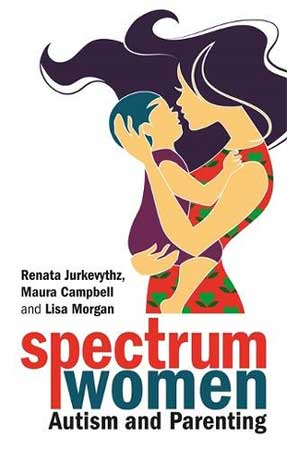
    Spectrum Women: Autism and Parenting – Book Review


    Book Review of
     
    “Spectrum Women – Autism and Parenting”
    By Renata Jurkevythz, Maura Campbell and Lisa Morgan
    Publisher: Jessica Kingsley Publishers

    You may have noticed that we have not reviewed any books for a considerably long time. It is almost impossible to keep up with the number of books that are published on a regular basis. However, an area where very little is written about is in relation to autistic mothers or indeed autistic parents. For this reason, I purchased the book called Spectrum Women – Autism and Parenting by Renata Jurkevythz, Maura Campbell and Lisa Morgan.

    People reviewing the book include Tony Attwood, who feels the book will be of great benefit to women on the spectrum, their families and professionals and I totally agree with him – this is a superb book.

    It is written in the following parts:

    The first part looks at the effects of being autistic on parenting style, and does offer some tips, but is very clearly not offering solutions and is reinforcing that parents are the experts on their own children.

    In the next part, the three mothers share their experiences of raising their biological and adopted children. This is somewhat different from many other publications that are out there, which usually come from a perspective of the non-autistic parent raising an autistic child. These autistic women also describe their experiences of raising neurotypical children.

    I particularly liked the expression ‘I know a lot of people have the idea that autistic people lack empathy, so let’s just briefly address it. Empathy is a people problem before we even start discussing autistics. It is extremely rare to see anyone really trying to put themselves in other peoples’ shoes. Everybody loves to judge and measure other peoples’ lives with their own personal rulers which is the absolute opposite of empathy.’ This really resonated with me and is reflected in the impromptu Post Diagnostic Support Group where Sarah and I discussed empathy (available here).

    The last part conveys their view of the autism community as it stands now. This is a brilliant description of the strengths and challenges of the autistic movement as it currently stands today.

    As the authors say, ‘this is a book from mothers, to mothers’. This will be invaluable.

    Dr. Linda Buchan
    Consultant Clinical Psychologist
    & Director of Axia ASD Ltd.

    Share This Post:
    Facebooktwitterlinkedinmail
  • Mental health lessons are coming to the national curriculum next week – MHT

    Mental health lessons are coming to the national curriculum next week – MHT


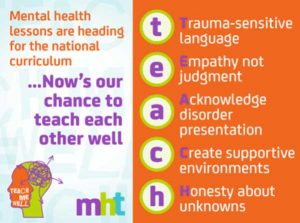
    Mental health lessons are coming to the national curriculum next week

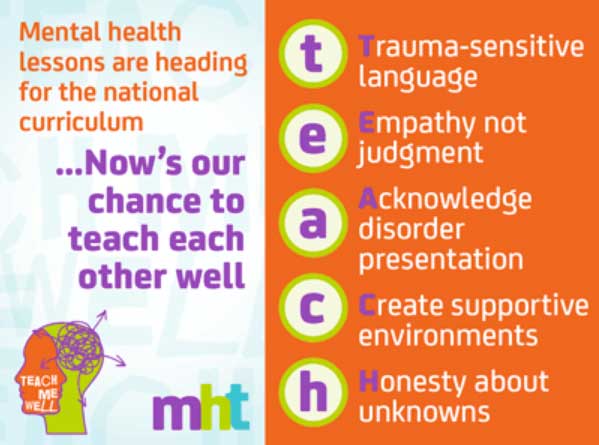
    It’s been a long time coming. Now’s our chance to teach each other well.

    Over 1,000 Mental Health Today readers contributed to our research on how mental health lessons should be planned.

    Now you can explore our range of trauma-sensitive resources and articles.

    You can also read MHT’s ‘anti-glossary’, essential if you want to avoid confounding stigma and symtoms in and out of the classroom.

    Insights

    Premium content

    Discover more

    Continue learning about what good looks like in mental health care. Explore the range of mental health books published by Pavilion Publishing and Media, including Mental Health and Well-being in Primary Education.

    Mental health education is coming to the national curriculum in England and Wales in September. Find out how to design trauma-sensitive lessons through the MHT Teach Me Well resources featured here.

    Know the signs and support options for various mental health conditions through watching the videos and reading the articles in our Disorders Explained information hub.

    Keep supporting mental health progress.

    Website | Twitter | Facebook | LinkedIn | Bookstore

    From Barney and the Mental Health Today team.


    Share This Post:
    Facebooktwitterlinkedinmail
  • We are still here for you – NAS

    We are still here for you – NAS


    We’ll be launching a new website towards the end of August and this is our latest update, so you know what to expect. You can read our introduction to the new website here.

    From launch, we’ll include the information we know you find most useful on this website, and we’ll be adding more and improving the website over the coming months. So it will be similar to the current website, but there will be changes in how it looks and how you find your way around the site.


    Share This Post:
    Facebooktwitterlinkedinmail
  • Elevated rates of autism in transgender and gender-diverse individuals – Nature Communications

    Elevated rates of autism in transgender and gender-diverse individuals – Nature Communications


    Elevated rates of autism, other neurodevelopmental and psychiatric diagnoses, and autistic traits in transgender and gender-diverse individuals

    Varun Warrier, David M. Greenberg, Elizabeth Weir, Clara Buckingham, Paula Smith, Meng-Chuan Lai, Carrie Allison & Simon Baron-Cohen

    Nature Communications volume 11, Article number: 3959 (2020) Cite this article

    Abstract

    It is unclear whether transgender and gender-diverse individuals have elevated rates of autism diagnosis or traits related to autism compared to cisgender individuals in large non-clinic-based cohorts. To investigate this, we use five independently recruited cross-sectional datasets consisting of 641,860 individuals who completed information on gender, neurodevelopmental and psychiatric diagnoses including autism, and measures of traits related to autism (self-report measures of autistic traits, empathy, systemizing, and sensory sensitivity). Compared to cisgender individuals, transgender and gender-diverse individuals have, on average, higher rates of autism, other neurodevelopmental and psychiatric diagnoses. For both autistic and non-autistic individuals, transgender and gender-diverse individuals score, on average, higher on self-report measures of autistic traits, systemizing, and sensory sensitivity, and, on average, lower on self-report measures of empathy. The results may have clinical implications for improving access to mental health care and tailoring adequate support for transgender and gender-diverse individuals.


    Share This Post:
    Facebooktwitterlinkedinmail
  • Learning Disability Today Update – August 2020

    Learning Disability Today Update – August 2020


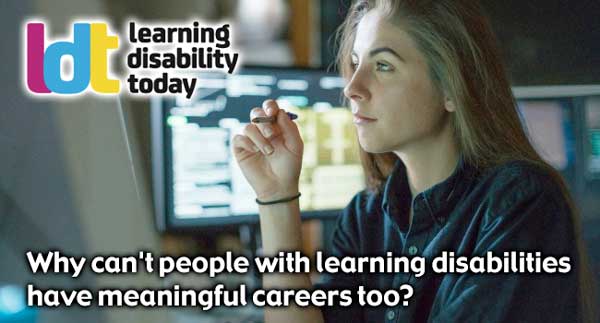
    Why can’t people with learning disabilities have meaningful careers too?

    Saba Salman, editor of ‘Made Possible: Stories of success by people with learning disabilities – in their own words’ tells Learning Disability Today about why meaningful employment is so important to many people with a learning disability.

    “Not everyone with a learning disability wants to work in a supermarket”.

    Further insight

    Catch up

    Explore the range of Learning Disability books and training materials produced by Pavilion Publishing and Media, including Let’s Talk About Sex.

    Barney and the Learning Disability team.
     

    Share This Post:
    Facebooktwitterlinkedinmail
  • Government produces official face mask exemption card – Wales Online

    Government produces official face mask exemption card – Wales Online


    Government produces official face mask exemption card

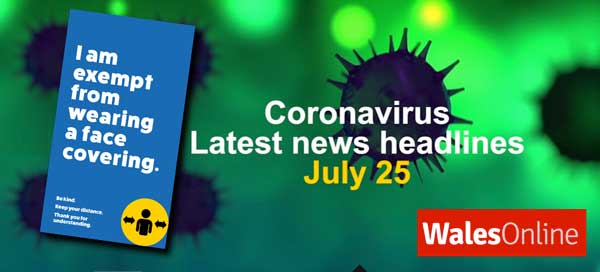
    You can show this to explain you don’t have to wear a mask in a shop or on a bus

    An official card has been produced by the Government which people can show to prove they are exempt from wearing a face covering in shops.

    It comes after the law changed on Friday making masks mandatory across England when shopping in supermarkets, takeaways, transport hubs, post offices, banks and indoor shopping centres, reports The Mirror.

    People with conditions like breathing difficulties, anxiety disorders or autism are exempt – as are children under 11.

    Care minister Helen Whately said: “We don’t want to see members of the public accosted for not wearing a face mask.”

    You can download the template for the exemption card or get a PDF to show on your phone here.


    Share This Post:
    Facebooktwitterlinkedinmail
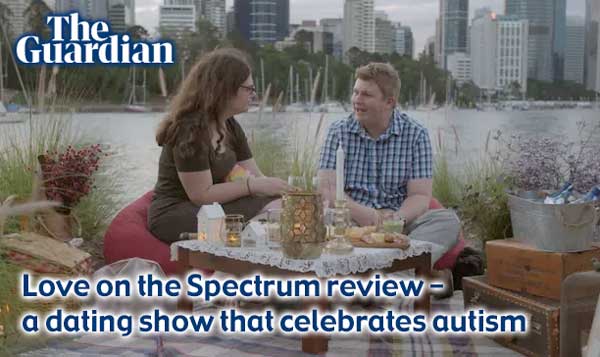
  • Love on the Spectrum review: a dating show that celebrates autism – The Guardian

    Love on the Spectrum review: a dating show that celebrates autism – The Guardian


    Ruth and Thomas enjoy an outdoor date in Love on the Spectrum. Photograph: Courtesy of Netflix

    Netflix’s latest reality effort follows the lives of people on the autism spectrum in detail, with warmth, insight and joy

    At first glance, Love on the Spectrum (Netflix) appears to be an Australian version of The Undateables, without the crude name, and specific to following the dating lives of people on the autism spectrum. But if the wealth of dating shows out there have taught us anything, it is that first impressions can be misleading, and often, you don’t see the twists coming. While I continue to love The Undateables, this five-part newcomer feels more of its moment, taking the time to explore the lives of its participants in greater depth, which results in a programme filled with joy, warmth and insight.

    It is frequently very funny, but crucially, that is never at the expense of anyone on camera. Looking for love can be complicated and absurd for anyone, and the programme highlights some of the pitfalls. Michael, 25, who dresses smartly, is desperate to find love, and insists that “an A+ partner looks like me”. He frequently amuses his family because of his bluntness. Over a meal with his parents and siblings, he reveals that he believes some people are “only interested in intercourse”. His father drops his food as he eats. “I think every family needs a Michael,” says his mother, happily. “It just adds something different.”


    Share This Post:
    Facebooktwitterlinkedinmail
  • Celebrating the key workers who happen to have learning disabilities – LDT

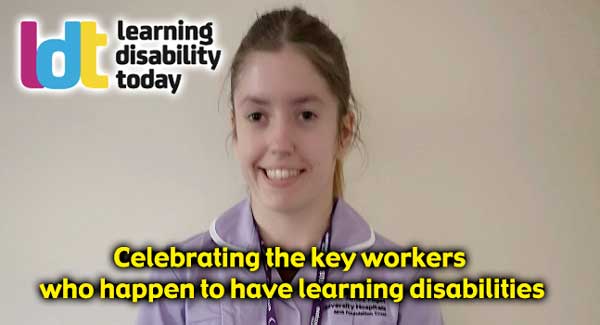
    Celebrating the key workers who happen to have learning disabilities – LDT


    Claire Cookson
    Blog, 10 July 2020

    Claire Cookson, CEO of employment facilitator DFN Project SEARCH, describes how young people with learning disabilities have stepped into key worker roles during the Covid-19 Pandemic and the legacy it may leave.

    The pandemic has certainly pushed us out of our comfort zones and changed the way we live our lives.

    “Society has been forced to re-assess what we consider key and essential roles to be and communities have started to value and celebrate people as individuals.”

    Change can be difficult, challenging and disruptive, we all recognise this.

    However, the past few months has taught us that we can adapt very quickly and bring ideas and ingenuity that ultimately improve performance and the way we work.

    As one of the country’s leading transition-to-work programmes for students with learning disabilities and autism, we operate 69 internationally recognised programmes across the UK, Ireland and Iberia.

    When lockdown was implemented by the UK Government our interns had to work from home too. The move brought uncertainty to many interns well on their pathway to employability and our programme partners throughout the country.

    Despite the disruption, we responded quickly, positively and in so many ways we have never felt more connected as a movement and organisation.


    Share This Post:
    Facebooktwitterlinkedinmail
  • Invitation to a Discussion – Luke Beardon’s New Research Project

    Invitation to a Discussion – Luke Beardon’s New Research Project


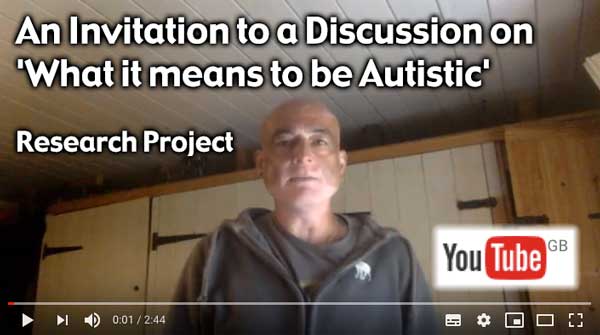
    Those of you who attend our PDSGs, may remember at Luke’s last presentation he mentioned a research project that he was hoping to get ethical approval for, and that it would depend on getting enough participants from our Post-Diagnostic Support Group.
     
    I remain confident that despite the current situation, because all of this is online, that Luke will be able to get sufficient participants to conduct this most essential, vital piece of research that will place autistic individuals at the heart of the study.
     
    The number of people able to take part in this exciting research is limited, so please register your interest as soon as possible!
    Dr. Linda Buchan
    Consultant Clinical Psychologist
    & Director of Axia ASD Ltd.

    Invitation to a Discussion on ‘What it means to be Autistic’

    • Are you an autistic adult?
    • Would you like your voice to be heard?
    • Would you like to participate in a study that will listen to your views on what it means to you to be autistic?

    If so – read on!

    Harriet Cameron from The University of Sheffield and Luke Beardon from Sheffield Hallam University are listening to autistic adults express and discuss their views on what it means to be autistic. You are invited to be a part of either a group (of approximately five, and no more than 10) autistic adults discussing what it means to be autistic; or, should you prefer to engage with the research without being part of a group, to have a discussion with Luke Beardon instead. If you choose the latter you will have the option of chatting with Luke on the phone, or via visual link (e.g. Skype) or via email or a messaging service. If you wish, you can be part of a focus group, and an additional interview. We will be offering a £20 voucher for each hour of your participation (up to a defined amount). There will be further opportunity after the focus group and interview to take part in analysis, and dissemination of the research.

    What we hope to identify is what being autistic actually means to autistic adults. We are interested in the experiences autistic adults connect to being autistic, and in how autistic adults talk about being autistic. Once we have written the project up we hope it will help other professionals to have a better understanding of what being autistic means to the autistic community.

    The project has been approved via The University of Sheffield’s School of Education ethics panel.
    If you are interested in the role of co-researcher then please email one of us (email contact below).
    We will then send you more detail on the project, which you should read through carefully before deciding to take part. If you did still want to take part after reading all of the information, we would ask you to sign a consent form.

    Any questions, please email us. Many thanks in advance!

    Our contact emails are:
    H.Cameron@sheffield.ac.uk
    l.beardon@shu.ac.uk


    Share This Post:

    Facebooktwitterlinkedinmail
  • I’m an autistic, mixed race woman – LDT

    I’m an autistic, mixed race woman – LDT


    I’m an autistic, mixed race woman – let’s discuss intersectionality

    Multiply marginalised due to being a mixed race, autistic woman, Mette writes for Learning Disability Today about how she experiences a world that wasn’t built for her.

    Content warning: racism

    Intersectionality is a term coined by law professor Kimberlé Crenshaw to explain how several identities can compound each other and create a new kind of oppression.

    As a mixed race woman with autism, I have three identities that give me unique lived experience that a white man with autism would not have. I experience disadvantage on account of my gender, neurodiversity, and race. Crenshaw helps to explain this by discussing he the concept of “injustice squared” . What is meant by this is that I go through something different by having a three-part identity. For many marginalised people who have multiple difficulties, intersectionality is a really useful way to describe how different parts of you can be discriminated against at one time. I have often felt like I could only experience racism or sexism, but once I realised I could experience racism and sexism simultaneously (sometimes understood as “misogynoir”), I had a better understanding of my own marginalisation.

    “Being mixed race and having autism presents vast differences from the Caucasian and neurotypical hierarchy and while I can’t control how I am perceived, I can listen, learn, and advocate for myself and others like me”.

    Autism brought something new into the mix. As something I only learnt about after a challenging adolescence, I spent a lot of time looking back on injustice and inaccessible spaces that didn’t accommodate my needs or the needs of other neurodiverse people. My childhood involved years of sensory overload and unexplained meltdowns, the day-to-day triggers often being found in shared spaces like school, shops, and the dinner table.


    Share This Post:
    Facebooktwitterlinkedinmail
  • Axia Weekly Bulletin – 26th June

    Axia Weekly Bulletin – 26th June


    Another busy week here at Axia this week with six diagnosticians carrying out sterling work. It was also a very sad day today as we said goodbye to Evie Connor, who is relocating back to Scotland. She will still be part of our team but we will miss seeing her lovely face and fantastic humour in the office every day.

    Although the government has reduced the Social Distancing measurement from 2 metres, we will still be observing the rule of 2 metres. Red Hill House is still maintaining this distance too and signs are around the building to remind businesses and visitors about this.

    This week, you may have seen our post about the National Autistic Society’s survey to help them shape their future strategy. I would encourage as many of you to complete it as possible.

    Calvin has been working hard on his game reviews, which have been posted this week, as well as a review of ‘5 Ways an Ending Can Ruin a Movie’. Calvin and Ren have also been streaming as usual on Tuesday and Wednesday and will be streaming again later at 7:30pm. The game later will be ‘Final Fantasy IX’.

    Wishing you all a lovely weekend.

    Dr. Linda Buchan
    Consultant Clinical Psychologist
    & Director of Axia ASD Ltd.

    Share This Post:
    Facebooktwitterlinkedinmail
  • Help us shape our future strategy – NAS

    Help us shape our future strategy – NAS


    We want to know what you think our charity should be focusing on for the next 3-5 years to make the world work for autistic people.

    More than ever we know we can’t do everything that autistic people and their families need – and we need your help to shape our future plans to help autistic people and their families.


    Share This Post:
    Facebooktwitterlinkedinmail
  • Axia Weekly Bulletin – 19th June

    Axia Weekly Bulletin – 19th June


    This is the first of our Weekly Bulletins.

    Again a very busy week with lots of diagnoses happening.

    Calvin and Renwick have continued streaming Final Fantasy on Calvin’s YouTube Channel, recently started The Last of Us Remastered on Tuesday, and “Jackbox in Quarantine” on Wednesday, the latter being interactive games which are proving to be very popular.

    Calvin’s also been keeping up with helping people to decide what games to buy, his review today being “Evan’s Remains”. He has also continued to write what he can around film reviews, the latest of which was “5 Reasons I Don’t Like ‘Boyhood’ But Do Like ‘Whisper of The Heart’.”

    Last week was Carers Week and June saw the start of Pride month, whilst on Wednesday the BBC published an article on The lockdown challenges of a 12-year-old with autism

    Dr. Linda Buchan
    Consultant Clinical Psychologist
    & Director of Axia ASD Ltd.

    Share This Post:
    Facebooktwitterlinkedinmail