Author: Linda Buchan

  • Axia Christmas Closing Times 2021

    Axia Christmas Closing Times 2021


    Our office will close
    at 5pm today, 23rd December 2021
    and will reopen at 9am on Tuesday 4th January 2022.

    We realise that for some people Christmas is a wonderful time, for others it is not a wonderful time, whilst others feel somewhat indifferent to the whole thing.

    We published a link earlier to an article from “Mental Health Today” titled “Looking after your mental health this Christmas”, which is probably about the most up to date information available, which you can read here. We also have our general “Where to get urgent help for mental health” page available here.

    We wish you all the best, and look forward to seeing those of you who attend our “Mini PDSG” on the 5th January!


    Share This Post:
    Facebooktwitterlinkedinmail
  • Looking after your mental health this Christmas – MHT

    Looking after your mental health this Christmas – MHT


    For some people, Christmas can be a really hard time of year and a strain on mental health

    From experiencing difficult situations with family, stress around food and eating, loneliness, feeling pressure from what Christmas is ‘supposed’ to be, and struggling with sobriety, so many issues can surface around whether you’re seeing family, not seeing family and the general pressures that surround the festive season.

    Importantly, we want to emphasise that there are services that are specially designed to offer support, advice and aid during this time: you are not alone.

    Services that offer helplines, online chats, emailing and more for mental health support:


    Share This Post:
    Facebooktwitterlinkedinmail
  • S4Nds Guide to Patient Choice in Mental Health

    S4Nds Guide to Patient Choice in Mental Health


    S4Nds Guide to Patient Choice in Mental Health – Neurodevelopmental Condition Assessments

    We were recently alerted that S4Nds have published a guide on their website to help people understand their legal right to choose a service provider for a neurodevelopmental condition assessment. There is a downloadable version of the guide that you can print off or save as a PDF


    Share This Post:
    Facebooktwitterlinkedinmail
  • Axia Weekly Bulletin – 5/11/21

    Axia Weekly Bulletin – 5/11/21


    Welcome, to what will be the last of our Weekly Bulletins.
    Some of you may remember back in March 2020, that suddenly life seemed very uncertain, and Calvin and I started doing “Daily Updates” in April to let everyone know how we were doing, and how things were changing here at Axia.
     
    By June we decided that daily updates were no longer necessary, so we started a “Weekly Bulletin”. These were produced by many members of our team over the last year or so, but we feel now is the time to go back to our updates being on their normal monthly basis.
     
    You can subscribe to our “Monthly Round-Ups” here.
     
    Linda and Calvin
    Directors of Axia ASD Ltd.

    Share This Post:
    Facebooktwitterlinkedinmail
  • A Poem from our Facebook Group

    A Poem from our Facebook Group


    I was delighted to see this poem, originally posted on our FaceBook Group, and wanted to share it on our website.

    As some of you who have been assessed at Axia will know, I like the following questions to be asked:

    • Why have you come to see me today?
    • What difference would a diagnosis make?
    • and Do you have any thoughts or feelings regarding the diagnosis?

    This poem is an absolutely marvellous reflection and response to the impact of the diagnosis.

    Thank you to Luca for taking the time to do this, and for sharing with us this excellent poem.

    Dr. Linda Buchan
    Consultant Clinical Psychologist
    & Director of Axia ASD Ltd.

    I’m the weird one

    How can you chat just like that?
    How do you know what to say?
    I can’t look at you I hate eye contact,
    why are you looking at me that way?
    I don’t really care what the weather is like today.
    I’m the weird one.

    Why are there so many rules I don’t know?
    I just wish I could understand so I know,
    So many questions going through my head,
    Sometimes it’s just safer to stay here in bed.
    I’m the weird one

    The feeling I get when I am so unsure,
    I can’t quite explain it,
    it feels so raw,
    I wish it would stop,
    as I look to the door.
    I’m the weird one

    My senses are suddenly heightened,
    My clothes feel unbearably tight,
    And The light in the classroom is incredibly bright,
    Someone is tapping a pen right beside me,
    The sound is so loud it completely overwhelms my whole body,
    I look all around and feel so alone,
    My belly starts churning, I don’t want to be here,
    I just need to go home.
    I’m the weird one

    My music always helps take me away,
    Off to a place that I wish I could stay,
    I lose myself to that beautiful beat,
    till someone interrupts me,
    and I’m back dragging my feet.
    I’m the weird one.

    The answer for all this was there all along,
    And now I know it’s like hearing a song,
    The melody was beautiful when I found I belong,
    I am not weird,
    and I wasn’t all along,
    My brain is just wired differently,
    and there is a name for this song.
    Autism makes me a bit different than you,
    I wish I had the words to explain it,
    but it’s really hard to do,
    Just Give me some time and space and soon you will see,
    I’m not the weird one,
    I’m just me.

    By Luca Hayes-Walmsley


    Share This Post:


    Facebooktwitterlinkedinmail
  • Where to get Urgent Help for Mental Health

    Where to get Urgent Help for Mental Health


    Where to get urgent help for mental health
    If you need help for a mental health crisis or emergency, you should get immediate expert advice and assessment.

    It’s important to know that support is available, even if services seem busy at the moment because of coronavirus

    Please be aware that Axia ASD is not able to offer a crisis or emergency service. 

    Call 999 or go to A&E now if:

    • someone’s life is at immediate risk – for example, they have seriously injured themselves or taken an overdose
    • you do not feel you can keep yourself or someone else safe

    A mental health emergency should be taken as seriously as a physical one. You will not be wasting anyone’s time

    If you need special assistance then you should let staff know right away: show them your Autism Alert card if you have one. A&E departments can be busy places at times: they can be noisy, bright, smelly and crowded sometimes. Because you might be waiting for some time, you might want to take something to help manage any sensory issues and cope with that sort of environment.

    NHS urgent mental health helplines

    NHS urgent mental health helplines are for people of all ages.

    You can call for:

    • 24-hour advice and support – for you, your child, your parent or someone you care for
    • help to speak to a mental health professional
    • an assessment to help decide on the best course of care

    www.nhs.uk/service-search/mental-health/find-an-urgent-mental-health-helpline

    If you are currently under the care of a mental health team, contact the mental health professional assigned to your care.  If they are not available, ask to speak to the duty worker or team. If you’ve already been given a crisis line number to use in an emergency, it’s best to call it.

    Get advice from 111 or ask for an urgent GP appointment if:

    • you are not able to speak to your local NHS urgent mental health helpline
    • you need help urgently for your mental health, but it’s not an emergency
    • you’re not sure what to do

    111 will tell you the right place to get help if you need to see someone.

    Use the NHS 111 online service, or call 111.

    Call NHS on 0845 46 47 if you live in Wales (or 111 if you live in Hywel Dda, Powys, Aneurin Bevan and Swansea Bay – including Bridgend).

    You may be able to speak to a nurse, or mental health nurse, over the phone.

    A GP can advise you about helpful treatments and also help you access mental health services. You may be able to refer yourself to some services.

    Coping during a crisis

    Coping in a crisis can be hard: it can be very stressful and feel overwhelming. Here are some suggestions about how to manage this:

    • If you need to talk, any time of day or night, there are some free listening services. These services offer confidential support from trained volunteers. You can talk about anything that’s troubling you, no matter how difficult:
    • Call 116 123 to talk to Samaritans, or email: jo@samaritans.org for a reply within 24 hours
    • SANEline: 0300 304 7000 for anyone experiencing a mental health problem or supporting someone else (4.30pm to 10.30pm, every day)
    • Campaign Against Living Miserably (CALM) – for men 0800 58 58 58, (5pm to midnight every day). Online webchat is available via www.thecalmzone.net
    • Text “SHOUT” to 85258 to contact the Shout Crisis Text Line, or text “YM” if you’re under 19. This is a free, confidential, 24/7 text messaging support service for anyone who is struggling to cope.
    • If you’re under 19, you can also call 0800 1111 to talk to Childline. 
    • Mind Infoline: 0300 123 3393 for information and signposting (9am to 6pm, Monday to Friday) 
    • The Hub of Hope (https://hubofhope.co.uk) can be downloaded as an app, as well as having a website. It can help you find a range of services that are nearby

    This includes calming exercises and some ideas to get you through the next few hours.

    The Samaritans also have an app which aims to provide a type of support that you can use without having to discuss your feelings with someone else
    https://www.samaritans.org/how-we-can-help/contact-samaritan/self-help/

    The Axia ASD website has a Resources section where you can find a document called “How can I help myself if I am feeling suicidal?”


    Share This Post:
    Facebooktwitterlinkedinmail
  • New plans to help Peterborough become an autism friendly city

    New plans to help Peterborough become an autism friendly city


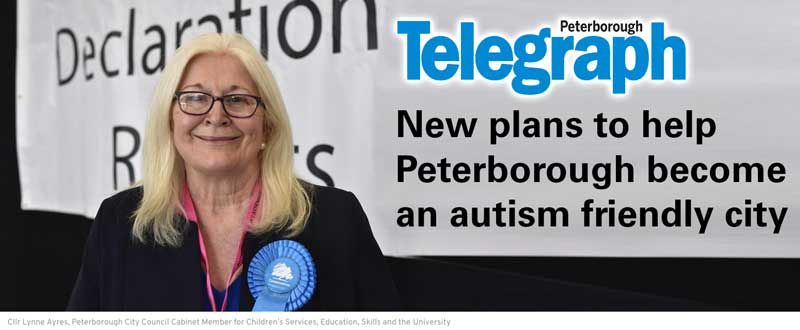
    New plans to help Peterborough become an autism friendly city have been launched.

    The strategy was developed by Peterborough City Council, Cambridgeshire County Council and the Cambridgeshire & Peterborough Clinical Commissioning Group in partnership with local organisations, service user groups and parent carer forums, drawing on the knowledge and understanding of those with experience of autism.

    The priorities for the strategy include:

    • Having a clear diagnostic pathway for children and adults with good support throughout the process, combined with good support before and after diagnosis

    Share This Post:
    Facebooktwitterlinkedinmail
  • Enhanced rationality in autism spectrum disorder

    Enhanced rationality in autism spectrum disorder


    Enhanced rationality in autism spectrum disorder

    Highlights

    Most research into autism spectrum disorder (ASD) focuses on difficulties and challenges, potentially overlooking intact and even enhanced abilities.

    Empirical evidence strongly suggests that individuals with ASD display enhanced rationality: judgments that are more objective and decision-making that is less biased than that of neurotypical individuals.

    Enhanced rationality may confer distinct strengths to individuals with ASD and may provide insights into the mechanism or ‘irrationality’ in neurotypical individuals.


    Share This Post:
    Facebooktwitterlinkedinmail
  • Autistic teen posts video about struggles with system – BBC

    Autistic teen posts video about struggles with system – BBC


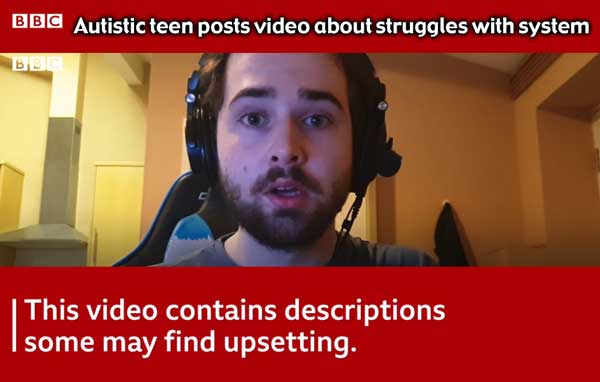
    This is a difficult watch but needs to be listened to
    Sadly in my opinion telling us what we should already know 
    To paraphrase Dr Luke Beardon
    Autism + Environment = Outcome
    It is everyone’s responsibility to try to provide the environments we know work for people 
    Dr. Linda Buchan
    Consultant Clinical Psychologist
    & Director of Axia ASD Ltd.


    Autistic teen posts video about struggles with system

    Campaigners say autistic people are being left to “fall through the cracks” by the social care system.

    Analysis carried out by the Health Foundation for BBC News suggests around 10 per cent of social care staff have had any training in how to support people with autism.

    And the National Autistic Society say more than 300,000 people are not getting their needs met by their local social services. That’s despite 5.6 billion pounds – 40% of local authority spending on social care – being spent on people with learning disabilities and autism.

    The BBC’s Jeremy Cooke has been to meet one family who feel completely failed by the health and social care system.


    Share This Post:
    Facebooktwitterlinkedinmail
  • 10,000 autistic people to take part in the UK’s largest study of autism

    10,000 autistic people to take part in the UK’s largest study of autism


    PLEASE NOTE:
    Axia is not affiliated in any way with this research project, and we are posting this article purely for informational purposes.
    If you are thinking about participating in this research, please ensure you read the information sheet and consent form very carefully.
    If you struggle with reading ask someone you trust to read it to you.

    An ambitious new research project, Spectrum 10K, launches today and will recruit 10,000 autistic individuals, as well as their relatives, living in the UK.

    Spectrum 10K is led by researchers at the world-leading Autism Research Centre (ARC), the University of Cambridge, together with the Wellcome Sanger Institute and University of California Los Angeles (UCLA) and will study how biological and environmental factors impact on the wellbeing of autistic individuals.


    Share This Post:
    Facebooktwitterlinkedinmail
  • A ‘national shame’: MPs demand an end to some autistic people being detained for years – Sky News

    A ‘national shame’: MPs demand an end to some autistic people being detained for years – Sky News


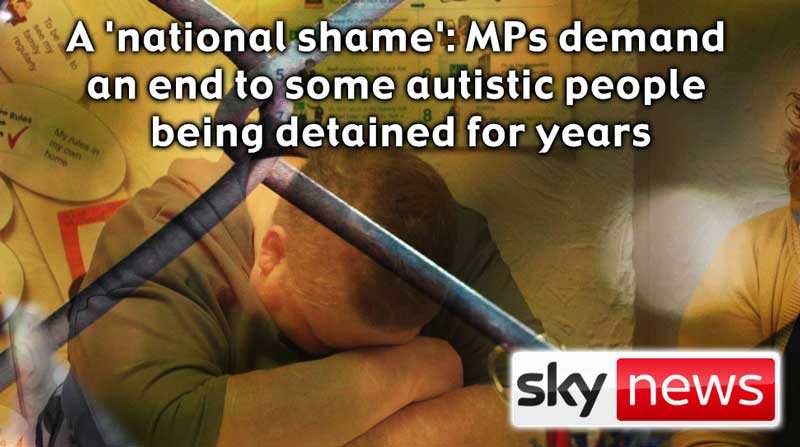
    A new report says there is a “shocking” six-year average length of stay in assessment and treatment units.

    long-term detainment of autistic people and individuals with learning disabilities must be banned, a committee of MPs has said.

    Former health secretary Jeremy Hunt, who chairs the Commons Health and Social Care Committee, said it is a “national shame” that “far too many” people are still being detained.

    In a new report, the committee said individuals can be subjected to “intolerable treatment” at inpatient facilities, including “abusive restrictive practices”.

    It added that autistic people and those with learning difficulties can be kept for “long periods of time in facilities that do not meet their needs” and kept long distances from family and friends, and it wants all new long-term admissions to institutions to be banned except for forensic cases.


    Share This Post:
    Facebooktwitterlinkedinmail
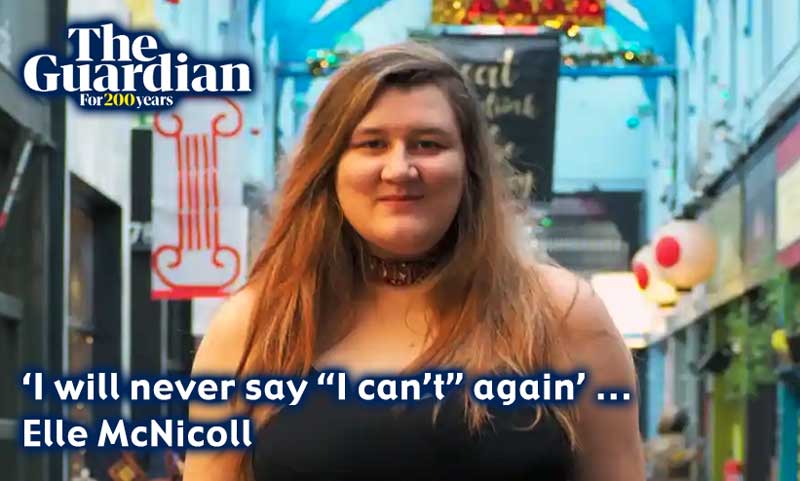
  • Waterstones prize winner Elle McNicoll – The Guardian

    Waterstones prize winner Elle McNicoll – The Guardian


    Waterstones prize winner Elle McNicoll: ‘I never saw autistic girls in books’

    The author was repeatedly told that no one wanted to read fun books with disabled heroes. Now she has won the £5,000 Waterstones children’s book prize for her debut, A Kind of Spark

    When Scottish author Elle McNicoll was first trying to enter the publishing world, she was repeatedly told that people didn’t want to read about an autistic heroine. “In job interviews, I was saying that I wanted to see more books with disabled characters in them that were not traumatic, boring or educational, but fun and full of life. A lot of the reactions were, ‘Waterstones don’t like books like that’,” she says.

    Now McNicoll’s debut novel A Kind of Spark has won the Waterstones children’s book prize. Published by tiny independent Knights Of, it follows Addie, an 11-year-old autistic girl, as she campaigns for a memorial to the witch trials that took place in her Scottish village. The novel has been praised by Waterstones’ booksellers as “eye opening, heart-wrenching, sad [and] inspiring”.


    Share This Post:
    Facebooktwitterlinkedinmail
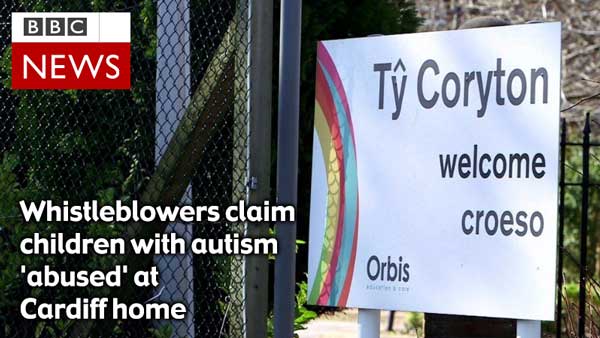
  • Whistleblowers claim children with autism ‘abused’ at Cardiff home

    Whistleblowers claim children with autism ‘abused’ at Cardiff home


    In light of the recent news article regarding care for autistic children in Wales, we would like to offer our sympathies to all of the families affected.

    We are shocked and saddened to hear of the alleged treatment of these children and young people, and want to make our stance on this issue very clear. We do not condone the actions detailed in the article linked below, and agree with Ms. Edwards that the children mentioned are not “naughty”, but require proper care.

    We are extremely upset to hear of children being “restrained”, and “punished for engaging in autistic behaviour”, as this goes against everything we know about the condition.

    We believe there is a significant need for greater understanding of Autism among professionals as well as the general public, and better training for those involved in the care of Autistic people. This incident only highlights this need.


    Children with needs associated with autism were “abused” and mistreated at a children’s home in Cardiff, four former employees have claimed.

    They said children at Ty Coryton were restrained and locked up unnecessarily.

    The whistleblowers also claimed one teenager was locked in her flat regularly because she was menstruating.

    Orbis Education and Care Ltd, who run the home, said they had investigated any incidents that were reported and they took allegations very seriously.

    Kristy Edwards worked at Ty Coryton – a residential home and specialist school for children with needs associated with autism – between November 2019 and September 2020.


    Share This Post:
    Facebooktwitterlinkedinmail
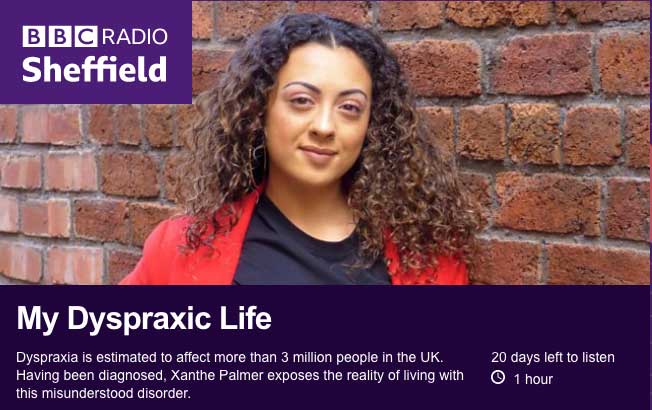
  • My Dyspraxic Life – BBC Radio Sheffield Special

    My Dyspraxic Life – BBC Radio Sheffield Special


    Dyspraxia, or Developmental Coordination Disorder (DCD), is estimated to affect more than 3 million people in the UK, 1.4 million severely – many adults remain undiagnosed.

    After struggling with Dyspraxia unknowingly for most of her life, Xanthe Palmer, having been diagnosed, is now making it her mission to lift the lid on the reality of living with this massively misunderstood disorder.

    The stereotype of someone with Dyspraxia is so far from reality; signs of this lifelong condition are present from birth and continue into adulthood – there is currently no cure.

    It affects physical movement, written and verbal communication; and memory and information processing (cognitive ability). Collectively, these impacts can have devastating effects on people’s lives.

    In this programme Xanthe shares the experiences of a range of people affected by DCD, from across the UK, then qualifies those experiences with one of the world’s top medical and academic experts, and one of the UK’s most experienced specialist occupational therapists; whilst learning more about advanced medical research into the disorder.

    My Dyspraxic Life is researched and presented by Xanthe Palmer.

    It’s written, produced and edited by Steve Bailey.


    Share This Post:
    Facebooktwitterlinkedinmail
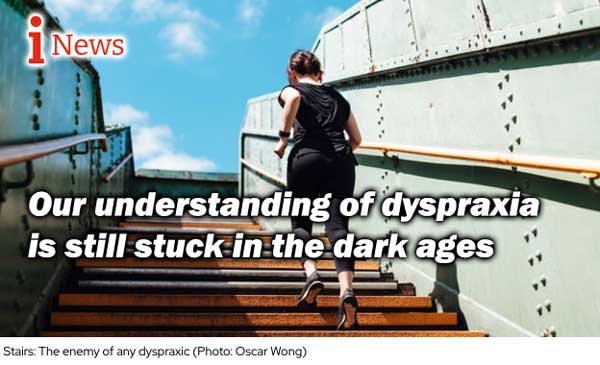
  • Our understanding of dyspraxia is still stuck in the dark ages – i News

    Our understanding of dyspraxia is still stuck in the dark ages – i News


    Our understanding of dyspraxia is still stuck in the dark ages

    The lifelong neurological condition affects our co-ordination, as well as how we organise ourselves, how we structure our sentences, our time management and our speech patterns

    If your average person knows what dyspraxia is, it’s through the jaded account of someone with it.

    Dyspraxics can be heard bookending their sentences with apologies, even when they haven’t got anything to be sorry for. Self-deprecating anecdotes about the injuries they’ve sustained that week come in thick and fast, entertaining the crowd before someone gets in there first.

    I’ve been this type of dyspraxic for as long as I can remember. You have to bring some levity to conversations if you have a co-ordination disorder that cannot be masked that easily. The only problem is, when you commit to being the punchline, it’s hard to take yourself seriously.

    It’s thought that 10 per cent of the population have dyspraxia like me, but the figure isn’t cast iron. The lifelong neurological condition affects our co-ordination, as well as how we organise ourselves, how we structure our sentences, our time management and our speech patterns.


    Share This Post:
    Facebooktwitterlinkedinmail
  • Dyspraxia: My life with the misunderstood condition – BBC

    Dyspraxia: My life with the misunderstood condition – BBC


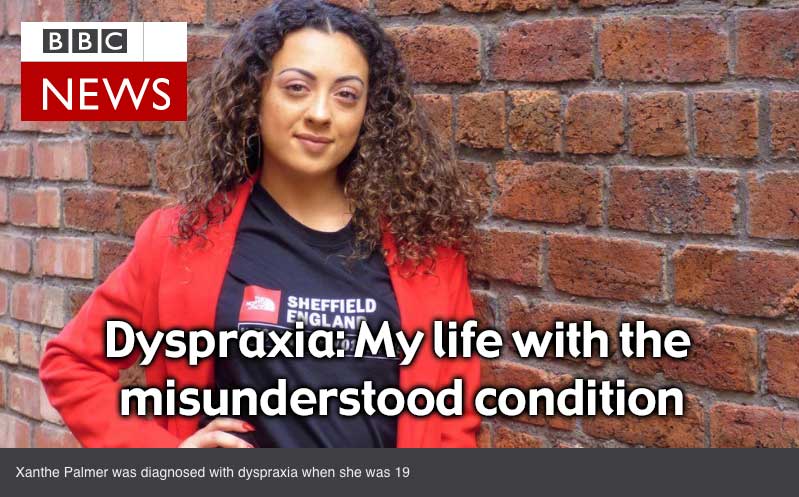
    BBC presenter Xanthe Palmer has dyspraxia, a complex and life-changing disorder she says is frequently misunderstood. She wanted to change that, so set out to speak to others with the condition to shine a spotlight on the challenges they face.

    Xanthe, now 23, was told she had dyspraxia – a lifelong condition affecting movement and co-ordination – when she was a 19-year-old university student. In some ways it explained a lot. “Clumsy”, “fidgety” and “lazy” are labels often applied to people with dyspraxia, and ones that many without a diagnosis accept.

    The most common symptoms affect motor skills and balance. Dyspraxia isn’t linked to intelligence, but experts say it can interfere with executive functions such as time management and short-term memory. It’s thought the extra concentration needed to perform everyday tasks can cause fatigue, and many with the condition describe feeling frequently exhausted.

    Xanthe says: “You battle against it every single day. It isn’t life threatening but it is life-changing.”


    Share This Post:
    Facebooktwitterlinkedinmail
  • Autism Research Recruitment – University of Liverpool

    Autism Research Recruitment – University of Liverpool


    University of Liverpool
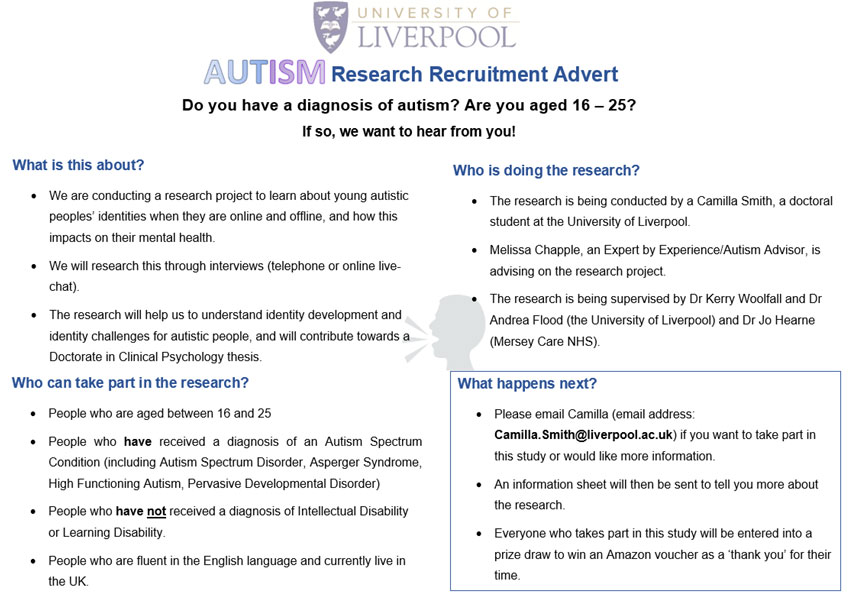
    Autism Research Recruitment Advert

    Do you have a diagnosis of autism?
    Are you aged 16 – 25?
    If so, we want to hear from you!


    What is this about?

    • We are conducting a research project to learn about young autistic peoples’ identities when they are online and offline, and how this impacts on their mental health.
    • We will research this through interviews (telephone or online live-chat).
    • The research will help us to understand identity development and identity challenges for autistic people, and will contribute towards a Doctorate in Clinical Psychology thesis.

    Who can take part in the research?

    • People who are aged between 16 and 25
    • People who have received a diagnosis of an Autism Spectrum Condition (including Autism Spectrum Disorder, Asperger Syndrome, High Functioning Autism, Pervasive Developmental Disorder)
    • People who have not received a diagnosis of Intellectual Disability or Learning Disability.
    • People who are fluent in the English language and currently live in the UK.

    Who is doing the research?

    • The research is being conducted by a Camilla Smith, a doctoral student at the University of Liverpool.
    • Milissa Chapple, an Expert by Experience/Autism Advisor, is advising on the research project.
    • The research is being supervised by Dr Kerry Woolfall and Dr Andrea Flood (the University of Liverpool) and Dr Jo Hearne (Mersey Care NHS)

    What happens next?

    Please email Camilla (email address: Camilla.Smith@liverpool.ac.uk) if you want to take part in this study or would like more information.

    An information sheet will then be sent to tell you more about the research.

    Everyone who takes part in this study will be entered into a prize draw to win an Amazon voucher as a “thank you” for their time.


    Share This Post:
    Facebooktwitterlinkedinmail
  • How Gaming Can Be Used for Good in Mental Health – MHT

    How Gaming Can Be Used for Good in Mental Health – MHT


    Changing the narrative: how gaming can be used for good in mental health

    For many years, since their rise to popularity in the late 90s, video games and gaming has been synonymous with negative associations: addiction, aggression, bad sleep patterns etc. But what if we’re missing a trick? What if video games could be used for good? Ultimately, could they help people experiencing psychological distress?

    Representation

    In 2017, a video game called ‘Hellblade: Senua’s Sacrifice’ was released onto PC and Playstation 4. The game was a particularly pivotal moment in the development of video games as a vital medium of art, and as a beacon of representation. The game also lead to it’s developers believing video games could go beyond an entertainment experience, they could be utilised as a therapeutic experience.

    The game developers of ‘Hellblade’, Ninja Theory, made the bold choice of creating a main character, that the player manoeuvres through the world as, who has psychosis.

    Upon deciding to make Senua’s (the main character) mental health a focus in the game and a part of its mechanics, Ninja theory consulted with leading neuroscientists, organizations such as Wellcome Trust – who actually put them in touch with people who live with psychosis – and experts on voice hearing to create an experience for the player that was as close to how auditory hallucinations are experienced in real life.


    Share This Post:
    Facebooktwitterlinkedinmail