Author: Linda Buchan

  • The Caudwell International Children’s Centre

    The Caudwell International Children’s Centre


    Delighted to hear of this new venture
    Dr. Linda Buchan
    Consultant Clinical Psychologist
    & Director of Axia ASD Ltd.

    New £18m autism centre opening to cope with lack of support in the UK

    Britain’s first independent centre dedicated to autism diagnosis, therapy and research is set to open this year – and aims to revolutionise the way millions of people in the UK affected by the condition can be helped.

    National charity, Caudwell Children, has revealed plans for an £18million facility being built at Keele University in Staffordshire, which will open this autumn.

    The state-of-the-art Caudwell International Children’s Centre (CICC) will be the first of its kind in the UK and promises to lead the way in multi-disciplinary assessments, family support services and research into a wide range of autism interventions.


    Share This Post:
    Facebooktwitterlinkedinmail
  • Compensatory strategies in autistic people associated with delayed diagnosis – LDT

    Compensatory strategies in autistic people associated with delayed diagnosis – LDT


    The first scientific study of compensatory strategies — techniques to camouflage autism — finds that they have both positive and negative outcomes, increasing social integration, but possibly also resulting in poor mental health for autistic people, and could be a barrier to diagnosis.

    The research

    Compensatory strategies used by autistic people have been investigated and collated in a qualitative study using an online survey of 136 adults, published in The Lancet Psychiatry journal. The authors advertised to recruit participants for their study via social media and with the National Autistic Society. 136 adults were asked to complete an online study. Of the participants, 58 had a clinical diagnosis, 19 self-identified without a formal diagnosis, and 59 were not diagnosed or self-identified but nonetheless reported social difficulties. The participants were asked to self-report autistic traits by completing a ten-item autism spectrum questionnaire and then a series of open questions about their social compensatory strategies. They also reported how successful and tiring their strategies were, and the likelihood of their recommending them to others with social difficulties.

    “Compensation is born from necessity. We have extensive experience of how cruel people are.”

    The study looked into what compensatory strategies participants used, whether the strategies used were similar in diagnosed and undiagnosed people, and how the strategies affected diagnosis. The team identified several strategies used by people with and without an autism diagnosis. Such strategies were used equally by people who were formally diagnosed as autistic and those who were not.


    Share This Post:
    Facebooktwitterlinkedinmail
  • Autism Audiobooks – JKP

    Autism Audiobooks – JKP


    JKP are delighted to now offer a small, but growing, selection of our books in audiobook format. You can browse and buy audiobooks in this newsletter, and look out for new books being made available soon.


    Share This Post:
    Facebooktwitterlinkedinmail
  • Discount Tickets for the 4th North Wales Autism Conference

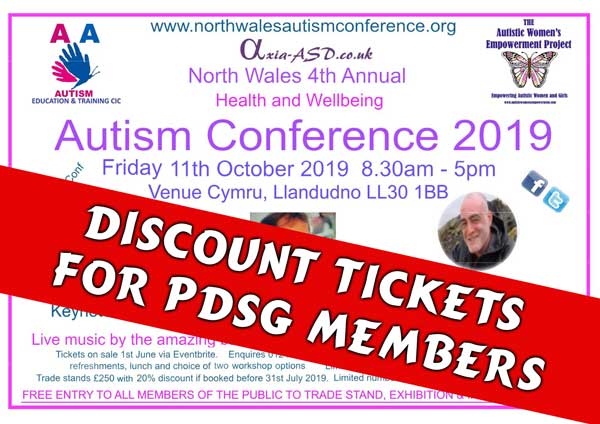
    Discount Tickets for the 4th North Wales Autism Conference


    After our discussion yesterday at our Post-Diagnostic Support group regarding the cost of tickets and lack of “Earlybird prices” for the upcoming “4th North Wales Autism Conference”, we are delighted to be able offer tickets to members of our PDSG at the reduced rate of £100
    Please contact us on 01244 56 76 56 or email enquiries@axia-asd.co.uk for further details.
     
    Dr. Linda Buchan
    Consultant Clinical Psychologist
    & Director of Axia ASD Ltd.

    Share This Post:
    Facebooktwitterlinkedinmail
  • An autism diagnosis saved my life, but not before the Mental Health Act almost ended it – LDT

    An autism diagnosis saved my life, but not before the Mental Health Act almost ended it – LDT


    An autism diagnosis saved my life, but not before the Mental Health Act almost ended it

    Hope Lightowler describes her experiences before and after diagnosis, in an exclusive extract from Responsive Communication, a new book showcasing techniques for recognising and supporting people living with sensory issues. This article discusses themes including self-harm and suicide

    Further insight

    Catch up

    Keep supporting progress and greater opportunities for people with learning disabilities.

    From Barney and the Learning Disability team.
     

    Share This Post:
    Facebooktwitterlinkedinmail
  • Patient Voices: A future with Autism?

    Patient Voices: A future with Autism?


    A future with Autism?

    David Gill

    When David’s parents were told that he didn’t have a future, they responded by encouraging David to push himself. A diagnosis of Asperger’s Syndrome enabled him to go to a special school where he did well and learned to be independent – but he always wanted a job. An opening at NHS England for people with lived experience of Autism meant that David could achieve his goal and also inspire others that there is, after all, a future with Autism.


    Share This Post:
    Facebooktwitterlinkedinmail
  • End the abuse of autistic people & people with a learning disability in inpatient units – Change.org

    End the abuse of autistic people & people with a learning disability in inpatient units – Change.org


    Alexis Quinn started this petition to Government of the United Kingdom

    My name is Alexis Quinn and I am autistic.

    In 2012 I was detained under the mental health act for almost three and a half years. I spent time in various psychiatric hospitals and an Assessment and Treatment Unit. The reason I was there was because I am autistic and other people, who were not experts in autism, decided I should not be allowed to leave. Whilst there I was drugged, restrained, secluded, put in long term segregation. I was mistreated.

    The events witnessed in the recent Panorama documentary ‘Hospital Abuse Scandal’ and which I detail in my book, Unbroken, showed vulnerable adults who are autistic or have a learning disability being abused and mistreated. These events were truly shocking but because of my experiences, I did not find them surprising. That’s why I’m working with the National Autistic Society to try and bring about change.

    To watch the denial of vulnerable people’s human rights should be regarded as a national scandal but all the more so considering the Government has failed to stop the use of inpatient units such as Whorlton Hall, through its recently-ended Transforming Care programme. Over 2,000 children and adults remain locked up despite Government promises to end their use.

    This is not a question of money, or funding – millions of pounds are spent on keeping vulnerable children and adults locked up hundreds of miles from their homes. This is about where the money is spent and what kind of service it is spent on. Autism and learning disabilities are not a mental health condition.


    Share This Post:
    Facebooktwitterlinkedinmail
  • How far can reasonable adjustments address health inequalities? – LDT

    How far can reasonable adjustments address health inequalities? – LDT


    Reasonable adjustments have been trumpeted as crucial to fighting the health inequality faced by people with learning disabilities.

    When 12 weeks turns into two years

    Isabelle Garnett’s son Matthew spent nearly two years under section in a mental health hospital after going for an assessment his family were told should take no longer than 12 weeks. Garnett fought a lengthy battle with husband Robin to get 18-year-old Matthew out of specialist hospital St Andrew’s Healthcare in Northampton.*

    Reasonable adjustments “can make the difference between the person having a life and not having a life or, in the worst case, between life and death.”

    In March 2017, Channel 4 Dispatches documentary Under Lock and Key highlighted how the hospital subjected people with learning disabilities to face-down restraint 600 times in just six months. Matthew, who has severe autism and a learning disability, is now thriving in a residential setting.

    But his mother says he endured fortnightly restraints and forced injections at Northampton that have left psychological scars. Now his life has improved, he is beginning to share more details of the trauma he suffered. Matthew’s experience of what was meant to be a short-term emergency hospital referral turning into a stay lasting years is an all-too-familiar story in autism and learning disabilities.


    Share This Post:
    Facebooktwitterlinkedinmail
  • Mental health professionals must value input – MHT

    Mental health professionals must value input – MHT


    Mental health professionals must value insight from friends, families, and carers

    It was a close friend who first noticed that I was experiencing extremes of mood.
    Friends, families, and carers “sense a resistance to being heard and feel their expertise isn’t being valued.”

    I had been in a depressive episode which was so debilitating that I had to be admitted to psychiatric hospital. And yet within days of being discharged, I was going out every night partying, with seemingly limitless energy and euphoria. The contrast was so marked that my friend commented “It’s like a miracle.” Then he thought about it and said “Do you think you might have Bipolar Disorder?”

    Diagnosing disorders

    The prospect had never occurred to me. I went to see my doctor and he started monitoring my moods. He eventually referred me for a psychiatric assessment and I was diagnosed with Bipolar Disorder Type 2. I was fortunate that he referred me to an NHS Trust in another county where they specialised in Mood Disorders.

    It was also a close friend who realised that I was suffering from traumatic grief after the death of my mother, for whom I had been a full-time carer. Traumatic grief can cause symptoms of Post-Traumatic Stress Disorder which may delay the grieving process, perhaps for years. It’s important to get help for the post-traumatic symptoms but, in my experience, mental health clinicians often miss the signs of it.


    Share This Post:
    Facebooktwitterlinkedinmail
  • LDT – Cervical cancer screenings: addressing the health inequality founded upon misconception

    LDT – Cervical cancer screenings: addressing the health inequality founded upon misconception


    I’d like to share this article with you: Cervical cancer screenings: addressing the health inequality founded upon misconception on https://www.learningdisabilitytoday.co.uk
    Dr. Linda Buchan
    Consultant Clinical Psychologist
    & Director of Axia ASD Ltd.

    Women with learning disabilities and autism are almost four times less likely to go for cervical cancer screening tests. Here, Darren Devine looks at the efforts being made to reverse one of the most stark health inequalities affecting potentially vulnerable women.

    The figures are brutally stark. Being an autistic or learning disabled woman wipes almost two decades off your life — NHS digital figures show they die 18 years before those without developmental differences. And on the face of it, there are few better illustrations of the gulf in standards of healthcare for women with learning disabilities than cervical cancer screening rates.

    “It’s about training medical professionals, including nurses and surgeries — everyone who will be treating people every day — to actually have the right understanding of what learning disabilities and autism is so that they can provide that right care and have a better understanding of what to do.”

    According to research by care firm Dimensions, just 19% of women with learning disabilities have had a recent cervical cancer screening test, compared to 73% in the general population.

    My GP and Me campaign

    Gemma Jones, who has a mild learning disability, is involved in the My GP and Me campaign run by Dimensions to improve healthcare for people with learning disabilities and autism. Dimensions’ found almost a third of people with learning disabilities or autism feel less likely to be treated with care and concern at the doctors, and two thirds said their GP did not make reasonable adjustments for them. Almost all GPs surveyed said they would like extra training in these areas.


    Share This Post:
    Facebooktwitterlinkedinmail
  • EastEnders – new autism storyline! (11 June 2019) – NAS

    EastEnders – new autism storyline! (11 June 2019) – NAS


    What do people think of the story line?

    Tonight’s episode of EastEnders saw the start of a new storyline for the Carter family, which follows Linda, Mick and their young son Ollie on their autism diagnosis journey. We’re really pleased we can now announce that, for the last six months, our charity has been working with the script team at EastEnders on this important story.

    Our Director of External Affairs, Jane Harris, said: “We were absolutely delighted when EastEnders contacted us to say that they were planning to introduce an autistic character into the show. We jumped at the chance to be involved with the storyline because we recognised that it was a fantastic opportunity to help millions of viewers understand more about autism.

    “There are over 700,000 autistic people in the UK and most people know someone who is autistic, whether it’s a friend, classmate, colleague or family member. Yet only 16% of autistic people and their families feel the public understand autism and half of autistic people sometimes don’t leave the house because they’re afraid the public won’t understand them. So it’s hugely encouraging to see more TV drama writers representing autistic characters in their work.


    Share This Post:
    Facebooktwitterlinkedinmail
  • An introduction to the classification of mental disorders: the DSM and the ICD – MHT

    An introduction to the classification of mental disorders: the DSM and the ICD – MHT


    As humans, we are constantly trying to find ways to make sense of ourselves, others, and the world around us. One way we do this is by assigning names to things, be it physical objects, concepts, or experiences. We designate things to to categories, providing a semblance of order. We look for frameworks to give us a way of understanding, or perhaps a common language.

    Psychological distress is no exception.

    Classifying mental illness: a brief history

    From the Latin term “insania” for insanity to the use of “mania” and “melancholia” in Greek to denote a chaotic frenzy and depression, there has been a rich vocabulary used to discuss mental illness since ancient times. But the first attempt to classify such afflictions was by the Greek physician Hippocrates in 400 BC, who believed that mental illness stemmed from imbalances of a person’s black bile, yellow bile, phlegm, and blood. Different imbalances resulted in particular symptoms which could be split into the following categories: Mania, Melancholy, Phrenitis (brain inflamation), Insanity, Disobedience, Paranoia, Panic, Epilepsy, and Hysteria.


    Share This Post:
    Facebooktwitterlinkedinmail
  • Westminster Health Forum Keynote Seminar: Learning disabilities and autism care in England

    Westminster Health Forum Keynote Seminar: Learning disabilities and autism care in England


    Sue and Linda are on their way now to this

    Westminster Health Forum Keynote Seminar:
    Learning disabilities and autism care in England
    Timing: 9.00 am start, registration from 8.30 am, 1.00 pm finish, Wednesday, 12th June 2019
    Venue: Royal Over-Seas League, Over-Seas House, Park Place, St James’s Street, London SW1A 1LR

    A live agenda for the seminar can be viewed here.

    Following the seminar, a briefing document will be produced. Primarily in the form of transcripts, these publications cover the entire spoken content of the event and, with the permission of the speakers, include links to PowerPoint presentations shown on the day. The document also includes additional articles from delegates, event information and a full attendee list. A complimentary copy is made available to all registered delegates, approximately twelve working days after the event.


    Share This Post:
    Facebooktwitterlinkedinmail
  • Introducing LDT Study Day plenary session:  Hate Crime – A Life Without Fear

    Introducing LDT Study Day plenary session: Hate Crime – A Life Without Fear


    “People with learning disabilities are silently victimised every day and are not receiving the level of support that they so clearly need from our service providers. We all need to work together and learn from one another to ensure that this vile abuse is stamped out, and victims are effectively protected so that they can live their lives without fear.”
    – Baroness Williams of Trafford, Minister of State for Countering Extremism.

    A disability hate crime is an offence committed against someone because they have a disability. 9 out of 10 people with learning disabilities have experienced learning disability hate crime.

    • “I may have a disability but I am still human”: United Response highlights prejudices
    • Disability hate crimes: Charity staff trained to spot signs
    • New report shows that people with learning disabilities are at high risk of targeting for hate crime yet remain “invisible” in Government crime statistics
    • Why Tackling Disability Hate Crime Is Down To All Of Us

    Learning Disability Today Study Day is addressing Hate Crime this year. The aim is to help staff working with people with learning disabilities, mental health needs, autism and physical disabilities to recognise whether they are, or have been a victim of hate crime and if so, how to best report it and provide guidance on how people supporting a victim can advocate on the person’s behalf.

    Hate Crime – A Life Without Fear will be led by Joanne Silkstone, North East and Yorkshire Learning and Development Manager for United Response, and Kevin Brighton, West Yorkshire Police Hate Crime Coordinator.

    Learn how to recognise hate crime and know how to support a victim at LDT Study Day in Birmingham on September 19.


    Learning Disability Today
    T: 01273 434 943 E: info@learningdisabilitytoday.co.uk


    Share This Post:
    Facebooktwitterlinkedinmail
  • Learning Disability and Autism Update – NHS England

    Learning Disability and Autism Update – NHS England


    Here is the latest email update for the Learning Disability and Autism Forum. It tells you about the work of NHS England and NHS Improvement and ways you can get involved.

    We write this update in plain English and we tell you about more accessible resources like the easy read newsletter and films


    Bristol learning from death reviews (LeDeR) report out now

    The learning from death reviews (LeDeR) programme is about stopping people with a learning disability dying younger than other people.
    The third annual report about the LeDeR programme has now been published by Bristol University.
    It is about all the deaths that we know have happened between January 2016 and December 2018. It looks most closely at the deaths that have been reviewed between July 2018 and December 2018.
    It has information about what reviewers have recommended from the deaths they have reviewed.
    Read the full annual LeDeR report
    Read the easy read LeDeR report


    NHS England and NHS Improvement action from learning report published

    NHS England and NHS Improvement have written a report to reply to the things that Bristol University have said in their annual LeDeR report.

    The action from learning report talks about the work that is happening in the NHS across the country. It talks about the things that we know cause people with a learning disability to die younger, and what the NHS is doing about them. These things include:

    • Sepsis (when an infection gets into your blood and makes you very poorly)
    • Constipation (trouble pooing)
    • Problems with the Mental Capacity Act
    • Cancer
    • Dysphagia (problems with swallowing).

    It also talks about what is happening in local areas. It gives examples of places that are making changes to make things better for people with a learning disability.

    Read the full action from learning from report
    Or in easy read action from learning report


    This week is epilepsy awareness week

    We want more people to know about epilepsy, including learning about different types of seizures and what they look and feel like.
    Read the epilepsy society campaign page to find out more.
    You can read information about epilepsy and autism.
    There is also easy read and video information about epilepsy.


    Constipation resources now available online

    We know that people are dying too soon from constipation (trouble pooing). The constipation working group at NHS England and NHS Improvement have been working on some information for people with a learning disability, their families and professionals.
    Easy read leaflet about constipation
    Leaflet about constipation for families and carers
    Leaflet about constipation for health professionals


    More information

    Read our easy read newsletter
    Find out more about the NHS England Learning Disability and Autism Forum 
    Short  film about NHS England and why we want you involved in our work.


    Contact us

    If you need this email update in an alternative format or have any questions please contact engage@nhs.net.
    If you do not want to receive these emails, or think you have been sent this email by mistake, please let us know and we will take you off our contacts list.
    If you have any feedback about these emails, please tell us what you think.
    The engagement team
    Twitter – @NHSAbility
    
Facebook group – NHS England Learning Disability and Autism Engagement
    Email – Engage@nhs.net 


    0113 824 9686
    7E56 Quarry House
    Leeds, LS2 7UE


    Share This Post:

    Facebooktwitterlinkedinmail
  • June PDSG – The Duck: An Autistic Play

    June PDSG – The Duck: An Autistic Play


    This play is the next PDSG presentation.
    We would like to remind everyone that it’s two weeks today.
    The format will be:
    • Play
    • Break with cakes
    • Discussion of any issues that have arisen
    Dr. Linda Buchan
    Consultant Clinical Psychologist
    & Director of Axia ASD Ltd.
     
    “The Duck” reveals the authentic voice of an autistic woman as she explores what her diagnosis means to her. Rhi Lloyd-Williams (Writer) uses her own autism to create patterns in her writing; making this a beautiful, as well as meaningful, piece of theatre.

    Using the idea of being diagnosed a ‘Duck’ instead of that ‘A-Word’ that people so often misunderstand, this is a one-woman play built around story-telling and memories, and designed to make connections between different ways of thinking.

    Rhi says, “It can be really difficult to describe autism from the outside; you end up just listing a set of behaviours, which doesn’t really explain anything. There’s nothing like the theatre for communicating an idea and making connections.

    “The usual representation of autism is not someone like me. They’re usually children and male. It’s so important that we see autistic women out there too. That representation is vital. We don’t tend to fit the stereotypes quite as neatly, and often spend a lot of time masking and hiding who we really are. This play is about being free to take off that mask and be ourselves. Forget Autism Awareness, this is real Autism Understanding.”


    Share This Post:
    Facebooktwitterlinkedinmail
  • The Autism Show 2019 is back for another year! – NAS

    The Autism Show 2019 is back for another year! – NAS


    We will be attending this event, and hope to see you there!
    Dr. Linda Buchan
    Consultant Clinical Psychologist
    & Director of Axia ASD Ltd.

    The Autism Show 2019 is back for another year!

    We’re once again delighted to partner with The Autism Show. We are pleased to support the organisers in inviting you to this year’s Autism Show taking place on 28-29 June at EventCity, Manchester. To book your tickets and save 20% off the door price visit The Autism Show website.

    If you’re looking for practical help and support pre- or post-diagnosis, are facing daily challenges, or approaching significant transition points, then we would recommend that you visit the show.

    At the show, you can pick and choose from over 100 hours of talks, clinics and workshops, plus hundreds of specialist products and services. Once inside the event, all content is free to access and CPD certified for professionals. Here are just a few reasons for visiting:

    • hear the UK’s leading autism professionals discussing the latest news and views on the condition
    • learn practical strategies and approaches which can make an immediate difference
    • listen to the experiences of autistic adults to gain insights into your past, present and future
    • discover 100s of specialist products and services including learning tools; communication aids; sensory equipment; advice and support services; and residential care and specialist
    • access specialist clinicians, therapists and advisers offering one to one advice on topics including managing distressed behaviour; mentoring and employment support; and how to use wills and trusts to secure your child’s long term financial future
    • interact with special features such as the Sensory Room, Artism Gallery and Autism Reality Experience.

    Book your ticket today and save 20% off the door price by visiting the Autism Show website.

    Remember, as a National Autistic Society member you receive a further 20% discount off a standard adult ticket by quoting the code NAS19 when booking in advance.

    Yours sincerely,

    Carol Povey
    Director of Centre for Autism

    Ps Help to guide other parents, carers and professionals by inviting them to the Autism Show.


    Share This Post:
    Facebooktwitterlinkedinmail
  • Insights from Mental Health Today – May 2019

    Insights from Mental Health Today – May 2019


    ‘As a black therapist, I want to see action come out of mental health awareness discussions’

    “When a community is constantly portrayed as strong and independent, individuals can internalise thoughts and view anything less as a sign of weakness,” writes Kairo Maynard.

    Insights

    Catch up

    Learn | Campaign | Support

    Join us at MHT Wales 2019 in Cardiff on May 22 to discuss the latest information and debates around disorders, therapy and children’s mental health.

    Mental health education is coming to the national curriculum next year. Find out how schools can best support children here.

    Learn about hearing voices in our Disorders Explained information hub.

    Show your support for what you’ve read today by making a one-off or recurring donation by debit card, credit card or PayPal. It helps us keep the site free from paywalls.

    Keep supporting mental health progress.

    Website | Twitter | Facebook | LinkedIn | Bookstore

    From Barney and the Mental Health Today team.


    Share This Post:

    Facebooktwitterlinkedinmail