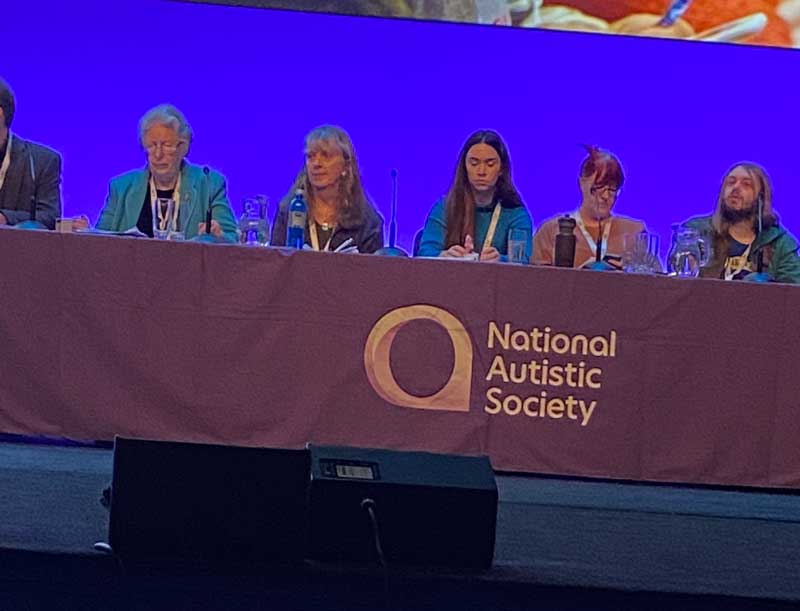
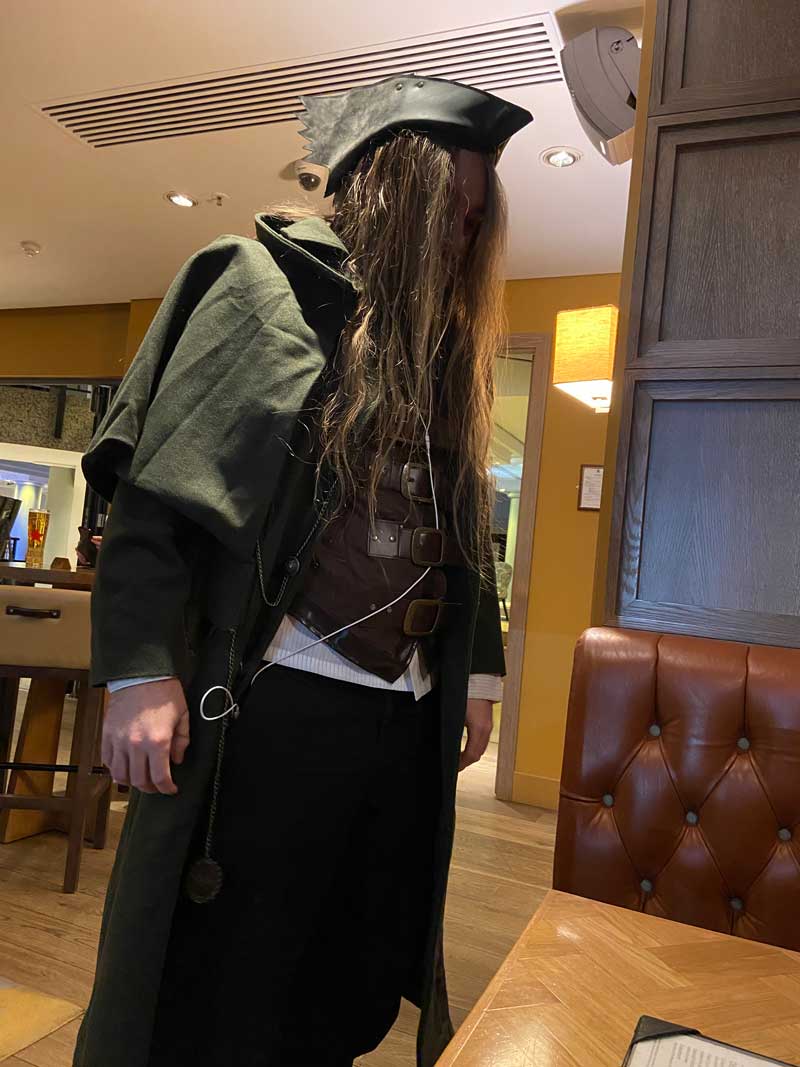
Here are some photos taken today of Calvin as he gave his presentation.
Please click on an image below to enlarge it.


Share This Post:





Autism Spectrum Disorder, ADHD and Dyspraxia
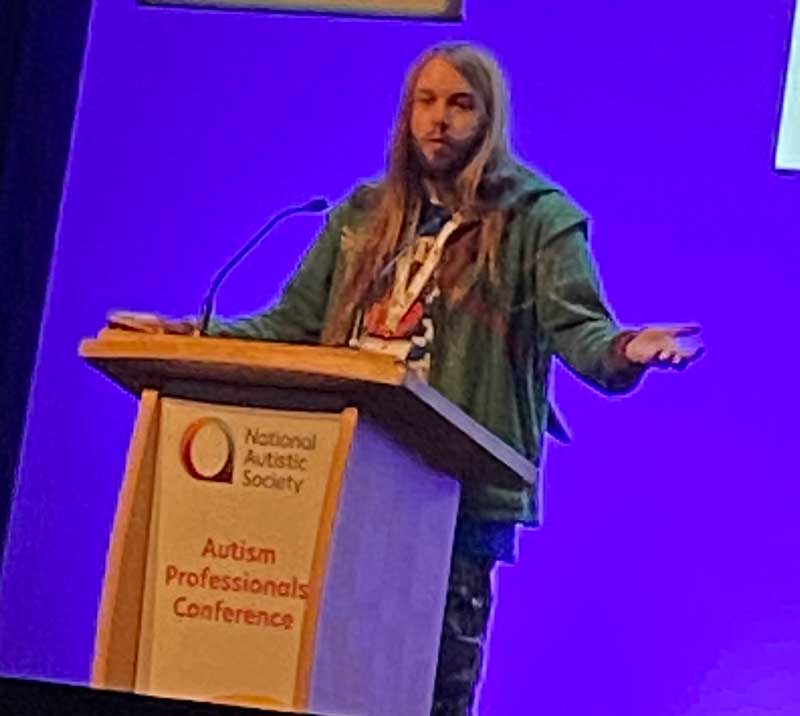
Please click on an image below to enlarge it.
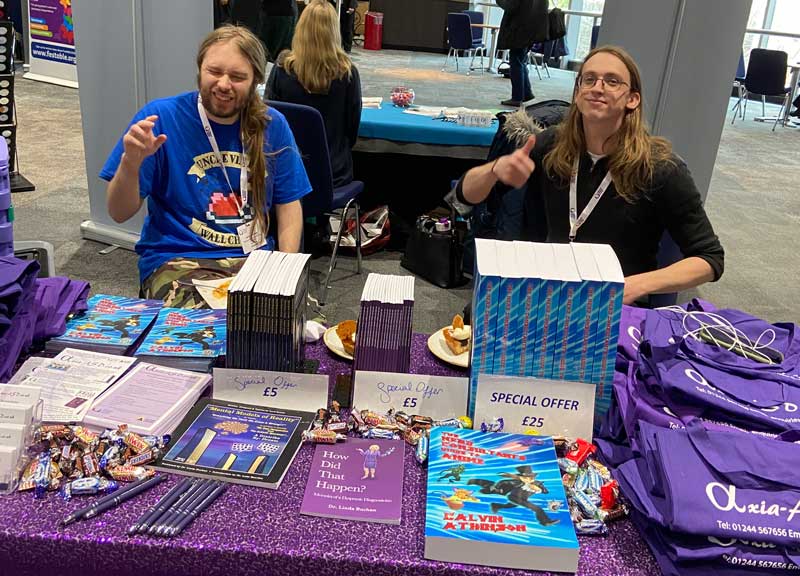
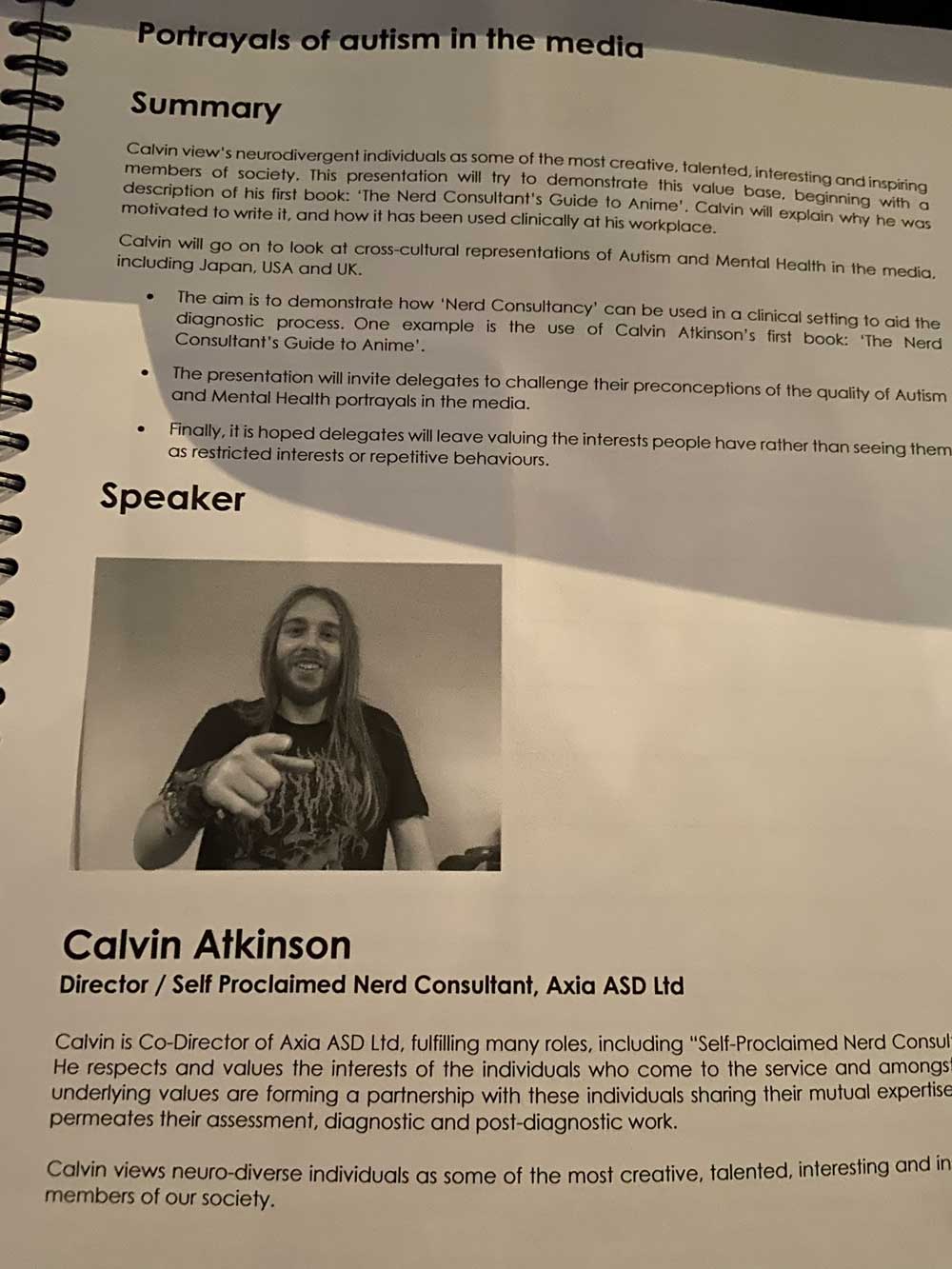
Cal’s presentation at the NAS Professionals Conference is tomorrow, so we’re sharing a couple of pictures from today along with the details from their brochure. Click on the images to enlarge.
Summary
Calvin view’s neurodivergent individuals as some of the most creative, talented, interesting and inspiring members of society. This presentation will try to demonstrate this value base, beginning with a description of his first book: “The Nerd Consultant’s Guide to Anime”. Calvin will explain why he was motivated to write it, and how it has been used clinically at his workplace.
Calvin will go on to look at cross-culture representations of Autism and Mental Health in the media, including Japan, USA and UK.
Speaker

Calvin Atkinson
Director / Self Proclaimed Nerd Consultant, Axia ASD Ltd
Calvin is Co-Director of Axia ASD Ltd, fulfilling many roles, including “Self Proclaimed Nerd Consultant”. He respects and values the interests of the individuals who come to the service and amongst their underlying values are forming a partnership with these individuals sharing their mutual expertise. This permeates their assessment, diagnostic and post-diagnostic work.
Calvin views neuro-diverse individuals as some of the most creative, talented, interesting and inspiring members of our society.
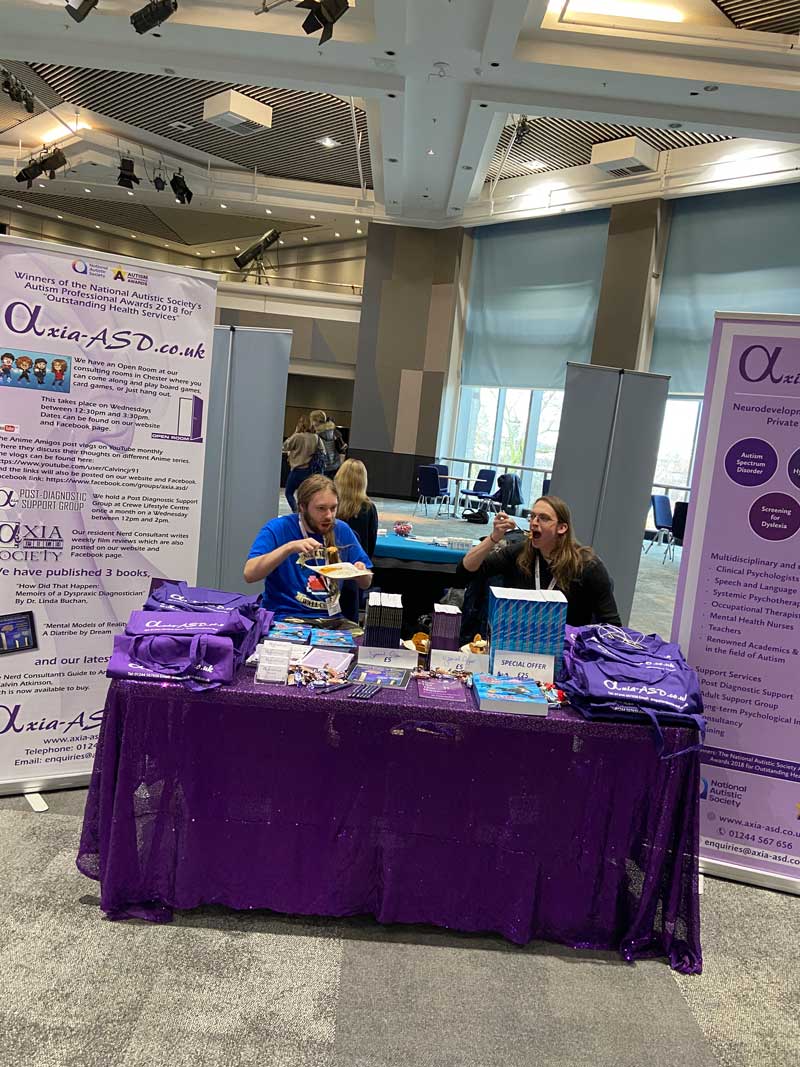

Calvin preparing to present an award…


 Here is the latest email update for the NHS England Learning Disability and Autism Forum. It tells you about ways you can get involved in our work.
We write this update in plain English and we tell you about more accessible resources like the easy read newsletter.
We are looking for new advisory group members
The NHS England and NHS Improvement Learning Disability and Autism Engagement team help people with a learning disability and their families, carers and supporters to have their say in work happening at NHS England and NHS Improvement.
We have an advisory group that is made up of people with a learning disability, autistic people and family carers.
We are looking for two new members to join the advisory group. We think that between the two people, it would be useful to have:
If you are interested, please read our information pack:
Plain English information pack.pdf
Easy read information pack.pdf
Then fill in an application form:
Plain English application form.docx
Easy read application form.docx
You can also the questions in a video and send it back to us. Or you can fill in an online application form here –
https://www.engage.england.nhs.uk/application/learning-disability-and-autism-advisory-group/
You will need to do this by Monday 16 March 2020.
NHS Learning Disability Improvement Standards
In 2018 NHS Improvement produced four standards for NHS trusts:
NHS Improvement want to know how well trusts are doing to follow the standards.
There is a new online survey where you can tell them about their experiences of using NHS services.
You can fill in the survey at https://www.surveymonkey.co.uk/r/LDStandards19
NHS Learning Disability Stopping People Dying Too Soon Board
There is a team at NHS England and NHS Improvement who are looking at how to stop people with a learning disability from dying too soon.
They are looking for an expert by experience to co-chair a board that is looking at why people with a learning disability sometimes die too soon.
You can email england.lederprogramme@nhs.net for more information.
You will need to apply by Friday 13 March 2020.
Staying well this winter
It is important to stay well this winter. There are different ways that can help you to stay healthy and well over the winter.
Some ways to stay well are:
Find out how to stay well this winter here:
https://www.nhs.uk/live-well/healthy-body/keep-warm-keep-well/
More information
Find out more about the NHS England Learning Disability and Autism Forum- https://www.england.nhs.uk/learningdisabilities/get-involved/
Short film about NHS England and why we want YOU involved in its work
Link to more news from the Transforming Care Programme
Contact us
The Engagement Team
Twitter – @NHSAbility
Facebook group – NHS England Learning Disability and Autism Engagement
Email – Engage@nhs.net
Watch accessible videos on our YouTube playlist
NHS England & NHS Improvement
0113 824 9686

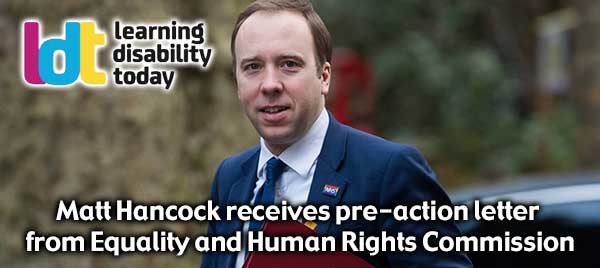
Matt Hancock receives pre-action letter from Equality and Human Rights Commission after “consistently failing patients with learning disabilities and autism”.
The Equality and Human Rights Commission (EHRC) has launched a legal challenge against the Secretary of State for Health and Social Care over the repeated failure to move people with learning disabilities and autism into appropriate accommodation.
“We cannot afford to risk further abuse being inflicted on even a single more person at the distressing and horrific levels we have seen. We need the DHSC to act now.”
The EHRC is the regulatory body responsible for enforcing the Equality Act 2010. It has longstanding concerns about the rights of more than 2,000 people with learning disabilities and autism being detained in secure hospitals, often far away from home and for many years. These concerns increased significantly following the BBC’s exposure of the violation of patients’ human rights at Whorlton Hall, where patients suffered horrific physical and psychological abuse.
The human rights body has now sent a pre-action letter to the Secretary of State for Health and Social Care Matt Hancock, arguing that the Department of Health and Social Care has breached the European Convention of Human Rights (ECHR) for failing to meet the targets set in the Transforming Care programme and Building the Right Support programme.

[Editor’s note: Whilst ADHD and Autistic Spectrum Disorder are included in the Diagnostic and Statistical Manual of Mental Disorders Fifth Edition (DSM-5), their status as mental health conditions is disputed.]
Studies have revealed symptoms of attention deficit hyperactivity disorder (ADHD) in around two thirds of autistic people. But are autism and ADHD symptoms of the same underlying condition? Academic Dr Simon Bignell has questioned whether autism and ADHD may be “one overarching disorder with a range of subtypes”.
Kian Hollow was diagnosed with attention deficit hyperactivity disorder (ADHD) as a seven-year-old and received an autism diagnosis a month before his ninth birthday.
Diagnostic manuals define the conditions as separate disorders though, as in 16-year-old Kian’s case, they can commonly co-occur.
“But this simply means science is now relying on artificially pure research samples that lack the nuance and inconvenient detail of reality. What can this lead to other than flawed conclusions?”
His mum Alicia McColl says she no longer thinks about her son’s challenges in terms of these separate labels but the symptoms they give rise to. The 46-year-old mum from Farnham, in Surrey, said: “His difficulties are speech and language and sensory. Those are his primary difficulties and those are the things that cause him all the problems”.

Research by charity Ambitious About Autism found 46% of parents report their child(ren) waited over 1.5 years from referral to receiving an autism diagnosis. In light of this the charity has created a toolkit to support parents in supporting their children.
From first being referred for an autism assessment nearly half (46%) of children waited longer than 18 months for a formal diagnosis. In some cases, children waited over 3 years.
“I didn’t think I could go to the GP with concerns about my son’s development”.
Parents are also struggling with a lack of support after an autism diagnosis – with over 70% saying the support they received wasn’t good enough. In many cases parents reported being left “completely alone” without a follow up appointment or signposts to sources of support, for example, speech and language therapy.
To support parents to support their children, the charity Ambitious about Autism has launched a new online toolkit.
The free guide contains a wealth of information, practical tips, and checklists to empower parents with the knowledge to support their children, their families, and themselves.

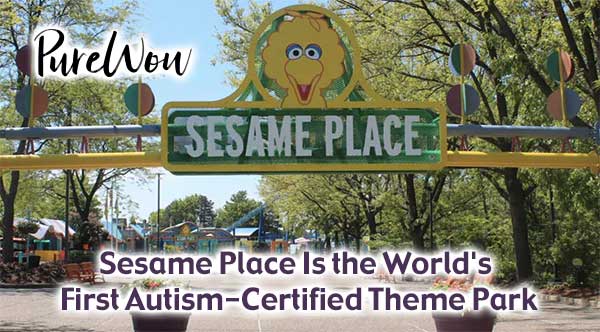
Exciting news for all fans of Elmo, Big Bird and the gang: Sesame Place is officially autism-certified.
Working with the International Board of Credentialing and Continuing Education Standards, the Sesame Street–themed amusement park in Langhorne, Pennsylvania, is actually the first theme park ever to bear the “Certified Autism Center” qualification.
What exactly does that mean? For starters, at least 80 percent of the park staff will receive specialized training (in areas such as communication, motor skills and sensory and emotional awareness) in order to meet the needs of all children, especially those with special needs…

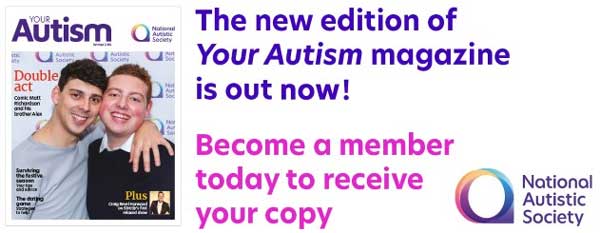
The latest edition of Your Autism magazine is out now! You can get your copy by becoming a member today!
As well as expert guidance and the latest autism news, we have an exciting interview with Strictly Come Dancing’s Craig Revel Horwood, who is interviewed by Lyric Denman, a dance enthusiast at our Robert Ogden School. They talk all things Strictly, and discuss the first autism-friendly Strictly Live performance! Read a sneak peek of the feature.
We also have an interview from the amazing comedian Matt Richardson and his autistic brother Alex, and an article providing advice for grandparents of autistic children and the latest updates from our charity.
To get a copy of the magazine, all you need to do is become a member of our charity. By joining today, you’ll receive the magazine four times a year, regular updates by email, and have the opportunity to attend our Annual General Meeting.
If you have any questions at all or would rather join over the telephone, please contact our Supporter Care team on 0808 800 1050.
Many thanks,
The Membership Team


NHS chief Simon Stevens has announced that a new taskforce will be set up to improve current specialist children and young people’s inpatient mental health, autism and learning disability services in England. Ambitious About Autism have also announced an initiative – lead by a panel of autistic young people – to create a blueprint of best practice for inpatient support.
New NHS taskforce
The taskforce will aspire to: make a rapid set of improvements in care – over 18 months – but starting immediately, and agree a set of recommendations for next steps.
The NHS chief also announced that Anne Longfield OBE, Children’s Commissioner for England, will chair an independent oversight board to scrutinise and support the work of the taskforce. “Research published by my office earlier this year found that far too many children are stuck in hospital for months or even years when they do not need to be there”, she says. “I am pleased that this taskforce has been announced to change this unacceptable situation, and I am delighted to Chair this Independent Oversight Group to amplify the voice of these children and their families, scrutinise progress and hold the system to account.”
“Being admitted to hospital is a daunting experience for anyone, but for autistic people it can be even more intimidating because they can struggle to have their needs understood.”
The Children’s Commissioner and her board will be given wide-ranging scope to track progress and propose rapid improvements in existing services, examine the best approach to complex issues such as inappropriate care, out of area placements, length of stays and oversee the development of genuine alternatives to care, closer to home.

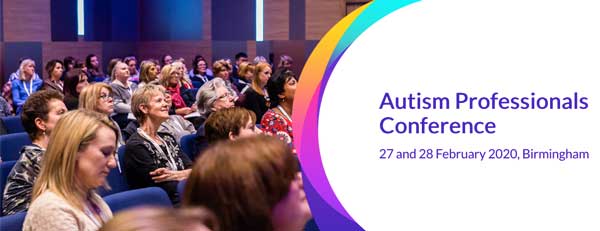
We are proud to announce that Calvin will be giving a presentation at the NAS Autism Professionals Conference in Birmingham on Friday, 28th February 2020 at 9:15am.
His talk will be on “Portrayal of autism in the media”.
You can view the full agenda for the conference HERE

Tackling the impact of racism is the number one priority to reduce ethnic inequalities in mental illness.
That’s according to the findings of a national consultation conducted by the Synergi Collaborate Centre, released on this year’s World Mental Health Day.
221 people, including service users and carers, outlined the multiple forms of racism experienced by ethnic minority people.
Instances were highlighted in encounters with public institutions including health services.
Insights
Catch up
Premium content
Discover more
Continue learning about what good looks like in mental health care. Explore the range of mental health books published by Pavilion Publishing and Media, including Child to Parent Violence and Abuse – A Practitioner’s Guide to Working with Families.
Mental health education is coming to the national curriculum next year. Find out more about the importance of language when delivering these classes by reading our “anti-glossary” here.
Know the signs and support options for various mental health conditions through watching the videos and reading the articles in our Disorders Explained information hub.
Keep supporting mental health progress.
Website | Twitter | Facebook | LinkedIn | Bookstore
From Barney and the Mental Health Today team.


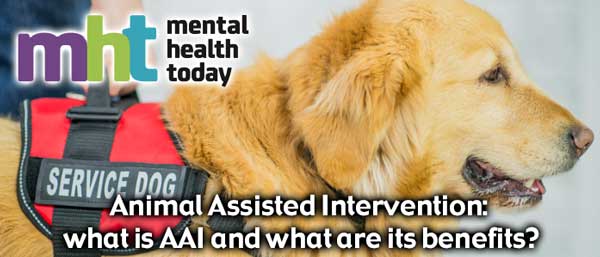
Guide dogs and other types of animal assisted intervention for physical disabilities have been around for a long time. But with an increasing understanding of how people experiencing mental illness can be supported, these methods are becoming more commonly used for therapy. Kathryn Eccles, E-Commerce Manager from pet, equestrian, and country store Millbry Hill, explains what Animal Assisted Intervention (AAI) is and how it can help people with mental health issues.
AII is the practice of using animals to provide emotional support and assistance to people experiencing mental health problems.
Everyone knows that interacting with animals makes us happier. We often feel calmer if we have a pet or an animal that we see regularly and their unconditional love can help us feel less lonely. So, pets have benefits for everyone – not just those experiencing mental health difficulties.

The term “neurodiversity” was coined in the late 1990s by Australian sociologist Judy Singer, who is autistic herself.
Singer, along with the American journalist Harvey Blume, recognised that what we call “diversity”, i.e. the variety we observe and value around us, can also be applied to people whose brains are different. These variations include autism, ADHD, the various forms of ‘dys’ (-lexia, -praxia, -calculia etc.), learning disability and more.
“This gives a different perspective on autism “awareness” – is it enough, or should we be insisting on improving accessibility for autistic and other invisibly disabled people?”
We may not think about it too much but we use biological diversity, in the form of biometrics, every day. We are all physically unique. If you have a biometric passport or a phone which uses facial recognition to unlock it, those are the principles which apply. The police have used fingerprints for identification purposes for well over a century.
Singer realised that, just as we all have different bodies, voices, eyes, and even walks we all have different brains, too. We all have our own experiences, strengths, and weaknesses. As with physical differences, problems arise when our brains diverge too much from the neurotypical “norm”.

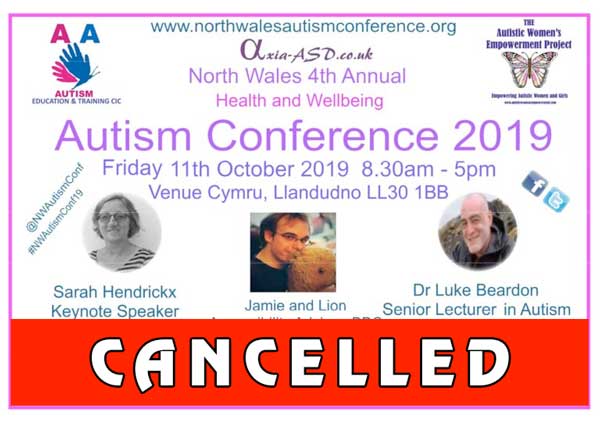
Due to personal circumstances we regret to inform you that the North Wales Autism Conference booked for Friday, 11th October 2019 has had to be postponed. Full refunds will be given and a new date will be released shortly.Thank you all for your continued support, and we apologise for any inconvenience or disappointment this may cause.


 Angie Atherton
AA Autism Education & Training CIC
Greenfield Business Centre
Greenfield
Holywell
Flintshire
CH8 7GR
01352 703055

In 2016, the UK government launched a groundbreaking drive to reduce the use of psychotropic drugs for people with autism and learning disabilities. But recent figures show that while prescribing rates for antipsychotics have fallen since the campaign’s launch, antidepressants, hypnotics, and stimulants have all risen.
Autistic blogger James Sinclair, 25, has no doubts about the value of the Ritalin he has been taking for the last 12 years. Sinclair, who also has attention deficit hyperactivity disorder (ADHD), says it’s a “crutch” and that he would struggle to function without it.
“I know I’d struggle with even being able to drive if I didn’t have Ritalin. I just think if that was taken away from me it would be life altering.”
NHS England’s STOMP initiative
But prompted by campaigning focused on the lives of people with autism and learning disabilities in long-stay hospitals, three years ago NHS England (NHSE) launched an initiative to decrease medication use. STOMP, whilst stands for ‘stopping over medication of people with a learning disability, autism, or both’ was a key policy designed to tackle an institutional culture of drugging and secluding people who sometimes considers themselves vulnerable.

Richard Mylan and his autistic son Jaco are going on a journey of discovery. Travelling from Wales to America and back again, they’re visiting the most autism-friendly places around the world, to find out how we can make everywhere from a local barber shop to a national stadium more inclusive for autistic people. Richard and Jaco want to understand why so many autistic people feel like they have to change themselves to fit into the world around them. Along the way, they meet some amazing people who believe it’s the world that should be changing instead.
In America they visit a South Carolina holiday resort which markets itself as autism friendly and has found the changes they have made have become a real tourist attraction which is generating additional business. They visit Sesame Place theme park where Jaco has a chance to come face to face with Julia, Sesame Street’s first character with autism. And are there lessons to be learnt in Wales by looking at how Madison Square Garden stadium deals with people who are ‘wired differently’?
59 mins • First shown: 9pm 29th Aug 2019 • Available for 27 days

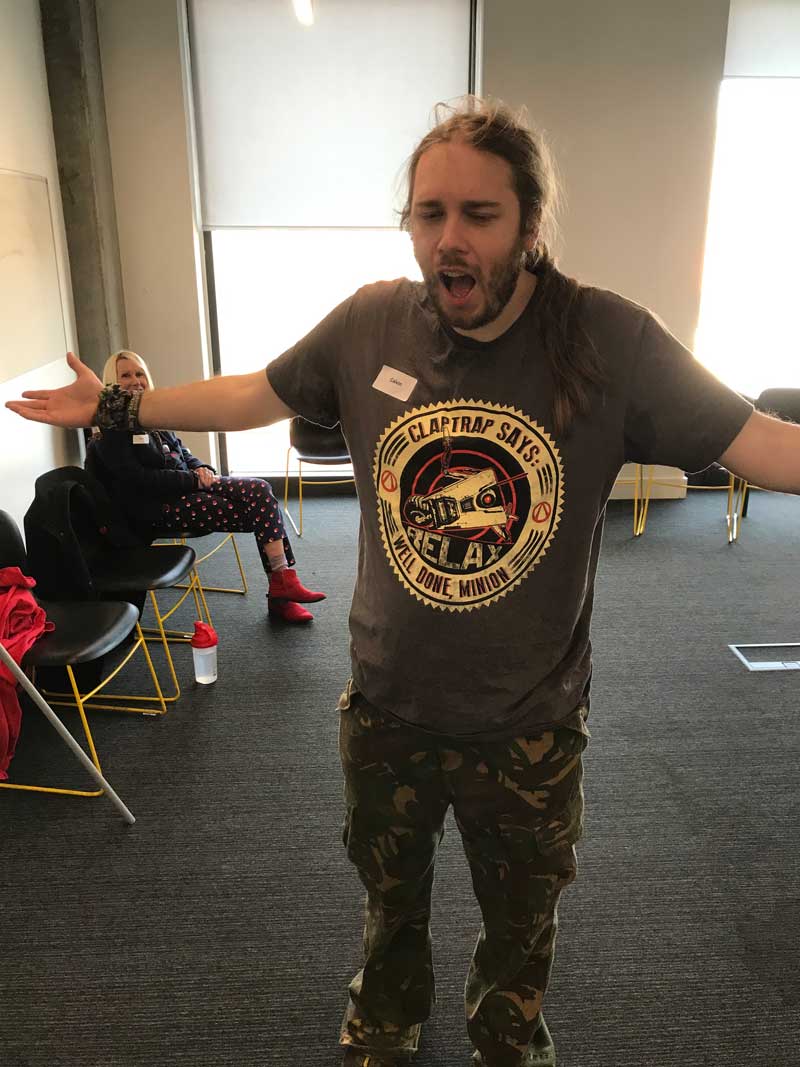
Calvin, our “in-house Nerd Consultant”, head of the Axia Film Society, founder of the Anime Amigos and author of “The Nerd Consultant’s Guide to Anime” has been with Axia ASD Ltd. 6 years today!
Congratulations Cal, and long may it continue.

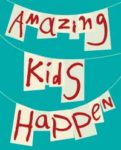 Amazing Things Happen is the creation of independent animation director Alex Amelines. The short was released in April 2017 to coincide with World Autism Awareness, and was made available online for free. It tackles the complex subject of autism with simple descriptions, relatable situations and positive language. It is primarily aimed at 7-11 year old children.
For nearly 2 years Alex wrote, animated and directed the project in his spare time. “After talking with the SENCO at my child’s school, it became clear that there was a lack of engaging visual material about autism for children, which is a shame because it seems the perfect stage to plant the seeds of tolerance and understanding for later life. That’s what drove me to make this animation”.