Author: Linda Buchan

  • April P-D.S.G. News

    April P-D.S.G. News


    News about tomorrows Post-Diagnostic Support Group meeting
    Looking forward to seeing you all at our post-diagnostic support group.

    The format will be similar to the usual formats in as much as I will be doing a presentation on sensory sensitivities. We will have the break with cakes and this time refreshments are going to be provided by the Lifestyle Centre (there has been a change in policy regarding this). We hope this will work out well.

    After the break there will be a number of things we will be discussing including the BAFTA hosted Autism Uncut awards which were awards for journalists, film makers and others involved in raising Autism awareness in the various genres.

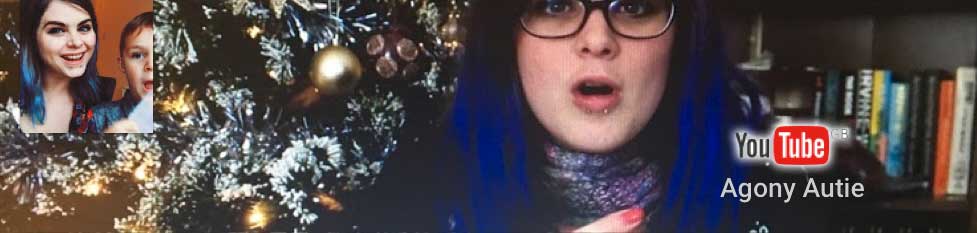
    Calvin and Renwick (Calvin’s new associate member of the film society) attended the BAFTA hosted awards and made contact with a number of the winners, in particular, they made contact with Agony Autie who won two awards: The People’s Choice and a media award. They discovered that she is based in Chester and therefore extended an invitation for her to attend our post-diagnostic support group as we felt this would become a useful link for the group in the work that we are co-producing.

    I am delighted that she has accepted the invitation and we hope there will be an opportunity, not only to congratulate her but also to hear about her success.

    Finally, there will be two noticeable absences: Carly and Gail as they will be attending the funeral of Gail’s mum and Carly’s Nanna. Our thoughts will be with them.
     
    Dr. Linda Buchan
    Consultant Clinical Psychologist
    & Director of Axia ASD Ltd.

    Share This Post:
    Facebooktwitterlinkedinmail
  • Is It Ok To Ask Questions About Autism – Review

    Is It Ok To Ask Questions About Autism – Review


    Book Review of
     
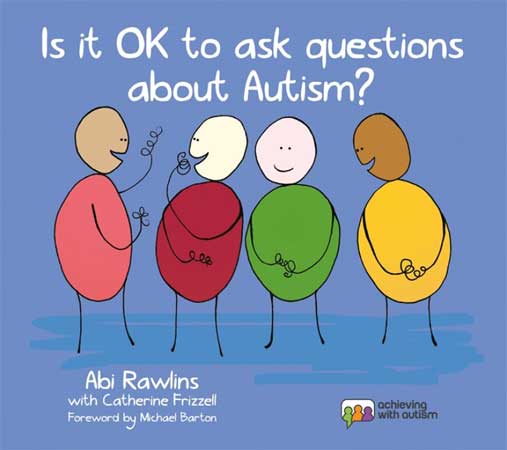
    “IS IT OK TO ASK QUESTIONS ABOUT AUTISM?”
    By Abi Rawlins with Catherine Frizzell
    Foreword by: Michael Barton
    Publisher: Jessica Kingsley Publishers (21 Mar. 2017)

    The foreword is by Michael Barton, who is the author and illustrator of ‘It’s Raining Cats and Dogs” and “A Different Kettle of Fish”

    Michael originally met Abi and Catherine at the Autism show in London when they were trying to produce a video explaining what Autism was like for a variety of children from those of primary school age to those of being a young adult.

    The book is primarily aimed at parents, schools, teacher and allies and the introduction describes how all the questions in the book were asked by primary school students who wanted to learn about Autism so they could be more considerate and understanding of their peers.

    The questions are as follows:
     
    • What is Autism
    • When was Autism discovered
    • How many Autistic people are there
    • What causes Autism
    • Are there different types of Autism
    • If all Autistic people have the same condition, then how does it affect them differently
    • Why is Autism called Autism

    The second section of the book looks at question and answers to help understand how Autism awareness is so important. A parent, very eloquently says “whose responsibility is to ensure that Autism is better understood and accepted” and she suggests that the onus of acceptance, currently, is placed on the shoulders of those who wish to be accepted, however, this needs to be rethought. Surely it is important that the rest of society take ownership of this responsibility.

    The following chapters then focus on:
     
    • Why is it important to learn about Autism
    • Why don’t many people know about Autism
    • Are there more Autistic boys or Autistic girls
    • Do Autistic people need to be treated differently
    • What things are good about Autism
    • How does Autism affect talking
    • Is there a school for Autistic people, and very interestingly goes on to say “yes, your school”
    The next section looks at ‘How to be a good friend’ and the chapters are:
     
    • Is it easy to make friends when you are Autistic
    • My friend is Autistic, how can I help them if they are feeling worried or scared
    • How can you help someone who is Autistic to understand games
    • Do Autistic people think differently to people who are not Autistic
    • Are there differences between Autistic boys and Autistic girls
    • My friend is Autistic, will she be able to do the same things as me when she grows up
    • How can I be a good friend to someone who is Autistic
    The next chapter focuses on what it is like to live with Autism and the chapter headings are as follows:
     
    • How do lights, noises and smells affect Autistic people
    • My cousin in Autistic, why does she find it difficult to look at me when we are talking
    • Why does my Autistic friend do things over and over again
    • Does Autism run in families
    • What does Autism do to your brain
    • Does Autism affect learning at school
    • Can you grow out of Autism
    In the final chapter the book focuses on some of the more difficult and unusual questions that students had asked:
     
    • Is Autism a disability
    • How do you know if someone is Autistic if you can’t tell by looking at them
    • Can pets be Autistic
    • Is it ok when someone is Autistic
    • Can you catch Autism
    • Can you die from Autism
    • Is it normal for people to feel uncomfortable around Autistic people
    The final section of the book provides 10 tips for teachers, including:
     
    • Explaining about the social stress
    • The breaks that other people find rewarding and a place to recharge their batteries actually put enormous stress on the person with Autism
    • Focusing on the positives
    • Being alert for sensory needs
    • Helping with Transition times

    The book is beautifully illustrated and I wholeheartedly recommend it.

    I shall be bringing it to the post-diagnostic support group on the 12 April and I am looking forward to seeing you all there.

    Dr. Linda Buchan
    Consultant Clinical Psychologist
    & Director of Axia ASD Ltd.

    Share This Post:
    Facebooktwitterlinkedinmail
  • I Dream in Autism by Richard Maguire – Review

    I Dream in Autism by Richard Maguire – Review


    Book Review of
     
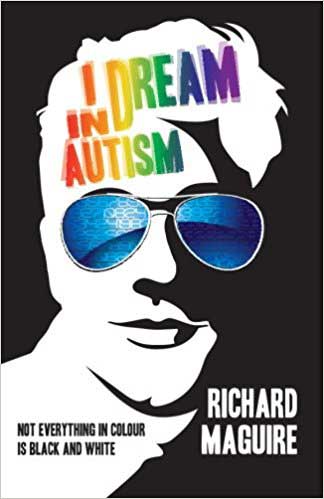
    “I Dream in Autism:”

    Not everything in colour is black and white.

    by Richard Maguire
    Publisher: CreateSpace
    Independent Publishing Platform (24 Mar. 2014)

    I had the privilege of chairing the Adult Stream at the National Autistic Society’s Professionals Conference in which Richard was a speaker. The theme of his talk was “it’s never too late”. I also discovered that we had a shared love of the East End of London; Me having been born there and Richard now spending quite a bit of time working there. He described Eastenders as being quite Autistic friendly and many people describe us as being blunt and honest. He also explained that his recognition of his Autism came about when he started working with adults with Learning Disabilities and Autism and he was instantly able to relate, make sense of and empathise with them. This was back in the eighties and at that time he felt he could not out himself as being Autistic.

    He was diagnosed as an adult and on face value people might think that his Autism doesn’t impact a great deal on him, however, it clearly did prior to him giving his talk where his sensory sensitivities meant he could not come in through the front of the building and also the lights within the building had to be kept down.

    This book charts his history from being a very young child to date and he dedicates it to his wife and son.

    The book is described as written with the personal experience for Autistic or learning disabled service users to handle an Autistic person from an Autistic point of view.
    “I am Autistic, try it my way. Read this book forward, backwards or in bit size chunks to see through the eyes of an “Aspie” as we are no affectionately called. Understanding my obsessive need to repeat intricate details through stories of being bullied, lost, loved and misunderstood”.

    I wholeheartedly recommend this book and shall be bringing it to our monthly post-diagnostic support group on Wednesday 12 April 2017.

    Dr. Linda Buchan
    Consultant Clinical Psychologist
    & Director of Axia ASD Ltd.

    Share This Post:
    Facebooktwitterlinkedinmail
  • Dyspraxia & Developmental Coordination Difficulties

    Dyspraxia & Developmental Coordination Difficulties


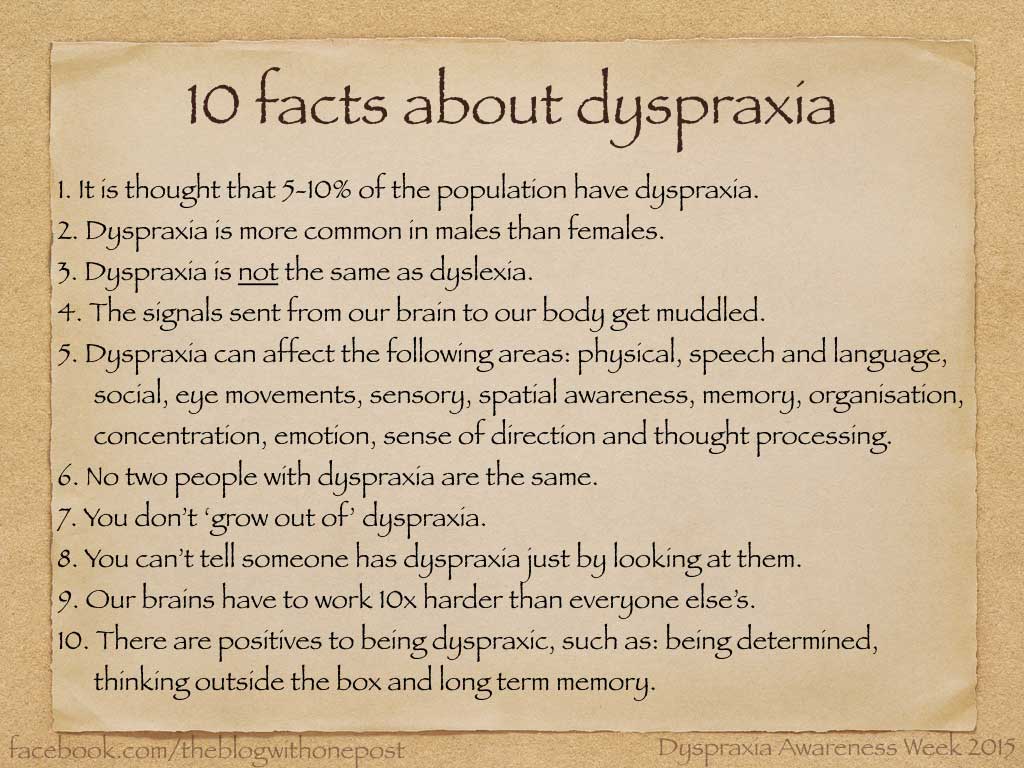
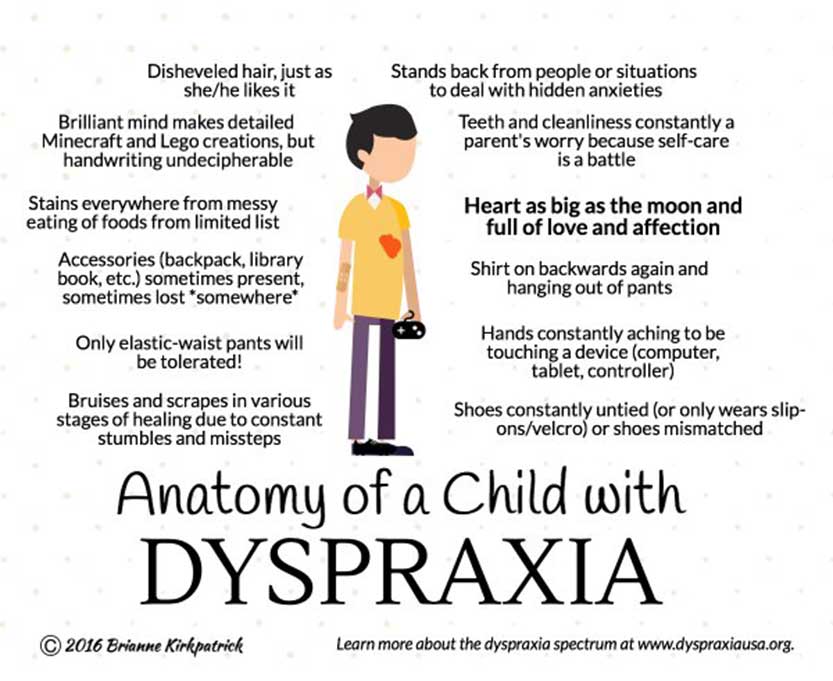
    My niece, Amy, who some of you may remember spoke so eloquently at the Dyspraxia conference we held in October 2014 has sent me over the following.  Obviously I have a personal interest in these and I particularly like the last of the images but thought I would share some of the things she sent across to me for those of us that have Dyspraxia.

    Dr. Linda Buchan
    Consultant Clinical Psychologist
    & Director of Axia ASD Ltd.


    Share This Post:
    Facebooktwitterlinkedinmail
  • Women And Girls With Autism Spectrum Disorder – Review

    Women And Girls With Autism Spectrum Disorder – Review


    Book Review of
     
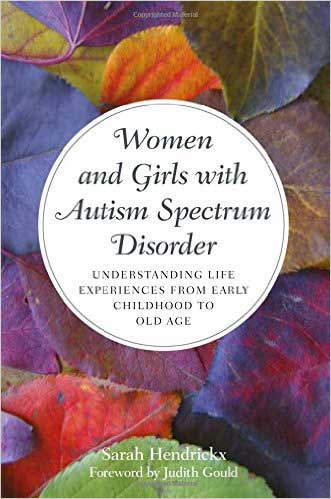
    “WOMEN AND GIRLS WITH AUTISM SPECTRUM DISORDER”

    Understanding Life Experiences from Early Childhood to Old Age

    by Sarah Hendrickx
    Jessica Kingsley Publishers

    I felt privileged to chair the session that Sarah Hendrickx did at the Nation Autistic Society’s Conference which was held at Harrogate on 7 and 8 March 2017. Her keynote presentation was also very thought provoking.

    This book has a foreword by Dr Judith Gould and I totally agree with her that this book does add to our knowledge how Autism Spectrum Disorder may present differently in women. It also looks at females from childhood to older age. It is informed by both academic research and personal stories, focusing on how women with Autism Spectrum Disorder experience diagnosis, childhood, education, adolescence, friendship, sexuality, employment, pregnancy, parenting and ageing. Any professional working in the field of Autism, in my opinion, should read this book. As Judith Gould, and here I quote “an added problem is that most current diagnostic assessments do not consider sex differences and only give examples of the male profile of behaviour. The knowledge and experience of an enlightened clinician are essential in both asking the right questions and interpreting the data to provide an accurate outcome”, and I am delighted and privileged to be working with all my colleagues in Axia-ASD limited who recognise this.

    For me, attending the National Autistic Society Professionals Conference, the theme of which was ‘working in partnership’ reinforces what we are trying to do in Axia, that is listening to people with respect and empathy and try not to judge. I am so pleased to be working with the post-diagnostic support group in planning our Conference in 2018 which will be very much how people mask and hide because that is the only way they can function in a world that is at best confusing and often frightening and we are hoping that key professionals will come along to that Conference so that they can hear this message.

    Dr. Linda Buchan
    Consultant Clinical Psychologist
    & Director of Axia ASD Ltd.

    Share This Post:
    Facebooktwitterlinkedinmail
  • Bittersweet on the Autism Spectrum – Review

    Bittersweet on the Autism Spectrum – Review


    Book Review of
     
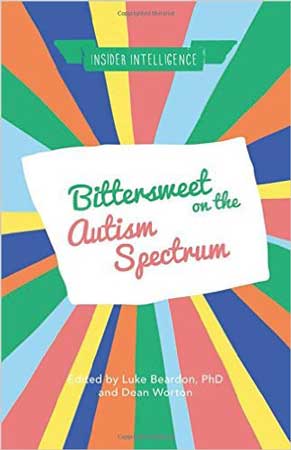
    “BITTERSWEET ON THE AUTISM SPECTRUM”
    Edited by Luke Beardon, PhD and Dean Worton
    Published by Jessica Kingsley Publishers.

    I have just read the second of two books edited by Luke Beardon and Dean Worton which is called Bittersweet on the Autism Spectrum.

    28 writers describe positive experiences they have had on the Autism Spectrum and how unexpected things can be a source of positivity. Their insights range from being very moving, honest, sometimes hilarious and very surprising.

    Luke provides the preface and both Luke and Dean do an introduction to each chapter.

    I cannot do justice to the whole book as each chapter is varied, interesting and most importantly written from the heart and experiences of individuals on the spectrum.

    I shall be bringing this book along to the post-diagnostic support group if people would like to borrow it in the usual manner.

    Dr. Linda Buchan
    Consultant Clinical Psychologist
    & Director of Axia ASD Ltd.

    Share This Post:
    Facebooktwitterlinkedinmail
  • The Back to Front World of Azzie Artbuckle – Review

    The Back to Front World of Azzie Artbuckle – Review


    Book Review of
     
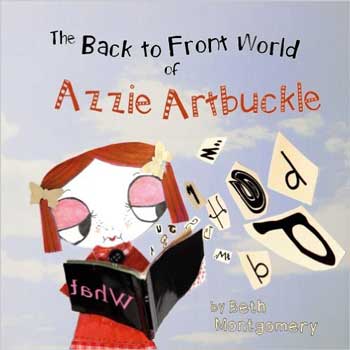
    “THE BACK TO FRONT WORLD OF AZZIE ARTBUCKLE”
    by Beth Montgomery
    Publisher: Your Stories Matter (30 Jan. 2017)
    This is another in the “Your Stories Matter” publications and begins with a very nice foreword
    “For all the amazing people out there who have struggled and not known why. This is for you”.
    It begins with very helpful notes for teachers regarding the different kinds of neurodiversity and also emphasises the strengths and talents that come with neurodiversity, as well as acknowledging the difficulties, many of which are exacerbated by other people’s reactions. The illustrations are fun and there are only a few words to read, which is in keeping with Azzie’s own difficulties with reading, which make her feel like a failure despite her enormous talents in other areas. Getting a diagnosis of Dyslexia, however, enables Azzie to make sense of her struggles and it stopped others calling her stupid or accusing her of messing about.

    One “nit picking comment”, but one I hope might prove useful for future publications is that it would be helpful to have a description, in the notes, for the teachers at the beginning of the book regarding Irlen Syndrome. www.irlen.org.uk

    Dr. Linda Buchan
    Consultant Clinical Psychologist
    & Director of Axia ASD Ltd.

    Share This Post:
    Facebooktwitterlinkedinmail
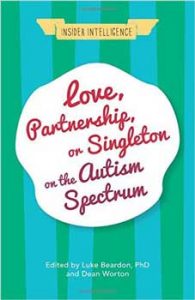
  • Love, Partnership, or Singleton on the Autism Spectrum – Review

    Love, Partnership, or Singleton on the Autism Spectrum – Review


    Book Review of
     
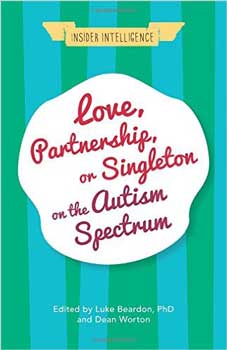
    “LOVE, PARTNERSHIP OR SINGLETON ON THE AUTISM SPECTRUM”
    Edited by Luke Beardon, PhD and Dean Worton
    Published by Jessica Kingsley Publishers.

    There are forewords at the beginning of the book from Sarah Hendrickx, Dean Beadle and Tony Attwood.

    The book is a collection of chapters, 26 in total, where people with Autism are sharing their perspectives on what relationships mean to them, including those who prefer not to have a relationship, for a range of reasons. So the 26 authors share their experiences and knowledge about relationships that have been both successful and unsuccessful. As Tony Attwood said
    “the wisdom and advice in this insightful book will contribute greatly towards an understanding of relationships from the Autism Spectrum Disorder perspective”.

    The preface by Luke Beardon is, as always an interesting read and I shall be bringing the book along on the 1 March 2017 for any of you who wish to borrow it.

    Dr. Linda Buchan
    Consultant Clinical Psychologist
    & Director of Axia ASD Ltd.

    Share This Post:
    Facebooktwitterlinkedinmail
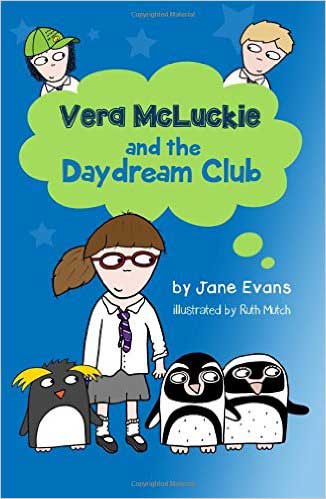
  • Vera McLuckie and the Daydream – Review

    Vera McLuckie and the Daydream – Review


    Book Review of
     
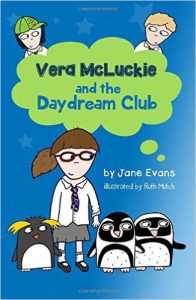
    “VERA McLUCKIE AND THE DAYDREAM CLUB”
    by Jane Evans (Author), Ruth Mutch (Illustrator)
    Publisher: Your Stories Matter (30 Jan. 2017)

    This is another book in the ‘Your Stories Matter’ collection. ‘Your stories matter’ are independent educational book publishers that are primarily about social rather than financial profit. They have done an excellent job of collecting inspiring stories from around the world, aiming to publish books for schools, families and individuals with specific learning difficulties. They also produce free teaching resources that can be used with the books. They welcome people joining them as a user, a contributor and a champion. www.yourstoriesmatter.org

    The books clearly celebrate difference and they do not shy away from some of the potential difficulties of having neurological difference, but also ensuring that we see the strengths as well as the difficulties that individuals experience.

    The book is printed in the Dyslexia font which makes it easy to read and there are also helpful illustrations to supplement the words. The story is written by Vera, later on in her life, talking about her childhood and the relationships she has with two other young people in her school who also experience neurological difference.

    Vera hates school, to the point where she can be physically sick. Prior to going to school, she loved learning, but finds school both exhausting and terrifying. It also makes her feel stupid, slow and messy and she clearly experiences sensory overload. She is also prone to daydreaming. Vera’s friends Max and Harry also find school a very difficult experience. Vera’s strengths are clearly outlined, including her incredible imagination and she writes a story about three Penguins, which provides a metaphor for difference in a way that many children and young people will be able to relate to. Thus, although the Penguins are popular with humans, they are ridiculed and bullied by other birds, who do not like them because of their difference. In particular the fact that they can’t fly. They are described by the other birds as stupid. Vera talks about the three Penguins as being like herself, Harry and Max, who she describes as needing help with reading, writing and getting on with other people. They are all extraordinary in their own ways, like Penguins, who are brilliant swimmers. There is an interesting twist in the story, when Bethany, a very popular talented girl, who has been bullying Vera, is revealed as being very unhappy and she acknowledges that she needs help too. Both Vera and Bethany come to a realisation that they maybe have more in common than they realised.

    Ultimately, this is a story about friendship, difference, and as the book says, believing in yourself, no matter what. As such, this is another book in the ‘Your Stories Matter’ series that will prove useful to, in particular, young people who experience themselves as being different, their family, friends and teachers. At the end of the book, there is a competition that focuses on
    “it is not about winning , but it is trying” .
    I whole heartedly recommend this book and will be taking it to our next post-diagnostic support group where some of the parents in the group may wish to share this with their own children.
     
    Dr. Linda Buchan
    Consultant Clinical Psychologist
    & Director of Axia ASD Ltd.

    Share This Post:


    Facebooktwitterlinkedinmail
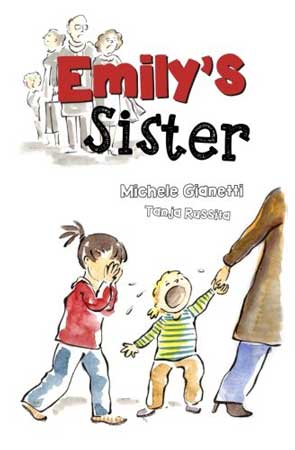
  • Emily’s Sister – Review

    Emily’s Sister – Review


    Book Review of
     
    “EMILY’S SISTER”

    A Family’s Journey with Dyspraxia and Sensory Processing Disorder (SPD)

    by Michele Gianetti (Author)
    and Tanja Russita (Illustrator)
    Publishers: Explainer HQ

    Based upon a real life experience, written by a parent of a child with Dyspraxia and Sensory Processing Disorder and it focuses on Emily, the sister of the child with Dyspraxia and Sensory Processing Disorder and how she wants to help her sister live a happier life.

    Overall it a very realistic and hopeful book, very much acknowledging what it would be like to grow up with a sister who presents some challenges at home, but also is very loving and interesting to be around.

    The book starts when Elizabeth is a very young child, talks about her diagnosis, talks about how her parents tried to make sense of the diagnosis with her sister Emily and the importance of therapy in relation to the Dyspraxia.

    It is a positive book that I would definitely recommend. I had 2 nit picking “criticisms”. One the spelling of mum, ‘mom’ which I think will be picked up by some individuals, but also Sensory Processing Disorder is actually not within the diagnostic criteria, while Sensory Sensitivities are acknowledged in both Dyspraxia and Autism Spectrum Disorder, it isn’t actually a diagnosis in its own right, although many people are receiving it. This may just be a little bit confusing to parents if people are not willing to give this as a diagnosis.

    As I say, these are nit picks in the context of a very good book. The people who would benefit from reading it are, parents, children with developmental difference and siblings of children with developmental difference.

    Dr. Linda Buchan
    Consultant Clinical Psychologist
    & Director of Axia ASD Ltd.

    Share This Post:
    Facebooktwitterlinkedinmail
  • Autistic woman lands job training others with autism and learning disabilities

    Autistic woman lands job training others with autism and learning disabilities


    News, 16th January 2017.
     
    Autistic woman lands job training others with autism and learning disabilities
    An autistic woman who graduated from a skills training course has now been taken on by the training provider to support other people taking the course.

    Hilary Morgan (pictured), 21, from South Shields, who has an autism spectrum condition as well as spina bifida and uses a wheelchair and crutches, completed a skills training course with AutismAble and has now been taken on as an apprentice by the organisation to support others.

    AutismAble works with young people aged 16-24 to help them fulfil their potential, providing free full- and part-time courses in skills to help prepare them for employment, and in vocational subjects ranging from art, photography and film making to business studies and customer services. Free education and training is available up to the age of 24 for anyone with a learning disability.

    READ MORE…
    Share This Post:
    Facebooktwitterlinkedinmail
  • Understanding and Evaluating Autism Theory – Review

    Understanding and Evaluating Autism Theory – Review


    Book Review of
     
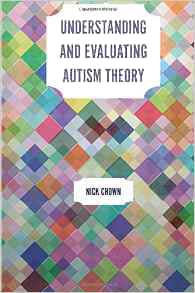
    understanding-and-evaluating-autism-theory-by-nick-chown“Understanding and Evaluating Autism Theory”
    by Nick Chown
    Jessica Kingsley Publishers

    Nick Chown is an independent Autism Researcher and Trainer who was one of Luke Beardon’s PhD students.

    The book focuses on the main theories of Autism, in particular, executive functioning, central coherence and Theory of Mind, however, it does bring along some alternative theories and ideas and is described as a complete guide for students in Autism related courses.

    It brings together a thorough compilation of the most important Autism theories for the first time with all the necessary information to inform the academic study of Autism Theory in one place.

    Luke supervised Nick Chown’s PhD which is summarised in this book and if you do get to read the book you will see much of Luke’s work in it, particularly around the myths of Autism.

    I shall be bringing the book the next monthly post-diagnostic support group.

    Dr. Linda Buchan
    Consultant Clinical Psychologist
    & Director of Axia ASD Ltd.

    Share This Post:
    Facebooktwitterlinkedinmail
  • Mental Health Today Update

    Mental Health Today Update


    Welcome to your Mental Health Today update

    In the past week, a report has called for schools to teach pupils about mental health alongside traditional subjects. We also highlight a book from Pavilion and an upcoming conference.

    1. Schools should be able to teach children and young people about mental health in the same way they are taught about literacy or numeracy, a report has recommended.
      Read the full story.

    2. Being prescribed non-medical treatments, such as sports groups or cookery courses, by their doctors is benefitting people with mental health conditions, a pilot has found.
      Read the full story.

    3. More than a quarter (28%) of men said they had not sought medical help for the last mental health problem they experienced compared to 19% of women, a survey has found.
      Read the full story.

    4. Out now from Pavilion: She’ll be Alright. This is a story-based approach to exploring issues of hidden neglect in care homes. This training and self-study guide has a main focus on dementia care, and will benefit trainers, care managers or those undertaking health and social care certificates.
      Order your copy now for the reduced price of £15.95.

    5. MHT is proud to support the Learning Disability Today conference on Tuesday 29 November in London. The event is one month away and tickets have been going fast! The programme will focus on topics that are important to people with learning disabilities, their carers and the professionals who support them.
      Make sure you book your place today.

    Don’t forget to check out the Mental Health Today website, @mhtodaymag on Twitter and our Facebook page throughout the week for the latest news.

    Thanks for reading,
    Dan Parton and the Mental Health Today team

    mht-contact-banner


    Share This Post:
    Facebooktwitterlinkedinmail
  • Make ALL reasonable adjustments for disabled customers

    Make ALL reasonable adjustments for disabled customers


    I am mum of four living in Hertfordshire. Two of my children are diagnosed with autism. My daughter who is 7 is also visually impaired and a wheelchair user.

    petition-make-all-reasonable-adjustments-for-disabled-customers

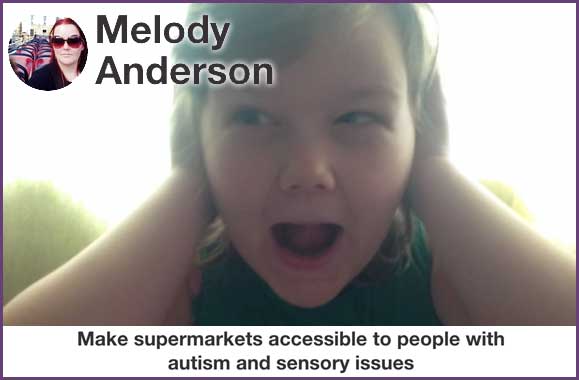
    Everyday life can be tough for our family. A simple trip to the shops, especially the supermarket, can be an extremely difficult experience. That is why, I’m calling on shops to be accessible.

    Bright fluorescent lighting and lots of unnecessary noise is extremely overwhelming causing sensory overload to my children to the point of meltdown; which can be dangerous.

    Supermarkets are beginning to implement disability awareness training to their staff. And some individual stores also recognise the needs of their customers trialling occasional ‘quiet hours’ focusing on autism, dementia and hearing loss needs.

    This shows that they accept the needs of their customers and that they are capable of making adjustments -but they are not doing it all the time. This makes no sense! And they are failing in their legal duty under the Equalities Act 2010 to implement adjustments to remove barriers.

    This issue makes my children feel that they are not included in their community and that those with hidden disabilities should be grateful for tiny crumbs of inclusion.

    If our children cannot shop there, they can never expect to be able to work there. In fact, only 32% of adults on the autism spectrum are in any type of paid work [1].

    Let’s start by calling on Sainsburys, Morrisons, Asda and Tesco to make ALL reasonable adjustments including:
    • Removing all unnecessary noise such as piped-in music and removing/minimising tannoy announcements
    • Dimming or changing fluorescent lighting

    This will make stores accessible to thousands if not millions of people with conditions such as autism, ADHD, dementia, hearing loss, visual impairment and anxiety and many many more.

    Please sign and share this petition.
    Thank you!

    SIGN THE PETITION
    Share This Post:
    Facebooktwitterlinkedinmail
  • 80% of autistic children experience school anxiety

    80% of autistic children experience school anxiety


    News, 19th October 2016.
     
    Eight out of 10 autistic children experience anxiety over going to school
    Eight out of 10 autistic children find going to school so stressful that they experience anxiety. Of those, 58% find this anxiety so debilitating that they miss days at school, according to a new survey.

    The report, entitled When Will We Learn?, by charity Ambitious about Autism, looks at the impact of the school system when it fails children and young people with autism and their families. Many families struggle to get the right support for their children, who, as a result, are not receiving the education they are entitled to.

    READ MORE…
    Share This Post:
    Facebooktwitterlinkedinmail
  • CPS launches consultation on disability hate crime

    CPS launches consultation on disability hate crime


    News, 17th October 2016.
     
    CPS launches consultation on disability hate crime and issues new guidelines
    The Crown Prosecution Service (CPS) has launched new Public Policy Statements on Hate Crime and put them to a public consultation. The statements focus on crimes against disabled people, racial and religious and homophobic and transphobic hate crime.

    The policy contains a definition of what constitutes a disability hate crime: Any criminal offence which is perceived by the victim or any other person, to be motivated by hostility or prejudice based on a person’s disability or perceived disability.

    READ MORE…
    Share This Post:
    Facebooktwitterlinkedinmail
  • Further Developments in Axia-ASD

    Further Developments in Axia-ASD


    We are delighted to announce further developments in
    Axia ASD Ltd.

    Firstly, Scott Bailey has joined the team as Technical Supervisor. Some of you may have met him at our Adult Post-Diagnostic Support Group at “the Creative table”. This is a space within the group where people can draw, doodle and so on which people have said can be a way to relax in the group.

    Secondly, we have secured another office at Red Hill House due to the expansion within the team.


    Share This Post:
    Facebooktwitterlinkedinmail
  • Venn Diagram of neurodevelopmental condition overlap

    Venn Diagram of neurodevelopmental condition overlap


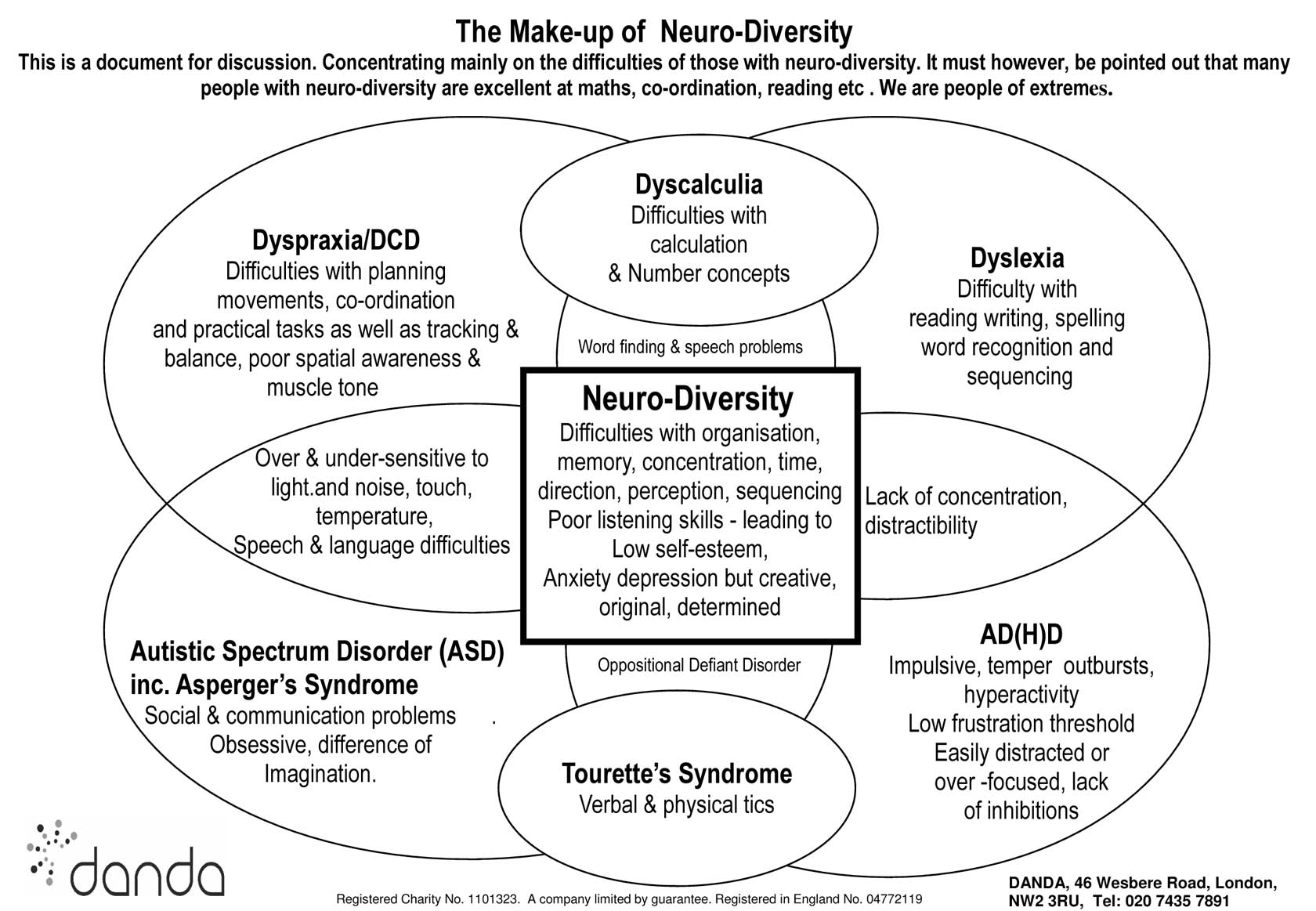
    Just to remind people or share with people who have not seen this the attached Venn Diagram.

    Everyone will be aware that none of us fit neatly into boxes and there is enormous overlap with the various neurodevelopmental conditions.

    This diagram gives some way of thinking about this overlap.

    If people would like to discuss this further at the Post-Diagnostic Support Group I would be more than happy to do so.

    Dr. Linda Buchan
    Consultant Clinical Psychologist
    & Director of Axia ASD Ltd.
    Share This Post:

    Facebooktwitterlinkedinmail