Author: Linda Buchan

  • Chester Autistic Pride Picnic – July 1st 2018

    Chester Autistic Pride Picnic – July 1st 2018


    Following our celebration of Autism Pride day last year, we are pleased to promote Agony Autie who is hosting this years

    Chester Autistic Pride Picnic – Grosvenor Park, Chester – 1st July 2018

    On Sunday 1st July 2018, Chester celebrates “Autistic Pride” and welcomes peers, friends & allies of the Autistic Community for a Picnic in the Park!
    Further details can be found HERE


    Share This Post:
    Facebooktwitterlinkedinmail
  • Improving the Lives of People with Learning Disabilities

    Improving the Lives of People with Learning Disabilities


    Improving the Lives of People with Learning Disabilities:
    Combating Inequalities in Health, Education and Employment

    Strand Palace Hotel
    Thursday 5th July 2018

    KEY SPEAKERS:
     
    Professor Runswick – Cole

    Chair in Education
    University of Sheffield
     
    Dr Ashok Roy
    Consultant Psychiatrist & Medical Lead, Community Learning Disability Services
    Coventry & Warwickshire Partnership Trust
     
    Ingrid Vlam
    Director of Care and Support
    Brandon Trust
     
    Dr Vicky Laute

    Psychologist
    Surrey and Borders Partnership NHS Foundation Trust
     
    Matt Clifton
    Chief Executive
    Skillnet Group
     
    Doreen Kelly
    Director
    Beyond Limits
     
    Minesh Patel
    Policy & Campaigns Manager
    Scope
     
    Professor Jane Seal
    Central Academic Staff Professor in Education & REF Unit
    The Open University
     
    Sarah Burslem
    
CEO
    MacIntyre


    Of the 1.4 million people with a learning disability in the UK, NHS England estimates that just over 200,000 are known to learning disability services (2017). Chronic levels of unidentified need underpin inequalities in health and well being for those with learning disabilities. On average, females with learning disabilities had around an 18 year shorter life expectancy than the general population, and males had around a 14 year shorter life expectancy than the general population (NHS Digital, 2017). Research by MENCAP (2017) also reveals that 50% of people with a learning disability experience chronic loneliness, whilst only 6% of adults with a learning disability, known to their local authority, are in paid employment. This is despite more than 60% wanting to and being able to be in work.

    As part of the Government’s Mandate to the NHS 2017-18, steps have been made to decrease the health gap between people with learning disabilities and the general population. This includes a commitment to reduce the number of people placed in inpatient services through the provision of 48 Transforming Care Partnerships (TCPs). The implementation of Care and Treatment Reviews (CTRs) in 2015, has also sought to supplement TCPs and transform services for people with learning disabilities by improving the quality of hospital care.

    However, primary legislation affecting the health care of those with learning disabilities, in the shape of the Health Services Commissioning Bill 2016-17, was abandoned prior to the General Election in May 2017. Research from MENCAP (2017) moreover suggests that many health professionals feel ill-equipped to meet the needs of these patients, with 23% of staff receiving no training on learning disabilities. Inadequacy in provision is furthermore, observable in additional sectors. Ofsted’s 2017 Local Area SEND inspections indicate that children and young people who have SEND aren’t receiving adequate support in schools and are having a poorer experience of the education system than their peers.

    In response, this symposium will offer NHS providers, health and care professionals, local authorities, schools, welfare and employment officers, and third sector bodies, with a timely opportunity to develop strategies for minimising inequalities in health, education and employment for people with learning disabilities. It will also provide the opportunity to share best practice in transforming care and supporting those with learning disabilities to lead more healthy and independent lives.

    Delegates will:
     
    • Identify priorities for improving health and social care across the NHS and local authorities in the absence of new primary legislation
    • Discuss ways of creating more inclusive and targeted education for adult and school-age SEND pupils
    • Evaluate methods of increasing the employment opportunities for those with learning disabilities
    • Discuss interventions enabling individuals with learning disabilities to lead more active, sociable and healthy lives
    • Scrutinise how health and social care professionals can receive better training on the needs of those with learning disabilities
    • Share best practice in enabling independent living and providing pathways into appropriate or assistive housing
    • Review the successes of TCPs and CTRs in delivering more collaborative and integrated forms of care that ensures timely discharge
    • Explore the need to combat stigma and drive changes in attitudes towards people with learning disabilities
    To view of brochure, including the full event programme, click here.

    Do feel free to circulate this information to relevant colleagues within your organisation.

    In the meantime, to ensure your organisation is represented, please book online at your earliest convenience in order to secure your delegate place(s)
     
    Kind regards,
     
    Conference Team
    Public Policy Exchange
    Tel: 020 3137 8630
    Fax: 020 3137 1459

    Share This Post:
    Facebooktwitterlinkedinmail
  • Dr. John Biddulph – our June PDSG Guest Speaker

    Dr. John Biddulph – our June PDSG Guest Speaker


    We just wished to give a final reminder to people, that we are pleased to have Dr. John Biddulph as our guest speaker at our Post-Diagnostic Support Group tomorrow.

    John runs “Autism Outreach” and is a specialist provider of autism and Asperger Syndrome (ASD) training, courses, mentoring, and counselling. For the past 14 years he has been a freelance specialist autism consultant and trainer including an autism and music programme. John is a visiting tutor for a Postgraduate Certificate course in Asperger Syndrome run jointly by the NAS and Sheffield Hallam University and an undergraduate course in Psychology. He is an external examiner for PhD studies in autism.
    John’s professional expertise in autism has the added benefit of being focused through the prism of his own diagnosis of Asperger Syndrome.

    We look forward to seeing you tomorrow!

    Dr. Linda Buchan
    Consultant Clinical Psychologist
    & Director of Axia ASD Ltd.

    Share This Post:
    Facebooktwitterlinkedinmail
  • LDT | Two in three care providers may stop services

    LDT | Two in three care providers may stop services


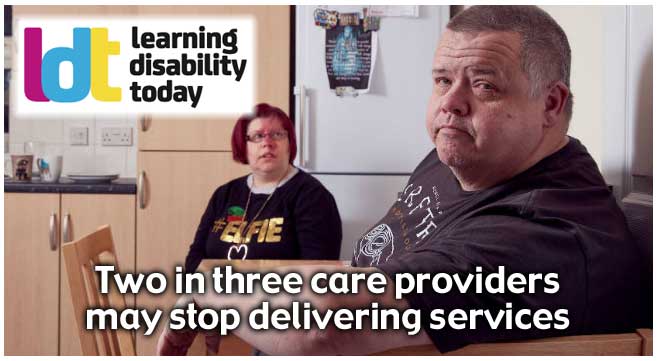
    Two in three care providers may stop delivering services

    LDT | News, 08 May 2018

    Scope is the biggest provider to have already started withdrawing delivery of all physical services.

    Around one in three care organisations may stop providing services as new debts have made them unviable.

    Providers say they can’t meet financial responsibilities imposed on them by tribunals.

    Care providers were surveyed on the implications of sleep-in carer pay tribunals, following the government’s refusal to cover back-dated pay obligations.

    67 percent of those who responded expect to have a budget shortfall in the coming financial period.

    Out of those considering different approaches to address the potential shortfall in funding, 56 percent are considering handing services back.

    22 percent of those surveyed said that they would have to sell properties to cover the shortfall.

    34 percent of those surveyed said that there would be a threat to the viability of their organisation if there’s a requirement from HMRC to back date payments to staff for two years.

    This figure rises to 68 percent (more than two in three) if the requirement is to back date for six years – as is required by current government guidance.
    Read more >
    Share This Post:
    Facebooktwitterlinkedinmail
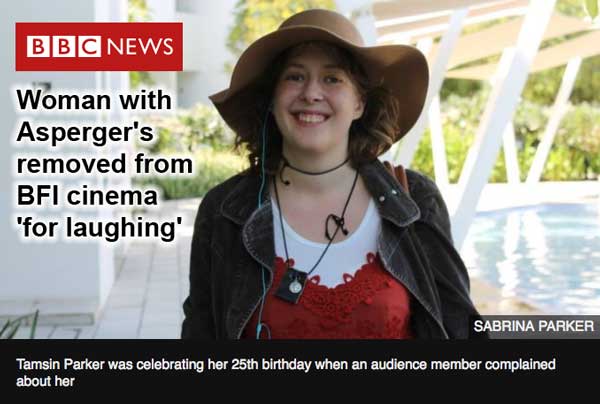
  • Woman with Asperger’s removed from BFI cinema ‘for laughing’

    Woman with Asperger’s removed from BFI cinema ‘for laughing’

    My brother sent this over to me (Martin Buchan),
    I was shocked and dismayed to read it

    Dr. Linda Buchan
    Consultant Clinical Psychologist
    & Director of Axia ASD Ltd.

    A woman who has Asperger’s syndrome was “forcibly removed” from a screening of her favourite film by cinema security staff for “laughing too much”.

    Tamsin Parker, 25, had been watching western The Good, The Bad and The Ugly at the British Film Institute (BFI) on London’s Southbank on Sunday.

    Many cinema-goers walked out in protest at the “disgusting” way she was treated by some audience members and staff.

    The BFI has apologised and said it “must do better”.

    Lydia Parker, Tamsin’s mother, said her daughter – who was celebrating her 25th birthday – was in “floods of tears” when she picked her up from the security office.

    She said she was “shocked and disgusted” about the way Tamsin was “humiliated”.

    “There’s clearly a huge lack of awareness about people with autism,” Mrs Parker added.


    Share This Post:
    Facebooktwitterlinkedinmail
  • LDT – Take care when you deliver a diagnosis

    LDT – Take care when you deliver a diagnosis


    Learning Disability Today –

    Take care when you deliver a diagnosis

    26 April 2018

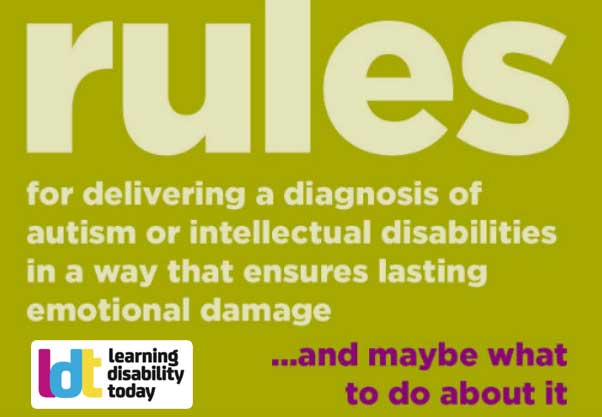
    ‘Ten Rules for Delivering a Diagnosis of Autism or Learning Disabilities in a Way That Ensures Lasting Emotional Damage’ is the latest in a series driving healthcare standards upwards.

    An appeal for diagnoses to be made more constructively has been made in a new book launched this spring. We arranged an email interview with authors Viki Ainsworth and Jim Blair to learn more.
     
    Learning Disability Today: What inspired you to choose this topic for your latest book?
     
    Viki: My inspiration came from two decades of personal experience on behalf of my daughter, combined with the experience of countless other families we have had the privilege of getting to know during our journey through the world of learning disability.
    “It is neither good news nor bad news. It is information which must be given in a considered, reflective and supportive manner.”
    There are too many tales of trauma at point of diagnosis and lack of post-diagnosis support and it needs to change. It wouldn’t take much and the explanations and commentary in the book will hopefully open the eyes of all those involved on a diagnosis pathway.
     

    Share This Post:
    Facebooktwitterlinkedinmail
  • LDT – Neurodiversity divisions

    LDT – Neurodiversity divisions


    Learning Disability Today –
    Neurodiversity divisions

    Darren Devine
    23 April 2018

    “Nothing about us without us” — it’s the mantra of the movement that has moved from the fringes of the autism community to centre stage. Here we look at the growing influence of the neurodiversity movement that insists autism is not an illness to be cured, but simply a difference that demands acceptance. Darren Devine reports.

    In October 2016 the world’s biggest autism advocacy group dropped the use of the word “cure” from its mission statement.

    The volte-face by US non-profit Autism Speaks was testimony to the growing influence of a movement that started life in the 1990s as a fringe group trying to challenge the accepted notion of autism as an illness.
    “Critics argue the neurodiversity movement is heavily skewed towards the needs of those with high-functioning autism.”
    Now the influence of the neurodiversity movement is everywhere. From tech firms going out of their way to recruit people with autism and adapting their working environments to enable them to flourish, to supermarkets and cinemas introducing quiet hours.
     

    Share This Post:
    Facebooktwitterlinkedinmail
  • Cancellation Notice for Axia’s 2018 Conference

    Cancellation Notice for Axia’s 2018 Conference


    We are very sad that we have to announce the cancellation of our Axia-ASD 2018 Conference.

    Subsequent to yesterday’s hugely successful PDSG (51 attendees), I met with two of the intended speakers, Ronnie and Dave.

    I informed them that all the individuals who had signed up to attend our conference were members of the group. We decided therefore that where relevant we would invite the booked speakers to talk to the group rather than go ahead with the conference.

    We shall of course reimburse the people who have already paid.

    Thanks for your understanding
     
    Linda & Calvin
    Directors of Axia ASD Ltd.

    Share This Post:
    Facebooktwitterlinkedinmail
  • How to support autistic students aiming for college or university

    How to support autistic students aiming for college or university


    Learning Disability Today, 19 April 2018
     

    With exam season around the corner, we spoke to the author of a new book perfectly capturing how to support autistic people preparing for higher education.

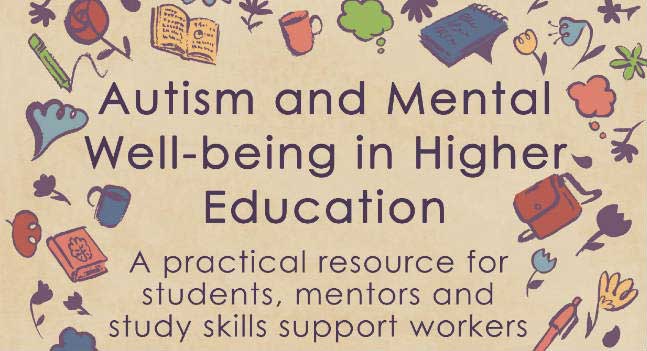
    ‘Not all autistic students require or want a mentor, but all autistic students should be offered one and have this offer open to access should the need arise,’ says autistic author Dr Susy Ridout. Learning Disability Today caught up with the woman behind Autism and Mental Wellbeing in Higher Education to share a flavour of how best to support students – and how students can support themselves – ahead of a transition that can be daunting for anyone.

    Learning Disability Today: What are the main challenges autistic people face when going off to college or university?

    Susy Ridout: The transition from a previous learning environment to HE is huge as this type of learning is much more independent. Furthermore, the demands of adapting to new routines, timetables, travel, living and environments can be exhausting and need allocated time at the end (or during) each day to process experiences.

    “Proactive support enable autistic students, and many others, to compete equitably with other candidates for places on HE courses.”

    Many learning environments (not solely those relating to HE) are highly unsuitable for autistic people and are designed to accommodate the needs of non-autistic individuals. Therefore, non-autism friendly environments, for example those comprising poor lighting, badly laid out lecture rooms or pungent cleaning fluids may result in sensory or social overload.


    Share This Post:
    Facebooktwitterlinkedinmail
  • Learning Disability Today Update – April 2018

    Learning Disability Today Update – April 2018


    Welcome to your
    learning disability today update


    • Our approach to autism support
      Certitude Support Manager Mark Wallis says better understanding ASD (autistic spectrum disorder) has inspired how they provide supported housing for people with the condition.
      Read more.
     

    LDT Study Day! Tickets are available for our LDT Study Day in London on May 15 and our learning and exhibition day, LDT London 2018, follows on November 28. We can now reveal the programme for the study day, which features a masterclass in modern day approaches to behaviour that challenges and an array of expert speakers. Read more.

    Don’t forget to check out the Learning Disability Today website, @ldtonline on Twitter and our Facebook page throughout the week for the latest news, views and offers.

    Thanks for reading,
    Barney Cullum and the Learning Disability Today team


    Share This Post:
    Facebooktwitterlinkedinmail
  • Autism is not over-diagnosed in the UK – Mental Health Today

    Autism is not over-diagnosed in the UK – Mental Health Today


    Autism is not over-diagnosed in the UK, says Royal College of Psychiatrists
    Dr Mark Lovell 20 March 2018

    The Royal College of Psychiatrists, which represents 34,000 doctors around the world, respond to a controversial article in the Daily Mail authored by their former President, which claimed parents chase diagnoses to ‘avoid their own failings’.

    “There is only one thing in life worse than being talked about, and that is not being talked about.” In recent times, neurodevelopmental conditions have not had to worry about falling victim to Oscar Wilde’s warning.

    Former President of the Royal College of Psychiatrists Mike Shooter grabbed headlines recently by suggesting that neurodevelopmental conditions like Autism Spectrum Disorders (ASD), Attention Deficit Hyperactivity Disorder (ADHD) and Intellectual Disabilities (ID) in children are being “vastly, and dangerously, over-diagnosed”. He says that parents are seeking out diagnoses like a “badge of honour”.

    Read the full article here >
    Share This Post:
    Facebooktwitterlinkedinmail
  • LDT – ‘Odd girl out’ author heads awards roll call

    LDT – ‘Odd girl out’ author heads awards roll call


    Learning Disability Today – News, 13th March 2018
    ‘Odd girl out’ author heads awards roll call
    Recognition has been given to individuals and teams involved in education, health, social care, employment, community projects and volunteering.
    Campaigning journalist Laura James has received the award for ‘Outstanding Achievement by an Individual on the Autism Spectrum’ at the National Autistic Society’s Autism Professionals Awards.

    James was recognised for her media work and novel ‘Odd Girl Out’.

    The Lifetime Achievement Award went to philanthropist Dame Stephanie Shirley in recognition of her commitment to improving the lives of autistic people through her foundation.

    Hosts Jane Asher and Kate Fox handed out 15 awards to individuals and teams involved in education, health, social care, employment, community projects and volunteering.

    The winners were chosen by an independent panel of 10 autism experts who judged each nomination on their innovation, creativity, impact and sustainability.

    Read the full article here >
    Share This Post:
    Facebooktwitterlinkedinmail
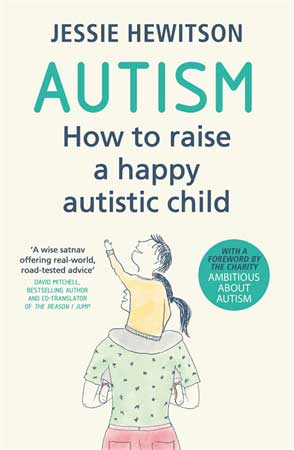
  • Autism: How to raise a happy Autistic child – Review

    Autism: How to raise a happy Autistic child – Review


    Book Review of
     
    “Autism: How to raise a happy Autistic child”
    By Jessie Hewitson
    Foreword by the charity Ambitious About Autism
    Publisher: The Orion Publishing Group

    I was delighted to come into work today and find this book on the table in our staffroom. Sarah had been given a copy by the publishers as she was one of a number of people who contributed to the book. Other contributors include the author, David Mitchell, Professor Simon Baron-Cohen and the book has been reviewed by, for example, Laura James the author of The Odd Girl and Carrie Grant.

    It is a beautifully written book and Jessie is an award winning journalist at The Times and has freelanced for various national newspapers and magazines. She is a mother of two, her 7 year old son is Autistic.

    The chapters include the following:
     
    • Defining Autism
    • Is my child Autistic
    • The diagnostic process
    • What it is like to be Autistic
    • Sensory differences
    • Interventions
    • Creating an Autism friendly home
    • Mental Health
    • Learning to play
    • Siblings
    • Nursery and School
    • Support in Education
    • Play dates
    • Girls and Autism
    • Autism in black and minority ethnic communities
    • Holidays

    She ends with a conclusion and there is also a very helpful glossary of terms, Autism acknowledgements in which Sarah is acknowledged as one of the people who have read chapters to “sense check it and lend me their expertise”.

    There is also two indexes which are very helpful.

    I have just started to read this book and I am so impressed by it that I am going to bring it in any case to the group on Wednesday and order several copies for our team.

    Dr. Linda Buchan
    Consultant Clinical Psychologist
    & Director of Axia ASD Ltd.

    Share This Post:
    Facebooktwitterlinkedinmail
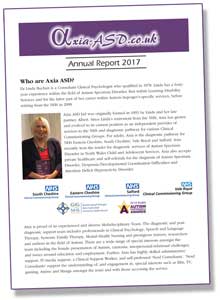
  • Axia ASD Ltd’s Annual Report – 2017

    Axia ASD Ltd’s Annual Report – 2017


    We are delighted to share Axia ASD Ltd’s Annual Report for the year 2017.

    We hope you glean from the report the recent developments in our service and our plans for 2018. In particular, we are delighted to share with you that we are finalists in the National Autistic Society Autism Professional’s Award for Outstanding Health Services.

    Yours sincerely
    Dr Linda Buchan and the team at Axia.

    Click Here or on the icon for the PDF file.


    Share This Post:
    Facebooktwitterlinkedinmail
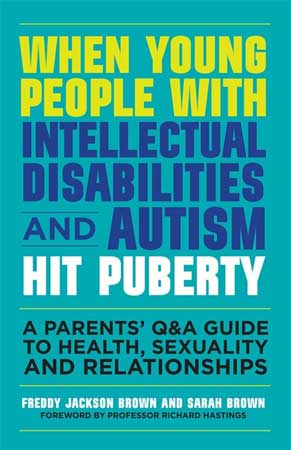
  • When Young People with Intellectual Disabilities and Autism Hit Puberty – Review

    When Young People with Intellectual Disabilities and Autism Hit Puberty – Review


    Book Review of
     
    “WHEN YOUNG PEOPLE WITH INTELLECTUAL DISABILITIES AND AUTISM HIT PUBERTY:
    A PARENTS Q & A GUIDE TO HEALTH, SEXUALITY AND RELATIONSHIPS”
    By Freddie Jackson Brown and Sarah Brown
    Foreword by: Michael Barton
    Publisher: Jessica Kingsley Publishers

    Foreword by Professor Richard Hastings, who some of you may remember, has spoken at various conferences that we have attended.

    Whilst it talks about young people with intellectual disabilities and Autism, there is plenty in there for families whose children do not have intellectual disabilities.

    The chapters start off with the importance of sexual education, it doesn’t shy away from thinking the unthinkable (sexual abuse).

    It then talks about puberty and how some people might struggle with that, for example, with hygiene and so on and how much should or should not, parents do.

    It also looks at some behaviours that can be somewhat challenging as young people develop and explore their sexuality. It talks about the importance of relationships and where people stand in relation to sex and the law.

    This is a book that we would recommend for parents whose children are approaching or going through puberty and will be bringing it along to our next Post-Diagnostic Support Group on 14 March 2018.

    Elspeth Bromiley
     
    Consultant Systemic Psychotherapist
    Deputy Director Axia-ASD

    Share This Post:
    Facebooktwitterlinkedinmail
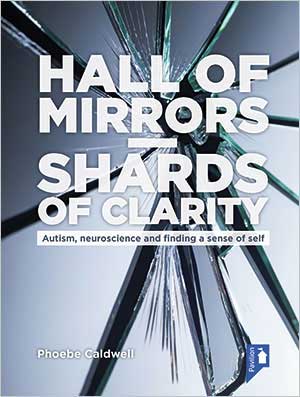
  • Hall of Mirrors: Chards of Clarity – Review

    Hall of Mirrors: Chards of Clarity – Review


    Book Review of
     
    “HALL OF MIRRORS: CHARDS OF CLARITY.”
    Autism Neuroscience and finding of self
    By Phoebe Coldwell
    Publisher: Pavilion Publishing

    Many of you will know of Phoebe Coldwell’s work which spans over forty years. She marries together neuroscience research evidence but also many years of practical approaches which she has found useful. She also draws on the stories and experiences of many people on the Autism Spectrum. She is clearly a pioneer in the field and I have had the privilege of hearing her speak.

    The chapters focus on body language, connections, she talks about the right and left brain and the Corpus Callosum which connects the brains. She talks about evolutionary notions, knowing self and un-self feelings, response of incommunication. She also provides tips on intensive interaction and sensory deficits toolkit.

    I highly recommend this book to try and have a greater understanding how the world is at best confusing and at times frightening for many people on the Spectrum in terms of how they experience it from a sensory perspective as well as all the other challenges they face on a day to day basis. These sensory sensitivities can range from touch, colour, symmetry, sound, pain and so on and cannot be underestimated as to how they impact on people on a day to day basis. However, many individuals and their families are actually not aware of this and how would one know that the way you experience the world is any different from anyone else.

    I shall try to endeavour to bring this to the next post-diagnostic support group.

    Dr. Linda Buchan
    Consultant Clinical Psychologist
    & Director of Axia ASD Ltd.

    Share This Post:
    Facebooktwitterlinkedinmail