
Author: Linda Buchan

  • Axia Christmas Closing Times and some Useful Tips

    Axia Christmas Closing Times and some Useful Tips


    Axia’s Christmas Closure begins at 12 noon on
    Thursday 20th December.
    Business resumes on 2nd January at 9 am.

    Christmas is almost here. While some people look forward to and enjoy the festive season, other people find it a trickier time that presents some challenges. For some people on the Autism Spectrum, there will be lots of change, social interaction, expectations and demands to negotiate as well as sensory considerations to manage. Here are a few useful links, including some useful overviews from the National Autistic Society:-

    http://spacedoutandsmiling.com/blog/2015-12-16-3-tips-autism-friendly-christmas

    http://ginadavies.info/xmas-challenges/

    For some people, Christmas can be an especially difficult time when they feel very low:-

    https://www.theguardian.com/social-care-network/social-life-blog/2015/dec/16/austistic-christmas-festive-social-expectations

    If you need help this Christmas, there are a number of organisations that can provide support if you are suicidal:-

    • The Samaritans are available round the clock every single day of the year, even Christmas day. They can be contacted on (0114) 2767277 or 116 123, or you can email jo@samaritans.org.
    • PAPYRUS HOPEline is a charity for the prevention of young suicide. Their helpline telephone number is 0800 068 4141 and is open from 10am to 10pm on weekdays and 2pm to 10pm at weekends. They are available from 2pm – 10pm on bank holidays (Christmas Day, Boxing Day and New Years Day).
    • The Campaign Against Living Miserably (CALM) is a charity dedicated to preventing male suicide. Online webchat is available via www.thecalmzone.net. Their telephone helpline (0800 58 58 58) is open 5pm–midnight, 365 days a year.
    • The Hub of Hope (https://hubofhope.co.uk) can be downloaded as an app, as well as having a website. It can help you find services that are nearby

    Here are some documents with further information that we hope you might find helpful:-


    Share This Post:
    Facebooktwitterlinkedinmail
  • Mental Health Today Update 2018

    Mental Health Today Update 2018


    Interview: Steve Gilbert on the new Mental Health Act and approaches to tackling injustice

    The government last week committed to new legislation that will safeguard individuals’ rights to make choices about their treatment and to nominate a relative to speak for them if they become too ill. But where does the independent review leave prospects for BAME patients? Mental Health Today spent an hour with review vice-chair Steve Gilbert, to discuss approaches towards tackling inequality of outcomes in crisis care.

    Insights

    The movements giving a voice to service seekers as well as service users

    “It is vital that we keep this momentum going”: Rethink Mental Illness on the Mental Health Act review

    Catch up

    Independent review of the Mental Health Act: charities’ responses

    Learn | Campaign | Support

    Learn about anorexia and other common mental health conditions in our expanded Disorders Explained information hub. Check out new techniques for supporting ‘self-soothing’ in our bookstore.

    Join or follow the In Our Right Mind campaign shaping the new Mental Health Act this year.

    Show your support for what you’ve read today by making a one-off or recurring donation by debit card, credit card or PayPal. It helps us keep the site free from paywalls.

    Keep supporting mental health progress.

    Website | Twitter | Facebook | LinkedIn | Bookstore

    From Barney and the Mental Health Today team.


    Share This Post:
    Facebooktwitterlinkedinmail
  • Post-Diagnostic Support Group Minutes – December 2018

    Post-Diagnostic Support Group Minutes – December 2018


    Meeting-minutes-pictureMinutes of the Thirty Fourth

    Post-Diagnostic Support Group
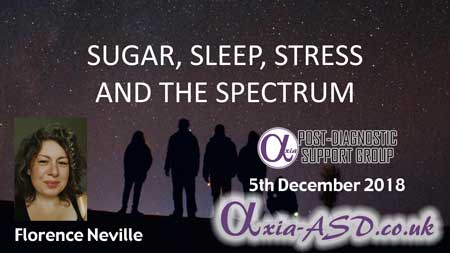
    5th December 2018

    Today’s group was well attended with over 40 people and one assistance dog

    The speaker was Florence Neville (www.florenceneville.com) who gave an extremely interesting and engaging talk on “Sugar, Sleep, Stress and the Spectrum” which should be available on our website in the coming days.

    After the break Kallum from the SEAT sales team came to show us one of the cars available from SEAT through motability. He went through the prices, what cars were available and also spoke about how a lot of people do not know they are eligible for motability. He left business cards, leaflets and other information so if you didn’t get a chance to speak to him and would like more information, you can pick these up at the next group.

    The Christmas meal will now be more of a get together in the New Year. If you are interested please email amy@axia-asd.co.uk and she will let you know more details.

    Next group is Wednesday 30th January 2019 with a talk entitled
    Atypically Autistic – ‘You don’t look autistic to me’.


    Share This Post:
    Facebooktwitterlinkedinmail
  • Third Annual North Wales Conference
    Third Annual North Wales Conference

    Fridays Third Annual North Wales Conference was wonderful

    It was a huge celebration of being Autistic and Neurodivergent

    Presentations will be available

    Put next years date in your diary
    18/10/2019
    Dr. Linda Buchan
    Consultant Clinical Psychologist
    & Director of Axia ASD Ltd.

    Share This Post:
    Facebooktwitterlinkedinmail
  • Post-Diagnostic Support Group Minutes – October 2018

    Post-Diagnostic Support Group Minutes – October 2018


    Meeting-minutes-pictureMinutes of the Thirty Third
    Post-Diagnostic Support Group
    17th October 2018

    Today’s group was attended by 45 people and a Therapy Dog.

    The meeting was opened by Sarah Hendrickx who introduced the other members of the Axia team who were present, and proceeded to describe the “Winter Program” we have planned.
     
    One of our group members, Ronnie, then gave a talk, which will be available on our website in the next few days. (Edit: Available here.)
     
    Linda alerted the group to recent news items and encouraged the group to subscribe to our monthly newsletter and join our FB Page so they were kept up to date.
    We were joined by colleagues from SEATT and The Bren Project


    Share This Post:
    Facebooktwitterlinkedinmail
  • Blue badge discrimination | LDT

    Blue badge discrimination | LDT


    Blue badge discrimination

    Darren Devine
    18 September 2018
     

    New laws will see blue badges issued to those with hidden disabilities, but councils already have discretionary powers to give the parking permits to those with autism and mental health problems. Here we show how some councils still refuse to use this discretion and insist on seeing disability as a purely physical issue. Darren Devine reports.

    It was heralded as a momentous shift in government policy finally signalling that the moment when those with hidden disabilities would be given parity of treatment with wheelchair users had arrived.
    “While one set of officials has decided his disabilities are so severe he is entitled to a Motability car, another say they don’t impair him enough to give him a blue badge.”
    In the summer, the government announced plans to change the law so those with autism and mental health conditions would benefit from the blue badge parking scheme.

    Those with physical disabilities already benefit from this scheme that allows people to park closer to their destination, including on double yellow lines.Charities like the National Autistic Society (NAS) had long campaigned for the change to help relieve pressure on families that can end up isolated by overwhelming challenges.

    Read more >
    Share This Post:
    Facebooktwitterlinkedinmail
  • Price increases for 2019


    In order to maintain the quality and professionalism and ongoing post diagnostic support people have come to expect from Axia we shall be increasing our prices from 1/1/2019

    All bookings received before 31/12 will be at our current price even if your appointment is in the New Year.

    Dr. Linda Buchan
    Consultant Clinical Psychologist
    & Director of Axia ASD Ltd.

    Share This Post:
    Facebooktwitterlinkedinmail
  • Promoting Autism Hour

    Promoting Autism Hour


    Had a great day promoting Autism hour with Amy in Crewe and Chester.

    There was a genuine commitment from everyone we met to make the world a better place for Autistic individuals and their families and friends.

    There was also commitment to making this not a once a year thing but throughout the year.

    Thanks to:

    And lovely meeting up with
    Dr. Linda Buchan
    Consultant Clinical Psychologist
    & Director of Axia ASD Ltd.

    Share This Post:
    Facebooktwitterlinkedinmail
  • Understanding autism | LDT

    Understanding autism | LDT

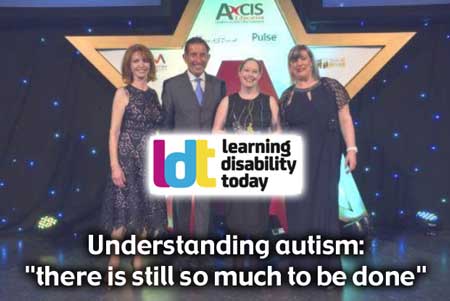
    Understanding autism: “there is still so much to be done”

    Mandy Garford
    01 October 2018

    In this blog, Mandy Garford from Dartford writes about raising three autistic children and why it’s important to recognise individuals and organisations who are making a difference to autistic people and their families.

    Sometimes, the days can be long and the nights even longer when you have children on the autism spectrum.

    There were so many times when I longed for people around me to think about autism first before judging. So many times I would go home and cry.

    Being a qualified teacher gave me little advantage in being a parent for three autistic children; they are all very different. The sheer diversity of the spectrum means that both the joys and the difficulties are never the same. As the saying goes, “when you have met one autistic person, you’ve only met one autistic person”.

    I’ve found different approaches for supporting each of my children.

    For example, my eldest has similar traits to that of Pathological Demand Avoidance, which means he has incredibly high anxiety and struggles when a demand is made. So here goes the request to put on shoes: “Hey, let’s all put our shoes on! It will be fun!”. If I’m feeling brave, I might suggest the opposite in the hope that he would refuse and then put his shoes on.

    My second child on the autism spectrum is more inquisitive. For him I would need to say: “Hey, we’ve run out of bread so we need to go to the shop…it’s been raining so we need to put shoes on.”

    My youngest is “classically autistic” so simple instructions are needed: “Shoes on, now please”.

    …And that’s just the shoes!

    Read more >
    Share This Post:
    Facebooktwitterlinkedinmail
  • How Doctor Who tackles dyspraxia in series 11

    How Doctor Who tackles dyspraxia in series 11


    Everything you need to know about the co-ordination disorder experienced by the Doctor’s new companion Ryan

    By Huw Fullerton
    Sunday, 7th October 2018


    Dyspraxia is a fairly common condition among both children and adults, but the disorder – which effects physical co-ordination and language among other things – is relatively unknown among the wider public, especially compared to other comparable conditions like dyslexia, autism or ADHD.

    However, that might change thanks to BBC sci-fi series Doctor Who.

    Series 11 introduces a new companion – Tosin Cole’s Ryan Sinclair – who has dyspraxia, a decision inspired by head writer Chris Chibnall’s own family experiences.

    Read more >
    Share This Post:
    Facebooktwitterlinkedinmail
  • Thousands of autistic girls and women ‘going undiagnosed’ due to gender bias

    Thousands of autistic girls and women ‘going undiagnosed’ due to gender bias


    Number of girls and women with the condition in UK may be vastly underestimated, leading neuroscientist says

    Hundreds of thousands of girls and women with autism are going undiagnosed due to it being viewed as a “male condition”, according to one of the UK’s leading neuroscientists.

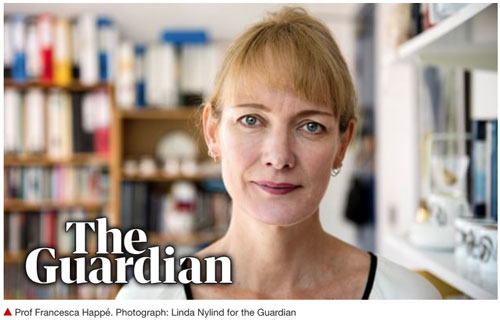
    Prof Francesca Happé, director of the Social, Genetic & Developmental Psychiatry Centre at King’s College London, warned that the failure to recognise autism in girls and women was taking a stark toll on their mental health.

    “We’ve overlooked autism in women and girls and I think there’s a real gender equality issue here,” she said. “I think we are missing large numbers and misdiagnosing them too.”

    Share This Post:
    Facebooktwitterlinkedinmail
  • Developing the long term plan for the NHS

    Developing the long term plan for the NHS


    Overview

    The NHS has just celebrated its 70th birthday.

    A lot has changed since it was created in 1948, and as a result the NHS is responding to changes in society that were never expected, let alone planned for, when it was set up 70 years ago.

    But the NHS is also a dynamic and innovative institution that has continuously evolved over the last 70 years. Those who use it and work in it know that evolution needs to continue if the changing needs of patients are to be met when the NHS is celebrating its 80th birthday. 

    With the recent Government announcement of additional funding for the NHS we can now face the immediate future with renewed certainty; able to plan for the next five years confident of guaranteed budget increases.
    The NHS is now working on a plan setting out our ambitions for improvement over the next decade, and our plans to meet them over the five years of the funding settlement.  

    Helping develop the plan

    As part of that process it is vital that all those who rely on and work in or alongside the NHS have the opportunity to contribute their ideas, experiences and insights.

    Read more and give your feedback >
    Share This Post:
    Facebooktwitterlinkedinmail
  • Jack Monroe on defeating Katie Hopkins and why low-cost recipes matter

    Jack Monroe on defeating Katie Hopkins and why low-cost recipes matter


    Jack Monroe is a food writer and poverty campaigner who has been diagnosed with Autism and Attention Deficit Hyperactivity Disorder.

    Jack Monroe on the need for low-cost recipes, defeating Katie Hopkins and why her son doesn’t have unsupervised access to the internet

    Jack Monroe rose to prominence by making everyday recipes fit tight budgets, gradually becoming the face of modern poverty

    Jack Monroe knows the exact price of a pack of Sainsbury’s Basics stock cubes.

    Not that surprising, perhaps. She does, after all, create low-cost recipes for a living. But she can also tell you how much a pack cost last year. And the year before that. In fact, Monroe can rattle off the price rises of basic food products from the past six years. All off the top of her head. The stock cubes, for example, have risen from 10p to 40p, a staggering 400 per cent price rise.

    These are the statistics going round in Monroe’s head. The food writer and poverty campaigner who rose to prominence in 2013 as a single mother blogging about how to feed her young son on a budget of just £10 a week, describes her brain as “like most people’s internet browsers”.

    “My brain is like this huge, swirling tornado of noise.”

    She was diagnosed with autism and ADHD when she was 11 but didn’t receive any medical support until she went to the doctor about an unrelated issue as an adult.

    Read the full article >
    Share This Post:
    Facebooktwitterlinkedinmail
  • North Wales 3rd Annual Autism Conference

    North Wales 3rd Annual Autism Conference


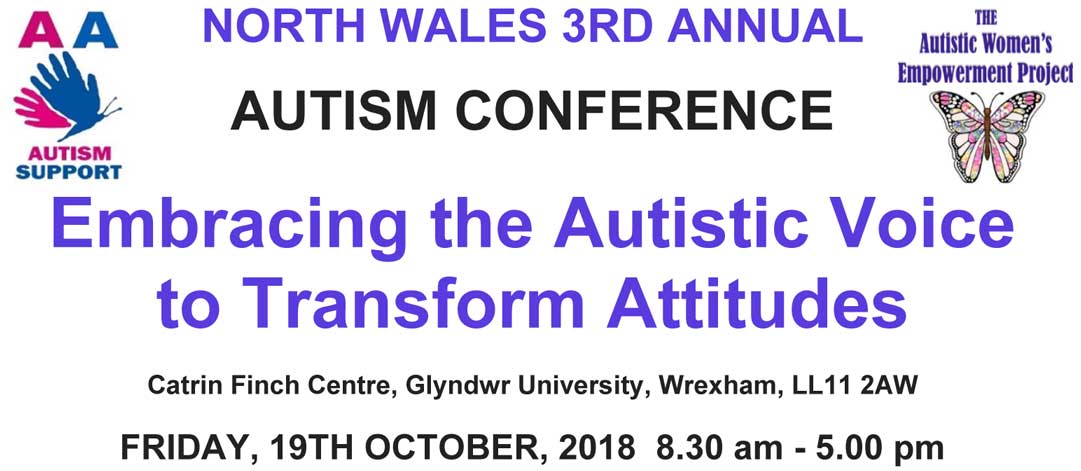
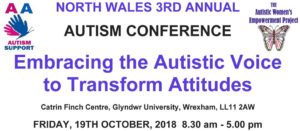
    NORTH WALES 3RD ANNUAL AUTISM CONFERENCE

    Embracing the Autistic Voice
    to Transform Attitudes

    Catrin Finch Centre, Glyndwr University,
    Wrexham, LL11 2AW

    FRIDAY, 19TH OCTOBER, 2018 8.30 am – 5.00 pm


    KEYNOTE PRESENTATION

    Dr Wenn Lawson PhD, CPsychol. AFBPsS. MAPs

    Psychologist, lecturer and author, Dr Wenn has run his own business for 23 years. At 2 years of age, he was misdiagnosed as intellectually disabled, at school of being incapable of doing as he was told, at 17 misdiagnosed with schizophrenia; in and out of Mental Institutions; eventually aged 42 years of age, diagnosed with an autism spectrum condition (ASC), ADHD, dyspraxia and learning difficulties.

    ADDITIONAL SPEAKERS: –

    Dean Beadle
    Dean is a well-respected public speaker who has toured the UK and many countries around the world, sharing his experiences and life on the autism spectrum. Through his humorous and insightful speeches, Dean outlines his positive outlook on his diagnosis. Dean is also a recognised journalist, having been published in local, national, and international publications covering everything from fitness columns and celebrity interviews, through to concert reviews and serious news reports.

    RETURNING BY POPULAR DEMAND: –

    Dr Luke Beardon, Senior Lecturer, the Autism Centre, Sheffield Hallam University.
    Dr Beardon has worked in the field of Autism for over twenty years in various capacities ranging from practitioner, researcher, trainer, and author. He has worked for the National Autistic Society as a Service Coordinator assisting in the development of a residential service of young adults with autism. In his post as Senior Lecturer in Autism, he runs various courses at different academic levels and supervises students at a doctorate level.
    He has been recognised for his work and dedication in education and teaching and has also been awarded the Inspirational Teachers Award and the Inspirational Research Supervisor Award by his students. He continues to research and consult in the field of autism. His specific research interests are around individuals with autism who have broken the law.
     

    The North Wales Autism Conference at Glyndwr University is now in its third year and is organised by a group of Autistic individuals and parents.

    We work co-productively with educators, researchers and specialists working in the field of autism, to provide credible information.
     
    This event is an opportunity to hear their experiences and access their knowledge, about how we can work in partnership to reduce the barriers within education, employment, healthcare and social situations which will enable individuals to progress in every area, and therefore improve self-esteem, confidence and develop opportunities to feel valued, understood and included in society.
     
    Mr Mark Isherwood AM – Chair of the Cross-Party Autism Group will be updating from the
    Welsh Assembly plus a Campaign Update from NAS Cymru
     
    Early Bird Rate available before 31 s t August 2018
    Parents, students, Autistic Individuals £45.00 Early Bird £35.00
    Professionals £150.00 Early Bird £125.00
    Prices include: Buffet Lunch, Refreshments and VAT

    FREE Exhibition and trade stand area open to members of the public all day

    TRADE STANDS AVAILABLE FOR BUSINESSES, CHARITIES AND
    LOCAL ORGANISATIONS.
    Trade stand enquiries contact 01352 703055 or email aaas.flintshire@gmail.com
    Conference enquiries please contact 01978 293494 or email conference@glyndwr.ac.uk
     
     
    Parallel sessions: choice of ONE per delegate
    Promoting Self Advocacy | Japanese Animé Vloggers | Positive Therapeutic
    Support | Autism and the Environment | Autism and Gender Fluidity | School
    Transitions | The Integrated Autism Service (Wales) | Barriers to Effective Communication
     
    Also Welcoming Presenters:
    Emma Dalmayne | Sarah Jane Harvey “Agony Autie”
    Andrew Edwards & Geraint Roberts | Willow & Anne Holloway
    Sound Express ♪♫ Emerge Community Arts

    Share This Post:
    Facebooktwitterlinkedinmail
  • Charity to tackle disability hate crimes | LDT

    Charity to tackle disability hate crimes | LDT


    LDT – News, 26 July 2018

    United Response staff are being shown how to advocate on behalf of the people they support.

    United Response is training its staff in Leeds to help people with disabilities and their carers spot the signs of hate crimes as new figures reveal a huge rise across Leeds and West Yorkshire.

    Statistics from West Yorkshire Police show disability hate crimes and incidences recorded from April 2017 to January 2018 increased by 71 percent to 915 – up from 535 the previous 12 months. In Leeds alone, disability hate crimes recorded by the police have increased from 30 in 2013/14 to 206 in 2017/18 – a 587 percent rise in just four years.

    The disability charity United Response is now working with West Yorkshire Police to help people with physical and learning disabilities, Down syndrome and autism recognise the signs of hate crimes and know how to report them.

    Response
    Jo Silkstone, United Response’s learning development manager for Yorkshire, said: “These shocking figures reveal that there are people out there who wish to do harm to some of society’s most vulnerable people.”

    Continue reading >
    Share This Post:
    Facebooktwitterlinkedinmail
  • Mental Health Today newsletter – July 2018

    Mental Health Today newsletter – July 2018


    Welcome to your Mental Health Today update

    What we can learn from trans activism

    Gender is complicated: it’s emotionally complex, intellectually challenging and politically disruptive. But it’s also very simple. How can we make the world a bit less difficult and dangerous for people who are marginalised? Akiko Hart reports.

    Insights

    Catch up

    Campaign | Learn | Support

    Join or follow the In Our Right Mind campaign shaping the new Mental Health Act this year.

    Visit and draw from our Disorders Explained information hub.

    Mental Health Today’s readership continues to grow exponentially. Power us to continue publishing for free by making a one-off donation of £10 or whatever you like.

    Keep supporting mental health progress.

    Website | Twitter | Facebook | LinkedIn | Bookstore

    From Barney and the Mental Health Today team.


    Share This Post:
    Facebooktwitterlinkedinmail
  • Dyspraxic Student told he was “just bad at maths” gets Masters

    Dyspraxic Student told he was “just bad at maths” gets Masters


    This student with dyspraxia was told he was ‘just bad at maths’ – but he proved teachers wrong by getting a master’s in it

    ‘I managed to get through a system that holds disabled people back’

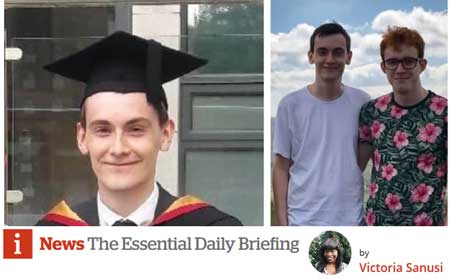
    A student with dyspraxia has gone viral online after sharing that he graduated with a first class master’s degree in theoretical physics with maths. As a child, he was dismissed by primary school teachers as being “just bad at maths”.

    Joe Rowland Adams from Lancaster told i that graduating in maths is a monumental moment for him because “even after my diagnosis, many teachers saw it as not a ‘real disability’, and just a thing made up by my parents not satisfied with my academic performance”.


    Share This Post:
    Facebooktwitterlinkedinmail
  • MHT Blog: Your guide to being an advocate

    MHT Blog: Your guide to being an advocate


    Explained in its simplest form, an advocate helps their clients to understand their rights under the Mental Health Act. A client can also apply to the court to have the nearest relative appointed to represent them, or the nearest relative can make that application.

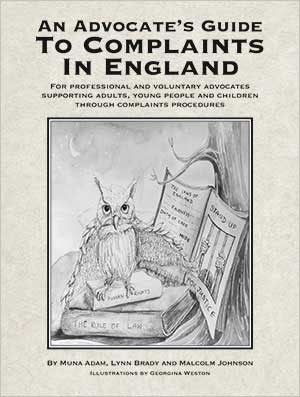
    To help us understand the role of an advocate, Mental Health Today asked Malcolm Johnson, author of An Advocates Guide to Complaints in England,  to explain further.


    Are you a professional or voluntary advocate supporting a client through the complaints process?

    An Advocate’s Guide to Complaints in England is a concise and informative handbook which provides accessible advice with a minimum of legal jargon and can be used as a reference book for all those who undertake advocacy.

    The aim is that the advocate will be able to ‘dip into’ these chapters for advice as and when needed and use the book as a comprehensive route map for the main complaints systems in England. This should be particularly helpful for advocates dealing with complaints that may cross between different institutions, such as social care and mental health.

    Take a look inside the manual by requesting your free sample chapter below

    Price: £28.00


    Share This Post:
    Facebooktwitterlinkedinmail