


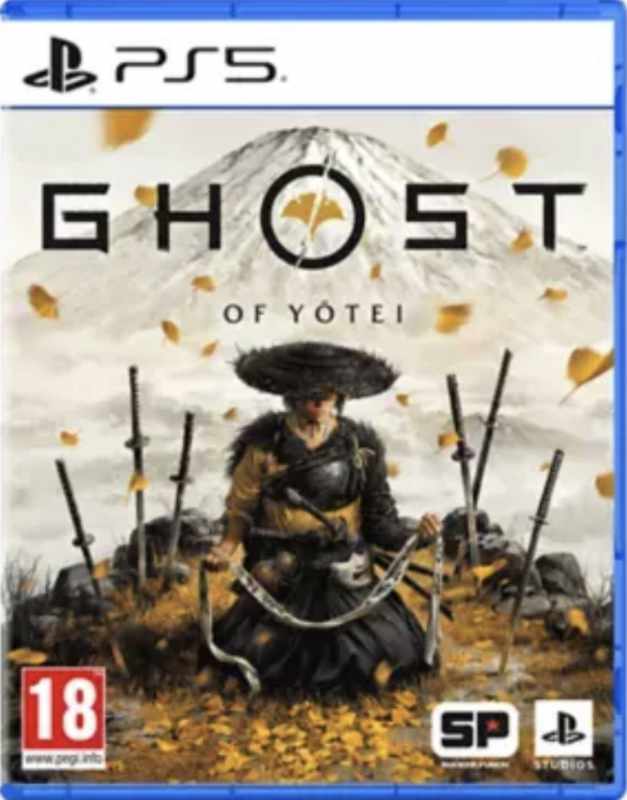
Ghost of Yotei
I will admit, I was very late to Ghost of Tsushima, not playing it until last year at time of writing, and as soon as I did, I instantly regretted not giving it a go sooner. The game was a ton of fun, I was quickly drawn into Jin Sakai’s story, the combat was thrilling, and I loved exploring the island of Tsushima; it didn’t take long for it to become my favourite game to come out in 2020. I was a bit hesitant when I heard that Ghost of Yotei, a sequel to Ghost of Tsushima, was in the works, mostly because Jin’s story was over and I didn’t want them to over extend it, and make that beautiful ending null and void. Luckily, however, those worries were put to rest with the first trailer, after not only learning about the new protagonist, but also with the new setting and even time period, instead having it become one of my most hyped games of the year. Ghost of Yotei was developed by Sucker Punch Productions, published by Sony Interactive Entertainment, and released on 2nd October 2025 as a PlayStation 5 exclusive.
Story
The game takes place on the island of Ezo in 1603. We start off with the burning of a ginkgo tree. Our protagonist, Atsu, is trapped to this tree, being stabbed through the shoulder by her father’s katana, just after witnessing a band called the Yotei Six, being led by Lord Saito, slaughter her mother, father and her brother Jubei and leaving her to burn with the tree. She manages to escape and spends the next sixteen years on the mainland as a mercenary. Now Atsu returns to take her revenge against the Yotei Six, writing their names on a sash she wears and plans to cross out their names with the blood she draws from them. However, Lord Saito has obtained a significant amount of power while she’s been away, now being referred to as the Shogun of the North, and after gaining a name for herself after killing her first target, The Snake, and the denizens of the island giving her the title Onryo, she will discover that her hunt will not be an easy one.
In my opinion, this game’s narrative is weaker than Ghost of Tsushima. The previous game was a compelling story about the conflict between one’s honour and the importance of those you care about. This game is more of a simple revenge story about Atsu learning to let go of her past, which is not a bad idea at all, but it is not as unique as the first game’s. Plus, I find Jin to be a more interesting protagonist when compared to Atsu, I found his inner turmoil more compelling and more thought provoking, while Atsu’s is not nearly as nuanced. That being said though, I did still like the story. Atsu’s quest, while fairly predictable at times, was still engaging and I found myself liking her more and more as the game went on. The side characters are very likable and compelling. And while Jin is a better protagonist than Atsu, the Yotei Six definitely outshine the Mongols, having a much larger presence and Lord Saito being very intimidating when he wants to be; especially when you consider what they did to Atsu in the past, it is incredibly satisfying to see them killed off one by one.
Presentation
After the encounter with the Snake and riding my horse through a forest, ending up atop a cliff where I saw the land I would be exploring, my mouth was agape. Ghost of Yotei looks absolutely stunning, everything about it is exquisite, the vast use of vibrant colours makes you want to ride through every inch of the island. Even smaller details have attention brought to them, from the way water flows through rivers, particles and clothes flapping with the wind and adapting to how strong the wind is, even footprints being left in wet mud. Every last part of the environment and characters has been meticulously worked on, and it makes the world feel even more alive and a marvel to explore. Obviousldoes notame does look better in quality mode, but performance mode still looks amazing, the details that are missing are very minute, mostly it just doesn’t have as dynamic lighting and details on clothing material is missing, though that’s only if you look very closely.
How the game runs depend on what graphics mode you are playing. For quality mode, you will find the game chugging along at 30fps, meanwhile performance runs at a very nice 60fps. For me, the slight increase in quality in exchange for the sacrifice of half my frames is not worth it so I would definitely advise that you play in performance. Whichever one you pick however, the frame rate will run smoothly and consistently, with no drops or lag, so you are guaranteed for a stable experience.
The voice acting in this game is pretty good. I played this game in English dub and everyone spoke with a bit of a Japanese accent, which I did find a bit jarring at first, but I grew to appreciate it, if makes the characters sound like they are native to Ezo, even without speaking the language and most of the cast seem to be of Asian descent, so it’s doesn’t feel insensitive. Particular standouts include Erika Ishii as Atsu, playing both the adult and child version of the character, Feodor Chin as Lord Saito and Suzie Yeung and Kiku.
The soundtrack for this game is beautiful. It is predominantly a combination of string and woodwind instruments and it all comes together to make an overall tranquil and harmonious listening experience. Of course, not every song is like this, some of the tracks will sound dramatic, intense or orchestral. The standout for a number of the songs is the shamisen, it is not in every song but when it’s there it’s very much welcomed, especially as the shamisen is Atsu’s instrument of choice, so it makes the soundtrack feel more connected to her.
World Design
Ghost of Yotei takes place on the island of Ezo (known in the modern day as Hokkaido). You only have access to a small portion of the island (because Ezo is massive, the developers need to sleep at some point), but what you are able to explore is nothing to groan at. The game is split into six open areas, and each of them are of a very decent size. While not as big as other open-world games, the game makes up for it by cramming as much as they can into each area, using a similar strategy to the Yakuza/Like a Dragon series, where you can barely take three steps without finding a side activity to do. This can be an annoyance to people who are not that bothered with side quests and just want to get on with the main story, though I never found them too egregious as they really do not take up much of your time.
A decent amount of exploration will involve climbing. What cliffs you are able to climb up are very easily indicated by pieces of rock jutting out making a convenient path upwards. You also have a grappling hook to also aid in climbing up cliffsides as well as swinging between large ledges. Using the grappling hook will always be the most fun part of parkour in any game, so obviously it’s a ton of fun in this, however, climbing can be a bit more cumbersome, sometimes Atsu will not jump unless you’re incredibly precise with your thumb stick placement, as well as not automatically grabbing onto a ridge if you’re climbing down a ledge.
If you are in need of more ammo for ranged attacks or need to regain health, you can set up camp pretty much anywhere. There are some places that you cannot obviously, such as on uneven terrain or in the middle of an enemy camp, but you are able to in the majority of places. At these camps, you can use materials to craft ammo for your weapons, sleep until morning or night, sometimes an ally or wandering ronin will sit with you to sell you their wares or point you to a side activity. Sometimes when you set up camp, the game may force you into a minigame where you light a fire and cook some fish or mushrooms. A lot of people have called this minigame unnecessary and annoying and I honestly agree. It’s mostly there for additional dialogue that could have just been added to a cutscene and you get no benefits or negatives for how well you cook the food – you can burn one mushroom to a crisp and leave the other one completely raw and nothing will happen.
One thing I have to praise this game for is the fast travel. As usual, there are a number of key locations that you can travel to be it settlements, taverns on the road, or locations for completed side activities. The unique feature of this game’s fast travel is the fact that when you select a settlement or location containing a lot of facilities, you can also select which facility you can spawn in front of. You just need to find said facility for the first time and you will be able to fast travel to it. I love this feature, as it takes away potential minutes of searching for something every time I wander into town, and as someone who regularly gets very lost in games, this feature is much appreciated.
Combat
Ghost of Yotei’s combat works very much the same as Ghost of Tsushima. Encounters consist of you fighting a bundle of enemies, where you have to juggle them while whittling down their defences with the right weakness. Easily the biggest difference between Jin and Atsu in terms of combat is their weapon pool – mostly the fact that Jin did not have one, only using a single katana but adapting to each situation by using different stances against enemies with certain weapons. Atsu has access to five different melee weapons, each of which you will unlock as you progress through the story and world. Similar to Ghost of Tsushima’s stance system, the weapon that’s best used depends on the weapon the opponent’s carrying, kusarigama being best against enemies with shields or twin-katana’s best against spears for example – the main benefit being that they help to degrade an opponent’s shield gauge a lot faster. This can make juggling enemies a much tougher challenge, especially when each enemy in an encounter is wielding a different weapon, forcing you to swap fighting styles around with quick succession. It can admittedly lead to a bit of frustration as well, mostly when you swap weapons for one enemy, only for Atsu to launch herself at a different one entirely, either because that previous ronin moved back or the game was just feeling scummy at that moment. Overall, I vastly prefer Atsu’s giant arsenal to Jin’s multiple stances, they feature vastly different move sets on top of speeds that feel more natural that it did in the previous game.
At the start of some fights, Atsu can call out an opponent, leading to a standoff. Just like in the previous game, when a standoff happens, you have to hold down the strike button and wait for the opponent to charge at you to let go. Doing so at the right time will kill that opponent instantly, though failing to do so will deal a chunk of damage to you. It is not quite as easy as it sounds as an enemy can perform a feint, tricking you into attacking before they do. I found myself getting tricked by this all the way into the later game, so it is not something you can really get used to, which I do quite like.
Just like last time, a big part of combat in particular is spirit. Spirit is the circles you see above your health bar and they are your primary source of regaining health, though you can also use spirit to perform a special attack with each of your weapons, or use three spirit at once to perform your own disarming attack. You regain spirit through a variety of means in combat, from just killing opponents, to performing perfect parries, or you can just chug a bottle of sake to regain a bunch, though with the caveat that your vision will become temporarily impaired.
On top of melee, you also have a variety of ranged weapons. You have your long-ranged ones like bows and eventually a Tanega Shima (a rifle for those of you too lazy to google it yourself – no hate, I can relate). Though you do also have quickfire weapons for close quarters combat, like a smoke-bomb to make you invisible and potentially even pull off some assassinations, or the oni’s flame to set your blade on fire temporarily, making your attacks unblockable. They are not so overpowered that the game stops being a challenge, but they can give you an edge in combat and can be incredibly useful when needed.
There is not really that much variety between enemies, some may have slightly different tactics or will gain new weapons and better armour in the later game, but when you really analyse it, the differences are minimal. Though in this kind of game, not having a wide variety is a benefit more than anything else, as you will be battling against hordes of enemies at times so having familiar enemies means you will not be as overwhelmed. When it comes to enemy attacks, aside from the standard ones, there are three in total, each one foretold by the colour their weapon is glowing. Returning from Ghost of Tsushima, blue glows mean that the attack has to be parried instead of blocked and red means that it is unblockable, meaning you have to dodge instead. This game however features a new type to attack, if the opponent’s blade glows yellow, they are performing a disarming strike – if hit Atsu will lose whatever weapon she’s holding and will have to rush to pick it back up or select another one. She can instead disarm an opponent if she hits them with a charged attack while they are still charging theirs. I’m a bit mixed on this type of attack, when facing a single enemy I enjoy it as it can put you into that fight or flight mode, where you have to decide in a split second if you’re going to try and disarm the opponent or just dodge out of the way. Though it can be seriously annoying when it’s against a group, as a lot of the time you’re way more likely to get hit by it if you’re not concentrating on that enemy in particular, or even worse, they’re offscreen before while building up the attack, so you don’t know it’s about to happen until you’re hit by it. Genuinely rage inducing when that happens.
Finally, just like before, you have plenty of opportunities to stealth. There really aren’t any areas where stealth is required, there aren’t any sections either in the story or any of the side quests that I played where stealth is your only option, so it’s not as punishing if you get caught or if you just don’t like the sneaking option you can just rush into the fray sword in hand. Sneaking about enemy strongholds is quite fun as there are a number of ways you can move past or assassinate guards, from hiding in long grass to, my preferred method, climbing on top of houses and bringing your enemies death from above.
Side Content
There is a lot of side content in Ghost of Yotei, possibly more than there was in Ghost of Tsushima. To the point where I am going to be structuring this like I did in my Like a Dragon: Infinite Wealth review, where I will be giving each one their own segment. There is a lot so let us just get into it, starting with:
Tales: Tales are quests given to you by other characters. While some tales are required for the story you will also find plenty that are entirely optional. Some are pretty small, being given by NPC’s you will only see once and will take you about five minutes, though there are some that will lead you on a grand quest and will reward you greatly once you reach the end. The rewards may range from a couple of coins for your trouble, to a new set of armour that will give you unique benefits in combat or exploration. A number will even end with a one-on-one duel against some pretty challenging opponents – one of which is probably the most difficult/unfair boss I have fought this year and need I remind you I played The First Berserker: Khazan.
Bounties: Ezo is full of bad eggs, and not just the members of the Yotei Six. In each settlement you will find a bounty board containing a selection of crooks you will be asked to kill. Most of these will have you searching their last known location for them and will then result in a duel to the death. These fights are pretty fun, though they can also be a bit samey if you do them one after another. Completing these will reward you with some money and maybe an additional reward depending on the bounty.
Fox and Wolf Dens: Fox dens are back everybody!! Just like last time, you will find a fox somewhere in the environment and it will ask you to follow it. You may encounter nothing, you may run into some enemies, but in the end they will lead you to a fox shrine where you’ll be rewarded with a charm – these charms will give you a variety of effects to help in combat, stealth or health regain (but more importantly, you’re able to pet the foxes again!!)
Wolf dens on the other hand are a bit different. When you find a wolf, they will not lead you to a shrine or a charm, but instead to a Yotei Six camp that has caged wolves. After dealing with them and rescuing the captured wolves, you gain an upgrade based on your connection with the wolf, making it more likely that she will help you in combat or save you from death.
Altars of Reflection: Altars of Reflection are how you unlock skills or upgrade ones previously unlocked. There are two ways to find one of these altars, the most common one is simply by finding one in the wild, sometimes out in the open, others at the top of a cliff that may require climbing to reach, and others will just be hidden by nature, like in a cave behind a waterfall or within a bundle of boulders. The rest will require you to take out one of the Yotei Six Camps. These camps can be a pack of tents or a seized village whose locals have been captured and caged. All you have to do in these is eradicate the samurai within and liberate the citizens of the village. These in particular are very fun and are probably my favourite side quests aside from the Tales.
Hot Springs and Bamboo Strikes: I decided to lump these two together as they both do similar things. Hot springs are what you use to increase your max health and some of them can be fairly well hidden. It is also in these that Atsu can reflect on her journey or her past, so you get a bit of insight towards her character. Bamboo strikes on the other hand are what is required to upgrade your spirit. When you approach one you are given a list of buttons to press and the order in which to press them, progressively getting more difficult. It will take you finding multiple bamboo strikes to be able to level up your spirit, but these are very easily found, and they are quite fun to do so I do not really mind it.
Zeni Hajiki: While there are more that I can talk about, this is the last side activity that I feel is worth mentioning. Zeni Hajiki is the gambling minigame of Ghost of Yotei. The game’s actually quite simple to understand; there are a bunch of coins on the table, and you have to flick one of the coins into another, this is repeated until either you or your opponent gets six points. If you do not hit any coins, or you hit more than one then your turn is over, or even worse, if you hit one off the table then your opponent gets a point. While this game is fun, it is one of those ones that is difficult to master and is very easy to mess up, there are a few problems I have with it. To start off, the amount of money I can bet is predetermined, which I am not a big fan of. I would have preferred it if I could choose how much I want to risk, whether it be a small amount so I do not go broke, or a lot so I can be really risky. But my main problem with this minigame is how good the opponent is. As I said, it is very easy to mess up and misjudge the power of your flick, meanwhile, whenever I played, my opponent was almost always perfect, getting a clean streak and reaching six points without effort. Them messing up a shot felt like a miracle. It felt really unfair at times and just discouraged me from playing it more than anything else.
Conclusion
At time of writing, the Game Awards has recently announced its nominees, and this game has been nominated for a bunch of them, though it’s not nominated for game of the year which is baffling to me because I thought that this game was fantastic. While weaker in story, it surpasses Ghost of Tsushima in every other way. I played this game for dozens of hours, even managing to get the platinum trophy for it, and I did not get bored in the slightest. In my opinion, if you have a PlayStation 5, then you really should get this game. It is one of the best exclusives for the console and absolutely deserves your time.
9.4/10
Anime Amigo and Nerd Consultant
Share This Post:


















Leave a Reply