Author: Calvin Atkinson

  • House of Gucci – Review

    House of Gucci – Review


    “HOUSE OF GUCCI”

    House of Gucci is a biopic directed by Ridley Scott. It is based on a book written by Sara Gay Forden, detailing the internal politics that created a major shift at one of the biggest fashion brands on the planet. Now, whether you’re a fan or not, Gucci has become one of the biggest global brands on the planet and makes an incredible amount of money every year. And it has had a major impact. This film is obviously made with the organisation’s blessing—the branding, the logos and the products are all in the film and there have clearly not been any licensing issues that the filmmakers have had to tiptoe around. Again, the film is not actually about the creation of Gucci and how it became a global megabrand; it’s more about how greed and politics created a massive rift within the family that started it all, just as they were about the enter the height of their success. The film begins in the early 70s and runs up to the mid-90s; anyone who’s kind of familiar with that story will know exactly what event closes the film. What’s interesting for me though is that fact it does have this major time shift but none of the actors are really aged up; most of them look exactly the same throughout the entire film, despite the fact that in some scene transitions, five to ten years could have passed. It’s a very bizarre choice.

    The film is not really about anyone born into the family. It’s about Patrizia Reggiani, played by Lady Gaga, who marries into one of the sons of the Gucci family, Maurizio, played by Adam Driver. It shows Maurizio not really wanting to be a part of his family’s business but Patrizia slowly encouraging him to take more and more of a role. The film, if anything, is mainly about greed and power corrupting people and what it does to them. There are lots of happy smiles on the surface but below, there are massive power struggles going on, and I can definitely see why the film has been made now. Without giving too much away if you’re not aware of the story, let’s just say that anyone who could, is not able to legally object to their depiction in this, which is good considering that everyone comes off as awful. I honestly thought if the filmmakers didn’t have that luxury that this film would result in a lawsuit because no one comes off looking good.

    There are very good performances in the film, I would say particularly from Lady Gaga considering how well she molds herself into Patrizia. And Adam Driver has to do a major shift partway through the film: he has to start out as a rather timid and unassuming person but then has to change his character up very quickly. He does this well but I also think it ties into another issue I have with the film, which we’ll get into later. The rest of the cast list also has to do something that Adam Driver doesn’t have to: they have to really mould their image. Not too many of the people are incredibly recognizable in this one; they clearly spent a lot of time in makeup to look like their real-life figures. The only one who’s very recognizable when you see her in the film is Salma Hayek who plays Patrizia’s personal sidekick, Pina. Despite the fact Salma Hayek has been billed quite high in this, she doesn’t actually get much runtime, though she does bring it when it counts. The cast list includes actors like Al Pacino, Jeremy Irons, Jared Leto, Jack Huston—it’s a very good cast on paper. Al Pacino does brilliantly in this role; you can certainly see some of his features through the great makeup job that’s been done but he works quite well. Jeremy Irons is similarly quite recognizable but he gives a very good performance when he’s on screen, though not totally unrecognizable with the makeup.

    I feel kind of bad for Jared Leto because it really feels like someone was out to sabotage him—his makeup looks really weird. The whole thing is designed to age him up a little bit but he managed to keeps some of his usual facial features which is how I could tell it was him, but the whole thing looks bizarre. I also don’t know what direction he was given but it kind of feels like he’s meant to be in a completely different film. Granted, he’s one of the best parts of the film considering how much he hams it up but it feels a little bit out of place; I can’t imagine the real-life figure was this eccentric and over-the-top. And his Italian accent definitely needed work—he really sounds like he’s auditioning to be a resident of the Mushroom Kingdom in the next Mario movie. It’s actually a problem I had with most of the accents in this one. Most of them are trying their best to do an Italian accent, particularly a Tuscan accent since the Guccis are from that region of Italy, and the effects vary. Lady Gaga, Al Pacino, Jeremy Irons and Adam Drivers all do a decent job but you can also hear their American—or in Jeremy Irons case, British—accents trying to break through. It’s never really entirely convincing per se.

    Speaking on another point, I feel the direction of this film is all over the place. The humour whenever it’s brought up feels either a little bit insensitive or really not for the right film. There is a decent plotline going forwards; it does follow historical events accurately from what I’ve heard, but it also feels like there’s a lot of dead air in this film. There were a ton of moments where I felt certain scenes could have either been cut down a little bit or cut out entirely and it wouldn’t have made much of a difference. The film is just under 2 hours and 40 minutes and it is way too long; if you cut 10-20 minutes off this film, I think it would have a decent runtime. It’s just a personal thing for me but I don’t really like having overly long films about really awful people being arseholes with no leverage to really take my mind off it. Don’t get me wrong, I don’t mind flawed characters; I think they can usually be the most intriguing ones to watch, but you have to offset it with something and I don’t think this film does that. Granted though, Ridley Scott is working with having to abide by real-world history.

    I feel like the biggest thing that flubs House of Gucci is the direction. I feel like the actors were given a lot of different direction to work with and it means that much of the film feels inconsistent. House of Gucci is an alright film but it’s bogged down by an overly long runtime and some weird decisions that kind of muddle it up a bit. It does make the smart decision of not emphasizing too much about the Gucci brand; it’s more about the people who were behind the brand at that time. And I think, overall, the film for the most part works. It is a well-put together film when it is working but I think the team needed to reign in a few of the stranger choices and have a more consistent tone throughout.
     
    Calvin – Nerd Consultant

    Share This Post:
    Facebooktwitterlinkedinmail
  • Forza Horizon 5 – Game Review

    Forza Horizon 5 – Game Review


    Forza Horizon 5

    (Available for Xbox Series X and S, Xbox One and PC)
    (Xbox Series X and S version on an Xbox Series X used for review)

    Forza Horizon 5 has arrived to be a major fixture of the Xbox holiday line up, alongside the upcoming Halo Infinite. The Forza games have done a great job using real world locations to create amazing and seamless open world arcade racing games. The country chosen this time is Mexico. The game however did not have too many new features compared to that of Forza Horizon 4, though given how good that game is, a lot of people were really going with the “if it aint broke don’t fix it” attitude. Once again you compete with various cars in several different events like: Road Races, Dirt Races, Cross Country Races and Street Racing with each of them, requiring a new discipline for the approach.

    Pros

    • Open world design: I loved the open world in Forza Horizon 4 and this one is even better. I’ve only been to Mexico a couple times and on each occasion I never stayed overnight because I was moving on later that day, but from what I’ve seen the team did a great job capturing the essence and look of Mexico. Just like number 4, Forza Horizon 5 takes a few pre-established locations and mishmashes them together. In the case of FH 4, (which was based in the UK) it was kind of a mash of the coastline, the lake district, Derwent, the Yorkshire and Derbyshire countryside and Edinburgh. Forza Horizon 5 does a similar thing but with much more interesting locations, there are beaches, deserts, jungles, the ruins of locations like Chichen Itza and even a volcano. Once again, the map gives you choice of following the roads or just saying “screw it” to all driving laws and going off road to reach your destination more directly. The map is huge but not daunting, I drove from one end of the map to the other and it took me just over 7 minutes so it’s not a slog to get through. Not only is the map great to explore and I really love doing it, but the way the various tracks are incorporated into the game is fantastic as well. The developers clearly looking into how to best integrate the tracks into the world they designed and succeeded very well. I didn’t get a chance to really get a feel for all the seasonal changes on the map given that the season changes each week (on Friday in my case), and the game came out in early November so obviously didn’t really have the game long enough to really see much of it.
    • Controls and gameplay:  The controls are very typical of racing games so if you play a lot of arcade racers or driving simulators you know what you’re in for. The controls though were particularly good and worked well with the various cars making some easier to use than others. If you’re struggling to control your car, it might not suit your play style so you might want to rethink which car you’re using and make sure you really read over all the stats before you buy or modify one of your cars. The gameplay is also well varied. If you’re getting sick of street racing swap to cross country or dirt racing or try out one of the various seasonal challenges or get a better star rating going past a speed camera the options are really plentiful and none of them feel half baked.
    • Graphics: Forza Horizon 5 may be one of the best-looking Xbox console exclusives available. I played it on Series X and with the visual enhancements that version gives you this game is stunning. The world is both bountiful and detailed, and amazingly has pretty much zero frame rate drops. It was a very consistent 60 FPS in performance mode (which is how I recommend playing the game) and did an amazing job of it. This series has never looked better.
    • Adventure missions: These were earned with experience points and were some of the big highlights of the game as they really allowed for some creative challenges and set pieces. Each one is so energetic be it exploring ruins in a storm or running away from an active volcano they really will make you feel like you’ve been transported into an episode of Top Gear or The Grand Tour.

    Mixed

    • Online play: It wasn’t either good or bad in my opinion. At the time I was reviewing the game I did not have my Xbox Series X connected by an ethernet port like I do with my PS5 or PC so any issues I had may be a result of that and the time of day I was playing. Although, I did run into some connection issues and was plagued with many alerts of being taken offline. When I did get the thing to work it did run very well and online play is a lot of fun however the issue, I had is the same that I’ve had with Forza Horizon 4 (feel free to correct me on this). I don’t think the user interface with the online multiplayer is vary user friendly to the average player. It did feel confusing when I tried it out and took a bit of getting used to but once I got it going it was great, I particularly loved joining some online convoys and the races were great, I just think the game could do a better job getting you up to speed on how to use it.
    • Difficulty of A.I. opponents: Okay this is weird for me, but while I think the challenge in Forza is for the most part fair, I did notice that the difficulty of A.I. opponents in single player races really fluctuated often from race to race. I would go from getting beaten by most of my opponents and lucky to be placed 4th, to winning a race with virtually no competition in my next event. I think the game needs to do a better job balancing the difficulty though this was never to an absurd degree and for the most part I didn’t run into too many issues because of it.

    Cons

    • Most of the licensed soundtrack: I did like the main score used for adventures and I liked the Latin songs on the radio, which given the setting was an absolute necessity, but other than that I hated the licensed soundtrack. There’s not too many good songs and they’re really bland. I really think they should’ve played a bit more to fans of Clarkson, Hammond and May TV, and had more driving songs and classic rock or some really great Metal songs. That’s what I want to hear playing a racing game like this one. Obviously, this is a ‘me’ thing so it won’t impact the score too much and accept that this criticism would vary from person to person, but I also didn’t want to leave it off and be disingenuous.
    • Slight advantage for those that buy the more expensive editions: I realised this because I did pre-release an expansion along with pre-ordering the game with my game pass subscription, so I had a few extra cars to test. What I found was my extra monetary spend actually got me really distinct advantage in the early game. I did several races not doing well only to use some of the cars I paid real world money for and win handily. Now you might say if you’ve paid for it you should get something for this, but I object to the idea that you should pay to gain an advantage. For one thing it really cuts off a big portion of the people that don’t want to pay and leaves them at a disadvantage and it incentivises companies to create pay to win products.
    • Stop asking me if I want to change the difficulty: Whenever you get into a winning or losing streak, the game would ask me if I wanted to raise or lower the difficulty and it was so annoying. I’m glad I can change the difficulty at any time, but I really didn’t need to be told that after a winning or losing streak, especially given that 2nd or 3rd place counts as a loss. While I don’t think it was the intent it does come off as patronising.

    Overall thoughts

    Forza Horizon 5 is one of the best Xbox Console exclusives to date and is really good reason to be excited about owning an Xbox. It has a few issues, but they are trivial at times and even some I’ve mentioned in this review is localised to me such as the soundtrack. However, the game looks and runs amazing, the open world is breath-taking and has tons of amazing locations and tracks and has tons of set pieces that make for amazing sequences. On top of that, there’s no other way of putting this, it’s just really good fun. There’s an addictive nature of “just one more race” or “I wonder what happens if I travel to that part of the map” or “if I just keep looking in this area, I can find the hidden barn with the rare car”. I really enjoyed my time playing this and I intend to keep going. I would really urge giving this a go, this is one of the best racing games out right now.

    Score: 9.3/10

    The game is on Xbox Game Pass so if you’re subscribed you can download it, though the editions that give you more- will cost you extra, so I would only recommend if you have trouble with racing games and want an advantage at the start. Other than that, if you’re just signing up for Xbox live now, this should be high on your list. Racing fans should put this to the top of their list of what game they should be playing next.

    Calvin
    Nerd Consultant

    Share This Post:
    Facebooktwitterlinkedinmail
  • Professionally Unprofessional Game Podcast: Game Awards, Nominations & Thoughts

    Professionally Unprofessional Game Podcast: Game Awards, Nominations & Thoughts


    We give our thoughts on the Game Awards nominations and what trailers we think we might see at the game awards.
    Calvin – Nerd Consultant
     

    Share This Post:
    Facebooktwitterlinkedinmail
  • Eternals – Review

    Eternals – Review


    “Eternals”

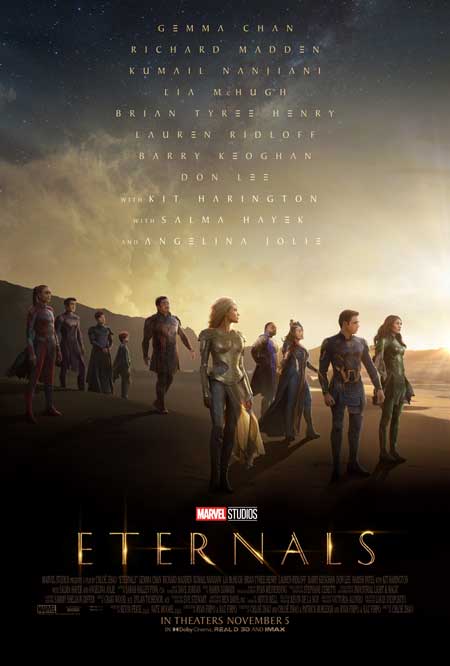
    Eternals is the latest film in the Marvel Cinematic Universe, part of a very condensed year for the Marvel Cinematic Universe to make up for the lost time of not getting any films out in 2020. The film once again has to tackle introducing a relatively unknown team from the Marvel Universe, not only into the MCU but to introduce them to a wider audience. When it’s successful, it’s what I like to refer to as “the Guardians of the Galaxy effect”. Now, Eternals actually had a massive advantage going in to the production, with it being directed by Chloé Zhao who’s coming off the fact that she was this year’s winner at the Oscars for Best Director for directing Nomadland, and she has a hell of a cast to work with. You’ve got Salma Hayek, Angelina Jolie, Kitt Harrington, Richard Madden, Gemma Chan, Kumail Nanjiani, Brian Tyree Henry—there’s a ton to work with here. Now, I’ll be honest, I went into Eternals with not too much knowledge on the comic iterations of the characters so I have no idea if a lot of changes were made with this translation. Though, to be fair, given Kevin Feige’s direction for the MCU up to this point, I imagine there’s at least something.

    Eternals’ basic plot revolves around a team of extraterrestrial beings from the planet Olympia known as the Eternals, who can never die, travelling the Earth to deal with the Deviants in order for them not to harm mankind. With their eternal life and lack of ageing, they have lived throughout most of history and it has shaped their attitude towards humanity. Now, after a very long gap the Deviants are back. And Sersi, played by Gemma Chan, after reuniting with her old boyfriend Ikaris, played by Richard Madden, must travel to reunite the team to deal with this new threat. Eternals is a very ambitious film. For one thing, it doesn’t really feel like a Marvel film. It’s not just the fact there are very few references to the MCU as the events of Infinity War and Endgame are brought up quite a bit. In fact, Kit Harrington’s character Dane Whitman even asks why they didn’t help fight Thanos (which by the way gets a really dumb explanation). But it doesn’t really have the tone and feel of a Marvel film. You honestly could tell me this was starting a brand-new franchise in its own universe and I’d believe you.

    Now, the positives for this film: it’s great to see Marvel take a lot of risks by having a very diverse team of characters, and a lot of talk has definitely been around the fact that this is the first Marvel superhero film with an openly gay superhero. And it’s not something that’s just mentioned; he’s shown having a family with his husband, and I genuinely applaud the filmmakers for including this. I also think that the team dynamic is great. However, one of the biggest issues I have is that most of the stars in this film are kind of in it periodically. Without giving much away, a lot of the cast often are not in as much of the film as you’d expect. Salma Hayek was in way less of the film than I was expecting based on the trailers, and Kit Harrington is really not in this movie, but anyone with a knowledge in this character in regards to Marvel comics will know why he’s not in this film much. And there are actually moments where some of them just disappear for quite a while. Kumail Nanjiani, for example, is not in the film as much as I was expecting which is annoying because he’s probably the best part of it. And, side note: his chemistry with character Karun played by Harish Patel is also incredibly hilarious; I need to see more of these two on screen together.

    I think people will be quite surprised considering that—maybe it was just me—I did not get a sense from the trailers that Gemma Chan would become the lead character. Now, that being said, Gemma Chan (who you might recognise from playing Mia in Humans) is a really great actor and she does do a good job carrying the film. I actually think she did a very good job playing the gamut of emotions for the character; there are a couple of plot twists she is involved in and she really sells it every time. And the performances I would say for the most part are alright. There are some flubs here and there with some scenes but overall, the cast delivered some quite good performances.

    Now, if I’m honest, that’s kind of where by praise begins to end for Eternals. I will say the special effects are alright for the most part and the fight choreography is actually pretty good, though the Marvel films are starting to get pretty good at that. Where Eternals fails, is the plot. The plot’s not bad by any stretch of the imagination, but my explanation is really simple compared to what the actual film goes through. There are a ton of twists, a few too many if you ask me, and they kind of mess about with things way too much. This film is really complicated by the end of it, to such an extent that it occasionally had to stop and re-explain the plot through conversations with characters. What’s worse, there’s also the fact the plot is just a bit all over the place; it doesn’t fall apart completely but you can definitely tell it’s being held together by a thread. There is just way too much happening in this film, too many explanations rather than actions, and I think it’s because of the fact they have to develop about eight characters at once. The film really doesn’t save much character development for sequels; it really insists on getting to the heart of the entire cast. Thankfully, Kumail Nanjiani is here—without him, I feel like the film would have been seriously lacking in its sense of humour that the Marvel Cinematic Universe is known for.

    What’s also bad about Eternals is that it doesn’t really have a great antagonist. The Deviants are set as an antagonistic force to begin with but they’re very animalistic in nature so they don’t come off as something which much personality. By the time the film does settle on an antagonist, it feels a little too late and unearned. This film also has the weirdest climax of almost any Marvel film; it’s very much a case of, ‘Okay, apparently that happened?’ What’s worse, I don’t think Eternals really has much of a feel to fit in with what the MCU entails. And I don’t think that’s just on the fact they’re introducing a new set of characters with a radically different mythology and setting of what came before. Shang-Chi came out earlier this year and had to do a similar job but it nailed it because they made sure to make it look and feel like it was still part of that universe, even though it was a martial arts-based film rather than a superhero movie. Eternals doesn’t really try to do that, and as a result, when it goes very much into being like a superhero film it feels rather as though it’s copying and pasting from other more successful characters. Ikaris, for example, is so clearly based on Superman I’m amazed Warner Bros hasn’t taken out a lawsuit. And Chloé Zhao even stated that she was basing the idea of the character from seeing Man of Steel so it’s not as if the comparison is unwarranted.

    What’s more, I think Eternals is a little too long as well. It’s over two and a half hours; that is an Avengers-length film. But it’s not as if a lot happens in that time. There’s a lot of dead air and so much time spent waiting for the next event to happen. Eternals is an ambitious project but it’s all over the place, and while it’s not as forgettable as something like Thor: The Dark World or Iron Man 2 or even The Incredible Hulk, it definitely isn’t a well-scripted film and it seems to want to distance itself from the overall MCU so much that it might as well be in its own continuity. It really is kind of a mess of a movie. Without going into spoilers, by the time I came out of the screening I felt drained by how it all turned out. That being said, I do think you should see Eternals if you are a fan of the Marvel Cinematic Universe since they are setting up plot points and plot elements going forward, particularly with the two post-credit scenes, one of which directly sets up an Eternals sequel. And while the second one is a little cryptic, it is setting up an already future-announced Marvel film. If you’re wondering which one it is, after you see the scene look up an explanation site or video. Chloé Zhao has even gone on record to say what it is.
     
    Calvin – Nerd Consultant

    Share This Post:
    Facebooktwitterlinkedinmail
  • Mario Party Superstars – Game Review

    Mario Party Superstars – Game Review


    Mario Party Superstars

    (Available for Nintendo Switch only)

    Mario Party Superstars is the latest entry in the series and is meant to act as a celebration of the spin off series up to this point. For those who don’t know, Mario Party games are virtual board games where following each set of turns, the players compete in mini games with the goal being to have the most stars at the end. Each board has different rules on how to acquire the stars, but usually this revolves around going past the Todette space and using the coins you won from the mini games, to pay for a star (costs 20 coins). The game is advertised to be a massive throwback to the series roots with updated versions of 5 boards from the Nintendo 64 trilogy of games (Peach’s Birthday cake, Space land, Woody Woods and Horror Land), as well as Minigames from throughout the series. The game also took note of something that previous game Super Mario Party was lacking by having Online multiplayer available from the start. With all that goodwill put in place, has this been the game to break the recent curse, and brought us a Mario Party that feels like the games of old?

    Pros

    • Graphics and updates: While much of the groundwork for Mario Party Superstars has been taken from Super Mario Party, it’s undeniable how good the game looks. The models for each of the characters and the boards look great and the team at ND Cube did a good job looking at those boards and bringing them into the modern era. Speaking of the updates, while most of them are pretty accurate, the N64 incarnations that the boards have, receive some updates to account for more mechanics that can be done with the more powerful console, and they feel like they work well. The boards don’t feel too different, and the new stuff works well to fit in with the established designs
    • Improved gameplay: This is mainly making up for the weaker elements of Super Mario Party. For one thing it is a great improvement that the boards are no longer grid-based so there is way more creative designs that can be done and way more interesting ideas. There are also a good few changes like raising the price of coins from 10 to 20 coins which makes the mini games and the space you land on, have way more consequence. The options for how games are set up have been improved as well with the option for not only how many turns a game will go, but also what kind of bonus stars and what kind of mini games will be played, letting you tailor the game to whatever kind of way you and your friends want to play. There are also some excellent extra modes like Mt Minigame which involves you and 3 other players competing in various minigames repeatedly if you want a quicker mode. I really enjoyed experimenting with all the modes and with everything having a feel of the older games madness which had been sorely missed it gave a sense of nostalgic bliss. ND Cube has been trying way too hard to innovate Mario Party which is why they’ve been smart and gone very back to basics for this instalment which is to its benefit. Mario Party hasn’t been this good since it’s first Wii and DS game.
    • Minigame selection: There’s already been a lot of comparisons with the 3DS game Mario Party the top 100 which was a compilation 100 of the best games in the series to that point. While it was a pretty good compilation there were some duds, and this time not only are there way more but they are also a better variety. The structure allows for 1-on-1 minigames to come in as well as 4 player games. There are a few I don’t like but overall there are rare times that I’ll groan at a minigame being selected. I also (for once) look forward to 2 vs 2 games because there’s a chance that dungeon duos will be selected, and I love that mini game. The weirder choice though, is that a couple of the games that revolve around spinning the joystick in the 1st Mario Party that got Nintendo into legal trouble are here though they do come with a health and safety warning.

    Mixed

    • Gameboard selection and number of gameboards at launch: Now I do like the 5 boards that the game has at launch, and I really enjoy playing them (especially Woody Woods and Horror Land). The only one I think has a bit of an issue is Space Land because it has a few too many event spaces which slow the pace of the game. I do however think 5 is a bit small for a Mario Party game, and if there were 2 or 3 more it’d be perfect. Fortunately, Data Miners have been looking at the games code and apparently have seen code to suggest more boards might be on the way through either a free update or paid DLC.
    • Online multiplayer: Mario Party offers Online Multiplayer among both friends and random people online (playing with the latter of which allows you to feel less guilty when you steal a star). Now I did play several online matches and my experience was mixed. While some games ran flawlessly, I had a couple of games with slowdown in minigames and some where one or multiple players lost connection to the server. So, as you can tell, your experience may vary depending on what kind of connection everyone has. That being said, when it did work it was a joy. Let’s be honest it’s rare most of us would get 3 mates over for a game of Mario Party with 4 controllers (even pre-pandemic) so to have the option for everyone to have their own switch is highly welcome. If you do have connection issues, an A.I. takes over the character picked and it is possible to re-join the game. There’s obviously no voice chat on switch still, so be prepared to use discord or messenger if you want to have midgame chat though the game does let you flash stickers on the screen to express emotion which came in handy when I was playing against randos.

    Cons

    • A.I. can be very dumb: This is a gripe I have always had with Mario Party which still hasn’t been fixed. The A.I. opponents are so fixated on getting the star they will do idiotic things which no smart player ever would. It’s the reason I pretty much only played online matches when I was reviewing the game it allowed for way better games. Even turning the difficulty up on the computer opponents didn’t help things completely they still made stupid calls. I say this is a big issue because on the road you likely won’t have Wi-Fi potentially limiting the number of opponents you can have, and in online matches you can be stuck with computer opponents if someone loses a connection and doesn’t get it back.

    Overall thoughts

    Mario Party Superstars is the Mario Party I’ve wanted to play for years and is one of my favourite multiplayer experiences this year. The gameboards and minigames are great, the online multiplayer when it works is fantastic and it feels like a lot of effort has gone into addressing issues of past games. The only complaints I have are with the quality of the A.I. and I wish the net coding on the online was better, but given the way Nintendo’s online multiplayer structure works I might be screaming at a wall with that complaint. I have heard a complaint that there’s too many lucky spaces but while I think that’s kind of true, I wouldn’t say it grossly impacted any games. If you have a group of friends and you want a break from Mario Kart and Smash Bros, this is your next great multiplayer experience.

    Score: 9.4/10

    This is a great multiplayer experience though unless you have friends that have the game, or you have a lot of controllers and your mates are likely to come over, you might not get the most out of it unless your very happy playing with random people online. On that basis, I would say maybe agree to buy the game at same time as a couple of your friends because this game is best enjoyed with good company.

    Calvin
    Nerd Consultant

    Share This Post:
    Facebooktwitterlinkedinmail
  • Last Night in Soho – Review

    Last Night in Soho – Review


    “LAST NIGHT IN SOHO”

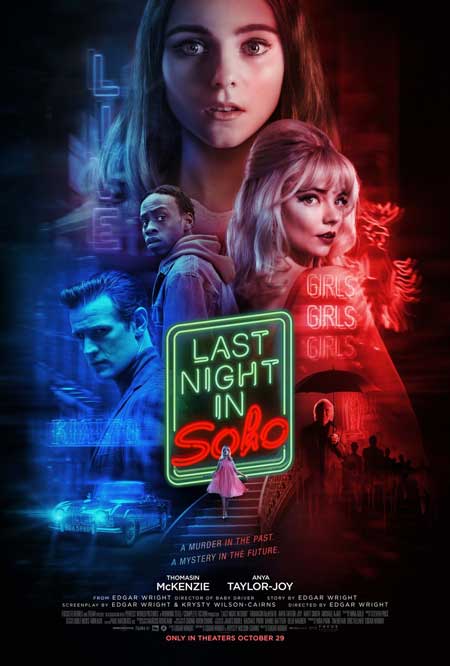
    Last Night in Soho is the latest directorial film from Edgar Wright, director of films like Shaun of The Dead, Hot Fuzz, Scott Pilgrim vs The World, and Baby Driver. In short of a resume like that, he’s one of my all-time favourite directors. So, when I saw the trailers for his new film coming out, I got very excited. Last Night In Soho had perfect timing to open on Halloween weekend. Now, I went in to see this film having only watched the trailer, which while giving a brief synopsis of the plot was also slightly coy with the plotline, and Edgar Wright has said in multiple interviews and on Twitter that he hopes no one spoils the film for people.

    As a result, I’m going to be quite coy about the film’s plot and try to limit myself to only things that were shown in the trailer. In a basic sense, it’s a film about two people: a modern girl named Eloise played by Thomasin McKenzie and a wannabe singer in the 60s named Sandy played by Anya Taylor-Joy. (You might recognise her from films like The New Mutants and The Witch; in fact, she was fantastic in The Witch.) The film involves Eloise moving into a bedsit in Soho since she’s gone to University College London to study fashion design, and in her room at night she has very realistic dreams of Sandy in the 60s, and while she’s incredibly inspired by them initially, they do eventually start to take a turn. That’s all I could really say about the plot without diving into it and spoiling a lot. I’m desperate to go on more and more about it but I’ve got to be fair to the people who haven’t had a chance to see it. It’s a shame because the film tackles multiple themes at once, and in terms of visual language, this is probably Edgar Wright’s most ambitious film since Scott Pilgrim vs The World; it’s certainly the most he’s had to use special effects since then. The use of visual effects and lighting is fantastic in this film.
      How do I put this? You know that friend of yours who thinks they were born in the wrong era and would have thrived if they were born in the 60s or the 80s because “the music and the movies were so much better back then” and people were more content and it was a better time, and they really hate it when you point out all the negative things about that time period and that everything now is objectively better in spite of the fact that there are still issues in the world? This is not the film for them. This really is an anti-nostalgia film. There are certainly a lot of 60s imagery—there is a famous shot where we see a poster for Thunderball, for example—but, as the trailer implies, the film definitely shines a light on the rather darker side of London which existed in the 60s. It kind of shows that it was not “The Summer of Love” for everyone. Though, the biggest use of 60s iconography is definitely in the soundtrack: The song ‘Downtown’ is very prevalent alongside other artists from the time period, including artists like James Ray and Cilla Black. It’s not really the rock bands that were big in the 60s, more the singer-songwriters that were playing at things like high-class clubs and theatre venues. And the song choices are actually quite appropriate for certain transitions. For example, the James Ray song that was used was ‘Got My Mind Set On You’ which perfectly matched the tone of the sequence, and, rather than being a nostalgia trip, it’s feels that each song’s been very meticulously chosen on where it’s meant to go. Again, the 60s iconography is also kept within a modern setting with the casting of actors like Terence Stamp and the late Dame Diana Riggs. 

    Now, the big question is, based on the trailer: Is this film scary? Well, kinda. Put it this way, Last Night in Soho plays on a fear that a large portion of the population have, but if you’re not in that part of the population you might not necessarily get it as much. A good film, however, will do what this film does: take a social issue that you are not necessarily affected by and force you to empathise with the person affected. And I actually think Eloise might be one of my favourite protagonists in a film this year; while many of my experiences don’t match up with hers, I did empathise with her in many ways. And she’s very well-written, a sympathetic character, and they do a great job making her work. I feel like this film is really what I’d like to call a horror film for people that don’t like horror films—it’s not made with a traditional horror movie audience in mind, even though I’ve seen it advertised before very more traditional horror films in recent memory. The 18 certificate is also very warranted. While I won’t go into detail about why it’s warranted, trust me, it has allowed Edgar Wright to make the film I think he really wanted to make; it goes a lot more “all-out” with certain sequences which I think if he had toned down to gain a wider audience might have caused the film to suffer. 

    The performances from the cast are also great. Terence Stamp and Diana Riggs are obviously brought in to act as throwbacks to the time period but they do give excellent performances. But the real standouts are Thomasin McKenzie and Anya Taylor-Joy who definitely should get Bafta nominations for these performances; they’re some of the best performances I’ve seen all year. The only other actor I haven’t really mentioned is Matt Smith who is definitely trying to broaden the sort of roles he’s taking since leaving Doctor Who, and I think this is definitely one of the most ambitious choices he’s made post-Doctor. I think it’s shown that he’s a lot more of a versatile actor than people had given him credit for. He actually is very good at playing the figure he needs to play at certain times during the film. Again, I won’t go in detail about what is going on in particular but, as a whole, I think he does give an excellent performance. 

    If there’s one more thing I want to give praise for, it’s this film’s use of lighting. Edgar Wright really understands that we absorb films from both a sense of sight and sound, and he perfectly uses both in this instance. Because the film is set in Soho, which had a bit of a reputation as a Red-Light District, the colour red is used quite a bit. Lots of reds, blacks and dark blues are often used in the colour schemes of scenes, and to very good effect—they give almost otherworldly images at times. If there’s one thing I will say about this film that I didn’t like, it’s the fact it was a little too jump scare-heavy; there were certain times were I thought the film didn’t really need it. The most effective moments were the longer, more drawn-out segments, so the jump scares for me just didn’t work as well. 

    Edgar Wright has really convinced me that he can do no wrong with his filmography and Last Night in Soho is not a stumble; it’s one of the best films I’ve seen all year. It tells both a touching yet horrifying story if that was even possible, and I think if nothing else it does feel like a passion project, not something that was made to tick boxes. I do wonder how this is going to go down with a mass audience since I think people might be surprised by the film they’re getting, but I think if they’re willing to give it a chance they’re going to get something great out of it. The performances are great, the effects and lighting are great, and I think the writing really excels. It’s also a great send-off for the late Dame Diana Riggs as I think this was her final performance, and the film at the start is dedicated to her. If you like good psychological films, this one is one for you. 
     
    Calvin – Nerd Consultant

    Share This Post:
    Facebooktwitterlinkedinmail
  • Dune (2021) – Review

    Dune (2021) – Review


    “DUNE”

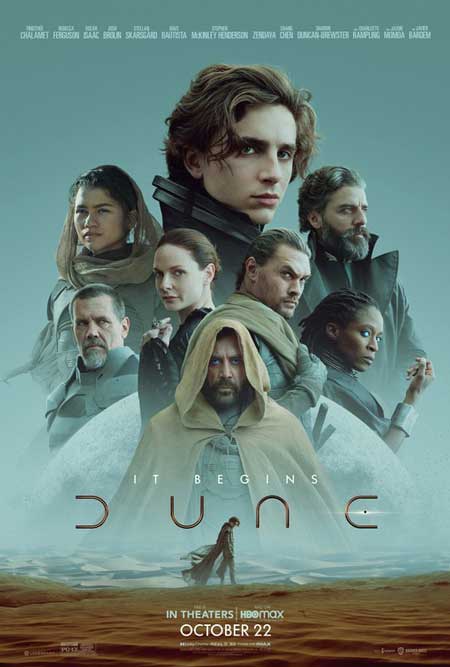
    A Dune remake has always been kicked around Hollywood for quite some time, with the projects falling in the hands of various writers and directors over the years who have expressed interest in the project. And there’s obviously been a long history of adapting Frank Herbert’s novel; there was the failed Darren Aronofsky film which has become such a myth and legend in the world of filmmaking that it even got its own documentary about how mad the film was going to be if it had actually happened. But there was, of course, the film made by David Lynch which, while an admirable attempt to cram the entire book into one film is at times a bit of a mess. Though, I actually fall into the camp of someone who likes the David Lynch film. And if you want to watch a video in defense of that film, might I recommend watching Mitch Benn’s ‘5 Reasons Why David Lynch’s Dune Is Great’ video on YouTube. It also was adapted into a sci-fi series in 2001 though I haven’t actually seen that one, but as I’ve heard from people that have watched the series, they haven’t been incredibly kind to it.

    Now, I always thought doing a Dune movie was always going to be a tough challenge and in order to really nail it they would have to get the right director. Fortunately for Warner Bros, they got just the man: Denis Villeneuve. I reviewed two of his films for the site prior to this, his film Arrival which is still probably one of my favourite science-fiction films in recent memory, and Blade Runner: 2049 where he did something extraordinary by actually making a great sequel to Blade Runner. When I heard he was directing Dune, it was basically a guarantee to me that on some level this film was going to work. Villeneuve always has a way of creating his films in a way that makes you feel that there’s something ethereal going on, that there is a fascinating world beyond your comprehension and he’s only going to give you a snippet of it. We saw this with Arrival and, to a certain extent, with Blade Runner: 2049, and I was really hoping he’d bring it to Dune. The smart choice as well was to bring on Eric Roth and Jon Spaihts as well as split the book into two films, similar to how Stephen King’s IT was handled. The downside is that normally when these two-parters are created, they’re both filmed around the same time, hence why Stephen King’s IT had a very short gap between films, having part 1 come out in 2017 and part 2 come out in 2019. Dune on the other hand hasn’t even begun work on part 2, and in fact part 2 is not even confirmed; it’s going to rely really on the box office takings and the critical word-of-mouth of the first film, which means that if it doesn’t do well we might be getting part 1 with no part 2. Given all that, how do I feel Villeneuve’s approach to Dune was?

    Now, you’re going to see a ton of reviews that will go very heavily into the philosophy of Dune and the very symbolic nature of all the events and the character motivations, and how it relates back to the book. I feel like you maybe could read the book prior to going to see this film but do not go and see the David Lynch film prior to this one if you haven’t seen it already—not only will it spoil several elements of this film, it’s going to spoil how the next one’s going to turn out in several ways. Though from what I gathered, as an adaptation of the book this film is a lot more loyal to its source material than David Lynch’s movie was. The big thing that Villeneuve gets thanks to the marvel that special effects now give us is the sense of scale of everything that the book implied. Dune as a book always had this sense of really building up these worlds with massive ships and buildings that were so indescribable that years ago you wouldn’t have been able to make these kinds of designs. For example, Frank Herbert and Hayao Miyazaki had very similar beliefs on how air transportation would work in a desolate environment where birds hadn’t been seen in centuries: Most air travel would be more based around insects, hence why the ships in this look like dragonflies. But one of the things I found interesting about the film is it also kind of gives a retro feel. While there is a bit of a modern feel to it, it almost seems like using modern graphics to imagine how the far-off future would look like from someone living in 1960s; there’s both a futuristic and a retro feel to it at the same time, certainly something I wasn’t expecting.

    Both visually and audibly, this film is a marvel. Please, if you can safely, go and see this film in a cinema—this is something that was made to be seen on a big screen with a massive sound system, especially considering that Hans Zimmer’s score might be one of his best to date. I’ve never been a huge fan of Hans Zimmer but what he brings to this film is outstanding. His soundtrack really matches the setting, making the desert feel powerful as well as desolate, and the use of sound in this film in general is phenomenal. The very first instant we heard a booming voice directly talking to the audience, everyone in the cinema I was in went instantly silent; it captures your attention so instantaneously. The other effect that people have wanted to know about is the famous giant sand worms, and once again the film does this phenomenally. Some of the best sequences do a great job involving them, giving the amazing effect of the worms almost seeming as though they’re swallowing the desert itself. I won’t give away too much more but, believe me, it’s going to stick with you when you see it. It also does an interesting job with its core themes which is something I’m wondering how modern audiences will react to given the geo-political situation it is right now, especially as—again, with rather unfortunate timing—this is coming a few months after the US and UK withdraw from Afghanistan.

    The basic premise of Dune is that it is a film that takes place 8,000 years from now, involving two rival families competing with each other for control over a planet whose indigenous population are being subjugated or belittled by either side because the mind-altering hallucinogenic substance which gives them their distinctive blue eyes is also the source that is essentially fuel for their transportation and stands to earn the current galactic empire a lot of money. The theme of the terror of colonialism is very front and centre, and this is not something that was added to the film before someone suggested it; Frank Herbert very much put that theme front and centre of his book, and it translates very well here. And one of the things I found interesting is that unlike David Lynch’s film, the very Islamic-inspired imagery that was detailed in the book is very present here. Despite the fact that Atreides House are treated as the good guys, this film does a better job than most of really conveying that while their intentions are very good-natured, they are still kind of selfish in their choices and are hiding behind the betterment of the galaxy and improving the land of Arrakis which is the home planet of the Fremen. But, at the end of the day, they’ve not asked for this and this is still an imperial power—even with good intentions—trampling on the right of an indigenous population. It is certainly something that is going to hit hard with audiences in 2021. Even the soundtrack kind of reflects that; there are a couple of tracks in this which definitely feel like they could easily be the backdrop for various countries that have largely Muslim populations.

    Now, what I’ve said so far probably makes you think that I think this film is great. And to a certain extent, I’d say yes: imagery-wise and respecting its source material, it’s very good. However, I also think the latter is kind of where it falters a little bit. Let’s face it, Frank Herbert’s Dune has always been a difficult book to adapt—it is a very heavy read, and the film really reflects this. The film is 2 ½ hours long. Keep in mind, this is just supposed to be part 1. And to me, I think this film is a little too exposition-heavy; there are a lot of scenes with characters just explaining stuff. And when I was coming out of the film it didn’t feel as though people were excited; they looked almost exhausted. I also think this is the action-heavy film people are expecting it to be. I certainly noticed a few walk-outs during the screening when I went to see it, including the two morons who were sat a few seats away from me that left at about 30 minutes in. 30 minutes is not enough time to judge a film; stick around a bit longer before you make a judgement! But I must be honest, it did feel like a bit of a slog by the end as there was a lot of stuff to remember and a lot of things to take in, especially considering that a lot of the story is told through quite trippy imagery. Remember, this is about a hallucinogenic fuel source based on a story that was written in the sixties; I think you can get an idea where a lot of motivation for the imagery came from.

    And I think a lot of big stars that people were expecting based on the trailer are not really in the film as much as you’d expect because it’s really a story about the main character Paul Atreides who’s the son of the Duke Atreides (played by Oscar Isaacs), coming into his own whilst being given visions of a girl in Arrakis (played by Zendaya) trying to guide him onto the path of his destiny. Just what it all means isn’t exactly entirely made clear and I think people will come out of this film a little confused. The basic plot is still there but it’s a lot to take in, and there are certain things that the book makes clear that you wouldn’t know if you hadn’t read it. For example, they only briefly show off the fact that calculations are now done by servants who are high on drugs and allow them to do said calculations. But it only happens once in the film, and you wouldn’t get the context that Dune is taking place years after a failed AI uprising, so as a result artificial intelligence is considered untrustworthy and therefore must not be used (hence why the calculations need to be done by humans on, essentially, intergalactic LSD).

    Now, that would all be well and good but it does also feel like the film is sort of bouncing around from set piece to set piece with tons of storyline going on, and it can be quite difficult to piece it together. The two most constant cast members are Timothée Chalamet as Paul and Rebecca Ferguson as his mother, Lady Jessica, who is preparing him for the possibility that he could be a messiah to her home planet’s mind control religion. And even just saying some of the plot elements in this review, it is things that like which can give you a sense of what I’m on about—there’s a lot going on in the film, and it definitely feels like it clunkily gets through. I think people might also be a bit disappointed by the fact that most of the stars they were hoping to see are not in much of the film. Oscar Isaacs isn’t in as much as you’d expect, and Jason Momoa, despite being featured in a lot of the trailers, is in a lot less of this film than I’d expected. And Javier Bardem and Dave Bautista were also two actors I expected to be in the film a lot more than they were. However, the casting is excellent; everyone feels perfectly cast for their role. If I had to pick some standouts, I would say Rebecca Ferguson as Lady Jessica is excellent and Stellan Skarsgård does a brilliant job bringing the Baron Harkonnen to life. This is a villain that this time gets a lot more dignity, and the prosthetics they’ve used to make him look like the character from the book are brilliant.

    However, something I did dislike about the film was its use of lighting. While in daytime scenes it will look great, some of the scenes shot in dark environments are a bit too dark, like there were a few times when I was having to squint to really see what was happening. And it doesn’t help that the look at the worm we got in the trailer isn’t much better lit in the final film than it was in that trailer. There’s also the fact that when I went into this film, I knew I was only going to get half the story. But at the same time, I think it would be better to experience these films with a gap between them rather than try to watch it all in one go. I don’t think this is going to be a Lord of The Rings situation where you can make an event out of it when all of the films are out.

    Dune is a very ambitious film by Denis Villeneuve and succeeds for the most part, though it’s also bogged down by the fact it’s a little too long and a little too exposition-heavy as a way to make sure the film is respectful to its source material. However, the cast is really well-cast, the acting is great, and the cinematography is phenomenal. And for those reasons, I would really recommend seeing this, just know what you’re getting into prior to seeing it. And I would stress by all means to read the book but I would also say, if you’re going to see the David Lynch film, it’s not the best way to experience the story. In fact, I’d actually argue you’d be better off holding off on the Lynch film until part 2 comes out. While I’m not entirely sold by Dune, —I think a couple bits of it are underwhelming and, in trying to adapt its story well, it’s a bit too slow at times—it at least feels like a passion project rather than just trying to cash in on nostalgia or the David Lynch movie.
     
    Calvin – Nerd Consultant

    Share This Post:
    Facebooktwitterlinkedinmail
  • Metroid Dread – Game Review

    Metroid Dread – Game Review


    Metroid Dread

    (Available for Nintendo Switch only)

    Metroid finally has its first 2D game in 19 years with the release of the previously cancelled game Metroid Dread. I have professed that I’m a huge fan of the Metroidvania genre which has been propped up by indie developers, but it has always felt like despite the fact we’ve had amazing games like Ori, Hollow Knight, Bloodstained: Ritual of the Knight and Ender Lillies, something has been missing; as the two games that started the genre were largely absent for a long time. While we could be waiting a while for Konami to give us a new Castlevania (not counting the Castlevania Advanced collection that recently released, and is brilliant by the way), but Nintendo were smart enough to ask Mercury Steam who did a brilliant job on the 3DS remake of Metroid Samus Returns to make this game, and with a bigger budget and more powerful hardware to create their vision. It also helps that the game launched the same day as the Switch OLED model which is what all 3 of us played the game on.

    Pros

    • Graphics: Now I might have noticed it even more since I was playing this on the larger and more vibrant screen of the Switch OLED but it really amazes me how good Metroid Dread looks. The environment oozes atmosphere in a big way, a standard for the franchise, but in this case, there are quite a few distinct environments and it feels like they use the hardware they’re working on to deliver a larger variety of environments than usual which look amazing, and Samus also looks amazing in these areas. The OLED screen really benefits in highlighting both the bright colours as well as the darker hallways, giving the areas that extra feel of isolation.
    • Frame Rate: The game runs at a consistent 60fps in both docked and handheld mode and was largely consistent with it. There were a few noticeable frame rate drops but they really didn’t interfere too much and were pretty rare.
    • Story: The story takes place at the end of the timeline of games, and shortly after the events of Metroid Fusion. The galactic federation received footage that the X parasite is still alive and, on the planet ZDR, and send out a group of robots known as the Emmi’s to investigate. When they become silent and communication is lost, the federation send Samus Aran in to investigate since she is immune to the virus. However, shortly after arrival she gets beaten down by a Chozo Soldier and dumped in the bowels of the planet with a new suit, with the only goal being get to the surface and escape. While that is the main focus the story, there is a large expansion to the lore of the Metroid universe particularly surrounding the Chozo, who have always played a big role. The emphasis on closing out the story that has been going through the 2D games is very apparent and it does a very good job. The way Samus is characterised as well is excellent especially given that unlike Other M, it is achieved mostly through body language, leading to one of the most badass versions of the character. The game really also nails the balance between gameplay and story. This is yet another thing Other M got wrong.
    • World design and map: As I mentioned, the world is very varied and even more so than usual with each area giving distinct themes. These include environments of molten lava and ice, an underwater lab and even some jungles. I won’t give away too much since most of the best stuff comes from exploration, but all the environments feel better than ever for 2D Metroid’s. The game also gives you a really great map to aid in exploration as well. Not only will it tell you how much of each environment you’ve explored, but how much of the items for things like Missile and health upgrades, really aids when backtracking to boost Samus’s stats. I do have one issue with the map which we’ll go into in the cons section but overall, this is one of the best 2D Metroid worlds to explore.
    • Controls and combat: The best controls make them feel like an extension of yourself and dread really achieves this. Samus’ controls really smoothly and it meant I was never worried about timing challenges, and any time I was screwing up I was never really blaming the controls. The combat as well is excellent not only do they bring back most of the combat from games like Super Metroid and Metroid Fusion but also brings back new features from Mercury Steam’s previous game Metroid Samus Returns. Most notably the melee counter and more precise aiming using the L trigger. Now these were good ideas, but not well implemented last time since they felt rather situational. This time they are much better incorporated and suit the combat well. The counter was something I was using a lot in combat even when it wasn’t required, and L trigger aiming won several boss fights for me. These features also benefit from having a better controller and button layout for this kind of combat compared to the 3DS which Samus Returns was on. The upgrades you get will be very familiar to you if you played previous Metroid games, though some you get later than expected (particularly the Morph Ball). However, the game once again eases you into these upgrades and the controls never feel too complicated with each upgrade so don’t feel too worried about remembering everything late game.
    • The Emmi’s: The Emmi’s are robots which are localised to certain areas of a map in each of the areas. they are invincible and cannot be killed when initially around. Put short, they put the Dread of the title into the game, they are relentless and very smart so don’t expect to use a bunch of tricks to fool A.I. that you may have used in the past. You have no choice but to run and hide and if caught, it’s instant death unless you can counter. Plus, if they catch sight of you before you can get away to lower their alert level, all the exits from their area are cut off. The Emmi’s really are a highlight for just how heart pounding each encounter with them is and their presence is not to be taken lightly. Truly a highlight for the franchise in just how scared they can make you feel
    • Boss fights: They’re outstanding and in a couple of cases a bit too easy if you can get an upgrade ahead of time. While there are some returning boss fights from previous games, the designs and tactics really are a highlight of the game and the brilliant use of checkpoints means you won’t have a ridiculous trek to get to them every time you die. The set pieces when dealing critical damage also really bring out Samus’ badass qualities
    • Amiibo support: Whilst unfortunately due to supply issues with Europe, my Samus Metroid dread design, and Emmi amiibo hadn’t been delivered during my first playthrough. I did have plenty of Metroid Amiibo to test the functionality since any Amiibo with characters relating to the franchise work. I have collected all the Smash bros Amiibo to date so had Samus, Dark Samus, Ridley and Zero Suit Samus on standby but I also picked up the Samus and Metorid Amiibo that were launched for Samus Returns, in prep for the game coming out. Basically, all Samus Amiibo let you recover a certain amount of health and the enemy characters replenish missiles. Doesn’t sound too amazing but can get you out of tough situations without being a win button. I had situations where I used an Amiibo to recover health in a boss fight only to subsequently lose the fight and not be able to use the Amiibo until the next day, so be prepared to gamble with using them. While it’s nothing amazing and is certainly not going to reward collector as much as Smash Brothers or the new Animal Crossing update, it does have its benefit more than many other Amiibo functionality in games and is certainly better than a difficulty level being locked behind an Amiibo which was the case with Samus Returns.

    Mixed

    • Difficulty spikes: I admit that all games should raise the difficulty as they go but I found a few of the spikes were a little too steep especially given that for many, with it now being on the Switch, this will be their first experience with a 2D Metroid game. There were a couple of times where I thought the game maybe should have toned down the difficulty a little bit because sometimes there were fights that felt extremely more difficult than they should be, given how the last area was. now take this bit with a pinch of salt since I might’ve not picked up too many health and missile upgrades that would’ve helped since I didn’t want to use a guide too much on my first playthrough, given how much exploration is a key part of Metroid’s appeal, but I have seen other review comments of the difficulty spikes and how it’s a bit unforgiving for new players. That being said the challenge of the game did make it feel even more better when I finally conquered something. Thank you, Reece, for the tip that won me the battle against the final boss.

    Cons

    • Quite easy to get lost: The map system is good, but I wish that like in Metroid Fusion, Adam (Samus’s A.I. in her suit) would give you a map marker on where your aiming for your next task. I got lost quite a bit in frustrating ways and while I was avoiding guides, they did eventually become necessary as I had no idea where to go at many points. Adam does give you advice, but it can often be too cryptic for its own good. As I mentioned this was something fixed in Fusion, and I don’t understand why it wasn’t in this. It’s not as if having a map marker would prevent exploration or going off the beaten track if you wanted to, Fusion was hardly a linear game. But for whatever reason it’s not here. A minor complaint I accept but a complaint none the less.

    Overall thoughts

    Metroid Dread is fantastic and one of the best games in the series. It looks great, the combat and controls are fantastic, the soundtrack is ominous, the world is a joy to explore and the Emmi’s make for great terrifying set pieces. The switch is a home for many great Metoridvania’s, and this one need in your collection if you love that genre. If you’re a newcomer, you shouldn’t be worried since the game isn’t too tied to the previous storyline or games, and it does a good job catching people up. It is perfectly fine as a first Metroid but if that’s still a bug for you, then check out Super Metroid which is part of the SNES collection included with the Nintendo Switch Online subscription, though still get this one to play immediately afterwards. If you’re a fan of the franchise and you somehow haven’t played the game, pick this one up you owe it to yourself to play it.

    Score: 9.5/10

    Please buy this game it’s fantastic and is a great Metroid Vania that can stand up with the best of them and this game needs to sell well to convince people that we’re still interested in Metroid as a franchise. It obviously is a Nintendo first party game so don’t bother waiting for a sale that’ll never come, unless you buy this game second hand it’s £50, so only wait on it if there’s another expensive game you want sooner or want to save your money for a year of the Nintendo Switch Online expansion pass, though I think this is a Game of the Year contender so expect to get a lot for your money.

    Calvin
    Nerd Consultant

    And now for Reece’s review

    My experience with Metroid Dread is that I have beaten the game on the “Normal” difficulty playthrough with a time of 6 hours 57 minutes and unlocked the “Hard” difficulty for a subsequent playthrough.

    I played Metroid Dread almost exclusively in Handheld Mode on the new Nintendo Switch OLED model. This in my opinion was the best way to play Metroid Dread in comparison with the old models of the Switch, as my previous model was the original from 2017 which would run out of battery in under 2 hours.

    Metroid Dread is the latest entry in the Metroid series that first premiered in 1986 on Nintendo’s original console, the Famicon Disc System marking Metroid’s 35th anniversary this year.

    Metroid Dread follows the story of intergalactic Bounty Hunter Samus Aran in an undisclosed period of time after Metroid Fusion, and sees players investigate the source of a transmission that showed off wild X-Parasites (The antagonists of Metroid Fusion, that players thought they made extinct) so players have to travel to a new mysterious planet called ZDR and investigate since the X have the ability to wipe out all life in the galaxy if left unchecked.

    Metroid Dread is also technically Metroid 5 in the classic 2D Metroid series as the series goes.
    • Metroid (1986)
    • Metroid 2: Return of Samus (1991)
    • Super Metroid (1994)
    • Metroid Fusion (2002)
    These are the four previous entries in the series although modern remakes of some of the games have been made with Metroid (1986) getting a Remake with Metroid: Zero Mission in 2004, and Metroid 2: Return of Samus getting a Remake on the Nintendo 3DS in 2017 as Metroid: Samus Returns. 

    Metroid: Samus Returns is the most important previous entry for this game, as it was made in 2017 by MercurySteam (a Spanish videogame developer based out of Madrid) who then went on to make MetroidDread and brought over a lot of their features and gameplay innovations from said Remake with Samus Returns on 3DS into this new entry with Metroid Dread 4 years later.

    Pro:

    Graphical fidelity. This is easily the best-looking Metroid game to date. Not only is it on Nintendo’s most powerful current hardware and although not as powerful as the PlayStation 4, the Switch is able to create beautiful vista’s and environments in Dread.

    Samus Aran herself receives a major graphical upgrade with her new Power Suit being a combination of her classic Power Suit and the Fusion Suit (From Metroid Fusion, the previous canonical entry before Dread), as her Power Suit has begun to regenerate after Metroid Fusion and has had an impact on initial gameplay.

    I personally enjoy the new design of the starting Power Suit as it feels different from previous games, but the graphical fidelity really shows as you can see organic strands covering the Suit which carries over from the Fusion Suit as it helps with the continuity from Fusion to Dread and the Suit just looks very unique in comparison to other starting Suits in the series.

    One aspect that I didn’t realise was that as Samus gets more Suit upgrades (From the basic Power Suit to the Varia Suit to finally the Gravity Suit) they all look more aggressive in appearance with the jagged lighting effect going down Samus’ abdomen appearing more like animal scratch marks.

    Every corner of the world of Dread is filled with detail and life, from small endemic flora and fauna life to the vast architecture from the lost civilization of the planet ZDR that has long fallen into ruins. All of which is a joy to explore as power ups are hidden everywhere encouraging the player to explore this vast new world and to backtrack later in game and use new power ups to access new areas they couldn’t before.

    It is seriously impressive just the large scope and scale of the maps and for every inch of it to be covered in something interesting to look at (Or flee from if it isn’t friendly), and all throughout this the frame rate never drops even when rendering in all the details and moving entities.

    Framerate. In my time playing Metroid Dread the game never once dropped a single frame during gameplay.

    This is incredibly impressive when the game is rendering massive 3D vista’s with full details, but also when you are in frantic boss battles with entire arena’s covered in body horror while you are filling the screen with missiles and explosions.

    Abilities. Samus is now much more agile in her base Suit than previous games, as she has access to the new Slide technique returning Power Grip. Allowing the start of the game to be much more dynamic as the player can explore a more varied environment at the beginning with just the base abilities this time around compared to previous entries.

    This allows the game to be much faster paced as the player has more options to explore the environments and fight/evade enemies, as Samus feels less vulnerable when the Counter move returns from Metroid: Samus Returns. This makes it so the player pretty much can’t die to the basic enemies in the overworld as long as they can press the counter button before the enemy attack hits, as they can perform a follow up shot that instantly kills the enemy and refills a lot of missiles and health. Due to this, if the player is low on health and resources they can now grind much faster than in previous games to get a refill by reloading a room, as the enemies will respawn and thus infinite refills of health and missiles.

    Samus also gets the return of many fan favourite power ups from previous games including all Beam upgrades (Minus Ice Beam) and fun abilities like the Speed Booster/Shinespark (Which allows the use of sequence breaking for advanced players).

    So Samus plays and controls are better than ever and her range of power ups allows players a great degree of freedom to explore the world of ZDR, and on subsequent playthroughs can find new ways to sequence break the game and finish the game as fast as possible by getting power ups out of normal order (Players are even rewarded depending on how fast they beat the game, just like previous games).

    Dread. Metroid Dread really lives up to its title compared to any previous game.

    This is due in large part to the inclusion of the new E.M.M.I (Extraplanetary Multiform Mobile Identifier) enemy type that the player fights throughout the game.

    The E.M.M.I are an evolution of the SA-X from Metroid Fusion, where Samus is hunted by a nigh unkillable enemy through large sections of the map where Samus can pretty much only flee until the player get a power up to stall or kill the enemy.

    The E.M.M.I are always fun to run from as they have some of the best A.I from the enemies in the game and the area where you fight them cranks up the tension due to the old style film filter draining the colour and the audio being harsh and cranked up adds to the dread factor and puts you on edge.

    The other bosses in the game are also really great as these are some of the largest and most imposing bosses of a 2D Metroid game. I found Boss 2 to be one of the most difficult and imposing because at that point you have little health or missiles so every mistake feels like it really costs you in your run.

    The only absence of the feeling of Dread is in Samus herself, as in cutscenes she is now more confident and bad-ass than ever with her feeling more like the Doomslayer from Doom in her attitude due to being stylish in every situation. I would recommend players watch her in cutscenes especially in Boss 2 where she is almost effortless in dispatching of the boss and she now really feels like the Bounty Hunter we have always read about in the expanded lore and text logs in prior games.

    Difficulty. Dread feels a lot more difficult that previous entries as enemies deal more damage than in previous games due to late game common enemies dealing over one full e-tank of damage per hit, so it promotes the idea to the player to play either more cautiously or full aggro.

    The difficulty curve does lower as you get further in the game when you have more e-tanks to brute force your way through enemies and tanking the damage. This is exemplified when you reach the midpoint of the game where the X is released from containment because at that point every X you kill gives you a lot of health a missiles back especially if you kill them with the counter.

    This means that if the player is struggling with the initial difficulty of Dread, then I would recommend doing some exploration to find more e-tanks or power ups as then the rest of the game becomes much easier with a larger arsenal.

    Even the bosses get easier the farther into the game you get with the only difficulty spike being the final boss.

    Con:

    Controls. Metroid Dread offers a lot of new weapons to add to the arsenal of Samus and with that brings new controls that the player has to master in order to use them and most involve simultaneous pressing/holding of buttons in quick succession.

    Most of these are normally fine and easy to use but as a person who has Dyspraxia I found it difficult to use all of the full arsenal as it requires you to press and hold multiple buttons at once. The biggest problem I had was using the Shinespark in confined cramped areas, as I constantly missed the timing to store the Shinespark after using the Speed Booster move and either ran into a wall or I was too far away from the area that needed the use of the Shinespark.

    This wasn’t an issue in the older games but Dread is a much faster paced game (Thanks in part to the new 60fps) especially in its boss battles where you have very little breathing room and I found it very easy to be overwhelmed as I attempt to dodge the boss while fighting back.

    Lack of direction. In comparison to Metroid Fusion where Adam used to show on the map where your next destination was for you to move towards Metroid Dread, this game instead just says work it out for yourself with no clear direction and the only clue being the occasional swarm of blue butterfly creatures at one door. Unfortunately, when you go through them I never saw another swarm until after I beat the next boss. 

    I think a better system would be a general map marker like in Metroid Fusion so you have an indication of the general section of the map to travel to and not an exact location, as I spent several hours just running around and attempting to find my next destination through which I found the occasional missile pack but mostly it felt out of place.

    While this problem will not exist on follow up playthroughs it was definitely annoying on the first, and I feel like it was an avoidable problem since they already had the solution in Metroid Fusion.

    Conclusion:

    If you are a fan of the Metroid series and own a Nintendo Switch then Metroid Dread is a definite pick up in my opinion and is worth the price of admission as I think Dread is easily the best non-3D game in the series since Metroid Fusion back in 2002.

    Although this is not a good jumping on point for new players to the Metroid franchise due to its high level of difficulty for players who do not have experience with the series and while it is the 5th entry in the classic 2D storyline, it only gives the player a basic premise of Metroid Fusion.

    Metroid Dread is also a great showcase of the vibrant and vivid screen of the new Nintendo Switch OLED Model and I would recommend players who don’t have a Switch or only an original Switch like I did to upgrade as it is worth it.

    Metroid Dread is definitely a Game of the Year contender for me.

    Score: 9.8

    Reece Imiolek
    Anime Amigo and Nerd Consultant

    And finally Elliots review

    While it’s definitely not Nintendo’s biggest franchise, I don’t think the Metroid series needs any introduction. It’s one of the oldest series that Nintendo has (the first game coming out in 1986), and has one of the most loyal and passionate fan bases I’ve ever seen. Which is why it’s a shame that, for a very long time, we haven’t seen much of it. While the Metroid Prime series was still getting a decent amount of attention and new games in its style, we hadn’t seen anything new with the 2D Metroid games in nearly 20 years, outside of Metroid: Samus Returns, which, while still being an awesome game, was still a remake of Metroid 2: Samus Returns, not entirely a new game. That was until e3 2021, when Nintendo announced a brand new 2D Metroid game with Metroid Dread, a game that many had believed to have been cancelled years ago, with a release date of 8th October 2021, coinciding with the release of the Nintendo Switch Oled.

    In Metroid Dread you once again take on the role of Samus Aran, the galaxy’s greatest bounty hunter. Not long after the events of Metroid: Fusion, the Galactic Federation sends Samus footage of an organism called Parasite X, which had been believed to have been extinct after the destruction of the planet SR388, alive on the planet ZDR. The federation had sent a unit of seven E.M.M.I. robots to the planet to investigate and collect DNA of the Parasite X, but not long after landing on the planet all communication was lost, leading them to have no other choice but to send Samus to investigate, seeing as she’s the only living being in the galaxy who’s immune to the effects of the organism. Not long after landing on ZDR Samus is attacked by a Chozo (a humanoid being with birdlike features) called Ravenbeak, causing her to have a powersurge of some kind and passing out. She later regains consciousness, having lost all her powers and very far away from the planet’s surface. She must now explore the labyrinth that is ZDR and return to her ship. The story, in all honesty, doesn’t really have that much of a presence in Metroid Dread, from what I can tell it’s mostly just a simple explanation on why the events of the game are happening. Not to say that that’s a bad thing, just don’t go in expecting a heavily detailed narrative.

    As to be expected, Metroid Dread looks great. I played it on the Switch Oled, and it feels like the game was made to be played on that model. The areas that you explore all look distinct from one another and really help to promote this as a vibrant world. The game runs very well as well, during gameplay, when docked and in handheld, it runs at a consistent 60fps (on the Switch Oled at least), only really dropping on occasion when saving, but it always returned to normal when gameplay resumed. The soundtrack is also very good, having a very sci-fi ambience while exploring and really building up the intensity during boss fights and when running away from E.M.M.I.’s, it really adds to the mild horror elements of the game while also adding emphasis to the isolation you’ll likely feel while traversing the planet. 

    Metroid Dread is a 2D platformer with a focus on exploration and ranged combat. While traversing these areas you’ll be battling a variety of enemies with an arsenal of weapons and abilities that you accumulate throughout the game. Each enemy will require different strategies to combat them, meaning that, unfortunately, you won’t just be able to shoot your way through the game (I mean you can, but just be ready for a very large number of deaths and a severe case of carpal tunnel). Some, for example, won’t be damaged by your regular blaster beams, meaning that you’ll have to use things like your charge shot or missiles. Some enemies, when they attack, will give you a small opportunity to parry them, if done successfully you’ll be able to counterattack which is a guaranteed one-shot, unless it’s a boss in which case you’ll deal a fair amount of damage and gain some extra resources. 

    Easily the biggest and most frightening threat you’ll encounter in the game – that, let’s be honest you’ll likely know all about as it’s been a big part of the games promotions – is the E.M.M.I.. You’ll encounter one of these enemies in each of the seven areas you’ll explore in their own designated zones, and you’ll have to defeat them in order to obtain a power-up required for you to proceed. The one problem is that these things can’t be killed by traditional means, instead you have to find and fight a mini boss called a Central Unit in order to temporarily obtain the Omega Blaster, using that is the only way to kill it. Until then, all you can do is avoid the E.M.M.I.. This, however, is much easier said than done, as when you’re spotted by one it’ll pursue you relentlessly and you won’t be able to leave its zone until you get far away enough from it for it to stop chasing. To make matters worse, each E.M.M.I. works in different ways, utilizing different power-ups (the ones that you’ll receive from killing it) to catch you, not to mention the fact that the environment won’t hinder the E.M.M.I. the same way it will you. If it catches you, fear not, for you will have the chance to escape, the bad news is that the opportunity only lasts for a split second and is completely random, meaning that there are no patterns for you to learn, the only way to survive your encounter is to have a keen eye or sheer luck. Needless to say, be prepared to accumulate a large number of deaths from these things.

    As mentioned previously, a massive part of this game is exploring the eight sections of ZDR. This place is anything but linear, as you’ll be having to backtrack through already explored areas as you find the power-ups needed for accessing areas, containing upgrades and progressing further into the game. When I called this place a labyrinth it was not an over exaggeration, as you will be getting lost a lot just from traversing. Hence why I suggest you don’t make the same mistake I did and use the Map Makers. When you find an area you’re not able to access because you lack the necessary power-up, you can leave a one of five different coloured makers on your map as a note on where you can go when you have what’s needed to continue. I didn’t use this nearly as much as I should have, which led to many hours of bumbling around like an idiot with no idea on what to do next. That being said though, as tempting as it may be, I very much suggest not looking up where to go next. I only looked things up on occasion – and even then it was just for the location of a couple of power-ups – because it felt so rewarding getting lost only to have those “What if…” and those “Ah-ha” moments of figuring out where to go next, it was honestly one of the things that made the game so great for me (even if it did lead to even more deaths from the E.M.M.I.’s). That being said though, it can be quite frustrating to have to spend a good amount of time having to run through the multiple zones just to get to one particular place that you need to get to in order to move forward. Whilst I do see why it happens – you can’t just have a fast travel system in a game like this – but it is still very annoying, even when the E.M.M.I.’s are dead.

    As for the upgrades, I cannot stress enough how important seeking these out is. You’ll find them hidden throughout each zone, most often behind blocks that require a certain power-up to be destroyed – if the blocks are hidden you can determine what power-up is needed by shooting them with the missile. These upgrades will normally consist of missile upgrades, letting you carry more than before, or energy tanks that essentially give you another health bar. The later enemies and bosses will take away a staggering amount of health with each attack, some even taking away an entire health bar, so these things are incredibly important. I found a decent amount of each and even then, the number of deaths I gathered rival that of your average Dark Souls playthrough.

    Speaking of bosses, you’ll be facing a lot of them throughout the game, both mini-bosses and main ones. The main bosses are all unique and consist of series regulars and newcomers, each one requires you to use all the skill you can in order to defeat them and are all designed very well and are incredibly fun to fight, to the point where no matter how many times I died I never felt frustrated as it always felt like I was doing better each time (which for me, is a goddamn miracle). They almost felt like 2D Soulsborne bosses, which is a massive plus for me. As for the mini bosses, while they’re also very fun to fight, they repeat very often with extra gimmicks to make them a little bit harder each time. While this isn’t a complete turn off, it does lead to some of these fights feeling a little hollow at times. 

    Now it’s time for the complaints… is what I would normally say, but in all honesty, for once, I don’t really have any that I haven’t already discussed, and those that I haven’t are so miniscule that they’re not even worth mentioning.

    This is my first time playing a 2D Metroid game to the end, and I can happily say that this game has more than guaranteed my pursuit in playing more of these games. Despite all the times I got lost and the hours I spent trying to kill a simple mini-boss, I absolutely loved every second I played this game. This is a must buy for any Nintendo Switch owner out there, and has solidified itself as one of my favourite games on the console. Even if you’re not a Metroid fan, I urge you to give this game a go. 

    9.2/10

    Elliot Chapman
    Anime Amigo and Nerd Consultant

    Share This Post:

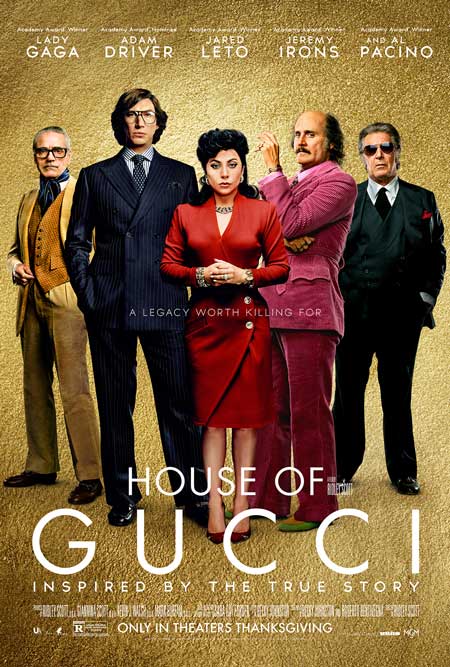
    Facebooktwitterlinkedinmail
  • Venom: Let There Be Carnage – Review

    Venom: Let There Be Carnage – Review


    “VENOM: LET THERE BE CARNAGE”

    Now, last time I talked about Venom was a few years ago and I was not a huge fan of that first film by any means. In fact, I’m pretty sure I put it in my ‘Worst Films of The Year’ list for how bad I thought it was. It was a completely confused mess of a film. However, I was clearly in the minority—Venom did pretty well in the box office and, as a result, Sony did get to work creating a sequel. This was hinted at in a post-credit scene detailing Woody Harrelson playing serial killer Cletus Kasady who goes on to become Carnage. Years later, most of the team has returned to reprise their roles, though there has been one slight change: Andy Serkis has now been placed in the role of director. And in short, for reasons I’ll go into I think he actually made a wiser choice in many regards, though in others I’m wondering if he might have been hampered a bit by the studio process.

    Venom: Let There Be Carnage basically follows on almost directly from the first film. Eddie Brock is still inhabited by Venom, protecting San Francisco in a more violent fashion than you’d expect from a supposed hero, but he gets a big scoop when he unveils the location of one of Cletus Kasady’s victims, thus securing the death penalty for him. We’ll ignore the fact that that’s not how that works; there would have to be a court process over this, and if he’s already been sentenced to death that was already clearly going to be carried out with or without a body, but I’m getting bogged down in details. Cletus does get a bite out of Eddie and thus swallows a new symbiote which he infuses with, becoming Carnage. And not only does he want to get some revenge after breaking out of prison but he wants to get back his girlfriend Shriek, played by Naomie Harris. Okay, here’s the thing: if you liked the last Venom movie, it’s more of the same. I didn’t like the last Venom movie but I actually think this is a better film, though not by much of a margin. Where this film really benefits is its more much interesting villain. And here’s a test for you: what’s the name of the villain of the first Venom movie? I’ll bet 9 out of 10 of you that read this will not be able to answer that without looking it up.

    It is kind of cool but this Venom film I find bizarre; not much actually happens in this for long periods of time. We get this stupid one-man comedy show repeatedly throughout it, and if you thought Venom was de-fanged in the first film, it’s not really improved all that much in the second film. And the thing is, Tom Hardy I think could make a good Eddie Brock but the way he’s written makes him feel horribly miscast. Now, I could bog myself down with this but these are all problems I had with the first film. The big thing this time is Woody Harrelson as Carnage, and I actually thought he was alright in the role. But we run into another problem, that being that this film is rated PG-13 which means it’s screwed from the start. Basically, because of the rules of how the ratings work in America, PG-13 films cannot go all out with their gore or language. And in particular in regards to the gore, that means we’ve got one of the most violent villains in Marvel and we’re not allowed to go all out with the levels of violence that you can achieve. His name is Carnage for crying out loud. Now, there are several things I don’t like about this film but that was one in particular that bothered me.

    While the special effects do feel like they have improved, they still feel a bit over-animated for lack of a better word. The best special effects don’t make you realise the process being made to bring it to life, but this is the kind of film where you definitely feel like you can see the lines of code that have been used and all the various texture layers that have been put over each layer of the effect. As a result, it really throws you out of it. In fact, the reason the effects are kind of ropey is why I suspect most of this film is once again shot at night where we can barely see what’s going on, not helped by the fact that the fight scenes are once again really badly cut together. There are so many shots that don’t go on very long and the choreography is terrible. They’re all shot really close up with little time for you to take in exactly what’s happening. The best fight scenes are the ones where you could actively choreograph it out yourself in your mind. The Russo brothers do a fantastic job with this in their Marvel films, but what we have in both this and the first Venom film are really quick-cut and kind of nonsense. And it feels weird that this film doesn’t have much of an idea of how to handle the effects considering Andy Serkis of all people is directing it, the guy who made his name from visual effects and actually putting himself into characters for complete transformations which he did through motion capture. In fact, if anything, apart from the seemingly lighter tone of the film, I really don’t see much of Andy Serkis’s presence in this film; I actually forgot he was directing it until the credits came up.

    What’s more, Let There Be Carnage also feels very hollow by the fact that, once again, it’s a really short film, just under an hour and 40 minutes if you take the credits into account, including the post-credit scene. As a result, the film feels like it’s rushing for time; there are tons of things that feel rather underdeveloped or have to get resolved really quickly because the clock’s ticking. Venom: Let There Be Carnage is a superior film to its original but that was not a massive bar to leap over, and I wouldn’t even say this sequel is a good film. It’s possibly a passable film but it doesn’t live up to the characters it portrays. It’s got terribly choreographed fight scenes, tries to cover up its lack of visual flair by shooting most of its scenes at night, and the acting has not really improved all that much from the first one. This film at least feels a little more faithful to its source material, but even then it’s kind of undercut, mostly by the fact it tries to get a PG-13 rating to get more of an audience. If you like the first film, you’ll probably like this one; you’re getting more of the same. However, if you didn’t like the last one, the only reason to see this is the post-credit scene which basically confirmed we will be seeing Venom pretty soon.
     
    Calvin – Nerd Consultant

    Share This Post:
    Facebooktwitterlinkedinmail
  • No Time To Die – Review

    No Time To Die – Review


    “NO TIME TO DIE”

    No Time To Die is the twenty-fifth James Bond film and also will be the final one to feature Daniel Craig in the title role. The film has had a somewhat troubled release schedule—it was supposed to release in April 2020 but was put on the backburner because of the pandemic, just a few weeks before the first lockdowns were put in place. Since then, it’s been bouncing around the release schedule, finally releasing over a year and a half after what was meant to be its initial release date. This film also had a troubled production in quite a few ways. It was originally supposed to be directed by Danny Boyle who would also write the screenplay, however he backed out of the project and Cary Joji Fukunaga stepped into the role.

    Now, I personally am not the biggest Bond fan in the world; I like a few of the films but I’m not what you’d call a connoisseur of them. I certainly could do a whole list ranking all 25 films but, as a whole, I wouldn’t say I’m a mega fan. However, I have personally been a fan of the Daniel Craig era since there has only been one underwhelming film in the bunch, that being Quantum of Solace which was a bit of a mess, not helped by poor decisions and behind-the-scenes troubles. But I really liked Casino Royale and I was a fan of Skyfall. Spectre, on the other hand, I reviewed it and stand by most of what I said in that review: it’s a fine film but it’s ultimately a bit underwhelming when compared with Skyfall. Now, normally I would go into a plot synopsis but I actually think the trailers have been purposely vague about the plot for No Time To Die, so I’m going to be incredibly vague myself, especially considering that there is a lot that happens and I can’t really discuss a large majority of it without spoiling a lot of what wasn’t in the trailer. But this is definitely very similar to Quantum of Solace in one way: it takes place almost immediately after the events of the previous film, that being Spectre. And quite a bit that happened in that film is going to affect your understanding of this film. Now, Spectre definitely further tied together all the three previous films leading up to that point, and the Daniel Craig era has been the one with the most established continuity between all the films. Most of the cast of Spectre are still in here: Lea Seydoux is back as Madeleine, Ralph Fiennes is M, Ben Whishaw is Q, Naomie Harris is Moneypenny, and, of course, Christoph Waltz does briefly reprise his role. (I don’t think that’s a spoiler because it was in most of the trailers.)

    One of the major reasons I think this one was delayed is because it does deal with themes of bioweapons and engineered viruses created on the down low by governments to be used as weapons. Honestly, if I didn’t know better, I’d say this film had been written by an anti-vax COVID conspiracy nut because it really reads like something that they would come up with. But it also proves that it’s a very sensitive issue and I think they’ve definitely released it at the right time. Let’s face it—this film really couldn’t have been pushed back any further. The film also involves Bond coming reluctantly out of retirement following the events of Spectre and it actually leads to something that people have been questioning the idea of: a female 007, which this film does give us in the form of Lashana Lynch who plays Naomi, who inherits the title of 007. Now, if the film is setting her up to be a potential future protagonist in further films, I think they’re going to need to do a bit more with her. No offense to Lashana Lynch who’s playing the role very well and plays a very likeable character, but they need to show more of her personality. There’s certainly a lot of it at the beginning of the film but it does feel like, when it goes back to being The James Bond Show, there’s less and less of it. When you do these films, you need a big personality at the forefront; I think she’s capable but it would require a better script, and that is of course if that is the plan rather than to simply recast James Bond in the future.

    Now, obviously Lea Seydoux returns to be the love interest again so that fills that criteria. There’s not really a new Bond car this time; he’s still driving around in the DB5 from the previous films, so the only other things to talk about are the theme song and the villain. Let’s start with the theme. This time the theme went to Billie Eilish who also co-wrote the song. A fine choice though I’m personally not the biggest Billie Eilish fan, but I will say this song is one of her best ones. It’s not my favourite Bond theme of the Daniel Craig era—I’d still say that’s ‘Skyfall’ with second place going to ‘You Know My Name’—but I preferred it to Sam Smith’s ‘Writing On The Wall’ and I much preferred it to ‘Another Way To Die’ from Quantum of Solace which rightly so is generally considered one of the worst Bond themes. The only one I think that beats it is Madonna’s ‘Die Another Day’ which is an appalling song. I think Eilish’s song also really fits the tone of the film—it’s very sombre and suits the idea of it being a fight to the finish, which is fitting given that this will be Craig’s final time in the role.

    Now that Craig has completed his time in the role, I can safely say that I personally think he’s done a very good job as Bond. He’s brought his own style whilst maintaining a lot of what made the character so good, and I think he’ll go down as one of the better James Bonds when all is said and done. And this film I think is actually a great send-off for him. It once again is very much a story about James Bond himself, and they go in directions with the character that I really wasn’t expecting. This is one you really want to watch to see for yourself; they did a very good job not giving away a lot about this film in the trailers. Trust me though, I thought this was a fantastic performance from Daniel Craig and I’m hoping that this will now give him carte blanche to get almost any role he wants. I also felt this was an excellent performance from Lea Seydoux, but then again, she’s a really good actor; she actually can really carry a lot of the projects she’s in and I would view her as underrated. For example, I actually thought she did a brilliant job carrying a lot of Death Stranding considering that she has to kind of be one of the emotional rocks of that story, and I think she got overshadowed by Norman Reedus and Mads Mikkelsen’s performances. 

    Now we have to talk about the villain. When I heard Rami Malek was going to be playing the Bond villain this time around, I was actually kind of hyped—I thought that was perfect casting. Malek is obviously a very versatile actor, coming off winning an Oscar for playing Freddie Mercury. Come to think of it, he also has motion captured his face into video games for Until Dawn which was also a seriously great performance. The thing is though, this might be one of the more forgettable Bond villains. For one thing, he’s not in the film all that much; he really doesn’t appear in a big way until at least halfway through and then isn’t really prominent until the final third. I like the personal ties he has to the characters and I think they did a good job giving him a good backstory but they didn’t give him much motivation; they give him one early on but that gets dealt with halfway through the film. And with that gone, he’s just doing what he does… because it’s what he was going to do. I don’t understand what the profit to his plan is. It’s like, you created this device that will let you kill millions—what are you going to do with it? The Bond villain plans actually never really make much sense for the most part but this one felt a bit glaring, and if you think I’m wrong on that, really analyse Goldfinger’s plan—it was actually really stupid when you think about it. Malek is a great actor and delivers a good performance but his character doesn’t have a lot of personality either. They try to go with this idea that he and Bond are two sides of the same coin but it just doesn’t really fly in this one because they don’t show enough to prove that. I feel like there was more to this character that they were going with but that got lost through deleted scenes, something we probably won’t find out about until we get the Blu-ray.

    No Time To Die is not a film I consider on the same level as Casino Royale or Skyfall but it’s still a really good film and a good way for Daniel Craig to leave the role. I’ll be interested, given the direction the Bond films have gone so far, where they’ll be going in the future, but as a whole I felt like this film really did a lot more with the Bond franchise than I was expecting. I was expecting a rather middling film for Daniel Craig to go out on but they actually do try to make it a big hurrah. How this will stand up in the grand scheme of things we’ll have to wait on, but I’ll say at this point in time I think it’s a really good one. If you are a fan of the Bond franchise and particularly the recent spate of films, if you haven’t already seen it, I think you owe it to yourself to check it out.
     
    Calvin – Nerd Consultant

    Share This Post:
    Facebooktwitterlinkedinmail
  • Kena: Bridge of Spirits – Game Review

    Kena: Bridge of Spirits – Game Review


    Kena: Bridge of Spirits

    (Available for PlayStation 5, PlayStation 4 and PC)
    (PlayStation 5 version used for review)

    Kena Bridge of Spirits is the first game from Studio Ember Lab and is the last major PlayStation exclusive for 2021 with Horizon Forbidden West being pushed back to February. The game was first shown last year at the PlayStation 5 reveal presentation, and since then the art style alone got many people like myself intrigued and it looked like it would be a big part of PlayStation’s 2021. This is an action/adventure game about a Sprit guide named Kena, attempting to restore a land she has travelled to from the infection that has spread across it. She is joined by many cute creatures called The Rot, which give her access to several abilities to purify the land and lead the various Spirits she comes across, to rest. The game has a world to explore with a central village hub and 3 areas you unlock over time with a few collectables, such as new hats for The Rot, as well as extra rot to upgrade abilities.

    Pros

    • Graphics, Art style and Performance: Right off the bat the game looks brilliant. Rather like the story Studio Ghibli, it has clearly been an influence on the world and character designs, and the creators have done an excellent job. I think it’s one of the better looking games on PlayStation 5 currently, with it really feeling like you can get lost in the nature. I wouldn’t say that it quite achieves that to the same extent Breath of the Wild does but still looks great. As for performance, well I can only speak of the PS5 version, but in that case the game offers 2 options; Graphics mode, which has the game run at locked 30 frames per Seconds at 4K resolution, or Performance mode which has the game target 60 FPS at 4K. Despite saying it’s only targeting 60, I found when in performance mode, it hit that pretty well and there were no visible frame rate drops. With games like this you really want 60, so with no obvious frame rate drops I would say, play this game in Performance mode at all times.
    • Soundtrack: The music has clearly had a lot of effort put in and it pays off. Like the world and character designs, the soundtracks take a lot of influence from various Asian cultures and uses it to great effect with atmospheric music for the environment, and bombastic for combat. My pre order was well worth it since I got a digital copy of the soundtrack with my purchase, and it has been great to listen back to some of these tracks.
    • Puzzles: The puzzles in this game are just the way I like them, challenging without being too cryptic and I was able to figure out most of them through observation. They usually are platforming based as well, so merge well into the gameplay. Only a couple of duds in the bunch really.

    Mixed

    • Combat: Now while the combat looks similar to that of Zelda in the trailers, it ends up playing a lot more like Bloodborne weirdly. This is emphasised by the use of the R1 trigger for light attacks and the R2 Trigger for heavy attacks, and L1 and L2 being used for range weapons, shield and some abilities and circle for the dodge. It’s pretty simple for the most part and function fine, though it doesn’t always feel like it flows well. The best combat in games takes you away from the idea that you’re pushing buttons and makes the combat feel like an extension of yourself, and Kena doesn’t pull that off. The shield for example doesn’t work too well in my opinion, even if you upgrade it so I resorted to dodging more times than not- though weirdly for me I found using the bow and arrow (once you unlocked it), to be the most satisfying and accurate weapon. For example, I unlocked the Rot hammer ability which lets you spend Rot points you build up in combat through successful attacks but I was in so many boss fights where the camera would point at the boss but not act as a pointer for Kena’s attack, so I wasted my point with a big miss. The Rot arrow for example was way better since it gave time for a more accurate aim. The Rot points also don’t work too well if they build up with successive hits, but I personally would’ve preferred that they slowly build up as it would’ve allowed me to play the game bit more safely when I was on low health. Now that is available in easy difficulty, but that comes with its own can of worms for later. Plus, I feel like this is a game where you don’t unlock abilities frequently enough. I was a good couple of hours into the game before I got the bow and arrow and even when I was in the last section of the game, I was unlocking new abilities which seemed pointless at the time. All these abilities were really good and improved combat over time, but I would’ve liked them sooner to experiment with. Combat is fine in the game, but it could’ve been better, I will say the further I got in, the better it got, with one exception I’ll go back to later. There are upgrades you get by earning Karma points, through successful combat and small tasks to improve the land, but it’s not the most in depth skill tree to build on with only 12 upgrades, and trust me you won’t be grinding for all of them. Weirdly the bombs were the upgrade I liked the most since they could turn the tide of combat in several instances
    • Difficulty transitions: I’m glad this game has multiple difficulties for most part. There’s an easy mode labelled Story mode, followed by standard and hard difficulties with master difficulty unlocking after you beat the story once. Now, I’m glad the easy difficulty is there because the game has several difficulty spikes especially around bosses and mini bosses which annoyed me, and occasionally I was swapping too easily for some fights that I was having trouble with. The problem is that unlike easy modes in games like Xenoblade Chronicles (which still offer some challenge whilst also giving players more of an ability to cope with tougher moments), Kena has an easy mode with really dumb AI. There were several moments they would just stop and wait for me to attack them or miss me by miles and it made this mode not fun since unlike other easy modes it really was a win button. To quote from Backlog banter’s YouTube channel, I think there needed to be more of a middle ground with the difficulty settings and spikes.
    • World design: Kena’s world looks great with a central village hub to connect the 3 areas you travel to and serval fast travel points to travel between them. I really enjoyed exploring the world but in my opinion while I don’t mind linear games, Kena gives the impression of a big open world, only for it to be way more confined than I was expecting. There’s a lot more invisible walls than I would like and most of the environments just feel like hallways than big open areas though obviously there’s some collectables to find and were certainly not talking Final Fantasy 13 bad in terms of hallway like design. This feels a bit more like a throwback to the PS2/GameCube era and while there’s nothing wrong with that and I am a great fan of that era, the game occasionally gives off a vibe it’s trying to be a bit more and didn’t advertise it well. I like the world as a whole I just don’t think collectables were enough of an incentive to revisit areas since I didn’t get much for it other than hats for the rot which admittedly were cute.
    • Story: Kena story opens up with the idea of it being a character driven story and to a certain extent it is. The story is very episodic with little connection between the individual stories. Each area centres around a different corrupted villager and journey they went through to get where they are. Each story is fine, but they also alluded to some character development with Kena, that only gets slightly touched upon. She feels like an interesting character on paper but less so in execution. The story is fine and there were some good moments where I felt gutted for characters but it’s not a story that’ll stick with me as much as many other games like it.

    Cons

    • Cutscenes to gameplay transition: This isn’t a big problem but the cutscenes run at 30 fps so it was jarring when you move to 60 fps for gameplay. It means many scenes don’t flow as well together when they really need to.
    • Healing system: This was my biggest problem with the game; I can’t stand how healing works. Many games limit the amount of times you can heal in battle but Kena does it in a terrible way. In order to heal, you have to spend a Rot point and activate a plant in the area to get the heal. Not only is this a limit to how much you can heal, it’s also not to quick and means dying mid-heal is very possible, but it also limits where you can heal as well which is really stupid. There was occasions I had to go from one side of an area to another just to heal, and it severely limited what I could do in combat. I don’t understand why I didn’t just have limited heals that I could activate at any time similar to Ender Lillies that would’ve been a much better solution
    • A little shorter than I expected: Kena is a bit too short for my liking it really feels like just as the game is really getting going, we’re in the final act. I think the game maybe could’ve used one more area to boost the running time coming in at around 10 hours. I feel like a more interesting story could’ve been told with just one more segment but as it stands it’s a game that feels over too soon.

    Overall thoughts

    Kena Bridge of Spirts is a good game that I enjoyed playing but there’s far too many niggles for me to say it’s great. It has great graphics that bring to life a beautiful world and soundtrack that’s great and all of it is especially good for first time creators but is bogged down by a combat system that works fine but needed a bit more time to work out the kinks. There are other issues like the camera being a bit of a bother, and the terrible healing system but as it stands, it’s a fine short experience that you will probably get something out of but won’t be something you’ll come back to even with an easy mode that is essentially a ‘win’ button.

    Score: 7.5/10

    If you are looking to pick up a PlayStation exclusive this one is fine but there’s a few better right now to hold you over until Horizon in February. I would recommend if you’re up for a shorter experience that’s a bit cheaper though pick it up and get the deluxe version if you’re still on PS4, since it comes with the PS5 version when upgrading.
     
    Calvin
    Nerd Consultant

    Share This Post:
    Facebooktwitterlinkedinmail
  • Super Monkey Ball: Banana Mania – Game Review

    Super Monkey Ball: Banana Mania – Game Review


    Super Monkey Ball: Banana Mania

    (Available for PlayStation 4, Xbox One, Nintendo Switch and PC)
    (Nintendo Switch version used for review)

    As part of Super Monkey Ball’s 20th anniversary there is special entry in the franchise. Bananamania attempt to remake Super Monkey Ball 1 and 2 with modern hardware and really recapture the magic that has felt absent from recent entries. Those entries were fine, but due to changes in things like the physics and adding in what was widely considered unnecessary mechanics, it just didn’t feel like the series was really firing on all cylinders. Sega has promised this game is a return to form and I can confirm at this point before I go into detail, they have kept that promise, despite the claims online of the opposite.

    Pros

    • Level design: Bananamania has done an excellent job really bringing the excellent level design of the GameCube games. They combine the correct amount of challenge with good ease of access in a sort of easy-to-learn, hard-to-master type of way. There are a few levels which were so difficult that made me look up a YouTube guide for help, but I gave up on that early on because half the time, you get someone showing off that they broke through half a level in a way the average player (i.e me) is never going to pull off). There is an assist mode which increases the time limit to get to the finish line and gives you directions. Though I found the majority of time, it wasn’t that helpful to the current predicament. Even when levels were tough though, I went back into it several times trying to figure it out, and it really reminded me what made Monkey Ball on GameCube so addictive, and fortunately there is an option to move on to the next level in both story and challenge mode. The game is also very replay-able for getting faster times on the course especially with online leader boards now in the game
    • Physics and mechanics: As I said before, there have been a few fans that have not liked the physics, but I personally think this is the best they have been in a while. They are slightly different than the original game but not to the extent it was throwing me off (both literally and figuratively). They generally work quite well, and I think they strike a good balance for both seasoned and new players. The mechanics are the same as usual manipulating the stage to make the ball move through a lot of physics-based challenges and puzzles, but what newer fans may be surprised by is the jump that was introduced in the Wii game Banana Blitz (also released in HD on Switch) has now gone. Now this has been a real contention to long time fans that felt it messed too much with the formula, so some like the fact it has gone, but for fans that are more used to it, they will not have to worry as it is unlockable in the game so their needs are met.
    • Character selection: The character selection is great. Not only do most of the Monkey Ball cast return but they also have unlockable Sega icons Sonic and Tails as part of the Sonic 30th anniversary as well as Beat from Jet Set Radio and Kazuma Kiryu from Yakuza and more characters are available for purchase. The Sega Legends collection gives you Sega Dreamcast, Sega Saturn and Sega Game Gear to play as (yes, it is just as ridiculous as you think it is) and future content will include Hello Kitty and Morganna from Persona 5

    Mixed

    • Mini games: The game includes a large portion of mini games like Monkey Race, Monkey Bowling, Monkey Billiards and many others. Now, the games are alright as multiplayer but I can imagine if you have been buying the majority of Nintendo first party title, they really don’t hold up since it doesn’t have depth of something like Mario Kart and Mario Tennis. This is especially the case given that Mario Party Superstars is out in a few weeks and if I have mates over, I am going to play that over this.

    Cons

    • Story mode cutscenes: The cutscenes for the first two games are still good so what the hell happened here. For some reason the game is now littered with lots of still images in a sort of half comic/ children’s show style which really doesn’t match the aesthetic of Monkey Ball’s past. I don’t understand why the cutscenes from the first game couldn’t be remastered.
    • Soundtrack: The game has an updated soundtrack which is fine, but I personally preferred the original soundtrack. The original is available but annoyingly is locked behind a pay wall. It is included in the digital deluxe edition but by the time this review comes out, it will not be available and be an extra expense.

    Overall thoughts

    Super Monkey Ball: Bananamaina is in my opinion the best Monkey Ball game’s in years and delivers the experience most people were asking for. It does have issues such as some of the best features being behind a pay wall and a difficulty level that newer fans who didn’t have a chance to play the Gamecube will struggle with. But as a whole it is a very enjoyable and has replay value. If there was bit more care put into story mode I’d probably put it into the 9’s but as is, it just misses out. I also don’t think this is the kind of game I will be rushing to put on my Switch OLED when I upgrade. I had a good time with it, but it’s not a game I’m going to play continuously. Though I will certainly be returning if DLC levels are added and I will be getting the Persona 5 DLC.

    Score: 8.6/10

    This is a great game but considering what is coming out in October you might want to wait on this one and get Metroid Dread, Mario Party, Back 4 Blood or Guardians of the Galaxy. Especially Metroid Dread, we can’t afford for that game to sell poorly and result in Nintendo undervaluing the franchise again.
     
    Calvin – Nerd Consultant

    Share This Post:
    Facebooktwitterlinkedinmail
  • Malignant – Review

    Malignant – Review


    “MALIGNANT”

    Malignant is the latest horror film from director James Wan, one of the masterminds behind Saw and The Conjuring films, and this is his first film back as a director since Aquaman. Now, when it comes to my opinion on James Wan, as much as I am a fan of the Saw films—for my own weird reasons that I still can’t figure out because the more I analyse those films, they worse they seem to get—, I’ve always thought of James Wan as more of a good ideas man who is not great at executing those ideas. For example, The Conjuring films are great on paper but they don’t turn out too well in practice, especially since he’s been trying to turn it into an extended universe.

    So, what is Malignant? Well, Malignant is a bit of a hard film to go into since you don’t want to give away too much, but let’s just say that it hasn’t really been marketed very well. The trailers imply that you’re getting a much different film than the one you’re actually getting. It’s mainly surrounding a woman named Madison who’s been abused by her husband and had a series of miscarriages, and then one day her husband is murdered and it spirals into a series of murders of various people that have a connection to a past event. Maddie can now see the murders through visions, believing that they’re being committed by her old imaginary friend Gabriel. Now, when you go into this thing you think it’s going to be a simple, typical poltergeist-type film, but as it goes on it actually goes in very different directions. The film’s actually kind of a mystery: what Maddie and Gabriel’s connection is; what the past event that’s connecting all these murders is exactly; and, of course, there is a plot twist down the line.

    Now, I’m going to be fair on this one—some of these ideas are actually very good. I genuinely think James Wan and his co-writers had some excellent ideas when putting this together, but man does the execution not quite pull it off. The biggest problem I had with this film is that it can’t decide what kind of horror it wants to be. At one moment it’s a very paranormal horror and you can certainly believe there’s some sort of paranormal element, but then it decides it wants to contradict itself part of the time and decides to be a more grounded horror film. The plot twist later also raises further questions about just how paranormal everything is, and not in a good way. It’s one of those twists where it’s quite good when you first see it but then the more you think about it, it actually raises more questions than it answers, and that’s one of the worst kinds of twists. James Wan definitely does not have an original twist in this case; nothing in this film I would say is very original.

    And without giving too much away, I’ll put it like this: if Karl Pilkington was a script writer on this, I would have believed it because some of these do feel like ideas that he would come up with. There are a lot of moments in this film where it really wants to spell out the twist, and I think even James Wan kind of knew that once we get to that point, there’s not much left for the film to do. So his solution to this is to have the film go completely off the rails in the final segments. This had to have one of the most insane final sequences of a horror I’ve ever seen. At times I genuinely thought James Wan had mixed up scripts from multiple films because a lot of it didn’t feel like it belonged in a horror film, but not to the film’s detriment; it actually really feels like the second half picks up after the first half which is actually rather dull.

    Madison is a decent lead character on paper but they also can’t really nail down a personality for her. She does a very good job acting out some of her early scenes but James Wan doesn’t really know how to characterize her afterwards. There’s a lot to do with the relationship with her sister Sydney and her working with the police investigation looking into the murders, in a competition of ‘How Can I Incriminate Myself As Much As Humanly Possible?’ When we get brief glimpses of Gabriel, I do like the design they go with up and to a point; once we get even more of a view of what Gabriel’s like, the design falls down considerably and goes from looking creepy to looking ridiculous. Again, it further ties into the question of whether we’re having a paranormal or a grounded horror film? Because it feels like it wants to do both though it can’t really have it both ways.

    It also doesn’t help that the acting isn’t that great, but I don’t think that’s down much to the actors, rather the poor script—the dialogue is horrendous. Dialogue has never been a strength in James Wan films and Malignant is a prime example of that; this is really where it falls down. And as a result, what could have been a great performance by the actors feels rather off kilter most of the time. Also, this film really loves lightning effects, to such an extent it overuses them to an absurd degree. I don’t care how bad global warming has gotten, there are not that many lightning storms in the Washington area! Oh yeah, this film takes place in Seattle, I should have mentioned that.

    If you’re going to watch Malignant, my advice would be to not watch the trailer—it convinces you you’re getting a different film from the one you actually get. Other than that, the best thing I can say about this is the fact that it completely loses itself is actually its only saving grace. Malignant would have been a boring, forgettable horror film if it hadn’t been for its insane second half. Do I recommend it? No. Malignant has some interesting ideas for a horror, and if someone tried to do something like this again they might actually be able to pull it off. Without giving too much away, I’m not saying that going into these ideas is an automatic failure, it’s just not been executed brilliantly here. The film goes from feeling wooden to being over-the-top, and really suffers from the phenomenon of horror movie characters being incredibly stupid in the face of danger. But, as a whole, I’m going to say I think the film is passable at best and, at worst, pretty boring.
     
    Calvin – Nerd Consultant

    Share This Post:
    Facebooktwitterlinkedinmail
  • Anime Amigos Podcast: Best of Summer 2021

    Anime Amigos Podcast: Best of Summer 2021


    Anime Amigos podcast – best of Summer 2021

     
    We discuss our favourite Anime from the Summer 2021 season in another discussion.
    Calvin
    Nerd Consultant
     
    03:28​ our thoughts on the season
    07:06​ our Best Holdovers
    19:36​ our Best OP’s
    32:36 our Best ED’s
    41:53​ our Biggest Disappointments
    1:00:30 our Biggest Surprise’s
    1:09:22 our Best Animation
    1:16:42​ our Best Female character’s
    1:26:24 our Best Male character’s
    1:37:22​ our Best Sequel’s
    1:42:22 our Best Original’s
    1:52:58 ​choosing our Anime of The Season


    Share This Post:
    Facebooktwitterlinkedinmail
  • Neo: The World Ends with You – Game Review

    Neo: The World Ends with You – Game Review


    Neo: The World Ends with You

    (Available for PlayStation 4 and Nintendo Switch)
    (Nintendo Switch version used for both review’s)
    (Works on PlayStation 5 via backwards compatibility)
    (PC version is in development and will be released later this year)

    Sqaure Enix has finally, after 14 years, released a sequel to The World Ends with You. The original game was a smash hit for the then, recently released Nintendo DS and was probably the game that took the most advantage of the handheld’s dual screens and its contemporary modern setting of then present day Shibuya district of Tokyo. This was seen as ground-breaking at the time, given Square Enix’s usual high concept or futuristic fantasy settings for games. The original was both critically and financially successful, and the Square has talked a lot about wanting to turn it into a franchise in interviews, but the company has really been dragging their heels with it, having put the characters in 1 Kingdom Hearts game and rereleasing the game for mobile phones. However, things looked better when the original was released on Switch as The World Ends With You: Final Remix, which ported the mobile phone version over with a terrible control scheme for playing the game when it’s docked to a tv, as well as adding an epilogue chapter hinting at future content. That would arrive when Neo The World Ends with You was finally announced with a Summer 2021 release date to coincide with a 12 episode Anime adaptation of the game, which was released a few months earlier, but wasn’t well received. If you haven’t played the original you don’t have to worry about jumping into this one, despite it being a cannon sequel to the original, the story takes place quite a bit after and starts with a new cast and conflict, with minimal ties to the original or the conclusion of that game, though The World Ends With You: Final Remix, is there if you want to brush up. Basically, the premise of The World Ends with You, is about groups of young people forced into competing in survival games in a Shibuya where they can’t be seen or heard, but can manipulate people’s thoughts by scanning their psyche. These games have been set up by a group called the Reapers and the competitors must win daily missions set out by the Reapers in order to escape. The missions range from getting a product that an entrepreneur wants to sell to trend in this part of Shibuya via word of mouth alone, to make it to a certain location using a particular route and the obstacles along the way are monsters (known as the Noise). The winner by the end of the week is granted 1 wish. There’s a bit more to dive into but it’s not too complicated and it is a kind of narrative that unfolds slowly. This time instead of Neku and his various partners like the last game, we have Rindo, his friend Tosai (AKA Fret) and a shy gamer they meet named Nagi Usui, who make up a team competing with several other teams to climb up the ranks of a new reapers game with the knowledge that the team in last place will be erased.

    Pros

    • Story: The narrative is very strong in this game. Unlike the first game where there was the various partners that would team up with Neku, this time the team mechanic and as a result we have a more consistent cast with a lot more time to engage with one another, and develop their characters. You also don’t really need to be a fan of the original to enjoy this one there’s no call backs to the original game until just before the halfway point, and even then it doesn’t dwell on the original too much in spite of some call backs. For fans of the original though those call backs will be great for them. Even taking the story on its own it was incredibly engaging, and I really was motivated to see how it went. Once again it tells a very character driven story and I really liked all of them. Rindo initially didn’t come off as a great replacement for Neku in the protagonist role, but I really grew to like him as it went on, and the side cast are great in this one. Shoka might be my favourite character in the series after this game (though I will have to refrain saying why to avoid spoilers), and I thought the villains were a real improvement over the first game.
    • Combat: This game has one of the best action RPG combat systems I’ve used in a long time. It works by assigning a different attack to different buttons and triggers using pins to represent the attacks, just like the last time and each one has a length of time you can use them. The genius comes in learning which combinations of pins of pins work together so you can chain them together for more powerful all-out attacks. This is also done on a timer so you’ll want to hit it in time to cause the meter to rise, and if you don’t pull it off consistently it will start lowering itself. This means you won’t necessarily want to just erupt all the most powerful pins and there were several occasions I went back and equipped weaker pins to make better combos with the other pins I had already equipped. It works to match the mood of the game which is to feel like a music remix or a mix tape with a lot of switching back and forth. Combat is also very strategic in terms of finding which attacks work well with each enemy and it feels fun to do. I did quite a bit of grinding for levels in missions because it was some of the best part of playing and the fact you can like the last control enemy encounters outside of story missions, is excellent for tailoring the amount of grinding you want to do.
    • Soundtrack: The music in this game is once again outstanding. The game brings over a lot of the great songs from the first game but adds much of its own original entries and the soundtrack over all really works. The genres of music have also increased. The first game had a lot of Techno, Hip-hop, and Pop, but this game adds quite a bit of Rock and Metal songs which are very welcome and add further into the themes of mixing things up that the game has.
    • Stat increase systems: The game once again offers you clothes from the different in-game fashion brands, but thankfully drops overall, improving which district of Shibuya the brand is big in to gain bonus mechanic. Instead, you use another stat besides HP, Attack and Defence which is Style. If your Style stat is high enough, then you gain certain bonuses from the clothes that you equip to each character adding extra thought into each character’s equipment and I personally think it’s a good addition. The game now also adds version restaurants and takeaways in Shibuya which provide permanent stat boosts with bonuses for giving a character something they like. Though you are limited on how often you can do it, given that each food has a certain calorie count, and you can’t go above the limit, so you have to burn them off in combat. It is a really great way of handling grinding for levels since not only do you gain stat boosts for levelling up characters, but you can also tailor each character’s stats for certain roles in the group during the story. The game also offers boosts through the side quests by giving an ability tree that works like a social network of the characters you meet, adding an extra incentive to the side quests, which when all put together with some excellent character and game customisation, which lead me to do way more side content and grinding than I normally do.
    • Art style: The manga art style is back and is an excellent choice. The World Ends with You has an excellent aesthetic quality that really allows it to stand out, and the character design once again is superb.

    Mixed

    • Graphics and world design: This new entry is in 3D so new graphics and world had to be created and I’m amazed how well they recaptured the look and feel of the first game in this entry. It does feel like a modern transfer, and they’ve used the new look to add to the environments. The graphics however will not really wow anyone, this isn’t really the pinnacle of anything, but the game doesn’t have to be. The most amount of money was put into the CG cutscenes which up until the end are few and far between, though they have better frame rates than the actual Anime. The world design is good offering a wide variety of locations to explore though it still kind of annoys me that you can go for long sections of the game with parts of it cut off to you. There usually is story relevancy but if I wanted to improve something on the social network by ordering from a certain restraint and gain a bonus menu item, I either have to wait another day or time travel to a day with no restrictions to that area (made worse by repeated un-skippable cut scenes). Think the next game should have a more open map.
    • Side content and repetitive gameplay: This is more for other people because I thought that the side content was handled well and enjoyed the gameplay loop. I’m the sort of person that doesn’t hate repetitive gameplay if the loop is good, and I really enjoyed the gameplay loop in this case. The side content is particularly repetitive though and while they are optional, you should still do a few, since part of the social network is cut off if you don’t, and it’s the quickest way to earn friendship points to move through the social network. Though your experience may vary, just be prepared to do a lot of the same thing repeatedly. I personally didn’t have any issues with it and it didn’t get bored of it.

    Cons

    • Frame rate issues in combat: Combat normally flows fine at around 30 fps on Switch, even when it was docked there were quite noticeable frame rate drops when there was lots of attacks on screen. I haven’t tried out the PS4 version which targets 60 fps on PS4 pro’s and PS5, but I suspect it won’t be as much of an issue there. I will say though this was only an occasional thing and wasn’t too distracting and never lead to any deaths.
    • Some cheap deaths: Now, I was alright at dodging, but this game still gave me some cheap deaths. The problem was getting all the characters to dodge and sometimes it really wasn’t possible, and as result I just died because a character that I wasn’t in control of, got hit. Again, this only happened on a few occasions but was really annoying especially in one of the boss fights that was particularly tricky.
    • Fret’s puzzles: Fret’s power is that he can implant things into people’s minds to remind them of things and he does this via puzzles where you have to reform a picture by moving the left and right analog stick in the correct locations. This was pure guesswork whenever I got it right and the puzzles were just tedious, I dreaded when one was coming up because it would take at least 2-4 minutes of mindlessly moving them back and forth with little clue until I got it right. They’re not hard since you usually get one half right quickly, but it is tedious getting the second half, and whenever I was successful it felt like a fluke.

    Overall thoughts

    Neo The World Ends with You is a late follow up, but it was well worth the wait. This is one of the best action RPG’s I’ve played all year. The combat is great and well thought out, the story is gripping, the art style is fantastic, and the gameplay overall made you want to explore Shibuya more and more. It has frame rate issues, and I really didn’t care for Fret’s puzzles but those are minor squabbles. I really enjoyed mixing and matching pins to create combos and following the story to see where it went. The soundtrack is also one of the best soundtracks I’ve heard in a long time. If Square-Enix are seriously looking to turn this into a franchise I am completely on board because this game really shows, there’s passionate developers that really want to take the series in interesting directions

    Score: 9.4/10

    Really, get this one if you were a fan of the original. I think if you’re a newcomer now is time to get into the franchise. If you own a Switch, both games are available and affordable, and although PlayStation 4 owners can only get the new game, the first is available on mobile phones. The game is available physically and digitally and is a full price release at £50, though if you’re curious the Switch has a free demo which covers the first couple hours of the game and transfers your save data to the full game after purchase, so feel free to try it out.

    Calvin
    Nerd Consultant

    And now Elliot’s review

    If you look up a list of the best Nintendo DS games, you are guaranteed to see The World Ends With You in its higher echelons. While still not the most well-known game, over the years it has gained a massive cult following and is hailed by many as one of the best JRPGs of all time. So, no doubt fans were excited when on 23th November 2020 Square Enix announced Neo: The World Ends With You, a sequel no one knew they wanted, and was released on 27th July 2021 for Nintendo Switch, Playstation 4, with a Windows release scheduled for later this year. 

    We return to the city of Shibuya, where another round of the Reapers Game is underway, a game where the recently deceased must complete tasks throughout a week and defeat monsters called the Noise to reach the top or face erasure, overseen by game master Shiba Miyazaki and his fellow reapers. Forcefully dragged into this deadly game are Rindo Kanade and Tosai “Fret” Furesawa, two high school students, despite the two of them having no memory of dying. They learn of the absurd nature of this game, and that a team called the Ruinbringers have been winning week after week, only to go another round, ensuring that no other group can win. After recruiting Sho Minamimoto and Nagi Usai, they form the team known as the Wicked Twisters, who must now face off in this game against other rival teams in the hopes of reaching the top, finally dethroning the Ruinbringers, and getting back to the real world. I cannot stress enough just how good this story is. The twists and turns that take place and how likeable the characters are, with some familiar faces, this is easily one of, if not, the best story to come out of this year. 

    Presentation wise, the game looks, for the most part, okay, the city of Shibuya itself looks fine enough, though the character models are a little pixelated; not to the point where you can’t tell what they’re meant to be, but just enough to be noticeable, luckily all character interactions are told via pictures of said characters, which are all drawn very well in the style that’s iconic to this series. The frame rate on the other hand can do with some improvement. The performance is quite choppy, and it can lag when there’s a lot happening on screen, which considering the game is quite often – mind you, I did play this game on the Nintendo Switch and I have heard that the PS4 version is a lot better. Another thing that I absolutely love about this game is the soundtrack, it covers a variety of genres, brings in a number of songs from the first game that have been remixed, and even has a songs that remind me of actual bands, like how Kill the Itch reminds me of Alter Bridge or Hustle and Bustle giving me major Daft Punk vibes, while not all songs are hits for me, this is without a doubt a solid soundtrack and easily one of this year’s best, only really being beaten by Persona 5 Strikers. That being said though, most of the time the songs that are playing are completely random and there are very few more sombre songs that match the mood the game’s going for, so at times the song currently playing really doesn’t fit the vibe that the game’s going for.

     Neo: The World Ends with You plays a lot like the first game, except this one plays on a 3D plane, while the first one plays in 2D. You begin encounters by scanning your environment and running into Noise icons. You can run into many of them before you have to fight them, creating a chain of encounters that you can fight, one immediately after finishing another. While it is much more risky, you’re more likely to get more rewards from doing it. At first you can only create a chain of five, but in the later game you’ll be able to chain fifteen encounters together. 

    Combat takes place in real time and relies on items you equip called Pins. The attack that your character is able to perform will entirely depend of what Pins you equip, there are ones where you have to rapidly attack the button, ones where you have to charge up the attack and ones where you just have to hold down the button, and most will have a certain element type that will either add a certain status element to your enemies or the attack itself will have extra properties, like light healing your party when used, or sound bouncing from one enemy to another when hit. There are over three-hundred Pins in the game, that are either dropped by enemies, can be bought, or given as a reward for completing a main or side quest. I found myself experimenting constantly with these Pins, as each Noise had different weaknesses and a ton of the early game Pins are seriously weak in comparison to the later ones, you no doubt you’ll find yourself experimenting a lot as well. 

    When you attack with a character, you’ll notice that a meter just below that character’s Pin decreases, when that meter is completely depleted, you’ll have to wait for it to fully recharge before you can use that attack again. Of course, you can stop using the attack before the meter empties, if you do it will slowly recharge on its own, meaning that you won’t have to wait till it’s been fully replenished before using it again. Though, if you are using multiple Pins at a time (which let’s be honest, you will be), be very careful on which character you are using and that their Pin hasn’t been emptied. You see when you are holding down the button to use an attack, you are then technically controlling the character who’s using that attack, though you’ll only be able to move the character who’s Pin you used last, at which point they will be vulnerable to attacks from the Noise, so it’s definitely recommended that you only press the button for the characters who are actually able to use their abilities.

    As you fight, you’ll notice that something called a Groove Meter is filling up. Sometimes when you’re attacking a Noise, a timer telling you to “Drop the Beat” will appear, at that moment, if able, attack the enemy with a different character than you’re currently using, and the groove meter will raise in percentage slightly. When the meter reaches 100%, you’ll be able to perform a special attack, the attack you do will depend entirely on the element of the attack you did on the last “Drop the Beat”. As you go throughout the game, the max percentage your Groove Meter can reach will increase as well, till eventually you’ll be able to reach 300%, which will let you do one giant special attack which will deal a ton of damage and will fully heal your party. 

    Admittedly, combat can get monotonous and tiring somewhat easily, luckily encounters are incredibly easy to avoid and grinding is barely a hassle. There were numerous sessions where I barely grinded and just focused on the story and never found myself under-levelled at any point. Though that’s probably also because levelling up only really increases health, all other stats remain the same. To increase those, you have to do one of two things, one is to wear particular articles of clothing, which the game labels as threads, which can be bought from shops spread throughout Shibuya, the other is by eating food at certain restaurants, each character will have their favourites and least favourites, and will gain a bonus to their stats if they eat food that they particularly like. 

    When not in combat, you’ll be exploring the streets of Shibuya, completing tasks to move on to the next story section and reach the next day. While in Shibuya, you’ll find yourself in multiple situations where you’ll have to use the powers of one of your characters, called Psyches, during certain story sections or side quests. The most notable one is Rindo’s, which is the ability to travel back through time when called for in the story, at which point you’ll have to go through the previous events during the day to ensure that whatever bad event occurred doesn’t happen and “Change your Fate”. The second is Fret’s, who has the power remind people of certain things, be that people or events, during which you’ll have to play a minigame where you have to line up your analog sticks to form a picture, it’s actually more difficult than you think, as you have to be very precise with where your analog sticks point, making it much more satisfying when you succeed at doing it. The final one (well not really, but the last one I’ll mention because spoilers) is Nagi, who is able to dive into the minds of people who have been infected by Noise, which will lead to you having to face a small number of encounters, where the Noise will have certain buffs attached to them, defeat them and the person will go back to normal. 

    As mentioned, numerous times in this review, you’ll also be able to complete several side quests. Each side quest is linked to a certain day and can be found in a certain part of Shibuya, you can easily find out where just by checking your task menu. While most of the time, you do have to go out of the way to find this person, the quests are very short and are very much worth it as it adds to your social network page. As you play through the game, complete side quests for people, or even just buy threads and food, you’ll have more slots added to your social network page, which essentially acts as your upgrade tree. You obtain new upgrades by spending friends points which you also gain by doing any of the above. While these upgrades don’t do anything too substantial, they can very much help as you play the game and make things at least a little easier for you, especially since they’re so easy to unlock, they’re worth getting. 

    If there is anything I can complain about, it’s that navigating your environment isn’t exactly the easiest. The layout of the areas of Shibuya is quite often at a completely different angle than what the mini map depicts, which led to me getting a little confused from just trying to get from one area to another. Granted I did get used to it after a short while, but it was still an annoyance that I could have done without at the beginning. 

    I will admit that I still haven’t played the first The World Ends With You, despite it being on my list of games to play for a good few years now, but this game has fully convinced me to get it as soon as possible. I had an absolute blast with this game and have been praising it to high heaven. While you probably would have a better time with this game if you played the first, as characters and plot points from it come up in this game, I still highly recommend this game to anyone interested. This is easily a contender for best game of the year for me, I absolutely love it. 

    9.3/10

    Elliot Chapman
    Anime Amigo and Nerd Consultant

    Share This Post:
    Facebooktwitterlinkedinmail
  • Batman: The Long Halloween – Review

    Batman: The Long Halloween – Review


    “BATMAN: THE LONG HALLOWEEN”

    Well, there wasn’t anything in cinemas this week so I decided to finally get round to reviewing the DC animated film I’ve been most anticipating for this year, Batman: The Long Halloween which was released in two parts over the summer. The Long Halloween is one of the most accredited comics in DC’s history. Written by Jeph Loeb with art by Tim Sale, the two created a very interesting Batman story within their own continuity. And it proved so successful it even got sequels, though they were not so great. Marvel even poached them to do their own selection with Hulk: Gray, Daredevil: Yellow and Spiderman: Blue, all of which were not amazing, though I would really recommend Spiderman: Blue—that’s actually one of my favourite Spiderman comics.

    Now, going into this film I could do a plot synopsis but it’s actually quite hard to, not that there isn’t an underlying plot—there is—but there are also a lot of mini stories going on and I think a plot synopsis wouldn’t do it justice. The basic premise is that the story takes place over the course of a year from one Halloween to another and involves Batman, Jim Gordon and Harvey Dent investigating a series of murders against the Falcone family and their associates, with each murder taking place on a holiday, hence the killer being nicknamed ‘The Holiday Killer’. That’s a very brief synopsis of the film but there is a lot going on here. For one thing, that sounds like it would take up the bulk of the plot, but because this is a very loyal adaptation of the comic it’s more in the background. The murder mystery doesn’t even really get close to being solved until you’re a large way through part two. Now, it definitely puts it in a little more focus than the comic did; the comics just kind of treated it as a bit of a backdrop. Each of the twelve chapters were named after each of the holidays in question with not much interim between and the film actually does a pretty good job recreating the iconic covers. Obviously, a few things were cut or changed, though, as I said, this is a very loyal adaptation, hence why it’s in two parts—you essentially are adapting twelve longer-than-usual issues. An hour and a half film is not going to do that justice. I chose not to watch it in one three-hour stint, instead watching them over a weekend one day after the other. And while I think you’re perfectly able to follow the story, I would not recommend having a long gap between the two.

    There are tons of subplots around Carmine Falcon’s succession and there’s a fracturing relationship between Harvey Dent and his wife Gilda, and there are also Batman villains committing tons of crimes. However, without going into too many spoilers, they more serve as their own subplots. There’s a lot going on though—the comic features a ton of villains and I don’t think any of them were cut. Most of the bigger ones are here; I think the only one that’s missing in any capacity is The Riddler. There’s a few of which you wonder why they bothered to show up: the Penguin is barely in this thing and could have easily been cut, and what’s rather strange is the Mad Hatter actually has more to do in this film than he did in the comic. It probably helps that he’s played by John DiMaggio.

    Speaking of which, the casting is also excellent. One of the things I found interesting about the voice cast that was put together for this film in particular was that many of them sound very similar to actors from Batman: The Animated Series. For example, Josh Duhamel’s Harvey Dent sounds remarkably like Richard Moll at times who voiced the character; Troy Baker has proven over a few performances that he’s probably the closest Joker to sound like Mark Hamill and does very well in the role; and Billy Burke actually might be one of my favourite actors to play Jim Gordon after this. He really does sound right for the role and he’s probably one of my favourite casting choices since Bryan Cranston played him in Batman: Year One. Same would go for the sadly late Naya Rivera as Catman who the film is dedicated to. Obviously, you have to have a good act to play Batman, and in this case we’ve got Jensen Ackles who you may recognise from playing Dean in Supernatural. I personally was kind of weirded out when he was cast for the role but I think he actually plays it brilliantly. The direction given to him was to sound like Kevin Conroy and you really feel like he’s channeling him for this performance, and if you were going to have him replicate anyone’s performances, Kevin Conroy was the right choice. I really liked him as Batman; it’s just kind of interesting that because The Long Halloween has to deal with so many subplots, Batman goes long periods not being the focus.

    Dialogue in The Long Halloween is also great which works out very well considering that every actor is giving great performances. The one thing I was concerned about was Calendar Man being brought in considering how big of a role he plays in the story. David Dastmalchian is in the role and he is good but he’s basically been to do a bit of a Hannibal Lector impression, which isn’t surprising considering this version of the character was kind of inspired by Anthony Hopkin’s performance in Silence of The Lambs. Despite the fact that it is obvious what they’re pastiching, he does give a good performance and I liked the interactions between him and Batman. They also did a very good job with the action scenes; a particular highlight would be a plane fight between Batman and Joker.

    If there’s one thing that kind of bothers me about The Long Halloween in hindsight, it’s that while the answer to solve the murder mystery is there and you can guess it properly, you can’t really guess the why. I actually found when we solved that one there was a lot more revealed to us in the last few minutes of the film than there was in the story preceding it. Now, that is true in the comic so they were kind of tied over with that issue, and in fact I actually felt that this one did a better job than the comic in the sense that it actually gave a bit more closure than the comic does. The comic certainly ends with everything wrapped up but it also had a very different feel as far as an ending goes. I feel like the writers and directors were not too happy with the ending of The Long Halloween and tried to tack on an extra ending, maybe to give it more of a sense of completion or a different tone considering it’s a little more hopeful than the comic’s ending was. But I definitely think a few people are going to say that the ending comes a little out of nowhere. Though, as I said, the clues are there if you look hard enough.

    The only thing I really haven’t commented on is the animation. Now, since this isn’t tying into DC’s animated universe it means that they can do what they normally do when they’re adapting one of their famous comics to an animated film and actually replicate the artist’s art style for the animation. Now, in this case they had to replicate Tim Sale’s art which is not the easiest thing to do, not because Tim Sale is a bad artist—far from it, he’s really good—but it’s very hard to describe his art style. Abstract would be not the right word, but with each of his works he definitely goes with something very unique. In the case of The Long Halloween it’s quite pointy but it’s also designed to replicate a noir. The big difference is that they have to fill a lot of empty skies and backgrounds that were often there to create a sense of isolation since this Gotham is way more populated than it was in the comics. I personally felt that they did a very good job replicating the style; it doesn’t feel like it comes straight out of the comic but it definitely feels like the comics were used as a storyboard. Personally, I actually thought the animators were given a hard task and did a very good job all things considered.

    If there’s one thing I think people might come away not too happy about it’s the fact that Batman is not a large focus of the story; at times he feels like a secondary character in a Harvey Dent film. Though, personally, I kind of like that—I quite like these Batman stories that aren’t really about Batman per se. And, if anything, one of the reasons I like The Long Halloween so much is that it’s a very well-done personal story about the people surrounded by Batman and I think the film captured that very well. Batman: The Long Halloween Part One and Two are very loyal adaptations of their comics and do a great job transferring that to the screen. There is so much going on in the story that I don’t think my review has done it justice. I really would recommend seeing it, especially if you’ve read the comic since you can go into it seeing the sheer amount of love and care that was put into transferring it to another medium. I thought there was never going to be a Long Halloween adaptation considering how narratively it doesn’t really suit a three-act structure, though the writers did a fantastic job adapting it for that. It’s another great character piece and, like the comic, it doesn’t feel like any character is wasted. I would say this is a real must for Batman fans.
     
    Calvin – Nerd Consultant

    Share This Post:
    Facebooktwitterlinkedinmail
  • Sonic Colours: Ultimate – Game Review

    Sonic Colours: Ultimate – Game Review


    Sonic Colours: Ultimate

    (Available for PlayStation 4, Xbox One, Nintendo Switch and PC)
    (PlayStation 4 version used on a PlayStation 5 used for review)
    (works on PlayStation 5 and Xbox Series X and S via backwards compatibility)

    This year Sonic celebrates its 30th anniversary and as a result, we’ve had some animation, a concert livestreamed on YouTube, the announcement of a new Sonic game for next year (untitled at this point though Sonic Rangers has been uncovered as potential title by data miners), and the release of a remaster of Sonic Colours with the game running at 4K 60fps on PlayStation 4 and Xbox One, and running at 1080p 30fps on Switch. Out of the 3D Sonic games that were released around that time, Sonic Generations was my favourite and the best reviewed, however Colours was a fan favourite and considering it was a Nintendo Wii exclusive upon its release with no other re-releases, it made sense to get another chance.  The game sees Sonic working his way through an Intergalactic amusement park created by Dr Eggman as a front for capturing Aliens known as Wisps. The big gimmick this time being that Sonic collects powers as he collects wisps, and they provide new ways to reach the goal. Rather like many of my other reviews for remasters I’ll more be concentrating on the updates to the game, though my opinion of the Wii game is that I like Sonic Colours and think it’s a good platformer and has a good soundtrack. My only complaints are that the levels are too short, the graphics haven’t aged well, it has issues with its camera and I don’t think it handles the boost formula of 3D Sonic games as well as Unleased or Generations since you can’t use it as much as the rings don’t refill your boost gauge. It’s a few small things like that which stop me loving Sonic Colours, but the remaster was released, and I was keen to give it a go.

    Pros

    • Graphics and performance: Sonic Colours has some of the best stages in the series in terms of how they look and the concept of the design. We now can not only finally see all the levels not named Planet Wisp (which was remade for Sonic Generations) not only in HD but 4K and the game looks great. I really appreciated how well it popped out, especially in regards to the use of colour and the game ran pretty smooth at 60fps in my experience. Asteroid Coaster is a particular highlight for me on both counts which is why it’s probably not a surprise it’s still my favourite level
    • Interesting level design: Sonic Colours always had level design that used the at the time new control scheme a little more to its fullest and encourage you to use all sorts of different kinds of platforming to get from one end to the other, rather than just pure speed. Personally, I’m not always a fan, but I have to commend them for trying something and working within the limitations of the hardware they were using at the time. The levels stay mostly the same though some things like red rings have changed locations to take account for the new features like the new Jade Wisp
    • Post-game: Sonic Colours Ultimate really comes into its own upon beating the game when you can take part in more of the games features and new content. For a start you can once again play all the levels with all the Wisp Powers unlocked. Therefore, tackling these levels becomes a lot more fun as there are multiple ways to reach the goal. It’s also how you receive the new Jade Wisp, which I enjoyed using (though I found it to be very similar to other powers like the Cube Wisp or the Hover wisp, which slow down the game a bit too much). Similarly, this is when you can unlock Rival Rush which is a genuinely challenging race against Metal Sonic across multiple levels. While these are fun, there sadly is only 6 of these which gives the feeling the game was rushed to meet a deadline of coming out in the 30th anniversary year. There’s also collecting the Red rings which unlocks more levels for Sonic Simulator which is once again required to get the chaos emeralds to unlock Super Sonic. As a result of all this I once again enjoy the post-game more than the main game though there is many Sonic games I could say that about.

    Mixed

    • Controls: It controls fine for the most part, though maybe it’s just me, but I swear the developers messed with the physics a little bit. Sonic’s jumps in particular, feel a lot more floaty and I found it was way more difficult to do precise platforming this time around.  I also felt like the controls were designed to slightly replicate the Wii Mote rather than to adjust the game slightly to have a control scheme like Unleashed or Generations, which is what I was hoping for.
    • Cosmetics: This game adds the ability to change up Sonic’s shoes, gloves and boost effects. They are entirely cosmetic and don’t affect the gameplay which is fine of itself but given that Sonic has a great character design I barely felt a reason to mess with it, as it didn’t affect the gameplay.
    • Updated soundtrack: The game has a few new mixes for this game and it’s a mixed bag. I like the new version of Reach for the Stars, though I also say the original is just as good. The rest are fine, but they weren’t so good that I thought it was worth the new mixing and kind of made me wish you could turn on the original soundtrack. The worst offender is Speak with your Heart, the closing credit song, which actually sounded really good when it was played with the symphony orchestra at the 30th anniversary concert and assumed it was the version in the final game, but the version they settled on for the credits sounds terrible and was the worst version of it. Seriously listen to the version for the anniversary concert and ask why it wasn’t used.

    Cons

    • Cutscenes not updated: They look appalling. These were fine for the Wii but they were not in 4K. Sega simply recycled the cutscenes from the Wii and upscaled them rather than giving them new renders and they just look ugly. You put all this effort into making your levels and gameplay look good and you screw this up. Go watch mine and Ren’s stream of the game and you get a genuine first time reaction to how bad they look
    • Levels seem even shorter: Due to the higher frame rate, the levels now seem even shorter than they were before and that was a big complaint I had with the original. It’s not as bad as Sonic Force’s in that regard but it did have a similar effect of ending a level just as I was getting into it.
    • No lives: I have no idea why Sonic team is obsessed with the idea of giving you unlimited lives in a Sonic game these days. This was first introduced in Forces, and it sucked there too so why put it into Sonic Colours. As a result, there’s less punishments compared to dying and less reward to getting 100 rings which takes much of the jeopardy out of the game. The game introduces Tails Saves which allow Tails to rescue you from a bottomless pit and keep you going, but it doesn’t really feel much different to what happens if you die not holding any. Please end this stupid experiment for the new game because it’s getting annoying.
    • Terrible glitches, particularly on the Switch version: The worst thing about this game is that it has got tons of technical issues. It’s less of an issue on Xbox One and PS4 and I didn’t really run into any other than a couple of audio screw ups, but with the amount that have been recorded and shown, it’s impossible to ignore. The Switch version is so broken I am amazed it was released. The visual glitches are absolutely game breaking and unacceptable, and a word of warning; they could cause seizures. The switch version absolutely needs a patch since it’s downright unplayable in its current state. I would say look online to see just how bad they are, but I would really not recommend it given the risk.

    Overall thoughts

    Sonic Colours Ultimate on PlayStation and Xbox consoles is fine for the most part but the Switch version is downright awful, which is a really bad use of your priorities given that this was going to appeal largely to a Nintendo audience. The game doesn’t feel like a major update which would make it the Ultimate version. I wish the physics had been fixed a bit more and I think getting rid of unlimited lives. When it runs well, the game looks great and is enjoyable to play but it’s not the 3D Sonic game I’ll return to often, and I don’t think the new features are entirely worth it (though it does add more time to the game length). It’s fine enough and I’d even recommend it over Sonic Force’s in many regards but for Sonic’s anniversary I was kind of hoping for more.

    Score: 6.8/10

    If you really like Sonic Colours and you own a pc, Xbox console or PlayStation console by all means pick it up but you can easily wait for a sale which is what I’d recommend. The Switch version is so bad you had to wait for a patch before picking it up.

    Calvin – Nerd Consultant

    Share This Post:
    Facebooktwitterlinkedinmail
  • Psychonauts 2 – Game Review

    Psychonauts 2 – Game Review


    Psychonauts 2

    (Available for Xbox Series X and S, Xbox One, PlayStation 4 and PC)
    (Xbox Series X and S version on an Xbox Series X used for review) 

    After 16 years of waiting, a successful Kickstarter campaign, and Xbox Game Studios buying the development studio Double Fine, Tim Schaffer’s long-awaited sequel to his platformer hit Psychonaughts, is finally available. Psychonaughts was a game which had you play as Razsputin (or Raz for short), where you had to sneak into a summer camp for psychically gifted kids, ran by a group of government psychic agents. This was all after Raz ran away from his psychic hating family in the circus, and became a Psychonaught. The levels are about diving into the minds of people to solve their problems and heal their emotional troubles. The levels are very creative and dreamlike with interesting ways to interpret people’s psyches, and the aesthetics inspired by Tim Burton films gives it a look that doesn’t sit well with a lot of platformers. That didn’t sell too well but gained a cult following over the years leading to a few releases on PS4 (don’t get this version unless you have a choice. It is an emulation of the not so good PS2 version), Xbox One (which is available on Xbox Game Pass) and PC release on Steam.  Psychonaughts 2 has been much longer in development than many expected, as the developers constantly added new ideas, trying to perfect the ideas they put in. It finally has released and is very much a similar game to the first, though it is beginning to feel like everything has been taken up a notch. Most of the psychic powers from the first game are back, and the majority of the cast return to reprise their roles, though there are some cool new cast members added to the mix.

    Pros

    • Story: The game takes place immediately after the events of the first game but there is a catch up of the first story in the introduction, so I wouldn’t worry about getting lost (though feel free to play the original before doing this one if you insist on it). As a result, I won’t go too far into story details since I don’t want to spoil elements of either game. I will say, that the game involves Raz dealing with the aftermath of the first game and heading to Psychonaughts HQ to work his way through the intern Psychonaught program, and identify the mastermind behind the events of the first game, as well as uncovering a mole in the organisation. Raz once again is also uncovering trauma by diving into people’s mind, and how we get from each level makes the story feel organic and the levels once again really aid in story progression and character development. I wasn’t surprised that the storytelling was good, but I was really surprised how it somehow feels like an improvement over the original and similarly to that game; when you complete each one you feel really happy that the character you’ve gotten to know has taken the first step to helping their lives, which is important given that Psychonaughts deals with some quite heavy subjects. It’s a genuinely touching story at times and really feels like the sequel story we wanted. Plus, it’s incredibly funny with some excellent jokes throughout it, and they know when to use them and when not to use them so they don’t feel out of place.
    • Controls for platforming: I have some minor issues with combat so that’s why I decided to make a slight distinction, though the controls feel great. This game is great for exploration and doing platforming challenges and it works so well considering the controls feel fine tuned to the gameplay. It’s very hard to describe but trust me it feels like a game where it was tested over and over again to make sure every little bit of these controls felt right
    • Level design: This is where the genius of the game really lies. The levels are not only once again incredibly creative but they also tie in well to the character that Raz has dived into. There’s actions such as diving into the life and regrets of someone who has alienated themselves by traveling across a sea to find seeds to grow plants, or to reawaken the senses of a character by reuniting a band where each instrument is played by a different sense like hearing or touch. That level was made like a 60’s psychedelic music festival as a tribute to Yellow Submarine, and features a guest appearance from Jack Black. I don’t want to spoil all of them but you’ll be doing things like traveling through a librarian’s books, which display the different sides of her history or, taking part in a casino-turned-hospital to show the regrets and anxiety of failure, of a certain character. I can’t stress how clever it is and my descriptions really don’t do it justice, you really should just play it. Whilst all the levels have some degree of repetition, there’s also a lot of unique ways to play each of these levels and they had a good mix of challenges. I think one of my favourites would be the level that was a parody of cooking shows, featuring Raz and his friend. The pair had to impress the judges with their cooking via timed platforming challenges, using audience members (which were foods such as eggs, watermelons, etc) as ingredients. I enjoyed this since it had a lot of challenge and forced me to think on my feet about how I would approach it. The hub world this time is Psychonaghuts HQ and it is amazing how much fun I had exploring the environment especially when I got access to the woods surrounding it, since it provided tons of variety of locations to move around and explore. There are tons of hidden secrets and collectables to get in levels and the hub World, so it really is worth looking and exploring.
    • Art style: Tim Burton films have always been brought as inspirations for Psychonaughts, and that comparison is justified, but if there’s anything the games remind me of it is old nickelodeon cartoons like Ah Real Monster and Invader Zim (the latter of which is especially evident considering Richard Steven Horvitz is the voice of Raz). I really love the art style of the first game which really had it stand out from games around the time. This has been repeated with Psychonaughts 2 which updates the style for modern hardware very well. Graphically the game looks great, not Ratchet and Clank levels of good but that’s understandable given this must hit PS4 and Xbox One. The developers should be proud of themselves because with the way this game looks, they really proved how timeless the concept and art style is. Plus, the textures of the graphics really hit what they’re aiming to with the feel of certain environments, and works well with the ‘cartoony’ look.
    • Frame rate on Xbox Series X and S: Out of all the consoles, it’s the enhancements made for Xbox Series X and S, that make it the definitive version for consoles (though the PC version is even better if you have the hardware and monitor to run it). On PS4 and Xbox One, it hits a maximum frame rate of 30 FPS giving the impression that the PS4 was an obligation from the Kickstarter fundraised that became an afterthought following the Microsoft purchase, given that the framerate doesn’t increase on PS4 Pro or even when played on PS5 (which currently has a native version). On Xbox Series X it can not only play in 4K and hits 60 FPS, but also if you have a tv that supports at least 120HZ playback, it will play at 120FPS provided you select it in the settings. Really recommend as this was a great way to play the game since the performance is great, and it had absolutely no frame rate drops that I spotted. I really would not want to play the game at less than 60fps but if you have no other option, I imagine it’ll play fine enough.

    Mixed

    • Combat: This feature is fine and gets the job done but it doesn’t feel entirely thought out. For example, there was one enemy type that seemed weak to my Pyrokensis attack, but later it just seemed like almost any attack was as effective and whilst the combat increases as the game goes on, and you get more powers (which you map to the trigger of your choosing at any time) but early on it feels rough. For example, the Telekinesis made for grabbing stuff and throwing at enemies was a bit unreliable and I only really used it against Judges, to throw their gavels back at them. I liked the Psi Blast to attack enemies and the Time Bubble to slow enemies down, so I would use them most of time. The enemy variety is also good and creative such as the Censors, the Bad Moods and the really annoying Enablers that heal enemies (take them out first). The controls are alright for it, but it just doesn’t feel as well-crafted as it was for the platforming, though as I said it gets better as the game goes on it gets better.
    • Post-game: The post-game is fine and serves as a nice epilogue but it’s really only there for serving 100% completion. I can revisit levels but I wouldn’t have minded an optional boss. There is some stuff locked behind the post-game, so I won’t complain about it for the most part.

    Cons

    • Pop in issues: This was a real issue for me. Even on Xbox Series X which is the most powerful home console on the market the game had pop in issues and I could visibly see the graphics loading in a very visible way. Not helped by the fact it was very visible during cutscenes when I’m zoomed into to the characters and environments. It’s not the worst, I’ve seen way worse than this, but it would be disingenuous not to point it out

    Overall thoughts

    Psychonaughts 2 is a fantastic platformer with some of the best level design, great art style and a great story. It really feels like it can stand with some of the great 3D platformers including this years Ratchet and Clank: Rift Apart. If the combat was a bit better I would be a bit happier, but it’s by no means bad. The only major issue I had was that the game suffers from bad pop-in that effects the graphics, though again I’ve seen way worse and it doesn’t happen too often. I do wish there was better frame rates on Xbox One and PS4 for owners of those consoles, since they do have models capable of 60 fps but that didn’t affect my score since I didn’t play those versions. The word Experience is thrown around a bit too much (including by myself, I accept that) but in this case it really is an experience that not many other games are achieving and is a big boost for first party games on Xbox. Well done to Double Fine Studios, it took a really long time and I was worried about it, but you’ve done yourselves proud and it was well worth the wait.

    Score: 9.4/10

    The game is on Xbox Game Pass so if you’re subscribed you can download all but the PS4 version as part of your subscription with no extra cost at this point in time. It’s digital only right now unless you were a Kickstarter backer, but it doesn’t take up too much space on your hard drive. It’s full price so I would really suggest signing up to Xbox Game Pass right now if you have an Xbox or PC since not only will you get this game, but almost every Xbox first party release on release day, and will cost £15 a month for over a hundred games, as opposed to paying £50 each time. Get used to seeing me say that a lot in the future, I really am happy with my Game Pass subscription right now.

    Calvin – Nerd Consultant

    Share This Post:
    Facebooktwitterlinkedinmail