

Author: Ren

  • Autism Together’s Comic Con 2023

    Autism Together’s Comic Con 2023


    Sunday 27th August, 2023, 10am – 3pm

    Come along and be part of Autism Together’s
    very first Comic Con!

    Our event will feature special guests, exhibitors, cosplay, and entertainment that will delight die-hard sci-fi fans and comic book enthusiasts alike.

    It’s also a perfect opportunity for those who have never attended an event like this before to experience the excitement in a more relaxed setting.

    You’ll have the chance to meet like-minded individuals who share your interests, while experiencing our Interactive Zone, exploring Artists’ Alley, and browsing the items on sale from our Stallholders.

    The exclusive entry fee for the event is £10 per person.


    Share This Post:
    Facebooktwitterlinkedinmail
  • Warning: Ice around Red Hill House

    Warning: Ice around Red Hill House


    We just wanted to let people know, that the pavements and residential roads around Red Hill House have a lot of ice on them at the moment, so we want people to be aware if they’re taking public transport, etc.
    Renwick Bromiley
    Mental Health Nurse and Anime Amigo.

    Share This Post:
    Facebooktwitterlinkedinmail
  • “The History of Autism” – History Scope

    “The History of Autism” – History Scope


    I recently found a YouTube channel called History Scope, which had quite a thorough “History of Autism” video.
    The video revealed it had been created by an autistic person, giving it a personal insight, and the description contained the list of sources and citations for those who wish to check the historical claims themselves.
    We thought it was worth sharing with people, please enjoy.
    Renwick Bromiley
    Mental Health Nurse and Anime Amigo.
     

    Share This Post:
    Facebooktwitterlinkedinmail
  • Government publishes draft Mental Health Bill – NAS

    Government publishes draft Mental Health Bill – NAS


    The Government has published its draft bill to change mental health laws in England and Wales. This is a huge step forward in the campaign to stop the scandal of autistic people being wrongly detained and stuck in mental health hospitals. But it must be accompanied by urgent investment in social care and mental health services, so that autistic people have the right support in the community.

    The draft bill proposes some important changes for autistic people, including:

    • Changing the definition of “mental disorder” in the Mental Health Act so it no longer includes autism, which should help prevent the wrongful detention of autistic people who do not have a mental health condition.
    • Introducing a duty for councils, NHS England and local health decision makers to provide enough of the right community services to prevent autistic people reaching crisis point, and having to stay in an institution because there is nowhere else to go.
    • Making Care and Treatment Review actions enforceable, helping autistic people get discharged from hospitals sooner.

    Share This Post:
    Facebooktwitterlinkedinmail
  • Tonights YouTube Live Stream – Cancelled

    Tonights YouTube Live Stream – Cancelled


    We just wanted to let anyone who would have been joining us tonight on Calvins YouTube channel know, that unfortunately due to unforseen circumstances we won’t be able do our usual Stream.
     
    We should be back on Friday at our regular time slot of 7:30 pm.
     
    Renwick Bromiley
    Associate to Head of Film Society

    Share This Post:
    Facebooktwitterlinkedinmail
  • Bilingualism in autism – SAGE Journals

    Bilingualism in autism – SAGE Journals


    Bilingualism in autism: Language learning profiles and social experiences

    Lay abstract

    Bilingualism changes the way people relate to others. This is particularly interesting in the case of autism, where social interaction presents many challenges. A better understanding of the overlap between the social variations of bilingualism and autism could unveil new ways to support the social experiences of autistic people. This research aims to understand the language learning and social experiences of autistic people who speak one, two or more languages.

    A total of 297 autistic adults (aged between 16 and 80 years) completed an online questionnaire that included general demographic questions, social life quality self-rating questions, language history questions, and open questions about the respondents’ bilingualism experience. Respondents had a wide range of language experiences: there were 89 monolingual English speakers, 98 bilinguals, 110 respondents knew three languages or more, all with a wide range of abilities in their languages. In the full group, younger respondents were more satisfied with their social life, and respondents with many languages were more satisfied with their social life than respondents with few languages.

    In the multilingual group, younger respondents were more satisfied with their social life, and the more skilled in their third language the more satisfied with their social life. This is the first study describing the language history and social experiences of a large group of bilingual and multilingual autistic adults. It highlights how autistic people can encounter a new language, learn it and use it in their daily life, and how their bilingualism experiences shape their social life.


    Share This Post:
    Facebooktwitterlinkedinmail
  • Autscape 2020: Vision – Online Conference

    Autscape 2020: Vision – Online Conference


    Autscape 2020 is an online Autistic-led conference taking place between the 27-30th of July. Tickets are £20 and the talks touch on a variety of subjects. Allies are welcome to join in as well!
    Renwick Bromiley
    Associate to Head of Film Society

    Autscape 2020: Vision

    Monday 27 July – Thursday 30 July 2020
    Online

    Autscape is a conference with a difference. Rather than talking to a primarily non-autistic audience about autism, this conference is specifically by and for autistic people. Some of it isn’t even about autism at all! Non-autistic people are also welcome, but the environment and content of the event are centred around autistic people’s needs, interests and sensitivities.

    Autscape lasts three days in which there are workshops, leisure activities, social opportunities, and more, all specifically oriented to the needs and preferences of autistic people.


    Share This Post:
    Facebooktwitterlinkedinmail
  • Wednesday 20th May – Update

    Wednesday 20th May – Update


    The claimed prime concern of the lockdown for coronavirus, is the preservation of people’s physical health through social distancing measures in order to keep rates of infection at a minimum. This reduced level of interaction, as well as the disruption caused to many people’s normal routines, has had a dramatic effect on the mental health of the nation, and that is worth talking about.
     
    It is currently Mental Health Awareness Week in the UK, which means it’s a fine time to reflect on the impact of this public health crisis from a mental health perspective. People can struggle when conditions are normal, and this time brings with it additional challenges. Of course, for some Autistic people, the idea of social distancing and less crowded public spaces are welcome changes. However, for others things may not be so simple.
     
    It’s worth thinking about people who may not have an understanding family dynamic, where tensions can arise in the home and cause stress. It’s worth thinking about people who cannot go outside due to physical susceptibilities. It’s worth thinking about people who cannot see their loved ones as a result of the restrictions.
     
    It’s worth thinking about reaching out to other people, whether it is you or they who are struggling. Social contact can be overwhelming at times, but can also provide some comfort if it’s on your terms.
     
    Below we’ve included numbers for the MIND and Samaritans helplines, who can provide support over the phone if you are experiencing any difficulty with your mental health. In addition, the National Autistic Society provides a helpline that offers confidential advice and support for people on the spectrum. Even if you feel your struggle is insignificant, it’s not. You will be listened to and treated with respect.
     
    Renwick Bromiley
    Associate to Head of Film Society
    Final Year of Mental Health Nurse Training

    MIND
    Monday – Friday 9AM – 6PM
    0300 123 3393
    NAS Autism Helpline
    Monday – Friday 10AM – 3PM
    0808 800 4104
    Samaritans
    24 hour service
    116 123

    N.B. Calvin and I will also be streaming again this evening at 7:30pm, playing the interactive Jackbox on Calvin’s YouTube channel. We hope you can join us.

    Share This Post:
    Facebooktwitterlinkedinmail
  • Calvin & Ren play Jackbox in quarantine part 2

    Calvin & Ren play Jackbox in quarantine part 2


    Following last nights successful streaming of Spyro (which had 30 views), we will be streaming again today due to our Wednesday afternoon “Open Rooms” still being suspended.

    Join us today at 1:30pm for our Jackbox stream (A social comedic game that encourages audience participation and funny answers), “Calvin & Ren play Jackbox in quarantine part 2”

    Renwick Bromiley
    Associate to Head of Film Society
     

    Share This Post:
    Facebooktwitterlinkedinmail
  • Skype Appointments – How To Guide

    Skype Appointments – How To Guide


    How to Skype

    Some of our assessments can be carried out via video call on Skype. Skype is a programme
    used to establish video and audio contact between individuals, and is similar to FaceTime. In order to use Skype, you will require a device on which it can be installed, such as mobile phones or tablets, on which the app can be installed from Google Play or the App Store.


    • Computers and laptops, where Skype can be downloaded from its website on PC or Mac

    The device you wish to use must also be connected to a camera. Most phones and tablets will have one built in, but for desktop computers you may require a webcam or other form of camera.

    The next thing you will need is a Skype account. This will require you to enter either a phone number or an email address, as shown in the images below on . The website will then ask you to choose a password for your account. Your phone number/email address and password will act as login details for your account.

    Our clinicians use different accounts to carry out assessment, and you will be informed as to how to connect with them prior to your session.

    Make sure that we have the contact details associated with your Skype address (username or associated email address/phone number) by sending it to our enquiries email address: enquiries@axia-asd.co.uk. Our clinician will contact you to begin the assessment at the allotted start time. However, if you have not received any contact twenty minutes after the assessment was due to commence, please contact our office on 01244 56 75 56.

    The assessment will take place over the course of two hours. To ensure that this goes smoothly, please make sure that you have access to a stable internet connection and that for the duration of the session you are seated in a well-lit area so that the clinician is able to see you or whoever is being assessed.

    If you have any difficulties or additional questions, please do not hesitate to contact us at our enquiries email address listed above, or ring us on the phone number also given above.


    Share This Post:
    Facebooktwitterlinkedinmail
  • Suggestions for a name change of Consultation Room 1

    Suggestions for a name change of Consultation Room 1


    Hi all,
     
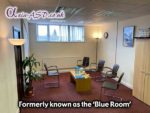
    Our clinic room, formerly known as the ‘Blue Room’, has now had its furniture replaced with fresh, fabulous, and fashionable fixtures, more fitted to the Feng Shui.
     
    In light of this makeover, we’re looking for a new name for the room, and we thought it best to open discussion up to Axia’s clients to see what (ideally appropriate) names you can come up with!
     
    Please put your suggestions in the comments below, or click ‘Like’ on the ones you think are best.
     
    Be aware that we will be monitoring for inappropriate or offensive comments, so please be nice!
    Renwick Bromiley
    Associate to Head of Film Society

    Share This Post:
    Facebooktwitterlinkedinmail
  • Axia to increase its streaming output on YouTube

    Axia to increase its streaming output on YouTube


    Hi all,

    Given the uncertain circumstances that we currently are facing, Axia would like to increase its streaming output with the intention of providing some outreach and entertainment for anybody who would like to join in.

    In addition to our usually scheduled Tuesday evening stream (which at the moment consists of alternating between Spyro: Reignited Trilogy and Marvel’s Spider-Man week by week), we would like to introduce the following:

    • Wednesday afternoon – Jackbox stream. A social comedic game that encourages audience participation and funny answers.
    • Friday evening – Which will consist of another game that is yet to be decided upon.

    We welcome suggestions if anybody has any. We are currently able to stream Playstation 4 games, but are investigating the possibility of being able to play games on the Switch, such as Animal Crossing: New Horizons, and Zelda: Breath of the Wild.

    Renwick Bromiley
    Associate to Head of Film Society
     

    Share This Post:
    Facebooktwitterlinkedinmail
  • Luke Beardon’s Notes from: The Future is Gold 2019 Conference

    Luke Beardon’s Notes from: The Future is Gold 2019 Conference


    The Future is Gold

    Dr Luke Beardon,
    Autopia (Autism Utopia)

    Where/when the world becomes weirdly normal (or where/when weird becomes the new normal)

    ‘My hypothesis is that there is a pervasive and invidious pattern of thought, behaviour, and belief that is at the heart of a societal ‘norm’, that is, in effect, destroying Autistic lives.

    Assumptions are made by people, knowingly or not – ‘if you’ve met one Autistic person, you’ve met them all’ – the idea that good practice is to ‘…consider the other treatments such as psychological interventions’ (NICE guidelines). The need for an Autism awareness day/week/month is exactly representative of the problem.

    You have to be problematised before you are allowed to be Autistic. ‘Conform to the norm or be deemed in the wrong…’. The assumption that ‘you have to fit in with society to be considered healthy’ is farce, and sadly perpetuates these negative assumptions.

    These views can be found institutionally, as many professionals speak of Autism in the context of a ‘cure’. The concept of Autopia is ‘when Autism becomes an identity rather than a medical diagnostic label’.

    The Equality Duty protects people based on factors such as age, gender, sexuality, but for these qualities, absolutely no proof is required – whereas for Autistic people, who in many environments must provide evidence of their diagnosis in order to receive the protection afforded to others passively, the Equality Duty itself could then be considered inherently discriminatory.

    Autopia recognises the importance of self-identification. The (formal) identification ought to be there for those who choose it; ought to be timely and understanding of the fact that waiting for a diagnosis can be akin to putting a life on hold; should be holistic and geared toward the individual, and should reject time-conscious diagnostic processes.

    The inclusion concept of Autopia is centred around acceptance, need, wellbeing, belonging and understanding – it opposes the notion of inclusion, as the word has been bastardised into what is essentially now a parallel of its original meaning, which is supposed to embody the qualities listed above. Too often it is synonymous with integration, or practice being the same for all parties.

    The three golden nuggets of Autopia:
     
    • Autism + Environment = Disability
    • Predominant neurotype-based concept need to be translated before they are applied in an Autistic context – just because it works well for neurotypical people, do not assume that the same is true for Autistic people, as experiences that may be thought to be helpful can actually be deeply damaging to the point of trauma.
    • The amount of energy put into effecting change should warrant the intended outcome.

    Education in Autopia would see that Autistic students accessing learning from Autistic teachers, experience alternate forms of education (such as in outdoor environments, museums, yurts, or having dimmer switches in a classroom to cater for sensory sensitivities), assessments are provided through alternate methods (verbal, coursework, use of laptops, etc.), have assessments examine actual knowledge, rather than the means a student possesses to operate within a system. And education isn’t even the full scope of it; limitations are put on students based on where they can eat, where they can do, what they are allowed to do and more.

    Socially, Autopia would see the end of the assumption that more friends means greater happiness, have an acceptance that solitary activity may be beneficial for some people, create an understanding that Autistic skills are as valid as neurotypical skills, accept that social chit-chat is rubbish and unnecessary for many.

    Employment would be changed in that job descriptions ought to reflect an accurate layout of roles, that Autistic people have agency over how their roles within their occupation changes over time, that a greater range of application processes be made available, that interviews become an obsolete form of application for jobs, to annihilate the idea of open-plan offices (and telephones with them), to stop unexpected approaches, etc. Basically, just not applying neurotypical logic to Autistic needs and preferences.


    Share This Post:
    Facebooktwitterlinkedinmail
  • Notes from: The Future is Gold 2019 Conference

    Notes from: The Future is Gold 2019 Conference


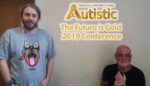
    We took some notes from the conference that took place yesterday that we wanted to share.

    I should express that it is paraphrased and therefore has been put through the lens of my own interpretation, so it may not reflect 100% the intended meaning of the speakers.

    Renwick Bromiley
    Associate to Head of Film Society

    The Future is Gold – Autism Conference

    Jamie and Lion – The Future of Technology

    Any sufficiently advanced technology is indistinguishable from magic
    Arthur C. Clarke, Clarke’s Third Law

    Jamie is a Senior Research Engineer at the BBC, the goal of which is to improve accessibility for disabled people.

    Impairment + Environment = Disability
    I.e. we disable people by creating barriers in the environment; impairment is not inherently disabling.

    What technology (or magic) can we use to remove these barriers?

    These barriers can relate to environment (around us), automation (assisting us), and communication (connecting us).

    Environment – ‘Things we do, before we do any things.’
    Spoons. Each day we have a number of spoons that we can spend on activities (it may require two spoons to provide food for the day, three spoons on safety, and four spoons on communication – but if you only have eight spoons in one day, this creates a problem, as you don’t have enough spoons to cope with activities for the day), and this number of spoons can vary day-to-day.
    By implementing changes to the environment, we could reduce the number of spoons it takes to carry out tasks. For example, introducing smart appliances to cook food will reduce the number of spoons it requires to prepare food. Similarly, installing a smart alarm will reduce the number of spoons required to ensure safety.

    A good example of using the magic of technology to thrive is through the use of VR. VR can provide a portable sensory room for people to use to relax, or build and explore worlds outside of our reality, which can be stressful and uncontrollable

    Automation – ‘Reducing demands.’
    Abilities – list of things I can do
    Capabilities – list of things I can do today
    Capacity – how many of those things I can do today
    The magic of automation can be used to reduce the number of things that need to be done, so that we can do more that we want to, likewise, automating transportation (Alexa, take me to a shop that sells Rolos), and services (Alexa, book me a haircut) will also reduce the demands required of us so that we can do more.

    Communication – ‘Conveying meaning and co-ordinating action.’
    Communication and speech are different.
    ‘The Communication Mountain’ describes that speech lies at the top of a mountain, and it is the job of communication to reach the top of the mountain – some days, when things are easier and needs are met, speech is easily attainable, but on other days (perhaps days with fewer spoons) communication that can be made without the use of speech will be preferred.
    Shortcuts to communication are currently available, such as speech synthesisers on Smart Watches (to allow for effective communication without the requirement for speech), or messaging/posting apps.
    Re-packaging, or re-interpreting (in the BBC, this comes in the form of translating speech into subtitles and sign language), allows for information to be more freely accessible for people with differing communication needs.


    Steve Silberman, author of Neurotribes

    The early ideas for the book came from writing an article for Wired Magazine entitled Geek Syndrome.

    Over the course of his career, Steve came into contact with more and more professionals who were Autistic, or who had Autistic family members. Around the time that Steve’s research had come to a head and his research and findings were to be posted, 9/11 took place, and as a result, the article hit the backburners. In the years following, Autism was theorised to be caused by a menagerie of factors, the biggest of which being silicon in water supplies (hence the large number of Autistic people living and working in Silicon Valley, *GASP*), and the the most pervasive, being vaccines.

    Steve’s research challenged his understanding a lot of the theories and models that had been suggested up to that point to try to explain Autism, and was alienated from those models as a result. When researching Neurotribes, Steve attended an ‘Autism retreat’ with a bus-full of Autistic people (bearing in mind, up to this point, the general consensus was that Autistic people would never have friends or social connections and never arise to any conceivably successful job prospects), all of whom appeared happy, sociable, and thoroughly enjoying eachother’s company.

    Of course, this had completely subverted the ‘textbook’ description of Autistic people and given a true lived experience of neurodiverse lifestyle and how neurotypicality enforces unnecessary social rules on individuals. As a neurotypical on a retreat with an Autistic group, over the course of the holiday, Steve had un-learned many of these social rules and acclimatised to a communication style that he (and the rest of the neurotypical world) was unaccustomed to.

    Up to this point, Leo Kanner, the psychiatrist who ‘discovered’ Autism, had theorised (among the multitude of other theories he spouted) that it was caused by refrigerator parents (cold, unloving parents), and disproportionately affected white, middle-class, ambitious, studious individuals, A.K.A. white, middle-class, ambitious, studious individuals, the only population who could afford to have access to Leo Kanner himself.

    Steve spoke at length about the role of Hans Aspergers in the emergence of Autism, as well as the recent controversy surround his supposed Nazi associations and will be discussing this topic in forthcoming writings, sharing his depth of knowledge and unique insights into what is a thoroughly interesting and controversial debate.


    Jerry Rothwell – Filmmaker behind The Reason I Jump

    The Reason I Jump was originally a book written by a 12 year old non-verbal Autistic boy named Naoki Higashida, who, when it came to the film being made (at the age of 23), expressed that he did not want it to be biographical, so that he did not come across as ‘the voice for Autistic people’.

    Naoki is Japanese and uses a piece of paper with letters of the alphabet that he can point at to communicate words

    The film covers five main themes:

    • Hyperfocus
    • Sensory overload
    • Communication
    • Stigma
    • As I am

    The film follows the lives of young people living in different cultures (UK, US, Indian and African) relating to these themes, expressing how they live their lives and the challenges they face.


    Share This Post:
    Facebooktwitterlinkedinmail
  • Anime Amigos is on Facebook

    Anime Amigos is on Facebook


    We’re the Anime Amigos, a group of amataeur anime reviewers, chatting certified nonsense.

    From left to right, we are Reece, Renwick, Calvin and Elliot.

    Anime Amigos is on Facebook. To connect with Anime Amigos, log in to Facebook.


    Share This Post:
    Facebooktwitterlinkedinmail
  • Our 1st “Open Room” in 2018

    Our 1st “Open Room” in 2018


    ‘Hi all,

    We would like to announce our 1st “Axia Film Society Open Room” for 2018.

    This will be Wednesday 3rd January from 12:30 – 3:30 p.m.

    We’ll provide snacks and games, so if you would like to hang out and talk about anime and films, or play board games or card games, feel free to come and join us.

    Thanks!
    Ren’

    Renwick Bromiley – Associate to Head of Axia Film Society

    Share This Post:
    Facebooktwitterlinkedinmail
  • The Dark, Netflix 2017 – Review

    The Dark, Netflix 2017 – Review


    “THE DARK, NETFLIX 2017”

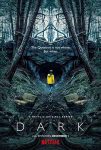
    The isolated German town of Winden is home to many mysteries, it would seem. Alleged disappearances and abductions seem to plague the community – understandable, given the vast sea of woodland that surrounds it; these things are bound to happen, right? This does not seem to be the case, as Ulrich Nielsen (Oliver Masucci) fervently searches for his son, Mikkel (Daan Lennard Liebrenz), after he disappears in the forest. Meanwhile, Jonas Kahnwald (Louis Hofmann) finds re-integrating to school difficult, following his father’s suicide months earlier. With the imposing proximity of a nuclear power plant, the shadow it casts seems to loom on endlessly and its intensity is branded on the lives of Winden’s inhabitants; a scarred network, connected through their sins. Dark very much lives up to its name in that it keeps you firmly bound within it, feeding you fractions of light until the bigger picture is revealed.

    Germany’s most recent assault on the Sci-Fi Horror genre, Netflix’s Dark does not have the easiest time standing up against heavyweight productions. Stranger Things is one that springs to mind pretty much immediately, and not only because they share a parent company. While Stranger Things is more of an ode to the nerd-culture prevalent around the 80s, Dark rarely harkens back nostalgically in this way, and is all the better for it. It’s one thing to give shout outs – I mean, who doesn’t love a well-placed Star Wars reference – but it requires a greater degree of conviction to stay thematically on track with what you intend the show to be. In this case, the template of Sci-Fi Horror/Thriller is rigidly adhered to and is wonderfully executed. Specifically, the themes of isolation, entrapment and secrecy are explored and is echoed resonantly in the setting. The nuclear plant dominates the livelihood of Winden’s residents and physically towers above the town, appearing to be more of a Gothic keep than a pillar of industry. In addition, the forest acts as shelter for shady goings on, imbuing the place with a sense of the profane. Altogether, these thematic choices contribute to a sense of intense unease as elusive plots and suspicious connections are gradually revealed to us.

    Dark is all about understanding the intricate web of relationships between characters, and how everything slots together. It does this through adopting a fractured narrative, separated by thirty-three year gaps; in 1953, 1986, and in 2019. The bulk of the plot takes place in 2019, giving us a somewhat more familiar setting in which to ground ourselves initially. Here, we meet the individuals – parents, grandparents – who are elaborated on further as we dart hither and thither between the time periods. Though this is executed with stunning proficiency, at times the change over can be quite jarring, as we are bombarded with faces and names to remember in order to fully understand character motivations and the like. While this may seem like a downside, what it does provide us with (if you take a couple of minutes to reflect every so often on how things tie together) is those ‘OH MY GOD I GET IT NOW’ moments that makes all the setup worthwhile. Combine this with some truly brilliant performances, courtesy of Ulrich (Oliver Masucci), Noah (Mark Waschke), Hannah Kahnwald (Maja Schöne), and Egon Tiedemann (Christian Pätzold), Dark stands out as a character piece with great depth, not often seen in media today.

    Unfortunately for the average non-German language media consumer (the uncultured masses that we are), the wonderful performances delivered to us in this show are unlikely to carry over to English language productions. Though, in terms of direction, Baran bo Odar (director of Who Am I, and Silence), the success of Dark could very well see further partnerships with Netflix, or larger production companies in future. That is certainly the outcome that I hope for, as I rate this show very highly, and would recommend it to anybody perhaps looking to fill the hole in the interim between Stranger Things seasons two and three (I know I went to lengths to differentiate the two shows, but they do go hand in hand rather well). If you can handle subtitles, I recommend watching it in original audio. Coming from a background of intensive anime watching, I think hearing the original deliveries of the lines provides a more authentic and realistic view of what’s happening, even if the words don’t quite match up.

    All in all, 4.5/5. It would have more, but as I mentioned, the flitting between time periods will lead to varying degrees of confusion in any viewers not directly related to Hawking or Einstein. Even then, to us non-geniuses, weak points appear in Dark in the form of Bartosz’s (Paul Lux) complete lack of the facial muscles required for expression and, even though the show makes meticulous effort not to trip over itself in terms of continuity, sometimes it inevitably does. Regardless of the fenickity nitpickery, I wholeheartedly recommend this show to anybody in the market for a high-quality production to binge watch; the score is incredible, the imagery is dour and absorbing, and you cannot help but become ensconced in the deeper workings of the characters we observe throughout. Dark is definitely one of the better shows Netflix has left somewhat in the shadows, and it sure to garner a significant cult following.

    And that’s it from me. Apologies for the inactivity in releasing written reviews, and I hope you enjoyed reading. See you soon!

    Renwick Bromiley – Associate to Head of Film Society

    Share This Post:
    Facebooktwitterlinkedinmail
  • Axia Film Society “Open Room”

    Axia Film Society “Open Room”


    ‘Hi all,

    We are going to start running an open room on Wednesdays, 12:30 – 15:30, for playing board games, card games, and just for anybody over the age of 18 that would like to come along and hang out.

    We’ll provide snacks and games, so if you would like to learn something new, enjoy a multiplayer experience, or just hang out and talk about anime and films, feel free to come and join us.

    Thanks!
    Ren’

    Renwick Bromiley – Associate to Head of Film Society

    Share This Post:
    Facebooktwitterlinkedinmail